
We are renovating a terraced house from the 1960s with split-level floors. Since we want to have direct access to the garden on one level, our architect recommended a single-story extension (entrance, cloakroom, kitchen, and dining room). From there, the first split level would be reached by 7 steps. This level would include the living room, toilet, and office. One exterior wall of the original house will be removed.
At first, I thought this would be really cool, like a gallery or split-level house. Now, I’m not sure if it might be inconvenient in everyday life. You enter the living room by going up 7 steps in the dining room. The wall will be removed to create an open layout.
I would really appreciate your opinions!
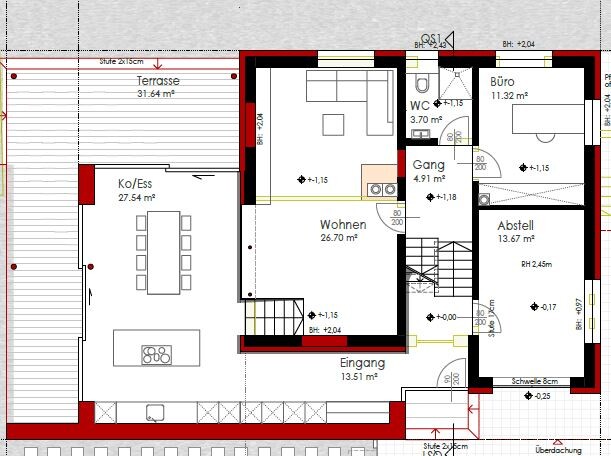
At first, I thought this would be really cool, like a gallery or split-level house. Now, I’m not sure if it might be inconvenient in everyday life. You enter the living room by going up 7 steps in the dining room. The wall will be removed to create an open layout.
I would really appreciate your opinions!
The tool has its limitations, which need to be worked around. However, I cannot make any cuts; that should be checked by the architect.
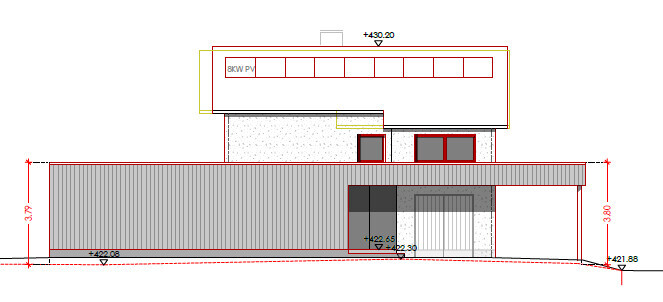
The windows of the extension are 2.50 meters (8 feet 2 inches) high, and I set the ceiling at around 2.80 meters (9 feet 2 inches). Everything is just roughly planned to show the interior window (where I placed the braces).
Originally, I gave the living room a height of 2.50 meters (8 feet 2 inches); the platform only allows for a one-meter (3 feet 3 inches) difference, but this should be approximately correct. The elements with the braces are about 180 centimeters (5 feet 11 inches) high starting from the living room. Then there is a 70-centimeter (28 inches) “beam” before the ceiling begins.
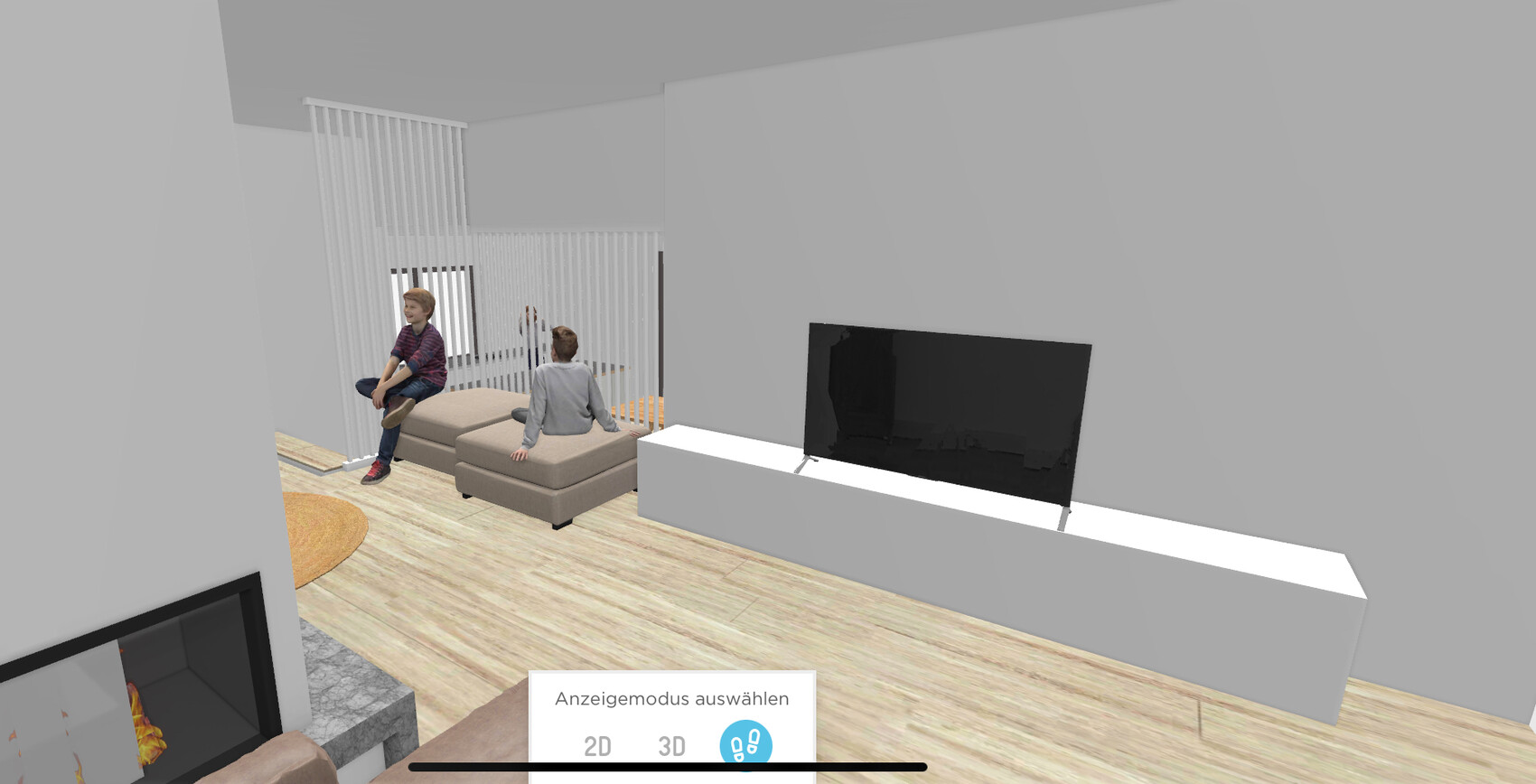
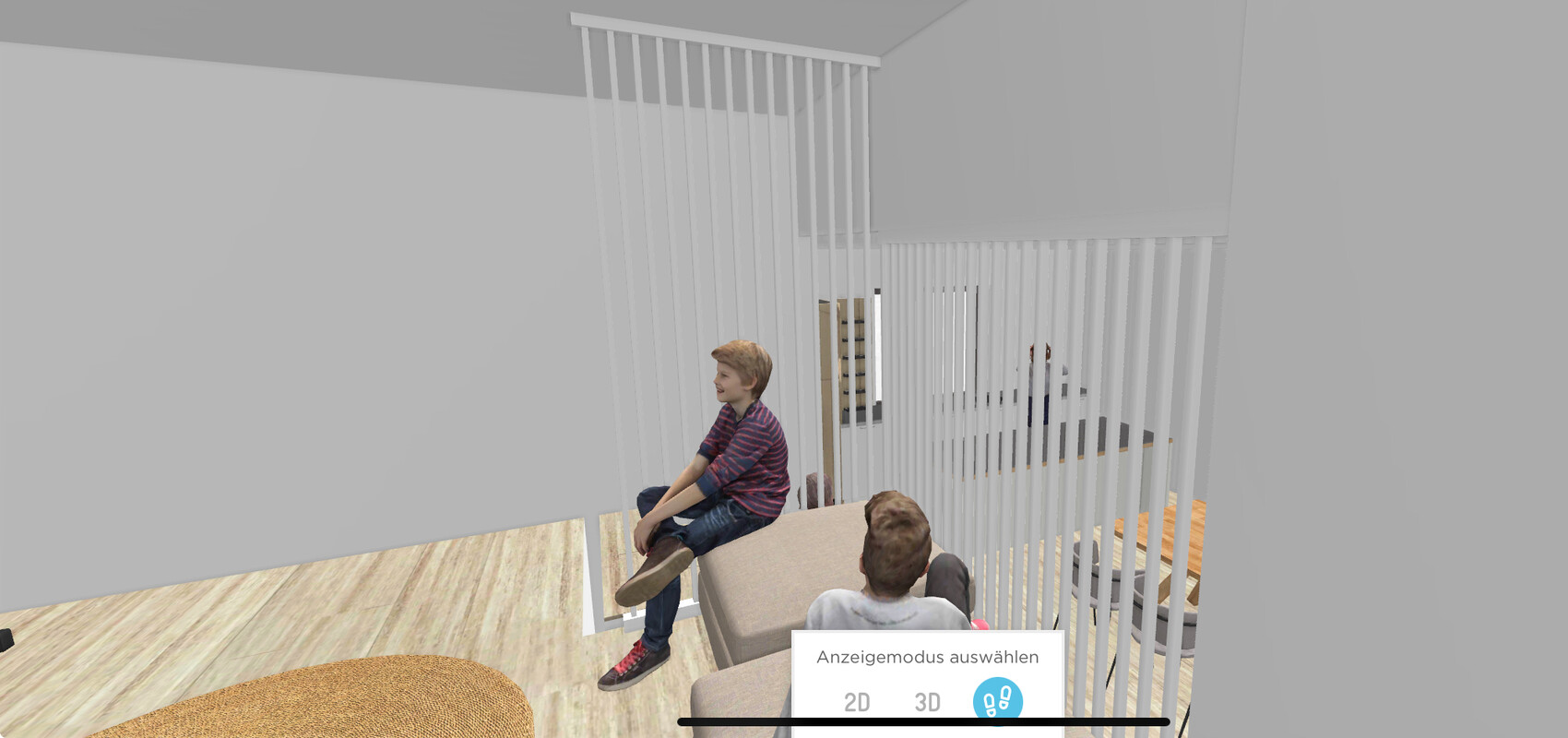
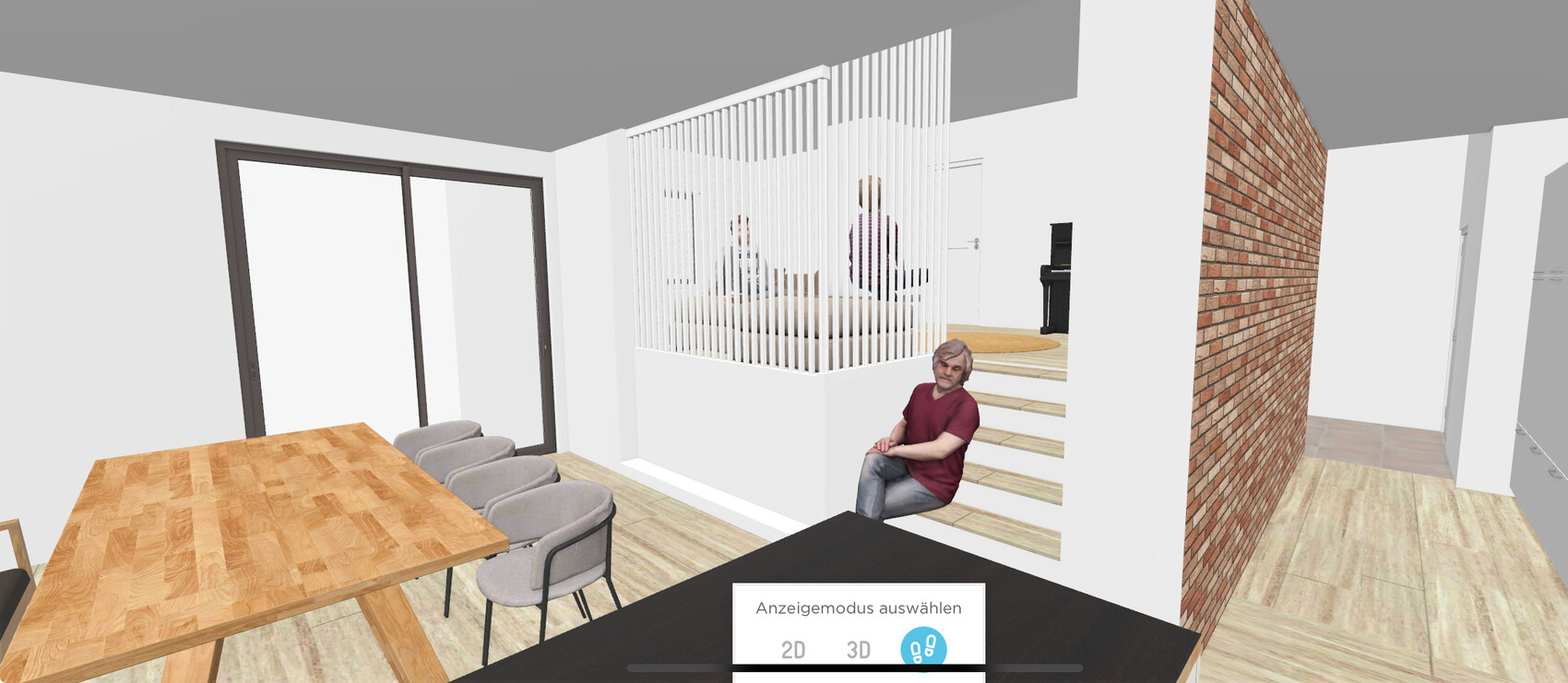
On a different topic: the fireplace. It might be a bit tight with the sofa in that area.
The windows of the extension are 2.50 meters (8 feet 2 inches) high, and I set the ceiling at around 2.80 meters (9 feet 2 inches). Everything is just roughly planned to show the interior window (where I placed the braces).
Originally, I gave the living room a height of 2.50 meters (8 feet 2 inches); the platform only allows for a one-meter (3 feet 3 inches) difference, but this should be approximately correct. The elements with the braces are about 180 centimeters (5 feet 11 inches) high starting from the living room. Then there is a 70-centimeter (28 inches) “beam” before the ceiling begins.
On a different topic: the fireplace. It might be a bit tight with the sofa in that area.
Thanks to @ypg for the visualization!!! Very cool. I can already imagine it well this way.
You also made a very good comment about the ceiling height in the extension. We are renovating an old house, and we could keep the wall to the higher-level living room as is. However, as ypg said, I find that boring and want to make it more open. That’s why this floor plan was created. Of course, it would be ideal if the extension were higher, but please keep in mind that the extension wraps around the house. In the living room itself, a large window (2.40 m (7 ft 10 in)) is planned:

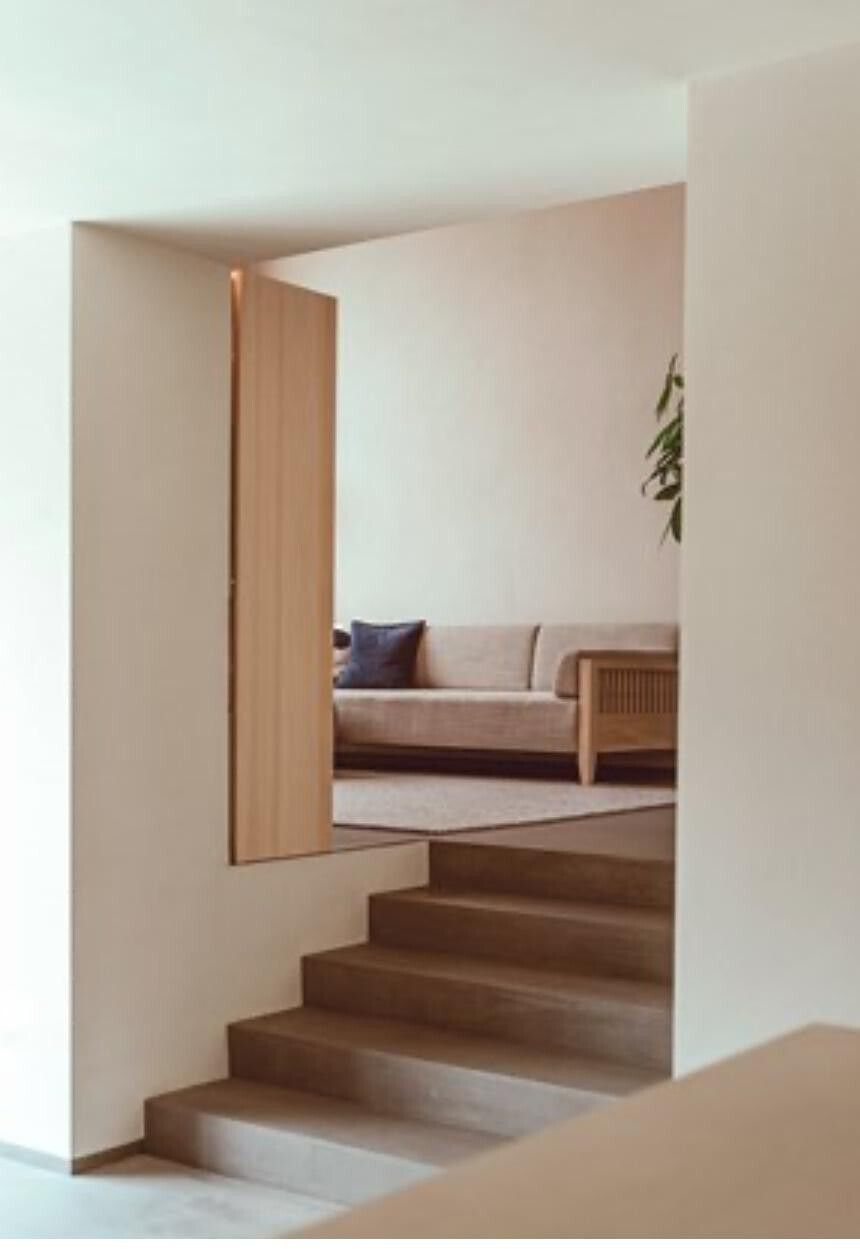
Friends of ours have these steps leading into the living room in their new build:
You also made a very good comment about the ceiling height in the extension. We are renovating an old house, and we could keep the wall to the higher-level living room as is. However, as ypg said, I find that boring and want to make it more open. That’s why this floor plan was created. Of course, it would be ideal if the extension were higher, but please keep in mind that the extension wraps around the house. In the living room itself, a large window (2.40 m (7 ft 10 in)) is planned:
Friends of ours have these steps leading into the living room in their new build:
K a t j a schrieb:
Have you considered a monopitch roof instead of a flat roof?I think that would look very nice inside, but it would be challenging to match with the rest of the extension on the outside...
Zubi123 schrieb:
In the current design, I would probably only change the fact that there are fewer steps inside the house. The problem with ceiling height remains an issue. In my opinion, the original poster should reconsider the unnecessary floor-to-ceiling windows on the first floor (1st floor / upper floor). Then, the roof of the extension could also be set significantly higher… The floor-to-ceiling windows were simply carried over from the original building. It would be possible to make them regular windows instead and wider, but that would also increase the costs. If we now change every single window in the existing building, we should start asking ourselves whether it might be better to demolish and rebuild ;-)
How would you then design the rest of the extension if the kitchen and dining area are higher? Would the entrance canopy, carport, etc., also be that high?
dbertig schrieb:
You also wrote a very good comment on the topic of ceiling height in the extension. We are renovating an old house and could keep the wall to the higher-level living room as it is. However, as ypg says, I find that boring and want to make it feel more open. Often, the forum community is more dynamic than expected. Every piece of information or idea is valuable and worth mentioning. Still, as the person asking the question, it’s important not to lose focus and the main line of thought. What do I want, how do I want it, and what would be nice to have?
I can’t measure heights with my tool because it’s for designing, not measuring. A shelf about 1.80 meters (5 feet 11 inches) tall is roughly the same height as the “opening.” If you stand a meter (3 feet 3 inches) away and look down, you’re looking directly at the dining area. That’s how it should be.
At home, I also have a strip window in the kitchen that is about 160 centimeters (63 inches) high. Since the countertop is in front of it and I want to look down into my garden, this height is neither disturbing nor unusual. There should just be something in front to prevent standing too close to the wall. For that reason, cushioned stools work well there. You could also extend the TV unit all the way to the stairs and then add cushions to create a built-in window seat, like the mentioned window bench. However, I actually don’t like that as much as movable seating furniture.
By the way, window seats often have lower sill heights.
Thanks @ypg for your great visualizations and tips.
We are now in the detailed planning stage, and I want to draw the furniture on the floor plan as it is planned. Maybe you have some ideas about my thoughts:
Dining room:
I find the floor plan of the dining room with just a table in the middle somehow "boring." So here are my considerations:
- How about a round table and maybe a lounge bed, window seat, or two armchairs by the window to the larger terrace? Or maybe just leave it open for the kids to play.
- Or a dining bench made by a carpenter directly against the wall towards the living room (right after the steps). Possibly leave the front towards the window wall open, with a plant or maybe some other seating furniture. In this case, I would not plan the glass wall all the way to the corner.
Living room:
After some thought, I find the location chosen by the architect for the wood stove not ideal. We have a large living room, but because of the stove on this side, there is no space for a longer sofa. Does anyone have an idea where the stove could be better placed?
Looking forward to your feedback, many thanks in advance!
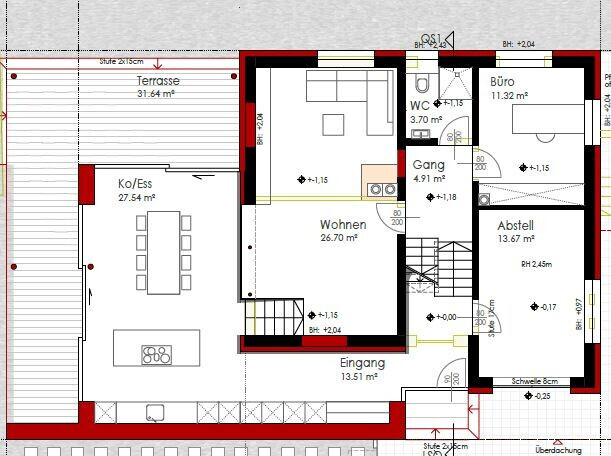
We are now in the detailed planning stage, and I want to draw the furniture on the floor plan as it is planned. Maybe you have some ideas about my thoughts:
Dining room:
I find the floor plan of the dining room with just a table in the middle somehow "boring." So here are my considerations:
- How about a round table and maybe a lounge bed, window seat, or two armchairs by the window to the larger terrace? Or maybe just leave it open for the kids to play.
- Or a dining bench made by a carpenter directly against the wall towards the living room (right after the steps). Possibly leave the front towards the window wall open, with a plant or maybe some other seating furniture. In this case, I would not plan the glass wall all the way to the corner.
Living room:
After some thought, I find the location chosen by the architect for the wood stove not ideal. We have a large living room, but because of the stove on this side, there is no space for a longer sofa. Does anyone have an idea where the stove could be better placed?
Looking forward to your feedback, many thanks in advance!
Similar topics