
ᐅ Raising the ground level of a property in a flood-prone area
Created on: 27 Oct 2025 22:16
T
Tom_bay
Hello everyone,
We are currently considering purchasing a plot of land and would like to hear your assessments and experiences—especially regarding additional costs or risks.
Key details:
“According to the flood hazard map by the Bavarian State Office for the Environment, the development area lies within the HQextrem flood hazard zone.
The soft clay soils of the cohesive upper layer are not suitable for foundation construction without additional measures, as they can cause twisting and tilting due to unfavorable load/settlement behavior.
The at least stiff clays of the cohesive upper layer are generally suitable for foundation construction.
If buildings are constructed without basements, only minor water retention measures are necessary (e.g., sump pumps, drainage pipes).
Waterproofing against groundwater under pressure according to DIN 18195-6 standard must be provided.
Basements are explicitly not recommended.”
Situation:
The plot currently lies about 1.5 m (5 ft) below street level, basically in a kind of “pit.” According to the building plan, the ground must be filled up to street level.
This issue affects all parcels along the planned road—some to a greater extent, some less. There might be an opportunity to collaborate with future homeowners here.
My questions:
Thanks in advance for your opinions and experiences!
[ATTACH alt="IMG_0592.jpeg"]93322[/ATTACH]
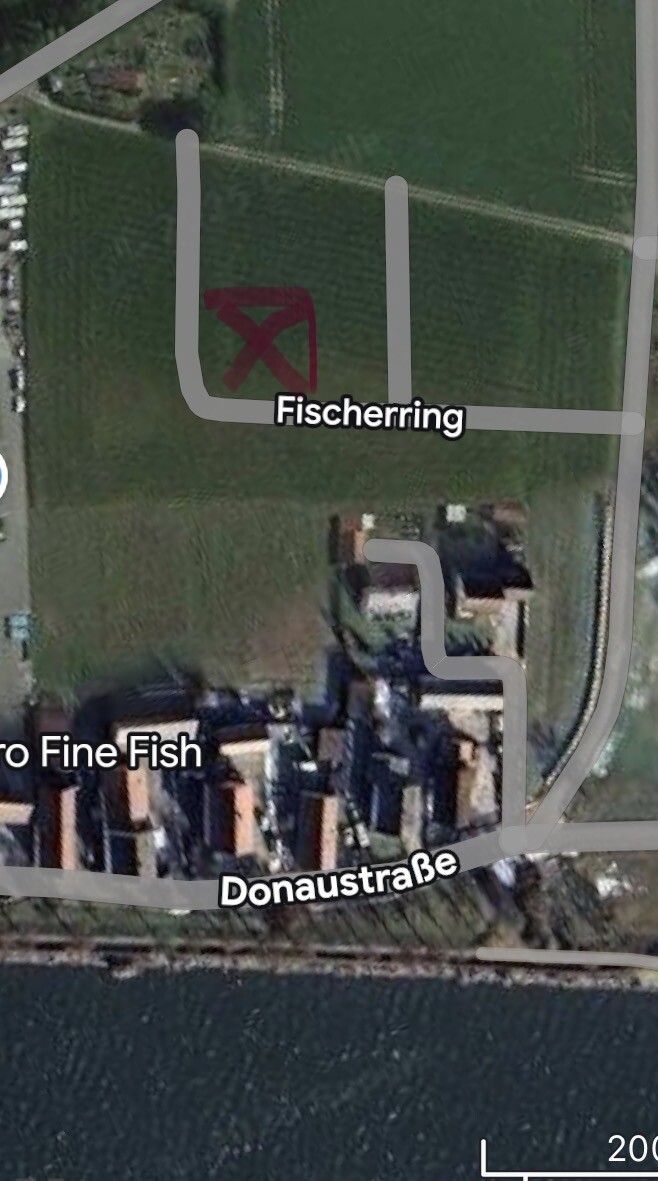

We are currently considering purchasing a plot of land and would like to hear your assessments and experiences—especially regarding additional costs or risks.
Key details:
- Plot size: approx. 576 m² (6,200 sq ft)
- Distance to the Danube River: approx. 150 m (490 ft)
- Location according to flood hazard map: HQextrem (information from the building plan)
- Price: approx. €180,000
- Region: Bavaria, postal code: 93*
“According to the flood hazard map by the Bavarian State Office for the Environment, the development area lies within the HQextrem flood hazard zone.
The soft clay soils of the cohesive upper layer are not suitable for foundation construction without additional measures, as they can cause twisting and tilting due to unfavorable load/settlement behavior.
The at least stiff clays of the cohesive upper layer are generally suitable for foundation construction.
If buildings are constructed without basements, only minor water retention measures are necessary (e.g., sump pumps, drainage pipes).
Waterproofing against groundwater under pressure according to DIN 18195-6 standard must be provided.
Basements are explicitly not recommended.”
Situation:
The plot currently lies about 1.5 m (5 ft) below street level, basically in a kind of “pit.” According to the building plan, the ground must be filled up to street level.
This issue affects all parcels along the planned road—some to a greater extent, some less. There might be an opportunity to collaborate with future homeowners here.
My questions:
- What additional costs could realistically be expected for the necessary ground filling and soil improvement (rough estimates)? Also, what about waterproofing against groundwater under pressure?
- Are there risks or disadvantages associated with the location in the HQextrem zone, even if no basement is planned? According to a neighbor (living there for about 20 years), floodwater was so far well controlled by a dam, but who knows how this will look in the coming years…
- Does anyone have experience with how building permits/planning permissions are handled in such areas (e.g., additional requirements or insurance issues)?
- Would you personally consider buying under these conditions at all?
Thanks in advance for your opinions and experiences!
[ATTACH alt="IMG_0592.jpeg"]93322[/ATTACH]
hanghaus2023 schrieb:
Why? In my opinion, only the area for the house, (terrace?) and the driveway need to be raised.As far as I understand from the development plan, the entire plot must be raised to street level:
“Adjustment to traffic areas: Immediately adjacent to public traffic and green spaces, the finished level of the plot borders must be adjusted to the level of the traffic and green areas.”
W
wiltshire28 Oct 2025 12:43Besides the financial aspect, I also consider the emotional side. What must it be like to wait for a flood, watching the water level anxiously? How does it feel to have lost a lot, even if it is somehow compensated?
The classification into flood hazard (HQ) zones is statistical and based solely on historical data. Among the 25 largest rivers in Germany, there is not a single one that has not experienced at least one HQ50 flood event in recent years; several have had two or three. To me, this reveals a mathematical anomaly. Bavaria has issued recommendations to exceed the standards associated with HQ classifications by at least 15% to account for changes caused by climate change.
I am not an expert. In an extremely classified flood zone, I would only build floating structures. If the area is also vulnerable to overflow, I would not build even floating. For the risk involved, I would expect a special increase in quality of life, such as an unobstructed view of the water. In the case of the property in question here, that is not the case. My assessment is not purely rational; it is not a matter of "right" or "wrong."
I consider it economically questionable that any land designated as building land is located at all in areas classified as HQ100 extreme flood zones.
The classification into flood hazard (HQ) zones is statistical and based solely on historical data. Among the 25 largest rivers in Germany, there is not a single one that has not experienced at least one HQ50 flood event in recent years; several have had two or three. To me, this reveals a mathematical anomaly. Bavaria has issued recommendations to exceed the standards associated with HQ classifications by at least 15% to account for changes caused by climate change.
I am not an expert. In an extremely classified flood zone, I would only build floating structures. If the area is also vulnerable to overflow, I would not build even floating. For the risk involved, I would expect a special increase in quality of life, such as an unobstructed view of the water. In the case of the property in question here, that is not the case. My assessment is not purely rational; it is not a matter of "right" or "wrong."
I consider it economically questionable that any land designated as building land is located at all in areas classified as HQ100 extreme flood zones.
M
MachsSelbst28 Oct 2025 13:14Tom_bay schrieb:
As far as I understand from the development plan, the entire plot must be raised to the level of the street:
“Adjustment to traffic areas: In direct connection to public traffic and green areas, the finished ground level at the edges of the property must be aligned with the level of the traffic and green areas.” This makes sense for many reasons. In the end, it will even be significantly more expensive if you only raise the areas for the house, garage, terrace, and pathways, and support the rest with 1.5–1.8 meters (5–6 feet) high L-shaped retaining walls, a dry stone wall, or another method. Smoothing out a 1.5-meter (5-foot) slope alone requires a lot of space, as slopes should generally not exceed 30°, and also carries the risk that rainwater from the street will run onto the property if the drainage system fails during heavy rainfall.
Check whether the local authority has a heavy rain management plan. It uses different criteria than a hundred-year flood event. The communities along the Danube are experienced with flooding, but what happens if water levels rise much higher or faster than a typical flood? For example, our small stream usually reaches about 15–20 cm (6–8 inches) during normal flooding and around 75 cm (30 inches) at high flood levels, but according to the model, it could rise to 5 meters (16 feet) during heavy rain—and that can happen very quickly. I wouldn’t build without the option to get insurance coverage, so clarifying this should be the first step.
M
MachsSelbst28 Oct 2025 18:51Technical measures, insurance, all fine.
But the most important factor was mentioned by wilshire. What type of person are you? Or, what type are you as a family?
I have a colleague who was sitting next to me when the floodwaters were already flowing down his street, sandbag barriers were being built, and when I asked him if he wanted to go home instead, he said, “I’ll manage here somehow on my own... What am I supposed to do? Scoop the floodwater away with a bucket? Stand in front of the dam with tears in my eyes? At worst, you just have to renovate...”
If you are that kind of person, build there.
If you are the kind of person who already gets a stomach ache when the weather warning shows level 2 or 3 for heavy rain, then don’t. Think about your significant other too. In the year when Lower Saxony and Saxony-Anhalt were flooded, water was standing up to the top of the foundation slab on our property. I was calm because the foundation slab is waterproofed (WU), no danger... but for my partner, the world fell apart that day... If we had faced a real flood risk, we would probably be living somewhere else by now...
Technical measures are expensive, and insurance only kicks in after the disaster has already happened. The personal aspect is what really matters. It won’t help you if the insurance pays for the renovation, but your family no longer wants to live there and leaves you alone.
But the most important factor was mentioned by wilshire. What type of person are you? Or, what type are you as a family?
I have a colleague who was sitting next to me when the floodwaters were already flowing down his street, sandbag barriers were being built, and when I asked him if he wanted to go home instead, he said, “I’ll manage here somehow on my own... What am I supposed to do? Scoop the floodwater away with a bucket? Stand in front of the dam with tears in my eyes? At worst, you just have to renovate...”
If you are that kind of person, build there.
If you are the kind of person who already gets a stomach ache when the weather warning shows level 2 or 3 for heavy rain, then don’t. Think about your significant other too. In the year when Lower Saxony and Saxony-Anhalt were flooded, water was standing up to the top of the foundation slab on our property. I was calm because the foundation slab is waterproofed (WU), no danger... but for my partner, the world fell apart that day... If we had faced a real flood risk, we would probably be living somewhere else by now...
Technical measures are expensive, and insurance only kicks in after the disaster has already happened. The personal aspect is what really matters. It won’t help you if the insurance pays for the renovation, but your family no longer wants to live there and leaves you alone.
 Papierturm28 Oct 2025 19:37
Uh oh.
So, before even considering buying the plot, I would clarify a number of things.
1. Insurance options: Online platforms are not very reliable here. In risk-prone areas, assessments are often done on a case-by-case basis, and depending on the insurer, flood damage may easily be excluded. (I do recall that there is supposed to be a legal change making it mandatory to offer natural hazard insurance – but I am not sure how that is being implemented.) So: Talk to your current insurer, where you are their best customer, and clarify the situation there.
2. Soil report for the exact spot on the land where you plan to build. Sorry, but relying on the city’s soil report, which might be based on boreholes from somewhere else, is not a good idea.
3. Really reflect, as others have mentioned, on how well or badly you can live with the risk. (In this context: How high would the water stand on the property in a 1000-year flood event? Would it be mostly standing water or flowing water?)
4. If you still decide to buy the plot after that, try to find out which building companies have done a lot of work in the area and ask them about their experiences and cost estimates. Especially in rural areas, there are usually a few “regular suspects” who know the local conditions well and can provide fairly accurate assessments.
I’m afraid it will be expensive.
So, before even considering buying the plot, I would clarify a number of things.
1. Insurance options: Online platforms are not very reliable here. In risk-prone areas, assessments are often done on a case-by-case basis, and depending on the insurer, flood damage may easily be excluded. (I do recall that there is supposed to be a legal change making it mandatory to offer natural hazard insurance – but I am not sure how that is being implemented.) So: Talk to your current insurer, where you are their best customer, and clarify the situation there.
2. Soil report for the exact spot on the land where you plan to build. Sorry, but relying on the city’s soil report, which might be based on boreholes from somewhere else, is not a good idea.
3. Really reflect, as others have mentioned, on how well or badly you can live with the risk. (In this context: How high would the water stand on the property in a 1000-year flood event? Would it be mostly standing water or flowing water?)
4. If you still decide to buy the plot after that, try to find out which building companies have done a lot of work in the area and ask them about their experiences and cost estimates. Especially in rural areas, there are usually a few “regular suspects” who know the local conditions well and can provide fairly accurate assessments.
I’m afraid it will be expensive.