
ᐅ Initial Floor Plan Draft – Backyard Development – 1.5 Stories
Created on: 15 Oct 2025 14:31
S
Steiger
Hello everyone,
we would like to present our first floor plan draft and kindly ask for your honest feedback.
The house is designed for 2 adults plus potentially 2 children in the future and will be built on a rural plot of land. We are currently in the design phase and welcome all constructive comments and suggestions for improvement.
The plot is a backyard development, which means there are some restrictions. For example, we are not allowed to exceed a length of 7.0 m (23 feet) and an eave height of 3.7 m (12 feet). In addition, the assigned plots are not yet developed, so we will need to build a road access here.
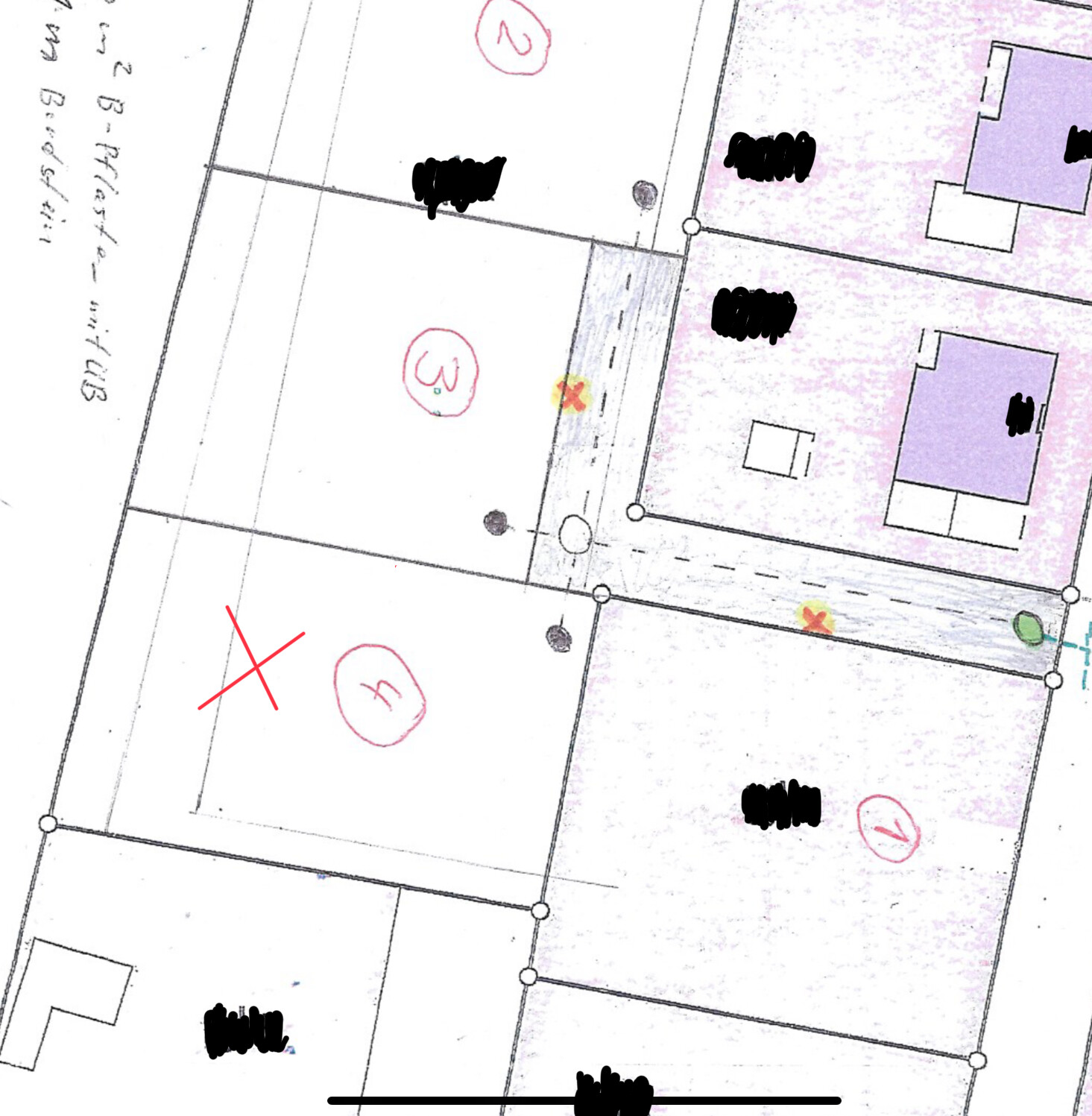
On the site plan we were allocated plot number 4.
More details are included in the notes..
Building Plan / Restrictions
Homeowner Requirements
House Design
Why the design looks like this
We wanted a home that is family-friendly, functional, and suitable for aging in place, while complying with the building plan.
The basic idea: parents live fully on the ground floor, children live upstairs.
We are still optimizing and would appreciate feedback on:
We look forward to your honest feedback!
What would you improve or arrange differently?
Thank you very much in advance for your time and suggestions.
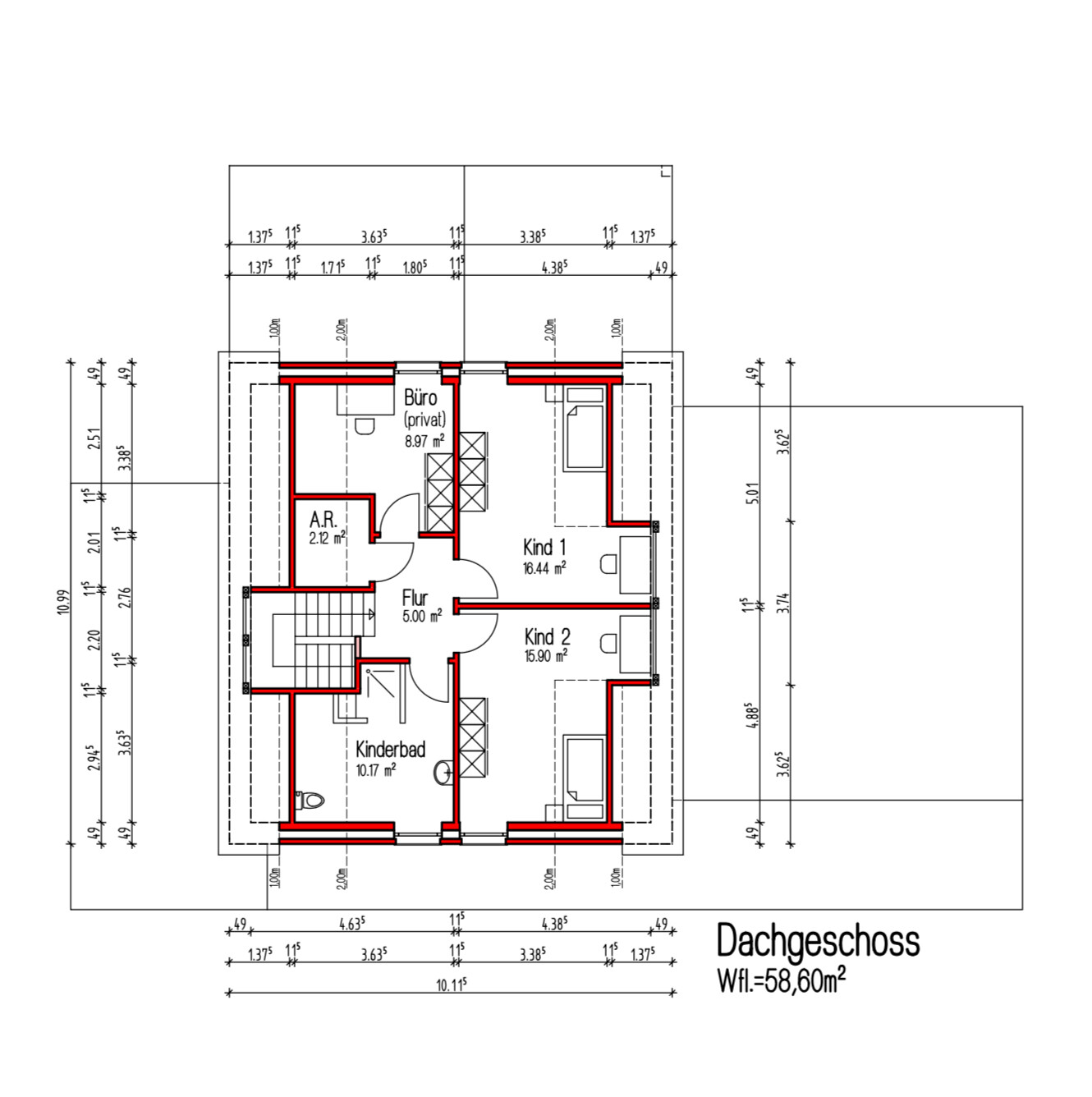
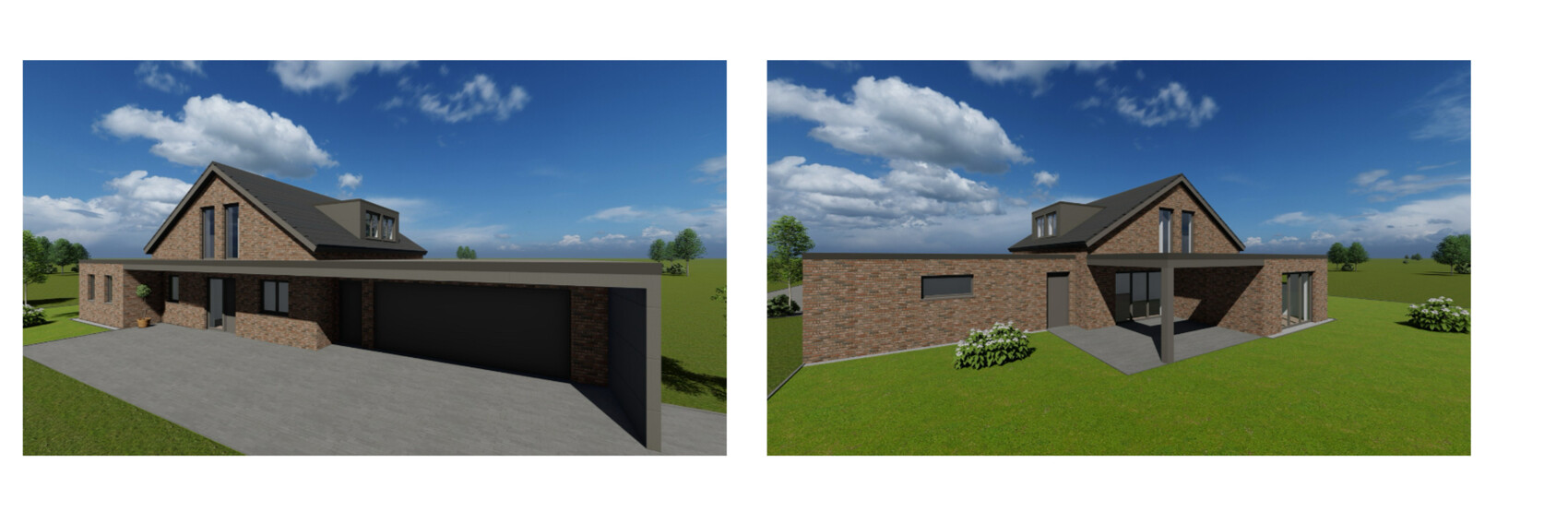
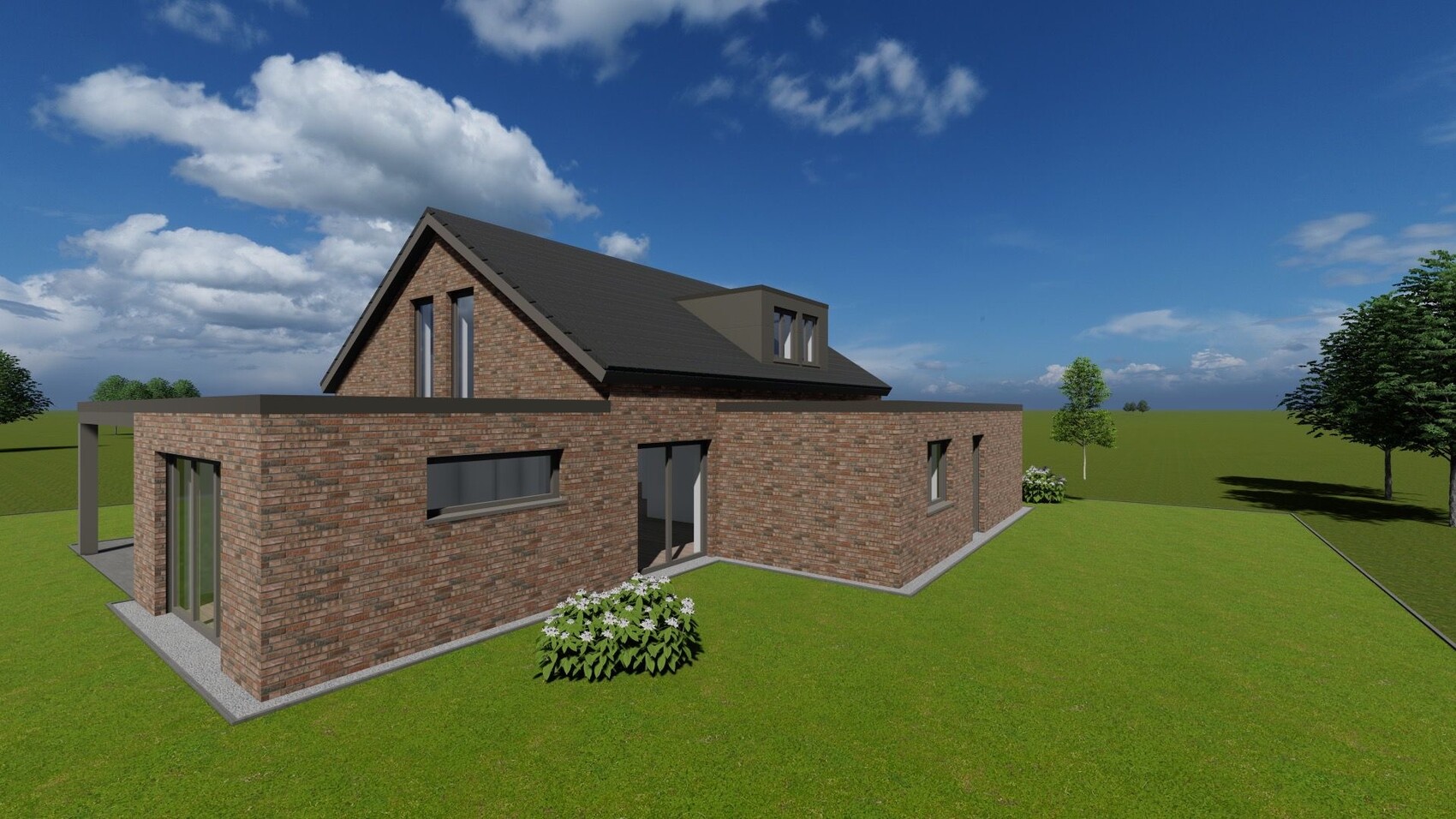
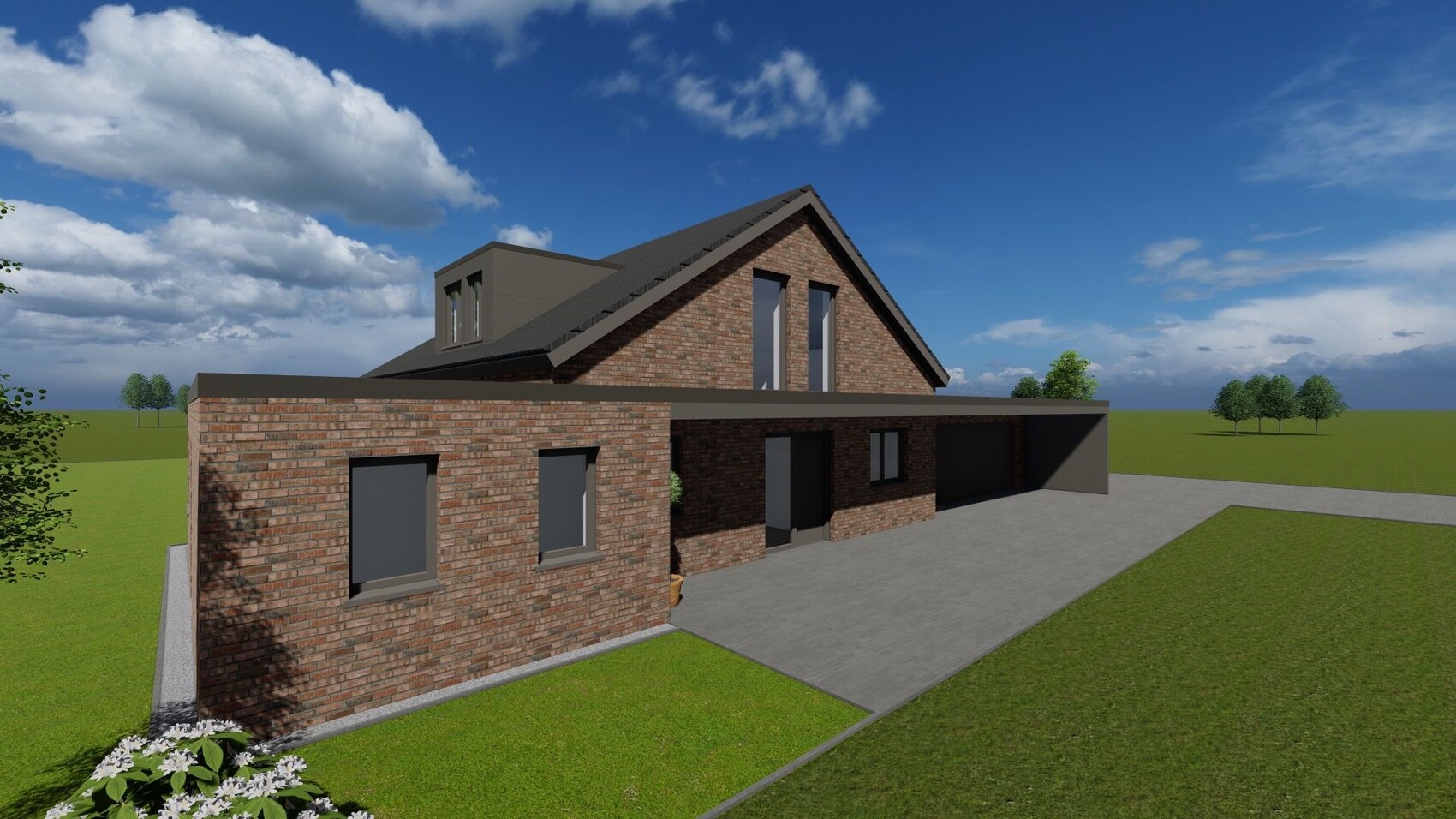
we would like to present our first floor plan draft and kindly ask for your honest feedback.
The house is designed for 2 adults plus potentially 2 children in the future and will be built on a rural plot of land. We are currently in the design phase and welcome all constructive comments and suggestions for improvement.
The plot is a backyard development, which means there are some restrictions. For example, we are not allowed to exceed a length of 7.0 m (23 feet) and an eave height of 3.7 m (12 feet). In addition, the assigned plots are not yet developed, so we will need to build a road access here.
On the site plan we were allocated plot number 4.
More details are included in the notes..
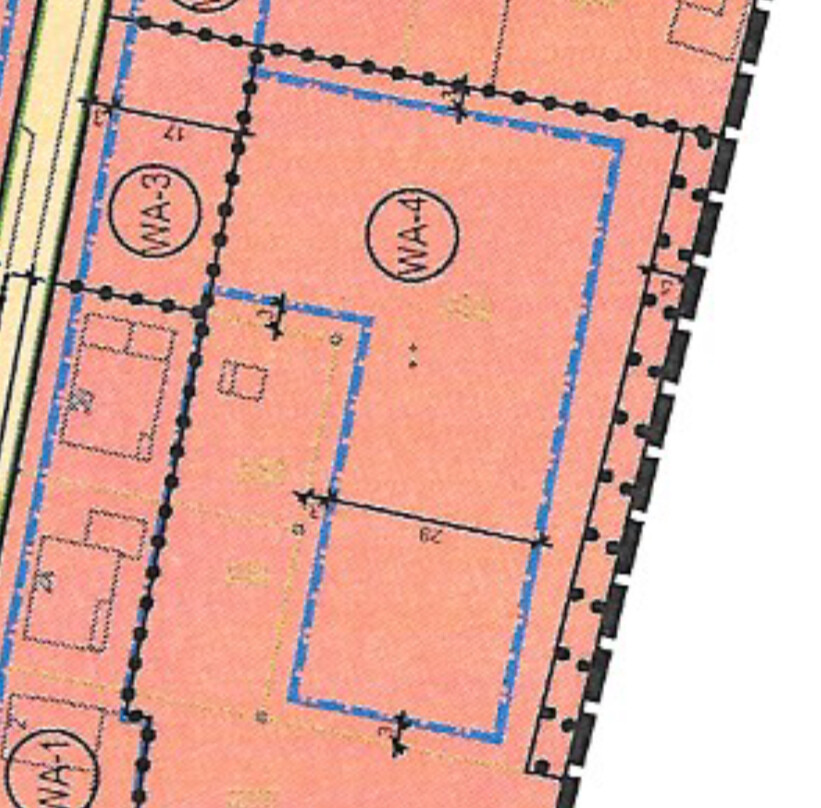
Building Plan / Restrictions
- Plot size: approximately 27.5 m (90 feet) wide × 41 m (135 feet) deep (~1,100 m² (12,000 sq ft))
- Terrain: flat, no slope
- Site coverage ratio (floor area ratio): 0.4
- Floor space index (floor area ratio): 0.4
- Building envelope / setbacks: 3 m (10 feet) boundary setback, house positioned on the right side, garage may be built on the boundary
- Number of floors: 1.5 stories (maximum ridge height 7 m (23 feet), eave height approx. 3.7 m (12 feet))
- Roof type: gable roof, minimum 25° pitch
- Architectural style: modern country house style
- Orientation: south is at the top of the plan
- Maximum heights: 7 m (23 feet) ridge, 3.7 m (12 feet) eave
- Additional requirements: the plot must be accessed via a new road. The style must blend with the neighborhood.
Homeowner Requirements
- Building type: single-family home, 1.5 stories, no basement
- Occupants: 2 adults, later 2 children
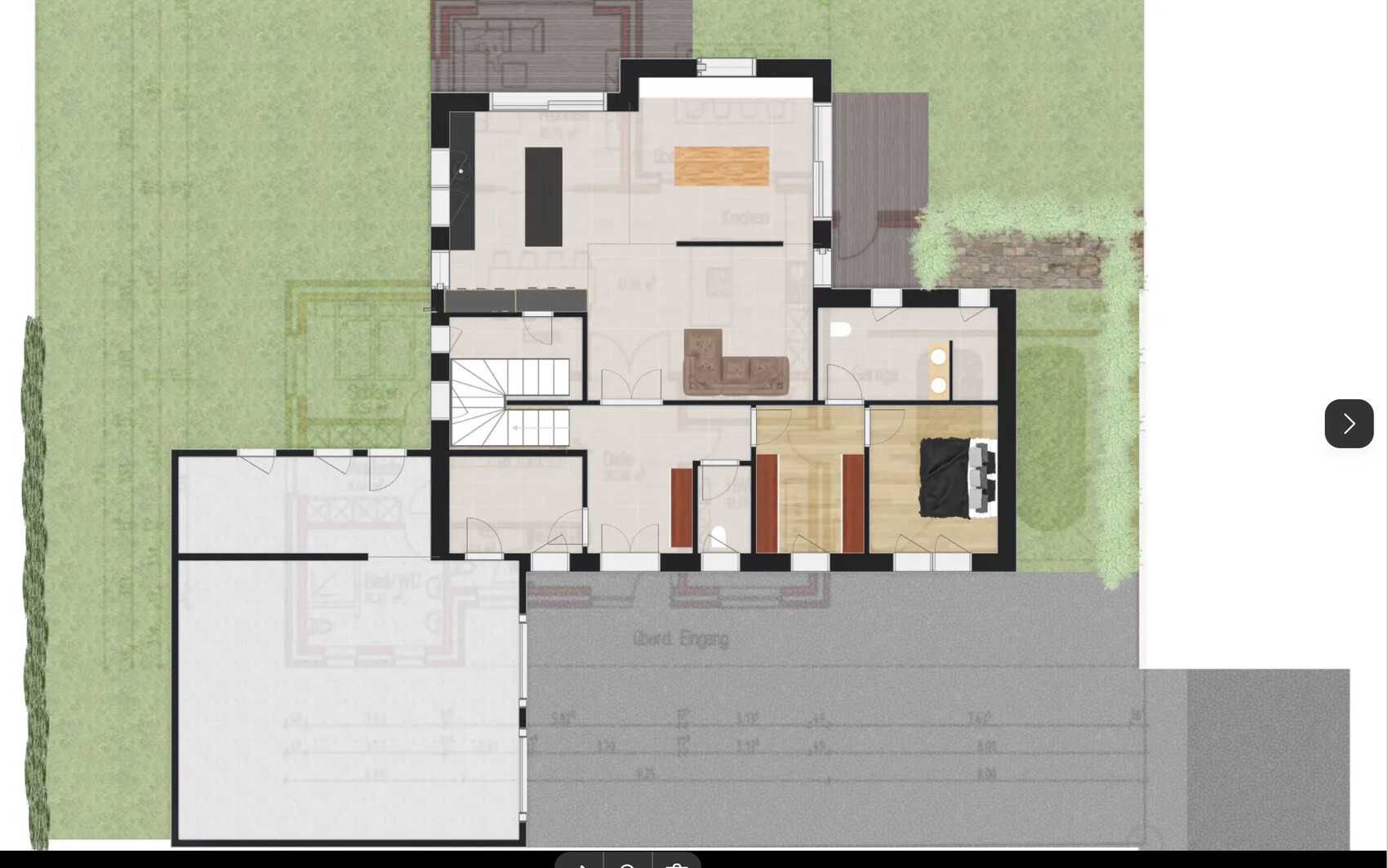
- Ground floor needs: parents’ area fully on the ground floor (bedroom, dressing room, bathroom), living/dining/kitchen area (living area preferably separate), utility room with access to the garage, guest toilet
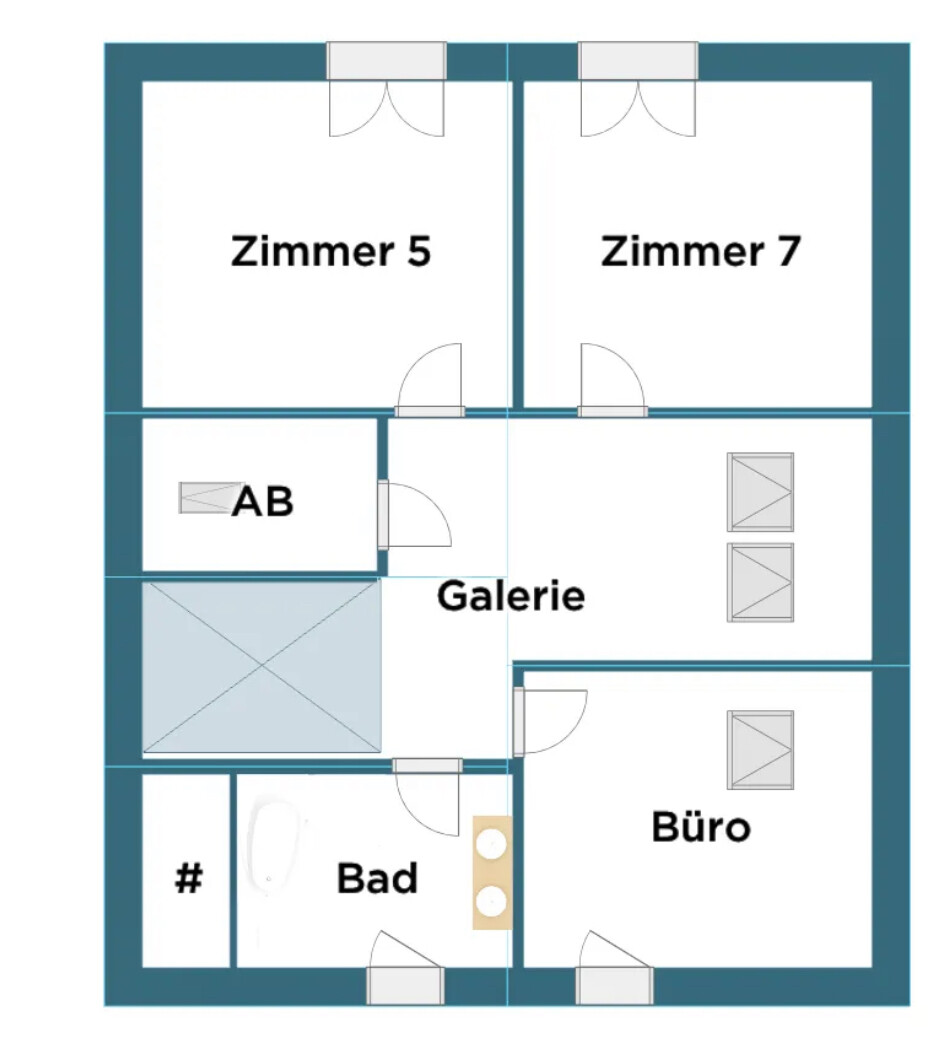
- Upper floor needs: 2 children’s bedrooms, 1 office, 1 bathroom, storage room
- Office: for home office and flexible use
- Guest accommodation: rare (max. 2–3 times per year)
- Architecture: open, welcoming, with clear sightlines
- Construction method: rather conservative-modern (no flat roof, but light materials, clean lines)
- Kitchen: open kitchen with island
- Dining area: spacious, table for 6–8 people
- Fireplace: optional, mainly for design/coziness, probably no
- Music/stereo: no specific plans yet
- Balcony/roof terrace: no
- Garage/carport: double garage, direct access to utility room, cars might be parked under a covered entrance to keep the garage space free since there will be no attic
- Garden: usable garden area, south-facing terrace → I would like to plan a conservatory here for the future or optionally build it right away. Since we will have a south-facing garden with farmland behind, a conservatory is desired as a separated area to be used all year round.
- Special features:
- Smart home planned
- Parents’ area deliberately on the ground floor
- Conservatory desired either in the future or built-in from the start
House Design
- Designed by: architect
- What we particularly like:
- South orientation with bright rooms
- Functional floor plan and parents’ area
- What we don’t like (yet):
- Children’s bathroom upstairs might be too large
- Bedroom too small
- Pantry/storage room has a door to the utility room; maybe reduce utility room size to enlarge pantry
- Children’s bedroom closets block windows and might reduce lighting
- Driveway to garage is not ideal. The garage may need to be moved further back
- Price estimate from architect: not available yet
- Personal price limit (house + fittings): around 500,000 € (approximately), completely self-built, land already purchased
- Heating system: ground source heat pump with borehole, underfloor heating, technical room probably in the garage equipment room
Why the design looks like this
We wanted a home that is family-friendly, functional, and suitable for aging in place, while complying with the building plan.
The basic idea: parents live fully on the ground floor, children live upstairs.
We are still optimizing and would appreciate feedback on:
- Room layout on the ground floor (hallway, sleeping area)
- Living/dining/kitchen area: solution with an adjacent conservatory. Living area preferably separate, so children or adults can use different paths when guests visit.
- Garage size
- Children’s bathroom: size and whether the storage room could be bigger and the bathroom smaller. Possibly separate the toilet from the children’s bathroom?
We look forward to your honest feedback!
What would you improve or arrange differently?
Thank you very much in advance for your time and suggestions.

Steiger schrieb:
I don’t want to call him for every little change I want or if something isn’t quite right. Well, I’ll try to gather in the next days/weeks what should be completely reconsidered and what changes are needed. Good thing we have enough time… First, you should completely scrap the draft. Not because much was wrong with it, but because of one crucial aspect: how it was developed. The architect (or you together with him) jumped into the drawing phase too early. What you have now visually appears as a design due to unnecessarily advanced graphical detailing, but in reality, it only has the quality of a preliminary design. They started full throttle, which jeopardizes the durability of any engine. It’s better to develop a new preliminary design from scratch in clean code rather than patching things up bit by bit. Many clients are impatient and eagerly crave visualizations because their weak spatial imagination desperately needs them. “Modern” architects accommodate this by quickly presenting CAD drawings. However, it is better to start with lists and rough sketches on napkins. Although this tests the patience of non-professionals, sterile instruments are essential for a successful operation. If you began drawing too early, you must not continue that way. Otherwise, even a single mold spore can ruin the next generation of yogurt culture.
Steiger schrieb:
It’s not easy to filter out all ideas—and genuinely good critiques—and present them validly and meaningfully to the architect. The most important maturation phase of a design is the resting period between the LOI (Letter of Intent) phases 2 and 3. At this point, you already face a kind of idea constipation because you have material enough for three houses, but can only build one. Consequently, the ideas covering the extra two houses either have to be peacefully dismissed or they will haunt you throughout the entire planning process.
With the result of phase 2 (the preliminary design according to experienced customs), you have exactly the right foundation to submit a preliminary inquiry to the building authority (building permit/ planning permission) at a low cost and calibrate cost estimates with three masonry versions and three timber versions. Meanwhile, you find out if one of the construction methods is significantly cheaper than the other—hence the term “setting the course.” Additionally, the feedback to question 2 gives a decisive indication of whether the architect should further develop the preliminary design or adapt a proven alternative proposal for the building family.
This ideally six-week resting phase is therefore the smartest investment of the entire planning process. Those who rush into phase 3 and skip the development of the preliminary design lose valuable insights, unknowingly lay the foundation for avoidable trouble, and cause a lot of stress. From my humble perspective as an independent building consultant, this is a very high price to pay for the fast route to 3D drawings.
https://www.instagram.com/11antgmxde/
https://www.linkedin.com/company/bauen-jetzt/
So, here is my sketch. I call it a sketch because I only used your measurements (here: house width) and did not include the other dimensions.
Here are my collected thoughts:
a) I didn’t include the conservatory because I consider it definitely optional. Shame on me, I forgot about it because such a feature has never been part of my new build planning. But if you feel you absolutely need that kind of “ambience,” then it should be integrated into the house design, not added on later.
b) I added the garden last and realized you have 1100 m² (12,000 sq ft). That is clearly a lot of space and I unfortunately overlooked it, and I’m certainly not the only one. This does play a major role in the house location and plot design. The architect squeezed the house into one corner of the plot, and I also followed this layout because of the garage discussion. The result is a very plain and downright dull driveway that couldn’t be uglier.
If I had considered this earlier, I would have planned more openly and not so tightly. For example, if you design a small turning area or similar, you get a courtyard that can really be called a courtyard, and with airy landscaping and a specimen tree by the house, it would fit the desired modern country house style.
In my opinion, it improves the appearance if you use the plot generously. Whether you have 17 or 20 meters (55 or 65 feet) of depth at the back doesn’t matter. But if you also allow a looser layout at the front with an extra 3 meters (10 feet), you can actually plan a detached house that you can walk all the way around without boundary buildings.
Conclusion: I wouldn’t plan it this way again. And if this wasn’t about the north garage and a west-facing opening, I probably would have hit the delete button right away.
c) House size: as already mentioned, I used your width. In my view, and considering cost, the house could easily be reduced in width by half a meter (1.5 feet) and in length by one meter (3 feet), especially in the open-plan living area.
d) The term “many self-performed tasks” always quiets critical voices when it comes to house costs.
Unfortunately, this is a classic misconception: you think you don’t have to pay for labor, but a friend who is a tradesperson is expected to be on call for weeks after regular work hours. Usually, that doesn’t work. If you said, yes, my partner and I are taking a sabbatical and will do almost everything ourselves, it could work. But it won’t if you rely on others who have a 40-hour week with their own employer. Even self-employed tradespeople need to earn their living. Paying clients take priority.
Just some thoughts to consider.
Here is the draft:
ypg schrieb:
If you position it as a boundary development to the north, you get a slightly larger driveway and roughly one meter (3 feet) less garden space to the south, but honestly, it’s definitely worth giving that up to have a bright, light-filled house that can even open to the west. West-facing is much more important in summer, while south-facing matters for interior spaces during the colder months. Also, a garden feels bigger when you can view it diagonally.
Here are my collected thoughts:
a) I didn’t include the conservatory because I consider it definitely optional. Shame on me, I forgot about it because such a feature has never been part of my new build planning. But if you feel you absolutely need that kind of “ambience,” then it should be integrated into the house design, not added on later.
b) I added the garden last and realized you have 1100 m² (12,000 sq ft). That is clearly a lot of space and I unfortunately overlooked it, and I’m certainly not the only one. This does play a major role in the house location and plot design. The architect squeezed the house into one corner of the plot, and I also followed this layout because of the garage discussion. The result is a very plain and downright dull driveway that couldn’t be uglier.
If I had considered this earlier, I would have planned more openly and not so tightly. For example, if you design a small turning area or similar, you get a courtyard that can really be called a courtyard, and with airy landscaping and a specimen tree by the house, it would fit the desired modern country house style.
In my opinion, it improves the appearance if you use the plot generously. Whether you have 17 or 20 meters (55 or 65 feet) of depth at the back doesn’t matter. But if you also allow a looser layout at the front with an extra 3 meters (10 feet), you can actually plan a detached house that you can walk all the way around without boundary buildings.
Conclusion: I wouldn’t plan it this way again. And if this wasn’t about the north garage and a west-facing opening, I probably would have hit the delete button right away.
c) House size: as already mentioned, I used your width. In my view, and considering cost, the house could easily be reduced in width by half a meter (1.5 feet) and in length by one meter (3 feet), especially in the open-plan living area.
d) The term “many self-performed tasks” always quiets critical voices when it comes to house costs.
Steiger schrieb:
Personal price limit (house + finishes): about 500,000 €,
Steiger schrieb:
To answer your question: We won’t be doing masonry, screed, etc. ourselves, but we have friends and family with trade skills who can take on almost all tasks related to the build. We will be helpers on site. So, we will be able to do almost the entire build without a company.
Unfortunately, this is a classic misconception: you think you don’t have to pay for labor, but a friend who is a tradesperson is expected to be on call for weeks after regular work hours. Usually, that doesn’t work. If you said, yes, my partner and I are taking a sabbatical and will do almost everything ourselves, it could work. But it won’t if you rely on others who have a 40-hour week with their own employer. Even self-employed tradespeople need to earn their living. Paying clients take priority.
Just some thoughts to consider.
Here is the draft:
@ypg Thank you very much!
a) Maybe my thinking is a bit fixed. I will reconsider the conservatory concept.
b) Good assessment. I like the idea of the rotunda. Until now, my thought was to position the house as far forward as possible to have as much garden space as possible at the back. I tend to think a front garden isn’t really an advantage but just extra maintenance. Also, in backyard developments you usually hardly see the front garden anyway, so it would mostly just be a feature for us and our guests.
If you say you wouldn’t plan it that way again -> why? What would change for you? Would you place the house further back and keep the garage on the west side?
c) noted
d) your thoughts may be valid. However, in our village this still works quite well when I look at my teammates, friends, and siblings who have already built. If there are still many willing tradespeople in the village whom you know well and who work on site Monday to Thursday, then they also have time on Fridays and Saturdays to help friends with construction. In my opinion, this is the only way to build at these prices. Please don’t get too hung up on my price estimate. It was just a rough figure... where we live, everyone still helps each other.
a) Maybe my thinking is a bit fixed. I will reconsider the conservatory concept.
b) Good assessment. I like the idea of the rotunda. Until now, my thought was to position the house as far forward as possible to have as much garden space as possible at the back. I tend to think a front garden isn’t really an advantage but just extra maintenance. Also, in backyard developments you usually hardly see the front garden anyway, so it would mostly just be a feature for us and our guests.
If you say you wouldn’t plan it that way again -> why? What would change for you? Would you place the house further back and keep the garage on the west side?
c) noted
d) your thoughts may be valid. However, in our village this still works quite well when I look at my teammates, friends, and siblings who have already built. If there are still many willing tradespeople in the village whom you know well and who work on site Monday to Thursday, then they also have time on Fridays and Saturdays to help friends with construction. In my opinion, this is the only way to build at these prices. Please don’t get too hung up on my price estimate. It was just a rough figure... where we live, everyone still helps each other.
ypg schrieb:
So, here is my sketch. I call it a sketch because I just copied your dimensions (in this case: house width) and left out the measurements. At first glance, I actually find your sketch and floor plan quite good.
Similar topics