
ᐅ Renovation of an old building from energy rating H to a KfW 55 EE energy-efficient house
Created on: 7 Sep 2025 12:27
T
TeldorF
Hello everyone,
I’m new to the forum and have a question regarding the following topic:
My wife and I want to buy a semi-detached house, renovate it, and then rent it out. Here are the key details about the property:
Current State:
- Semi-detached house, built in 1956. Classified as a Worst Performing Building
- Energy demand according to the energy certificate = 344 kWh/m²*a
- Living area on ground floor and upper floor = 110 m² (1184 ft²). Ground and upper floors are two separate residential units.
- Usable area according to the energy certificate: 208 m² (2240 ft²). Plot area 397 m² (4273 ft²)
- Basement, ground floor, upper floor, and attic— all basic standard
- Basement likely uninsulated but dry
- Ground and upper floors are finished. The exterior walls appear to have no insulation inside or outside. Originally built with pumice stone or hollow concrete blocks. The exterior wall thickness is about 30 cm (12 inches). Plastered on the outside.
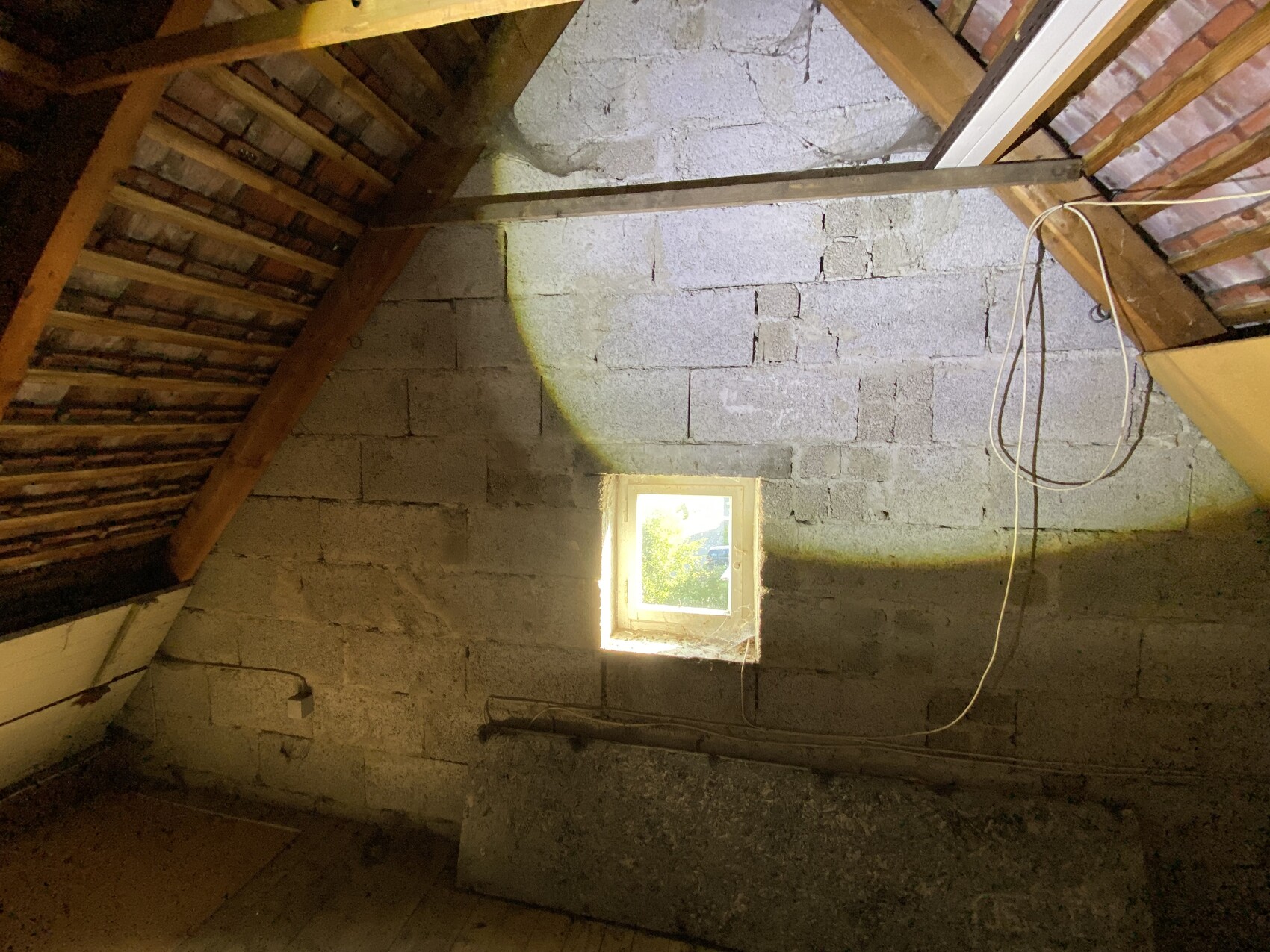
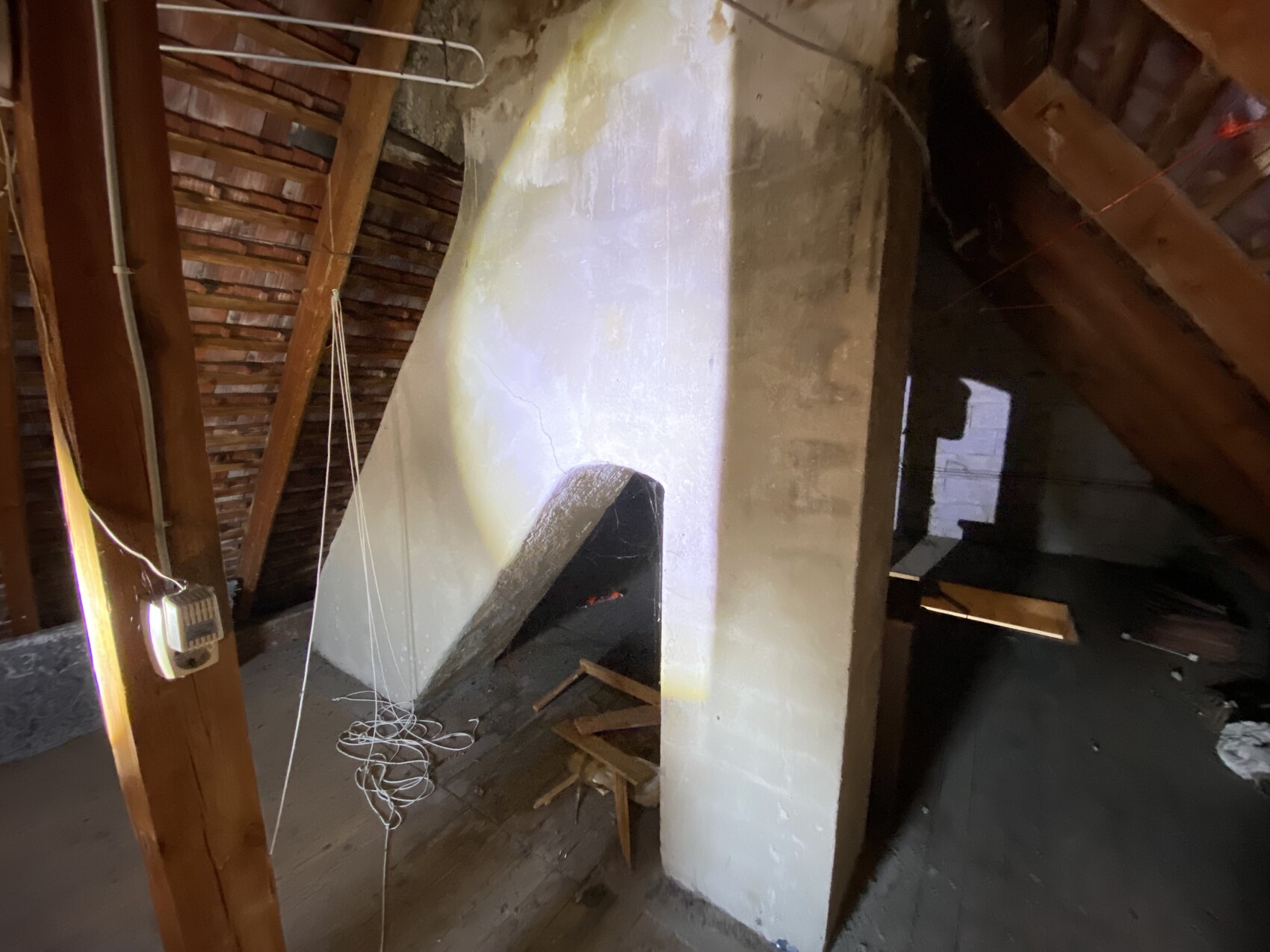
- Attic is unfinished. The gable interior shows the bare pumice stones. See attached picture.
- Roof is not insulated. Rafters and tiles are visible. Rafter thickness approx. 13 cm (5 inches).
- Heating is a floor-level gas heating system, built in 1980.
- Windows are wooden, double-glazed. Need to be replaced.
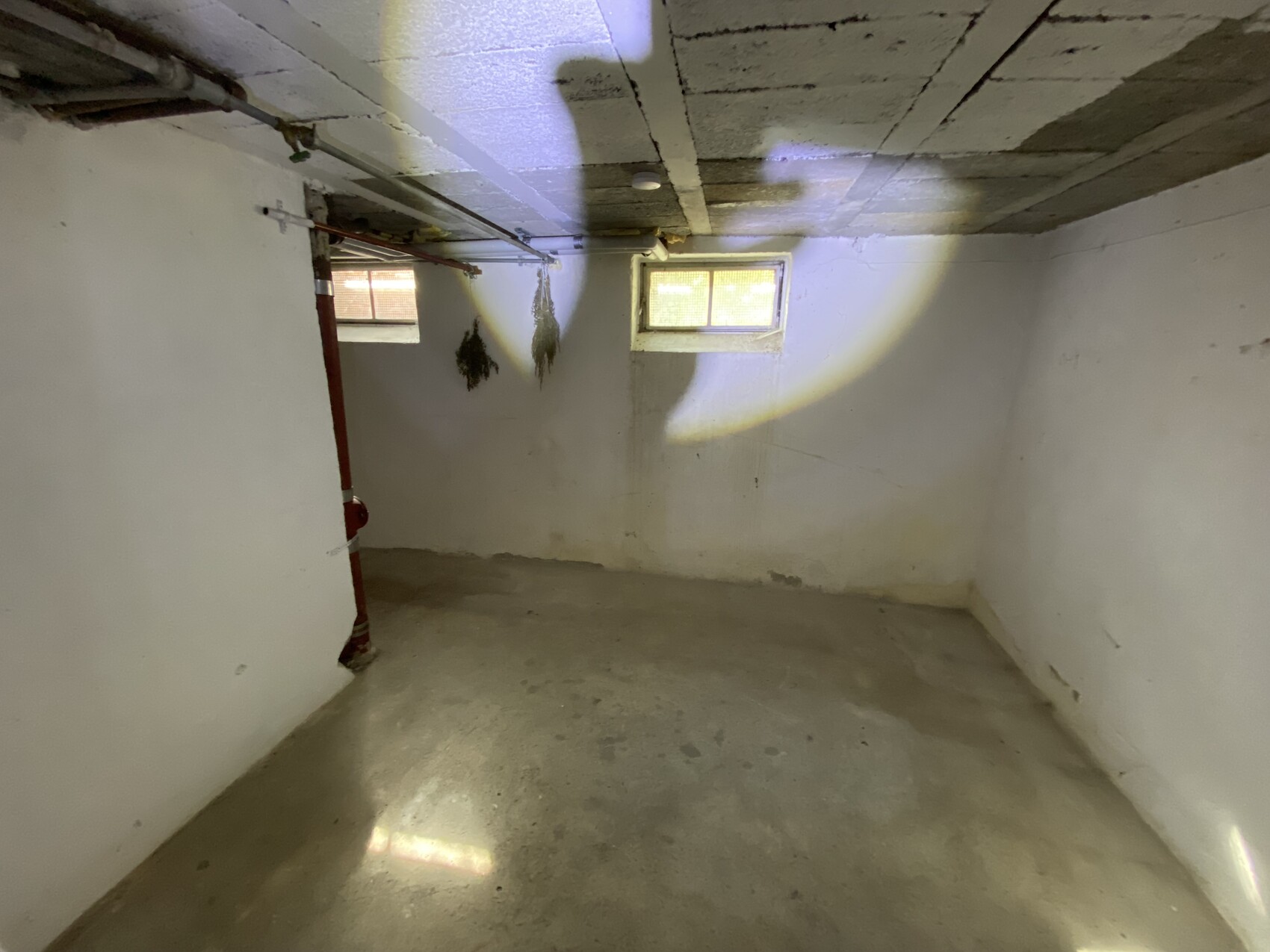
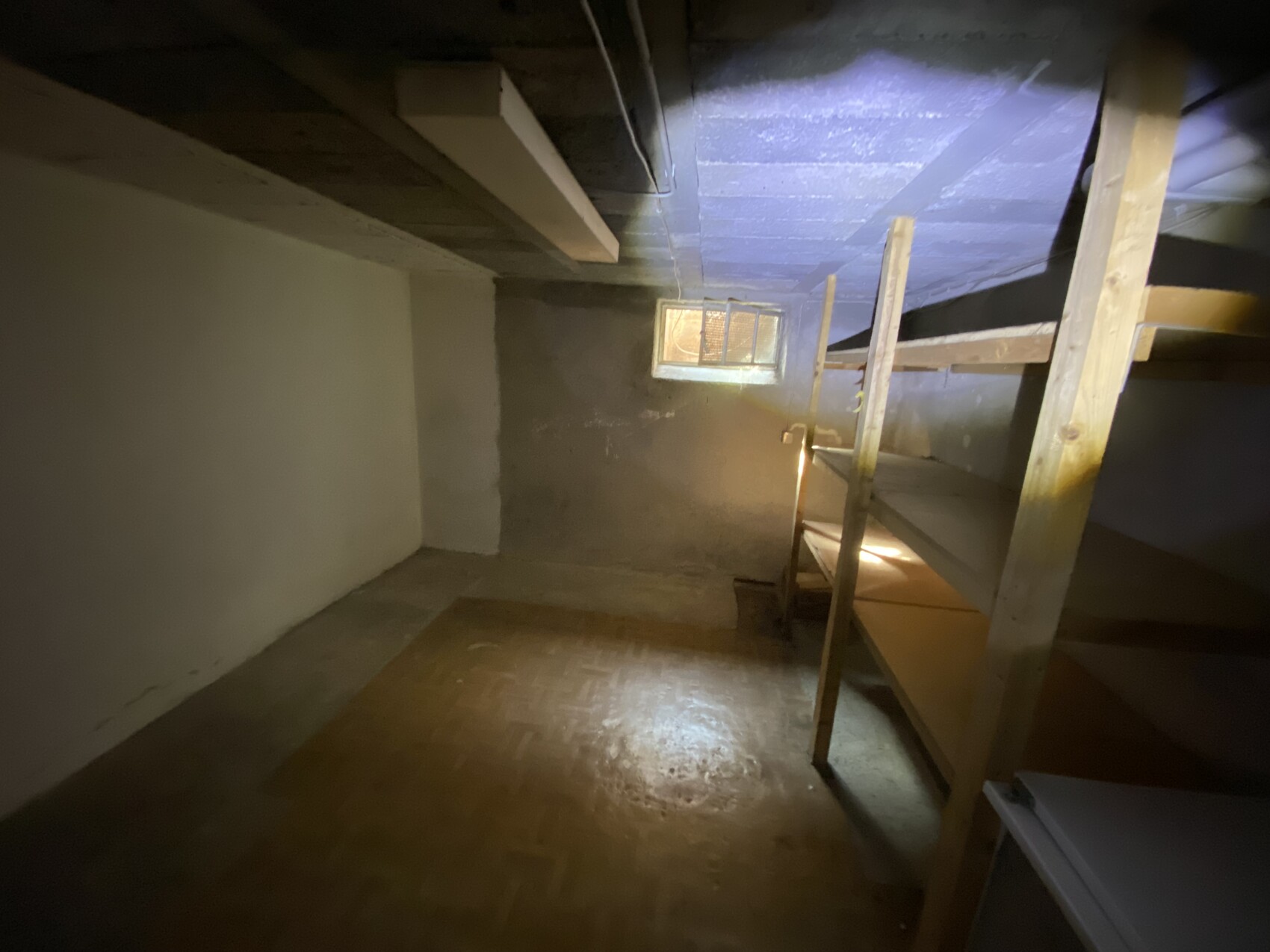
- Basement ceiling is a reinforced ceiling or concrete slab (see attached picture). The ceiling above the ground floor is probably a wooden beam ceiling but it’s not visible and the real estate agent did not know.
That’s the current situation.
Planned State:
The plan is to renovate the house using a KfW loan 261, aiming to achieve KfW 55 EE standard.
The following measures are planned:
- Full thermal insulation system (ETICS/External Thermal Insulation Composite System) using expanded polystyrene (EPS) on the facade. Thickness will be based on the calculation results.
- Replace windows with triple glazing (currently double glazed).
- Roof insulation from inside: cellulose insulation between the rafters and wood fiber insulation on the outside. Thicknesses depend on calculation results.
- Insulate the basement ceiling from below. Thickness according to calculations, but limited due to the basement’s clear head height of only about 1.90 m (6 ft 3 in).
- New heating system: air-to-water heat pump with radiators. Underfloor heating would likely reduce ceiling height too much because of the build-up required.
- The ground and upper floors are separate apartments and will remain so. The attic will only be added to the upper-floor apartment.
- If necessary, a small photovoltaic system may be installed to reach the renewable energy requirements.
That’s all for the planned state. I hope I haven’t left out any important information, but if so, please feel free to ask.
My question is whether, with the conditions above, it is possible to achieve KfW 55 EE standard for this house. I see a potential problem with the shared wall to the neighboring semi-detached house, as I cannot insulate this wall externally with an ETICS. Has anyone here had experience renovating a semi-detached house and can provide their assessment?
That would be great. Thank you very much in advance. If any information is missing, please just ask.
Best regards
Florian
I’m new to the forum and have a question regarding the following topic:
My wife and I want to buy a semi-detached house, renovate it, and then rent it out. Here are the key details about the property:
Current State:
- Semi-detached house, built in 1956. Classified as a Worst Performing Building
- Energy demand according to the energy certificate = 344 kWh/m²*a
- Living area on ground floor and upper floor = 110 m² (1184 ft²). Ground and upper floors are two separate residential units.
- Usable area according to the energy certificate: 208 m² (2240 ft²). Plot area 397 m² (4273 ft²)
- Basement, ground floor, upper floor, and attic— all basic standard
- Basement likely uninsulated but dry
- Ground and upper floors are finished. The exterior walls appear to have no insulation inside or outside. Originally built with pumice stone or hollow concrete blocks. The exterior wall thickness is about 30 cm (12 inches). Plastered on the outside.
- Attic is unfinished. The gable interior shows the bare pumice stones. See attached picture.
- Roof is not insulated. Rafters and tiles are visible. Rafter thickness approx. 13 cm (5 inches).
- Heating is a floor-level gas heating system, built in 1980.
- Windows are wooden, double-glazed. Need to be replaced.
- Basement ceiling is a reinforced ceiling or concrete slab (see attached picture). The ceiling above the ground floor is probably a wooden beam ceiling but it’s not visible and the real estate agent did not know.
That’s the current situation.
Planned State:
The plan is to renovate the house using a KfW loan 261, aiming to achieve KfW 55 EE standard.
The following measures are planned:
- Full thermal insulation system (ETICS/External Thermal Insulation Composite System) using expanded polystyrene (EPS) on the facade. Thickness will be based on the calculation results.
- Replace windows with triple glazing (currently double glazed).
- Roof insulation from inside: cellulose insulation between the rafters and wood fiber insulation on the outside. Thicknesses depend on calculation results.
- Insulate the basement ceiling from below. Thickness according to calculations, but limited due to the basement’s clear head height of only about 1.90 m (6 ft 3 in).
- New heating system: air-to-water heat pump with radiators. Underfloor heating would likely reduce ceiling height too much because of the build-up required.
- The ground and upper floors are separate apartments and will remain so. The attic will only be added to the upper-floor apartment.
- If necessary, a small photovoltaic system may be installed to reach the renewable energy requirements.
That’s all for the planned state. I hope I haven’t left out any important information, but if so, please feel free to ask.
My question is whether, with the conditions above, it is possible to achieve KfW 55 EE standard for this house. I see a potential problem with the shared wall to the neighboring semi-detached house, as I cannot insulate this wall externally with an ETICS. Has anyone here had experience renovating a semi-detached house and can provide their assessment?
That would be great. Thank you very much in advance. If any information is missing, please just ask.
Best regards
Florian
A brief clarification regarding the upper floor apartment, since you mentioned it is a top-floor apartment without a balcony. The upper floor apartment would later be spread over two levels, the upper floor and the attic, connected by a staircase. The balcony is located on the upper floor, and the attic is finished living space. Larger window elements would be installed in the attic later to ensure good natural lighting.
N
nordanney7 Sep 2025 16:08TeldorF schrieb:
So, for the small ground floor apartment with 55 m² (590 ft²), the potential target group would be couples with up to one child,No, that is not the target group. The size is suitable for singles. TeldorF schrieb:
The 90m² (970 ft²) apartment with a balcony would then be more for small families with up to 2 children,That is also not the target group.TeldorF schrieb:
So for the small ground floor apartment with 55 m² (590 sq ft), the possible target group would be couples with up to one child, singles, or active older tenants.I see an 8 m² (86 sq ft) kitchen and a 15 m² (161 sq ft) living room. This serves as a passage room to the bedroom. Then there’s a 9 m² (97 sq ft) room, which you refer to as a children’s room.TeldorF schrieb:
Most likely target group would be couples.Exactly. No families, unless you have a severe housing shortage like in a big city.TeldorF schrieb:
So probably a higher turnover.I actually see it as a transitional apartment. Maybe an older person would appreciate the garden, but a hardworking young couple climbing the career ladder would probably feel less comfortable there. The living room of 15 m² (161 sq ft) is outdated. The doorway as a passage restricts furniture arrangement and also reduces privacy.
But then ask yourself, who as a single person would pay over €1000 (about $1100) cold rent?
TeldorF schrieb:
The upper floor apartment has a bathroom, kitchen, living room, master bedroom, a small child’s bedroom, and in the attic there would be another large room of about 30–35 m² (320–377 sq ft).Look, you’re already reducing the square meters a bit. The upper floor is partly in the roof space. Also, there is the living area calculation according to DIN standards. How much of the attic has a height over 150 cm (59 inches)? Maybe 3 or 4 meters (10 to 13 feet) wide?
How is the attic accessed? Where would the staircase be? Above the existing stairs? Or added in the hallway?
For the room sizes, I’ll make a screenshot of the upper floor (with sloping ceilings).
And you come up with a family with two children...
For us (Hamburg metropolitan area), the attic would be nothing more than a bonus on top, to make the marketing more attractive. That’s called a maisonette apartment.
And yes, 80 m² (860 sq ft) or 90 m² (970 sq ft) sounds nice in theory, but I still see it more as a single or a couple passing through.
TeldorF schrieb:
Do you think the target groups I mentioned are unlikely tenants?Think it over. I was once a single person 35 years ago, but I had a 24 m² (258 sq ft) living room. With 12 m² (129 sq ft) and a 5 m² (54 sq ft) kitchen, you might want to reconsider.TeldorF schrieb:
Assumed rental price for fully renovated apartments at the end of 2026: 14 €/m² (1.30 $/sq ft).Okay, when I search for rental apartments in your area, there are fully renovated and modernized apartments with about 10–11 €/m² (0.93–1.02 $/sq ft) cold rent. The 14 €/m² (1.30 $/sq ft) is more typical for new build apartments with a premium look. I can’t comment on the location.
I think you might be overestimating!
Or do you and your wife want to live in one of these apartments?
A
ajokr20257 Sep 2025 16:34TeldorF schrieb:
That's exactly the point. I initially thought that the room behind the partition wall between the buildings should count as heated. However, the energy consultant said that it's not that simple and that he would need to calculate quite a few thermal bridges, which might make meeting the KfW 55 standard difficult. No, the room behind the partition wall must be considered unheated. This is because the other half is owned by someone who overextended themselves with renovation costs, and whose spouse subsequently left them. That half then remains unoccupied for years until the foreclosure and subsequent renovation are complete.
Therefore, according to DIN EN 12831, only your own dwelling unit is regarded as heated. This makes things even more complicated when you have two residential units (2RU) on your side. For a property that is owner-occupied and self-financed, it wouldn't be such an issue, but KfW pays much closer attention when it comes to their loans.
ypg schrieb:
Look, you’re already lowering the square meters somewhat.Yes, that’s true, I am lowering them because I’m not exactly sure how far I can extend the interior insulation from the roof inward. I haven’t measured the heights precisely to calculate it exactly. But yes, it’s possible I’m making this attic space look better on paper than it really is. Currently, access is through a floor hatch in the stairwell. I would have closed that off and built a staircase leading up from the living room on the upper floor. I measured that and it should work. Unfortunately, there isn’t enough space in the hallway.ypg schrieb:
I see an 8 sqm kitchen and a 15 sqm living room. The living room serves as a walk-through room to the bedroom. Then there is a 9 sqm room, which you refer to as a child’s room.I would change the room layout. Swap the kitchen and bathroom. Remove the partition wall to the living room so that the kitchen is open to the living room. The living room is currently a walk-through room, yes. I haven’t come up with a clever solution to change that yet. Moving the hallway only makes the “child’s room” even smaller.No, we don’t actually want to live in one of the apartments. This is really just intended as a form of retirement provision.
The property has been on the market for quite some time now, and probably no one really wants to take it on because of the costs and the harder-to-find target group.
ajokr2025 schrieb:
No, the room behind the separating wall between the apartments must be considered unheated. Because the other half is being bought by someone who got in over their head with the renovation costs, and whose partner then left them. So that half stands empty for years until the foreclosure and subsequent renovation is completed.
That’s why, according to DIN EN 12831, only your own residential unit is considered heated. This makes it even more difficult when your half contains two dwelling units. For a self-used and self-financed property, it doesn’t really matter, but the state development bank (KfW) looks more closely when granting their loans.Great, thanks to you as well for the information.Thanks all for the valuable input! Looks like I’ll really have to think this over more or negotiate the purchase price down to half :p
N
nordanney7 Sep 2025 17:29TeldorF schrieb:
The property has been on the market for a while now, and probably no one is really interested because of the costs and the more limited target group. Costs: You want to convert the attic (building permit / planning permission required = architect fees), change walls and floor plans. Since you also have two separate apartments with everything included, I would actually advise you to carefully consider the costs. I have no idea what you want to invest in energy efficiency, but the more you add, the more expensive it will get.
Similar topics