
ᐅ Renovation of an old building from energy rating H to a KfW 55 EE energy-efficient house
Created on: 7 Sep 2025 12:27
T
TeldorFHello everyone,
I’m new to the forum and have a question regarding the following topic:
My wife and I want to buy a semi-detached house, renovate it, and then rent it out. Here are the key details about the property:
Current State:
- Semi-detached house, built in 1956. Classified as a Worst Performing Building
- Energy demand according to the energy certificate = 344 kWh/m²*a
- Living area on ground floor and upper floor = 110 m² (1184 ft²). Ground and upper floors are two separate residential units.
- Usable area according to the energy certificate: 208 m² (2240 ft²). Plot area 397 m² (4273 ft²)
- Basement, ground floor, upper floor, and attic— all basic standard
- Basement likely uninsulated but dry
- Ground and upper floors are finished. The exterior walls appear to have no insulation inside or outside. Originally built with pumice stone or hollow concrete blocks. The exterior wall thickness is about 30 cm (12 inches). Plastered on the outside.
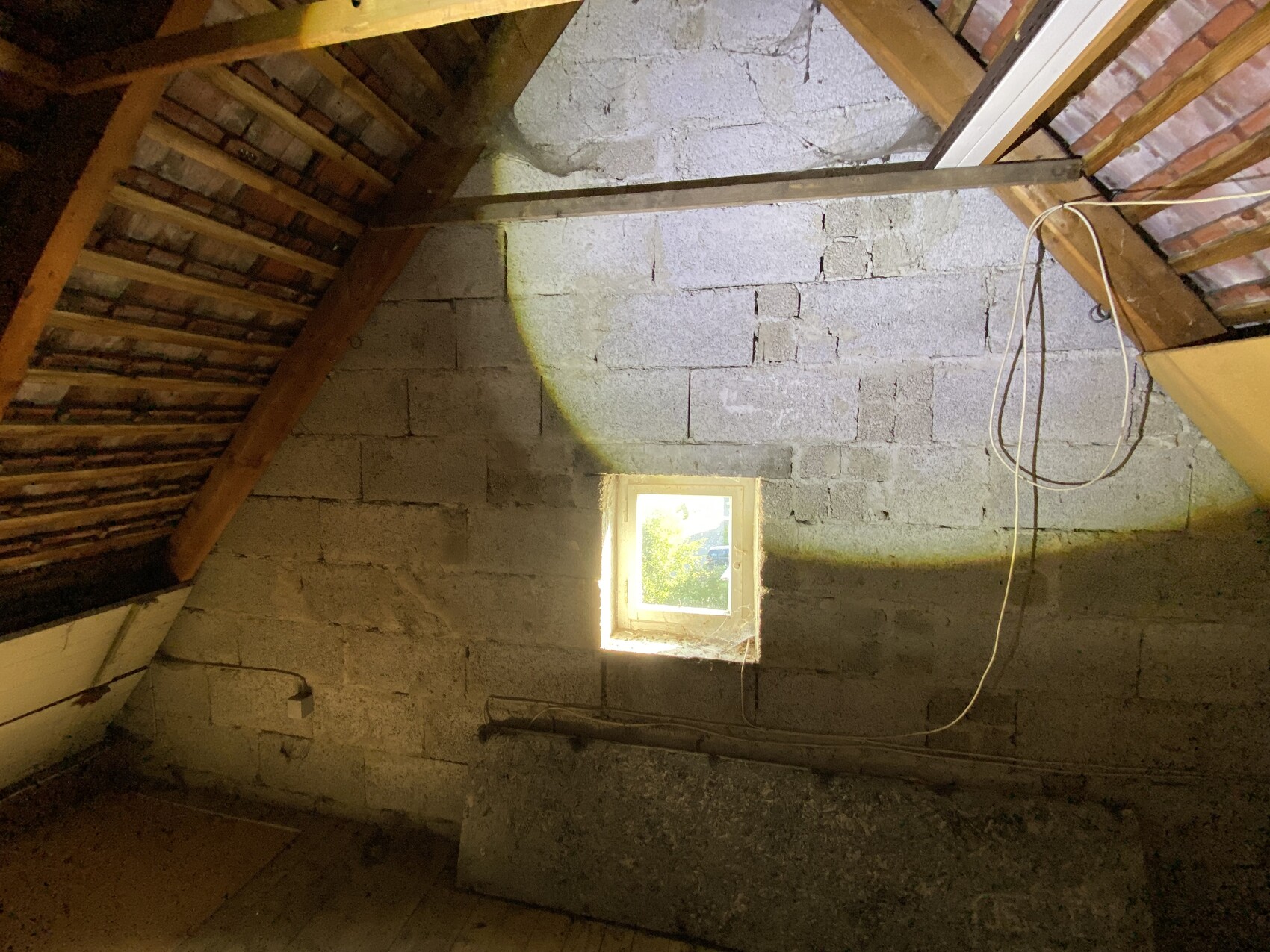
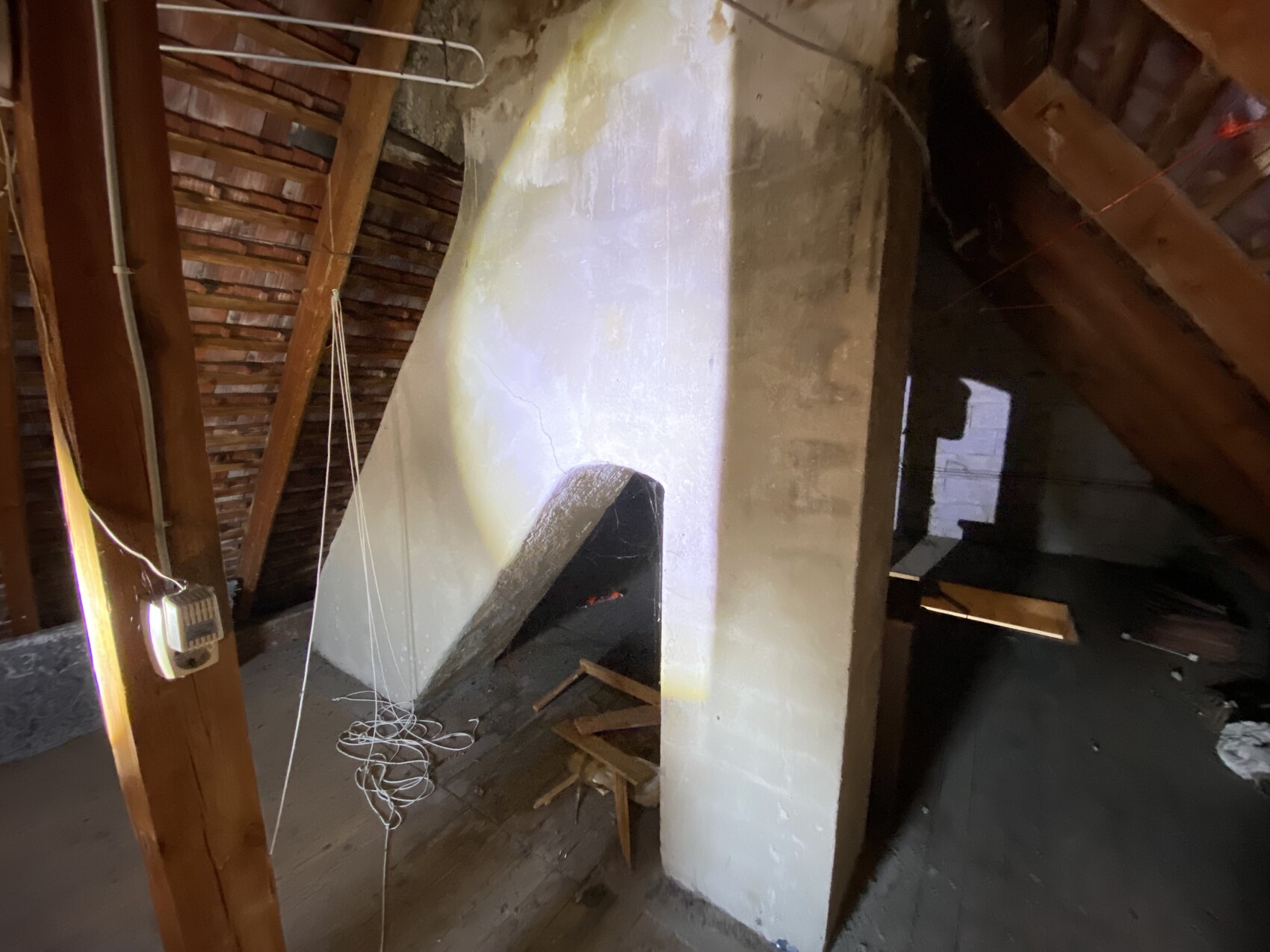
- Attic is unfinished. The gable interior shows the bare pumice stones. See attached picture.
- Roof is not insulated. Rafters and tiles are visible. Rafter thickness approx. 13 cm (5 inches).
- Heating is a floor-level gas heating system, built in 1980.
- Windows are wooden, double-glazed. Need to be replaced.
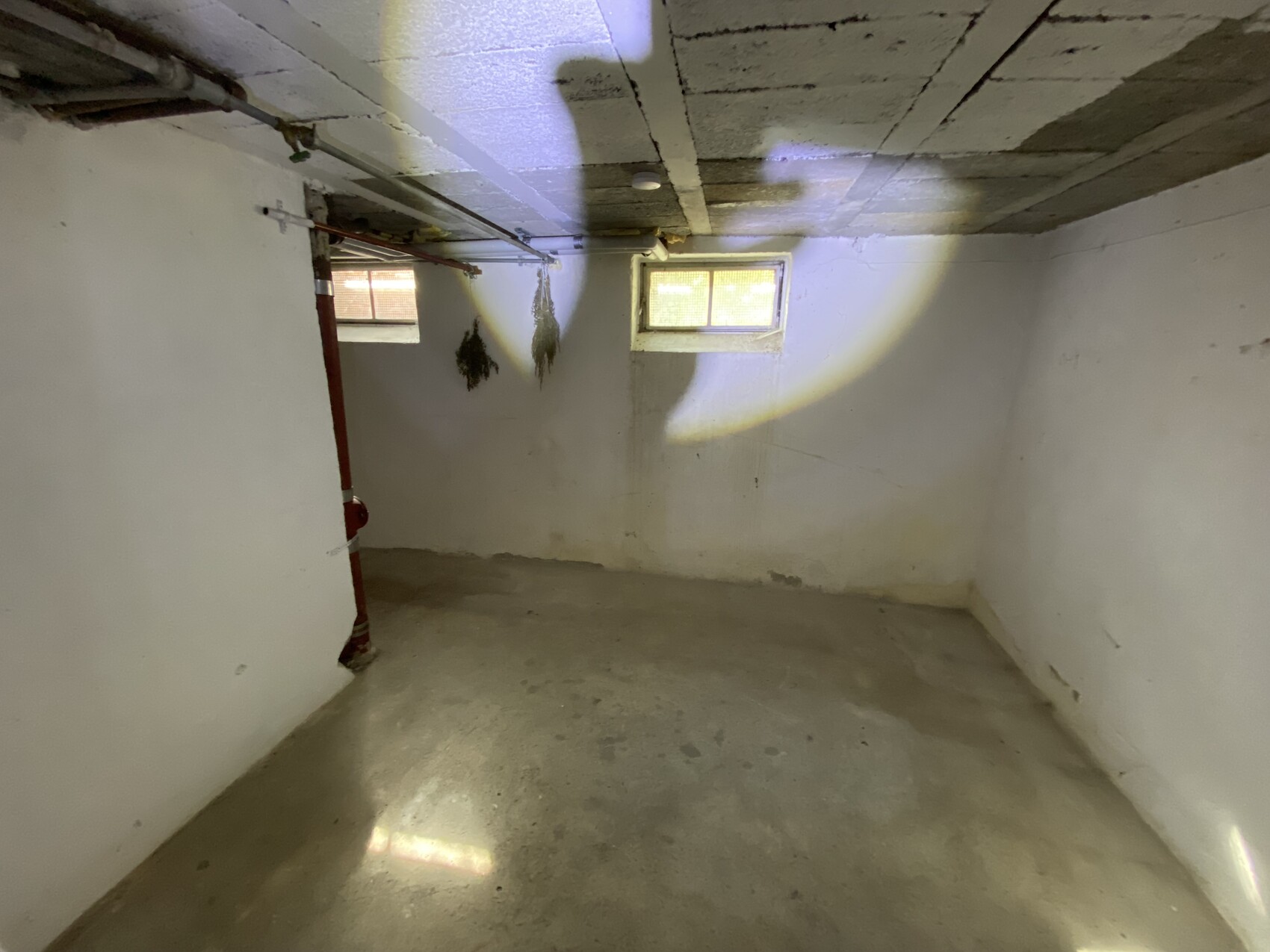
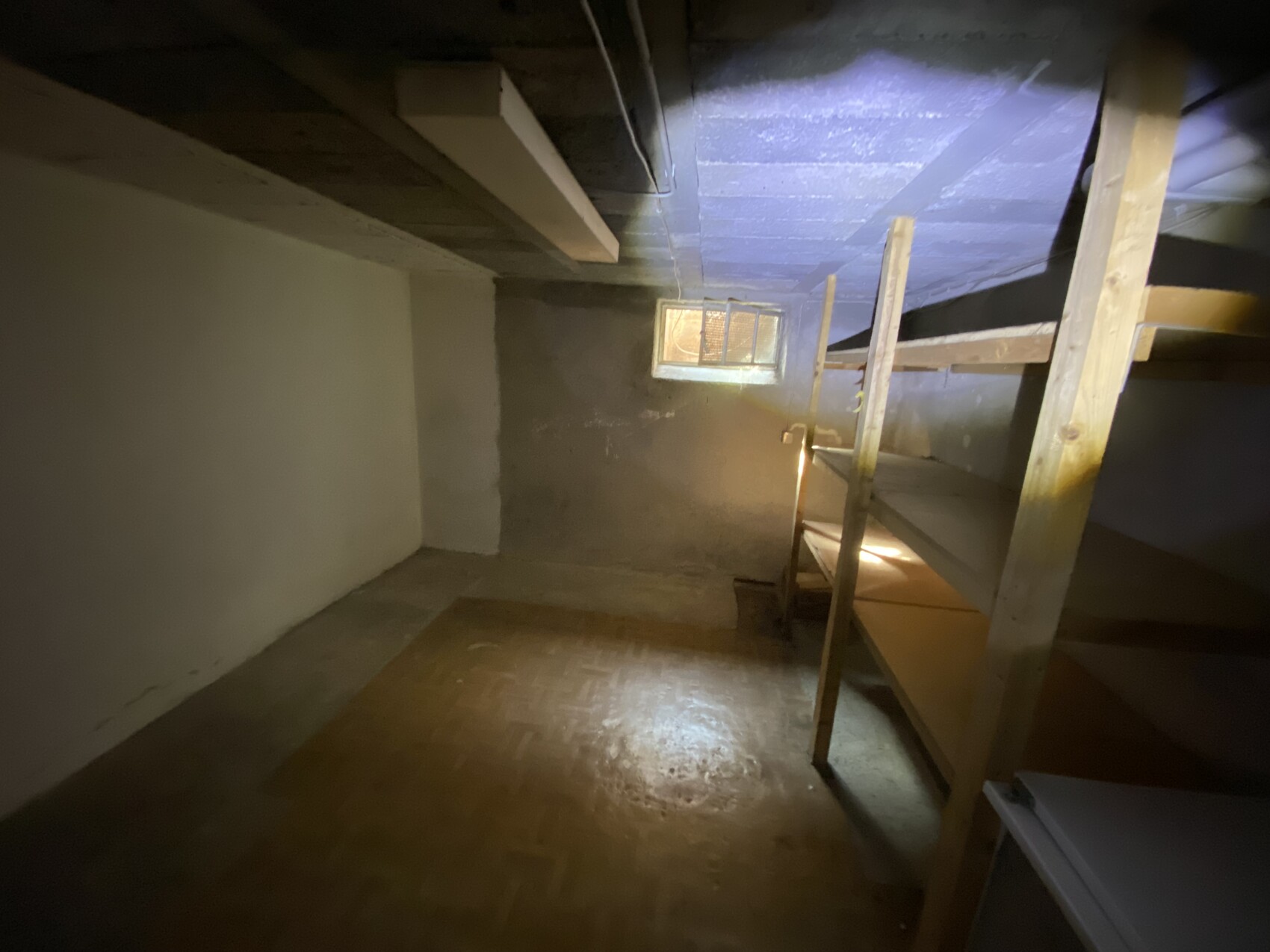
- Basement ceiling is a reinforced ceiling or concrete slab (see attached picture). The ceiling above the ground floor is probably a wooden beam ceiling but it’s not visible and the real estate agent did not know.
That’s the current situation.
Planned State:
The plan is to renovate the house using a KfW loan 261, aiming to achieve KfW 55 EE standard.
The following measures are planned:
- Full thermal insulation system (ETICS/External Thermal Insulation Composite System) using expanded polystyrene (EPS) on the facade. Thickness will be based on the calculation results.
- Replace windows with triple glazing (currently double glazed).
- Roof insulation from inside: cellulose insulation between the rafters and wood fiber insulation on the outside. Thicknesses depend on calculation results.
- Insulate the basement ceiling from below. Thickness according to calculations, but limited due to the basement’s clear head height of only about 1.90 m (6 ft 3 in).
- New heating system: air-to-water heat pump with radiators. Underfloor heating would likely reduce ceiling height too much because of the build-up required.
- The ground and upper floors are separate apartments and will remain so. The attic will only be added to the upper-floor apartment.
- If necessary, a small photovoltaic system may be installed to reach the renewable energy requirements.
That’s all for the planned state. I hope I haven’t left out any important information, but if so, please feel free to ask.
My question is whether, with the conditions above, it is possible to achieve KfW 55 EE standard for this house. I see a potential problem with the shared wall to the neighboring semi-detached house, as I cannot insulate this wall externally with an ETICS. Has anyone here had experience renovating a semi-detached house and can provide their assessment?
That would be great. Thank you very much in advance. If any information is missing, please just ask.
Best regards
Florian
I’m new to the forum and have a question regarding the following topic:
My wife and I want to buy a semi-detached house, renovate it, and then rent it out. Here are the key details about the property:
Current State:
- Semi-detached house, built in 1956. Classified as a Worst Performing Building
- Energy demand according to the energy certificate = 344 kWh/m²*a
- Living area on ground floor and upper floor = 110 m² (1184 ft²). Ground and upper floors are two separate residential units.
- Usable area according to the energy certificate: 208 m² (2240 ft²). Plot area 397 m² (4273 ft²)
- Basement, ground floor, upper floor, and attic— all basic standard
- Basement likely uninsulated but dry
- Ground and upper floors are finished. The exterior walls appear to have no insulation inside or outside. Originally built with pumice stone or hollow concrete blocks. The exterior wall thickness is about 30 cm (12 inches). Plastered on the outside.
- Attic is unfinished. The gable interior shows the bare pumice stones. See attached picture.
- Roof is not insulated. Rafters and tiles are visible. Rafter thickness approx. 13 cm (5 inches).
- Heating is a floor-level gas heating system, built in 1980.
- Windows are wooden, double-glazed. Need to be replaced.
- Basement ceiling is a reinforced ceiling or concrete slab (see attached picture). The ceiling above the ground floor is probably a wooden beam ceiling but it’s not visible and the real estate agent did not know.
That’s the current situation.
Planned State:
The plan is to renovate the house using a KfW loan 261, aiming to achieve KfW 55 EE standard.
The following measures are planned:
- Full thermal insulation system (ETICS/External Thermal Insulation Composite System) using expanded polystyrene (EPS) on the facade. Thickness will be based on the calculation results.
- Replace windows with triple glazing (currently double glazed).
- Roof insulation from inside: cellulose insulation between the rafters and wood fiber insulation on the outside. Thicknesses depend on calculation results.
- Insulate the basement ceiling from below. Thickness according to calculations, but limited due to the basement’s clear head height of only about 1.90 m (6 ft 3 in).
- New heating system: air-to-water heat pump with radiators. Underfloor heating would likely reduce ceiling height too much because of the build-up required.
- The ground and upper floors are separate apartments and will remain so. The attic will only be added to the upper-floor apartment.
- If necessary, a small photovoltaic system may be installed to reach the renewable energy requirements.
That’s all for the planned state. I hope I haven’t left out any important information, but if so, please feel free to ask.
My question is whether, with the conditions above, it is possible to achieve KfW 55 EE standard for this house. I see a potential problem with the shared wall to the neighboring semi-detached house, as I cannot insulate this wall externally with an ETICS. Has anyone here had experience renovating a semi-detached house and can provide their assessment?
That would be great. Thank you very much in advance. If any information is missing, please just ask.
Best regards
Florian
N
nordanney7 Sep 2025 12:45TeldorF schrieb:
My question now is whether, given the conditions mentioned above, I can achieve the KfW 55 EE standard for the house. Yes, that is definitely achievable without major difficulties. The only "minor" issue is that it will cost a lot of money.
Are the location, demand, and rental price good and high enough to make renting it worthwhile? THAT is the much more important question for me.
Because if you have to invest another 350,000 euros (approximately 350,000 euros) for the renovation (you will also be installing new electrical systems—properly separated for both apartments—renovating the bathrooms, replacing the floors, etc.), the rent should roughly be around 2,000 euros per month excluding utilities for both apartments combined (estimated, because the purchase price also factors in, you are in Bavaria, and I do not assume you paid only 50,000 euros for the semi-detached house).
Thanks for the quick response and assessment that this is doable. As I mentioned, I was a bit concerned about the non-insulatable partition wall between the buildings. But probably the other insulation layers will just need to be thicker to compensate.
Regarding the costs, your estimate was quite accurate. Here’s a brief summary of my calculations:
- Current purchase price is €320,000, excluding additional costs. Including those, about €348,000.
- My estimate for necessary investments is roughly €300,000.
- New roof and conversion of the attic
- New electrical and heating systems
- External thermal insulation for the facade
- Insulating the basement ceiling from below
- Replacing the windows
- Renovating the bathrooms, which are very old and poorly laid out; probably new flooring as well
- Adding an additional parking space in front of the house
- And so on. Quite a lot of work overall
- This results in estimated total construction costs of around €650,000.
- If we qualify for the KfW program, there would be a 20% subsidy for KfW55EE plus an additional 10% for the WPB, totaling 30% per residential unit. You can borrow up to €150,000 per unit, so the subsidy would be €45,000 x 2 = €90,000.
- Total construction costs minus subsidy: €650,000 - €90,000 = €560,000.
- If we convert the attic, the living space increases from a total of 110 m² (1,184 ft²) to about 145 m² (1,560 ft²). The ground-floor unit is around 55 m² (592 ft²), the upper-floor unit about 90 m² (969 ft²).
- Assumed rental price for fully renovated apartments by the end of 2026: €14 per m² (€1.30 per ft²).
- Living area 145 m² x €14/m² = €2,030 per month net rent.
- One should not overestimate one’s own work contribution, but I think I can still contribute with tasks like laying flooring, painting, etc., which could potentially reduce construction costs further.
- Conservatively calculated, that would mean a rental yield of 2030 x 12 = €24,360 / €650,000 = 3.7% (without KfW repayment subsidy) and 2030 x 12 = €24,360 / €560,000 = 4.35% (with KfW repayment subsidy). The apartments could almost pay for themselves. I might also be able to negotiate the purchase price down by about €20,000, which would bring it to around 4.5%.
- The semi-detached house is located on the outskirts of postal code area 88161 Lindenberg, in a quiet location but still fairly close to the town center.
Link in Maps: google.com/maps/place/Ahornweg,+88161+Lindenberg+im+Allgäu/@47.5960203,9.887538,257m/data=!3m1!1e3!4m6!3m5!1s0x479b743cda095fc9:0xb5954d75adbc92c1!8m2!3d47.5964754!4d9.8888238!16s/g/1tdq02wm?entry=ttu&g_ep=EgoyMDI1MDkwMy4wIKXMDSoASAFQAw==
So the location should be fine. There is a cemetery bordering the south/east side, but I don’t think that will deter many people. The neighbors are quiet.
Demand is quite high around Lindenberg because the supply is currently too low. Rental prices for new builds nowadays are between €14.5–15.5 per m² (€1.35–1.44 per ft²), without garden. The ground-floor unit would also have a large garden plus a conservatory; the upper-floor unit would get a balcony (which would be added). I think that €14 per m² by the end of 2026 is a realistic and not overestimated assumption, at least I hope so.
The key point is that the KfW funding works out. BAFA individual measures provide a significantly lower subsidy and do not offer a loan interest benefit, but BAFA is much easier to obtain. KfW 261 requires the entire package to fit together. That carries some risk. I’ve already contacted an energy consultant who initially recommended BAFA because of the partition wall and the blower door test, which is required for KfW.
What do you think of my rough calculations? Do you see any obvious mistakes at first glance?
Regarding the costs, your estimate was quite accurate. Here’s a brief summary of my calculations:
- Current purchase price is €320,000, excluding additional costs. Including those, about €348,000.
- My estimate for necessary investments is roughly €300,000.
- New roof and conversion of the attic
- New electrical and heating systems
- External thermal insulation for the facade
- Insulating the basement ceiling from below
- Replacing the windows
- Renovating the bathrooms, which are very old and poorly laid out; probably new flooring as well
- Adding an additional parking space in front of the house
- And so on. Quite a lot of work overall
- This results in estimated total construction costs of around €650,000.
- If we qualify for the KfW program, there would be a 20% subsidy for KfW55EE plus an additional 10% for the WPB, totaling 30% per residential unit. You can borrow up to €150,000 per unit, so the subsidy would be €45,000 x 2 = €90,000.
- Total construction costs minus subsidy: €650,000 - €90,000 = €560,000.
- If we convert the attic, the living space increases from a total of 110 m² (1,184 ft²) to about 145 m² (1,560 ft²). The ground-floor unit is around 55 m² (592 ft²), the upper-floor unit about 90 m² (969 ft²).
- Assumed rental price for fully renovated apartments by the end of 2026: €14 per m² (€1.30 per ft²).
- Living area 145 m² x €14/m² = €2,030 per month net rent.
- One should not overestimate one’s own work contribution, but I think I can still contribute with tasks like laying flooring, painting, etc., which could potentially reduce construction costs further.
- Conservatively calculated, that would mean a rental yield of 2030 x 12 = €24,360 / €650,000 = 3.7% (without KfW repayment subsidy) and 2030 x 12 = €24,360 / €560,000 = 4.35% (with KfW repayment subsidy). The apartments could almost pay for themselves. I might also be able to negotiate the purchase price down by about €20,000, which would bring it to around 4.5%.
- The semi-detached house is located on the outskirts of postal code area 88161 Lindenberg, in a quiet location but still fairly close to the town center.
Link in Maps: google.com/maps/place/Ahornweg,+88161+Lindenberg+im+Allgäu/@47.5960203,9.887538,257m/data=!3m1!1e3!4m6!3m5!1s0x479b743cda095fc9:0xb5954d75adbc92c1!8m2!3d47.5964754!4d9.8888238!16s/g/1tdq02wm?entry=ttu&g_ep=EgoyMDI1MDkwMy4wIKXMDSoASAFQAw==
So the location should be fine. There is a cemetery bordering the south/east side, but I don’t think that will deter many people. The neighbors are quiet.
Demand is quite high around Lindenberg because the supply is currently too low. Rental prices for new builds nowadays are between €14.5–15.5 per m² (€1.35–1.44 per ft²), without garden. The ground-floor unit would also have a large garden plus a conservatory; the upper-floor unit would get a balcony (which would be added). I think that €14 per m² by the end of 2026 is a realistic and not overestimated assumption, at least I hope so.
The key point is that the KfW funding works out. BAFA individual measures provide a significantly lower subsidy and do not offer a loan interest benefit, but BAFA is much easier to obtain. KfW 261 requires the entire package to fit together. That carries some risk. I’ve already contacted an energy consultant who initially recommended BAFA because of the partition wall and the blower door test, which is required for KfW.
What do you think of my rough calculations? Do you see any obvious mistakes at first glance?
N
nordanney7 Sep 2025 13:54That fits quite well with my assessment.
TeldorF schrieb:
As I said, I was a bit concerned about the non-insulated party wall.That would worry me the least. As long as the neighboring unit is occupied and heated, it provides good insulation.TeldorF schrieb:
If we convert the attic, the living area will increase from a total of 110 m² (1,184 sq ft) to about 145 m² (1,561 sq ft).I would have other concerns. What is the target tenant group supposed to be for the ground floor apartment as well as for the attic apartment?
55 m² (592 sq ft) with a garden and about 90 m² (969 sq ft) in the attic without a balcony...
ypg schrieb:
That would worry me the least. As long as the neighboring half is occupied and heated, that provides good insulation.That’s exactly the point. I initially thought the room behind the separating wall should count as heated space. However, the energy consultant said it’s not that simple and that he would have to calculate quite a few thermal bridges, which might make it difficult to meet KfW 55 standards. But that was just his initial impression. He could revise that after a more detailed assessment.ypg schrieb:
That would worry me the least. As long as the neighboring half is occupied and heated, that provides good insulation.
I would have other concerns.
What kind of tenant target group do you expect for the apartment on the ground floor and the apartment in the attic?
55 m² (590 sq ft) with garden and about 90 m² (970 sq ft) in the attic without a balcony…For the smaller ground floor apartment of 55 m² (590 sq ft), the target group could be couples with up to one child, singles, or active older tenants. The apartment includes a bathroom, kitchen, living room, and two bedrooms. Small but adequate. Most likely the target group would be couples, which could lead to higher turnover.The 90 m² (970 sq ft) apartment with a balcony would likely suit small families with up to two children or couples who might use the extra rooms as an office or for other purposes. Older tenants are also a potential target, but it’s not barrier-free due to stairs leading to the entrance, and for the upper floor apartment, there is an additional staircase to reach the attic. The upper floor apartment includes a bathroom, kitchen, living room, master bedroom, a small child’s bedroom, and in the attic there is an additional large room of about 30–35 m² (320–375 sq ft).
Do you think the target groups I mentioned would generally not be potential tenants?