
ᐅ Floor Plan Design for KfW 40 Single-Family Home in an Established Residential Area with Fully Finished Basement
Created on: 11 Aug 2025 20:39
A
AnnaChris88
Hello everyone,
After reading many posts here and following the discussions closely, we would like to use the collective knowledge and your input to reconsider our design. Attached are the basic data.
Development Plan / Restrictions
Plot size: 414 sqm (4455 sq ft)
Slope: hardly any – 1.5 m (5 ft) gradient from northwest to southeast
Site occupancy index: 0.4
Floor area ratio: 0.8
Building envelope, building line and boundary: entire plot buildable, including a 4 m (13 ft) wide strip along the eastern property boundary, parcel 743/22
Edge development:
Number of parking spaces: 2
Number of floors: 2 full stories mandatory
Roof type: 28-degree (28°) pitched roof mandatory
Architectural style: classic
Orientation: south/west
Maximum height / limits: none
Other requirements:
Owners’ Requirements
Style, roof type, building type: classic with pitched roof
Basement, floors: finished basement, 2 full stories
Number of occupants, ages: 4 persons (42, 37, 3, 1)
Room requirements on ground floor and upper floor: as in current design
Office: home office
Occasional overnight guests: few
Open floor plan
Conservative building method
Open kitchen with island
Number of dining seats: at least 6
Fireplace: no
Music / stereo wall
Balcony, roof terrace: originally planned above the terrace, canceled for cost reasons
Garage / carport: garage for storage purposes
Additional wishes / special features:
- There should be a large living-dining area separated from the stairwell by a door (sound insulation), a large kitchen with island, one bathroom with shower in the basement including two rooms to likely be used when the children move to the basement later; currently playing room and office/guest room, separate walk-in wardrobe from master bedroom, two large children’s rooms upstairs each larger than 15 sqm (160 sq ft)
House Design
Design by: architect and DIY
What do you particularly like?
- Ground floor is especially liked due to the combination of a large room with clearly defined areas
What do you dislike?
- Bathroom layout upstairs is not optimal so far, since window should actually be larger and face east
- Master bedroom should ideally be separated from children’s bathroom or walk-in wardrobe
- Window of guest WC faces north and not next to entrance door
Price estimate based on initial offer: €500,000–520,000
Personal price limit for house including equipment: €550,000
Preferred heating technology: heat pump with photovoltaic system
If you had to give up something, which details or additions
- You could give up: pantry on ground floor
- You cannot give up: separate walk-in wardrobe upstairs, shower bathroom in basement, door to hallway on ground floor
Why is the design like this? For example:
First discussion with architect and 7 rounds of “corrections” / revisions based on our wishes
We look forward to your feedback!!
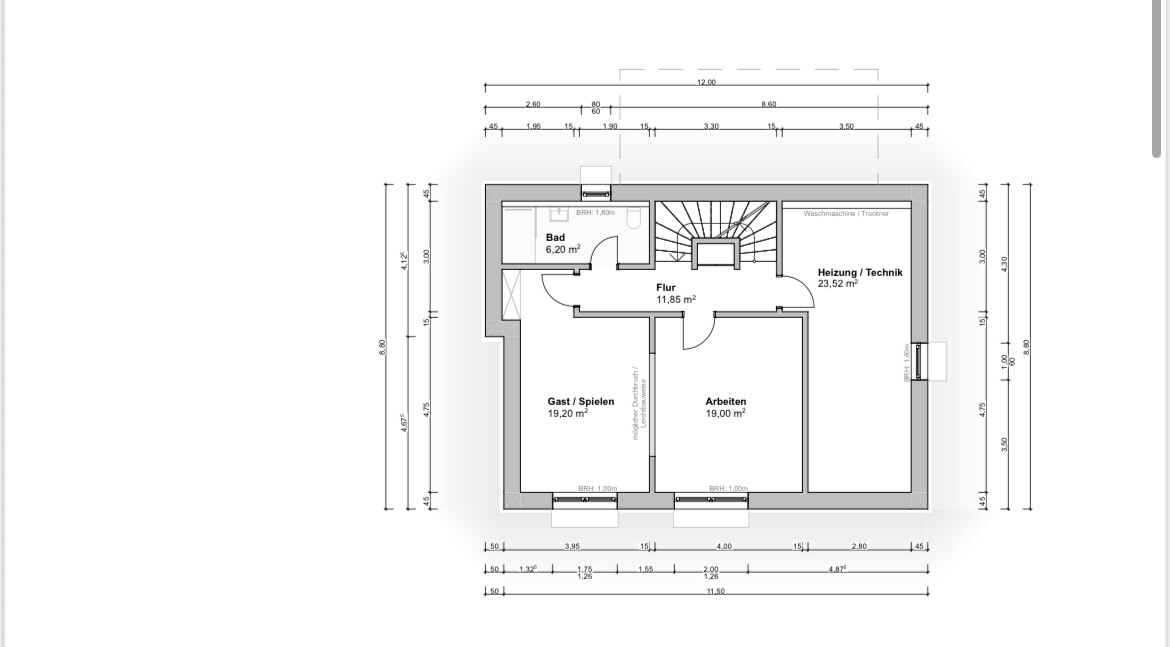
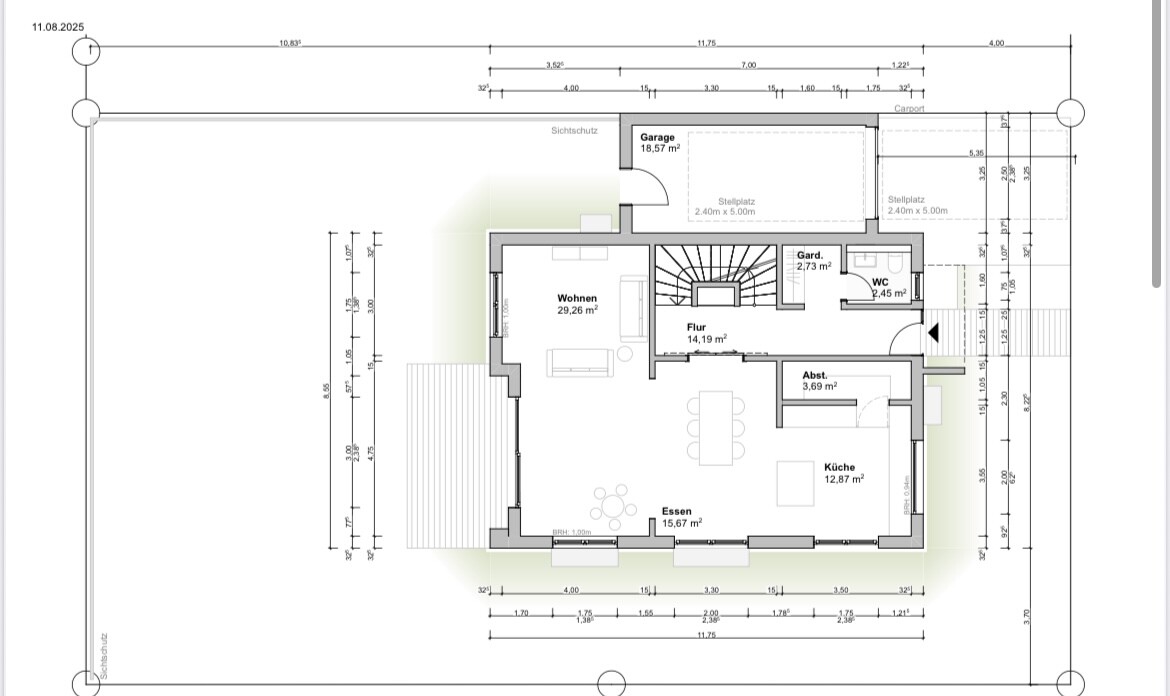
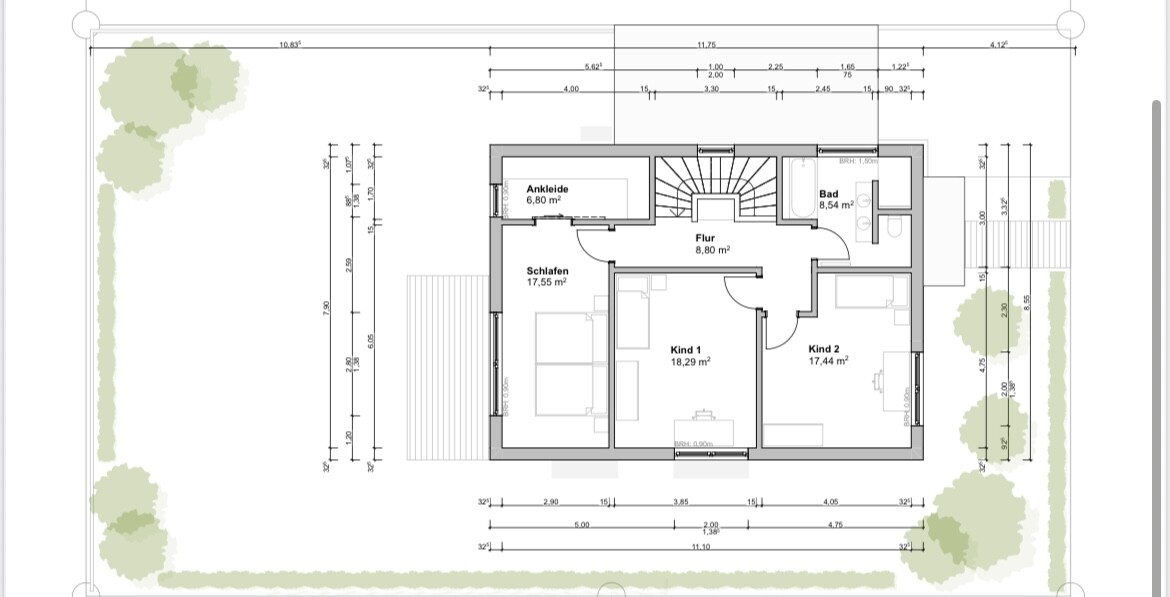
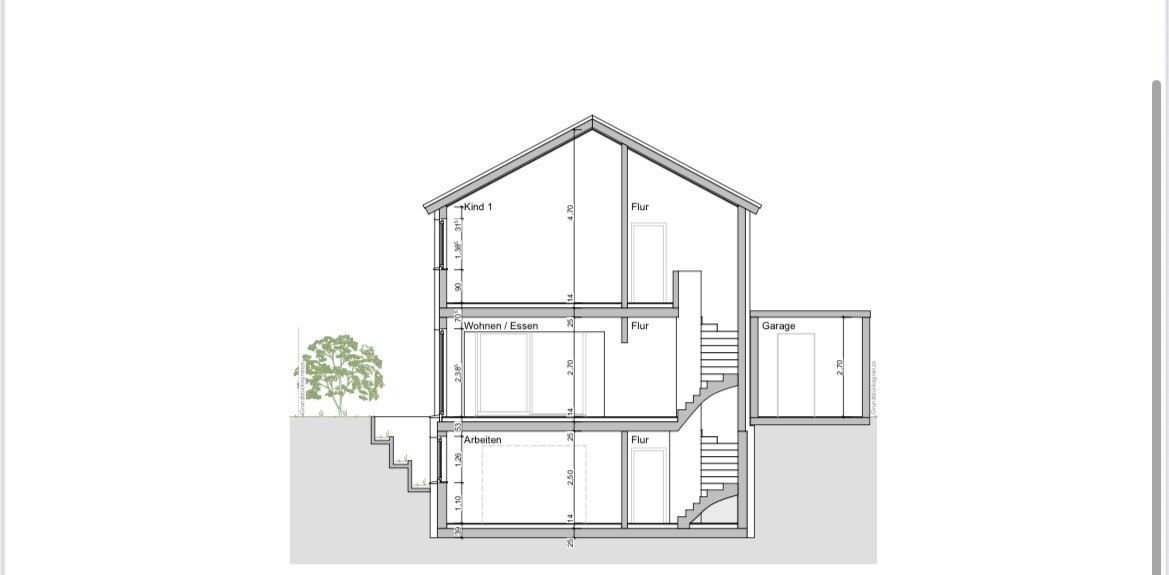
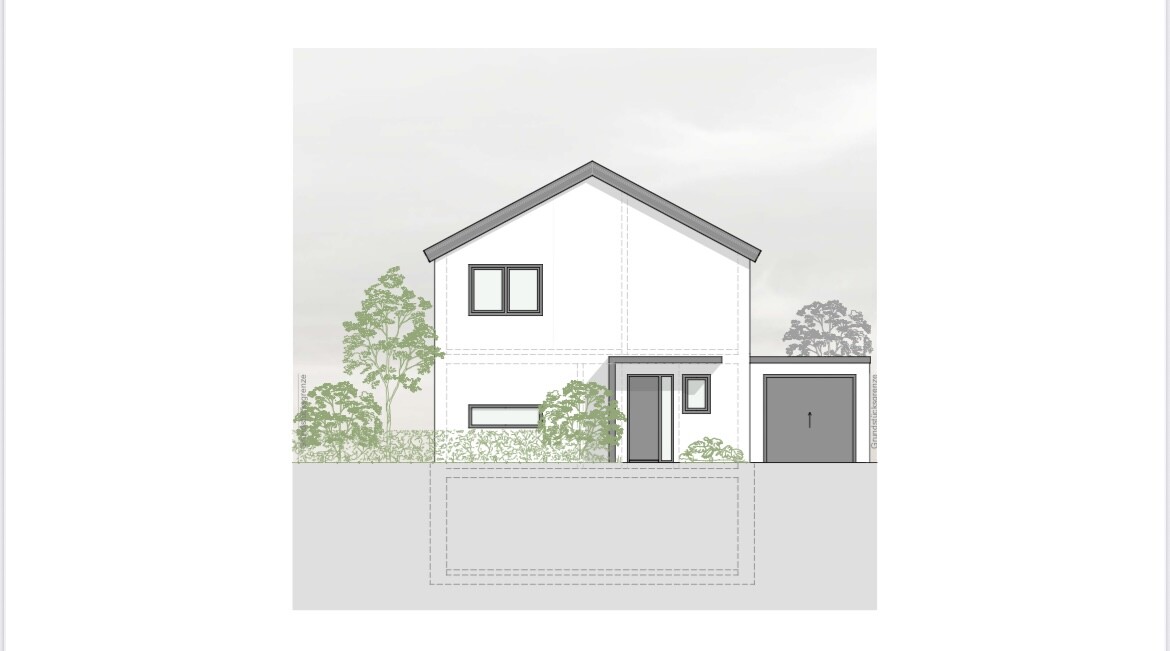
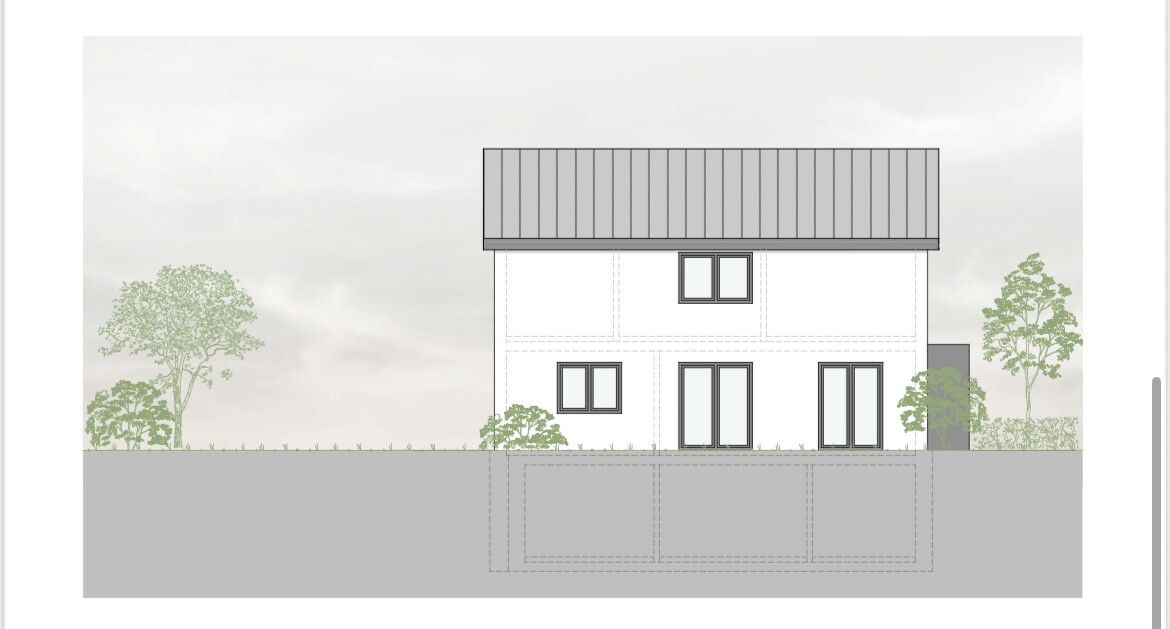
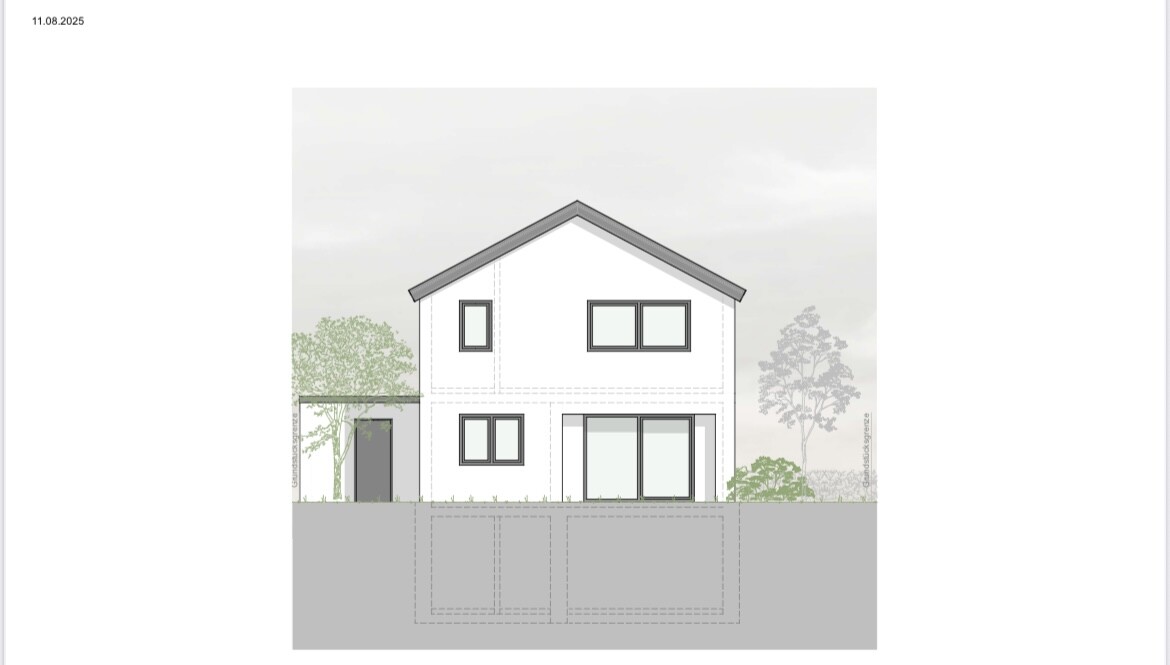
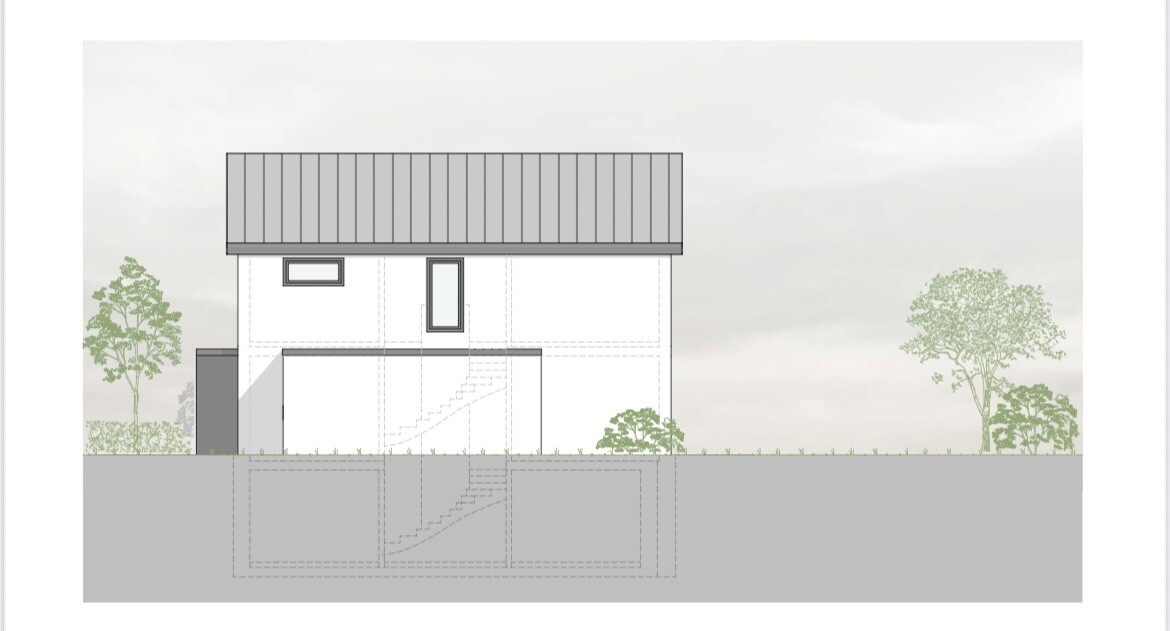
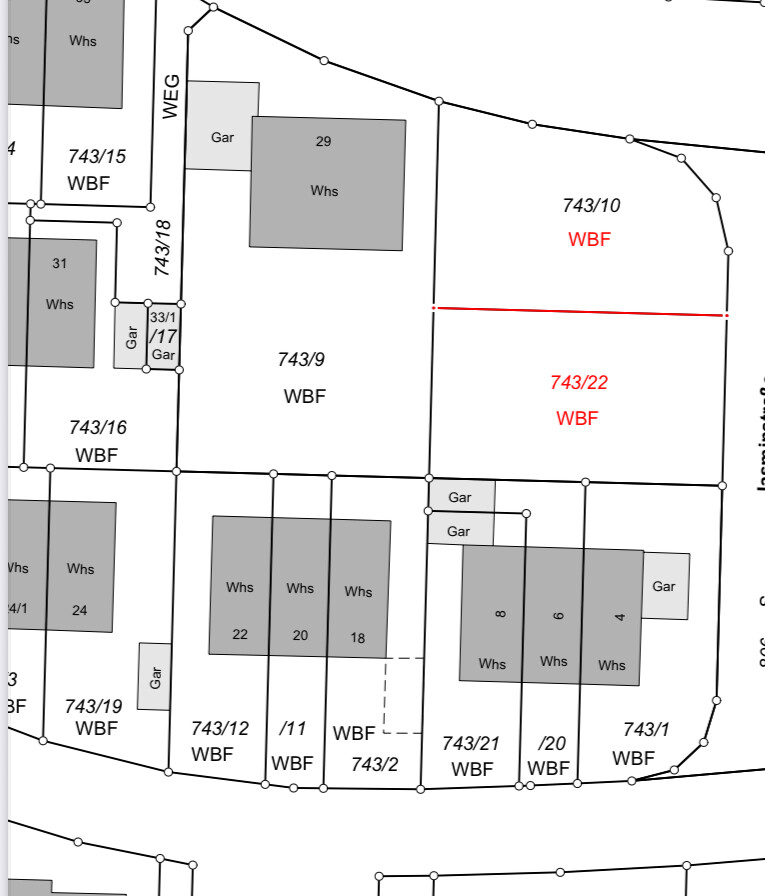
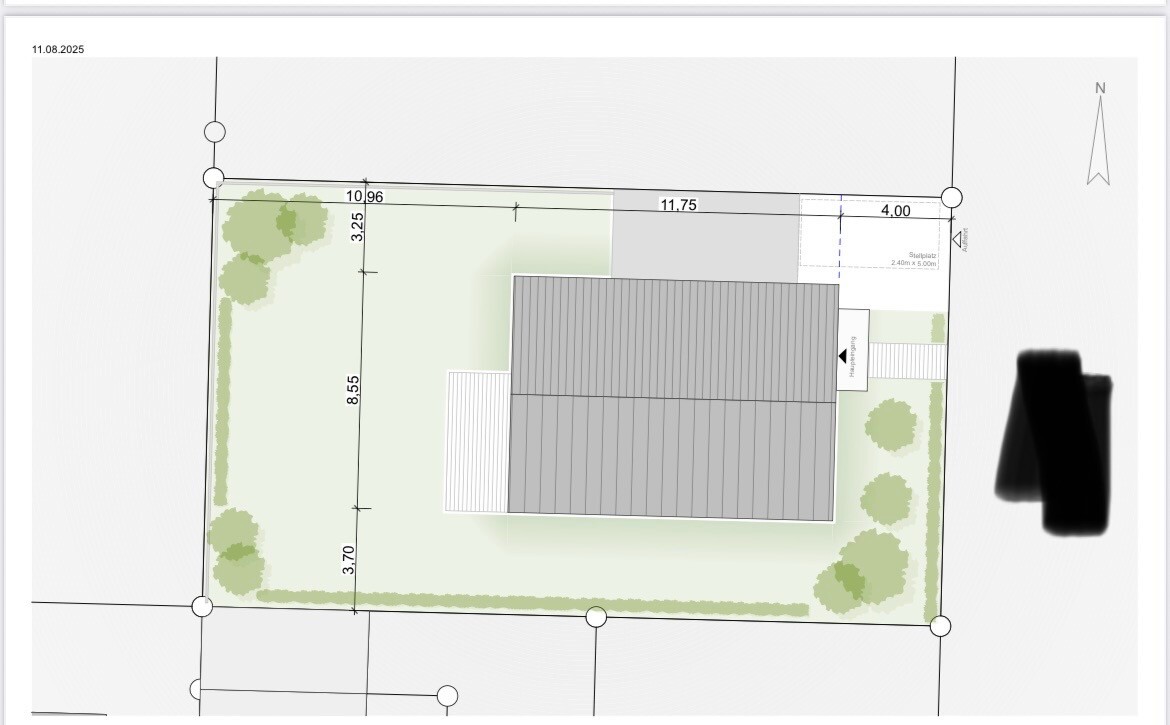
After reading many posts here and following the discussions closely, we would like to use the collective knowledge and your input to reconsider our design. Attached are the basic data.
Development Plan / Restrictions
Plot size: 414 sqm (4455 sq ft)
Slope: hardly any – 1.5 m (5 ft) gradient from northwest to southeast
Site occupancy index: 0.4
Floor area ratio: 0.8
Building envelope, building line and boundary: entire plot buildable, including a 4 m (13 ft) wide strip along the eastern property boundary, parcel 743/22
Edge development:
Number of parking spaces: 2
Number of floors: 2 full stories mandatory
Roof type: 28-degree (28°) pitched roof mandatory
Architectural style: classic
Orientation: south/west
Maximum height / limits: none
Other requirements:
Owners’ Requirements
Style, roof type, building type: classic with pitched roof
Basement, floors: finished basement, 2 full stories
Number of occupants, ages: 4 persons (42, 37, 3, 1)
Room requirements on ground floor and upper floor: as in current design
Office: home office
Occasional overnight guests: few
Open floor plan
Conservative building method
Open kitchen with island
Number of dining seats: at least 6
Fireplace: no
Music / stereo wall
Balcony, roof terrace: originally planned above the terrace, canceled for cost reasons
Garage / carport: garage for storage purposes
Additional wishes / special features:
- There should be a large living-dining area separated from the stairwell by a door (sound insulation), a large kitchen with island, one bathroom with shower in the basement including two rooms to likely be used when the children move to the basement later; currently playing room and office/guest room, separate walk-in wardrobe from master bedroom, two large children’s rooms upstairs each larger than 15 sqm (160 sq ft)
House Design
Design by: architect and DIY
What do you particularly like?
- Ground floor is especially liked due to the combination of a large room with clearly defined areas
What do you dislike?
- Bathroom layout upstairs is not optimal so far, since window should actually be larger and face east
- Master bedroom should ideally be separated from children’s bathroom or walk-in wardrobe
- Window of guest WC faces north and not next to entrance door
Price estimate based on initial offer: €500,000–520,000
Personal price limit for house including equipment: €550,000
Preferred heating technology: heat pump with photovoltaic system
If you had to give up something, which details or additions
- You could give up: pantry on ground floor
- You cannot give up: separate walk-in wardrobe upstairs, shower bathroom in basement, door to hallway on ground floor
Why is the design like this? For example:
First discussion with architect and 7 rounds of “corrections” / revisions based on our wishes
We look forward to your feedback!!
W
wiltshire13 Aug 2025 15:08I can see from the drawing that your requirements have been implemented. Looking at the house from this perspective alone, it could work – but I also have some question marks regarding the costs. The quotes from the timber frame house manufacturers are unlikely to reflect the total cost, which means the design would exceed your budget by an estimated 50% additional expenses.
Where could the necessary savings be made?
In the living area, almost 30m³ (about 1060 ft³) is planned as a kind of dance floor. The basement is usually not built smaller than the ground floor, so there is reasonable potential to save about 15m³ (about 530 ft³) here. This saving is also easily possible in the cellar. The ground floor would then allow for a bit more hallway space, and reducing 15m² (about 160 ft²) over three floors already translates to roughly €135,000 less in costs based on your (optimistic) estimate of €3000 per m². A partial basement on the slope could save additional money. You could also adjust standards and technical features or contribute your own labor. With strict discipline in decision-making, the 550,000 budget is within reach.
With such significant space reductions, a new design is needed.
That said, regarding the current design:
1. The hallway is impractical (already discussed).
2. The upstairs bathroom is too small for what you want. A T-shaped layout works only if the bathtub is removed. When children are teenagers, mornings often mean going downstairs to the toilet as the bathroom can be occupied for long periods. A bathroom this small in such a large house is – neutrally stated – unusual.
3. A storage room just over 1m (about 3 ft) wide takes up a lot of space relative to its usefulness.
4. Why squeeze a seating area into a niche when there is a considerably larger space available in front of it?
5. What is the purpose of enlarging circulation areas with the unusual door arrangement to the children’s rooms?
6. If you want an island, it should have sufficient workspace – or is it meant to be a cleaning block? Again, the kitchen feels cramped while there is a huge empty space in front of it (apart from the dining table).
7. The walk-in closet is unusably narrow. If one entire wall is full of wardrobes, there’s no comfortable space left to dress or change. This could be solved if the access led directly into the walk-in closet, with a (sliding?) door to the bedroom from there.
8. The basement looks like the available space was just filled with a few arbitrarily drawn rooms.
9. If the slope descends to the southeast, for reasons of light and cost I would also place the garden embankment there. This would require a different layout of the basement rooms.
10. The path from the front door to the kitchen leads through the living room – past a dining table that stands like a blockade in front of the door, even though the open-plan area has plenty of space.
I often try to find positive aspects in designs. Here, I find it particularly difficult.
Where could the necessary savings be made?
In the living area, almost 30m³ (about 1060 ft³) is planned as a kind of dance floor. The basement is usually not built smaller than the ground floor, so there is reasonable potential to save about 15m³ (about 530 ft³) here. This saving is also easily possible in the cellar. The ground floor would then allow for a bit more hallway space, and reducing 15m² (about 160 ft²) over three floors already translates to roughly €135,000 less in costs based on your (optimistic) estimate of €3000 per m². A partial basement on the slope could save additional money. You could also adjust standards and technical features or contribute your own labor. With strict discipline in decision-making, the 550,000 budget is within reach.
With such significant space reductions, a new design is needed.
That said, regarding the current design:
1. The hallway is impractical (already discussed).
2. The upstairs bathroom is too small for what you want. A T-shaped layout works only if the bathtub is removed. When children are teenagers, mornings often mean going downstairs to the toilet as the bathroom can be occupied for long periods. A bathroom this small in such a large house is – neutrally stated – unusual.
3. A storage room just over 1m (about 3 ft) wide takes up a lot of space relative to its usefulness.
4. Why squeeze a seating area into a niche when there is a considerably larger space available in front of it?
5. What is the purpose of enlarging circulation areas with the unusual door arrangement to the children’s rooms?
6. If you want an island, it should have sufficient workspace – or is it meant to be a cleaning block? Again, the kitchen feels cramped while there is a huge empty space in front of it (apart from the dining table).
7. The walk-in closet is unusably narrow. If one entire wall is full of wardrobes, there’s no comfortable space left to dress or change. This could be solved if the access led directly into the walk-in closet, with a (sliding?) door to the bedroom from there.
8. The basement looks like the available space was just filled with a few arbitrarily drawn rooms.
9. If the slope descends to the southeast, for reasons of light and cost I would also place the garden embankment there. This would require a different layout of the basement rooms.
10. The path from the front door to the kitchen leads through the living room – past a dining table that stands like a blockade in front of the door, even though the open-plan area has plenty of space.
I often try to find positive aspects in designs. Here, I find it particularly difficult.
wiltshire schrieb:
If the slope goes towards the southeast, for reasons of light and cost, I would also place the garden embankment in that direction. This would mean a different layout of the basement rooms. Oops, indeed. I mixed up west and east a bit and had a small misunderstanding, also because the basement windows are located in the southwest.
But I don't think we are really reaching the original poster.

wiltshire schrieb:
A partial basement on the slope could save some money.That is as rare as a Hail Mary in a synagogue.wiltshire schrieb:
With such drastic reductions in floor area, a new design is needed.First of all, a proper design is needed at all; currently, there is only some haphazard sketching that is then seriously adjusted or optimized. A design requires a preliminary design (according to traditional practice), otherwise nothing coherent and well-founded will come out of it. Without design phase 1, there is no design phase 2. Here, stories are fantasized about before the discussion between topography and spatial program has reached a conclusion. Imagine if the ancient Egyptians had placed their pyramids in the Nile floodplain without any planning. Sometimes I wish the whipping post still existed for these pampered architects.https://www.instagram.com/11antgmxde/
https://www.linkedin.com/company/bauen-jetzt/
M
MachsSelbst17 Aug 2025 17:41Arauki11 schrieb:
(...)
1.5 meters (5 feet) on such a small plot is, in my opinion, already quite significant, which will in turn increase the costs for the landscaping. Have you considered that?
(...)That is about a 6% slope from northwest to southeast. For the house itself, it probably doesn’t justify a basement, but for the landscaping, it definitely means more work than just leveling the soil and planting grass. You will either need to create steps or install substantial retaining structures along the property boundaries if you want everything to be flat.
A
AnnaChris8819 Aug 2025 21:02Thank you all for your comments – especially @wiltshire for your many constructive points.
We took some time to reflect and have made some revisions. Although some people here are critical of the architect’s approach or work, we have decided to follow this path and would really appreciate constructive feedback or suggestions for improvement. The surveyor has also been on site now. The height difference is just under 0.9m (3 feet). I don’t want to “level” the plot but rather use the slope to improve natural lighting in the basement.
Maybe you’d like to take a look at the revisions and feel free to share your thoughts 😉
Oh, and yes, the north wall in the basement is slightly shifted – that needs to be corrected 😉
We took some time to reflect and have made some revisions. Although some people here are critical of the architect’s approach or work, we have decided to follow this path and would really appreciate constructive feedback or suggestions for improvement. The surveyor has also been on site now. The height difference is just under 0.9m (3 feet). I don’t want to “level” the plot but rather use the slope to improve natural lighting in the basement.
Maybe you’d like to take a look at the revisions and feel free to share your thoughts 😉
Oh, and yes, the north wall in the basement is slightly shifted – that needs to be corrected 😉
Would you perhaps answer the questions regarding the offers from the home construction companies? Several people here have raised similar observations and questions. And no one here wants to discuss castles in the air. At least it is clear that the basement is planned as a solid structure, independent from the house itself.
Regarding the design itself:
Yes, it can probably be built. I lack some technical expertise: a second parking space. Are you supposed to shuffle the cars back and forth for your entire working life? Even though the parking space regulation dates back to 1970, I would still plan according to my current needs for house construction, also taking into account that these needs may change. For example, children’s vehicle fleet, bicycles — which are not accessible if one or two cars are parked in the driveway.
The exterior appearance with the different window dimensions is confusing: 200 cm, 275 cm, 280 cm (79 inches, 108 inches, 110 inches). In the basement rooms, you look towards a nearby shaft, which does not contribute to a pleasant atmosphere. Calculations show that too little natural light can enter.
The utility/technical area has moved completely to the rear, far from the access road, which is costly and illogical. Additionally, the bathrooms are planned furthest away from the technical area, so the pumping system as well as the hot water supply are affected. Then there is a technical room which, although meant to serve multiple functions, naturally offers less wall storage space than if it were planned solely as a functional room.
Also, I find the arrangement of the rooms somewhat clumsy. I think an architect could do a better job.
The hallway is nicely large and can be illuminated through the doors to the living room. However, although the room is large, it is only 3.60 m (12 feet) wide. The door area, which seems unnecessary, has the required width.
The troublesome T-shape is gone. Good. But 90 cm (35 inches) clear width for the toilet is tight, which makes childcare, illness care, and cleaning difficult. Having the walk-in closet accessible from the bedroom can be disturbing for a partner who wants or needs to rest independently.
Regarding the design itself:
Yes, it can probably be built. I lack some technical expertise: a second parking space. Are you supposed to shuffle the cars back and forth for your entire working life? Even though the parking space regulation dates back to 1970, I would still plan according to my current needs for house construction, also taking into account that these needs may change. For example, children’s vehicle fleet, bicycles — which are not accessible if one or two cars are parked in the driveway.
The exterior appearance with the different window dimensions is confusing: 200 cm, 275 cm, 280 cm (79 inches, 108 inches, 110 inches). In the basement rooms, you look towards a nearby shaft, which does not contribute to a pleasant atmosphere. Calculations show that too little natural light can enter.
The utility/technical area has moved completely to the rear, far from the access road, which is costly and illogical. Additionally, the bathrooms are planned furthest away from the technical area, so the pumping system as well as the hot water supply are affected. Then there is a technical room which, although meant to serve multiple functions, naturally offers less wall storage space than if it were planned solely as a functional room.
Also, I find the arrangement of the rooms somewhat clumsy. I think an architect could do a better job.
The hallway is nicely large and can be illuminated through the doors to the living room. However, although the room is large, it is only 3.60 m (12 feet) wide. The door area, which seems unnecessary, has the required width.
The troublesome T-shape is gone. Good. But 90 cm (35 inches) clear width for the toilet is tight, which makes childcare, illness care, and cleaning difficult. Having the walk-in closet accessible from the bedroom can be disturbing for a partner who wants or needs to rest independently.
Similar topics