
B
benchfreak28 Jul 2025 17:55Hello everyone,
I would like to build masonry pillars for a driveway gate (two-leaf aluminum gate with electric drive, 200 cm (80 inches) width per panel, 180 cm (71 inches) height). For each pillar, I plan to have a foundation measuring 100x100x80 cm (40x40x32 inches). The pillars should measure 70x50x180 cm (28x20x71 inches). One of the pillars is supposed to incorporate a built-in parcel box with the dimensions 91x40x50 cm (36x16x20 inches). For the connection between the foundation and the masonry, I have planned 4 concrete reinforcement bars per pillar, each 8 mm (0.3 inches) thick.
My question is whether these planned dimensions are suitable and, above all, how I should best build the pillars. Do I need to use concrete formwork blocks for the construction and fill them with concrete, or would calcium silicate blocks (plain blocks) theoretically be sufficient? Or is there another practical option? Since one pillar must have a cavity for the parcel box, I obviously cannot fill the pillars entirely with concrete. The pillars are to be plastered in the end, so the choice of blocks is of secondary importance.
Thank you in advance for your help.
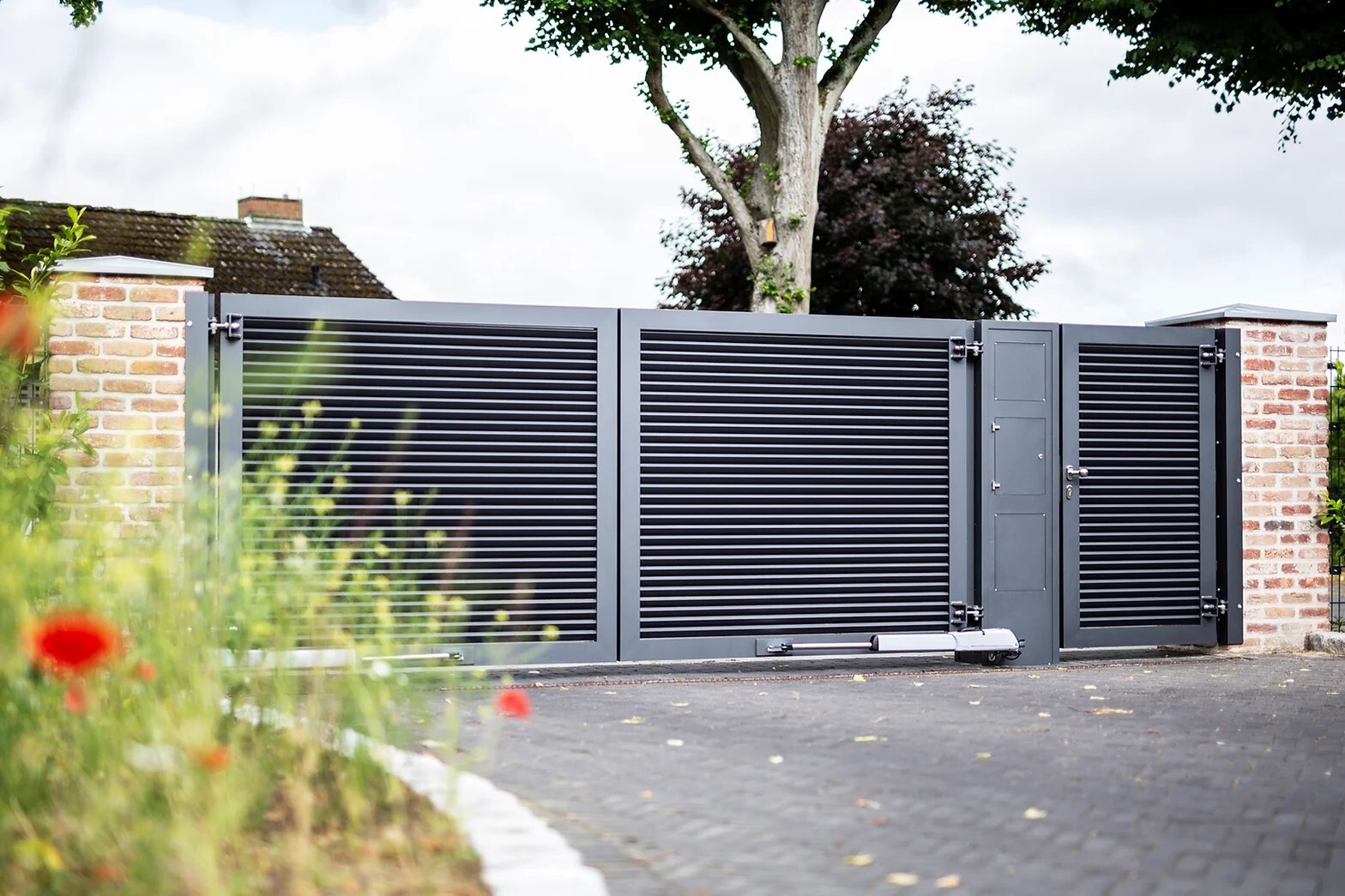
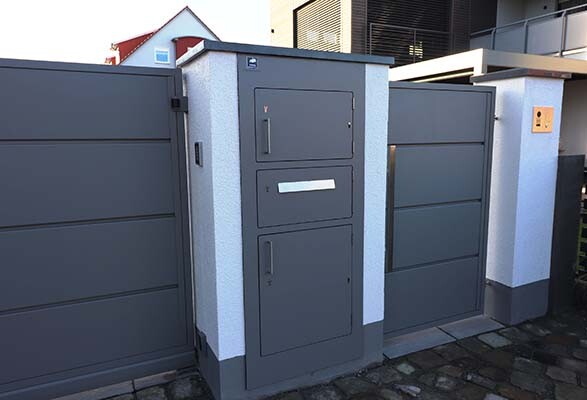
I would like to build masonry pillars for a driveway gate (two-leaf aluminum gate with electric drive, 200 cm (80 inches) width per panel, 180 cm (71 inches) height). For each pillar, I plan to have a foundation measuring 100x100x80 cm (40x40x32 inches). The pillars should measure 70x50x180 cm (28x20x71 inches). One of the pillars is supposed to incorporate a built-in parcel box with the dimensions 91x40x50 cm (36x16x20 inches). For the connection between the foundation and the masonry, I have planned 4 concrete reinforcement bars per pillar, each 8 mm (0.3 inches) thick.
My question is whether these planned dimensions are suitable and, above all, how I should best build the pillars. Do I need to use concrete formwork blocks for the construction and fill them with concrete, or would calcium silicate blocks (plain blocks) theoretically be sufficient? Or is there another practical option? Since one pillar must have a cavity for the parcel box, I obviously cannot fill the pillars entirely with concrete. The pillars are to be plastered in the end, so the choice of blocks is of secondary importance.
Thank you in advance for your help.

Hello benchfreak, I’m afraid there are hardly any people here who can calculate the structural engineering for your project. Just so you know: We recently asked for advice on a 6m (20 feet) wide gate, which was only 120cm (47 inches) high. The recommendation was to use a strip foundation between the pillars. Maybe that’s also relevant in your case.
W
wiltshire29 Jul 2025 19:23benchfreak schrieb:
One of the pillars must necessarily have a cavity for the parcel box, so I can’t fill the pillars completely with concrete.I’m currently in Burgundy. There are many very large gates at various wineries here, and they build more delicate pillars. A small roller under the gate significantly reduces the load on the pillars by preventing the full leverage effect from acting on them. This isn’t strictly necessary; some consider it "inelegant," and a few gate builders turn their noses up at it. But that’s probably only because this small, clever device greatly reduces costs and effort. We prefer to build in a Tim-Taylor style.
I would make the foundations larger. Build your two pillars as you need them, leaving space behind and ensuring there is enough foundation in the ground. This way, any gate manufacturer can anchor their gate with metal posts without relying on the structural stability of your masonry pillars.
You would need to provide a cavity in one of your pillars for your mailbox, but with some creativity and a wooden frame as an opening, you can manage that. If your pillars do not need to carry any load, you can also build them using aerated concrete blocks (Ytong) or sand-lime bricks.
You could also use very narrow aerated concrete blocks and build hollow columns, resulting in maybe only an 8cm (3 inches) thick outer wall. You can finish the columns with brick cladding or plaster.
Keep in mind that your mailbox will also need an internal container or similar. Masonry or concrete is always damp and cold, if you are unlucky. I would recommend having a stainless steel container made that is more or less sealed so that the contents are not directly exposed to all weather conditions.
You would need to provide a cavity in one of your pillars for your mailbox, but with some creativity and a wooden frame as an opening, you can manage that. If your pillars do not need to carry any load, you can also build them using aerated concrete blocks (Ytong) or sand-lime bricks.
You could also use very narrow aerated concrete blocks and build hollow columns, resulting in maybe only an 8cm (3 inches) thick outer wall. You can finish the columns with brick cladding or plaster.
Keep in mind that your mailbox will also need an internal container or similar. Masonry or concrete is always damp and cold, if you are unlucky. I would recommend having a stainless steel container made that is more or less sealed so that the contents are not directly exposed to all weather conditions.
Similar topics