
ᐅ Floor Plan Feedback for Single-Family Home for 4-5 People, 200 sqm on a 500 sqm Plot in Baden-Württemberg
Created on: 10 Jul 2025 14:13
K
KJanewayHello dear forum,
Our concrete building planning is slowly progressing. We were fortunate to purchase a nice plot with an (too old) existing building at a good price, and now want to invest the saved money into building the house. The existing building has been unheated and empty for 30 years and has some broken windows. It is weathered, moldy, and damp both inside and out. An advantage is that it has already been partially gutted and contains no hazardous materials. Initial demolition quotes estimate all-inclusive costs at about 30,000 EUR. This money is already reserved and not included in the construction budget.
Here is the questionnaire:
Development Plan / Restrictions
The development plan dates from the 1930s. It is still valid, but many approved deviations exist in the neighborhood. We can review what has already been approved and have a chance to get similar approvals. The plan specifies a building line 4m (13 feet) from the street along the east side of the house. The east-west orientation is defined by the neighboring buildings in the same block.
One full story and two full stories plus an attic story are allowable. A pitched roof with a slope of about 50° must be constructed. We are currently planning two full stories.
Plot size
512sqm (about 5500 sq ft), almost square (see floor plan)
Slope
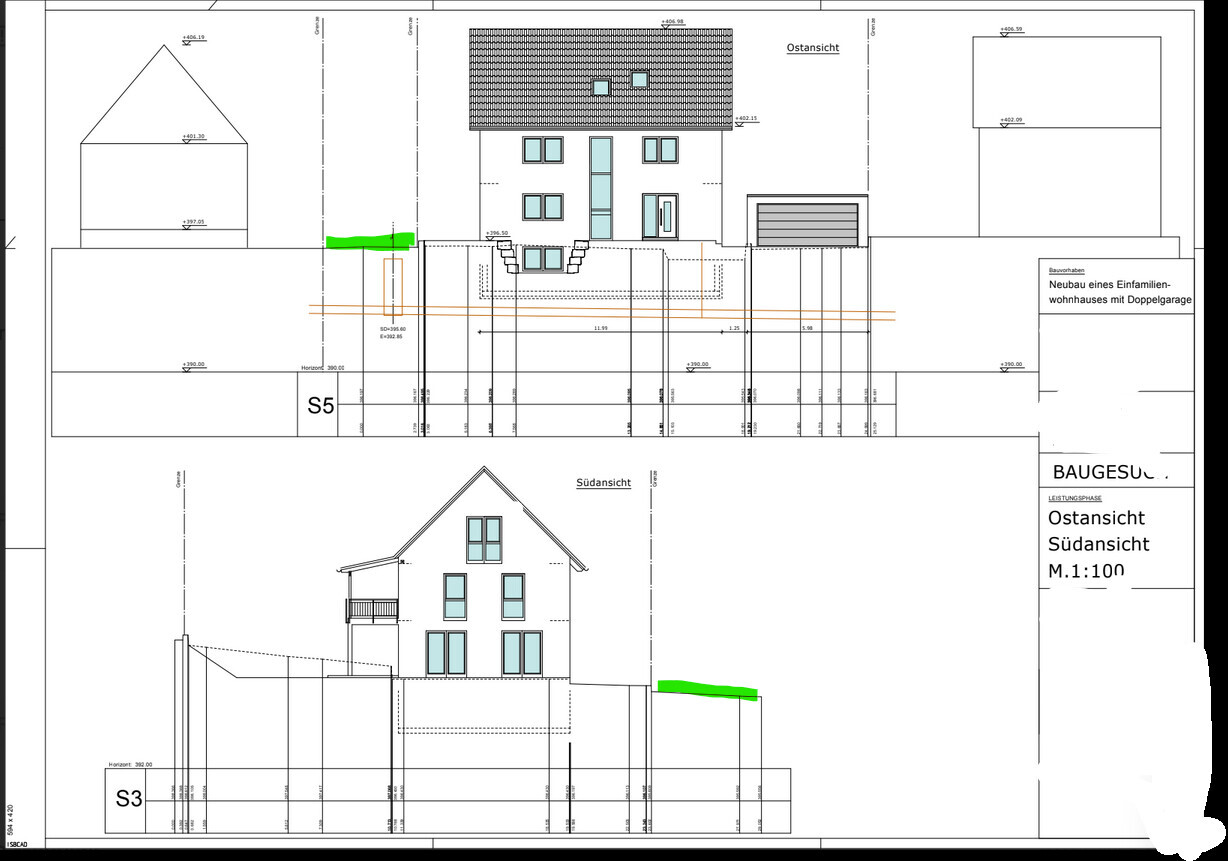
Slightly sloping toward the street (see cross-section)
Parking spaces
2
Maximum heights / limits
The building should blend into the neighborhood. The designer has planned the building height to continue the existing roofline in the row of houses.
Client Requirements
KFW40 house, approximately 150-170sqm (about 1,600-1,830 sq ft) (this was the initial wish, although my wife wanted it slightly larger). That is what we are aiming for now.
Number of people, ages
2 adults + 2 children (ages 3 and 6) + temporarily an au pair for the next few years. Possibly a third child later. Who can really predict so far ahead? + 1-4 cats.
Space requirements per floor:
There is a bit of a history here: Originally, we wanted all rooms distributed over two full stories. Then the planner told us that the attic story must also be included at least. So we thought: why not use it, make the house footprint a bit smaller, and distribute rooms over three stories. Hence, including the attic:
Basement: Technical room (ventilation system with heat recovery, heat pump, photovoltaics inverter plus battery, washing machine + dryer), hobby and workroom (home office, gaming, painting, sports, etc.) + storage space.
Ground floor: Living room about 35sqm (about 375 sq ft) was the guideline, plus a separate kitchen. Guest toilet and storage closet. Pantry optional. Large cloakroom area.
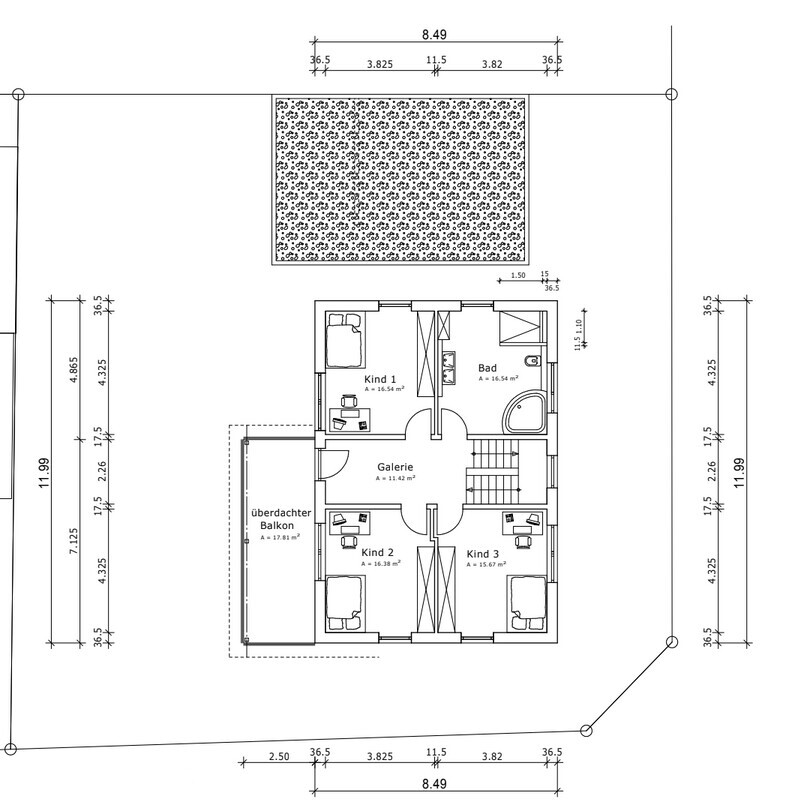
Upper floor: 3 equally sized children’s rooms for the kids and au pair. Plus a suitable bathroom where a stacked washer-dryer could be installed if climbing up and down gets tiring. Central access to the balcony (which should be enclosed for the cats so they can go outside if the door is open).
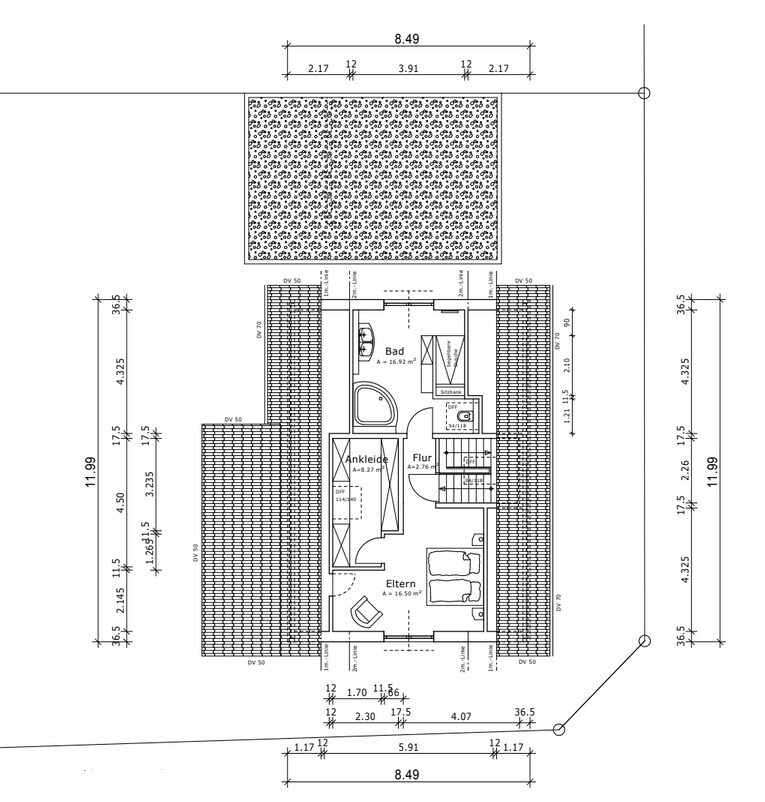
Attic: Parents’ area: bedroom, clothes storage + bathroom.
Overnight guests per year
Primarily one long-term guest for 2 to 4 years (au pair). Occasional overnight visitors are rare. Depending on temperature, I would accommodate them either in the living room or the hobby cellar.
Open or closed architecture
Rather closed.
Conservative or modern style
Not sure what the difference is.
Open kitchen, kitchen island
Definitely a closed kitchen. Although a kitchen island is drawn in, I don’t see it fitting well in the space.
Number of dining seats
6 to 8 in the living area.
Fireplace
No.
Music / stereo wall
Um, if that means a TV wall: yes, but for separate music no. Our musical tastes differ too much. We mostly listen with headphones.
Balcony, rooftop terrace
Balcony desired. Initially for the cats. Later maybe for the children when they hang out there with friends.
Garage, carport
Preference is a wooden carport for 2 cars with a shed behind it. The planner thinks a prefabricated garage (6x9m (20x30 ft)) is cheaper due to its all-in nature.
Utility garden, greenhouse
Not initially. Lots of play area for the children. Maybe later, possibly a small garden patch. A rainwater cistern for garden irrigation would be welcome.
House design
Designed by:
An independent building planner (who also supervises construction) collaborating with an independent architect.
What do you particularly like? Why?
We really like the attic (though we are considering adding a dormer in the dressing room). The 4 equally sized rooms on the upper floor promise a lot of flexibility.
The ground floor has a suitable living room and a nice kitchen, which can be expanded by a pantry depending on preferences and kitchen design. That is not decided yet.
What do you dislike? Why?
Since we have a child with behavioral challenges, we would like to enclose the stairs. This is rather not possible here. Overall, the house has grown larger than we wanted (mainly because of the attic). The guest toilet and storage room on the ground floor feel quite small.
Price estimate according to architect/planner:
Enclosed volume * 650 EUR per cbm = approx. 800,000 EUR turnkey with individual contracts including garage, additional costs, and VAT. Plus outdoor work and photovoltaics.
Personal price limit for the house including fittings:
850,000 EUR is an emotional limit for us. Besides the paid-off land, we currently have 350,000 EUR in liquid equity. An initial bank meeting indicated a financing framework up to about 500,000 EUR including a 170,000 EUR loan through the KFW 300 program. Unfortunately, we do not qualify for the L-Bank Z20 loan.
We plan to have a professional cost estimator review the figures for a more reliable cost forecast. After that, there might be a revision round. The estimator’s planning currently assumes a maximum level of equipment.
Preferred heating technology:
Heat pump (no district heating available). Ground-source heat pump preferred to avoid noise and therefore conflict potential with neighbors. But a quiet air-to-water heat pump is also possible. The drilling costs are never really recouped. The trench collector system, often recommended in a neighboring forum, is also an option, though probably not as a DIY installation. Photovoltaics for powering the heat pump is mandatory anyway, as we are building in Baden-Württemberg near Stuttgart.
If you had to compromise, on which details/expansions?
Haha, it depends who you ask among us:
-We could do without:
Pantry
Bathroom size on the upper floor
Possibly the 3rd children’s room on the upper floor. In that case, finishing the basement with living height would be considered.
Balcony (would hurt us quite a bit)
Dormer in the attic (not planned at all here)
Possibly the extra-long part of the garage if there would be an equivalent garden shed instead.
-We could not do without:
Large parents’ bathroom with a two-person bathtub
Storage = usable floor space
Hobby and workroom.
Why is the design like it is now?
Yes, we already like it quite a bit. All wishes were incorporated, even if the house overall could be about 20sqm smaller. That is difficult without making the rooms smaller at the same time.
Which wishes were implemented by the architect?
Almost all of them. Some he actually dissuaded us from during the planning because they were too expensive, not feasible, or impractical.
What do you consider particularly good or bad about it?
Well, it’s a somewhat large standard single-family house, I would say. We would gladly reduce the total floor area a bit more. We probably have to after the cost estimator’s results come in (if they come) and show we are well above our budget limit.
I expect we will have to negotiate hard about the first round of downsizing once we have the estimator’s results. I would appreciate your feedback on that and on the floor plan in general.
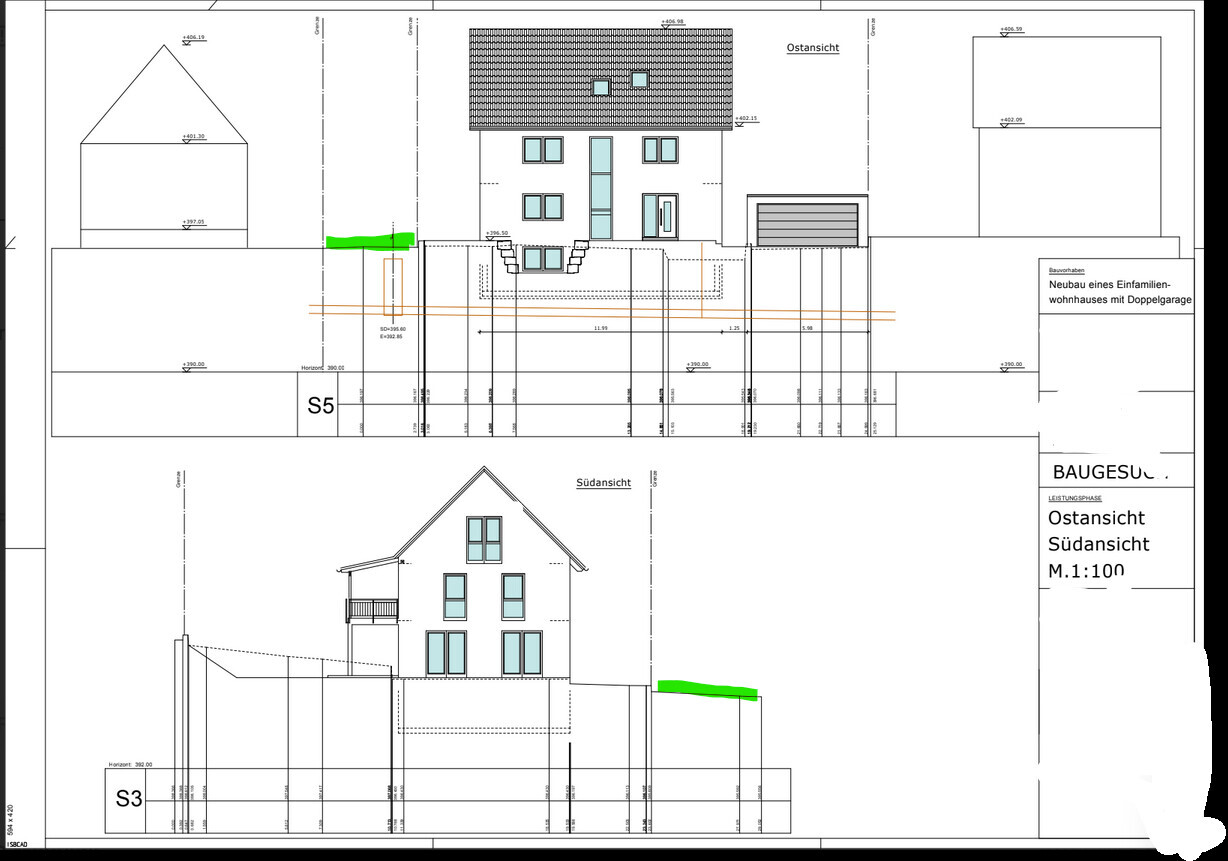
First, here are the site plans: (public roads marked in green. There are two roads adjacent to the plot: on the east and south sides.
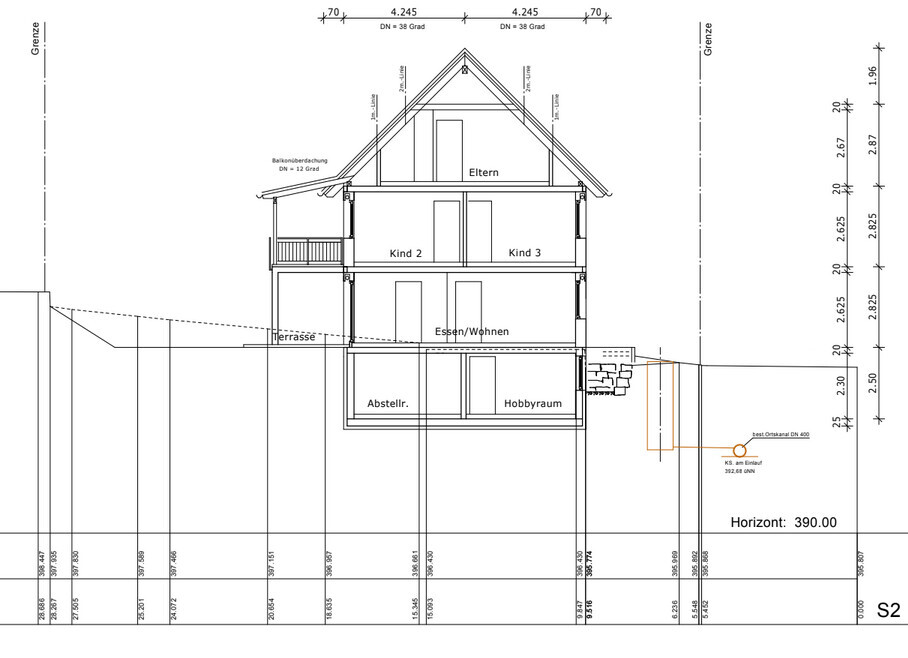
Here is the section through the building: We are also considering leaving the attic open so that one can see up to the roof ridge and use the exposed beams as a design feature. Note the lower basement that clearly serves a utility purpose.
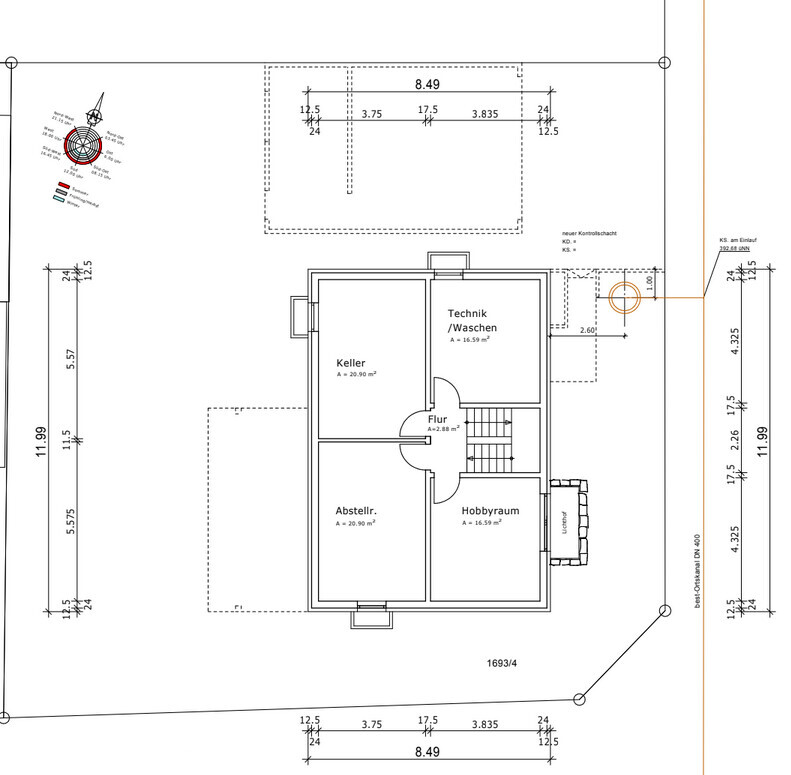
Now the floor plans from bottom to top:
Basement:
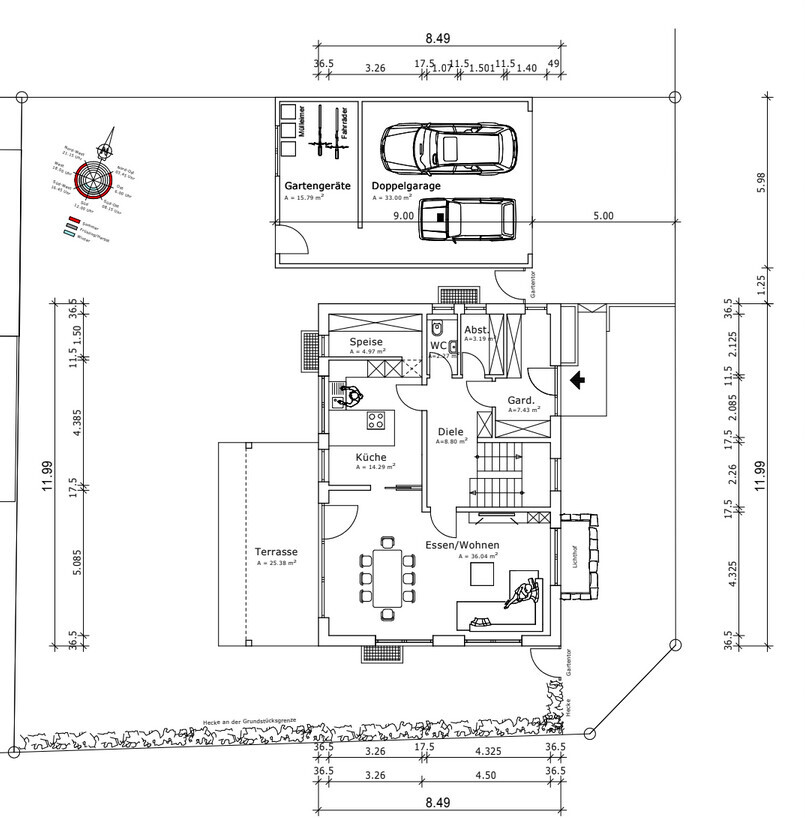
Ground floor:
Upper floor:
Attic:
Now I look forward to your comments and am ready to answer any questions. If I have forgotten anything important, I will add it later.
Thank you and see you soon.
Our concrete building planning is slowly progressing. We were fortunate to purchase a nice plot with an (too old) existing building at a good price, and now want to invest the saved money into building the house. The existing building has been unheated and empty for 30 years and has some broken windows. It is weathered, moldy, and damp both inside and out. An advantage is that it has already been partially gutted and contains no hazardous materials. Initial demolition quotes estimate all-inclusive costs at about 30,000 EUR. This money is already reserved and not included in the construction budget.
Here is the questionnaire:
Development Plan / Restrictions
The development plan dates from the 1930s. It is still valid, but many approved deviations exist in the neighborhood. We can review what has already been approved and have a chance to get similar approvals. The plan specifies a building line 4m (13 feet) from the street along the east side of the house. The east-west orientation is defined by the neighboring buildings in the same block.
One full story and two full stories plus an attic story are allowable. A pitched roof with a slope of about 50° must be constructed. We are currently planning two full stories.
Plot size
512sqm (about 5500 sq ft), almost square (see floor plan)
Slope
Slightly sloping toward the street (see cross-section)
Parking spaces
2
Maximum heights / limits
The building should blend into the neighborhood. The designer has planned the building height to continue the existing roofline in the row of houses.
Client Requirements
KFW40 house, approximately 150-170sqm (about 1,600-1,830 sq ft) (this was the initial wish, although my wife wanted it slightly larger). That is what we are aiming for now.
Number of people, ages
2 adults + 2 children (ages 3 and 6) + temporarily an au pair for the next few years. Possibly a third child later. Who can really predict so far ahead? + 1-4 cats.
Space requirements per floor:
There is a bit of a history here: Originally, we wanted all rooms distributed over two full stories. Then the planner told us that the attic story must also be included at least. So we thought: why not use it, make the house footprint a bit smaller, and distribute rooms over three stories. Hence, including the attic:
Basement: Technical room (ventilation system with heat recovery, heat pump, photovoltaics inverter plus battery, washing machine + dryer), hobby and workroom (home office, gaming, painting, sports, etc.) + storage space.
Ground floor: Living room about 35sqm (about 375 sq ft) was the guideline, plus a separate kitchen. Guest toilet and storage closet. Pantry optional. Large cloakroom area.
Upper floor: 3 equally sized children’s rooms for the kids and au pair. Plus a suitable bathroom where a stacked washer-dryer could be installed if climbing up and down gets tiring. Central access to the balcony (which should be enclosed for the cats so they can go outside if the door is open).
Attic: Parents’ area: bedroom, clothes storage + bathroom.
Overnight guests per year
Primarily one long-term guest for 2 to 4 years (au pair). Occasional overnight visitors are rare. Depending on temperature, I would accommodate them either in the living room or the hobby cellar.
Open or closed architecture
Rather closed.
Conservative or modern style
Not sure what the difference is.
Open kitchen, kitchen island
Definitely a closed kitchen. Although a kitchen island is drawn in, I don’t see it fitting well in the space.
Number of dining seats
6 to 8 in the living area.
Fireplace
No.
Music / stereo wall
Um, if that means a TV wall: yes, but for separate music no. Our musical tastes differ too much. We mostly listen with headphones.
Balcony, rooftop terrace
Balcony desired. Initially for the cats. Later maybe for the children when they hang out there with friends.
Garage, carport
Preference is a wooden carport for 2 cars with a shed behind it. The planner thinks a prefabricated garage (6x9m (20x30 ft)) is cheaper due to its all-in nature.
Utility garden, greenhouse
Not initially. Lots of play area for the children. Maybe later, possibly a small garden patch. A rainwater cistern for garden irrigation would be welcome.
House design
Designed by:
An independent building planner (who also supervises construction) collaborating with an independent architect.
What do you particularly like? Why?
We really like the attic (though we are considering adding a dormer in the dressing room). The 4 equally sized rooms on the upper floor promise a lot of flexibility.
The ground floor has a suitable living room and a nice kitchen, which can be expanded by a pantry depending on preferences and kitchen design. That is not decided yet.
What do you dislike? Why?
Since we have a child with behavioral challenges, we would like to enclose the stairs. This is rather not possible here. Overall, the house has grown larger than we wanted (mainly because of the attic). The guest toilet and storage room on the ground floor feel quite small.
Price estimate according to architect/planner:
Enclosed volume * 650 EUR per cbm = approx. 800,000 EUR turnkey with individual contracts including garage, additional costs, and VAT. Plus outdoor work and photovoltaics.
Personal price limit for the house including fittings:
850,000 EUR is an emotional limit for us. Besides the paid-off land, we currently have 350,000 EUR in liquid equity. An initial bank meeting indicated a financing framework up to about 500,000 EUR including a 170,000 EUR loan through the KFW 300 program. Unfortunately, we do not qualify for the L-Bank Z20 loan.
We plan to have a professional cost estimator review the figures for a more reliable cost forecast. After that, there might be a revision round. The estimator’s planning currently assumes a maximum level of equipment.
Preferred heating technology:
Heat pump (no district heating available). Ground-source heat pump preferred to avoid noise and therefore conflict potential with neighbors. But a quiet air-to-water heat pump is also possible. The drilling costs are never really recouped. The trench collector system, often recommended in a neighboring forum, is also an option, though probably not as a DIY installation. Photovoltaics for powering the heat pump is mandatory anyway, as we are building in Baden-Württemberg near Stuttgart.
If you had to compromise, on which details/expansions?
Haha, it depends who you ask among us:
-We could do without:
Pantry
Bathroom size on the upper floor
Possibly the 3rd children’s room on the upper floor. In that case, finishing the basement with living height would be considered.
Balcony (would hurt us quite a bit)
Dormer in the attic (not planned at all here)
Possibly the extra-long part of the garage if there would be an equivalent garden shed instead.
-We could not do without:
Large parents’ bathroom with a two-person bathtub
Storage = usable floor space
Hobby and workroom.
Why is the design like it is now?
Yes, we already like it quite a bit. All wishes were incorporated, even if the house overall could be about 20sqm smaller. That is difficult without making the rooms smaller at the same time.
Which wishes were implemented by the architect?
Almost all of them. Some he actually dissuaded us from during the planning because they were too expensive, not feasible, or impractical.
What do you consider particularly good or bad about it?
Well, it’s a somewhat large standard single-family house, I would say. We would gladly reduce the total floor area a bit more. We probably have to after the cost estimator’s results come in (if they come) and show we are well above our budget limit.
I expect we will have to negotiate hard about the first round of downsizing once we have the estimator’s results. I would appreciate your feedback on that and on the floor plan in general.
First, here are the site plans: (public roads marked in green. There are two roads adjacent to the plot: on the east and south sides.
Here is the section through the building: We are also considering leaving the attic open so that one can see up to the roof ridge and use the exposed beams as a design feature. Note the lower basement that clearly serves a utility purpose.
Now the floor plans from bottom to top:
Basement:
Ground floor:
Upper floor:
Attic:
Now I look forward to your comments and am ready to answer any questions. If I have forgotten anything important, I will add it later.
Thank you and see you soon.
N
nordanney10 Jul 2025 15:27200 sqm (2,150 sq ft) of living space, plus a full basement, an extra-long double garage, and all of that probably in a relatively expensive area (Baden-Württemberg).
I would estimate around 600k (+x) for the house, 100k for the basement, 40k for the garage, plus the usual additional costs. With your desired budget, this can quickly become tight.
Does a full basement really have to be included in such a large house? Or do you really need 200 sqm (2,150 sq ft)? If there is extra money, no problem.
I would estimate around 600k (+x) for the house, 100k for the basement, 40k for the garage, plus the usual additional costs. With your desired budget, this can quickly become tight.
Does a full basement really have to be included in such a large house? Or do you really need 200 sqm (2,150 sq ft)? If there is extra money, no problem.
Hello Nordanney,
thank you for the suggestion. Yes, I also believe the budget might be a bit tight. The initial design presented by the planner showed about 230 sqm (2,475 sq ft) of living space plus a basement. In that plan, only the ground floor and first floor were finished. The basement was intended as storage space, and the attic would have been storage as well. So, this setup makes it easier to consider doing without the basement (or half of it). The trade-off is less garden space due to a larger building footprint.
In the second (main) version (the one shown here), the house is about 0.5 m (20 inches) narrower to reduce gross floor area. I could imagine shortening it by another meter (3 feet) in length, but that leads to a dilemma:
I can still picture the layout on the first and attic floors working even if it’s a bit shorter.
However, the ground floor no longer works if you take away another meter: the living room becomes too narrow and elongated. I haven’t come up with a convincing idea yet on how to realize the ground floor on a smaller footprint.
The full basement is still under discussion. We could probably manage with a partial basement. The planner mentioned that cutting it in half could save around €50,000. The question is what we would give up then: a hobby room plus one storage room? Or both storage rooms? Eliminating one storage room is definitely possible, but it wouldn’t reduce the total cost significantly.
We also considered transforming the balcony into a loggia recessed into the building. That would reduce the first floor by about 16 sqm (170 sq ft), but the gross floor area would hardly change. I don’t think this offers a major potential cost saving.
I’m convinced that every euro well invested during the planning phase saves ten times more in the end. That’s why we also invested in the construction cost calculator, so we can estimate how much we still need to cut. Let’s see whether we have to shorten the house by another meter or better fill in the basement pit after all (the house has roughly the same dimensions as the existing basement in the old building).
Best regards
thank you for the suggestion. Yes, I also believe the budget might be a bit tight. The initial design presented by the planner showed about 230 sqm (2,475 sq ft) of living space plus a basement. In that plan, only the ground floor and first floor were finished. The basement was intended as storage space, and the attic would have been storage as well. So, this setup makes it easier to consider doing without the basement (or half of it). The trade-off is less garden space due to a larger building footprint.
In the second (main) version (the one shown here), the house is about 0.5 m (20 inches) narrower to reduce gross floor area. I could imagine shortening it by another meter (3 feet) in length, but that leads to a dilemma:
I can still picture the layout on the first and attic floors working even if it’s a bit shorter.
However, the ground floor no longer works if you take away another meter: the living room becomes too narrow and elongated. I haven’t come up with a convincing idea yet on how to realize the ground floor on a smaller footprint.
The full basement is still under discussion. We could probably manage with a partial basement. The planner mentioned that cutting it in half could save around €50,000. The question is what we would give up then: a hobby room plus one storage room? Or both storage rooms? Eliminating one storage room is definitely possible, but it wouldn’t reduce the total cost significantly.
We also considered transforming the balcony into a loggia recessed into the building. That would reduce the first floor by about 16 sqm (170 sq ft), but the gross floor area would hardly change. I don’t think this offers a major potential cost saving.
I’m convinced that every euro well invested during the planning phase saves ten times more in the end. That’s why we also invested in the construction cost calculator, so we can estimate how much we still need to cut. Let’s see whether we have to shorten the house by another meter or better fill in the basement pit after all (the house has roughly the same dimensions as the existing basement in the old building).
Best regards
D
derdietmar10 Jul 2025 16:29Hello,
the floor plan is fine, but the parents’ walk-in closet is poorly designed. Its unusual connection brings no benefits. I would try to place the walk-in closet between the bathroom and the bedroom.
The budget might be tight and will ultimately depend heavily on the fixtures and finishes – for example, two large bathrooms each with a bathtub are cost drivers. A partial basement is not recommended, first because of the different foundation levels and the resulting settling issues to be expected, and secondly due to the limited cost savings.
Honestly, I find the house quite dull and unappealing considering the expected costs. The proportions and the exterior appearance are awkward.
I believe the living quality can also be achieved with two and a half stories, with the upper floors smaller than the ground floor. A basement would then be unnecessary. With the budget, a more exciting building volume is possible.
Best regards
the floor plan is fine, but the parents’ walk-in closet is poorly designed. Its unusual connection brings no benefits. I would try to place the walk-in closet between the bathroom and the bedroom.
The budget might be tight and will ultimately depend heavily on the fixtures and finishes – for example, two large bathrooms each with a bathtub are cost drivers. A partial basement is not recommended, first because of the different foundation levels and the resulting settling issues to be expected, and secondly due to the limited cost savings.
Honestly, I find the house quite dull and unappealing considering the expected costs. The proportions and the exterior appearance are awkward.
I believe the living quality can also be achieved with two and a half stories, with the upper floors smaller than the ground floor. A basement would then be unnecessary. With the budget, a more exciting building volume is possible.
Best regards
@derdietmar: Thanks for the input.
Regarding the walk-in closet, you mean, for example, placing the entrance to the hallway next to the bathroom door and making it inaccessible from the bedroom. That would probably better suit the intended use:
Get up → Bathroom → Shower → Walk-in closet / Dressing room → Bathroom → Get dressed → go downstairs.
If the other person is still sleeping, you disturb them less than if you always have to pass by the bed.
Cost: valid point.
I find your other comments about the appearance of the house quite interesting. Unfortunately, I don’t have a very good sense of aesthetics. Do you have any idea how it could be done better or differently?
Just thinking out loud: Leaving out the basement means that the technical room, storage, and hobby room have to be upstairs. Also, we would need to buy filling material since the basement pit is already dug.
Then the ground floor could be made a bit larger to accommodate, alongside the living room, kitchen, and guest toilet, also the technical room and some storage space.
The upper floor and attic wouldn’t need to grow, might even become a bit smaller. On the upper floor, four very spacious rooms could probably be reconfigured into five less spacious ones, allowing the hobby room to be placed upstairs. The attic would remain as it is now, the master area.
But that is just the room layout... What could a nicer building shape look like within the budget?
EDIT: Another idea could be to integrate the garage roof or part of it as a balcony—if that’s even allowed under planning permission/building permit regulations.
Best regards
Regarding the walk-in closet, you mean, for example, placing the entrance to the hallway next to the bathroom door and making it inaccessible from the bedroom. That would probably better suit the intended use:
Get up → Bathroom → Shower → Walk-in closet / Dressing room → Bathroom → Get dressed → go downstairs.
If the other person is still sleeping, you disturb them less than if you always have to pass by the bed.
Cost: valid point.
I find your other comments about the appearance of the house quite interesting. Unfortunately, I don’t have a very good sense of aesthetics. Do you have any idea how it could be done better or differently?
Just thinking out loud: Leaving out the basement means that the technical room, storage, and hobby room have to be upstairs. Also, we would need to buy filling material since the basement pit is already dug.
Then the ground floor could be made a bit larger to accommodate, alongside the living room, kitchen, and guest toilet, also the technical room and some storage space.
The upper floor and attic wouldn’t need to grow, might even become a bit smaller. On the upper floor, four very spacious rooms could probably be reconfigured into five less spacious ones, allowing the hobby room to be placed upstairs. The attic would remain as it is now, the master area.
But that is just the room layout... What could a nicer building shape look like within the budget?
EDIT: Another idea could be to integrate the garage roof or part of it as a balcony—if that’s even allowed under planning permission/building permit regulations.
Best regards
Well, basement or not? With three children planned, having extra storage space makes sense. But this would turn the three-story building into a three-story building with a basement. That means four staircases!
I would also turn the master bathroom into a smaller shower room. The family bathroom is on the children’s floor.
The wardrobes in the attic could be moved into the rear roof space, so that behind the 2-meter (6.5 feet) height on the floor there is still a good amount of storage area. As mentioned earlier, the walk-in closet should open from the hallway.
There is nothing to change on the children’s floor for now. The gallery there offers space for an additional workspace or play area. Whether you place a TV for the children or a craft desk, there is at least room to develop.
What I find truly worth reconsidering is a) the exterior appearance, which currently looks like a low-budget multi-family house. For the children’s rooms, I would suggest windows with sills, possibly double-winged with transom windows. The lighting of the stairwell should also be done differently to maintain the charm that suits this house style. Dutch houses show how to create this kind of charm with this roof pitch.
b) the kitchen: it is far too small for five people, as you can see from the figure. There is room for only one person there.
The entrance area also feels too small for four to five people.
I think the house could benefit from a small extension and a revision of the upper ground floor layout—and possibly without a basement.
By the way, I also see the main access to the terrace more likely through the kitchen.
I would also turn the master bathroom into a smaller shower room. The family bathroom is on the children’s floor.
The wardrobes in the attic could be moved into the rear roof space, so that behind the 2-meter (6.5 feet) height on the floor there is still a good amount of storage area. As mentioned earlier, the walk-in closet should open from the hallway.
There is nothing to change on the children’s floor for now. The gallery there offers space for an additional workspace or play area. Whether you place a TV for the children or a craft desk, there is at least room to develop.
What I find truly worth reconsidering is a) the exterior appearance, which currently looks like a low-budget multi-family house. For the children’s rooms, I would suggest windows with sills, possibly double-winged with transom windows. The lighting of the stairwell should also be done differently to maintain the charm that suits this house style. Dutch houses show how to create this kind of charm with this roof pitch.
b) the kitchen: it is far too small for five people, as you can see from the figure. There is room for only one person there.
The entrance area also feels too small for four to five people.
I think the house could benefit from a small extension and a revision of the upper ground floor layout—and possibly without a basement.
By the way, I also see the main access to the terrace more likely through the kitchen.
Similar topics