
ᐅ Floor Plan Feedback Single-Family Home 140 sqm Two Full Stories
Created on: 4 Jul 2025 16:06
M
Milka0105M
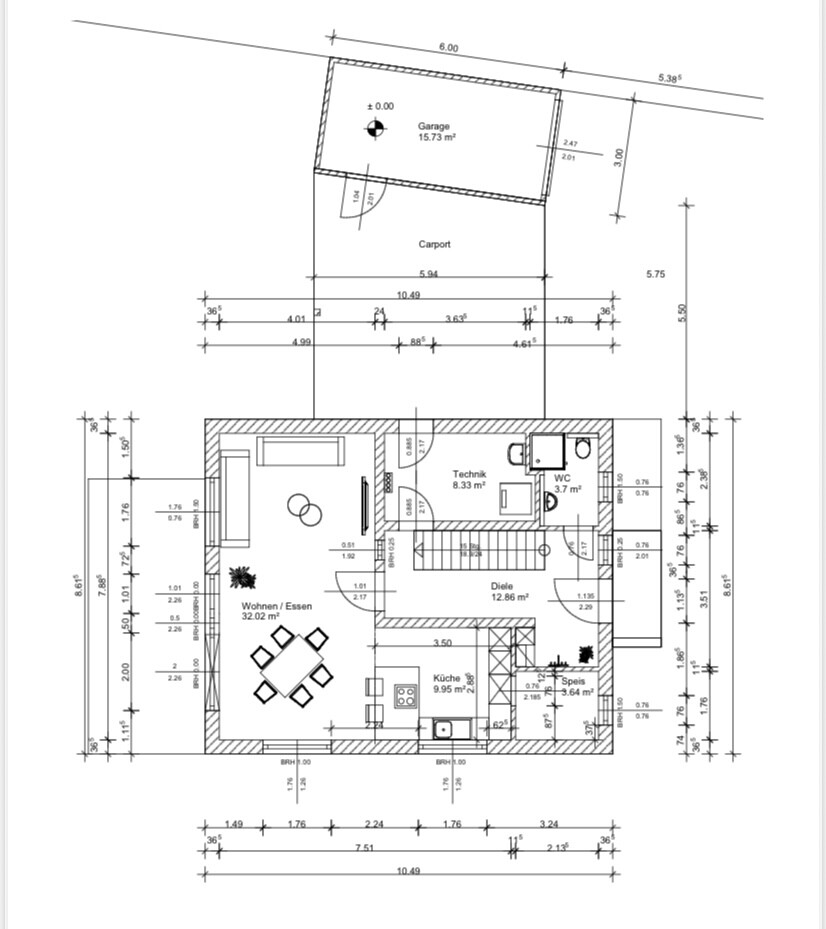
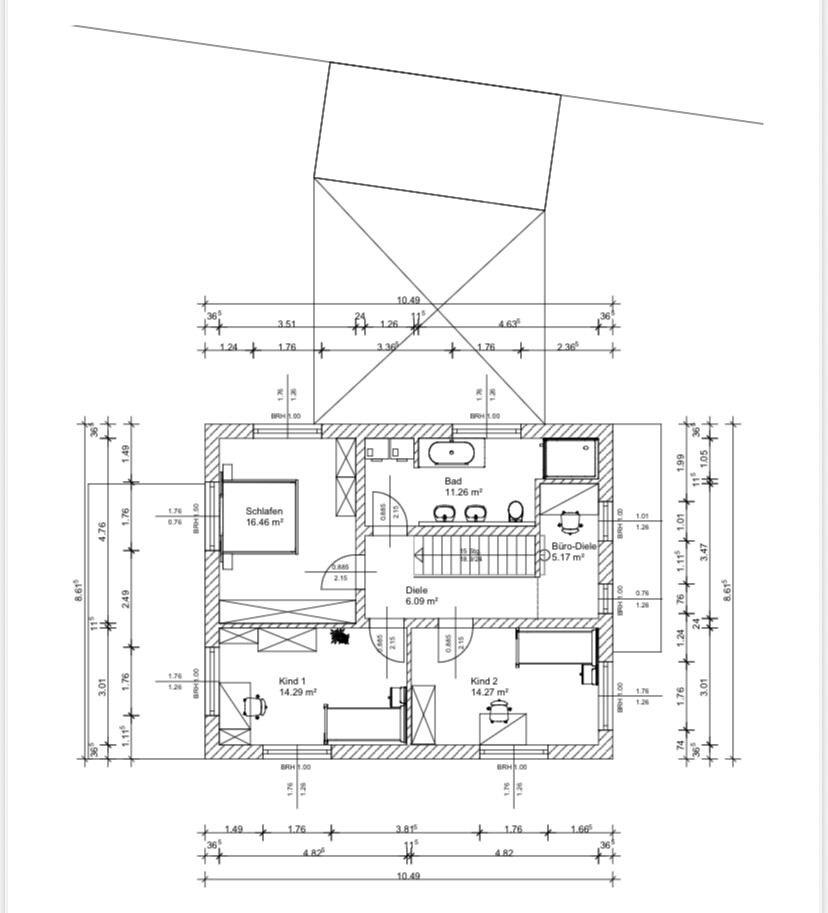
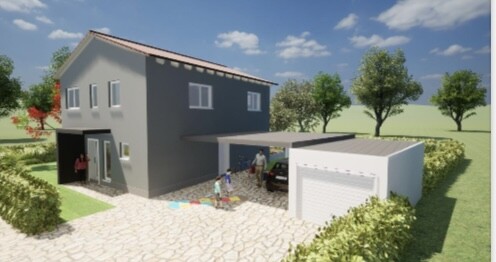
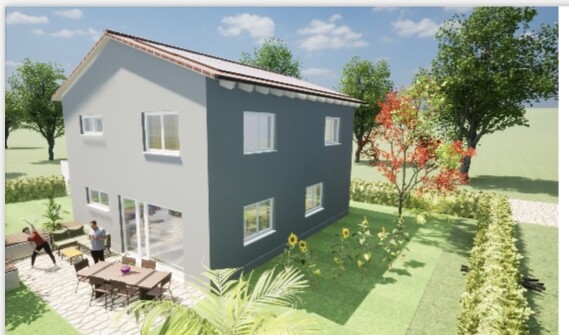
Milka01054 Jul 2025 16:06Hello everyone, following my last post about costs and so on, Ant11 suggested that I start with a floor plan here for evaluation. This plan has now existed for quite some time with a few minor adjustments, so the ideas have not changed. I’m looking forward to some feedback.
Development Plan / Restrictions
Plot size 654 sqm (7040 sq ft)
Slope no
Site occupancy index 0.4
Floor area ratio 0.8
Building setback, building line and boundary 3 m (10 ft)
Edge development only garages or carport
Number of parking spaces 2
Number of floors max 2
Roof pitch 0–48 degrees
Style single-family house
Orientation any
Maximum heights / limits 6 m (20 ft) wall and 9 m (30 ft) total
Other requirements cistern
Client Requirements
Style, roof type, building type gable roof
Basement, floors 2
Number of people, age 2 adults and potentially 2 children, currently 1
Space requirements ground floor, upper floor
Office: family use or home office? Both
Guest sleeping per year, if so guests sleep in the children’s rooms
Open kitchen, kitchen island open kitchen
Number of dining seats 1
Fireplace no
Music / stereo wall no
Balcony, roof terrace no
Garage, carport yes
Utility garden, greenhouse possible
Other wishes / special features / daily routine, also reasons why this or that should or should not be included
House Design
Who designed it:
- Initial draft by architect then adjustments with builder/architect
What do you particularly like? Why? Utility room with separate door (mudroom), large pantry
What do you dislike? Why?
Price estimate according to architect/planner: 433k
Personal price limit for the house, including fixtures: 500k
Preferred heating technology: air heat pump and central ventilation system
If you had to give up, which details / extensions
- Could you give up: if push comes to shove, the separate door for the utility room or the pantry could be omitted
- Could you not give up: guest WC with shower
Why did the design turn out the way it did? For example:
Build as small as possible but as large as necessary. The plot becomes wider toward the back.
So, this is a draft after a consultation appointment with the architect. It was then revised again with the builder.
We want a functional home that works for 2 adults and potentially 2 children (1 currently). In addition, we have a dog, but that obviously adapts too (the mudroom is also designed for this).
Home office is generally possible and planned. First, we have one child’s room reserved and intended for this purpose. Afterwards, the office niche or the bedroom upstairs. We don’t need much except a quiet place to work.
If all else fails, the pantry will become the office (possibly then accessible from the hallway).
The upstairs bathroom is somewhat elongated due to the narrow building footprint and straight staircase. The washing machine and dryer are shown upstairs and are planned to be there. There are also connections in the utility room. Otherwise, the space upstairs or downstairs will be used for storage.
I look forward to your opinions.
Development Plan / Restrictions
Plot size 654 sqm (7040 sq ft)
Slope no
Site occupancy index 0.4
Floor area ratio 0.8
Building setback, building line and boundary 3 m (10 ft)
Edge development only garages or carport
Number of parking spaces 2
Number of floors max 2
Roof pitch 0–48 degrees
Style single-family house
Orientation any
Maximum heights / limits 6 m (20 ft) wall and 9 m (30 ft) total
Other requirements cistern
Client Requirements
Style, roof type, building type gable roof
Basement, floors 2
Number of people, age 2 adults and potentially 2 children, currently 1
Space requirements ground floor, upper floor
Office: family use or home office? Both
Guest sleeping per year, if so guests sleep in the children’s rooms
Open kitchen, kitchen island open kitchen
Number of dining seats 1
Fireplace no
Music / stereo wall no
Balcony, roof terrace no
Garage, carport yes
Utility garden, greenhouse possible
Other wishes / special features / daily routine, also reasons why this or that should or should not be included
House Design
Who designed it:
- Initial draft by architect then adjustments with builder/architect
What do you particularly like? Why? Utility room with separate door (mudroom), large pantry
What do you dislike? Why?
Price estimate according to architect/planner: 433k
Personal price limit for the house, including fixtures: 500k
Preferred heating technology: air heat pump and central ventilation system
If you had to give up, which details / extensions
- Could you give up: if push comes to shove, the separate door for the utility room or the pantry could be omitted
- Could you not give up: guest WC with shower
Why did the design turn out the way it did? For example:
Build as small as possible but as large as necessary. The plot becomes wider toward the back.
So, this is a draft after a consultation appointment with the architect. It was then revised again with the builder.
We want a functional home that works for 2 adults and potentially 2 children (1 currently). In addition, we have a dog, but that obviously adapts too (the mudroom is also designed for this).
Home office is generally possible and planned. First, we have one child’s room reserved and intended for this purpose. Afterwards, the office niche or the bedroom upstairs. We don’t need much except a quiet place to work.
If all else fails, the pantry will become the office (possibly then accessible from the hallway).
The upstairs bathroom is somewhat elongated due to the narrow building footprint and straight staircase. The washing machine and dryer are shown upstairs and are planned to be there. There are also connections in the utility room. Otherwise, the space upstairs or downstairs will be used for storage.
I look forward to your opinions.
W
wiltshire4 Jul 2025 17:48Milka0105 schrieb:
Build as small as possible, as large as necessary.This has been achieved. More space here and there is nice, but not essential.I’m familiar with the size of the home office from England. It’s plenty sufficient for computer work, and with a few tricks you can make the atmosphere quite pleasant.
The straight staircase always takes up some space, but it’s well placed where there is no natural light anyway.
The kitchen is too small to comfortably cook with several people, but the location of the pantry can help. I would consider relocating the dishwasher along with a small additional sink into the pantry to create more storage space in the cooking area. You will have few full-height cabinets if you want even a minimal amount of countertop space. Positioning the oven(s) and refrigerator(s) will be a challenge.
I would skip the shower on the ground floor.
The utility room is a bit tight, even though the laundry appliances are upstairs in the bathroom. I’d advise checking the planned equipment with the necessary clearance requirements. As a “dirt lock” when autumn walks bring wet, muddy shoes and the dog inside, I think the side entrance into the utility room is a good idea, though a bit small. It could work if the dog learns to shake off under the carport...
The layout of the upstairs bathroom looks uncomfortable to me on the plan. Placing the toilet in a row with the sinks—there is something about that I don’t like, although I can’t really explain why. The shower niche will definitely need good ventilation to avoid mold.
The overall kitchen and the bathroom layout (not the size) would bother me a lot.
Two tall cabinets, one allowing crawling through the pantry, is one tall cabinet too few for valuable space. The pantry doesn’t even have room for a second refrigerator or tall cabinet (door and window locations).
But for me, even cooking alone, the countertop space would be too small. Obviously, storage space too, because as a cook I don’t want to have to constantly get something from a cabinet in the pantry.
This whole combination isn’t well thought out.
I see something similar with the cloakroom and mudroom: The cloakroom only seems to be there to store the currently worn jackets, but what about the others? And the shoes? We have a gas heating system and controlled ventilation with about 8.5 square meters (about 91 square feet), with roughly 3 meters (about 10 feet) of kitchen cabinets on one side. The remaining space is shared by recycling containers, bags, cleaning supplies that are not in cabinets, tools, and yet more bags. For our dog, about as much space as a person is needed — so about 60 centimeters (24 inches) of wardrobe space per person. That doesn’t fit anywhere here.
You will sooner or later end up cluttering the hallway if you don’t plan storage space for everyday items now.
The office corner doesn’t seem to be a problem. But it could get tight if you also need to accommodate a printer, miscellaneous items, or several family files.
For me, it’s more than that. The bathtub and the washbasin may be too close:
If you place the bathtub where the washing machine and dryer are currently planned, then orient the toilet at the end of the tub by the window (with the toilet rotated that way), and place two washbasins on a long countertop. Below the countertop, where you don’t bump your feet, put the washing machine and dryer.
Since you can also shower in the bathtub, I would build without a shower on the ground floor. If it’s intended for the dog, then please consistently without that door through the utility room, which just wastes valuable space.
There is no roof hatch indicated?
To summarize: there are larger houses with 150 square meters (about 1,615 square feet). Here, the functions are shuffled around so that a room’s function must serve many purposes only in theory. You will probably always be somewhat dissatisfied because the room’s function is insufficient.
And who is to blame? The straight staircase! A double half-turn staircase would shorten the hallway and widen the kitchen. The house is already narrow — and because of the size limit, the kitchen ends up (too) small.
(...Says someone from a two-person household who doesn’t hoard much)
wiltshire schrieb:
The kitchen is indeed too small to cook comfortably with several people, but the location of the pantry could help. I would consider relocating the dishwasher together with a small additional sink into the pantry to create more storage space in the cooking area. You won’t be able to have many tall cabinets if you want even a minimum amount of counter space. Positioning the oven(s) and a refrigerator is a challenge.
Two tall cabinets, one allowing crawling through the pantry, is one tall cabinet too few for valuable space. The pantry doesn’t even have room for a second refrigerator or tall cabinet (door and window locations).
But for me, even cooking alone, the countertop space would be too small. Obviously, storage space too, because as a cook I don’t want to have to constantly get something from a cabinet in the pantry.
This whole combination isn’t well thought out.
I see something similar with the cloakroom and mudroom: The cloakroom only seems to be there to store the currently worn jackets, but what about the others? And the shoes? We have a gas heating system and controlled ventilation with about 8.5 square meters (about 91 square feet), with roughly 3 meters (about 10 feet) of kitchen cabinets on one side. The remaining space is shared by recycling containers, bags, cleaning supplies that are not in cabinets, tools, and yet more bags. For our dog, about as much space as a person is needed — so about 60 centimeters (24 inches) of wardrobe space per person. That doesn’t fit anywhere here.
You will sooner or later end up cluttering the hallway if you don’t plan storage space for everyday items now.
The office corner doesn’t seem to be a problem. But it could get tight if you also need to accommodate a printer, miscellaneous items, or several family files.
wiltshire schrieb:
The arrangement in the upstairs bathroom looks uncomfortable to me on the plan.
For me, it’s more than that. The bathtub and the washbasin may be too close:
If you place the bathtub where the washing machine and dryer are currently planned, then orient the toilet at the end of the tub by the window (with the toilet rotated that way), and place two washbasins on a long countertop. Below the countertop, where you don’t bump your feet, put the washing machine and dryer.
Since you can also shower in the bathtub, I would build without a shower on the ground floor. If it’s intended for the dog, then please consistently without that door through the utility room, which just wastes valuable space.
There is no roof hatch indicated?
To summarize: there are larger houses with 150 square meters (about 1,615 square feet). Here, the functions are shuffled around so that a room’s function must serve many purposes only in theory. You will probably always be somewhat dissatisfied because the room’s function is insufficient.
And who is to blame? The straight staircase! A double half-turn staircase would shorten the hallway and widen the kitchen. The house is already narrow — and because of the size limit, the kitchen ends up (too) small.
(...Says someone from a two-person household who doesn’t hoard much)

Milka0105 schrieb:
Hello everyone, after my last post about costs and so on, Ant11 pointed out that I should first start the evaluation here with a floor plan. I assume I am meant with this post: https://www.hausbau-forum.de/threads/angebotsuebersicht-und-bauleistungsbeschreibung.48939/page-4#post-684995
11ant schrieb:
0. Start a planning discussion here, beginning with the completed questionnaire https://www.hausbau-forum.de/threads/grundriss-planung-unbedingt-vor-beitrag-erstellung-lesen.11714/ and a presentation of the plot, preferably with elevation points or contour lines;
1. Stop fearing the apparent extra expense of an independent architect’s design. Complete at least "Module A" of my "Homebuilding Roadmap, also for you: the HOAI phase model!". At its source, you will also find the way to my personal advice; ... where naturally the entire design – not just a "floor plan" – is being discussed;
Milka0105 schrieb:
so it is a design following a consultation appointment with architects. This was then altered again together with the construction company. ... and I continued saying
11ant schrieb:
3. After the resting period and setting the direction, discuss the aspect of your own building specification thoroughly with your independent architect. ... so explicitly an independent architect, Module A, resting period and setting the direction. Not letting the existing design be constantly reworked by an architect and the same construction company as before – that is an improper (even incestuous) yoghurt culturing process, which certainly does not reflect proper understanding of my homebuilding roadmap. Impatient, sloppy, incomplete redesign leads to results that do not praise its creators and represent carried-through genetic material in the DNA, here visible in the maintained staircase concept. MTBF correlates (painfully and powerfully!) with clean code!
It would have been important, 1. to return to the preliminary design during the design process. Apparently, this did not happen (probably taken lightly out of impatience). Then probably also 2. the resting period was too short and likely 3. the setting of the direction was considered unnecessary (because the builder was already fallen for). This can all be done (or rather omitted), it is not legally punishable, but largely pointless; wise decisions work differently.
A concrete floor plan critique therefore made little sense, if the conceptual approach is already flawed. Nevertheless, I am curious: what exactly is the three-part, 4.5-meter (15 feet) wide element from the family of sliding terrace doors supposed to represent, and why exactly in this specific way? (As not just a construction consultant, but also as a former window specialist, I am asking).
https://www.instagram.com/11antgmxde/
https://www.linkedin.com/company/bauen-jetzt/
M
Milka01054 Jul 2025 23:08wiltshire schrieb:
This works well. Having more space here and there is nice but not necessary.
I know the size of the home office from experience in England. It’s perfectly sufficient for computer work, and with a few tricks, you can make the atmosphere very pleasant.
A straight staircase always takes up some space but is well placed where there is no natural light anyway.
The kitchen is too small to comfortably cook with several people, but the location of the pantry can help. I would consider relocating the dishwasher along with an additional small sink into the pantry to create more storage space in the cooking area. You won’t be able to have many full-height cabinets if you want even a minimal amount of countertop workspace. The placement of the oven(s) and a refrigerator is challenging.
I would skip the shower on the ground floor.
The utility room is somewhat tight, even though the laundry machines will be upstairs in the bathroom. I would clarify the planned technical installations with the required clearance dimensions. As a “mudroom,” if autumn walks mean wet muddy shoes and a wet dog, the secondary entrance into the utility room is good but a bit small. It could work if the dog learns to shake off under the carport...
The layout of the bathroom upstairs looks uncomfortable to me on the plan. Placing the toilet in a row with the washbasins—something about that doesn’t feel right to me, though I can’t put it into objective terms. The shower niche will definitely need good ventilation to prevent mold. We will now have the kitchens designed by the kitchen studio to see how they could be arranged. Otherwise, we would need to adjust the floor plan. Possibly, the kitchen could be pushed slightly into the dining area.
The shower on the ground floor is planned for a household of four people, so that showering downstairs is possible. Also, for the dog, so it doesn’t have to walk through the entire house afterward. Hmm… it just offers a bit more flexibility.
The utility room is 8.5 square meters (about 91 square feet), not huge but not small either. We thought that the space in the middle of the utility room wouldn’t really be used, so it could potentially be made narrower or more compact.
W
wiltshire4 Jul 2025 23:14Milka0105 schrieb:
The utility room is 8.5 sqm (about 91 sq ft), not huge but not small either. We just thought that the space in the middle of the utility room usually goes unused, so it could be made narrower or more compact. Some building services equipment (heat pump, hot water tank, inverter, battery storage, etc.) comes with requirements for the necessary clearance from adjacent objects. The equipment dimensions alone do not determine the space needed, similar to how space requirements in a kitchen are not based solely on appliance size.
Similar topics