
Hello,
I have been reading along for some time now and finally dare to share a floor plan here.
First, here is the list of questions:
Zoning Plan / Restrictions
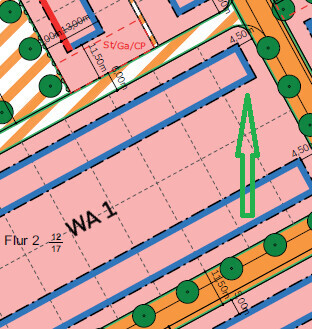
Plot size: 576 sqm (6,200 sq ft)
Slope: Yes, slight. According to the site plan, the top "right" corner is at 295.4 meters (970 feet), lower at 293.88 meters (964 feet), left side goes from 295.17 meters (968 feet) to 293.43 meters (963 feet)
Floor area ratio: 0.3
Building envelope, building line and boundary: Applies to house number 16
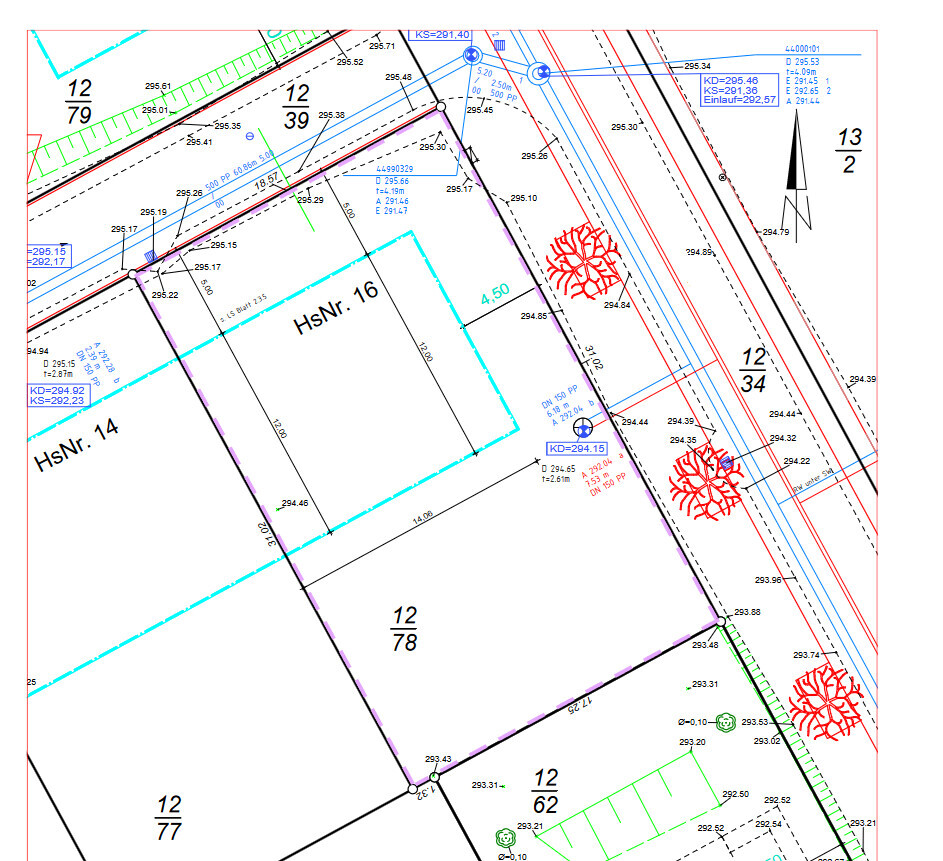
Surrounding buildings
Number of parking spaces: 2
Number of stories: 2 full floors required, plus optional recessed floor (setback floor)
Roof type: Flat roof, max. 5° pitch
Maximum height/limits: Max. 10 m (33 ft) high
Additional requirements: Equipment (heat pump) must be integrated, not external. Maximum of 2 residential units. Specific exterior colors required, rainwater should infiltrate (soil report says this is unlikely). Roofs must be greened. No oil or gas heating allowed.
Client requirements
Style, roof type, building type: Actually, none specified.
Basement, floors: No basement, 2 floors.
Number of occupants, ages: 4 people — 2 adults, 2 children
Ground floor space needs: Daily life (living, kitchen, dining, technical room, guest room)
Upper floor: Family (2 children's rooms, master bedroom, separate bathrooms), home office
Office: Home office, second workspace for occasional use such as a work window sill for example in the bedroom
Guests per year: Currently few.
Open or closed architecture, conservative or modern style: Either is fine.
Open kitchen, kitchen island: We are still considering. Initial wish was separate pantry like in the floor plan. An island would be nice if space allows.
Number of dining seats: Normally 4, rarely up to 8.
Fireplace: None.
Music/stereo wall: Multi-room audio with central unit in technical room.
Balcony, roof terrace: Neither.
Garage, carport: 1 garage
Other wishes: Central vacuum system, laundry chute, smart home (KNX) (I am mostly doing this myself, yes, I am a certified electrician, can program, but will also get additional help)
House design
Who designed the plan:
- Planner from a construction company: Correct, with some input from us. Based on an existing plan.
Price estimate by architect/planner: approx. 485,000 € (euros) for the house, approx. 210,000 € for the plot including basic services (survey, soil report, etc.)
Personal price limit for the house including features: approx. 800,000–850,000 € (including land)
Preferred heating technology: Heat pump
If you had to give up, which details/extra features could you skip:
- Could skip:
- Cannot skip:
Why is the design like it is now? For example:
Standard design by the planner? Yes, with minor wishes from us (wall between study and child’s room 2, T-walls in bathrooms, porch roof, conservatory, pantry)
What do you find especially good or bad about it? So far it seems to fit; apart from possibly the pantry/dining room, we don’t see major issues yet. But that’s why I’m here now.
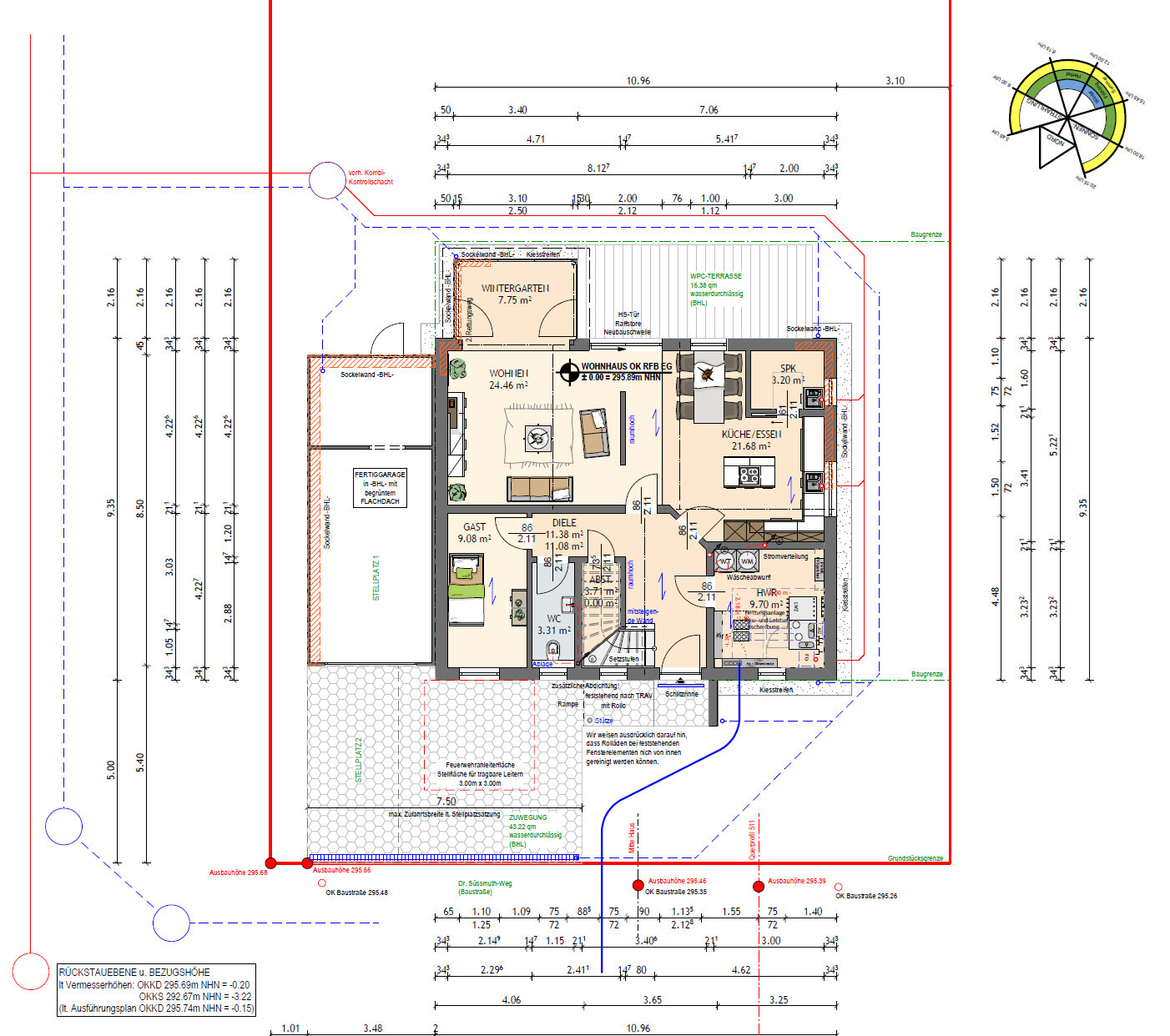
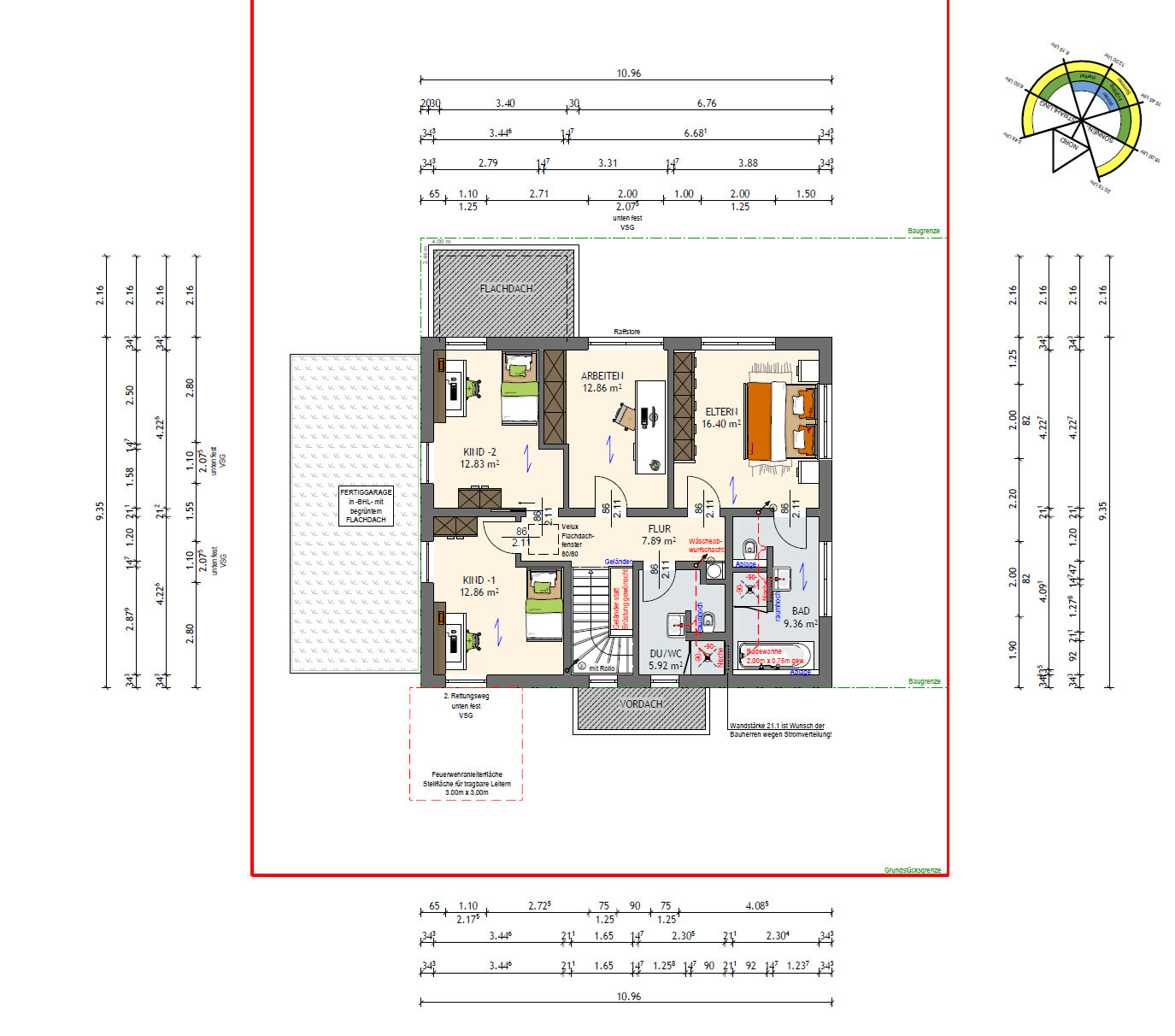
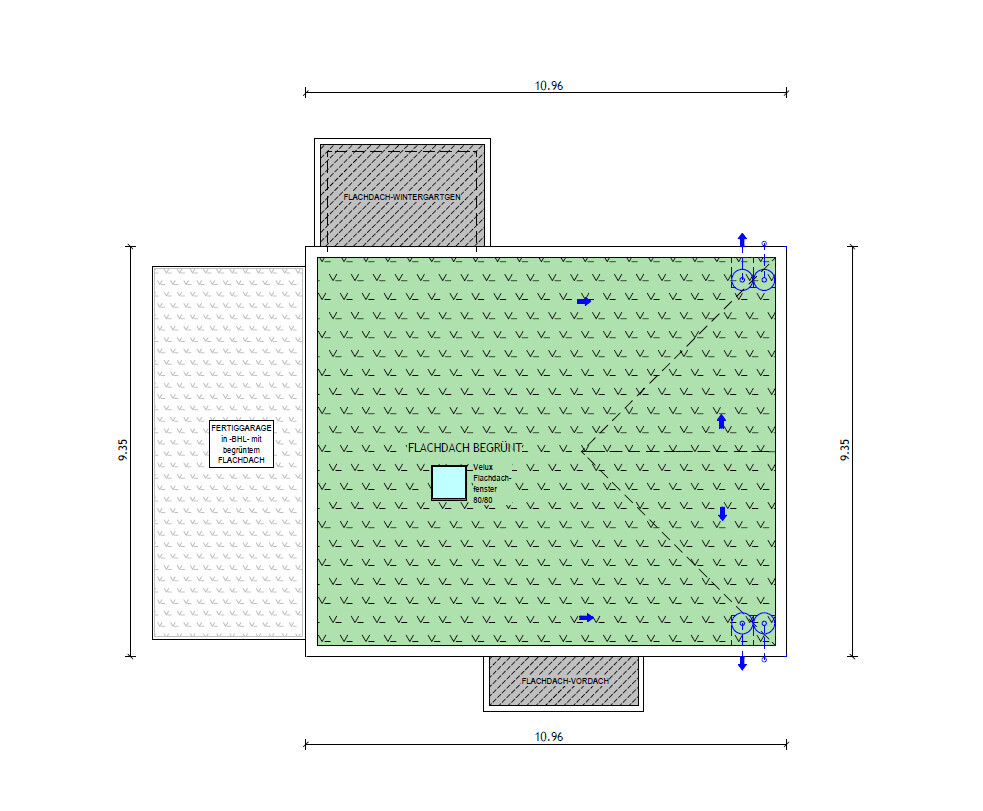
Edit: The furniture shown in the floor plans can be safely ignored. Planners seem to like adding these.
Best regards
Ganneff
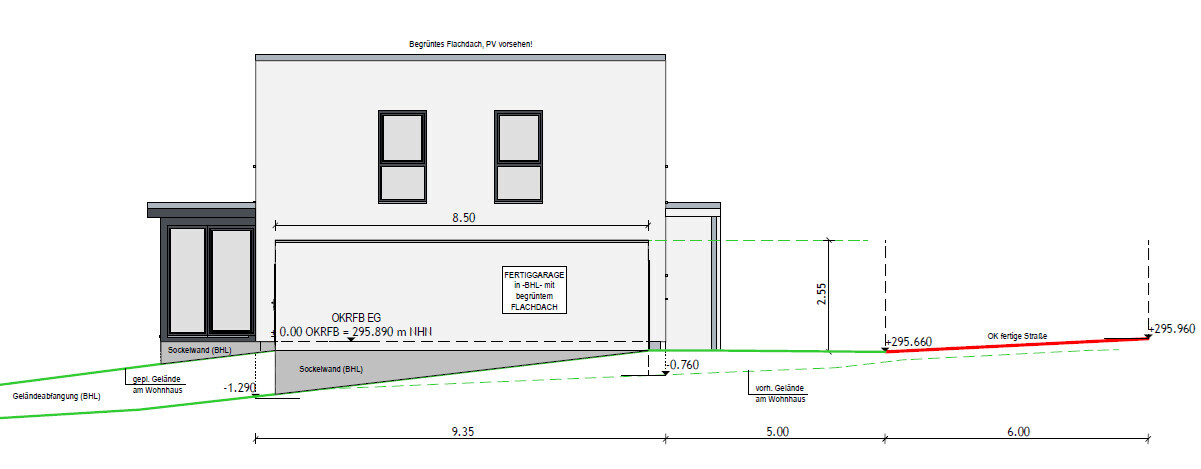
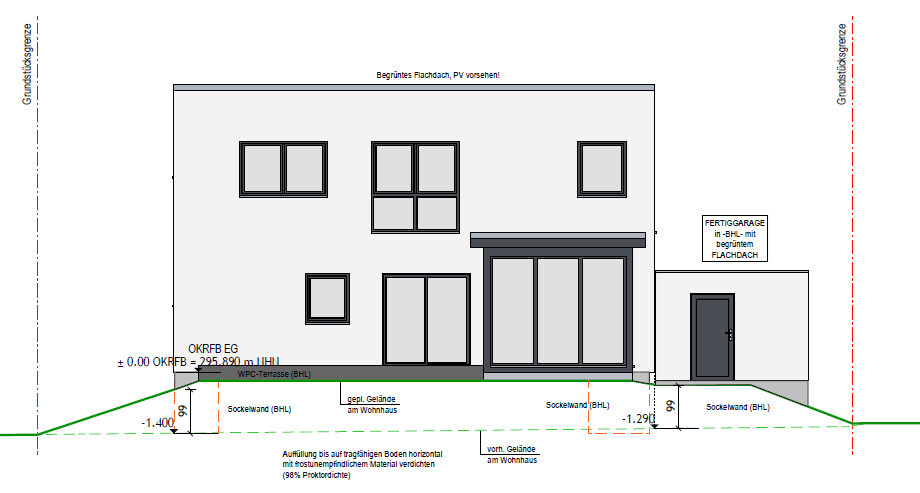
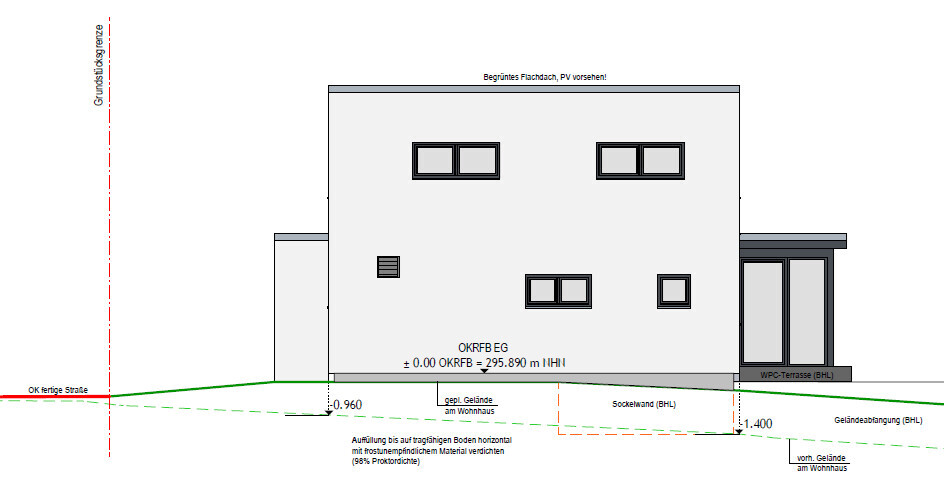
I have been reading along for some time now and finally dare to share a floor plan here.
First, here is the list of questions:
Zoning Plan / Restrictions
Plot size: 576 sqm (6,200 sq ft)
Slope: Yes, slight. According to the site plan, the top "right" corner is at 295.4 meters (970 feet), lower at 293.88 meters (964 feet), left side goes from 295.17 meters (968 feet) to 293.43 meters (963 feet)
Floor area ratio: 0.3
Building envelope, building line and boundary: Applies to house number 16
Surrounding buildings
Number of parking spaces: 2
Number of stories: 2 full floors required, plus optional recessed floor (setback floor)
Roof type: Flat roof, max. 5° pitch
Maximum height/limits: Max. 10 m (33 ft) high
Additional requirements: Equipment (heat pump) must be integrated, not external. Maximum of 2 residential units. Specific exterior colors required, rainwater should infiltrate (soil report says this is unlikely). Roofs must be greened. No oil or gas heating allowed.
Client requirements
Style, roof type, building type: Actually, none specified.
Basement, floors: No basement, 2 floors.
Number of occupants, ages: 4 people — 2 adults, 2 children
Ground floor space needs: Daily life (living, kitchen, dining, technical room, guest room)
Upper floor: Family (2 children's rooms, master bedroom, separate bathrooms), home office
Office: Home office, second workspace for occasional use such as a work window sill for example in the bedroom
Guests per year: Currently few.
Open or closed architecture, conservative or modern style: Either is fine.
Open kitchen, kitchen island: We are still considering. Initial wish was separate pantry like in the floor plan. An island would be nice if space allows.
Number of dining seats: Normally 4, rarely up to 8.
Fireplace: None.
Music/stereo wall: Multi-room audio with central unit in technical room.
Balcony, roof terrace: Neither.
Garage, carport: 1 garage
Other wishes: Central vacuum system, laundry chute, smart home (KNX) (I am mostly doing this myself, yes, I am a certified electrician, can program, but will also get additional help)
House design
Who designed the plan:
- Planner from a construction company: Correct, with some input from us. Based on an existing plan.
Price estimate by architect/planner: approx. 485,000 € (euros) for the house, approx. 210,000 € for the plot including basic services (survey, soil report, etc.)
Personal price limit for the house including features: approx. 800,000–850,000 € (including land)
Preferred heating technology: Heat pump
If you had to give up, which details/extra features could you skip:
- Could skip:
- Cannot skip:
Why is the design like it is now? For example:
Standard design by the planner? Yes, with minor wishes from us (wall between study and child’s room 2, T-walls in bathrooms, porch roof, conservatory, pantry)
What do you find especially good or bad about it? So far it seems to fit; apart from possibly the pantry/dining room, we don’t see major issues yet. But that’s why I’m here now.
Edit: The furniture shown in the floor plans can be safely ignored. Planners seem to like adding these.
Best regards
Ganneff

wiltshire schrieb:
Basically, it’s about the attitude you take towards your own building project. There is no “right” or “wrong,” but rather what fits or doesn’t fit your personality as a homeowner. Oh, the entrepreneurial approach to a homebuilding project: if I haven’t forgotten anyone, besides you I really only know it from @rick2018 and @i_b_n_a_n.
wiltshire schrieb:
I awarded the contracts myself (which is generally not recommended) and made sure that carpenters and electricians who had already worked on several projects together were involved. For the carpenters, I contracted a trade coordination service. Their site manager proved to be very reliable and was significantly less expensive than a site manager service following HOAI.
It’s a path with risks, but ones you can identify and evaluate. Self-contracting is mainly risky for first-time homeowners and, in the way you describe, actually exemplary.
wiltshire schrieb:
I don’t understand exactly what you mean. Can you explain at which points it might be difficult to separate warranty liabilities if you install the electrical systems within a wall build-up? The original poster does not want, as you do, an installation within a on-site prefabricated installation layer, but rather conduits built into prefabricated walls (produced differently than the standard process to accommodate this). This can easily create an aqueduct-like system that allows moisture or even water intrusion.
wiltshire schrieb:
The question seems to come out of nowhere to me. What is your point? I mean the total thickness of the interior walls with installation layers on both sides added up. Two times 3cm (1¼ inches) layers quickly add up. A non-load-bearing interior wall approaches the thickness typical for load-bearing interior walls, and a load-bearing one actually turns into a substantial cavity wall.
https://www.instagram.com/11antgmxde/
https://www.linkedin.com/company/bauen-jetzt/
11ant schrieb:
The original poster doesn’t want an installation like yours within a site-built installation layer made after the assembly date, but rather empty conduits in the prefabricated walls (which are produced differently from the standard process for this purpose). Here, an aqueduct system can easily form for ingressing moisture (or even wetness).The only difference is that I provide the plan, not their standard electrician. Pull wires and drilling for junction boxes are a completely normal process.
W
wiltshire26 Jun 2025 16:5911ant schrieb:
The OP doesn’t want an installation level made on-site after setting the position like you do, but instead conduit pipes within the prefabricated walls (which are produced differently from the standard process for this purpose). This can easily create an aqueduct system for trapped moisture (or even water). That’s certainly a difference. If the electrical planning is integrated into the setting position, then I agree with you. That carries a whole range of risks that even I would avoid.
Ganneff schrieb:
The only difference is that I deliver the plan, I can only advise against hiring the company to install the conduit pipes according to your plan. Even the smallest mistakes—no matter who makes them—can have major consequences. If just one wall-to-wall connection doesn’t fit correctly, you’ll have a huge problem and immediately lose any claims as soon as you start drilling. Even the factory workers won’t want to start drilling. The result: in the best case a few weeks of construction delay, in the worst case no satisfactory solution.
You are getting a house that may not come from a serial production line, but from a highly standardized, segmented manufacturing process that is extremely sensitive to changes. An intervention with conduit pipe planning that does not come from within this process is significant.
11ant schrieb:
Regarding the total thickness of interior walls with installation levels added on both sides. We don’t have interior walls manufactured in the factory, if you don’t count the load-bearing partition walls between the three residential units as classic interior walls. In fact, we barely have any interior walls. The few meters around the bathrooms, the guest toilet, and the beverage fridge were constructed on-site using drywall construction.
wiltshire schrieb:
I can only advise against hiring the company to install the empty conduits according to your plan. Even the smallest mistakes—no matter who makes them—can have a major impact. If just one wall-to-wall connection doesn’t fit, you have a huge problem and immediately lose any claims once you start drilling. The factory workers won’t want to start drilling either. The result: in the best case, a delay of several weeks in construction; in the worst case, no satisfactory solution.
You will get a house that is not from a mass production line but from a highly standardized modular manufacturing process, which is very sensitive to changes. Introducing an electrical plan from outside this process causes significant disruption. I don’t understand that part.
My walls will be assembled just like any other walls. Electrical boxes and cables will be installed as usual. Nothing is different except that the plan “box X here, Y there” was created by person B instead of person A.
The walls will be delivered complete (both sides closed, holes for boxes already made, pull wires running up). The ceilings remain open. They assemble the house on site. Then the electrician (whether mine or theirs) pulls the cables using the pull wires up into the ceiling sections and from there to the destination. After that, they come back and close the ceilings and complete the rest of their work.
Where would I have to drill, and for what purpose? Why should there be a higher risk in this? I don’t want them to do anything that requires completely reconfiguring their machines or experimenting with processes that nobody has seen before.
W
wiltshire26 Jun 2025 17:42Ganneff schrieb:
I don’t understand that part. No problem. It’s simply about the difference between theory and practice. Since theoretically there isn’t one, discussing it is difficult.
Ganneff schrieb:
My walls will be assembled exactly as usual. Boxes and cables will be installed just like always. And that’s precisely where the risk lies, because while that may be true for the craftsmanship aspect, it does not hold for the work preparation (especially machine setup) or quality control (aspects that usually don’t require any attention but must now be considered). Therefore, it’s possible that the walls will be "assembled" exactly as you somewhat disparagingly put it, exactly as before, pass quality control exactly as before, be installed exactly as before, and then it turns out—for example—that the joint between two walls is slightly misaligned and the cable ducts don’t connect properly.
M
motorradsilke26 Jun 2025 17:58wiltshire schrieb:
No problem. It’s simply about the difference between theory and practice. Since, in theory, there is none, it makes the discussion quite difficult.
And that’s where the risk lies, because this applies to the craftsmanship aspect, but not to the work preparation (especially machine setup) or to quality control (aspects that normally wouldn’t need consideration). Therefore, it can happen that the walls are “just cobbled together,” as you put it somewhat dismissively, just like usual, pass through quality control just like usual, get installed just like usual, and then someone realizes, for example, that a joint between two walls is slightly misaligned and the cable ducts don’t connect as intended. But that can happen just as easily if their electrician creates the plan. I don’t see any difference there either.
Similar topics