
Hello,
I have been reading along for some time now and finally dare to share a floor plan here.
First, here is the list of questions:
Zoning Plan / Restrictions
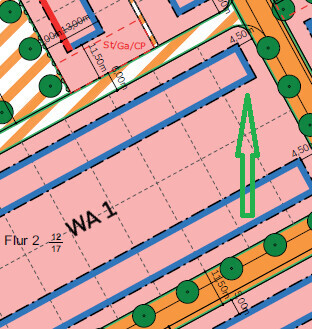
Plot size: 576 sqm (6,200 sq ft)
Slope: Yes, slight. According to the site plan, the top "right" corner is at 295.4 meters (970 feet), lower at 293.88 meters (964 feet), left side goes from 295.17 meters (968 feet) to 293.43 meters (963 feet)
Floor area ratio: 0.3
Building envelope, building line and boundary: Applies to house number 16
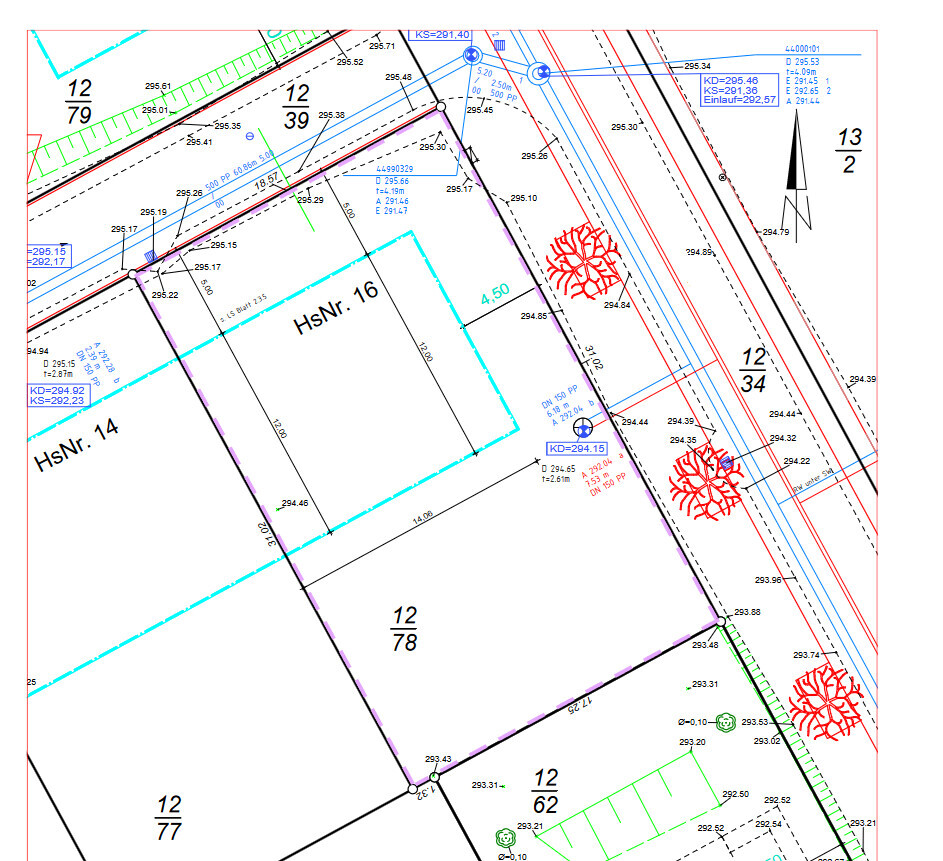
Surrounding buildings
Number of parking spaces: 2
Number of stories: 2 full floors required, plus optional recessed floor (setback floor)
Roof type: Flat roof, max. 5° pitch
Maximum height/limits: Max. 10 m (33 ft) high
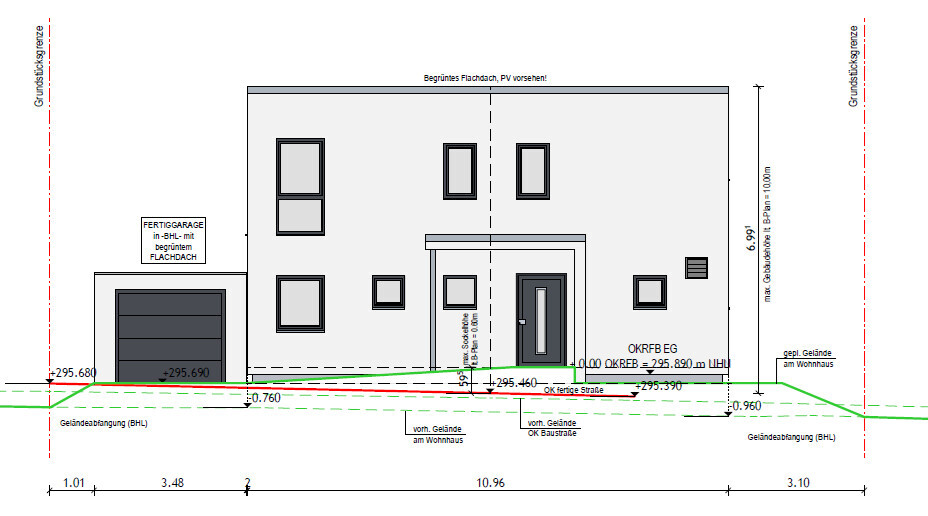
Additional requirements: Equipment (heat pump) must be integrated, not external. Maximum of 2 residential units. Specific exterior colors required, rainwater should infiltrate (soil report says this is unlikely). Roofs must be greened. No oil or gas heating allowed.
Client requirements
Style, roof type, building type: Actually, none specified.
Basement, floors: No basement, 2 floors.
Number of occupants, ages: 4 people — 2 adults, 2 children
Ground floor space needs: Daily life (living, kitchen, dining, technical room, guest room)
Upper floor: Family (2 children's rooms, master bedroom, separate bathrooms), home office
Office: Home office, second workspace for occasional use such as a work window sill for example in the bedroom
Guests per year: Currently few.
Open or closed architecture, conservative or modern style: Either is fine.
Open kitchen, kitchen island: We are still considering. Initial wish was separate pantry like in the floor plan. An island would be nice if space allows.
Number of dining seats: Normally 4, rarely up to 8.
Fireplace: None.
Music/stereo wall: Multi-room audio with central unit in technical room.
Balcony, roof terrace: Neither.
Garage, carport: 1 garage
Other wishes: Central vacuum system, laundry chute, smart home (KNX) (I am mostly doing this myself, yes, I am a certified electrician, can program, but will also get additional help)
House design
Who designed the plan:
- Planner from a construction company: Correct, with some input from us. Based on an existing plan.
Price estimate by architect/planner: approx. 485,000 € (euros) for the house, approx. 210,000 € for the plot including basic services (survey, soil report, etc.)
Personal price limit for the house including features: approx. 800,000–850,000 € (including land)
Preferred heating technology: Heat pump
If you had to give up, which details/extra features could you skip:
- Could skip:
- Cannot skip:
Why is the design like it is now? For example:
Standard design by the planner? Yes, with minor wishes from us (wall between study and child’s room 2, T-walls in bathrooms, porch roof, conservatory, pantry)
What do you find especially good or bad about it? So far it seems to fit; apart from possibly the pantry/dining room, we don’t see major issues yet. But that’s why I’m here now.
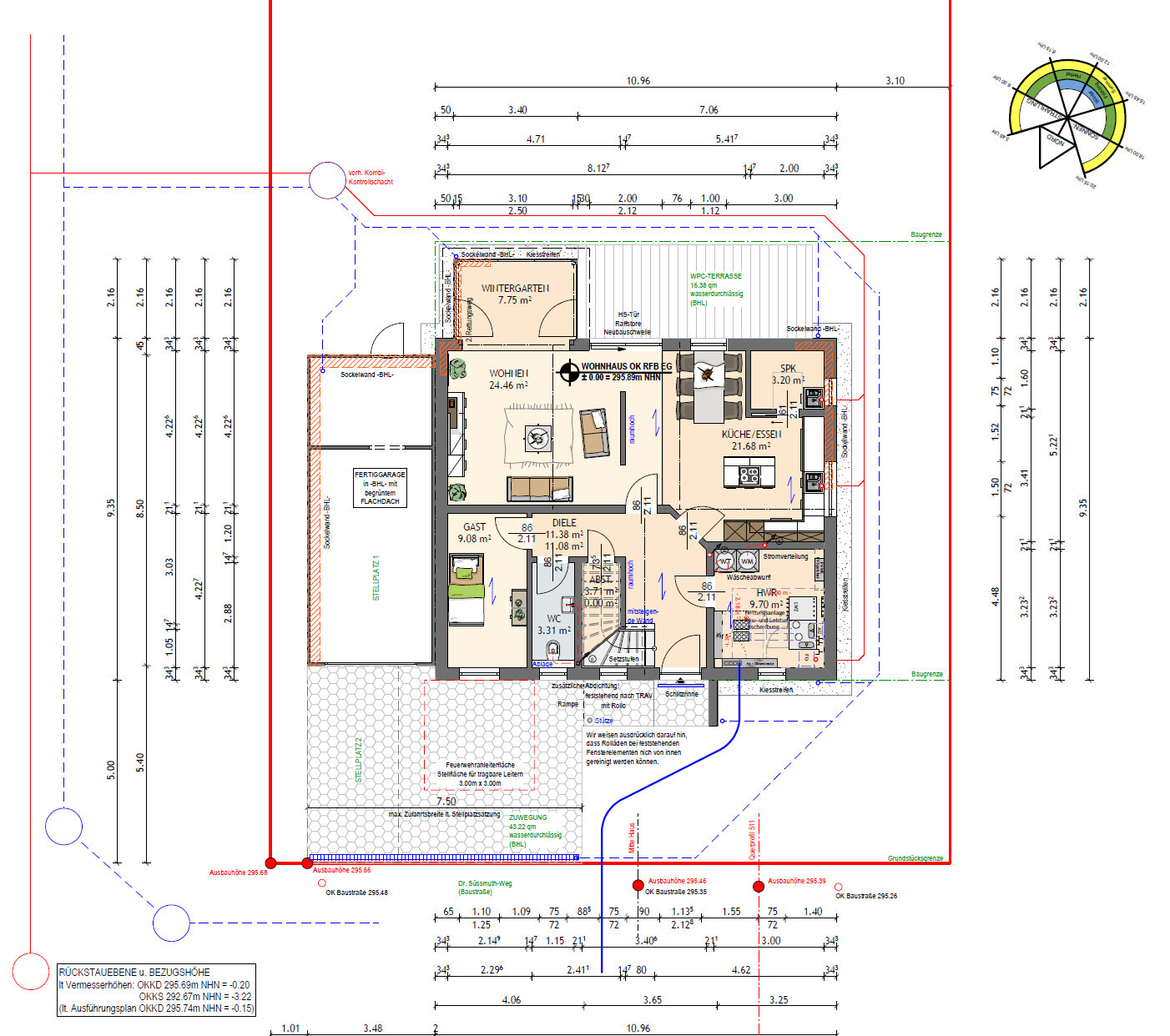
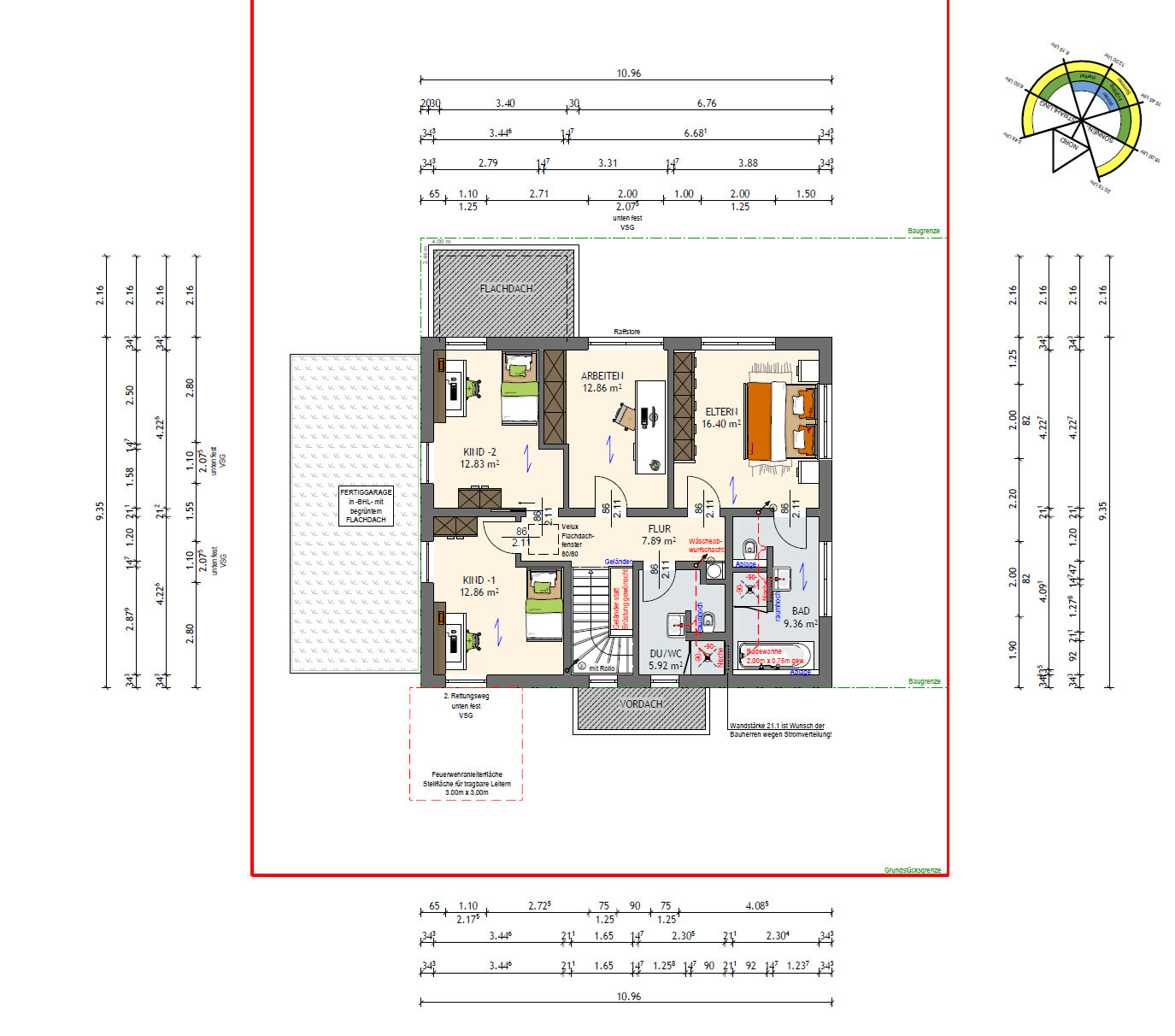
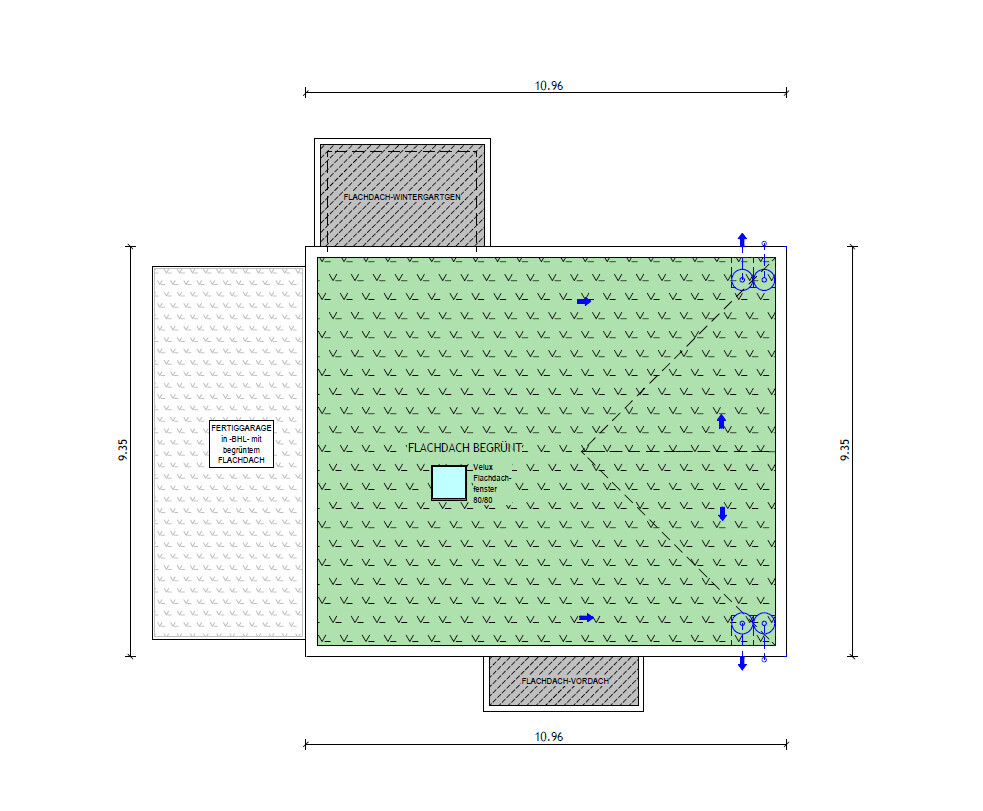
Edit: The furniture shown in the floor plans can be safely ignored. Planners seem to like adding these.
Best regards
Ganneff
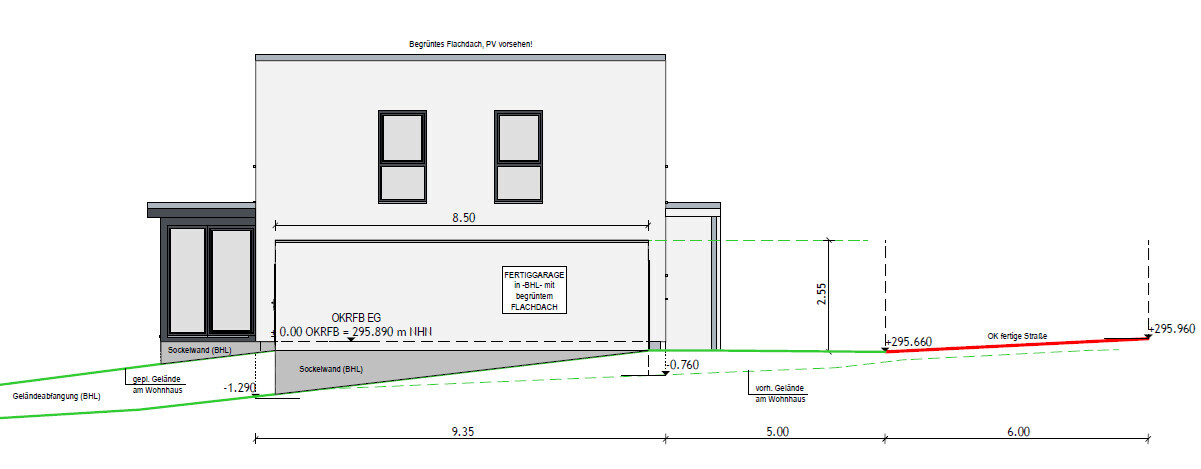
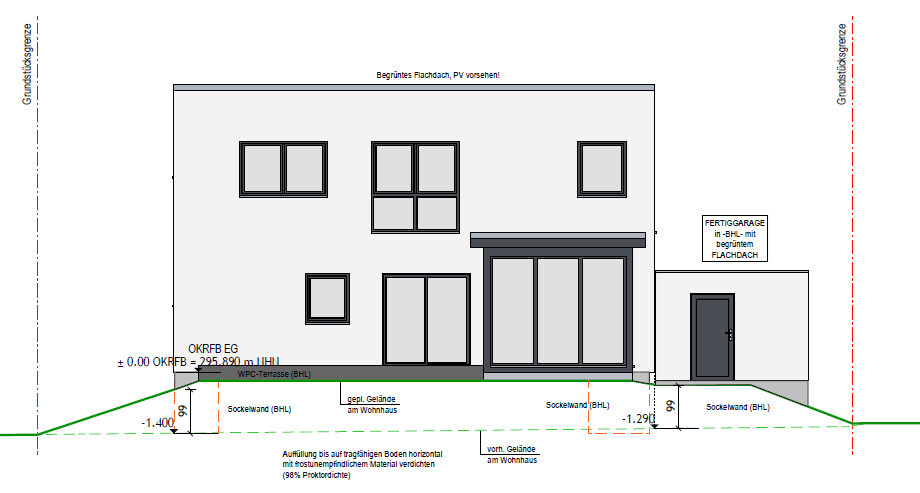
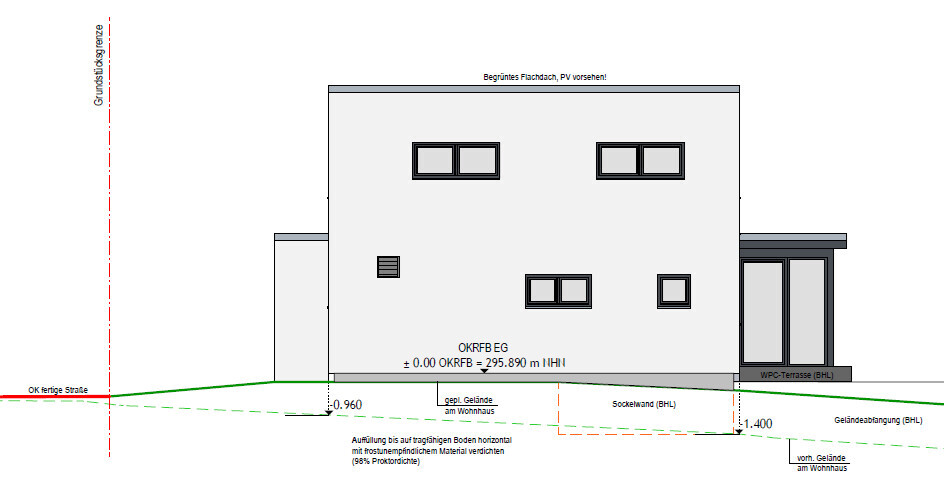
I have been reading along for some time now and finally dare to share a floor plan here.
First, here is the list of questions:
Zoning Plan / Restrictions
Plot size: 576 sqm (6,200 sq ft)
Slope: Yes, slight. According to the site plan, the top "right" corner is at 295.4 meters (970 feet), lower at 293.88 meters (964 feet), left side goes from 295.17 meters (968 feet) to 293.43 meters (963 feet)
Floor area ratio: 0.3
Building envelope, building line and boundary: Applies to house number 16
Surrounding buildings
Number of parking spaces: 2
Number of stories: 2 full floors required, plus optional recessed floor (setback floor)
Roof type: Flat roof, max. 5° pitch
Maximum height/limits: Max. 10 m (33 ft) high
Additional requirements: Equipment (heat pump) must be integrated, not external. Maximum of 2 residential units. Specific exterior colors required, rainwater should infiltrate (soil report says this is unlikely). Roofs must be greened. No oil or gas heating allowed.
Client requirements
Style, roof type, building type: Actually, none specified.
Basement, floors: No basement, 2 floors.
Number of occupants, ages: 4 people — 2 adults, 2 children
Ground floor space needs: Daily life (living, kitchen, dining, technical room, guest room)
Upper floor: Family (2 children's rooms, master bedroom, separate bathrooms), home office
Office: Home office, second workspace for occasional use such as a work window sill for example in the bedroom
Guests per year: Currently few.
Open or closed architecture, conservative or modern style: Either is fine.
Open kitchen, kitchen island: We are still considering. Initial wish was separate pantry like in the floor plan. An island would be nice if space allows.
Number of dining seats: Normally 4, rarely up to 8.
Fireplace: None.
Music/stereo wall: Multi-room audio with central unit in technical room.
Balcony, roof terrace: Neither.
Garage, carport: 1 garage
Other wishes: Central vacuum system, laundry chute, smart home (KNX) (I am mostly doing this myself, yes, I am a certified electrician, can program, but will also get additional help)
House design
Who designed the plan:
- Planner from a construction company: Correct, with some input from us. Based on an existing plan.
Price estimate by architect/planner: approx. 485,000 € (euros) for the house, approx. 210,000 € for the plot including basic services (survey, soil report, etc.)
Personal price limit for the house including features: approx. 800,000–850,000 € (including land)
Preferred heating technology: Heat pump
If you had to give up, which details/extra features could you skip:
- Could skip:
- Cannot skip:
Why is the design like it is now? For example:
Standard design by the planner? Yes, with minor wishes from us (wall between study and child’s room 2, T-walls in bathrooms, porch roof, conservatory, pantry)
What do you find especially good or bad about it? So far it seems to fit; apart from possibly the pantry/dining room, we don’t see major issues yet. But that’s why I’m here now.
Edit: The furniture shown in the floor plans can be safely ignored. Planners seem to like adding these.
Best regards
Ganneff

wiltshire schrieb:
In the actual wall structure, there are simply no utility lines. That’s what the service layer we installed later is for.How thick is a non-load-bearing interior wall then?https://www.instagram.com/11antgmxde/
https://www.linkedin.com/company/bauen-jetzt/
11ant schrieb:
You lucky one. Industrial construction isn’t usually that flexible, that’s more of a premium option.That’s not standard for them either. On the contrary, I’m probably the first (and last) person to have it this way.
They have build stages ranging from “shell only, do the rest yourself” to “technical installations completed,” “almost everything finished,” and “turnkey.” From the beginning, I said, “I’ll take almost everything finished BUT leave out the electrical work,” and they agreed to that. Nobody had done that before, so I’m the first. Now they’re doing it with me, but it doesn’t really fit into their usual process, so I’ll probably remain the only one.
Ganneff schrieb:
It’s also not standard for them. On the contrary, [...] it doesn’t really fit their system, which is why I’ll probably remain the only one. ... and in my opinion, it will become part of the history of sales training — showing which seemingly harmless special requests customers should absolutely never have fulfilled (because once you step outside the quality assurance process, everyone ends up a loser). My general Steinemantra (and the reference to @R.Hotzenplotz as a specific self-initiated unlucky knight) is by no means due to some pessimism of mine trying to save the world or my desire to be a know-it-all teacher proving a point. Quality assurance processes create routines, and apprentices endanger their success. No beauty contest between Alexa, Siri, and Cortana is worth creating a home automation nightmare mansion of perfection. Electrical work is structurally such a critical element, and within a ready-to-move-in house it’s a minefield of warranty pitfalls, that the head of legal could retire because the sales department was not forbidden from doing it. Theoretically, but only there, an industrial carpenter builds on principle the same way a bespoke timber-framing workshop does. That @wiltshire doesn’t regret it, in my opinion, is no encouragement to try it yourself. Brooms that are supposed to carry buckets — how much could possibly go wrong with that? ...
Say "April Fools" and put the electrical work back in — even if it probably costs more than never having removed it in the first place, it will be a good investment. While you’re researching photovoltaics, better focus on studying the history of the outlaw.
https://www.instagram.com/11antgmxde/
https://www.linkedin.com/company/bauen-jetzt/
H
HuppelHuppel25 Jun 2025 15:2811ant schrieb:
Story of the robber.Please enlighten us. I have come across mentions of the robber several times—what exactly is that about?
11ant schrieb:
Say "April Fool" and bring the electrical system back in — even if it probably costs more than never having removed it in the first place, it will be a good investment. While you were planning to research photovoltaic systems, you might be better off studying the history of the robber instead. No. Unless I win the lottery, because roughly estimated, it would cost me at least three times as much, if not more.
Aside from that, this is exactly the trade I know best and where I can deliver the most myself. For the part I’m missing here, I will hire a company. So I’m not left on my own.
HuppelHuppel schrieb:
Please enlighten us. I’ve read about the Räuber several times, what is that all about?You can easily find it using the forum search. Someone wanted to build a fairly large house (and actually did), but apparently carried an invisible sign that said "HERE WITH ME" whenever there was a question whether something was incorrect or simply doable (I’ve only gone through the first 80 pages so far). Combined with not exactly the brightest construction consultants, supervisors, and architects, this resulted in a build that seems to have served as a demonstration project for training new building specialists.