
Hello,
I have been reading along for some time now and finally dare to share a floor plan here.
First, here is the list of questions:
Zoning Plan / Restrictions
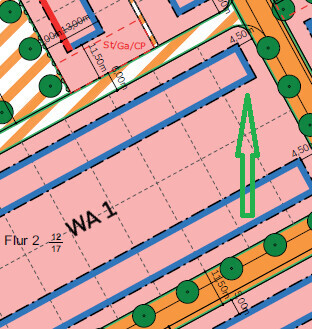
Plot size: 576 sqm (6,200 sq ft)
Slope: Yes, slight. According to the site plan, the top "right" corner is at 295.4 meters (970 feet), lower at 293.88 meters (964 feet), left side goes from 295.17 meters (968 feet) to 293.43 meters (963 feet)
Floor area ratio: 0.3
Building envelope, building line and boundary: Applies to house number 16
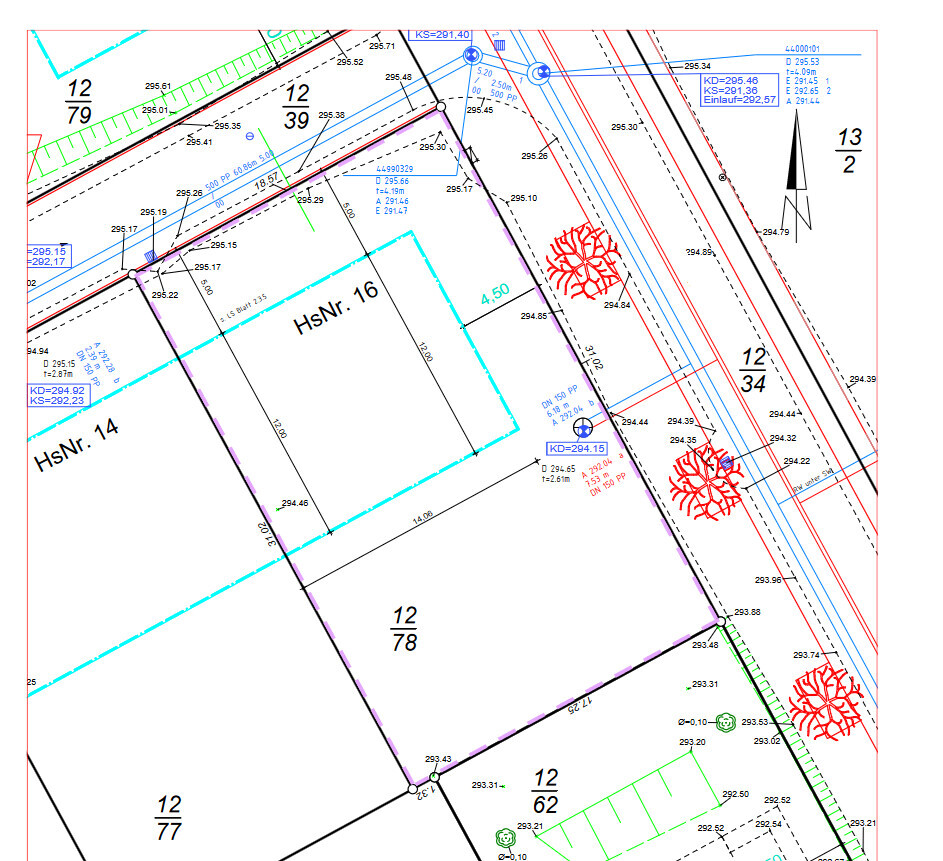
Surrounding buildings
Number of parking spaces: 2
Number of stories: 2 full floors required, plus optional recessed floor (setback floor)
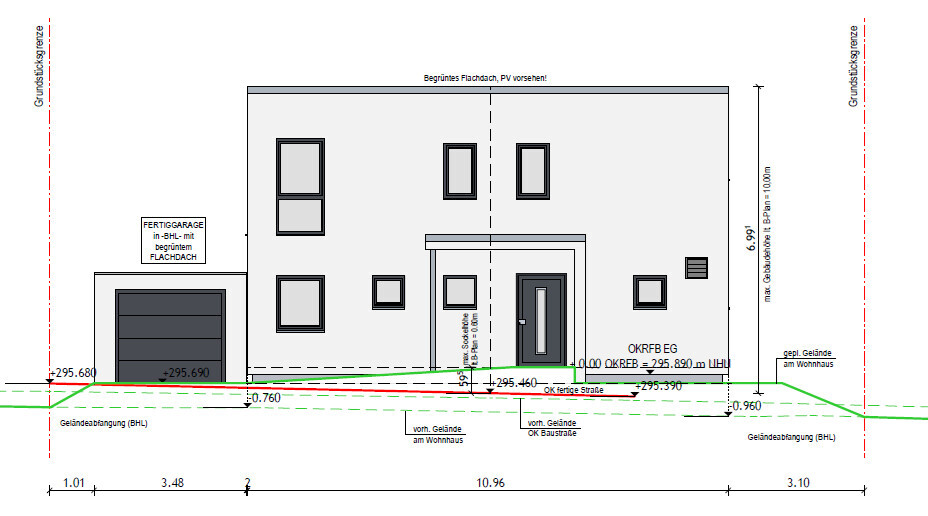
Roof type: Flat roof, max. 5° pitch
Maximum height/limits: Max. 10 m (33 ft) high
Additional requirements: Equipment (heat pump) must be integrated, not external. Maximum of 2 residential units. Specific exterior colors required, rainwater should infiltrate (soil report says this is unlikely). Roofs must be greened. No oil or gas heating allowed.
Client requirements
Style, roof type, building type: Actually, none specified.
Basement, floors: No basement, 2 floors.
Number of occupants, ages: 4 people — 2 adults, 2 children
Ground floor space needs: Daily life (living, kitchen, dining, technical room, guest room)
Upper floor: Family (2 children's rooms, master bedroom, separate bathrooms), home office
Office: Home office, second workspace for occasional use such as a work window sill for example in the bedroom
Guests per year: Currently few.
Open or closed architecture, conservative or modern style: Either is fine.
Open kitchen, kitchen island: We are still considering. Initial wish was separate pantry like in the floor plan. An island would be nice if space allows.
Number of dining seats: Normally 4, rarely up to 8.
Fireplace: None.
Music/stereo wall: Multi-room audio with central unit in technical room.
Balcony, roof terrace: Neither.
Garage, carport: 1 garage
Other wishes: Central vacuum system, laundry chute, smart home (KNX) (I am mostly doing this myself, yes, I am a certified electrician, can program, but will also get additional help)
House design
Who designed the plan:
- Planner from a construction company: Correct, with some input from us. Based on an existing plan.
Price estimate by architect/planner: approx. 485,000 € (euros) for the house, approx. 210,000 € for the plot including basic services (survey, soil report, etc.)
Personal price limit for the house including features: approx. 800,000–850,000 € (including land)
Preferred heating technology: Heat pump
If you had to give up, which details/extra features could you skip:
- Could skip:
- Cannot skip:
Why is the design like it is now? For example:
Standard design by the planner? Yes, with minor wishes from us (wall between study and child’s room 2, T-walls in bathrooms, porch roof, conservatory, pantry)
What do you find especially good or bad about it? So far it seems to fit; apart from possibly the pantry/dining room, we don’t see major issues yet. But that’s why I’m here now.
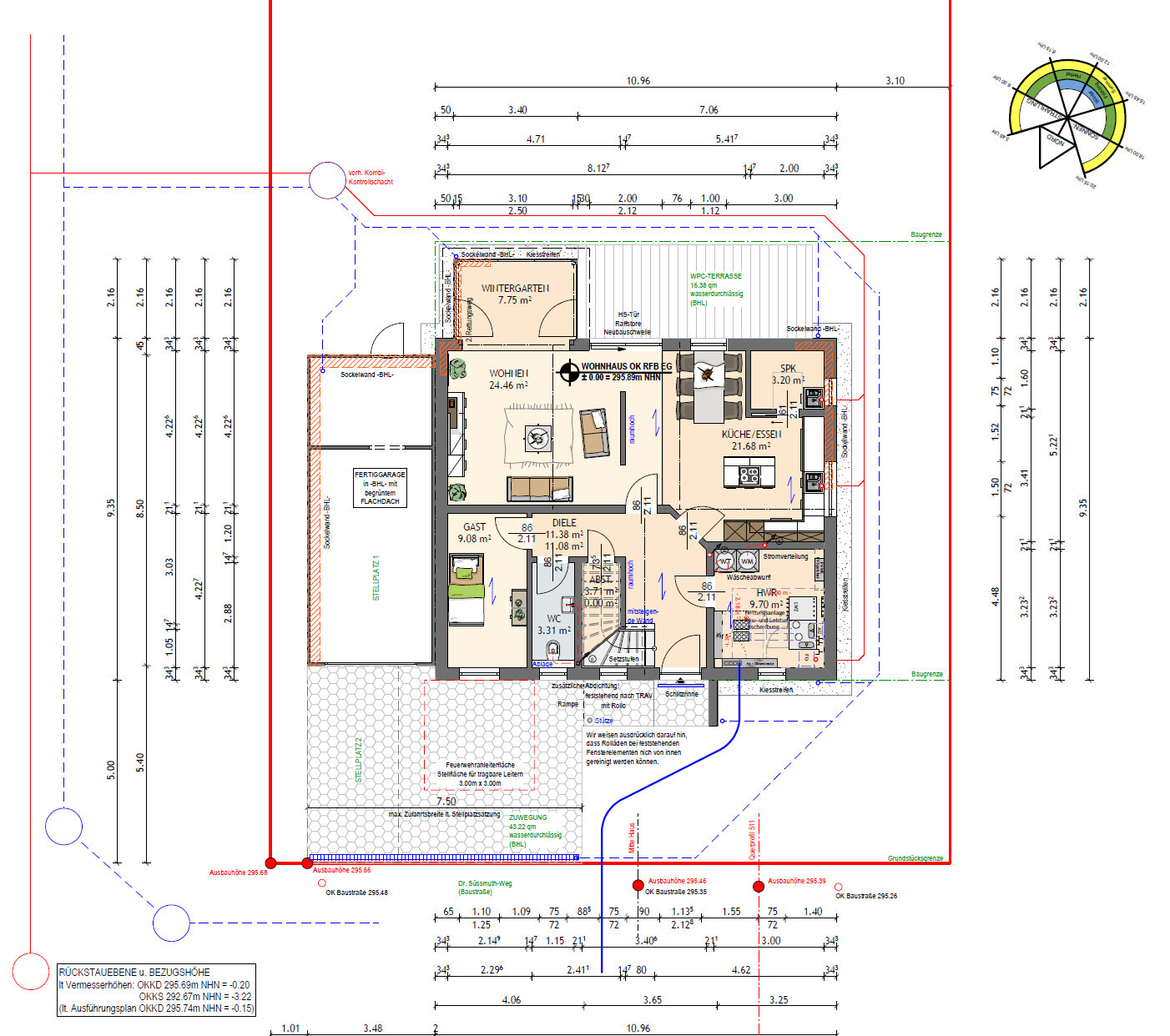
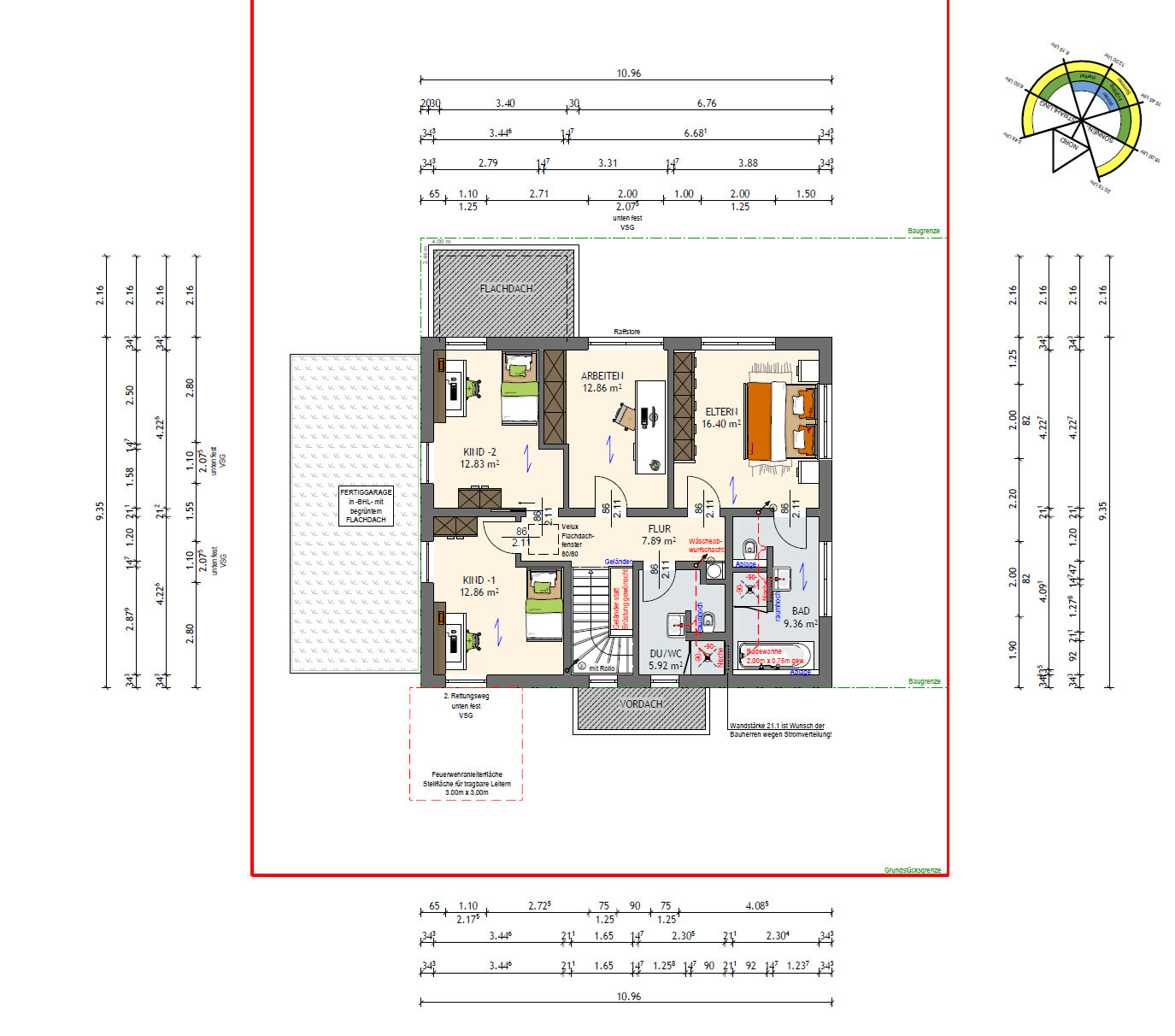
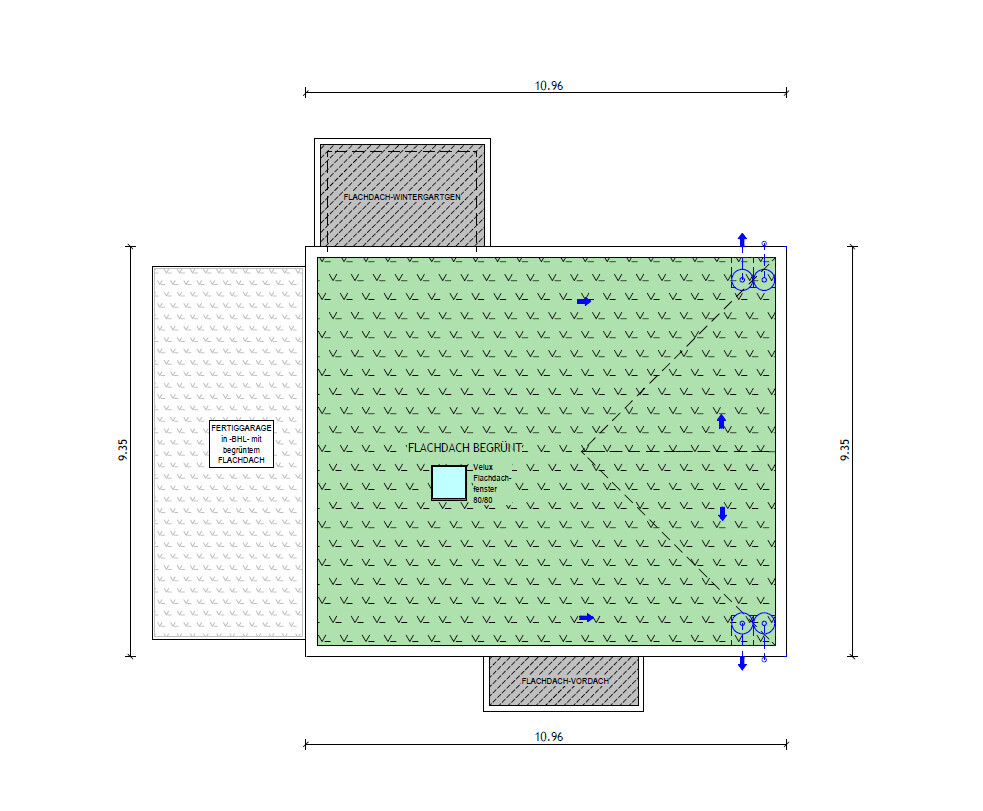
Edit: The furniture shown in the floor plans can be safely ignored. Planners seem to like adding these.
Best regards
Ganneff
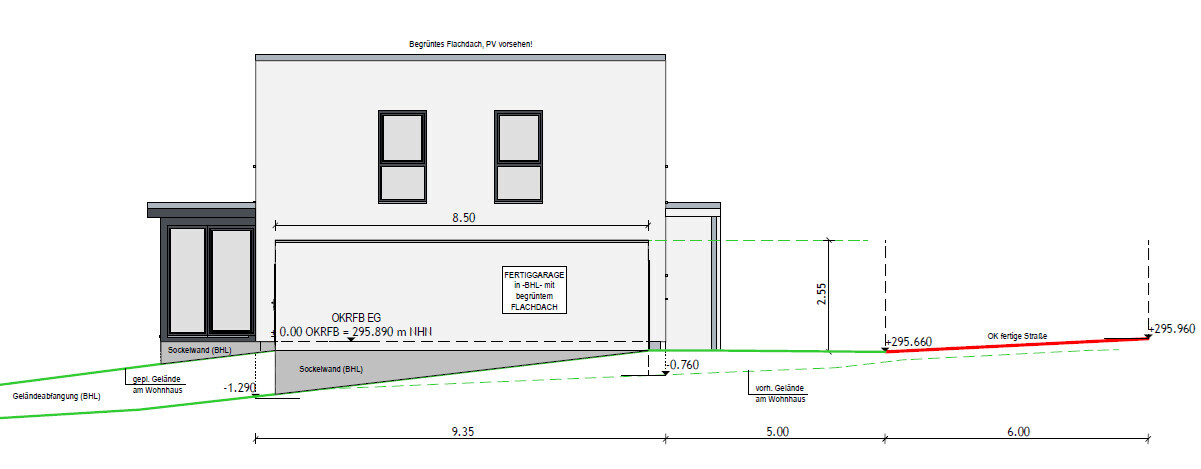
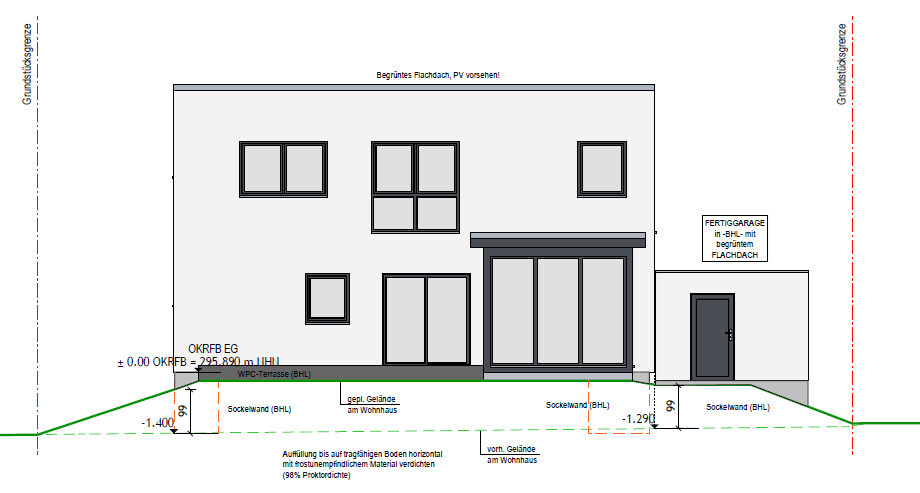
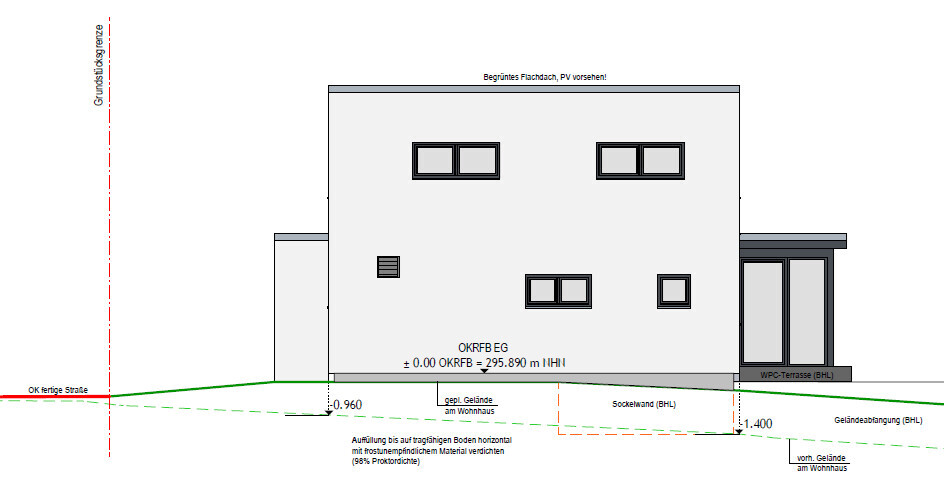
I have been reading along for some time now and finally dare to share a floor plan here.
First, here is the list of questions:
Zoning Plan / Restrictions
Plot size: 576 sqm (6,200 sq ft)
Slope: Yes, slight. According to the site plan, the top "right" corner is at 295.4 meters (970 feet), lower at 293.88 meters (964 feet), left side goes from 295.17 meters (968 feet) to 293.43 meters (963 feet)
Floor area ratio: 0.3
Building envelope, building line and boundary: Applies to house number 16
Surrounding buildings
Number of parking spaces: 2
Number of stories: 2 full floors required, plus optional recessed floor (setback floor)
Roof type: Flat roof, max. 5° pitch
Maximum height/limits: Max. 10 m (33 ft) high
Additional requirements: Equipment (heat pump) must be integrated, not external. Maximum of 2 residential units. Specific exterior colors required, rainwater should infiltrate (soil report says this is unlikely). Roofs must be greened. No oil or gas heating allowed.
Client requirements
Style, roof type, building type: Actually, none specified.
Basement, floors: No basement, 2 floors.
Number of occupants, ages: 4 people — 2 adults, 2 children
Ground floor space needs: Daily life (living, kitchen, dining, technical room, guest room)
Upper floor: Family (2 children's rooms, master bedroom, separate bathrooms), home office
Office: Home office, second workspace for occasional use such as a work window sill for example in the bedroom
Guests per year: Currently few.
Open or closed architecture, conservative or modern style: Either is fine.
Open kitchen, kitchen island: We are still considering. Initial wish was separate pantry like in the floor plan. An island would be nice if space allows.
Number of dining seats: Normally 4, rarely up to 8.
Fireplace: None.
Music/stereo wall: Multi-room audio with central unit in technical room.
Balcony, roof terrace: Neither.
Garage, carport: 1 garage
Other wishes: Central vacuum system, laundry chute, smart home (KNX) (I am mostly doing this myself, yes, I am a certified electrician, can program, but will also get additional help)
House design
Who designed the plan:
- Planner from a construction company: Correct, with some input from us. Based on an existing plan.
Price estimate by architect/planner: approx. 485,000 € (euros) for the house, approx. 210,000 € for the plot including basic services (survey, soil report, etc.)
Personal price limit for the house including features: approx. 800,000–850,000 € (including land)
Preferred heating technology: Heat pump
If you had to give up, which details/extra features could you skip:
- Could skip:
- Cannot skip:
Why is the design like it is now? For example:
Standard design by the planner? Yes, with minor wishes from us (wall between study and child’s room 2, T-walls in bathrooms, porch roof, conservatory, pantry)
What do you find especially good or bad about it? So far it seems to fit; apart from possibly the pantry/dining room, we don’t see major issues yet. But that’s why I’m here now.
Edit: The furniture shown in the floor plans can be safely ignored. Planners seem to like adding these.
Best regards
Ganneff
ypg schrieb:
It wasn’t that the general contractor had a bad reputation.
It’s just that it is a general contractor who only delivers standard quality. But the client didn’t want standard anywhere, he wanted extra special features throughout. The general contractor said everywhere, “That’s not possible,” and had dollar signs in his eyes. The subcontractors were overwhelmed by the requests.
The client should have gone with an architect and used individual trade contracts. Thanks. I opened the thread, so whenever I have a few spare minutes, I can read a bit. Quite a proud house he’s planning.
The graphics look familiar in terms of format, so probably the same software — but yay, he’s building a solid masonry house. I’m building a prefab house, definitely a different company. Phew.
 Papierturm24 Jun 2025 12:16
I’ll try to share some thoughts on the latest designs (page 7 for the ground floor, as far as I could find):
My favorite question (from my own experience living in a rental) is always about the walking paths. Are the routes within the floor plan practical? Or will they become annoying over time?
Compared to the first design (page 1), I already like that the two closely positioned doors (kitchen/dining area) have been removed.
However:
One of the most common routes will be from the living/dining area to the toilet on the ground floor. This path is relatively long. For guests who haven’t been there often, you can expect they might end up in the utility room or the storage under the stairs by mistake.
Yes, I have read the requirement “not adjacent to the living room,” but… I’m not sure if this rule actually helps.
If you don’t want to change the upper floor and want to avoid unnecessarily complicating the piping system (so you don’t want to move the utility room), there are hardly any good solutions. Possibly, if space allows, the ground floor toilet could be placed between the utility room and the kitchen. If that fits, it would be the best option in terms of walking routes: the closest door to the living area and a straight line to the guest room. No circulation pipe necessary (all wet rooms would border the utility room). Also easily accessible when coming in from outside with urgent need to wash up, without the ground floor toilet being directly in the dirt zone. (By the way, the stairs are located in the dirt zone – many people don’t really like that.)
But space might not be sufficient for this. Then, the suggestion by ypg on page 5 would still provide a more straightforward route (a direct path once you’re in the hallway).
If that’s also not an option because it’s been decided that the toilet must not be adjacent to the living area, I would go back and carefully rearrange the rooms on the ground floor to find a good walking route. In most of the houses I know, the ground floor toilet is actually used more often than the toilets upstairs.
My favorite question (from my own experience living in a rental) is always about the walking paths. Are the routes within the floor plan practical? Or will they become annoying over time?
Compared to the first design (page 1), I already like that the two closely positioned doors (kitchen/dining area) have been removed.
However:
One of the most common routes will be from the living/dining area to the toilet on the ground floor. This path is relatively long. For guests who haven’t been there often, you can expect they might end up in the utility room or the storage under the stairs by mistake.
Yes, I have read the requirement “not adjacent to the living room,” but… I’m not sure if this rule actually helps.
If you don’t want to change the upper floor and want to avoid unnecessarily complicating the piping system (so you don’t want to move the utility room), there are hardly any good solutions. Possibly, if space allows, the ground floor toilet could be placed between the utility room and the kitchen. If that fits, it would be the best option in terms of walking routes: the closest door to the living area and a straight line to the guest room. No circulation pipe necessary (all wet rooms would border the utility room). Also easily accessible when coming in from outside with urgent need to wash up, without the ground floor toilet being directly in the dirt zone. (By the way, the stairs are located in the dirt zone – many people don’t really like that.)
But space might not be sufficient for this. Then, the suggestion by ypg on page 5 would still provide a more straightforward route (a direct path once you’re in the hallway).
If that’s also not an option because it’s been decided that the toilet must not be adjacent to the living area, I would go back and carefully rearrange the rooms on the ground floor to find a good walking route. In most of the houses I know, the ground floor toilet is actually used more often than the toilets upstairs.
Papierturm schrieb:
One of the most common routes leads from the living/dining area to the toilet on the ground floor. It’s quite a long way. For guests who haven’t been here often, you can expect them to end up in the utility room or the storage area under the stairs. Ha, then they might as well tidy up those rooms.
Moving the WC would mean adjusting the size of the utility room/kitchen. On the other hand, the guest room would become larger (or there would be more storage space). I’ll pass the suggestion on, let’s see what the boss thinks, thanks!
haydee schrieb:
Who are you planning to build with? There are quite a few in the region. The prefabricated house builder from Frankenberg is the poor soul who has to struggle with us.
Papierturm schrieb:
One of the most common routes is from the living/dining area to the restroom on the ground floor. That is relatively far. For guests who have not been there often, you can expect them to end up in the utility room or storage room under the stairs. I don’t believe that is actually the most common route.
I also find it convenient when a restroom is located somewhat “off to the side.” Ultimately, a guest only ever sees one door and doesn’t know where exactly the restroom is because they only see a single door regardless of the layout.
In our previous home, we simply put a nice little sign on the restroom door—a funny dwarf on the toilet; when visitors come, I just ask where the restroom is, and since you don’t have many unfamiliar guests but mostly repeat visitors, this “problem” usually resolves itself quite quickly.
This also highlights individual preferences, and depending on what is important to you, you should implement it accordingly; I don’t see any general guidelines favoring either option.
Papierturm schrieb:
One of the most common routes is from the living/dining area to the bathroom on the ground floor. That’s relatively far. What do you mean by far? You mean from the south wing to the east wing? I would say it’s a compact house, so there aren’t really any long distances. Having the WC tucked away isn’t a bad idea at all.
However, it’s also possible to consider swapping the guest/WC area with the utility room... that could be an option!
Similar topics