
Hello dear forum,
I would like to ask for your advice regarding the construction of the ceiling and sloped ceiling (drywall and possibly insulation).
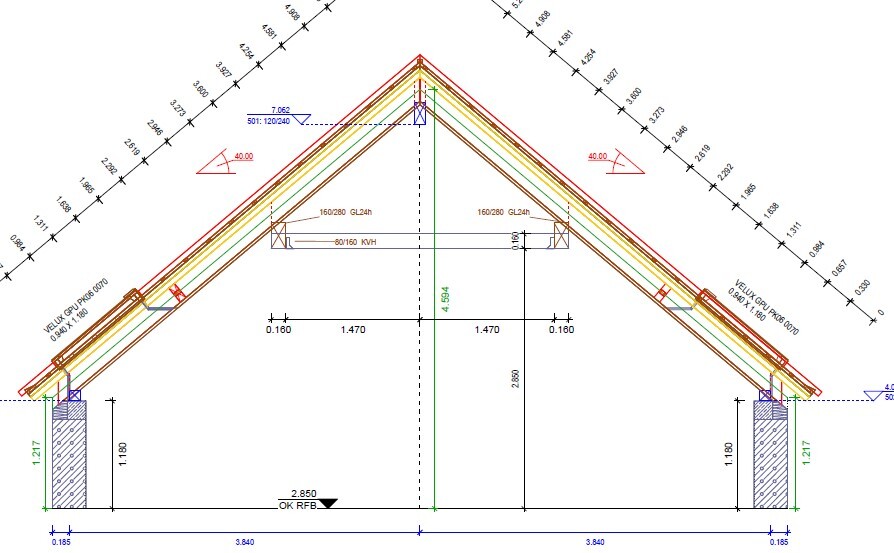
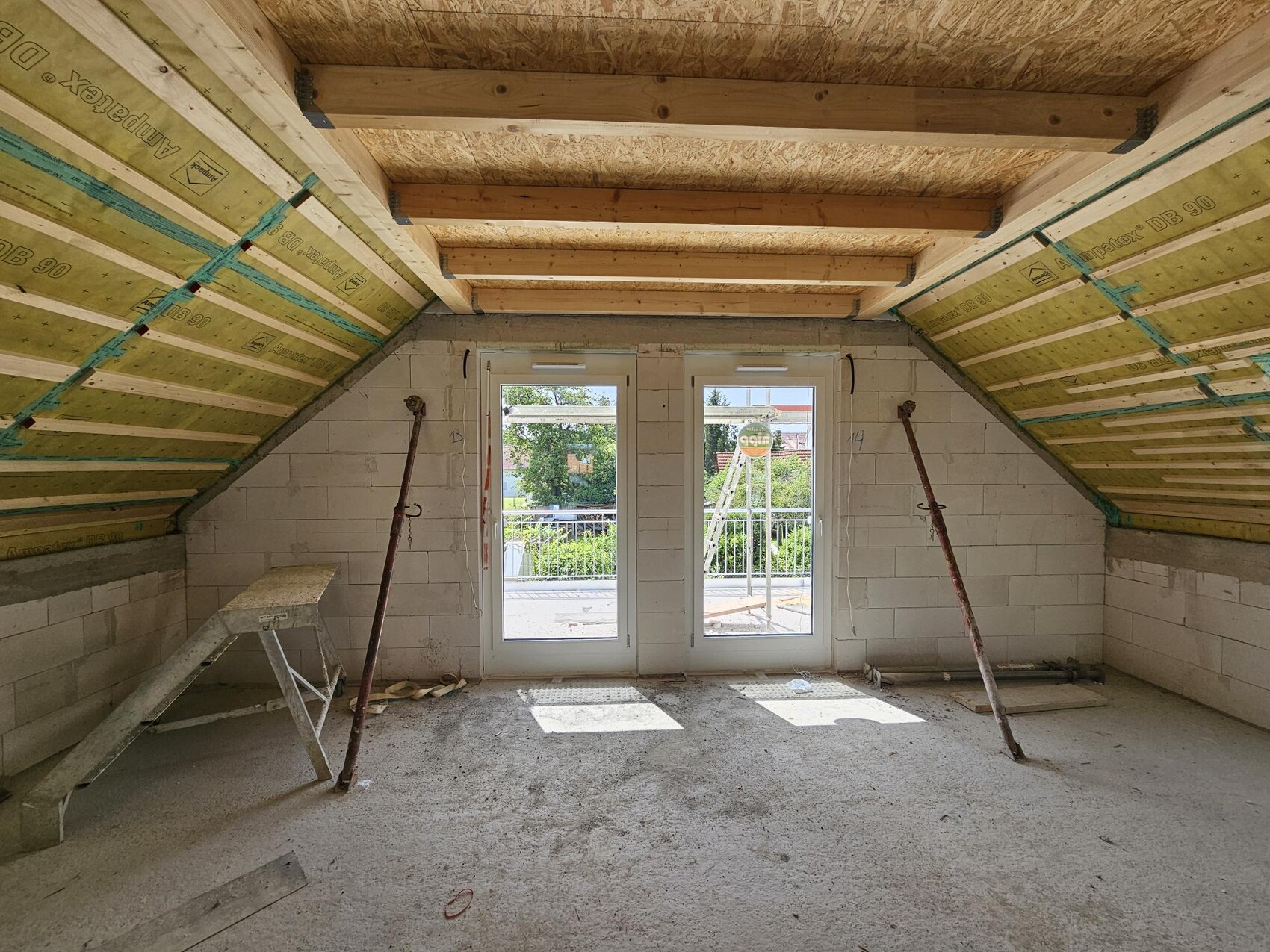
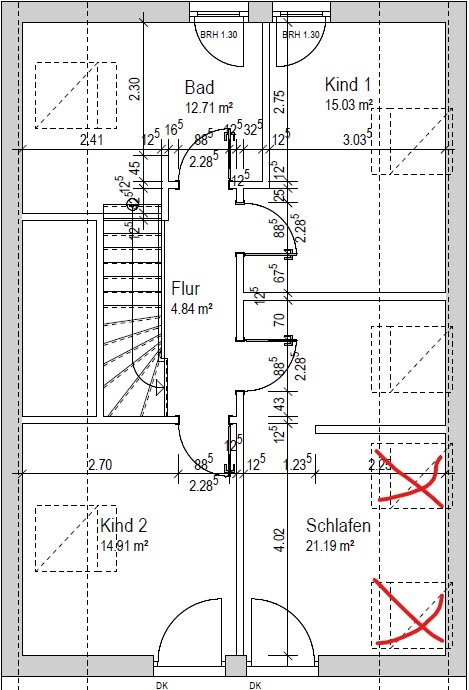
Attached are a few pictures for better understanding.
The roof is constructed with cavity insulation between rafters (mineral wool) plus insulation above rafters (Schneider TOP Wood 160).
The attic floor was made walkable with OSB3 (22mm) (7/8 inch).
Now to my question:
What type of lining or construction is recommended for the sloped ceiling and the ceiling?
The standard is a single layer of gypsum plasterboard. Specifically for the ceiling, I am a bit concerned about potential unwanted sound transmission and possibly poor acoustics. Would it be better to add additional insulation or acoustic panels behind the lining here?
For the rooms, I will prepare a conduit in one of the ceiling panels for upgrading to ceiling speakers.
The partition walls in the attic will be built with a standard Kn... system construction, double-layered drywall, thickness 125mm (5 inches).
If you need any further information for feedback, please let me know.
Many thanks in advance!
I would like to ask for your advice regarding the construction of the ceiling and sloped ceiling (drywall and possibly insulation).
Attached are a few pictures for better understanding.
The roof is constructed with cavity insulation between rafters (mineral wool) plus insulation above rafters (Schneider TOP Wood 160).
The attic floor was made walkable with OSB3 (22mm) (7/8 inch).
Now to my question:
What type of lining or construction is recommended for the sloped ceiling and the ceiling?
The standard is a single layer of gypsum plasterboard. Specifically for the ceiling, I am a bit concerned about potential unwanted sound transmission and possibly poor acoustics. Would it be better to add additional insulation or acoustic panels behind the lining here?
For the rooms, I will prepare a conduit in one of the ceiling panels for upgrading to ceiling speakers.
The partition walls in the attic will be built with a standard Kn... system construction, double-layered drywall, thickness 125mm (5 inches).
If you need any further information for feedback, please let me know.
Many thanks in advance!
A
Allthewayup20 Jun 2025 22:27Simply screw 12.5mm (1/2 inch) boards onto leveled battens on the sloped roof. The vapor barrier is already installed, as can be seen. The ceiling will also need a substructure that must be leveled as well. In my two years as a drywall installer, I have never installed any special soundproofing boards or similar for ceilings in privately used attic spaces. The furnishings will later provide sound reduction. However, it is essential to apply a "Magic Corner" between the sloped roof and the ceiling. This is a flexible tape that creates clean transitions. Do not press the boards tightly against the plaster but leave a 3–5mm (1/8–3/16 inch) gap. Also, be careful at the joints between the slopes and the ceiling so that the boards from the respective surfaces do not touch each other. Over time, this causes stress and almost certainly leads to cracks in the joints. In the first filling stage, embed the fiberglass tape. Apply it to all joints, not just those recommended by the manufacturer. My experience with this has been consistently positive.
Thank you for your reply @Allthewayup!!
I will definitely take the issue with the corners and the fiberglass tape into account. For the ceiling and the substructure, I still need to find a suitable solution.
In other threads, I have read about double drywall layers on sloped walls and ceilings. Is this common practice, or generally not necessary compared to partition walls?
I will definitely take the issue with the corners and the fiberglass tape into account. For the ceiling and the substructure, I still need to find a suitable solution.
In other threads, I have read about double drywall layers on sloped walls and ceilings. Is this common practice, or generally not necessary compared to partition walls?
A
Allthewayup7 Jul 2025 21:45Irma9010 schrieb:
Thank you for your response @Allthewayup!!
I will definitely take the issue with the corners and the fiberglass tape into account.
I still need to come up with a suitable solution for the ceiling or the substructure.
In other threads, I have read about double boarding on sloped ceilings and ceilings. Is this common practice or rather unnecessary compared to partition walls? Sorry, I was on vacation and completely switched off.
Sloped ceilings and ceilings are usually not double boarded for structural reasons. Furthermore, there is no significant benefit from double boarding on these surfaces. Different stability requirements apply to walls.
Great, thanks again for your feedback.
The walls are standing now and have been dry-lined on one side. The sloped walls and ceilings will be done after the screed. So far, everything has gone well and the suspended ceiling is insulated.
However, since the UW profiles are now fixed to the leveled ceiling substructure, are there any concerns about the additional gap and potential sound transmission? With a solid concrete ceiling, I can attach them continuously, not just spot-fixed to the battens. (See example image)
Addendum: I will need to install an additional cross battens to build up the substructure level enough to install spotlights and other fixtures properly.
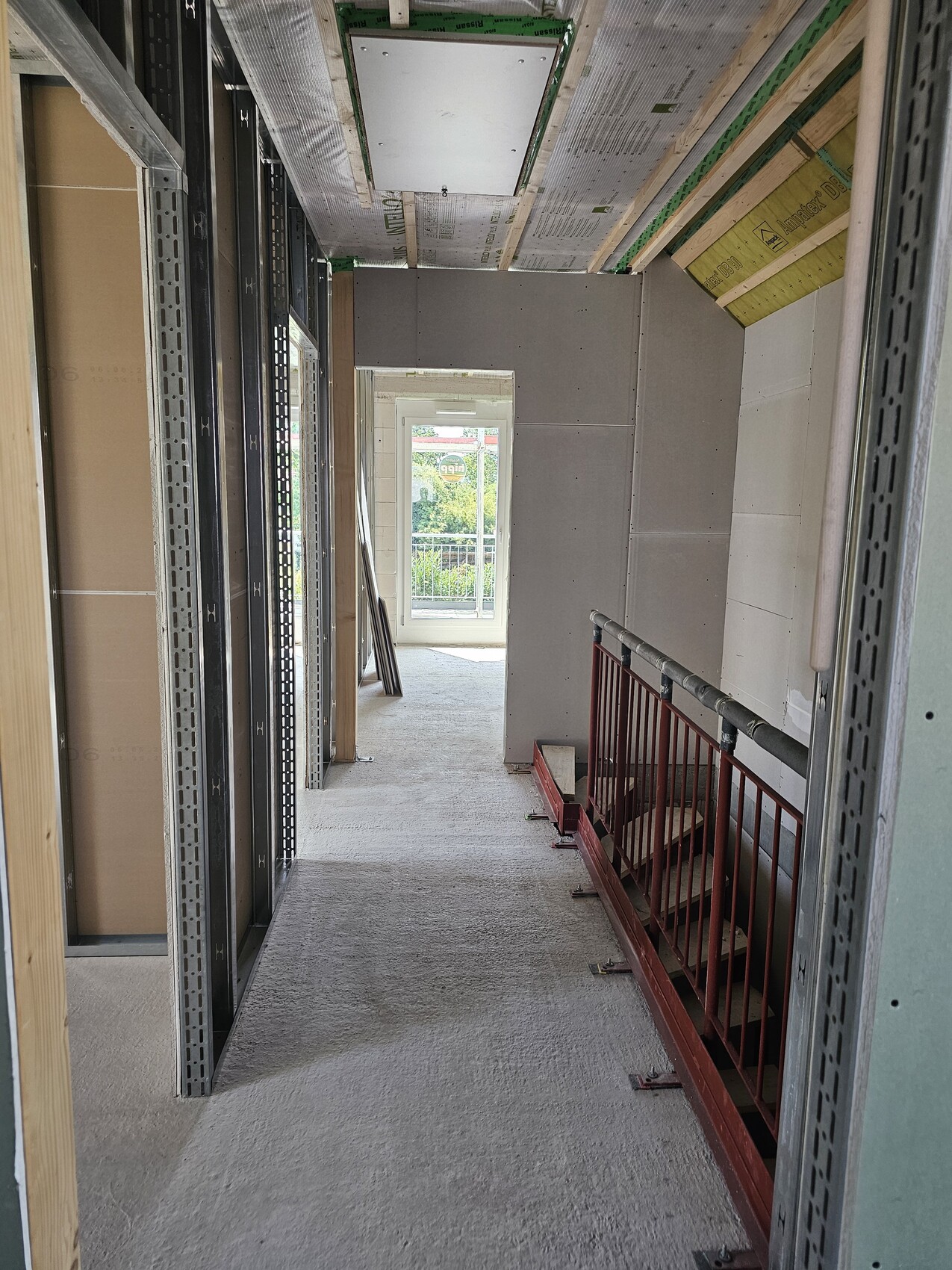
The walls are standing now and have been dry-lined on one side. The sloped walls and ceilings will be done after the screed. So far, everything has gone well and the suspended ceiling is insulated.
However, since the UW profiles are now fixed to the leveled ceiling substructure, are there any concerns about the additional gap and potential sound transmission? With a solid concrete ceiling, I can attach them continuously, not just spot-fixed to the battens. (See example image)
Addendum: I will need to install an additional cross battens to build up the substructure level enough to install spotlights and other fixtures properly.
Similar topics