
ᐅ Relocating a 1960s bathroom into a new room, 12 sqm floor plan
Created on: 10 Jun 2025 00:36
N
NilsStgHello everyone,
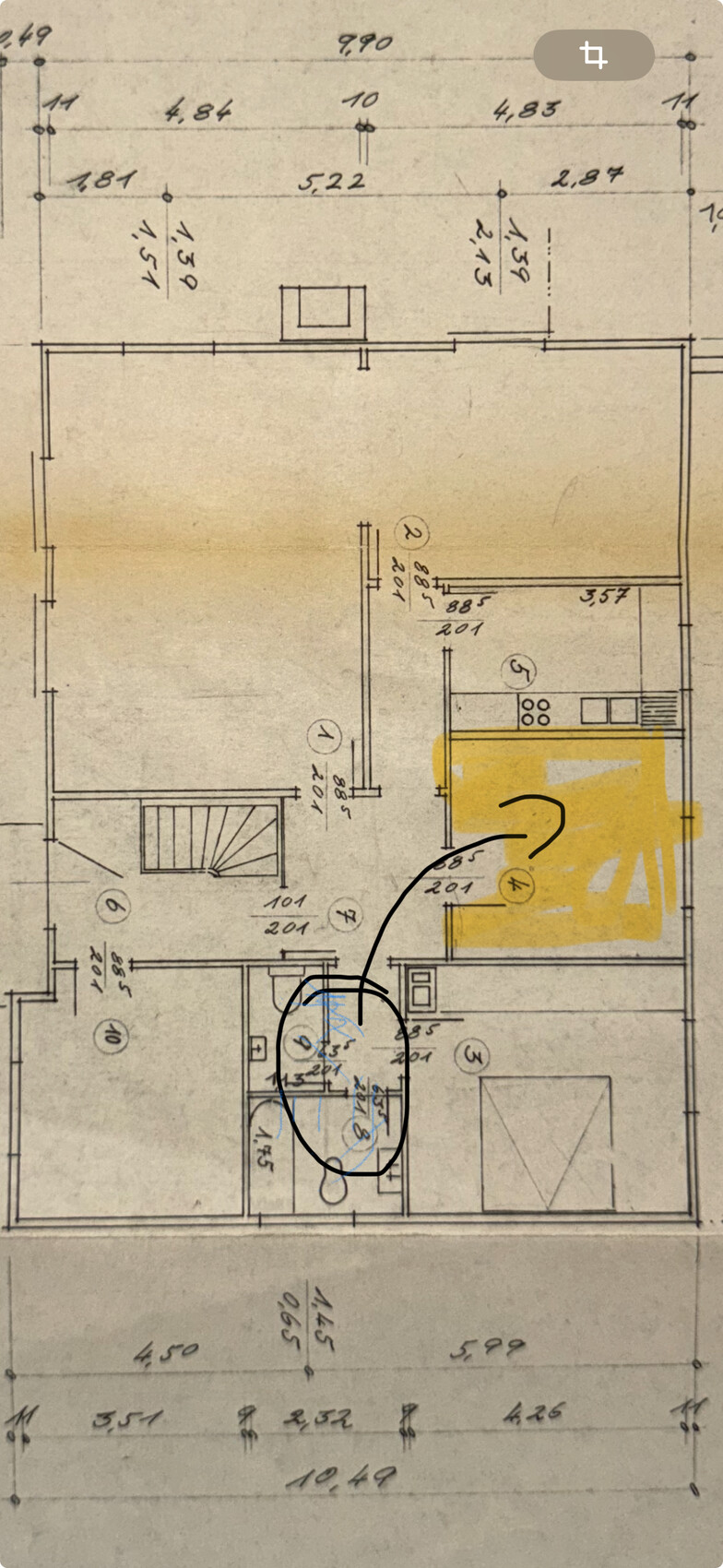
we are currently renovating a prefabricated house from the 1960s, which has a full basement. Since the water and heating pipes are also from the 60s, we are considering replacing the existing rather small 1960s bathroom with a modern one. For this, we have selected a living space, primarily used as a walk-in closet with a desk, measuring 12m2 (129 sq ft) to be converted into a family bathroom. As a family with a 5-year-old child, we often sit together in the bathtub, so a large bathtub was important to us. The house has a basement. Below the bathroom is a laundry room with a toilet and a sink next to the heating room. Therefore, we should be able to route the pipes quite well through the basement ceiling.
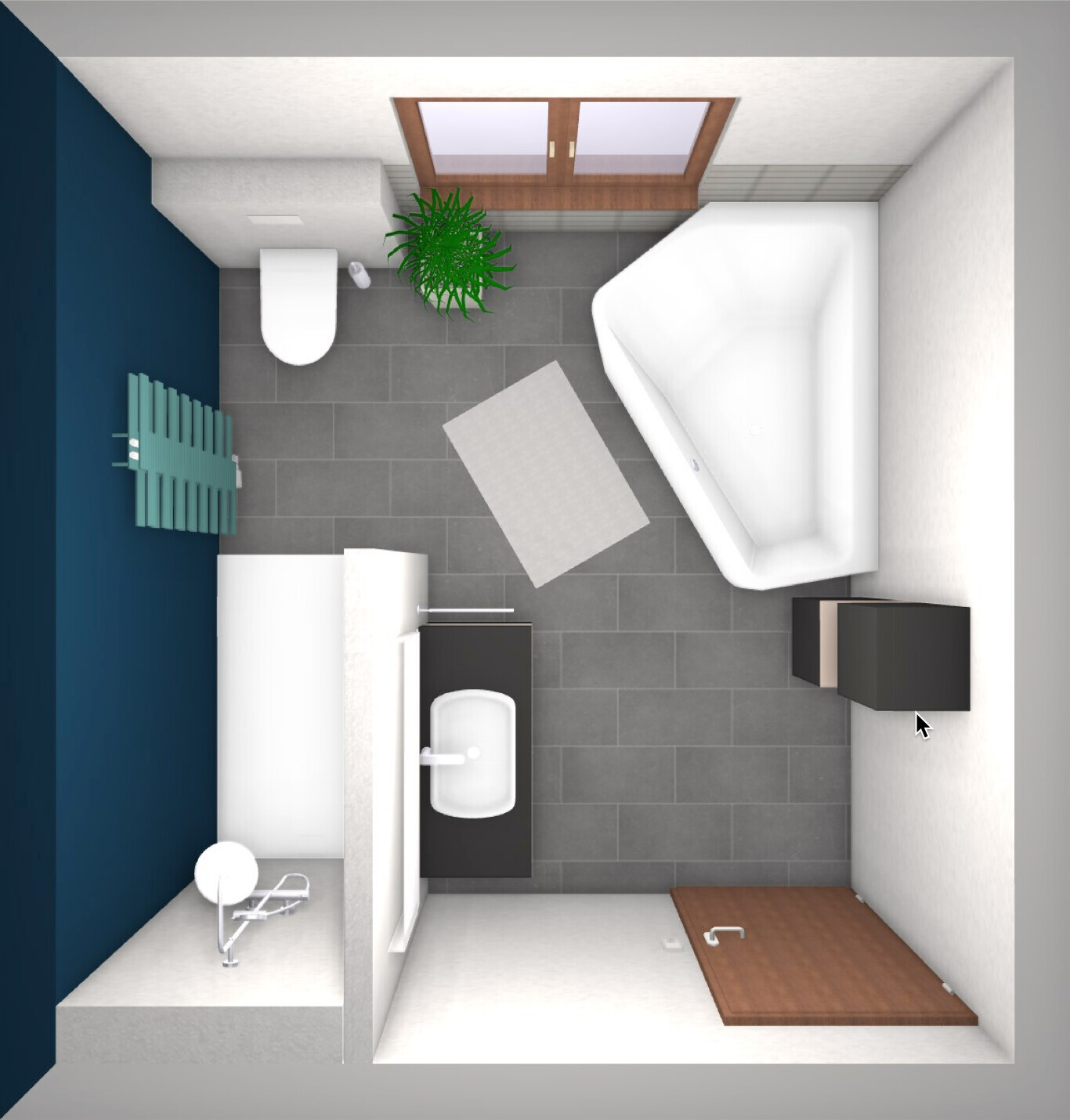
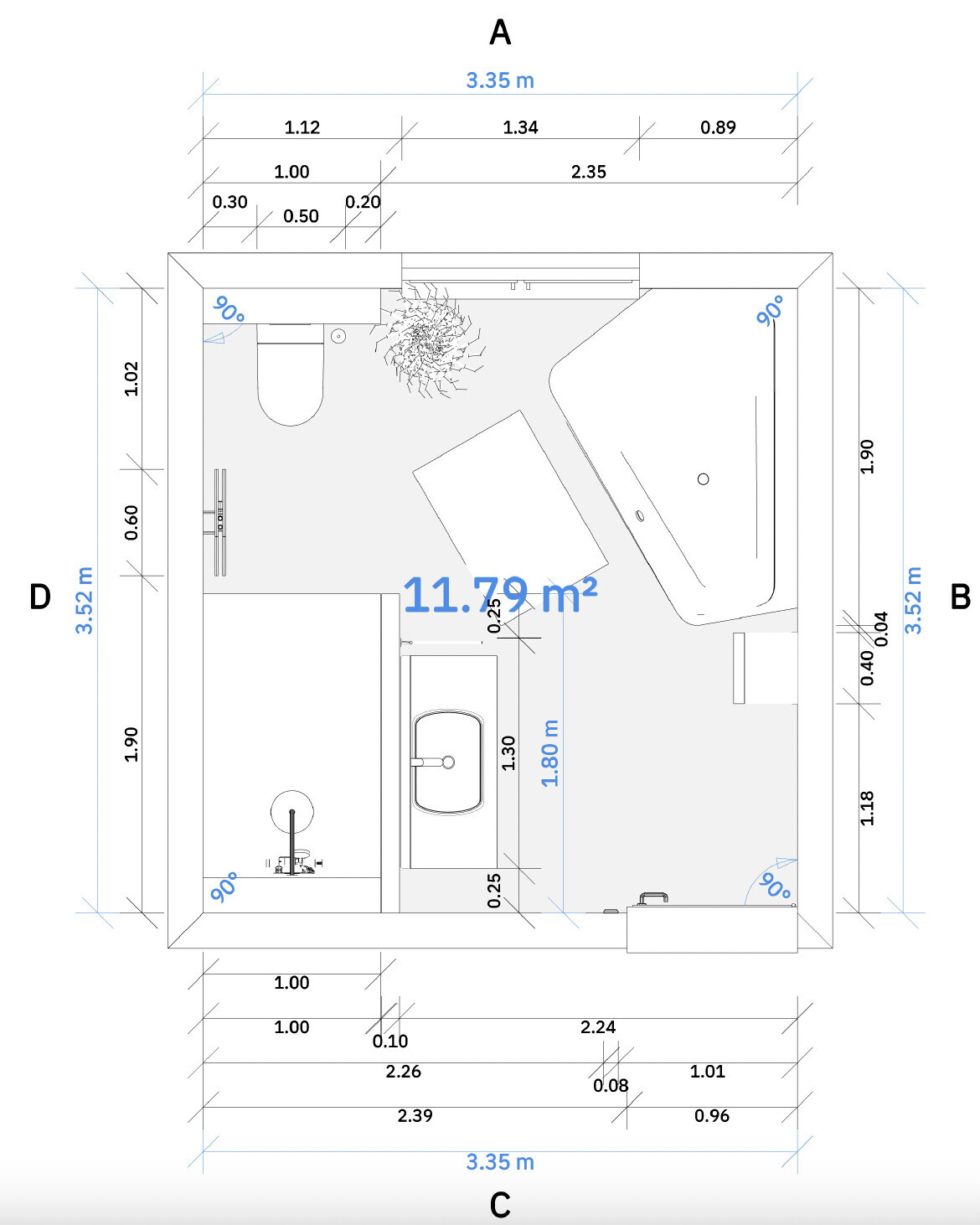
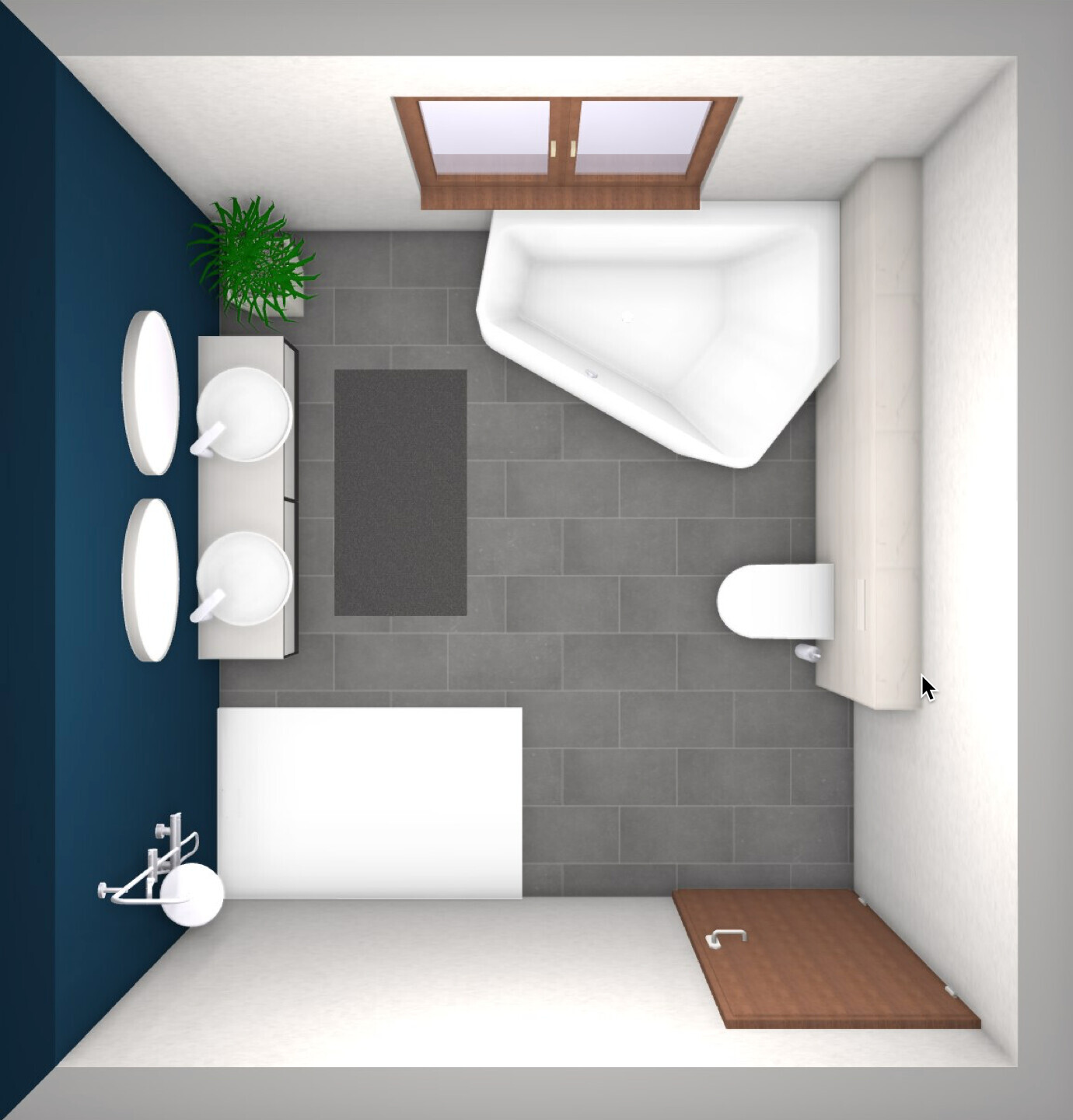
Since this is our first renovation project and I lack experience, I hoped to share a design I created with the Duravit bathroom planner here to get some feedback. (We have chosen the Duravit Paiova 5 bathtub for us)
Thanks in advance
we are currently renovating a prefabricated house from the 1960s, which has a full basement. Since the water and heating pipes are also from the 60s, we are considering replacing the existing rather small 1960s bathroom with a modern one. For this, we have selected a living space, primarily used as a walk-in closet with a desk, measuring 12m2 (129 sq ft) to be converted into a family bathroom. As a family with a 5-year-old child, we often sit together in the bathtub, so a large bathtub was important to us. The house has a basement. Below the bathroom is a laundry room with a toilet and a sink next to the heating room. Therefore, we should be able to route the pipes quite well through the basement ceiling.
Since this is our first renovation project and I lack experience, I hoped to share a design I created with the Duravit bathroom planner here to get some feedback. (We have chosen the Duravit Paiova 5 bathtub for us)
- Based on your experience, what do you think of the layout? Are the passageways between bathtub, shower, and toilet convenient? We planned the walk-in shower to be 100x160cm (39x63 inches).
- For the shower, we wanted to tile the floor flush with the level of the rest of the bathroom but paint the walls instead of tiling them (no grout lines). We have seen this often in hotels, and I like it. I believe it is called Beton Ciré. Does anyone have experience with this?
- We also considered installing a laundry chute to the basement (since the laundry room is directly underneath). Does anyone have advice on what to watch out for?
Thanks in advance
I think the current bathroom layout is quite acceptable overall.
However, it first needs to be clarified how you will connect the toilet drain to the existing waste system. Usually, these are 10cm (4 inches) pipes that must be installed with a slope. Or does this statement refer to the space of the newly planned bathroom?
However, it first needs to be clarified how you will connect the toilet drain to the existing waste system. Usually, these are 10cm (4 inches) pipes that must be installed with a slope. Or does this statement refer to the space of the newly planned bathroom?
NilsStg schrieb:
Below the bathroom is a laundry room with a toilet and sink next to the boiler room. Therefore, we should be able to run the pipes quite easily through the basement ceiling.
M
motorradsilke10 Jun 2025 09:22I think the current design is good, but I would plan the vanity in the lower part of the layout right up to the wall.
In the previous design, I didn’t like that the sinks were located furthest back. Since those need the most access, I would always place them at the front.
I find a laundry chute in the bathroom impractical. However, that is because I get dressed and undressed in the bedroom.
In the previous design, I didn’t like that the sinks were located furthest back. Since those need the most access, I would always place them at the front.
I find a laundry chute in the bathroom impractical. However, that is because I get dressed and undressed in the bedroom.
M
motorradsilke10 Jun 2025 09:24kbt09 schrieb:
The current bathroom layout seems quite acceptable to me.
However, I think the first thing to clarify is how you will connect the toilet’s drain to the existing sewage system. Usually, these pipes are 10 cm (4 inches) in diameter and have to be installed with a slope. Or does this statement refer to the space of the newly planned bathroom? I understood it as referring to the new bathroom.
H
hanghaus202310 Jun 2025 09:26Do you want to move the door? Or is it already no longer there as originally planned?
W
wiltshire10 Jun 2025 10:32This will be a nice small bathroom. The clearances are perfectly fine for people with normal mobility. Incorporating the laundry chute is logical, even though it won’t be the place for changing clothes.
Suggestions:
1. As a partition between the shower and the washbasin, I would use a one-sided mirrored glass panel starting about 15cm (6 inches) above the washbasin height instead of extending the wall upward. This gives you a large mirror, an open feeling in the shower area, and depending on the placement of the panel, also a small shelf. With some luck, the mirror glass might even fog up less during hot showers because it is warmed from behind.
2. I would also avoid extending the wall for the rain shower too high; instead, tile a ledge or waterproof it differently so shower items can be placed there. A visible pipe can add a nice decorative accent.
3. Currently, there is no designated space in the bathroom for items that are best stored there. The suggestion to extend the countertop to the wall has already been made. I would place a spacious vanity cabinet underneath and integrate the laundry chute into a storage unit.
4. If you frequently use cordless devices in the bathroom, it is worth considering how to create a charging station with minimal cables. Electrical outlets can be installed behind a small flap in the partition wall between the shower and the washbasin, leaving only the ends of charging cables visible. Still, remember to include easily accessible sockets for temporarily used powered devices.
5. We have found a “night light” very effective, consisting of two floor-level recessed spotlights set to a soft yellow-orange light and operated by their own switch (this can also work with a motion sensor). This way, anyone needing to use the toilet at night can avoid turning on the bright main bathroom light and still find their way safely.
Suggestions:
1. As a partition between the shower and the washbasin, I would use a one-sided mirrored glass panel starting about 15cm (6 inches) above the washbasin height instead of extending the wall upward. This gives you a large mirror, an open feeling in the shower area, and depending on the placement of the panel, also a small shelf. With some luck, the mirror glass might even fog up less during hot showers because it is warmed from behind.
2. I would also avoid extending the wall for the rain shower too high; instead, tile a ledge or waterproof it differently so shower items can be placed there. A visible pipe can add a nice decorative accent.
3. Currently, there is no designated space in the bathroom for items that are best stored there. The suggestion to extend the countertop to the wall has already been made. I would place a spacious vanity cabinet underneath and integrate the laundry chute into a storage unit.
4. If you frequently use cordless devices in the bathroom, it is worth considering how to create a charging station with minimal cables. Electrical outlets can be installed behind a small flap in the partition wall between the shower and the washbasin, leaving only the ends of charging cables visible. Still, remember to include easily accessible sockets for temporarily used powered devices.
5. We have found a “night light” very effective, consisting of two floor-level recessed spotlights set to a soft yellow-orange light and operated by their own switch (this can also work with a motion sensor). This way, anyone needing to use the toilet at night can avoid turning on the bright main bathroom light and still find their way safely.
Similar topics