
ᐅ South-facing sloped plot, 700 sqm, single-family house about 150 sqm, looking for design ideas?
Created on: 28 May 2025 22:52
H
Hanger1
Hello everyone,
We have been working for some time now on how best to position our future single-family home on our plot. We want to utilize the existing slope as efficiently as possible and avoid losing too much green space.
Development Plan / Restrictions
Plot size approximately 700 sqm (8,400 sq ft)
Slope: yes, 10% south-facing slope
Site coverage ratio (Floor Area Ratio) 0.3
Floor space index 0.6
Number of parking spaces: 2 (garage or carport)
Orientation: Ridge direction can be freely chosen
Maximum heights / limits: The eaves height on the valley side must not exceed 6.65 m (21.8 ft)
Maximum 2 full floors
Setback distances according to the regulations of the Bavarian building code
Attached garages to the boundary are only permitted where garages are built together within the areas designated in the development plan
For other garages, a minimum distance of 1.20 m (4 ft) from the property boundary applies
Client Requirements
Approximately 150 sqm (1,615 sq ft) of living space
Basement, floors: open. However, due to the slope, a basement is likely. Possibly using the basement as a garage.
Number of occupants, ages: 2 adults, 2 children
House Design
Designer: Do-it-yourself
Could you please provide some input on the preliminary planning of a single-family home?
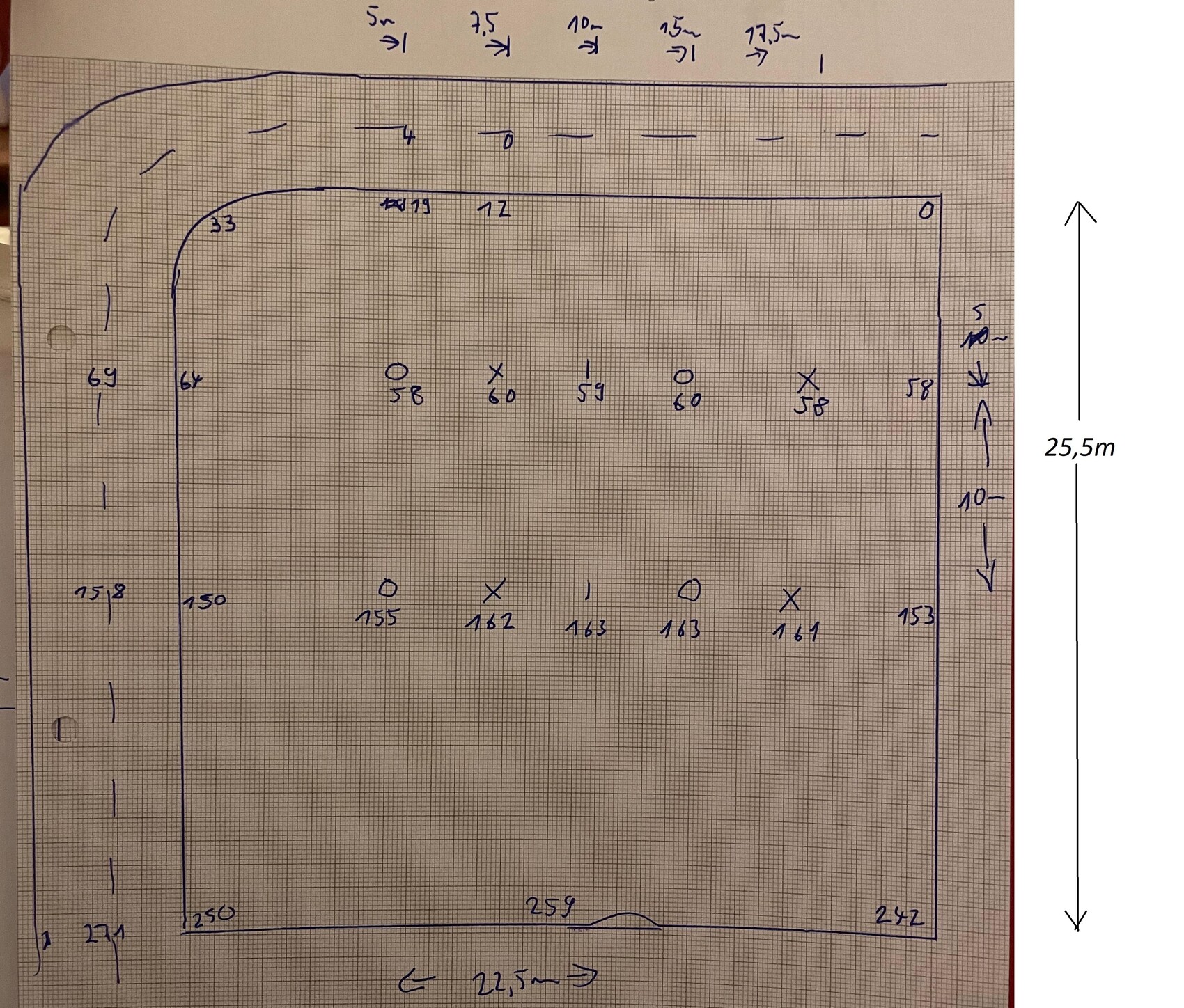
The building site has a south-facing slope of about 10%.
The road is located on the north and west sides.
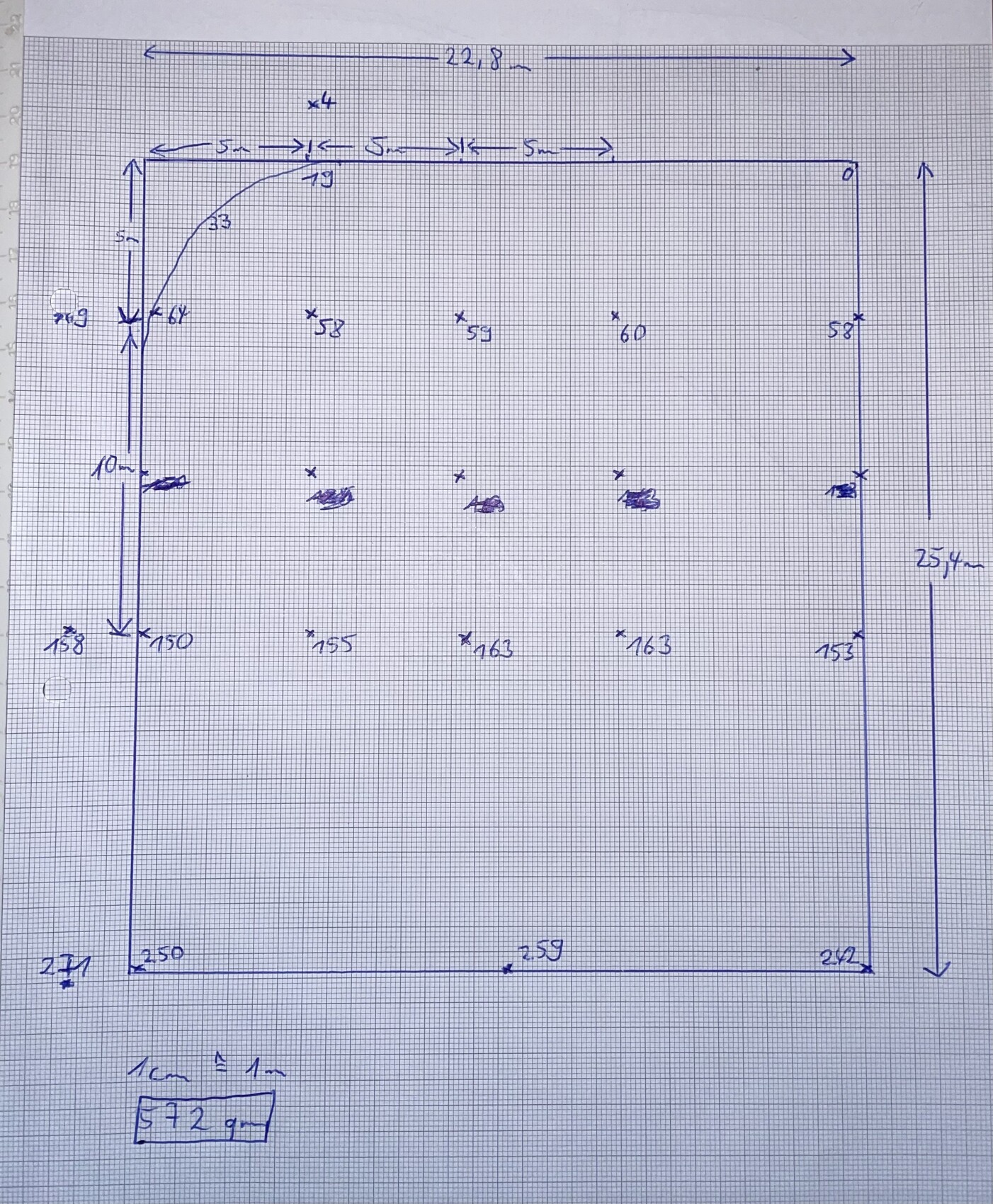
I have already marked the key points by laser. Zero point at northeast. The measurements are given in centimeters and should actually be negative since it is a south-facing slope.
The plan is for a single-family home of about 150 sqm (1,615 sq ft) with a garage or carport.
Option I a
5 m (16.4 ft) from north and west
House approximately 10 x 10 m (33 x 33 ft)
Garage integrated into the basement. Driveway access from south/west.
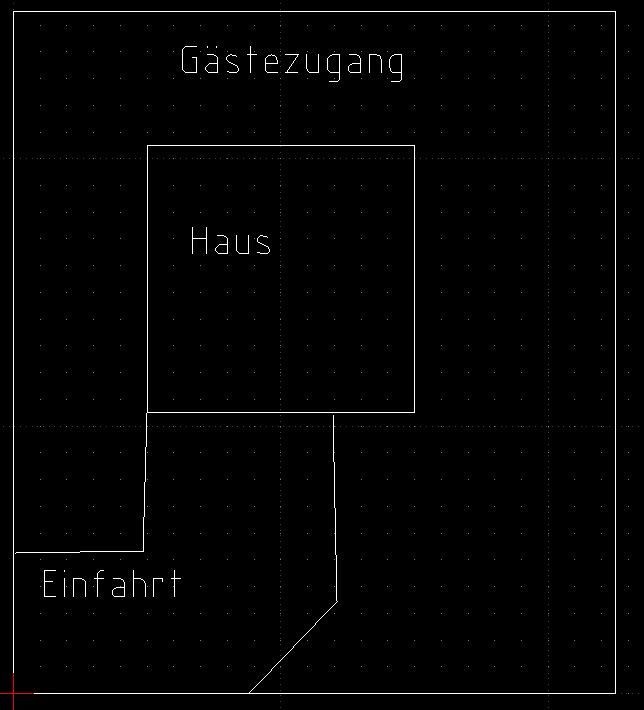
Guest entrance on the north side.
Advantage:
Everything fits within the 10 x 10 m (33 x 33 ft) footprint.
Disadvantage:
The garage driveway must be in front of the house, which results in a substantial loss of green space since there is only 7.5 m (24.6 ft) width available on the east side.
Option I b
House is positioned 5 m (16.4 ft) from north and east, leaving 7.5 m (24.6 ft) on the west street side. However, the driveway to the basement garage would definitely be too steep here.
Option II
Build the basement slightly higher and place the sleeping and bathroom areas in the basement so that the garden can be accessed directly from this level.
The upper floor has the main entrance on the north side, accessed by several steps. This floor contains the kitchen, dining, and living areas.
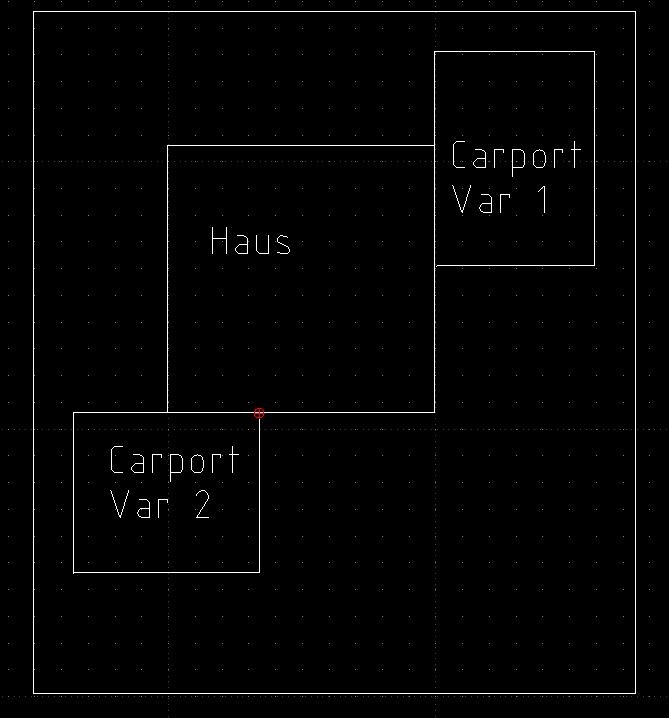
The garage or carport is built beside the house.
There is a balcony terrace on the upper floor, accessible from the dining area. The garden is reachable via stairs.
Advantage: Much more green space remains on the south side.
Disadvantage: Significantly more earthworks required. Overall less green area preserved.
Similar properties in the neighborhood:
2 full floors + basement + garage: In my opinion, the basement is only used as unnecessary storage space here. The costs are too high for this.
Slab foundation + 2 full floors + garage: Due to the slope, this requires extensive earthworks.
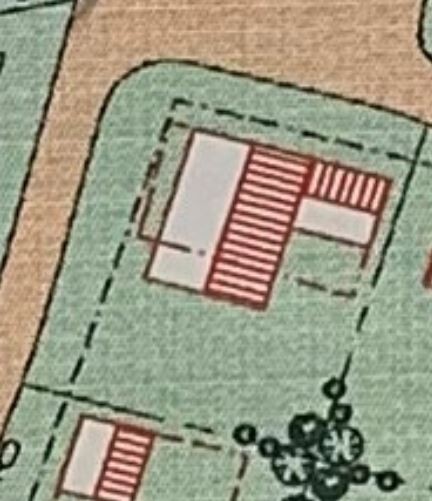
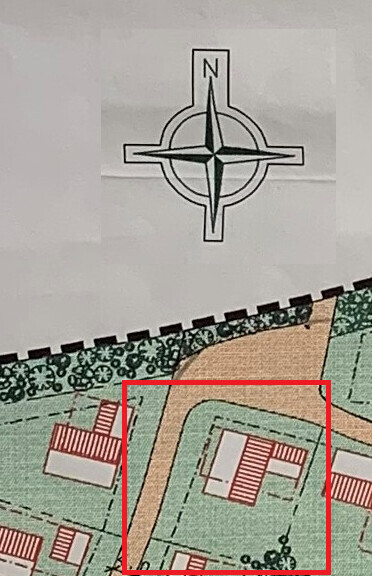
Attached are the height measurements, sketches of the options, and an excerpt from the development plan.
I would appreciate any input or other ideas very much.
We have been working for some time now on how best to position our future single-family home on our plot. We want to utilize the existing slope as efficiently as possible and avoid losing too much green space.
Development Plan / Restrictions
Plot size approximately 700 sqm (8,400 sq ft)
Slope: yes, 10% south-facing slope
Site coverage ratio (Floor Area Ratio) 0.3
Floor space index 0.6
Number of parking spaces: 2 (garage or carport)
Orientation: Ridge direction can be freely chosen
Maximum heights / limits: The eaves height on the valley side must not exceed 6.65 m (21.8 ft)
Maximum 2 full floors
Setback distances according to the regulations of the Bavarian building code
Attached garages to the boundary are only permitted where garages are built together within the areas designated in the development plan
For other garages, a minimum distance of 1.20 m (4 ft) from the property boundary applies
Client Requirements
Approximately 150 sqm (1,615 sq ft) of living space
Basement, floors: open. However, due to the slope, a basement is likely. Possibly using the basement as a garage.
Number of occupants, ages: 2 adults, 2 children
House Design
Designer: Do-it-yourself
Could you please provide some input on the preliminary planning of a single-family home?
The building site has a south-facing slope of about 10%.
The road is located on the north and west sides.
I have already marked the key points by laser. Zero point at northeast. The measurements are given in centimeters and should actually be negative since it is a south-facing slope.
The plan is for a single-family home of about 150 sqm (1,615 sq ft) with a garage or carport.
Option I a
5 m (16.4 ft) from north and west
House approximately 10 x 10 m (33 x 33 ft)
Garage integrated into the basement. Driveway access from south/west.
Guest entrance on the north side.
Advantage:
Everything fits within the 10 x 10 m (33 x 33 ft) footprint.
Disadvantage:
The garage driveway must be in front of the house, which results in a substantial loss of green space since there is only 7.5 m (24.6 ft) width available on the east side.
Option I b
House is positioned 5 m (16.4 ft) from north and east, leaving 7.5 m (24.6 ft) on the west street side. However, the driveway to the basement garage would definitely be too steep here.
Option II
Build the basement slightly higher and place the sleeping and bathroom areas in the basement so that the garden can be accessed directly from this level.
The upper floor has the main entrance on the north side, accessed by several steps. This floor contains the kitchen, dining, and living areas.
The garage or carport is built beside the house.
There is a balcony terrace on the upper floor, accessible from the dining area. The garden is reachable via stairs.
Advantage: Much more green space remains on the south side.
Disadvantage: Significantly more earthworks required. Overall less green area preserved.
Similar properties in the neighborhood:
2 full floors + basement + garage: In my opinion, the basement is only used as unnecessary storage space here. The costs are too high for this.
Slab foundation + 2 full floors + garage: Due to the slope, this requires extensive earthworks.
Attached are the height measurements, sketches of the options, and an excerpt from the development plan.
I would appreciate any input or other ideas very much.
wiltshire schrieb:
Very often, you find out exactly what you like about the picture and realize that you can achieve this aspect in a different and more budget-friendly way. wiltshire schrieb:
It’s a pity when this opportunity is missed. wiltshire schrieb:
But life is more than just ticking off “works”. Hmm, I often find this approach restrictive and difficult to implement. For example, you might really want a staircase with a landing, but you also love a built-in cupboard niche like on Pinterest, Pax, and Metod. Then you absolutely want a niche access to a pantry, or whatever, and suddenly one thing doesn’t fit with the other – at least not in the house size you can afford.
I often find, especially when building a cost-conscious home, it’s easier to look at the wall that forms between the front door and the stairs and consider how to achieve the purpose using (proven) straightforward solutions.
The best example is the T-layout in the bathroom: I often read in other forums, “I have this bathroom – how can I install a T-layout here? I really want it.” Yet it can be totally wrong for the space; maybe sloped ceilings make it difficult, the room is broken up by two more walls, leaving only narrow corridors, and no one sees this. People get frustrated because they collected three high-gloss brochure cut-outs showing it. They become blind to any other great possibilities to design the bathroom.
This also applies to the window seat, the huge kitchen island, the hidden pantry behind the kitchen cabinets, and so on. Often, people become blind to other beautiful possibilities that the house – yes – actually offers. That’s fine.
M
motorradsilke31 May 2025 13:53ypg schrieb:
Hmm, I often find this approach limiting and difficult to implement. For example, you might really want a platform staircase, but also like a built-in closet niche inspired by Pinterest, Pax, and Metod. Then you definitely want a niche entry to a pantry or something else, and suddenly these options don’t work together—at least not within the house size you can afford.
I often find it easier, especially when building on a budget, to look at the wall that forms between the front door and the staircase and think about how to achieve the purpose using (proven) solutions.
The best example is the T-layout in the bathroom: I often read in other forums, “I have this bathroom: how can I install a T-layout? I really want it.” But they don’t realize that for the space it’s totally wrong, roof slopes might interfere anyway, the room gets fragmented by two extra walls, it creates narrow corridors, and they lack perspective. They become unhappy because they’ve collected three glossy brochure cut-outs, but are blind to other great ways to design the bathroom.
This also applies to bay windows, oversized kitchen islands, hidden pantries behind kitchen cabinets, and so on.
Often, people become blind to other beautiful possibilities the house—yes—actually suggests. But that’s nothing to worry about. I think it’s good to get inspiration this way. Not everyone has the imagination to come up with ideas for every single feature alone. And not everyone knows all the options available.
However, you then have to consider if you really want something, whether it has any downsides, if it fits the budget, and to pick the most suitable ideas from several options, etc.
If you take a look, the house is somewhat misaligned, and consequently so is the property. However, this does not significantly affect the overall planning or this thread.
Hanger1 schrieb:
5 m from the north and westThe 5 meters from the north and west is not quite accurate; it seems to be closer to 3 meters on the north side, while the 5 meters on the west refers to the height of a potential house. Then there is 1 meter on the east side for the garage.
motorradsilke schrieb:
I think it’s a good way to get ideas. Not everyone has the imagination to come up with ideas for every detail on their own. And not everyone knows what options are available.
However, you need to consider whether you really want it, if there are any disadvantages, if it fits the budget, and to pick the right elements from several ideas, etc. Yes, you can and should get inspiration. It’s just difficult to implement something exactly as you see it.

wiltshire schrieb:
These are exactly the kind of sources I mean. In a creative phase, the goal is not to judge but to gather ideas. Often, you discover what exactly you like about an image and realize that you can implement that aspect in a different and budget-appropriate way. The problem with model houses is when their owners are high earners. They often afford quality, meaning not huge amounts of living space in square meters, but rather "plots instead of building lots" with gardens instead of sparse, minimal greenery limited to building setbacks and additional floor area ratio surpluses. However, being kept just far enough away from the fence in a cage-like setting, so that you can still paint it, kills all grandeur of a villa and reduces it to a pseudo-villa.
wiltshire schrieb:
It’s a shame to miss this opportunity. For most people, building a house is the most financially significant investment in their lives. From my point of view, it is worthwhile to look a little to the right, left, and inside rather than focusing solely on what is standard. Even just as an antidote to FOMO, it’s worth setting aside the old saying of “building only once” well before starting to plan your own home, much like discarding Christmas trees after Epiphany. Unfortunately, most who look to model houses don’t search for “individual instead of standard” but rather “standard” and “refined standard” to mix these 90/10 or 80/20 ratios: standard as a supposed guarantee of social compatibility, plus just enough detail from the world of two or three income brackets above them as seasoning. Courage that hardly costs anything financially (such as a front door in “11ant yellow”) is almost never summoned. The result is often at best a brick cladding in aubergine instead of classic Westphalian “mett” or a “Mac Mansion” mix pseudo-villa with backward-facing captain’s gables and a canopy crossbar to a garage in the style of a big-box hardware store with woodgrain-wide-mouth doors.
My advice remains to at least postpone gathering all these appetizer ideas—which your own plot often has no resources to digest—until the design phase 2, when the room program is transferred to a building form. You can still personalize two house designs at the wireframe model stage, like identical twins, enough that even their own mother no longer recognizes them as twins. So there is never a need to collect ammunition before meeting your architect to defend your home against being mistaken for others. A frequently encountered claim like “my wife would die or be utterly embarrassed if our house doesn’t have corner windows” is therefore completely unnecessary.
https://www.instagram.com/11antgmxde/
https://www.linkedin.com/company/bauen-jetzt/
Hello everyone,
the 700 sqm in both the title and the first post was a typo. It should actually be 600 sqm since our exact area is 572 sqm.
This time I have actually attached the image with the elevation measurements. Unfortunately, I forgot it yesterday. The ground slopes slightly downward to the south, but I think this is negligible. To the north and west is a street about 4m (13 feet) wide. I recorded a few elevation points there. The points are in the middle of the street (2m (6.5 feet) distance from the property line).
@motorradsilke / @ypg
We discussed your idea of having the basement level open to the garden with the kitchen, dining area, etc., on the ground floor, the sleeping area upstairs, and access from the north side.
How would you imagine guest access in this case? Would they enter through the front door near the bedrooms and then have to go down a floor to the dining area?
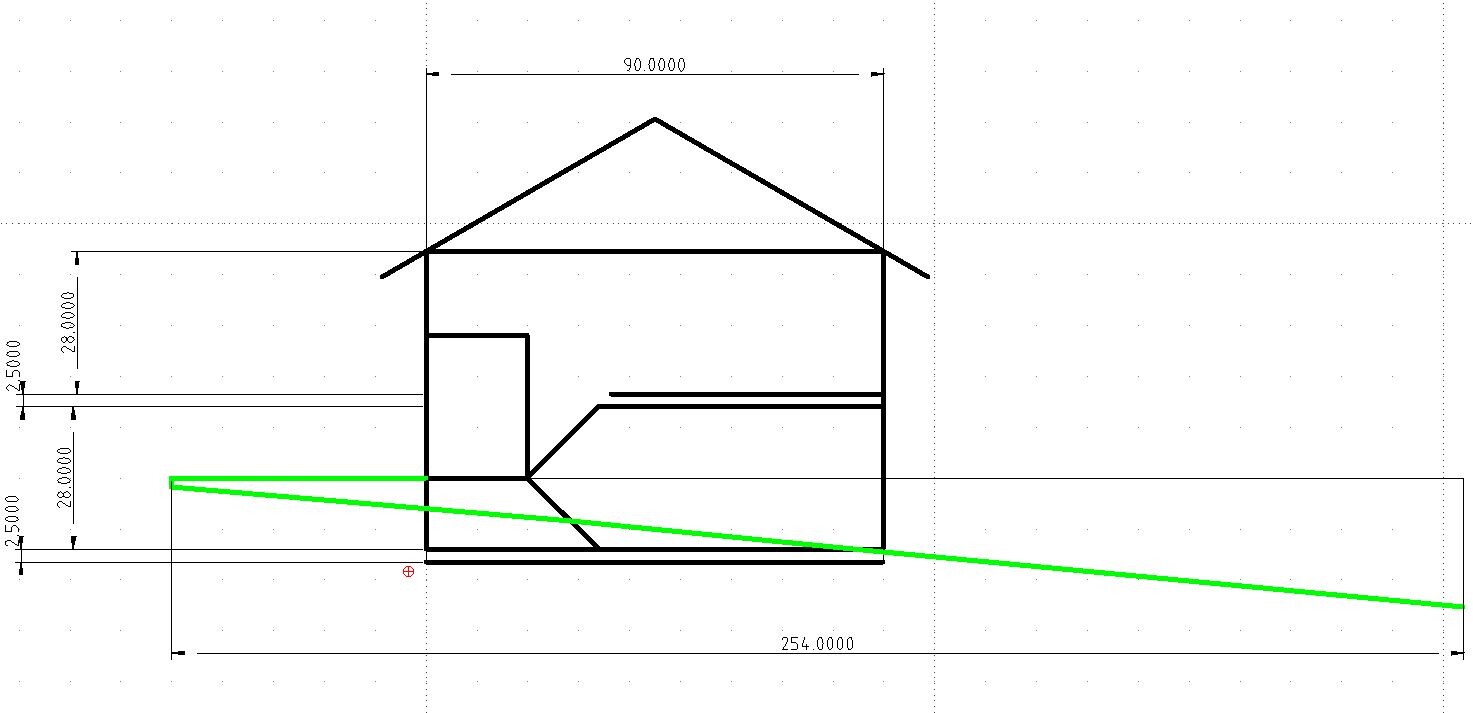
We did some research on possible solutions and came up with the idea of a sort of split-level layout. The entrance from the north side is close to street level, and the upper floor (sleeping area) and basement (living space) would be reached via a half flight of stairs.
What do you think of this? I sketched an example just to illustrate the idea better. The entrance area and stairs are obviously not final yet.
In the development plan, there is the following clause:
Plinth height:
The top edge of the unfinished floor slab on the ground floor of the lot, where the natural ground level is higher than the adjacent street, must not be more than 40cm (15.7 inches) above the natural ground level. The measurement is taken at the midpoint of the house on the valley side, parallel to the street.
In such cases, what is defined as the ground floor? The basement, the upper floor, or the entrance level?
the 700 sqm in both the title and the first post was a typo. It should actually be 600 sqm since our exact area is 572 sqm.
This time I have actually attached the image with the elevation measurements. Unfortunately, I forgot it yesterday. The ground slopes slightly downward to the south, but I think this is negligible. To the north and west is a street about 4m (13 feet) wide. I recorded a few elevation points there. The points are in the middle of the street (2m (6.5 feet) distance from the property line).
@motorradsilke / @ypg
We discussed your idea of having the basement level open to the garden with the kitchen, dining area, etc., on the ground floor, the sleeping area upstairs, and access from the north side.
How would you imagine guest access in this case? Would they enter through the front door near the bedrooms and then have to go down a floor to the dining area?
We did some research on possible solutions and came up with the idea of a sort of split-level layout. The entrance from the north side is close to street level, and the upper floor (sleeping area) and basement (living space) would be reached via a half flight of stairs.
What do you think of this? I sketched an example just to illustrate the idea better. The entrance area and stairs are obviously not final yet.
In the development plan, there is the following clause:
Plinth height:
The top edge of the unfinished floor slab on the ground floor of the lot, where the natural ground level is higher than the adjacent street, must not be more than 40cm (15.7 inches) above the natural ground level. The measurement is taken at the midpoint of the house on the valley side, parallel to the street.
In such cases, what is defined as the ground floor? The basement, the upper floor, or the entrance level?
Similar topics