
A
aniussi8922 Feb 2025 13:24Hello everyone,
We want to add an additional parking space in our front yard. It will be used for our electric car. We actually like the idea of a gravel or crushed stone base, but I have already read several posts here in the forum advising against gravel for various reasons. The main issues mentioned were the tracking of gravel into the house and the high noise level when driving on it.
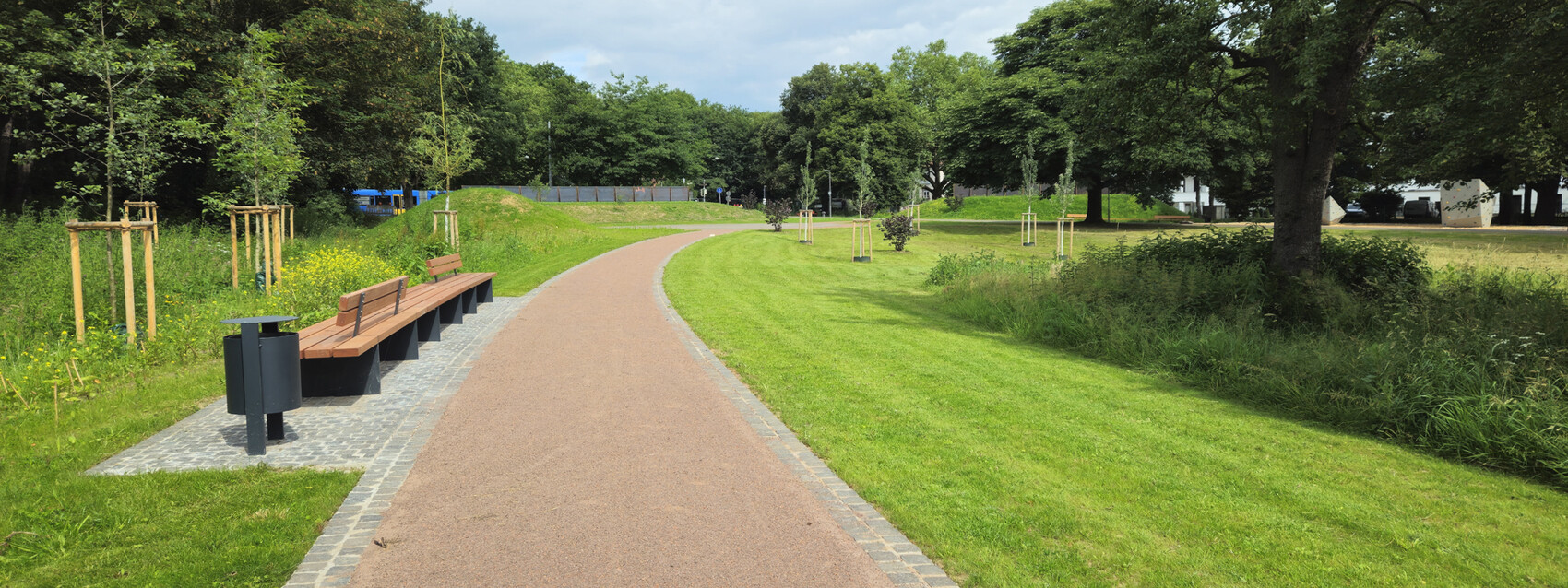
Yesterday, while out for a walk, we came across the compacted crushed stone paths typically found in parks. We like this natural approach a lot, so I wondered if anyone here has already implemented something similar or has experience with it. I would create a coarse gravel base, then lay a weed barrier fabric on top, and on that install cellular grids (also known as ground reinforcement grids). The hope with the cellular grids is to reduce ruts. I would also compact the gravel further. With the fine and compacted crushed stone, we expect to track little or no stones into the house, and the issue of high noise should also be addressed.
I have attached an example picture.
I would appreciate your assessment and opinions.
We want to add an additional parking space in our front yard. It will be used for our electric car. We actually like the idea of a gravel or crushed stone base, but I have already read several posts here in the forum advising against gravel for various reasons. The main issues mentioned were the tracking of gravel into the house and the high noise level when driving on it.
Yesterday, while out for a walk, we came across the compacted crushed stone paths typically found in parks. We like this natural approach a lot, so I wondered if anyone here has already implemented something similar or has experience with it. I would create a coarse gravel base, then lay a weed barrier fabric on top, and on that install cellular grids (also known as ground reinforcement grids). The hope with the cellular grids is to reduce ruts. I would also compact the gravel further. With the fine and compacted crushed stone, we expect to track little or no stones into the house, and the issue of high noise should also be addressed.
I have attached an example picture.
I would appreciate your assessment and opinions.
I believe your example photo shows a water-bound surface layer, which is constructed very differently from a gravel area with grids. It wouldn’t necessarily be the first choice for a parking lot.
I can’t say much more, except that the neighbors next door have a parking area with coarse gravel and grids, and so far (1 year) it has been working without any issues. In my opinion, the noise is not bothersome at all; my “eco lawn reinforcement” surface is probably even louder due to the larger gaps. Over time, though, they will occasionally need to recompact the gravel — this hasn’t been necessary so far, but it will be.
However, electric vehicles are generally noticeably heavier — depending on how often you drive in and out, and especially on how much steering you have to do, I can imagine that the surface might wear out more quickly after all.
I can’t say much more, except that the neighbors next door have a parking area with coarse gravel and grids, and so far (1 year) it has been working without any issues. In my opinion, the noise is not bothersome at all; my “eco lawn reinforcement” surface is probably even louder due to the larger gaps. Over time, though, they will occasionally need to recompact the gravel — this hasn’t been necessary so far, but it will be.
However, electric vehicles are generally noticeably heavier — depending on how often you drive in and out, and especially on how much steering you have to do, I can imagine that the surface might wear out more quickly after all.
A
aniussi8922 Feb 2025 14:23Thank you very much for the quick and very helpful response! Now I also know what to search for to learn more about the topic.
May I ask why you would rather advise against a water-bound surface layer? Is it due to continuous drivability or dirt/dust formation?
Thanks again!
May I ask why you would rather advise against a water-bound surface layer? Is it due to continuous drivability or dirt/dust formation?
Thanks again!
aniussi89 schrieb:
However, I have already read several posts here in the forum advising against using gravel for various reasons. There are also posts recommending it.
aniussi89 schrieb:
The main issue was always the tracking of gravel into the house and the loud noise when driving over it. You can reduce this by choosing gravel that is not too small.
And why should the loud noise be a problem? Those three seconds of rustling sound kind of nice, especially when you’re inside and know a resident is coming home.
M
motorradsilke22 Feb 2025 15:00ypg schrieb:
There are also posts recommending that.
And high volume, why should it be disturbing? The three seconds of noise: it actually sounds nice when you know someone is coming home inside. Because the arriving person might come home at night when someone else is already asleep and could be woken up (especially if you sleep with an open window)?
In any case, gravel is unsuitable for all two-wheeled vehicles. It rides poorly with bicycles and motorcycles. If children also have to ride their bikes over it, from my point of view it is completely unsuitable.
It is also bad for animal paws.
The question is also how to properly clear snow on gravel surfaces.
N
nordanney22 Feb 2025 15:47aniussi89 schrieb:
May I ask why you would rather advise against a water-bound gravel surface?You will notice it clearly after a longer period of rain. The surface then becomes very soft, leading to deep ruts in the gravel path and potholes when changing direction.Similar topics