
B
Bayernbors19 Feb 2025 08:41Hello everyone,
I ordered reed contacts from the window manufacturer, and they were delivered properly, as shown in the attached photos.
The issue now concerns their installation. The electrician says the window installer should have routed the cable through the hole in the frame before applying the sealant, while the window installer claims it is not their responsibility to handle the cable.
Was it really expected that the cable would be routed under the window seal? What options do I have now to connect the window contact without damaging the window seal?
Best regards and thanks


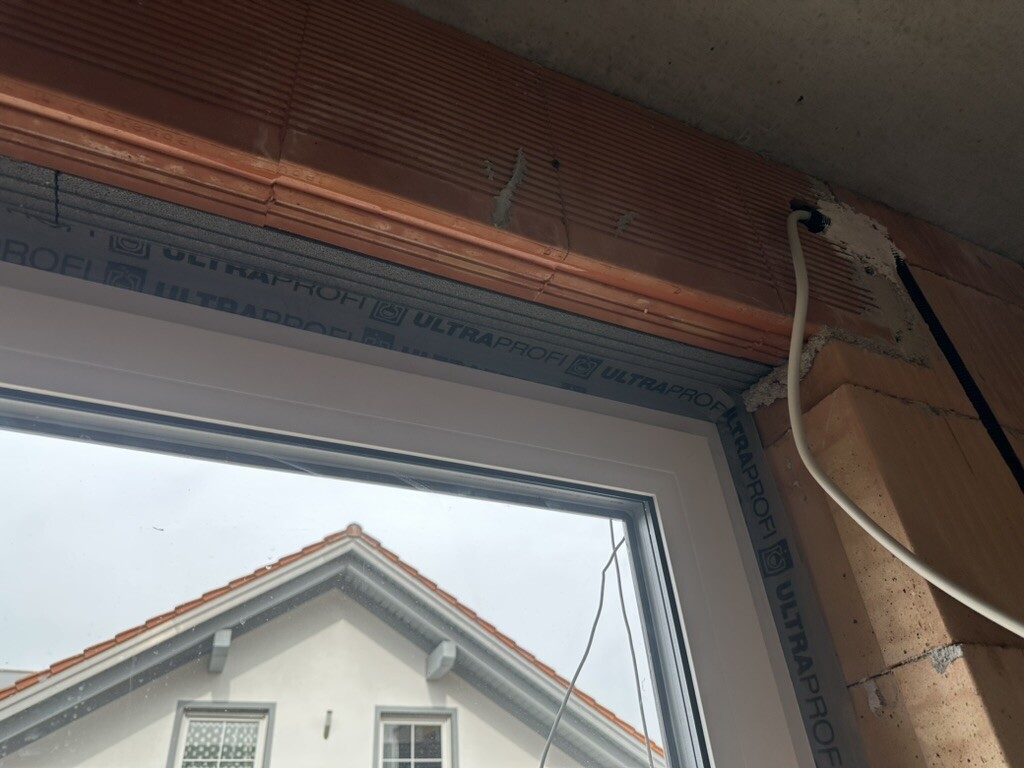
I ordered reed contacts from the window manufacturer, and they were delivered properly, as shown in the attached photos.
The issue now concerns their installation. The electrician says the window installer should have routed the cable through the hole in the frame before applying the sealant, while the window installer claims it is not their responsibility to handle the cable.
Was it really expected that the cable would be routed under the window seal? What options do I have now to connect the window contact without damaging the window seal?
Best regards and thanks
Of course, the window installer should have routed the cables out of the window frame. Whether this is done behind or in front of the sealing is relatively unimportant, as it will likely be lined or plastered over later anyway.
Are there any drill holes in the frame for the cable passage? If not, is there enough space to create a hole so the cable can exit beside the sealing? I can’t really tell from your pictures.
How does the window installer intend to route the cables? Over the frame or how?
Are there any drill holes in the frame for the cable passage? If not, is there enough space to create a hole so the cable can exit beside the sealing? I can’t really tell from your pictures.
How does the window installer intend to route the cables? Over the frame or how?
B
Bayernbors19 Feb 2025 09:45Harakiri schrieb:
Are there any drilled holes in the frame for cable routing? Yes, there is a drilled hole in the frame.
But I just can’t imagine how the cable can pass through this hole without damaging the seal (at least partly).
Harakiri schrieb:
How does the window installer envision the cable routing? Over the frame, or how? No, he just says it’s none of his concern.
That doesn’t make sense to me, so I wanted to know if there is an alternative solution, or if I have to push him to do it (and redo the sealing).
 Malle Zwabber19 Feb 2025 10:21
You should really check the window installer’s diligence. Naturally, the wiring should be routed out of the window frame before it is installed. Now, how is the electrician supposed to fix this issue without a lot of work?
B
Bayernbors19 Feb 2025 11:29Malle Zwabber schrieb:
What level of effort is the electrician supposed to put into solving the problem now?It’s not about the effort, but rather that the electrician doesn’t want to tamper with the window sealing to avoid being held responsible for any potential damage. He has no idea how to do it without touching the seal.
Assuming that the reed switches are included in the scope of work for the window manufacturer, it is also their responsibility to ensure that the following trades can continue working based on their installation, which is clearly not the case here. If they are not familiar with what a reed switch is (which some window manufacturers might not know), they should have asked where to route the cable or alternatively requested that the electrician be present on the installation day.
At this point, it is naturally difficult to find a neat solution. Removing the windows will likely lead to a more extensive dispute—possibly ending legally in your favor (but maybe only with compensation and no actual remediation), and almost certainly causing construction delays, additional costs, and so on.
It seems they used sealing tapes rather than compressible foam tape. In principle, I think it might be possible now to perforate the inner sealing tape, guide the cable through, and then restore the seal with a suitable collar. This depends somewhat on how much space there is between the frame and the reveal.
Alternatively, drilling the window frame at a 90-degree angle at the height of the other hole and trying to route the cable as close as possible just before the seal could work. However, this only works if the reveal/frame will still be covered on the interior, so the problem area can be concealed. It also depends on the window profile whether this is even possible. The window (profile) manufacturer will probably not be happy about this.
I would insist that the window manufacturer participates and supervises this process to avoid any warranty issues. For them, this should ultimately seem like a lesser evil compared to removing the windows.
At this point, it is naturally difficult to find a neat solution. Removing the windows will likely lead to a more extensive dispute—possibly ending legally in your favor (but maybe only with compensation and no actual remediation), and almost certainly causing construction delays, additional costs, and so on.
It seems they used sealing tapes rather than compressible foam tape. In principle, I think it might be possible now to perforate the inner sealing tape, guide the cable through, and then restore the seal with a suitable collar. This depends somewhat on how much space there is between the frame and the reveal.
Alternatively, drilling the window frame at a 90-degree angle at the height of the other hole and trying to route the cable as close as possible just before the seal could work. However, this only works if the reveal/frame will still be covered on the interior, so the problem area can be concealed. It also depends on the window profile whether this is even possible. The window (profile) manufacturer will probably not be happy about this.
I would insist that the window manufacturer participates and supervises this process to avoid any warranty issues. For them, this should ultimately seem like a lesser evil compared to removing the windows.
Similar topics