
ᐅ Combination of Solid Construction vs. Timber Frame Construction
Created on: 2 Feb 2025 12:15
G
Gustav5789G
Gustav57892 Feb 2025 12:15Hello collective intelligence,
Our building plot was flooded to a depth of about 20cm (8 inches) during the last flood, which is why our architect suggested raising the house 1m (3.3 feet) above ground level.
Since we also want the technical equipment to be protected from flooding, he proposed placing the utility room above the garage, as locating it inside the house would unnecessarily reduce living space. In contrast to the solid masonry house (42.5 Perlite), the utility room would be connected to the house using timber frame construction and insulated with 20cm (8 inches) of insulation to achieve the same thermal performance. The exterior will be finished with a standard render.
The advantage here is that since the garages are slightly lower than the house, the utility room would have direct access to the ceiling of the ground floor and the ceiling of the upper floor. However, I am not sure how wise it is to combine these two construction methods. On the one hand, there are concerns about thermal bridges and air leakage in the building envelope over the long term, and on the other hand, sound insulation.
He would also like to use a combined unit with both ventilation and heat pump in one system, but I have some concerns about a single point of failure, and even more so since the heat pump compressor would be located at the height of the bedrooms, which worries me.
I would prefer a separate heat pump placed 10-12m (33-39 feet) away at the edge of the property.
What do you think of this idea?
The pictures from a 3-year-old are meant to help visualize the idea

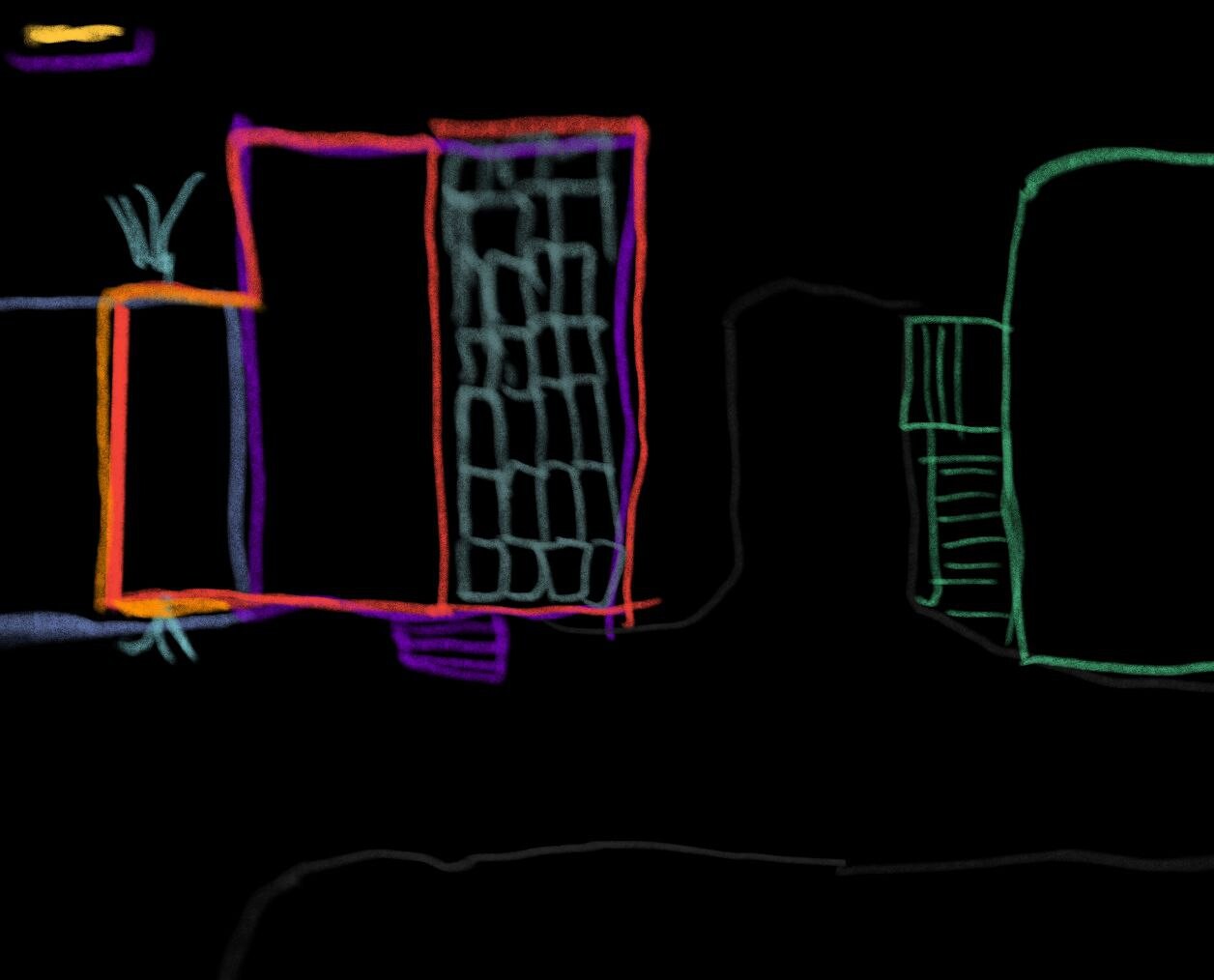
Our building plot was flooded to a depth of about 20cm (8 inches) during the last flood, which is why our architect suggested raising the house 1m (3.3 feet) above ground level.
Since we also want the technical equipment to be protected from flooding, he proposed placing the utility room above the garage, as locating it inside the house would unnecessarily reduce living space. In contrast to the solid masonry house (42.5 Perlite), the utility room would be connected to the house using timber frame construction and insulated with 20cm (8 inches) of insulation to achieve the same thermal performance. The exterior will be finished with a standard render.
The advantage here is that since the garages are slightly lower than the house, the utility room would have direct access to the ceiling of the ground floor and the ceiling of the upper floor. However, I am not sure how wise it is to combine these two construction methods. On the one hand, there are concerns about thermal bridges and air leakage in the building envelope over the long term, and on the other hand, sound insulation.
He would also like to use a combined unit with both ventilation and heat pump in one system, but I have some concerns about a single point of failure, and even more so since the heat pump compressor would be located at the height of the bedrooms, which worries me.
I would prefer a separate heat pump placed 10-12m (33-39 feet) away at the edge of the property.
What do you think of this idea?
The pictures from a 3-year-old are meant to help visualize the idea
 In der Ruine4 Feb 2025 07:14
No matter how you build it, the two structures need to be connected. It doesn’t really matter how you do that. In any case, you need to ensure proper connections and, if necessary, decoupling. I wouldn’t see this as a problem.

Gustav5789 schrieb:
I would prefer a standard heat pump and place it 10-12m (33-39 ft) further away at the edge of the property.
What do you think about this idea? None, because I don’t see the point; also, hardly anyone has that much space on their property to maintain a ten-meter (33 ft) distance between the house and the heat pump.
To summarize:
You want to locate the utility room of your planned house on the half of the double garage closest to the house and extend it upward under the sloped gable roof. You expect an additional benefit from this, as it would allow installations to be routed through both floor ceilings from the side. I would question the size of this additional benefit. However, what I really cannot understand is your idea to change only the exterior wall material for this utility room (even after thinking about it for two nights). Was that the real purpose of your post: to try confusing an experienced builder?
https://www.instagram.com/11antgmxde/
https://www.linkedin.com/company/bauen-jetzt/
G
Gustav57895 Feb 2025 22:31Thank you for the reply, and sorry for my unclear thoughts. Our architect tries to prioritize his ideas over our wishes, and we feel like we are making compromises where we shouldn’t have to.
I wanted a utility room on the ground floor of the house. Our architect advised against it due to potential impact noise issues and the supposed waste of living space. His suggestion was to move the utility room to the attic. That was not an option for me because I was too concerned about noise penetrating through the ceiling into the bedrooms below. I preferred to keep the utility room on the ground floor since our client and many show homes handle it that way.
However, he insisted on his opinion and argued that my solution would be too expensive. His compromise suggestion was to place the utility room above the garage. This would keep the option open for a prefabricated garage as a base and also save on material costs. He presented this concept as a major advantage, claiming it would provide easy access to all floor slabs, making ventilation and cable installation much simpler. After consulting two heating engineers, I now understand that it does not really offer any added value.
I doubt that the material savings are significant enough to impact the overall construction cost, and I no longer see any benefits. I would probably have the utility room and the garage built with masonry so that we use consistent materials throughout.
I wanted a utility room on the ground floor of the house. Our architect advised against it due to potential impact noise issues and the supposed waste of living space. His suggestion was to move the utility room to the attic. That was not an option for me because I was too concerned about noise penetrating through the ceiling into the bedrooms below. I preferred to keep the utility room on the ground floor since our client and many show homes handle it that way.
However, he insisted on his opinion and argued that my solution would be too expensive. His compromise suggestion was to place the utility room above the garage. This would keep the option open for a prefabricated garage as a base and also save on material costs. He presented this concept as a major advantage, claiming it would provide easy access to all floor slabs, making ventilation and cable installation much simpler. After consulting two heating engineers, I now understand that it does not really offer any added value.
I doubt that the material savings are significant enough to impact the overall construction cost, and I no longer see any benefits. I would probably have the utility room and the garage built with masonry so that we use consistent materials throughout.
Gustav5789 schrieb:
I wanted to keep the utility room on the ground floor since our client and many show homes handle it that way. Which "your client"? – you are the client yourselves, right (?)
As a layperson, you need an advisor you can trust and who understands you—not someone who wants to build "their" house for you. Find another independent architect and introduce your plot and project here in the forum. Complete the "Module A" with the new architect (see "A House Building Roadmap, also for you: the Phase Model of HOAI!"—external and therefore to be googled with quotation marks).
Every unnecessary special solution costs extra money and carries potential complications. Build as simply as possible; you will inevitably deviate from the standard, off-the-shelf approach for your family’s individual needs or wishes—but make sure it is not in a direction controlled by others.
https://www.instagram.com/11antgmxde/
https://www.linkedin.com/company/bauen-jetzt/
Gustav5789 schrieb:
I would probably have the technical room and garage built with masonry, so we use one material consistently. Honestly, I don’t see a mix of materials here nor a prefabricated garage. But basically, it’s a house with a semi-integrated garage. Whether that’s what you want is another question. From an aesthetic point of view, it’s rather less than ideal.
Similar topics