
C
Contact200121 Jan 2025 10:26Hello everyone,
I have a floor plan here where the staircase has been designed with only two steps in the lower turn but three steps at the top. Does that make sense?
The floor-to-floor height is 3.15 m (10.3 ft) with 17 steps; the rest you can see in the drawings.
Would you build it like this, or would you do something differently under certain circumstances?
Thank you very much,
Mike

I have a floor plan here where the staircase has been designed with only two steps in the lower turn but three steps at the top. Does that make sense?
The floor-to-floor height is 3.15 m (10.3 ft) with 17 steps; the rest you can see in the drawings.
Would you build it like this, or would you do something differently under certain circumstances?
Thank you very much,
Mike
W
wiltshire21 Jan 2025 12:23That is indeed a noticeable detail.
My idea on this—without being a stair specialist—is that the three-step solution saves on the staircase’s length. The two-step option offers a bit more safety against falling due to the larger outer tread surfaces. With your solution, you get a bit more safety at the top while keeping the staircase as short as possible. Quite clever, actually, isn’t it?
My idea on this—without being a stair specialist—is that the three-step solution saves on the staircase’s length. The two-step option offers a bit more safety against falling due to the larger outer tread surfaces. With your solution, you get a bit more safety at the top while keeping the staircase as short as possible. Quite clever, actually, isn’t it?
C
Contact200121 Jan 2025 12:56wiltshire schrieb:
That is indeed a striking detail.
My idea on this – without being a staircase expert – is that the three-step solution saves the overall length of the staircase. The two-step solution offers a bit more safety against falling due to the larger outer tread surfaces. With this solution, you have a bit more safety at the top while still keeping the staircase as short as possible. Quite clever, isn’t it? Thank you very much for your comment,
so in your opinion it’s better to have the larger double treads at the top and the three steps at the bottom? Right now it’s planned the other way around, but I also think it’s better to fall at the bottom than at the top.

Contact2001 schrieb:
I have a floor plan here where the staircase is designed with only two steps in the lower turn but three at the top. Does that make sense?
The floor-to-ceiling height is 3.15 m (10.3 ft) with 17 steps. You can see the rest on the drawings.
Would you build it like this, or would you do anything differently under certain circumstances? The drawing does not show a single staircase but two halves: at the bottom of the plan, the base of the stairs from the ground floor to the upper floor, and dashed lines indicating the head of the stairs from the basement to the ground floor. This common method of graphic representation can be misleading because non-experts often see it as just "one" staircase. Aside from that / regardless ...
Contact2001 schrieb:
So, in your opinion, it would be better to have the larger double steps at the top and the three steps at the bottom. At the moment, it’s planned the other way around, but I also think it’s safer to fall downstairs than upstairs. ... from an emergency-response perspective, it is generally safer to trip going upwards rather than downwards, because falling downstairs is more likely.
Show the upper floor plan—I suspect the head of the stairs might even end in a straight run.
https://www.instagram.com/11antgmxde/
https://www.linkedin.com/company/bauen-jetzt/
C
Contact200121 Jan 2025 17:02Hello 11ant,
thank you for your quick response.
No, there is a staircase since there is no basement. The stairs would lead straight into the shower.
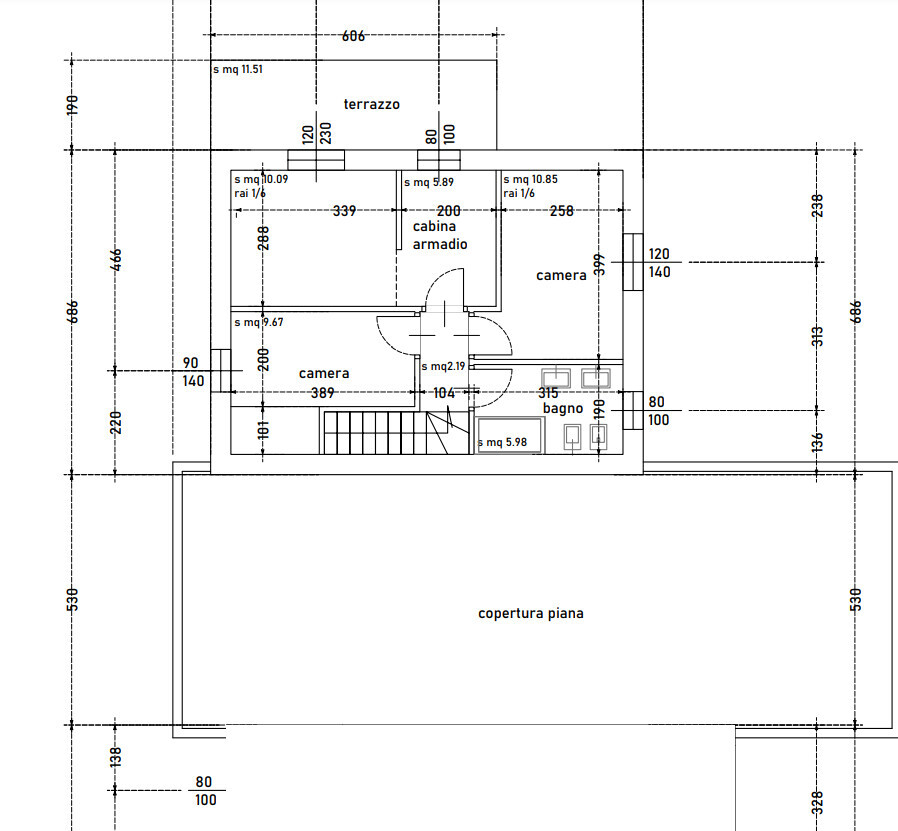
thank you for your quick response.
No, there is a staircase since there is no basement. The stairs would lead straight into the shower.
You can look up "stair tread warping" to find different construction methods for spiral staircases.
Starting directly with the curve is usually difficult. A small landing step at the beginning or end can be quite helpful.
It’s been 20 years already since I studied stair construction during my technical training. How time flies!
Starting directly with the curve is usually difficult. A small landing step at the beginning or end can be quite helpful.
It’s been 20 years already since I studied stair construction during my technical training. How time flies!
Similar topics