
ᐅ Waterproof concrete – injection during the construction phase
Created on: 4 Jan 2025 13:51
S
summoner
Hi,
we are currently in the process of building a house with a general contractor who is also responsible for the basement.
The house is a solid masonry structure with a fully basement constructed using a "white tank" (watertight concrete) system. The basement, made of watertight concrete (WU concrete), is completely below ground level and does not protrude on any side. Each room in the basement has waterproof light wells designed to resist groundwater pressure. The soil survey confirmed that there is no hydrostatic groundwater pressure.
The WU construction is or was carried out according to the contract as follows (excerpt):
Approximately 24 cm (9.5 inches) thick reinforced concrete walls cast in place, a 30 cm (12 inches) thick reinforced concrete slab with reinforcement, PE foil as a sliding layer, perimeter insulation with a thickness of 60 mm (2.4 inches), and a 5 cm (2 inch) thick blinding layer. The buried WU basement exterior walls were insulated with 100 mm (4 inches) of perimeter insulation.
Now, the site manager and we have noticed damp spots on some walls. In one area, water seeped in slightly between the floor slab and the wall, causing a small puddle on the floor. In another area, water penetrated the wall itself (photos attached). Fortunately, the site manager acted quickly and has been following up to ensure “everything is in order.”
These spots were generously injected with sealant by a company responsible for supervising the white tank installation (one site about a month ago, the other about 2–3 months ago) and currently appear to be sealed. In one case, water leaked out during drilling of the wall; according to the employee, they had to drill through the joint protection or membrane (warning: not an expert) to ensure it was fully sealed.
During a recent site inspection, we found new damp areas and are now concerned whether it is normal that multiple injections are needed in different places so early in a new build with a white tank basement. Unfortunately, the basement has already been fully backfilled, and a “foil” (vapor barrier?) has been installed inside the basement, which, however, is only adhered to the wall.
We have already reported the new damp spots to the site manager.
Has anyone had similar experiences? Any feedback would be greatly appreciated.

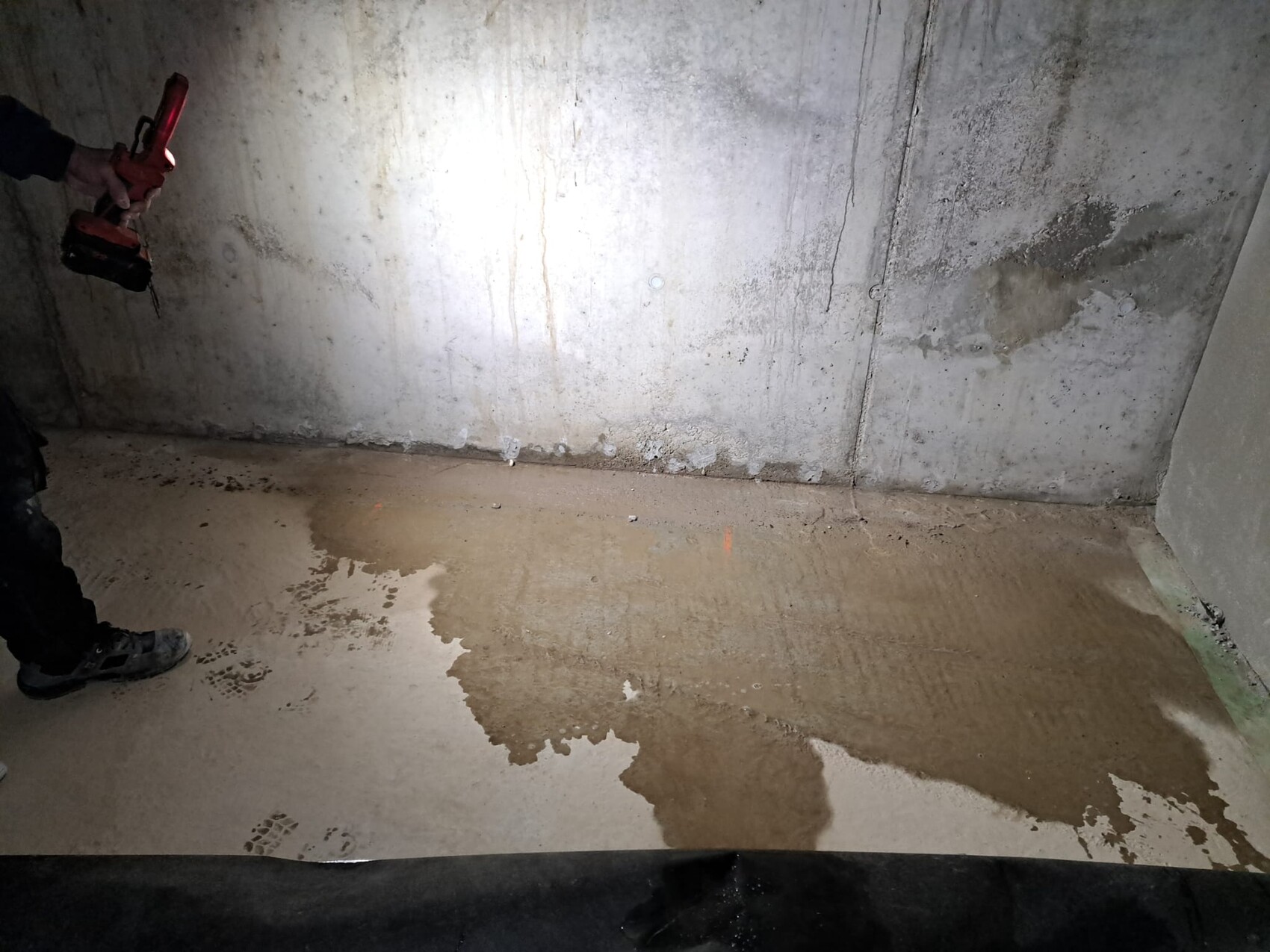
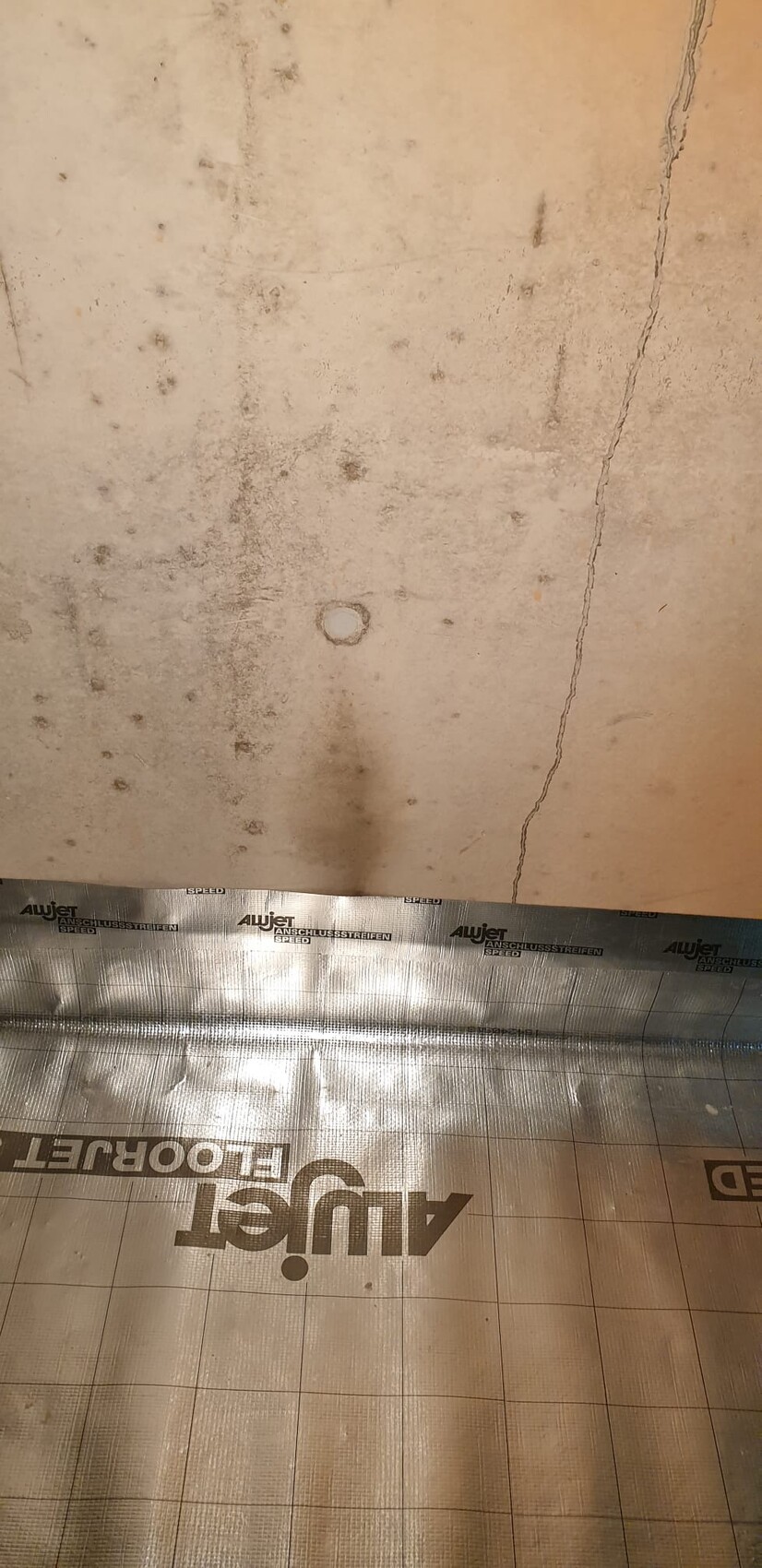
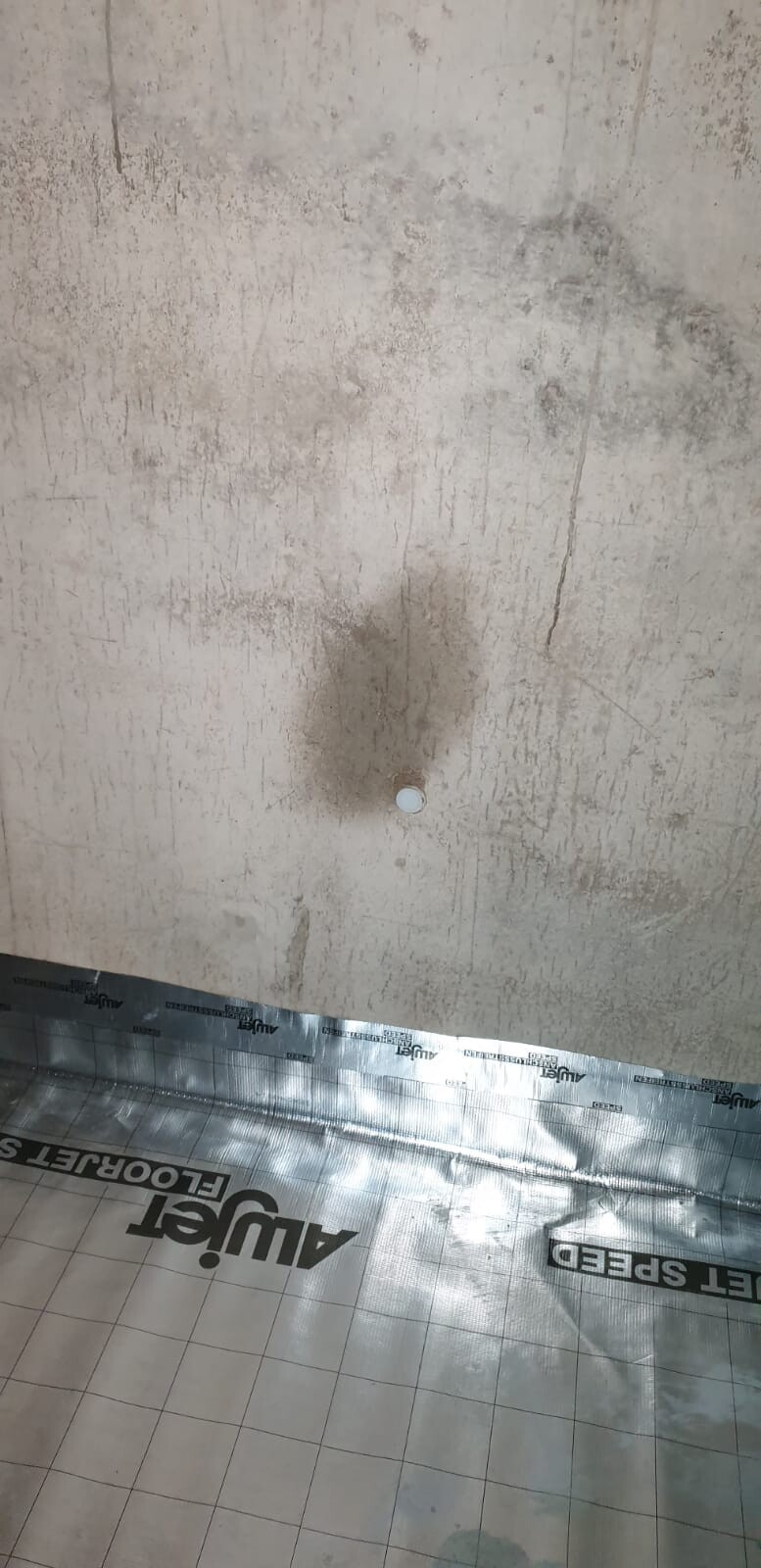
we are currently in the process of building a house with a general contractor who is also responsible for the basement.
The house is a solid masonry structure with a fully basement constructed using a "white tank" (watertight concrete) system. The basement, made of watertight concrete (WU concrete), is completely below ground level and does not protrude on any side. Each room in the basement has waterproof light wells designed to resist groundwater pressure. The soil survey confirmed that there is no hydrostatic groundwater pressure.
The WU construction is or was carried out according to the contract as follows (excerpt):
Approximately 24 cm (9.5 inches) thick reinforced concrete walls cast in place, a 30 cm (12 inches) thick reinforced concrete slab with reinforcement, PE foil as a sliding layer, perimeter insulation with a thickness of 60 mm (2.4 inches), and a 5 cm (2 inch) thick blinding layer. The buried WU basement exterior walls were insulated with 100 mm (4 inches) of perimeter insulation.
Now, the site manager and we have noticed damp spots on some walls. In one area, water seeped in slightly between the floor slab and the wall, causing a small puddle on the floor. In another area, water penetrated the wall itself (photos attached). Fortunately, the site manager acted quickly and has been following up to ensure “everything is in order.”
These spots were generously injected with sealant by a company responsible for supervising the white tank installation (one site about a month ago, the other about 2–3 months ago) and currently appear to be sealed. In one case, water leaked out during drilling of the wall; according to the employee, they had to drill through the joint protection or membrane (warning: not an expert) to ensure it was fully sealed.
During a recent site inspection, we found new damp areas and are now concerned whether it is normal that multiple injections are needed in different places so early in a new build with a white tank basement. Unfortunately, the basement has already been fully backfilled, and a “foil” (vapor barrier?) has been installed inside the basement, which, however, is only adhered to the wall.
We have already reported the new damp spots to the site manager.
Has anyone had similar experiences? Any feedback would be greatly appreciated.
Brief update:
1. In the next few days, an employee from the “basement company” will come to inspect the new areas and seal them. We (the construction manager/team and we as the homeowners) will completely remove the waterproof membrane (it’s only partially adhered) and check every exterior wall for any signs of moisture. Fortunately, it will rain soon in our area, and the screed won’t be installed until a few months from now, so we can monitor if any water is still coming in during that time.
2. After consulting with the construction manager, he informed me that he has already contacted the civil engineer: the “basement company” apparently overlooked something during the concrete pouring process (sorry, this is becoming non-technical), which caused difficulties when compacting the concrete or the concrete was too dry (I cannot reproduce the exact wording here).
3. The building inspector told me that he can basically only check whether the “issues” have been properly resolved through the compaction process.
1. In the next few days, an employee from the “basement company” will come to inspect the new areas and seal them. We (the construction manager/team and we as the homeowners) will completely remove the waterproof membrane (it’s only partially adhered) and check every exterior wall for any signs of moisture. Fortunately, it will rain soon in our area, and the screed won’t be installed until a few months from now, so we can monitor if any water is still coming in during that time.
2. After consulting with the construction manager, he informed me that he has already contacted the civil engineer: the “basement company” apparently overlooked something during the concrete pouring process (sorry, this is becoming non-technical), which caused difficulties when compacting the concrete or the concrete was too dry (I cannot reproduce the exact wording here).
3. The building inspector told me that he can basically only check whether the “issues” have been properly resolved through the compaction process.
D
derdietmar21 Jan 2025 08:57Hello,
I don’t think this problem can be resolved as is; the concrete itself seems to be leaking (probably low quality). It’s possible that the waterstop was also not installed correctly. Who can guarantee that all leaking spots were properly sealed? Most likely, all walls would need to be fully injected.
So, it won’t be a white tank anymore. The concrete basement will have to be converted into a black tank. This means digging everything up, removing the insulation, applying bitumen waterproofing against hydrostatic pressure, re-insulating, and refilling. Alternatively, it might be necessary to demolish and rebuild.
Best regards
I don’t think this problem can be resolved as is; the concrete itself seems to be leaking (probably low quality). It’s possible that the waterstop was also not installed correctly. Who can guarantee that all leaking spots were properly sealed? Most likely, all walls would need to be fully injected.
So, it won’t be a white tank anymore. The concrete basement will have to be converted into a black tank. This means digging everything up, removing the insulation, applying bitumen waterproofing against hydrostatic pressure, re-insulating, and refilling. Alternatively, it might be necessary to demolish and rebuild.
Best regards
A
Allthewayup21 Jan 2025 09:21derdietmar schrieb:
Hello,
I don’t think this problem can be resolved as it is; the concrete itself seems to be leaking (probably poor quality). Possibly, the water stop strip was also not installed correctly. Who can guarantee that all leaks were properly injected? You would probably need to inject all walls over the entire surface.
So this will not become a waterproof concrete tank. Therefore, the concrete basement needs to be converted into a tank with a bituminous membrane (a “black tank”). This means digging everything up, removing insulation, applying a bitumen-based waterproofing membrane against groundwater pressure, re-insulating, and backfilling. Alternatively, demolish and rebuild.
Best regards That wouldn’t work, since there is intermittent standing seepage water – at least that’s how I understood it. A bituminous membrane tank is not sufficient long-term protection against groundwater pressure.
I would insist on contract fulfillment, even if that means demolishing the basement.
To the affected homeowner: I would ask the expert how they would decide if this were their own basement; that usually provides the most honest answer.
D
derdietmar21 Jan 2025 10:00Hello,
A black tanking membrane can indeed be watertight against pressurized water. If necessary, the water may also need to be diverted around the building.
However, demolition and rebuilding would probably be the better option.
Best regards
A black tanking membrane can indeed be watertight against pressurized water. If necessary, the water may also need to be diverted around the building.
However, demolition and rebuilding would probably be the better option.
Best regards
Similar topics