
ᐅ Two-story single-family house without a basement, with an outbuilding and driveway on the south side
Created on: 12 Jan 2025 21:11
L
leinoel
Hello! Happy New Year to you all!
My husband and I recently purchased a plot of land and are currently busy planning how our house should look. I have already read several forum posts and have been able to take away a few tips – many thanks for that!
We are now gathering initial quotes to roughly estimate whether our current plans are completely off, within budget, or if we might even be able to plan a bit more generously. We aimed for a compact design but still allowed for a bit of luxury – at least on paper. We would appreciate feedback on our plan – both positive and negative comments are very welcome.
Development Plan / Restrictions
Plot size: 1000m2 (10,764 sq ft)
Slope: no, flat plot
Site coverage ratio: no restrictions
Floor area ratio: no restrictions
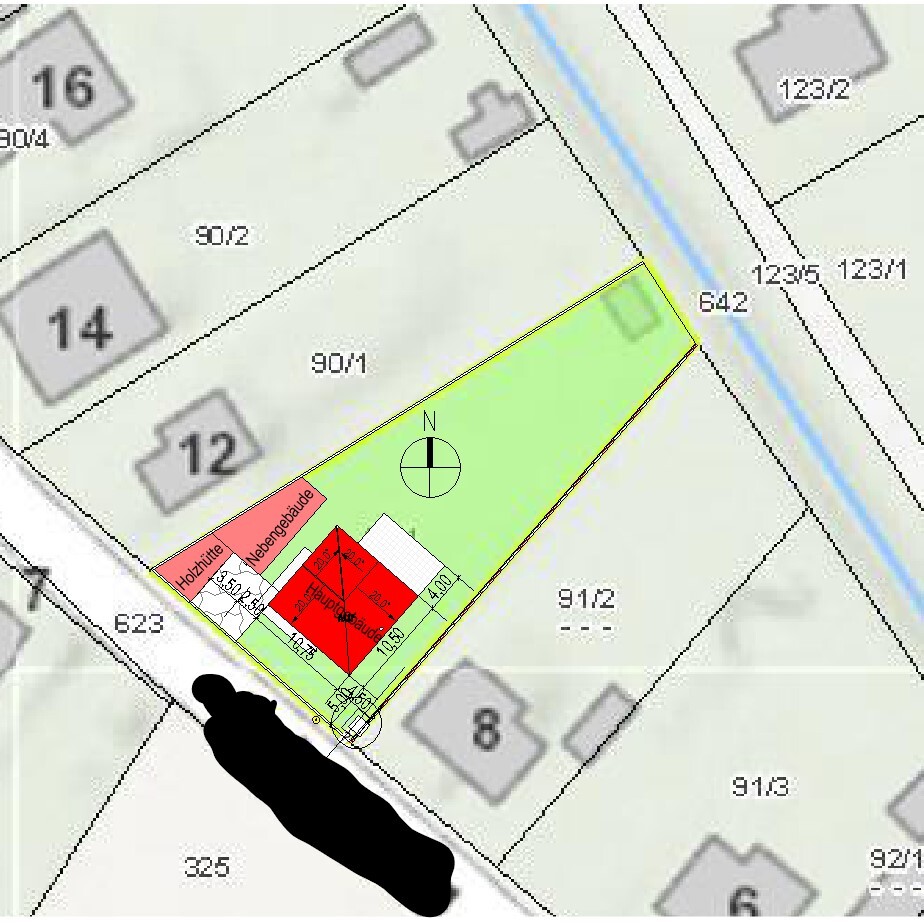
Building envelope, building line, and boundary: street side 3–5 m (10–16 ft), 3 m (10 ft) on both left and right sides, rear building boundary about 30 m (98 ft) – so plenty of space
Edge development – what does this mean? Open construction method is required; neighbors are at least 3 m (10 ft) from the property boundary
Number of parking spaces: 2 cars
Number of storeys: no requirements; we want 2 above-ground storeys but no basement (due to high groundwater level)
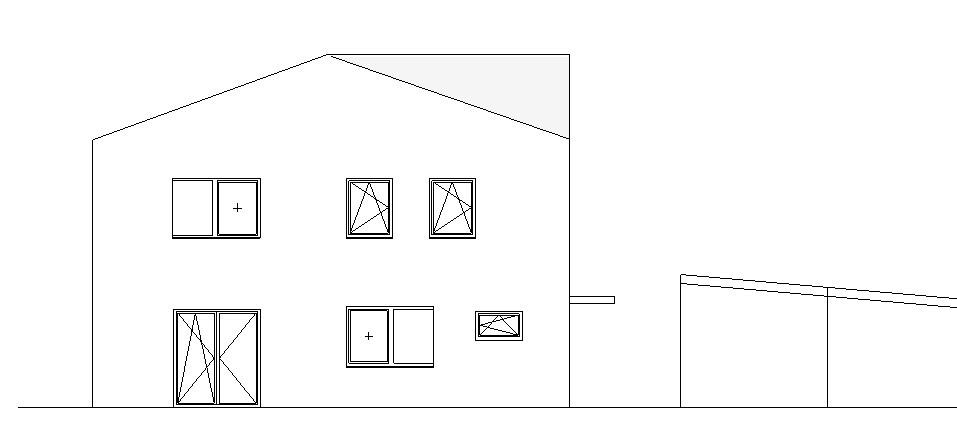
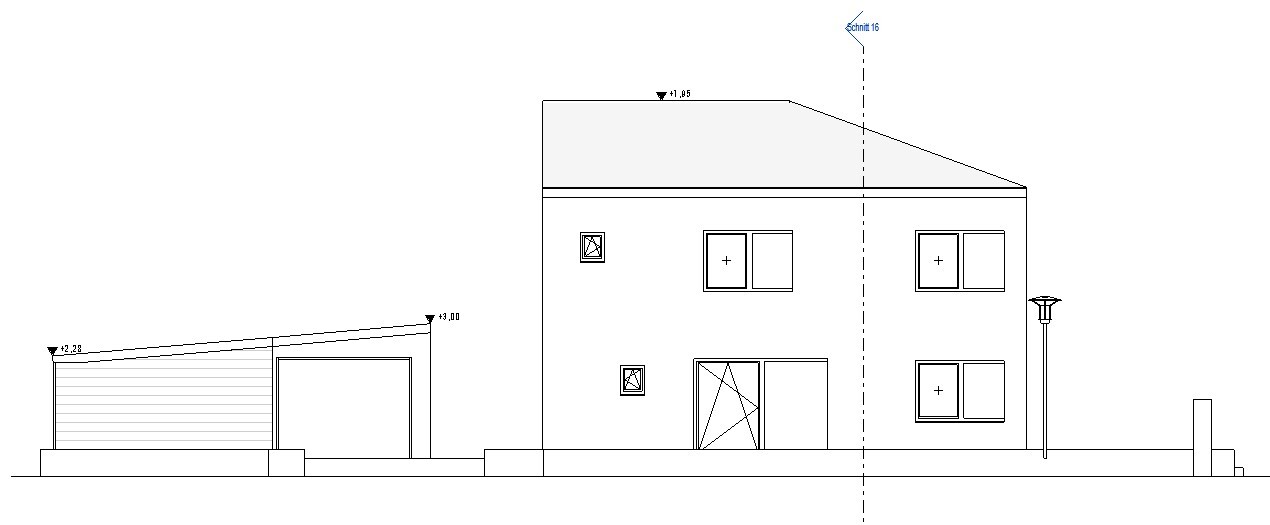
Roof type: pitched roof is mandatory; our idea is shown in the elevations (maximum roof area facing south for photovoltaic panels). Whether this makes sense cost-wise will depend on the quotes. Otherwise, it will be a traditional gable roof with the ridge running parallel to the street
Architectural style: Bauhaus or modern country house style (we like the combination of plaster and wood)
Orientation: garden to the northeast, street to the southwest
Maximum heights/limits: maximum building height at the building line 7 m (23 ft), maximum ridge height 8.5 m (28 ft)
Additional requirements
Homeowners’ Requirements
Architectural style, roof shape, building type: modern country house style, pitched roof, two storeys without basement
Basement, storeys: no basement, 2 storeys
Number of occupants, ages: 4 people, 37 years, 33 years, 4 years, 1 year
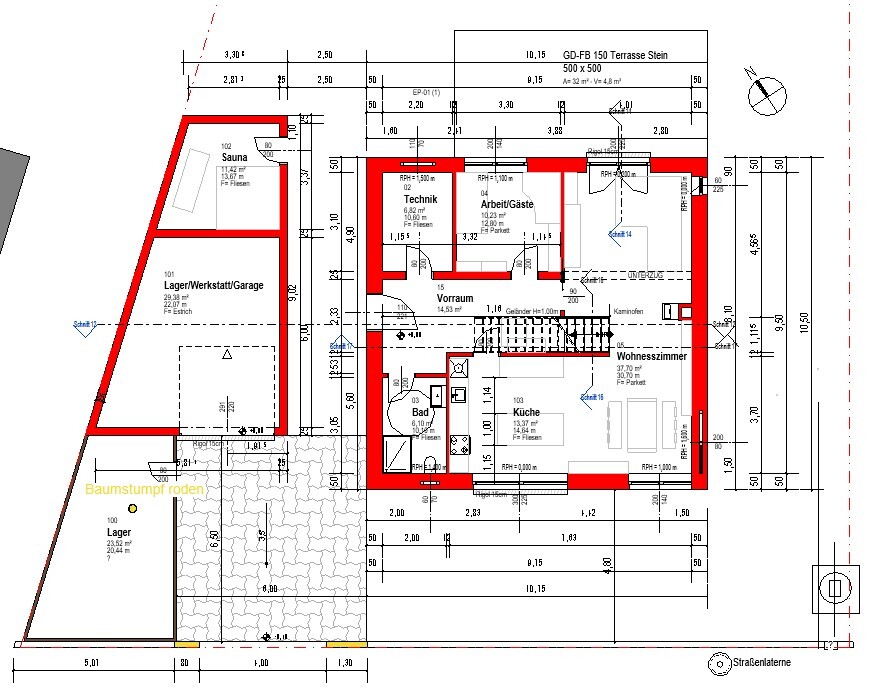
Space requirements on ground floor and upper floor: Ground floor: living-dining-kitchen area, home office/guest room, bathroom, utility room, cloakroom; Upper floor: 3 bedrooms, bathroom, laundry/storage room
Office use: family use or home office? Home office twice a week, sleeping accommodation for parents-in-law
Guest stays per year: 3–4 weeks
Open or closed layout: living areas on the ground floor open but preferably with the option to install a sliding door later when the children are older and visitors come, in order to have some privacy
Conservative or modern construction: open to both
Open kitchen, kitchen island: absolutely open to the dining room; a kitchen island would be my wish but takes a lot of space ... might end up as a peninsula instead
Number of dining seats: 4 people, but should have space for up to 15 people for events like Christmas or birthdays – it’s fine if an additional large table is placed in the living room and the sofa moved temporarily
Fireplace: YES
Music/stereo wall: not a must
Balcony, roof terrace: no
Garage, carport: yes, carport in the front building setback; behind that, a garage as a basement substitute room plus a room for a sauna (alternatively, placing the sauna inside the main building is also fine, but we didn’t manage that in our planning; the sauna should measure at least 2 m x 2 m (6.5 ft x 6.5 ft))
Utility garden, greenhouse: no greenhouse, but a few fruit trees are already on the plot; we want to add native perennials and small vegetable beds to be cultivated with the children
Further wishes/special features/daily routine, also reasons for why certain things should or should not be included: we want at least one living room to have a view of the garden – so to the north. Therefore, the living rooms are arranged in an L-shape. The other two living rooms should face the street (south). This street has very little traffic and currently a nice undeveloped view (it is farmed). The toilet on the upper floor should be a separate room. Maximizing afternoon sunlight in the living rooms would be desirable (appropriate sun protection for the hot period is planned).
House Design
Who designed the plan:
- Do-it-Yourself
What do you particularly like? Why? I especially like our plot because it is so quiet, and we are already looking forward to sleeping with open windows in summer. I like the – compared to our current home – large bathroom where, hopefully, people won’t bump into each other brushing their teeth and where there is still space for a laundry hamper. The kitchen next to the dining area is also very important to us. We don’t have that now, and it can be a challenge with the children.
What do you not like? Why? The entrance area – I’m not sure whether there will be enough space for our clothes. Also, perhaps it would be practical to have a direct connection from the garage into the house. I also worry that the long corridor between the buildings might be too dark.
Price estimate according to architect/planner: we are currently waiting for this
Personal price limit for the house, including fittings: €600,000 (about 600,000), but we would prefer to target €500,000 (about 500,000)
Preferred heating technology: geothermal (deep drilling or horizontal collector)
If you have to give up on details/extensions
- can you do without: lift-and-slide door (a hinged door is also fine), straight staircase, kitchen island, staircase from living room to upper floor
- cannot do without: guest room, garden view from at least one living room, bathroom on the ground floor, separate toilet on the upper floor
Why is the design the way it is?
We conducted a needs analysis and arranged the rooms according to cardinal directions (lighting is important to me — it will also be important later). After many pencil sketches and moving paper furniture around, this design finally emerged. This is the first one I haven’t completely reworked after just a few days. Let’s see if it stays that way 😀
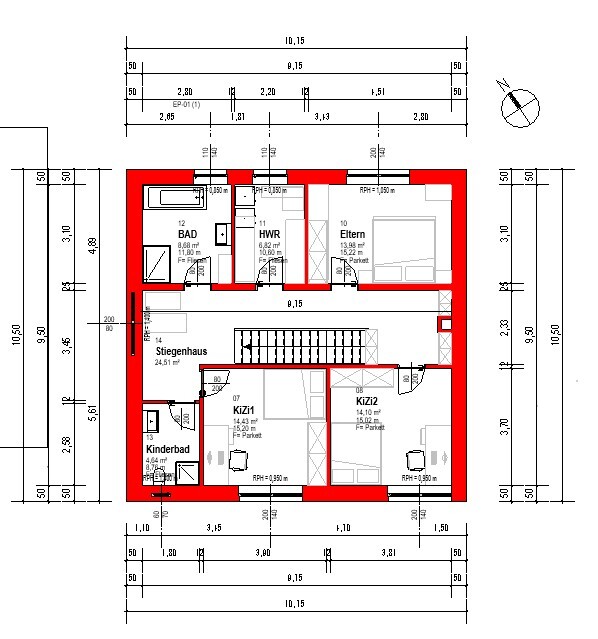
My husband and I recently purchased a plot of land and are currently busy planning how our house should look. I have already read several forum posts and have been able to take away a few tips – many thanks for that!
We are now gathering initial quotes to roughly estimate whether our current plans are completely off, within budget, or if we might even be able to plan a bit more generously. We aimed for a compact design but still allowed for a bit of luxury – at least on paper. We would appreciate feedback on our plan – both positive and negative comments are very welcome.
Development Plan / Restrictions
Plot size: 1000m2 (10,764 sq ft)
Slope: no, flat plot
Site coverage ratio: no restrictions
Floor area ratio: no restrictions
Building envelope, building line, and boundary: street side 3–5 m (10–16 ft), 3 m (10 ft) on both left and right sides, rear building boundary about 30 m (98 ft) – so plenty of space
Edge development – what does this mean? Open construction method is required; neighbors are at least 3 m (10 ft) from the property boundary
Number of parking spaces: 2 cars
Number of storeys: no requirements; we want 2 above-ground storeys but no basement (due to high groundwater level)
Roof type: pitched roof is mandatory; our idea is shown in the elevations (maximum roof area facing south for photovoltaic panels). Whether this makes sense cost-wise will depend on the quotes. Otherwise, it will be a traditional gable roof with the ridge running parallel to the street
Architectural style: Bauhaus or modern country house style (we like the combination of plaster and wood)
Orientation: garden to the northeast, street to the southwest
Maximum heights/limits: maximum building height at the building line 7 m (23 ft), maximum ridge height 8.5 m (28 ft)
Additional requirements
Homeowners’ Requirements
Architectural style, roof shape, building type: modern country house style, pitched roof, two storeys without basement
Basement, storeys: no basement, 2 storeys
Number of occupants, ages: 4 people, 37 years, 33 years, 4 years, 1 year
Space requirements on ground floor and upper floor: Ground floor: living-dining-kitchen area, home office/guest room, bathroom, utility room, cloakroom; Upper floor: 3 bedrooms, bathroom, laundry/storage room
Office use: family use or home office? Home office twice a week, sleeping accommodation for parents-in-law
Guest stays per year: 3–4 weeks
Open or closed layout: living areas on the ground floor open but preferably with the option to install a sliding door later when the children are older and visitors come, in order to have some privacy
Conservative or modern construction: open to both
Open kitchen, kitchen island: absolutely open to the dining room; a kitchen island would be my wish but takes a lot of space ... might end up as a peninsula instead
Number of dining seats: 4 people, but should have space for up to 15 people for events like Christmas or birthdays – it’s fine if an additional large table is placed in the living room and the sofa moved temporarily
Fireplace: YES
Music/stereo wall: not a must
Balcony, roof terrace: no
Garage, carport: yes, carport in the front building setback; behind that, a garage as a basement substitute room plus a room for a sauna (alternatively, placing the sauna inside the main building is also fine, but we didn’t manage that in our planning; the sauna should measure at least 2 m x 2 m (6.5 ft x 6.5 ft))
Utility garden, greenhouse: no greenhouse, but a few fruit trees are already on the plot; we want to add native perennials and small vegetable beds to be cultivated with the children
Further wishes/special features/daily routine, also reasons for why certain things should or should not be included: we want at least one living room to have a view of the garden – so to the north. Therefore, the living rooms are arranged in an L-shape. The other two living rooms should face the street (south). This street has very little traffic and currently a nice undeveloped view (it is farmed). The toilet on the upper floor should be a separate room. Maximizing afternoon sunlight in the living rooms would be desirable (appropriate sun protection for the hot period is planned).
House Design
Who designed the plan:
- Do-it-Yourself
What do you particularly like? Why? I especially like our plot because it is so quiet, and we are already looking forward to sleeping with open windows in summer. I like the – compared to our current home – large bathroom where, hopefully, people won’t bump into each other brushing their teeth and where there is still space for a laundry hamper. The kitchen next to the dining area is also very important to us. We don’t have that now, and it can be a challenge with the children.
What do you not like? Why? The entrance area – I’m not sure whether there will be enough space for our clothes. Also, perhaps it would be practical to have a direct connection from the garage into the house. I also worry that the long corridor between the buildings might be too dark.
Price estimate according to architect/planner: we are currently waiting for this
Personal price limit for the house, including fittings: €600,000 (about 600,000), but we would prefer to target €500,000 (about 500,000)
Preferred heating technology: geothermal (deep drilling or horizontal collector)
If you have to give up on details/extensions
- can you do without: lift-and-slide door (a hinged door is also fine), straight staircase, kitchen island, staircase from living room to upper floor
- cannot do without: guest room, garden view from at least one living room, bathroom on the ground floor, separate toilet on the upper floor
Why is the design the way it is?
We conducted a needs analysis and arranged the rooms according to cardinal directions (lighting is important to me — it will also be important later). After many pencil sketches and moving paper furniture around, this design finally emerged. This is the first one I haven’t completely reworked after just a few days. Let’s see if it stays that way 😀
Teimo1988 schrieb:
I'm not a floor plan expert, but I do own a sauna. On a 1000 m² (12,000 sq ft) plot, I definitely wouldn't place my wellness area/sauna behind the garage. It could be a separate structure in the garden. Running electricity and cold water for a shower in the garden isn’t that difficult either. We also have an outdoor sauna attached to the terrace. Every time, I’m glad we didn’t put the sauna in the basement because it’s just wonderful to be outside after sauna sessions. You might even have space for a swimming pond or something similar... Well, isn’t that a bit small for a wellness area? 😀 The sauna is actually a concession to my husband. He doesn’t like the idea of having to walk across half the garden in winter to get to the sauna. But maybe he’ll come around—I think he just can’t picture it yet. I guess if it’s not too far from the terrace, he might warm up to the idea. There’s enough space; the money might just run out at some point. We’ll see if the swimming pond is still doable—it would be great, of course. How did you build your sauna? Do you use it in winter as well? How close to the terrace should it be? Would you have a suggestion on where to place it? With more info, I’m sure I can convince my husband; I personally like the idea better too. Otherwise, so much garden space would go unused, and that would be a shame.
leinoel schrieb:
Yes, if in doubt, it might be one of those "barrel saunas" that you place somewhere in the garden. You just have to walk through the cold in winter to heat it up – I haven’t looked into how exactly such a sauna would work yet, but I will learn more about it.Basically, it can be a purchased or self-built garden shed. I once had one (a modular system with numbered wooden parts) which I even bought used and placed on a concrete slab. On the back, I attached a storage room for gardening tools. Everything was simple but functional. In Scandinavia, simplicity is more common, while here it’s sometimes done more elaborately and expensively.Our former sauna in the basement was comfortable and nice, but you need an appropriate space around it because you don’t want to see a workbench or shelves immediately upon leaving the sauna—instead, you want a pleasant atmosphere. Nature provides that automatically; the chilly feeling is a different matter. Heating it up is not a problem and works the same way as when it’s inside the house. However, I would prefer to have it close to the house because you don’t want to walk half the neighborhood in your birthday suit or be seen by neighbors, plus the possible walk through wet grass or rain. Snow would at least be romantic.
Our plan for the current house was similar: to integrate the sauna next to the carport. But for various reasons, it didn’t become a sauna after all, but a spacious storage room instead, with a luxurious hot tub in the garden.
Electrically, it’s no problem; you just need the appropriate power cable at the location.
Today, I might do it differently, but to give you an idea, here are two pictures. It was intended for a holiday apartment and was built affordably (with roofing battens) but still looking neat.

leinoel schrieb:
How did you set up your sauna? Do you use it in winter, too? How close to the terrace should it be?Since you don’t walk naked through the garden but wear a bathrobe, the distance doesn’t really matter. We use the sauna all year round.
The relaxation area changes with the seasons—spring through autumn it’s on the terrace when it’s not raining, and in winter it’s in the living room (sofa, lounge chair).
You can even turn it on while wearing a winter jacket and/or shorts.
leinoel schrieb:
The carport will be made of wood, but the garage behind it will be a solid structure that lets in little light, so I haven’t planned a window there yet. I still need to review the sun position more closely. I had overlooked that and assumed the entire structure would be built as a carport. Maybe this plan will become clearer depending on construction costs, or do you definitely need a closed, masonry room for that? I’m not sure if you can resolve this just by considering the sun’s position; to me, though, the functional advantage of a garage feels quite dominant in terms of its impact on my house.
leinoel schrieb:
Yes, the narrowest corridor width there is about 1.2m (4 feet) next to the stairs over a length of about 3m (10 feet). I think that’s still acceptable. There’s no daylight, that’s true. That feeling is subjective, and yours may be different from mine. I always find such layouts feel a bit like a tunnel, especially considering the daylight issue.
leinoel schrieb:
I see it differently; we already had a heating failure in winter. There’s always a worst-case scenario or an extreme example to justify any project. I wouldn’t choose to invest such a large sum for a very rare event. There are far more cost-effective ways to handle that without using so much money and living space or compromising design and furnishing. Looking at it this way, you’d have to prepare intensely for many emergencies that may occur with similar frequency.
We have a fireplace that runs almost constantly during the cold months. That’s part of our heating concept, as we don’t use underfloor heating or a heat pump. With underfloor heating, it’s not so simple because of its slow response time, as we experienced at our previous home.
leinoel schrieb:
If I remember correctly, the glass surfaces in the kitchen and dining area cover about 20% of the floor area. In the living room, I just about reach 10%, that’s true. I’m not familiar with those probably useful guidelines myself. For us, it was clear that we wanted maximum glazing in the house alongside the necessary furniture space.
leinoel schrieb:
Well, I wouldn’t define such strict room divisions—the living and dining areas basically share the space in front of the stairs. I assume a sliding door would mostly be open anyway, but I could be wrong. The boundaries are determined by the access from the stairwell. You wouldn’t place the living room directly in this access area or feel comfortable where someone is coming in from the hallway behind you. You mentioned children and playing; that’s temporary and tends to shift the other way, where some distance (from parents) is preferred. Right now, it may feel fine to flop down there in the evening. A sliding door here costs a lot and takes up space—I wanted to know if it’s really necessary. If it’s open most of the time, it would feel like a waste of money and space; to me, it seems like an expensive compromise.
Small sofas or individual seats would work and I’d arrange them to scale in the plan to create a comfortable, long-lasting living atmosphere, even after the LEGO players have grown out of their ‘cave dweller’ phase. I don’t like this layout with the stairs, hallway access, living room, and fireplace arranged as shown, but that’s just my personal opinion.
leinoel schrieb:
We currently have a narrow half-turn staircase, hence the wish for a straight staircase. Do you mean the disadvantage is the living room size or something specific? Originally, we also wanted a straight staircase...for whatever reason. Ultimately, we chose the one that fits best with our room shapes, and it turned out to be a different, particularly nice design. A straight staircase does bring certain challenges if you insist on it. I believe that the less attractive or more limited solution in the open-plan area results from this. Just because you have a narrow staircase now doesn’t mean it must stay that way or be worked around by a particular shape; our staircase is neither narrow nor straight.
Arauki11 schrieb:
when the Lego players have eventually evolved into cavemen.This is an important point. By the time you move in, the children will have developed different play habits, so don’t plan around toddlers.
Drawing and crafting at the dining table (who wants to tidy up all the time) usually changes to crafting in their own rooms.
W
wiltshire13 Jan 2025 12:35leinoel schrieb:
Hmm.. will the path be longer during the winter months? No, it’s only as long as originally planned. If I shrink with age, my wife won’t get any taller either...
Arauki11 schrieb:
I’m rather skeptical about whether a fireplace makes sense alongside underfloor heating; at this point, I’d prefer to have a larger window area. In fact, I find the window sizes quite sparse compared to the specific requirements. The usefulness can be questioned. A fireplace produces radiant heat, which feels very different from the warming of the air through the underfloor heating. I see value in this and in the coziness it adds. I’d be more willing to give up the TV than the fireplace. Everyone has their own preferences.
leinoel schrieb:
I can’t say how things will be in the future, but my feeling is that we will move away from floor-based play toward table games, and the dining area will become our main living space, at least during the day. It’s good that you’re thinking about that. The advice
Nida35a schrieb:
by the time you move in, the children will have developed different play habits, so don’t plan with toddlers in mind. is valuable.
leinoel schrieb:
A new staircase changes everything. However, I would also have positioned the sliding door on the wall where the kitchen unit is, so the fireplace wouldn’t be excluded. I also thought about the staircase. If you don’t prioritize maximum sound insulation, a straight staircase can be built as a walk-in closet and shifted slightly toward the “north.” This enlarges the study, benefits the children's rooms upstairs, while the other rooms become a bit narrower. Instead of a narrow corridor, you simply walk past the open kitchen. Combining the two traffic routes—hallway and the passage from kitchen to dining area—can create space. Just a conceptual idea. The straight staircase is nice. We built ours right along the room’s wall without a hallway. It takes up minimal space, but our children are already moved out.
leinoel schrieb:
Yes, I’m aware of that and struggling with it… I hope to make good use of the space under the stairs with a bench and hooks. A cupboard fits next to the front door or vice versa. A functional coat area often goes unnoticed, but a dysfunctional one causes constant dissatisfaction. Think about the dimensions for winter. The space should still be sufficient.
leinoel schrieb:
Thanks for all the effort you put in and for the honest feedback! Yes, what ypg contributes is impressively detailed, thoughtful, and well-founded. Respect also from me!
leinoel schrieb:
Well, isn’t it a bit small for a wellness area? 😀 The sauna is really a concession to my husband. He doesn’t like the idea of having to walk across half the garden to get to the sauna in winter. Not entirely serious and paraphrasing the absolutist queen: Then he should just swim.
Nida35a schrieb:
You can also turn it on wearing a winter jacket and/or sweatpants. Or conveniently by remote control.
Similar topics