
Hello everyone,
we would like to share our design with you to get feedback and suggestions for improvements, as well as to identify any potential issues.
With the optimized design, we plan to approach construction companies for quotes. All the architects we contacted have long waiting times, and since we need to apply for funding in spring, that would not be feasible timing-wise.
What do we want to build?
A single-family house with a maximum of 160 m² (approximately 1720 sq ft) according to the living space regulations (with the terrace counted proportionally) in order to qualify for funding.
Development plan / restrictions
Plot size: 645 m² (approximately 0.16 acres)
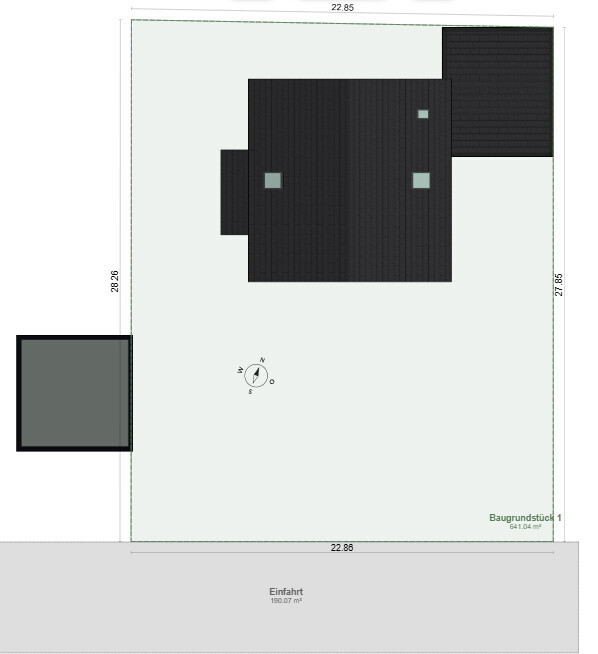
Slope: yes, slight. The plot is about 28 m (92 feet) long and rises about 1.5 – 2 m (5 – 6.5 feet) from the street (south) upwards.
Site coverage ratio: 0.4
Floor area ratio: 0.8
Building envelope, building line and boundary: The building boundary is 2.5 m (8 feet) from the front and rear (as viewed from the street). Roof overhangs may project up to 1 m (3 feet) beyond the building boundaries, provided the setback requirements of the state building code BW are met. Garages may be built outside the buildable areas.
Border development: Neighbor’s garage to the west on the boundary, see site plan. Both neighbors east and west have already built. On the opposite street side (south) is still a free building plot. North is a field with no planned development.
Number of parking spaces: 2, preferably a double garage.
Number of floors: 2 possible.
Roof shape: free choice.
Style: free choice.
Orientation: southwest (SW).
Maximum height limits: maximum height of 8.5 m (28 feet) measured from the ground floor level to the highest point of the roof structure (for roofs up to 7°, only 7.5 m / 25 feet height allowed).
Other requirements: ground floor height max. 0.5 m (1.6 feet) above street level; mandatory photovoltaic system (BW), mandatory cistern (~6 m³ (1580 gallons)).
Client requirements
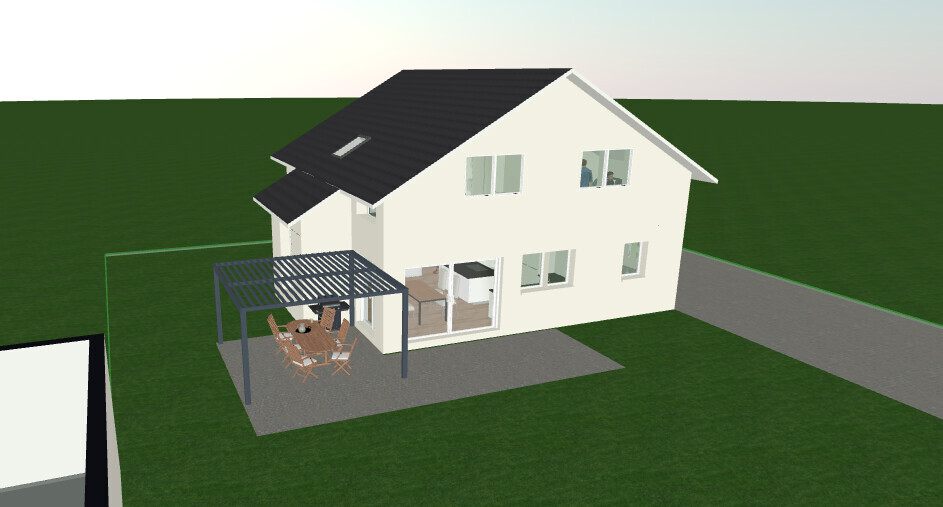
Style, roof shape, building type: classic gable roof house, 30° roof pitch, 1.4 m (4.6 feet) knee wall.
Basement, floors: no basement, 1.5 floors.
Number of occupants, age: 3 persons, ages 32, 28, 0.
Space requirements on ground floor (GF) and upper floor (UF):
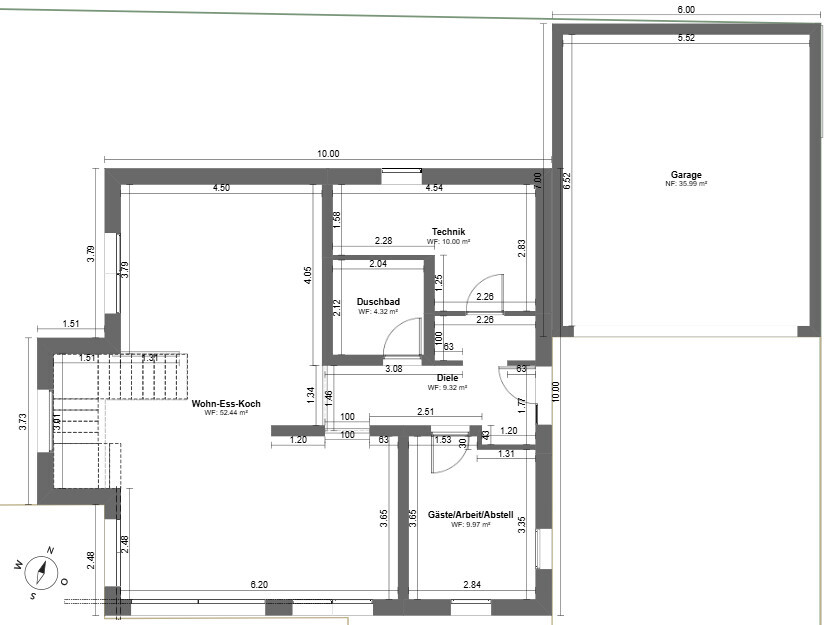
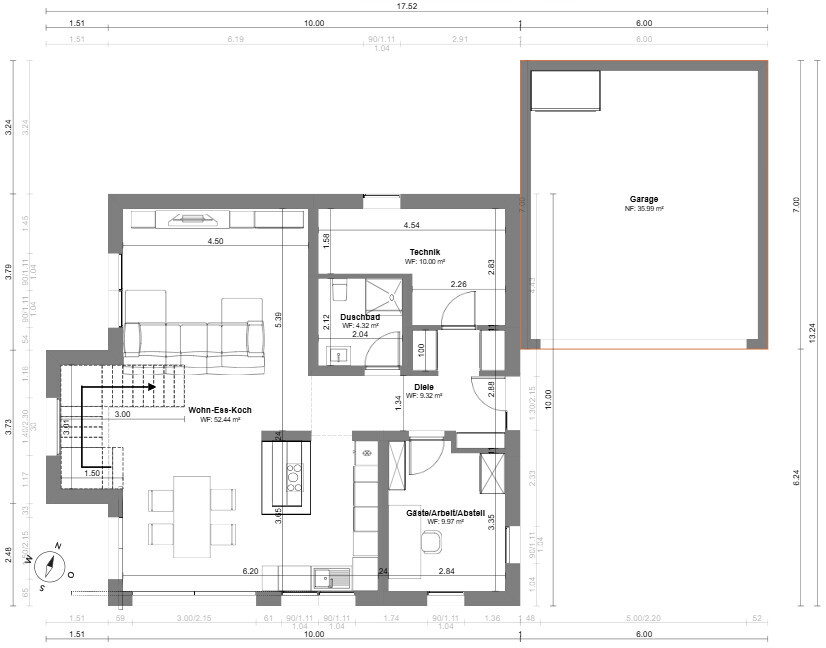
GF: living-dining-kitchen approx. 45 m² (484 sq ft), office/guest room approx. 10 m² (108 sq ft), utility/technical room approx. 8-10 m² (86-108 sq ft), shower bathroom approx. 4 m² (43 sq ft).
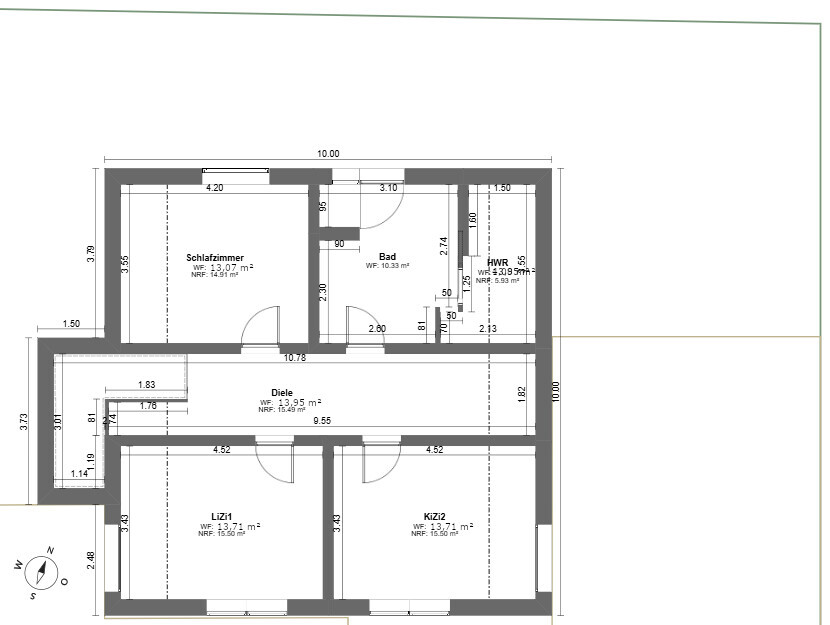
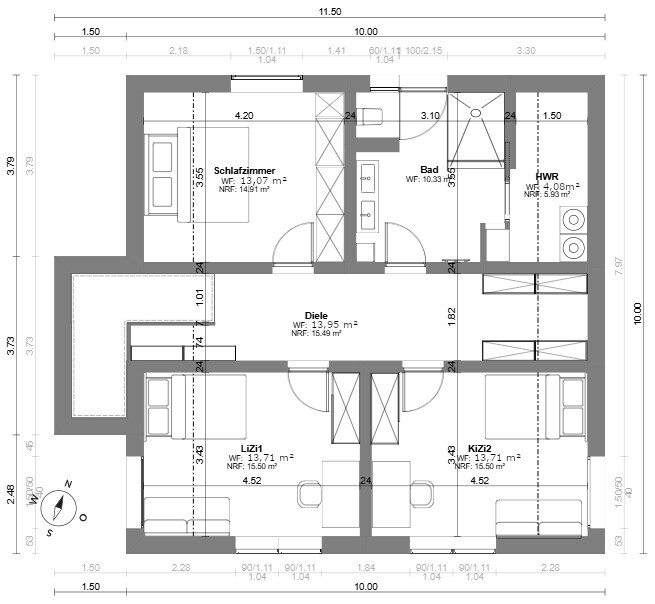
UF (all net floor area): bedroom approx. 14 m² (151 sq ft), bathroom with laundry room approx. 16 m² (172 sq ft), 2 children’s rooms approx. 16 m² (172 sq ft) each.
Office: family use or home office?
Since we currently plan for only one child, the office on the GF should serve as storage and guest room; the second "children’s room" will be used as an office. Approximately 15 guests per year; home office about 3 days per week.
Open or closed architecture: open.
Conservative or modern style: more or less modern.
Open kitchen, kitchen island: yes.
Number of dining seats: normally 4, extendable up to 12.
Fireplace: no.
Music/stereo wall: no.
Balcony, roof terrace: no.
Garage, carport: yes, preferably double garage at least 6 x 7 m (20 x 23 feet).
Utility garden, greenhouse: no.
Additional wishes / special features / daily routine, including reasons for certain choices or exclusions:
House design
Who designed it: Do-it-Yourself.
What do you like most and why?
What do you dislike and why?
Cost estimate by architect/planner: -
Personal budget limit for the house, including fittings: €520,000 (around US $570,000), excluding landscaping, must be reduced by personal labor.
Preferred heating system: not decided yet, no fossil fuels allowed, likely air-to-water heat pump.
If you had to give up something, on which details or expansions could you do without:
What could you not do without:
Why is the design the way it is?
We approached three construction companies, received some good but too large plans, and some standard plans that did not fit at all. Therefore, we studied floor plans intensively and tried to create a design with as few compromises as possible. Because of our wish for a side entrance and the living-dining-kitchen area arranged as an L-shape on the southwest side of the house and the two children’s rooms facing south without dormers or small gables, we couldn’t find 1.5-story designs from prefab house providers that fit.
After considering many other designs, we ultimately drew this one ourselves, which we basically like best and is just acceptable in size. The bay window for the stairs will probably cause extra costs, but we hope to compensate by omitting a flat roof and extending the roof line.
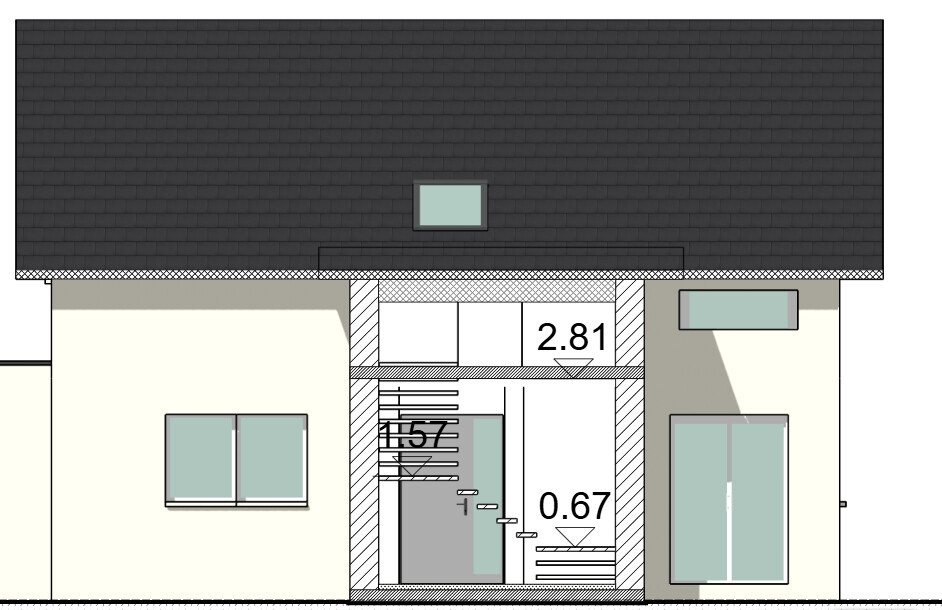
The ground floor ceiling height is an assumption; the stairs are planned for a floor height of 2.83 m (9.3 feet), with 26 cm (10 inches) tread depth and 18 cm (7 inches) riser height.
In addition to comments and suggestions on the floor plan, we also have the following questions:
Thank you very much in advance for your help! I will gladly provide any information available if needed.
Please be kind, this is my first post and
we would like to share our design with you to get feedback and suggestions for improvements, as well as to identify any potential issues.
With the optimized design, we plan to approach construction companies for quotes. All the architects we contacted have long waiting times, and since we need to apply for funding in spring, that would not be feasible timing-wise.
What do we want to build?
A single-family house with a maximum of 160 m² (approximately 1720 sq ft) according to the living space regulations (with the terrace counted proportionally) in order to qualify for funding.
Development plan / restrictions
Plot size: 645 m² (approximately 0.16 acres)
Slope: yes, slight. The plot is about 28 m (92 feet) long and rises about 1.5 – 2 m (5 – 6.5 feet) from the street (south) upwards.
Site coverage ratio: 0.4
Floor area ratio: 0.8
Building envelope, building line and boundary: The building boundary is 2.5 m (8 feet) from the front and rear (as viewed from the street). Roof overhangs may project up to 1 m (3 feet) beyond the building boundaries, provided the setback requirements of the state building code BW are met. Garages may be built outside the buildable areas.
Border development: Neighbor’s garage to the west on the boundary, see site plan. Both neighbors east and west have already built. On the opposite street side (south) is still a free building plot. North is a field with no planned development.
Number of parking spaces: 2, preferably a double garage.
Number of floors: 2 possible.
Roof shape: free choice.
Style: free choice.
Orientation: southwest (SW).
Maximum height limits: maximum height of 8.5 m (28 feet) measured from the ground floor level to the highest point of the roof structure (for roofs up to 7°, only 7.5 m / 25 feet height allowed).
Other requirements: ground floor height max. 0.5 m (1.6 feet) above street level; mandatory photovoltaic system (BW), mandatory cistern (~6 m³ (1580 gallons)).
Client requirements
Style, roof shape, building type: classic gable roof house, 30° roof pitch, 1.4 m (4.6 feet) knee wall.
Basement, floors: no basement, 1.5 floors.
Number of occupants, age: 3 persons, ages 32, 28, 0.
Space requirements on ground floor (GF) and upper floor (UF):
GF: living-dining-kitchen approx. 45 m² (484 sq ft), office/guest room approx. 10 m² (108 sq ft), utility/technical room approx. 8-10 m² (86-108 sq ft), shower bathroom approx. 4 m² (43 sq ft).
UF (all net floor area): bedroom approx. 14 m² (151 sq ft), bathroom with laundry room approx. 16 m² (172 sq ft), 2 children’s rooms approx. 16 m² (172 sq ft) each.
Office: family use or home office?
Since we currently plan for only one child, the office on the GF should serve as storage and guest room; the second "children’s room" will be used as an office. Approximately 15 guests per year; home office about 3 days per week.
Open or closed architecture: open.
Conservative or modern style: more or less modern.
Open kitchen, kitchen island: yes.
Number of dining seats: normally 4, extendable up to 12.
Fireplace: no.
Music/stereo wall: no.
Balcony, roof terrace: no.
Garage, carport: yes, preferably double garage at least 6 x 7 m (20 x 23 feet).
Utility garden, greenhouse: no.
Additional wishes / special features / daily routine, including reasons for certain choices or exclusions:
- The kitchen should not be visible from the sofa (when sitting).
- The living-dining area with kitchen should be the “heart” of the house.
- The shower bathroom and stairs (and if possible the guest room) should not be accessible through the dirt zone at the entrance door.
- Sufficient cloakroom space.
- Washing machine & dryer in the bathroom on the upper floor, as laundry accumulates there, but separated from the children’s rooms by the hallway.
- Gable or dormer facing southeast (street side) due to the view.
- No dormers or more costly architectural features due to cost reasons.
- Terrace mainly on the southwest side to catch evening sun. It will later be covered with a pergola. A 3 m (10 feet) lift-and-slide door would be ideal.
- Ground floor ceiling height at least 2.5 m (8.2 feet), upper floor 2.4 m (7.9 feet) is acceptable.
House design
Who designed it: Do-it-Yourself.
What do you like most and why?
- Spacious living-dining-kitchen area with kitchen not visible from the living room.
- Light-flooded living spaces.
- Possibility to later separate the living room with, for example, glass elements.
- Space available for furniture placement in living room.
- Modern feel due to open staircase.
- Staircase accessible from living area (natural access to bathroom or bedroom).
- Visual axis from entrance to garden through window behind the stairs, without having a view of the entrance door from the rooms.
- Implementation of basic wishes (number of rooms, orientation, functionality, etc.).
- Minimal actual hallway area on ground floor.
What do you dislike and why?
- No separation from upper floor possible.
- Head clearance to the first landing of the stairs is critical.
- Overhang in front of left children’s room is wasted space.
- No window in the shower bathroom on the ground floor.
- Dirt corridor & relevant rooms are separated.
- If a second child comes, there is little storage space.
- With about 155 m² (1668 sq ft), relatively large (and therefore expensive).
- Exterior appearance, but we have not focused on this as a priority so far.
- Southwest terrace has a possible sliding door that is too small (currently 1.5 m / 5 feet), so this door is planned 3 m (10 feet) slightly to the south instead.
- No pantry; we would consider a small cupboard and fridge-freezer in the technical room if space permits.
- Very long driveway.
- Unfortunately relatively close to neighbor’s plot on the southwest side.
Cost estimate by architect/planner: -
Personal budget limit for the house, including fittings: €520,000 (around US $570,000), excluding landscaping, must be reduced by personal labor.
Preferred heating system: not decided yet, no fossil fuels allowed, likely air-to-water heat pump.
If you had to give up something, on which details or expansions could you do without:
- Large guest/work/storage room.
- Shower on ground floor.
What could you not do without:
- Laundry room on upper floor.
- Side entrance to the house.
- Generous living-dining-kitchen area.
Why is the design the way it is?
We approached three construction companies, received some good but too large plans, and some standard plans that did not fit at all. Therefore, we studied floor plans intensively and tried to create a design with as few compromises as possible. Because of our wish for a side entrance and the living-dining-kitchen area arranged as an L-shape on the southwest side of the house and the two children’s rooms facing south without dormers or small gables, we couldn’t find 1.5-story designs from prefab house providers that fit.
After considering many other designs, we ultimately drew this one ourselves, which we basically like best and is just acceptable in size. The bay window for the stairs will probably cause extra costs, but we hope to compensate by omitting a flat roof and extending the roof line.
The ground floor ceiling height is an assumption; the stairs are planned for a floor height of 2.83 m (9.3 feet), with 26 cm (10 inches) tread depth and 18 cm (7 inches) riser height.
In addition to comments and suggestions on the floor plan, we also have the following questions:
- Is the size of the living area including the stairs structurally feasible without issues?
- How complicated and expensive would ventilation for the shower bathroom on the ground floor be?
- Is the head clearance for the staircase sufficient?
- Are knee wall windows, as planned in the children’s room, worthwhile? We see advantages in improved lighting for a small seating area and ventilation possibilities via a tilt window.
Thank you very much in advance for your help! I will gladly provide any information available if needed.
Please be kind, this is my first post and

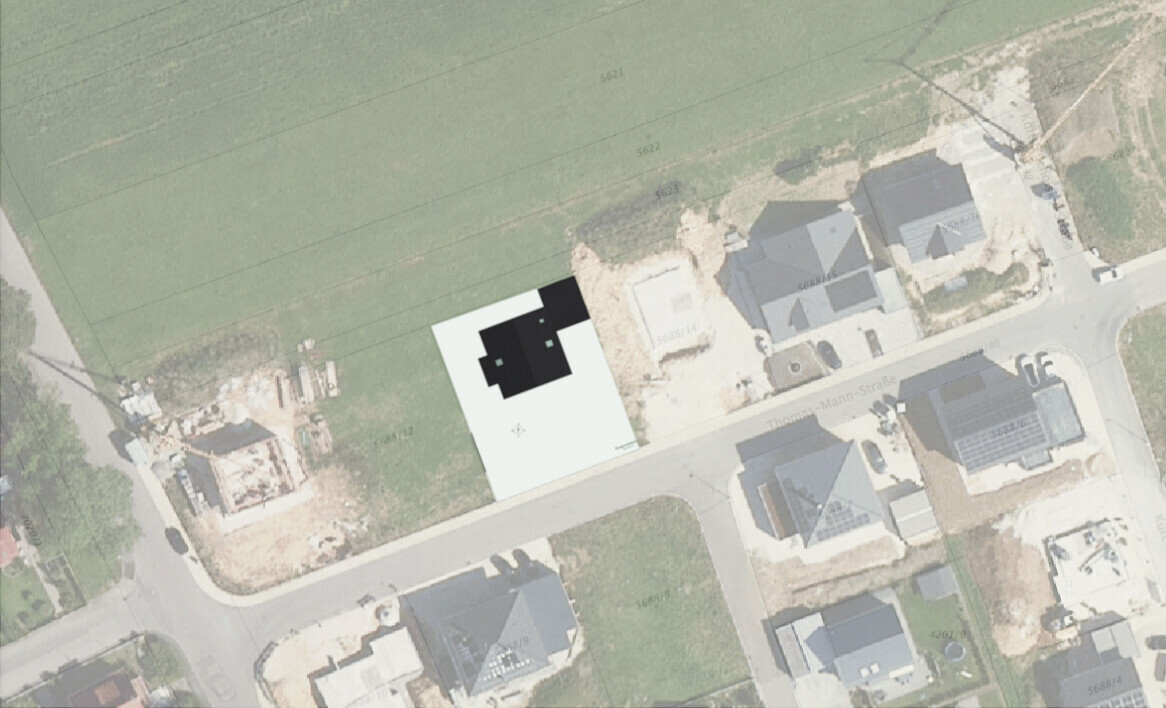
I have my doubts about the house on the east side. The plot is quite narrow. The garage would then be in front of the house on the south side, right? That would block the light for the house there. If you move the house towards the west, the garden becomes long and narrow. It’s probably best to make a simple sketch with rectangles and try moving them around on the plot.
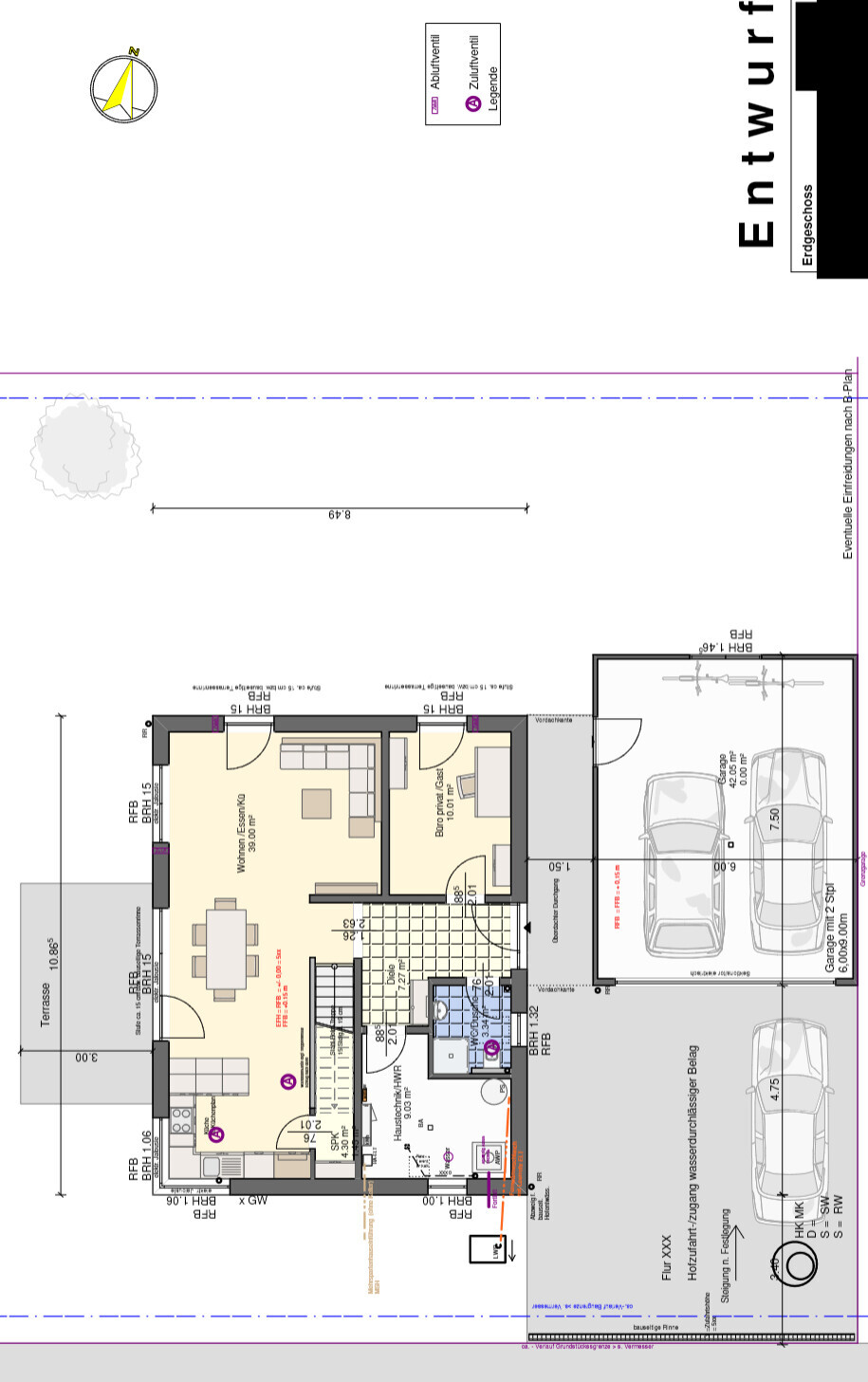
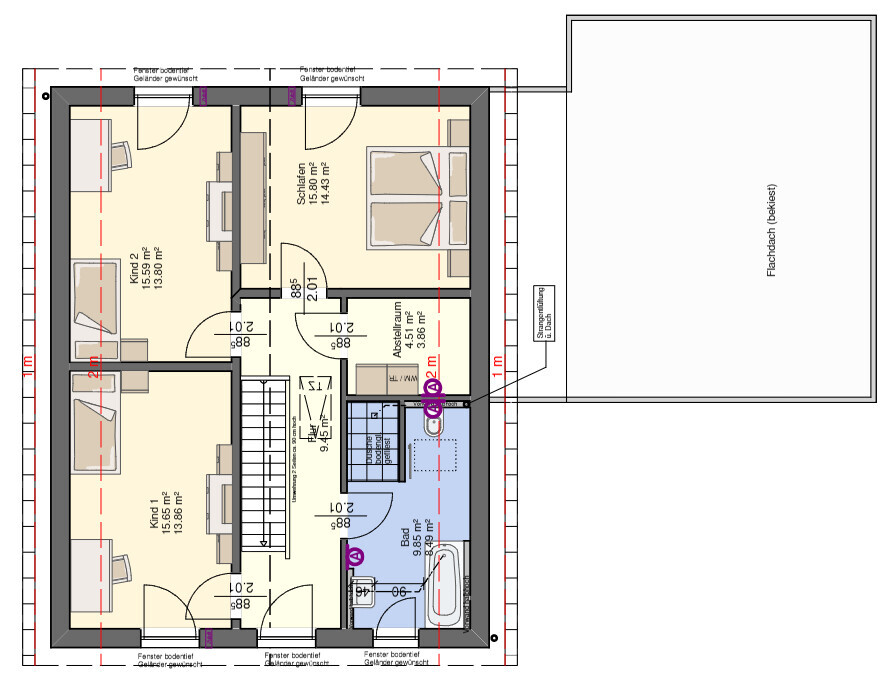
For the sake of completeness and because @11ant asked again – here is the planner's draft that we didn’t like very much. This seems to be a standard design from this general contractor. However, it only has 134 sqm (1,442 sq ft) of living space, with a volume of 730 cbm (25,777 cubic feet). So, theoretically, it might still be possible to enlarge it somewhat, provided the structural design is not significantly affected.
KN 1.5 m (5 feet), DN 38 °
What we liked:
- Generous pantry/storage space under the stairs
- Separate utility room on the upper floor, accessible through a corridor, separated from the children’s rooms (noise)
What we didn’t like:
- Dirty corridor must be crossed when entering the shower room on the ground floor
- The L-shape of the living area is only suggested
- Very narrow living area (about 3.2 m / 10.5 feet)
- Technical room located on the south side, guest room on the north
- Limited space for cloakroom/storage, although the technical room might be usable for this
- Narrow children’s rooms that are awkward to furnish
- One children’s room faces north, bathroom faces south
- Large corridor area on the upper floor on the south side
Maybe these points we didn’t like can be mostly solved with minor adjustments?
KN 1.5 m (5 feet), DN 38 °
What we liked:
- Generous pantry/storage space under the stairs
- Separate utility room on the upper floor, accessible through a corridor, separated from the children’s rooms (noise)
What we didn’t like:
- Dirty corridor must be crossed when entering the shower room on the ground floor
- The L-shape of the living area is only suggested
- Very narrow living area (about 3.2 m / 10.5 feet)
- Technical room located on the south side, guest room on the north
- Limited space for cloakroom/storage, although the technical room might be usable for this
- Narrow children’s rooms that are awkward to furnish
- One children’s room faces north, bathroom faces south
- Large corridor area on the upper floor on the south side
Maybe these points we didn’t like can be mostly solved with minor adjustments?
-LotteS- schrieb:
Do you also have 8/16 gravel? Light like from @Arauki11 or the usual “mixed grey”?
Is gravel of that grain size considered a sealed surface if, as you describe, it is permeable? We have anthracite, which looks dry mouse grey.
When I see Arauki’s, I would estimate it to be 2-3 times larger.
For us, the surface was not counted as sealed.
Mone_04 schrieb:
The plan is for a central gable with the roof extended further down at the northeast end, as the utility room would greatly benefit from a lower knee wall of 1.4 m (4.6 ft) for additional storage space. At the same time, a larger roof overhang toward the street would provide coverage for the entrance area in that direction—at least that’s the idea. Yes, that’s how I imagined it.
You have good ideas. At least I like them (except for the one from the original post).
But I was always wondering what the thick walls mean... Not least the location of the freezer room. But maybe that’s different for you? I can hardly believe it.
I would also suggest positioning the house centrally, sunny, but with access to or a view of the north—the long main side of the open-plan area facing southwest.
Mone_04 schrieb:
Maybe most of the mentioned dislikes could be resolved with minor adjustments? I still see potential there, but in my opinion, the main question is whether a terrace on the west side, without the protection of the house facing the street, has the same problem as the south-facing terrace? You feel "less private." Although this can be solved with hedges, wasn’t that an important argument against it, or is it no longer an issue?
Mone_04 schrieb:
That looks really nice! Thanks for the inspiration with the gravel; that’s a good option even for shorter driveways. In my opinion, it’s about finding ideas on how to design less important areas (parking space, driveway, fencing, etc.) attractively with a low budget, so you don’t have to cut corners in the “key” areas of the house. Unfortunately, the willingness to share pictures of completed ideas has decreased here, but maybe that will pick up again.
W
wiltshire7 Jan 2025 08:29-LotteS- schrieb:
Is gravel of this grain size considered a sealed surface if, as you describe, it is permeable? This is a question you need to clarify with your local building authority and the environmental water agency. While our architect, the county building officials, and I considered the area to be unsealed, the head of the local water authority concluded otherwise and required the infiltration system to be enlarged. When we built, I found this somewhat excessive, but I now realize it was appropriate, since our gravel surface is uneven and cannot absorb enough water during rainfall, so runoff has to go somewhere.
Since photos were requested, I can share part of our frost protection driveway—it takes up somewhat more space than desired in this particular case. Maybe the color and edging with greywacke stones will provide some inspiration. You can also see that wheel tracks develop. The slope of our driveway is actually not ideal for this material (rounded gravel would be impossible). Occasionally (less than once a year), we redistribute a few wheelbarrows of gravel from the bottom to the top. Plants don’t grow where vehicles drive. If they do, you can either pull them out or simply appreciate them.
Similar topics