
ᐅ Waterproof concrete – injection during the construction phase
Created on: 4 Jan 2025 13:51
S
summonerHi,
we are currently in the process of building a house with a general contractor who is also responsible for the basement.
The house is a solid masonry structure with a fully basement constructed using a "white tank" (watertight concrete) system. The basement, made of watertight concrete (WU concrete), is completely below ground level and does not protrude on any side. Each room in the basement has waterproof light wells designed to resist groundwater pressure. The soil survey confirmed that there is no hydrostatic groundwater pressure.
The WU construction is or was carried out according to the contract as follows (excerpt):
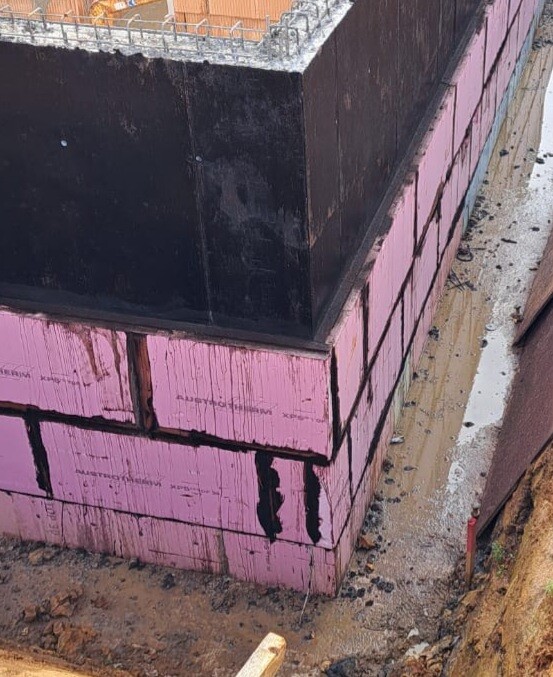
Approximately 24 cm (9.5 inches) thick reinforced concrete walls cast in place, a 30 cm (12 inches) thick reinforced concrete slab with reinforcement, PE foil as a sliding layer, perimeter insulation with a thickness of 60 mm (2.4 inches), and a 5 cm (2 inch) thick blinding layer. The buried WU basement exterior walls were insulated with 100 mm (4 inches) of perimeter insulation.
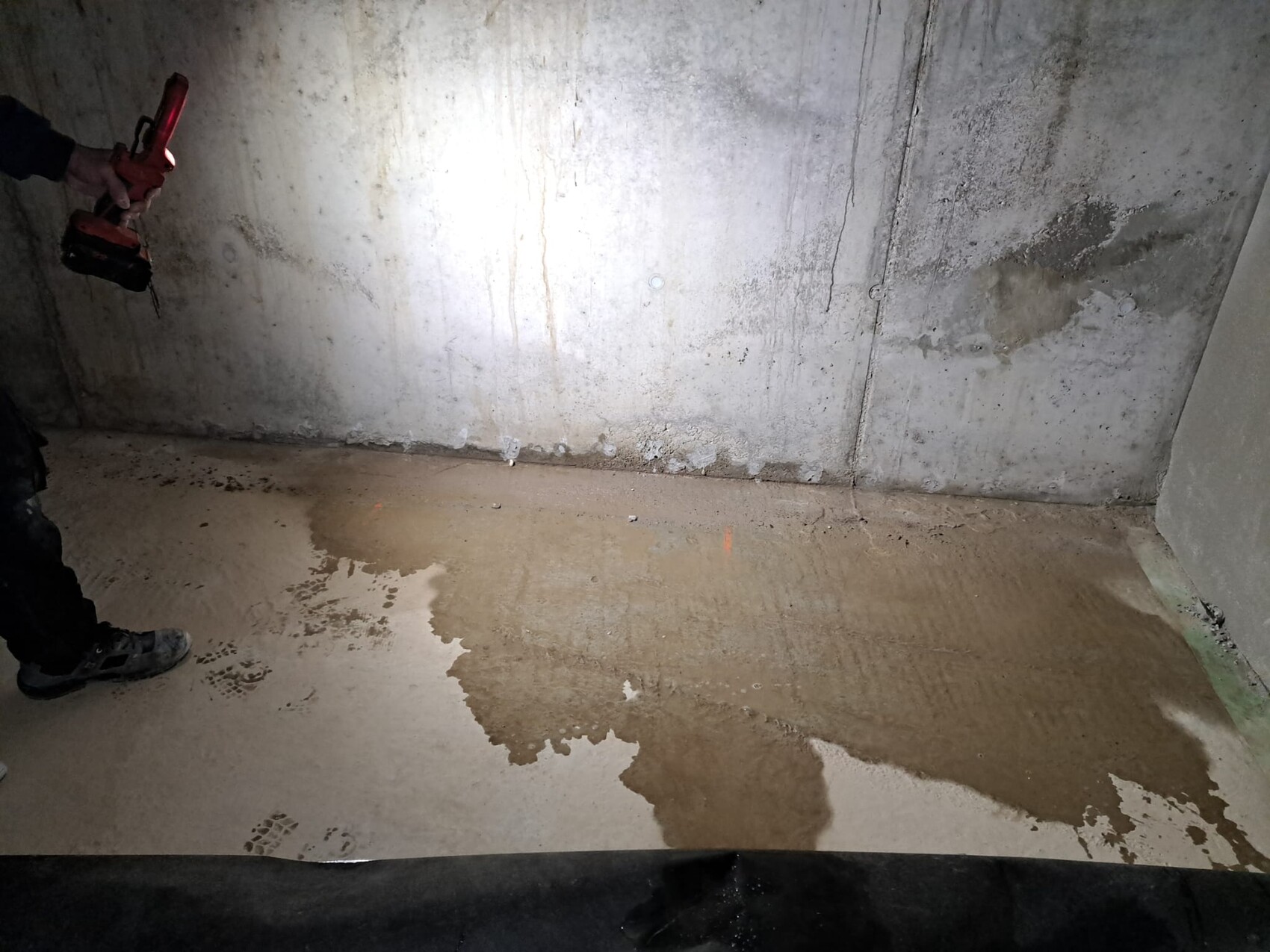
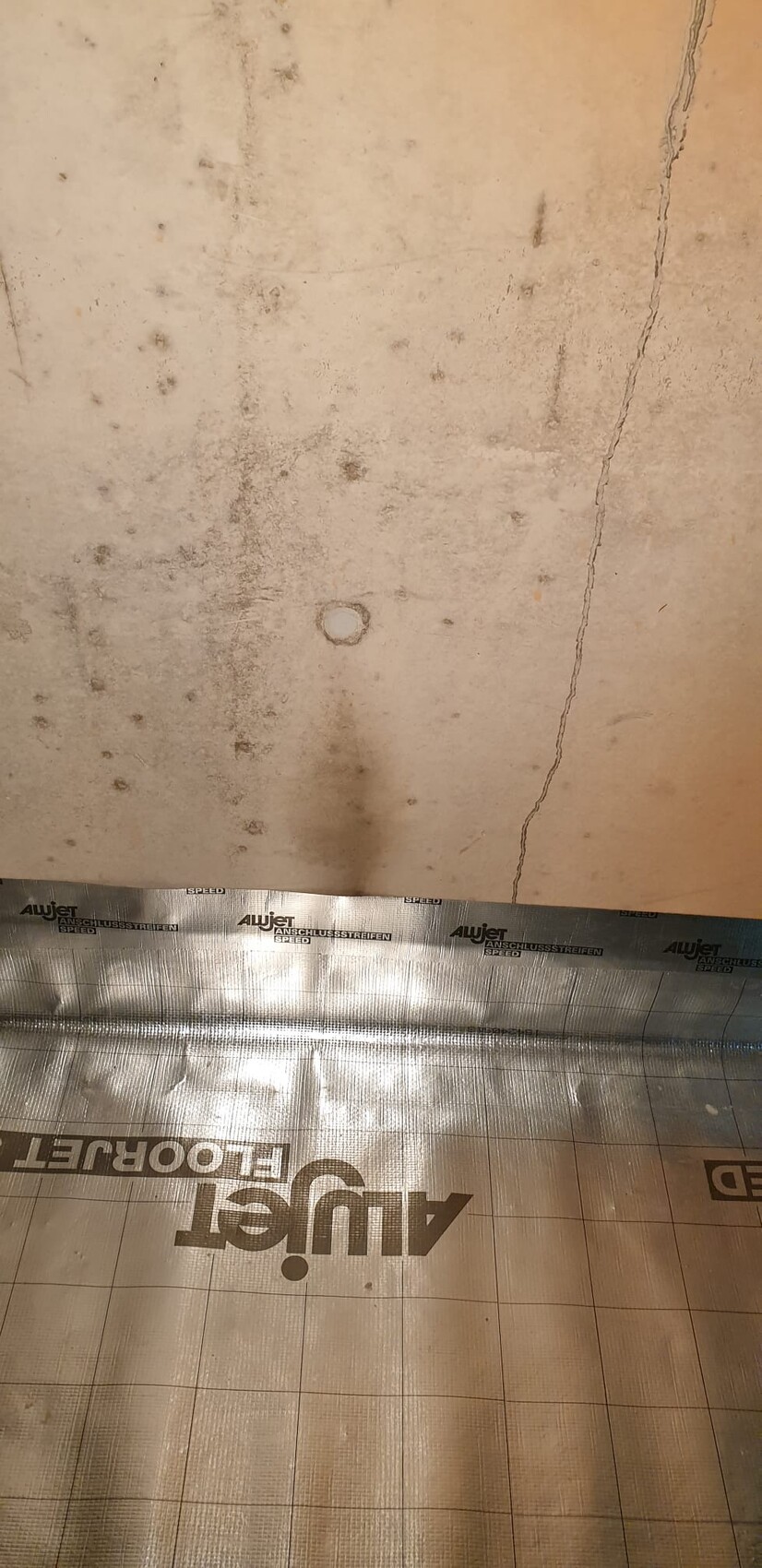
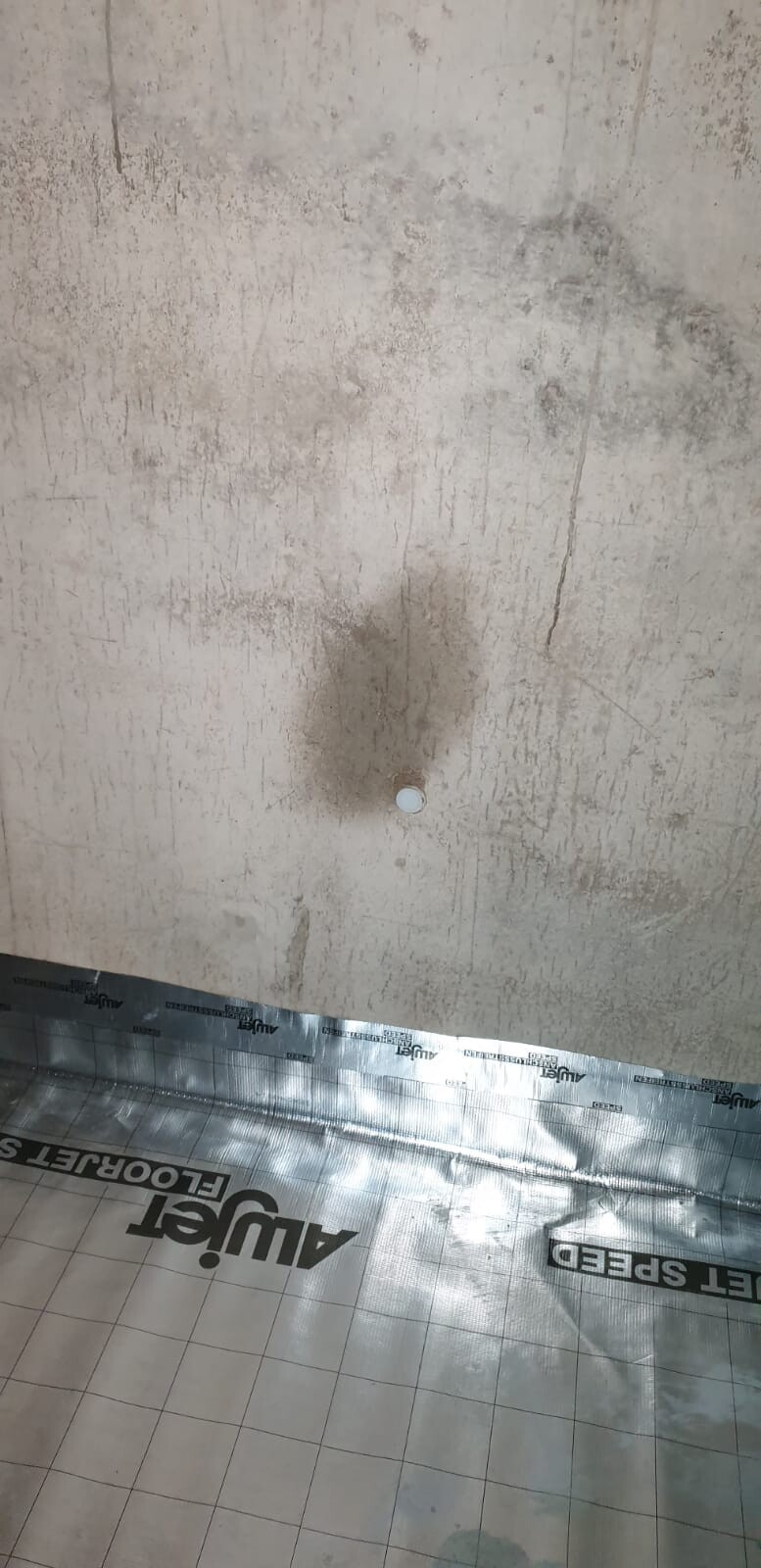
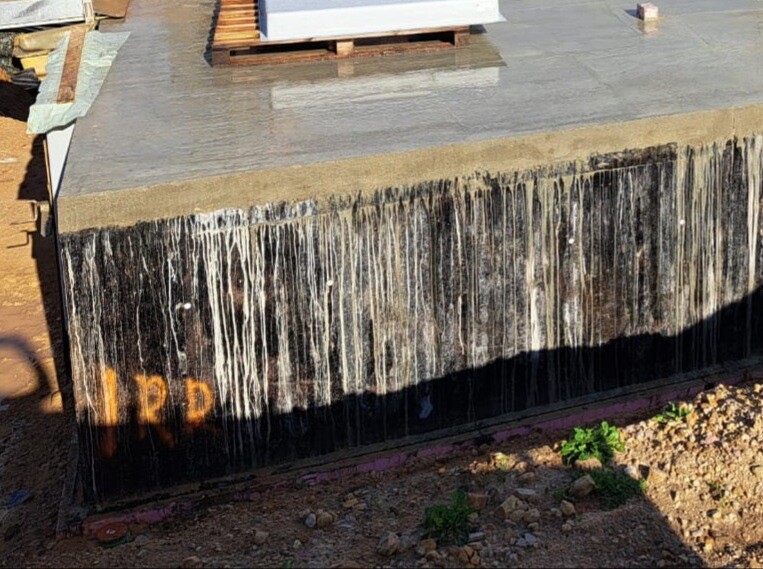
Now, the site manager and we have noticed damp spots on some walls. In one area, water seeped in slightly between the floor slab and the wall, causing a small puddle on the floor. In another area, water penetrated the wall itself (photos attached). Fortunately, the site manager acted quickly and has been following up to ensure “everything is in order.”
These spots were generously injected with sealant by a company responsible for supervising the white tank installation (one site about a month ago, the other about 2–3 months ago) and currently appear to be sealed. In one case, water leaked out during drilling of the wall; according to the employee, they had to drill through the joint protection or membrane (warning: not an expert) to ensure it was fully sealed.
During a recent site inspection, we found new damp areas and are now concerned whether it is normal that multiple injections are needed in different places so early in a new build with a white tank basement. Unfortunately, the basement has already been fully backfilled, and a “foil” (vapor barrier?) has been installed inside the basement, which, however, is only adhered to the wall.
We have already reported the new damp spots to the site manager.
Has anyone had similar experiences? Any feedback would be greatly appreciated.

we are currently in the process of building a house with a general contractor who is also responsible for the basement.
The house is a solid masonry structure with a fully basement constructed using a "white tank" (watertight concrete) system. The basement, made of watertight concrete (WU concrete), is completely below ground level and does not protrude on any side. Each room in the basement has waterproof light wells designed to resist groundwater pressure. The soil survey confirmed that there is no hydrostatic groundwater pressure.
The WU construction is or was carried out according to the contract as follows (excerpt):
Approximately 24 cm (9.5 inches) thick reinforced concrete walls cast in place, a 30 cm (12 inches) thick reinforced concrete slab with reinforcement, PE foil as a sliding layer, perimeter insulation with a thickness of 60 mm (2.4 inches), and a 5 cm (2 inch) thick blinding layer. The buried WU basement exterior walls were insulated with 100 mm (4 inches) of perimeter insulation.
Now, the site manager and we have noticed damp spots on some walls. In one area, water seeped in slightly between the floor slab and the wall, causing a small puddle on the floor. In another area, water penetrated the wall itself (photos attached). Fortunately, the site manager acted quickly and has been following up to ensure “everything is in order.”
These spots were generously injected with sealant by a company responsible for supervising the white tank installation (one site about a month ago, the other about 2–3 months ago) and currently appear to be sealed. In one case, water leaked out during drilling of the wall; according to the employee, they had to drill through the joint protection or membrane (warning: not an expert) to ensure it was fully sealed.
During a recent site inspection, we found new damp areas and are now concerned whether it is normal that multiple injections are needed in different places so early in a new build with a white tank basement. Unfortunately, the basement has already been fully backfilled, and a “foil” (vapor barrier?) has been installed inside the basement, which, however, is only adhered to the wall.
We have already reported the new damp spots to the site manager.
Has anyone had similar experiences? Any feedback would be greatly appreciated.
 schubert794 Jan 2025 14:10
If it is truly a waterproof concrete structure (“white tank”), it must be watertight. The problems and the recent injection repair confirm the suspicion that something was not executed correctly.
N
nordanney4 Jan 2025 14:52summoner schrieb:
During a second inspection of the construction site, we have now found new damp spots and are unsure whether this is normal. First step: Consult an independent expert
Second step: Submit a formal complaint citing defects, requesting rectification
Third step: Have the repairs checked by the expert
What is happening right now is a mess.
summoner schrieb:
Unfortunately, the basement has already been completely backfilled, and inside the basement a "membrane" (vapor barrier?) has already been installed. The latter is only stuck to the wall. That is not your problem. If work on the outside is necessary, the company must excavate everything, remove the insulation, fix the issue, reinstall insulation, backfill the soil, and then be frustrated that they worked carelessly.
Imagine a new car engine is leaking oil, but we can’t repair it because it’s already installed in the engine bay. What would you say...
A
Allthewayup4 Jan 2025 16:43Do you generally plan to have the support of an expert for your house construction? If so, where is/was this expert involved? If not, why not? You mentioned that the company supervising the basement construction also carried out the sealing of leaks? What kind of company setup is that? If I understand correctly, that would worry me a lot. They basically benefit from every defect they then seal. Who hired the company for the supervision and who hired them for the sealing? Let me guess – the general contractor!
Where is @11ant?
Here’s what I learned from our basement construction:
First of all, the method of using cast-in-place concrete is well suited for sealing leaks, unlike, for example, the precast element construction method in “waterproof concrete” (WU) standard.
What does the soil report say? If there is no groundwater present, then there should at least be seepage or layered water; otherwise, water wouldn’t come through the borehole, right? And who thinks it’s a good idea to bore test holes in the joint sealing tape (Pentaflex or similar)? That is the sealing element between the slab and the wall. Are there any photos of the slab before the walls were formed?
If a cast-in-place concrete wall shows leaks, it is usually due to improper handling during concreting (pour height, segregation, compaction, etc.) and/or the sealing tape was not installed correctly according to guidelines or was even damaged. The aggregate size in the concrete must also be considered. Depending on wall thickness, the standards specify the maximum aggregate size allowed. For a 24cm (9.5 inch) wall, the maximum aggregate size should be 16mm (0.63 inches), if I remember correctly.
You won’t find any universal solution for your current problem here in the forum, only advice and tips. I believe the most important advice is to have an expert at your side – one that you hire yourself.
Where is @11ant?
Here’s what I learned from our basement construction:
First of all, the method of using cast-in-place concrete is well suited for sealing leaks, unlike, for example, the precast element construction method in “waterproof concrete” (WU) standard.
What does the soil report say? If there is no groundwater present, then there should at least be seepage or layered water; otherwise, water wouldn’t come through the borehole, right? And who thinks it’s a good idea to bore test holes in the joint sealing tape (Pentaflex or similar)? That is the sealing element between the slab and the wall. Are there any photos of the slab before the walls were formed?
If a cast-in-place concrete wall shows leaks, it is usually due to improper handling during concreting (pour height, segregation, compaction, etc.) and/or the sealing tape was not installed correctly according to guidelines or was even damaged. The aggregate size in the concrete must also be considered. Depending on wall thickness, the standards specify the maximum aggregate size allowed. For a 24cm (9.5 inch) wall, the maximum aggregate size should be 16mm (0.63 inches), if I remember correctly.
You won’t find any universal solution for your current problem here in the forum, only advice and tips. I believe the most important advice is to have an expert at your side – one that you hire yourself.
First of all, thank you!
So, consulting a building expert will probably be the next step for now, while also waiting for the general contractor’s response. I’m curious to see what they say.
We have rising seepage water reaching up to 50 cm (20 inches) below the finished floor level according to the building documentation. The basement was constructed as a waterproof structure designed to resist groundwater pressure.
The basement was built by the civil engineer (hired by the general contractor). This work was then overseen by a company that also provides the warranty for the waterproof concrete shell ("white tank")—longer than the standard 5 years. This company also handled the injection sealing.
My main concern at this point is to find out if anyone has had similar experiences and whether the injection sealing has held up permanently.
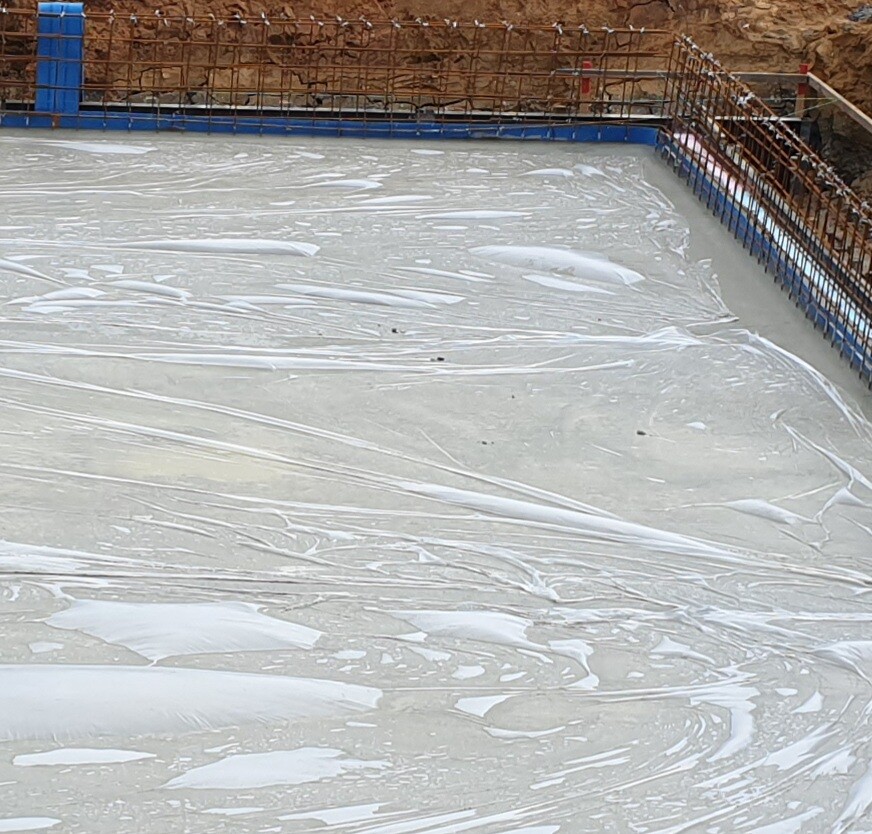
Attached are some photos.
So, consulting a building expert will probably be the next step for now, while also waiting for the general contractor’s response. I’m curious to see what they say.
We have rising seepage water reaching up to 50 cm (20 inches) below the finished floor level according to the building documentation. The basement was constructed as a waterproof structure designed to resist groundwater pressure.
The basement was built by the civil engineer (hired by the general contractor). This work was then overseen by a company that also provides the warranty for the waterproof concrete shell ("white tank")—longer than the standard 5 years. This company also handled the injection sealing.
My main concern at this point is to find out if anyone has had similar experiences and whether the injection sealing has held up permanently.
Attached are some photos.
A
Allthewayup4 Jan 2025 18:33The watertight construction method, especially when designed to resist water pressure, requires particular attention and close monitoring during both planning and execution.
A proper injection sealing process, compliant with the relevant standards for waterproof concrete construction (WU method), is one of the most reliable techniques. Although I have no personal experience with this, a friend reported that injection points sealed 10 years ago in his 24cm (9.5 inches) thick wall remain dry.
However, this does not guarantee the same results for your case. No one can assess the internal structure of your concrete or confirm whether the construction steps were carried out carefully and correctly.
Your expert will likely request the delivery notes for the concrete used from the foundation contractor to determine if an appropriate mix was employed. I would assume this is the case, but the repeated appearance of leaks does raise some concerns.
After detecting leaks, we conducted a stress test by pumping groundwater from a depth of 2.4m (7.9 feet) onto the property over several days, simulating extreme weather conditions. Even after two months of observation (while construction continued), no additional damp spots appeared.
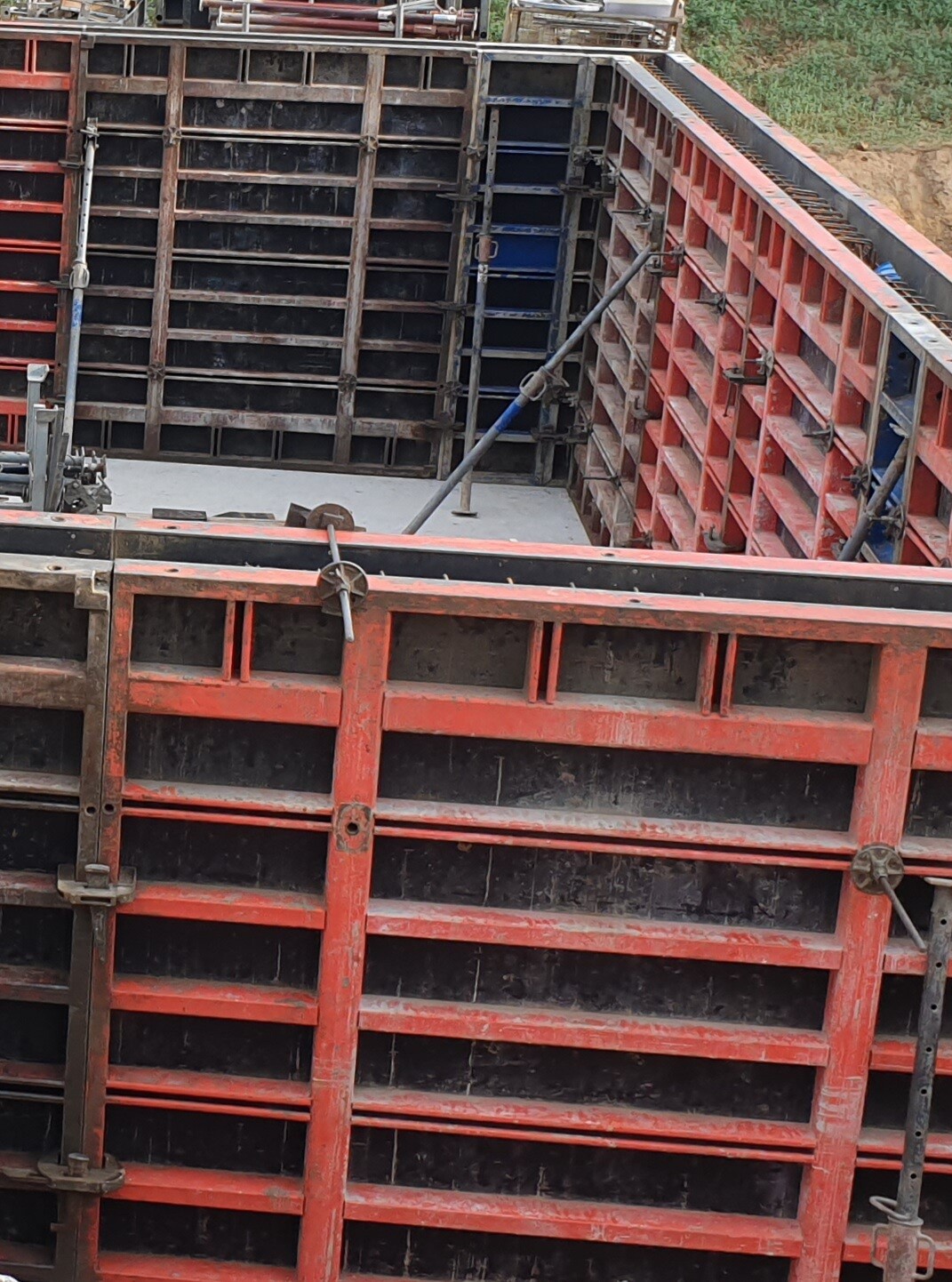
In one of the photos, I notice a blue tag attached to the steel reinforcement inside the formwork. These tags from the fabrication plant or steel mill should be removed before concreting or placing the reinforcement. Nobody noticed this during our work either. I ended up removing all of them myself (climbing around on the flatbed truck between crane lifts). A 12cm (4.7 inches) long plastic tag acts like a highway for water inside the wall. This issue is often downplayed because it “has always been done that way.”
A proper injection sealing process, compliant with the relevant standards for waterproof concrete construction (WU method), is one of the most reliable techniques. Although I have no personal experience with this, a friend reported that injection points sealed 10 years ago in his 24cm (9.5 inches) thick wall remain dry.
However, this does not guarantee the same results for your case. No one can assess the internal structure of your concrete or confirm whether the construction steps were carried out carefully and correctly.
Your expert will likely request the delivery notes for the concrete used from the foundation contractor to determine if an appropriate mix was employed. I would assume this is the case, but the repeated appearance of leaks does raise some concerns.
After detecting leaks, we conducted a stress test by pumping groundwater from a depth of 2.4m (7.9 feet) onto the property over several days, simulating extreme weather conditions. Even after two months of observation (while construction continued), no additional damp spots appeared.
In one of the photos, I notice a blue tag attached to the steel reinforcement inside the formwork. These tags from the fabrication plant or steel mill should be removed before concreting or placing the reinforcement. Nobody noticed this during our work either. I ended up removing all of them myself (climbing around on the flatbed truck between crane lifts). A 12cm (4.7 inches) long plastic tag acts like a highway for water inside the wall. This issue is often downplayed because it “has always been done that way.”
Similar topics