
ᐅ Floor plan for a newly built two-story single-family house, 200 m² (2,150 sq ft)
Created on: 26 Dec 2024 16:14
H
HaseUndIgel
Hello everyone and Merry Christmas,
after I posted a question about the heat pump to be used a few days ago, I now want to continue with the main and fundamental thread regarding the floor plan.
Development Plan / Restrictions
Plot size: 618 m² (6660 sq ft)
Slope: None
Site coverage ratio: 0.4
Floor area ratio: None
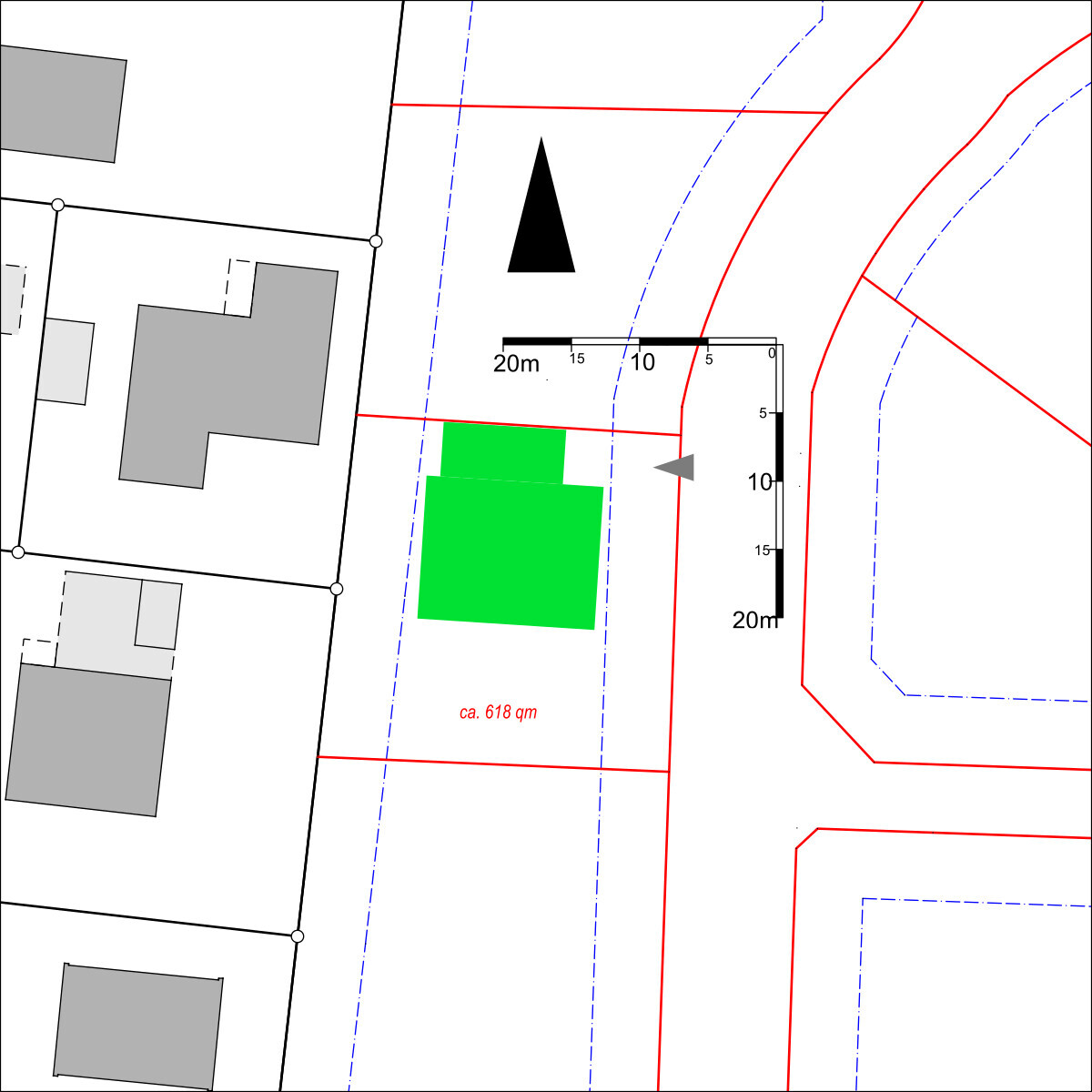
Building envelope, building line and boundary: See image
Peripheral development: No
Number of parking spaces: 2
Number of stories: up to 2
Roof shape: All allowed; for hip or gable roofs 25° - 50° pitch
Architectural style: None specified
Orientation: None specified
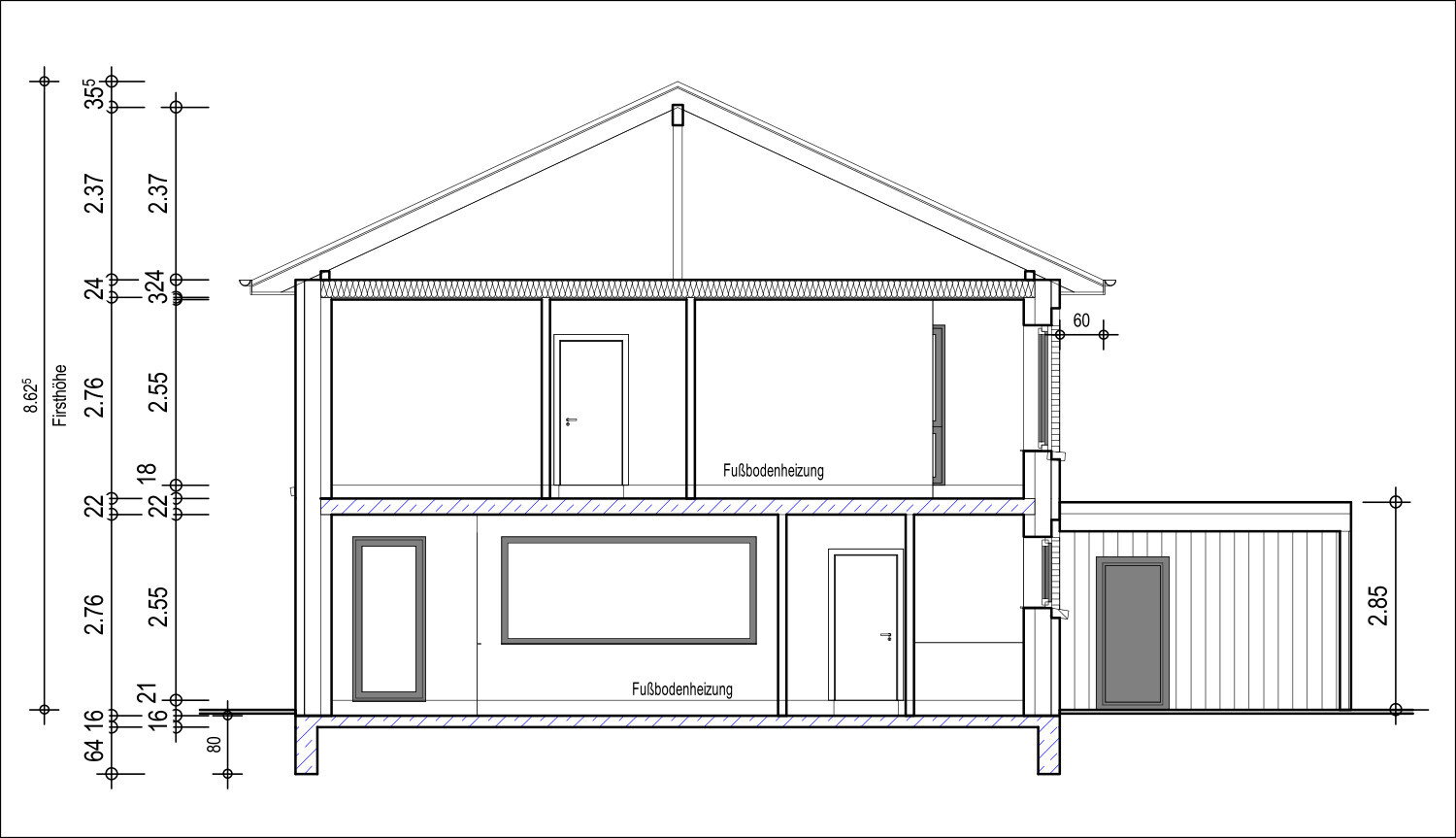
Maximum height / limits: 9 m ridge height (29.5 ft)
Other requirements: Photovoltaic system covering at least 50% of usable roof surface
Homeowner Requirements
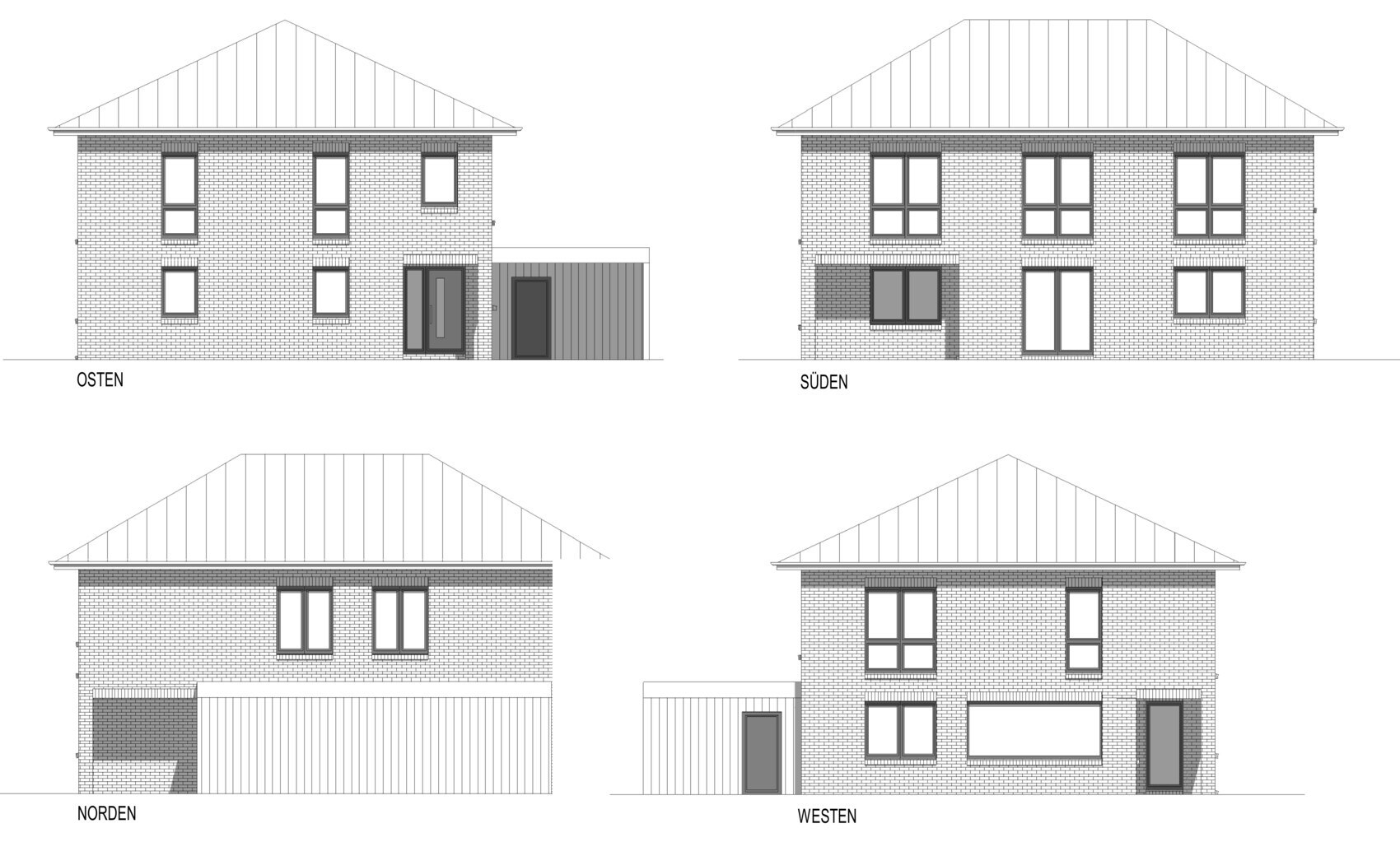
Architectural style, roof type, building type: "Urban villa but Northern German style"
Basement, floors: 2 full stories, no basement
Number of occupants, ages: 4 people, 32, 32, 1, -2 years
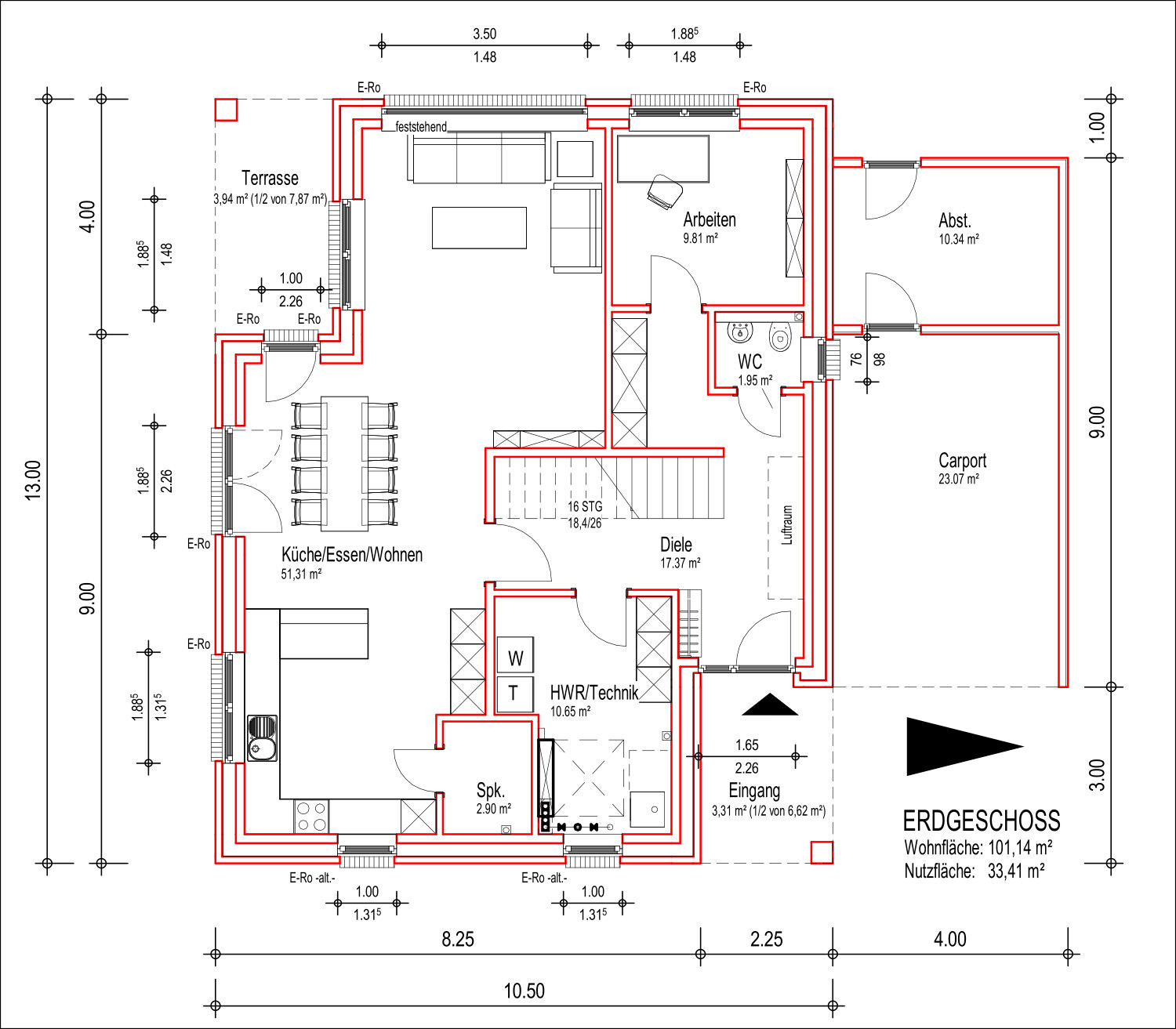
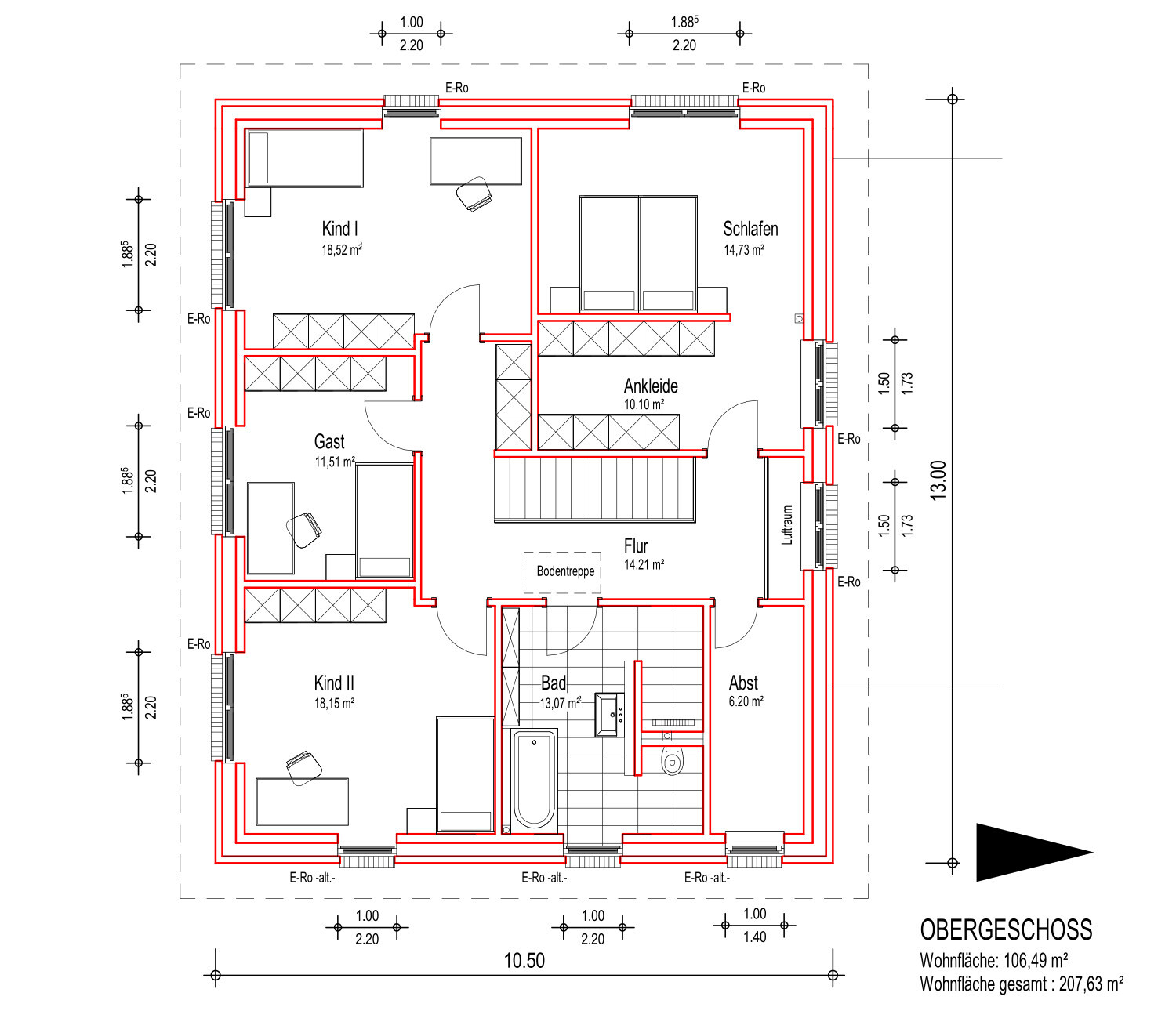
Room requirements on ground and upper floors: Study (ground floor), Study/guest room (upper floor)
Office: Family use or home office? 1 office for full-time use, 1 additional as a guest room hybrid
Number of guest stay days per year: approx. 10-15 days, mostly family
Open or closed layout: Open
Conservative or modern construction: More modern
Open kitchen, kitchen island: Open kitchen, with island if it fits, otherwise U- or L-shaped
Number of dining seats: 8
Fireplace: No
Music / stereo wall: No
Balcony, roof terrace: No
Garage, carport: Carport for 1 car
Utility garden, greenhouse: No
Additional wishes / special features / daily routine, also reasons why certain things are wanted or not: Nothing noteworthy
House Design
Who designed the plan: Planner (Architect?) of the general contractor (GC)
What do you particularly like and why?
What do you dislike and why?
Price estimate according to architect/planner: 565,000 EUR
Personal price limit for the house, including fittings: 730,000 EUR (including garden, carport, photovoltaics, kitchen, additional costs)
Preferred heating technology: Heat pump is basically a must (no gas connection)
If you have to give up, which details / extras
Why did the design turn out the way it did?
Three-hour meeting with the architect at the general contractor, starting from a similar model house (this was a 1.5-story house with a gable roof), several iterations on tracing paper, then a week later the digital design was received.
Which wishes were implemented by the architect? Covered entrance and terrace set back under the upper floor, bedroom with dressing room, 2 studies (1 ground floor, 1 upper floor).
What do you think makes the design good or bad? Overall we quite like the whole package.
I’m looking forward to your opinions and am curious about what you think. If we still like the design in January, we will probably proceed with further planning with the general contractor.
after I posted a question about the heat pump to be used a few days ago, I now want to continue with the main and fundamental thread regarding the floor plan.
Development Plan / Restrictions
Plot size: 618 m² (6660 sq ft)
Slope: None
Site coverage ratio: 0.4
Floor area ratio: None
Building envelope, building line and boundary: See image
Peripheral development: No
Number of parking spaces: 2
Number of stories: up to 2
Roof shape: All allowed; for hip or gable roofs 25° - 50° pitch
Architectural style: None specified
Orientation: None specified
Maximum height / limits: 9 m ridge height (29.5 ft)
Other requirements: Photovoltaic system covering at least 50% of usable roof surface
Homeowner Requirements
Architectural style, roof type, building type: "Urban villa but Northern German style"
Basement, floors: 2 full stories, no basement
Number of occupants, ages: 4 people, 32, 32, 1, -2 years
Room requirements on ground and upper floors: Study (ground floor), Study/guest room (upper floor)
Office: Family use or home office? 1 office for full-time use, 1 additional as a guest room hybrid
Number of guest stay days per year: approx. 10-15 days, mostly family
Open or closed layout: Open
Conservative or modern construction: More modern
Open kitchen, kitchen island: Open kitchen, with island if it fits, otherwise U- or L-shaped
Number of dining seats: 8
Fireplace: No
Music / stereo wall: No
Balcony, roof terrace: No
Garage, carport: Carport for 1 car
Utility garden, greenhouse: No
Additional wishes / special features / daily routine, also reasons why certain things are wanted or not: Nothing noteworthy
House Design
Who designed the plan: Planner (Architect?) of the general contractor (GC)
What do you particularly like and why?
- Straight staircase
- Covered entrance and terrace
- Spacious enough for our needs
What do you dislike and why?
- Ground floor WC probably too small
- Pantry doesn’t make much sense (maybe omit)
- Layout of the bathroom upstairs (we already have alternative ideas)
- Unsure if there is enough light in the living/dining area
- Slightly too big / bulky
- A bit too expensive
Price estimate according to architect/planner: 565,000 EUR
Personal price limit for the house, including fittings: 730,000 EUR (including garden, carport, photovoltaics, kitchen, additional costs)
Preferred heating technology: Heat pump is basically a must (no gas connection)
If you have to give up, which details / extras
- Can be skipped: open atrium, pantry, if necessary the type of covering on entrance and terrace (set back under the upper floor)
- Cannot be skipped: Storage space
Why did the design turn out the way it did?
Three-hour meeting with the architect at the general contractor, starting from a similar model house (this was a 1.5-story house with a gable roof), several iterations on tracing paper, then a week later the digital design was received.
Which wishes were implemented by the architect? Covered entrance and terrace set back under the upper floor, bedroom with dressing room, 2 studies (1 ground floor, 1 upper floor).
What do you think makes the design good or bad? Overall we quite like the whole package.
I’m looking forward to your opinions and am curious about what you think. If we still like the design in January, we will probably proceed with further planning with the general contractor.
 HaseUndIgel28 Dec 2024 23:00
ypg schrieb:
Evaluation process, usage intervals… that has nothing to do with living and lifestyle anymore. Now I’m a bit puzzled. When I say that we “like” it this way, it’s not about just “liking” it. When I specify that we have already thought about who might use the bathroom, how often, in which combinations, and how that relates to who will clean it, how often, and with what effort, then making a decision based on that no longer has anything to do with “living and lifestyle.”
I’m starting to feel that there is a lack of understanding that other people have different ideas of “living and lifestyle” and can be satisfied and happy in ways different from one’s own.
ypg schrieb:
Good luck! Thanks! We’ll definitely need it!
HaseUndIgel schrieb:
I’m starting to feel that there is a lack of understanding that other people have different ideas of "living and dwelling" and can be satisfied and happy in ways different from one’s own.Not at all. I often and gladly help—especially those whose lifestyle is different from mine or who want or need their home arranged differently. I rarely insist with phrases like "this is how we do it, you should too, just look." But sometimes the fundamentals simply don’t work for some people, so I’m unable to help.HaseUndIgel28 Dec 2024 23:5311ant schrieb:
The rigid-railed staircase and the squareness are the main flaws of the Anstattvilla.Yes, your opinion on this can be found in many places online, and I’ve read several of your other posts on the topic. Are you actually the originator of the term “Anstattvilla”? Because I find it quite fitting.
11ant schrieb:
They also guarantee an excessive growth of the so-called “living area.”That’s probably true, especially since a straight staircase really only fits efficiently if you plan around it from the start and don’t have dozens of other requirements for the entryway. A built-in wardrobe like a Harry Potter cupboard would at least create storage space, but we don’t want that either.
11ant schrieb:
This is the most common mistake made by non-professionals: planning the fulfillment of wishes and avoidance as if they were static phenomena.11ant schrieb:
First-time home builders would do well to weigh the contributions of repeat builders roughly twice as heavily as those of others in all discussions.That’s certainly good advice. Now for the “but”:
But I’ve noticed here in this thread and others that often it’s also about what you “should” want, and that homeowners tend to set the wrong priorities.
Of course I also like reading suggestions about how it is supposedly best to live in one’s house. But here, the professional really doesn’t have an advantage over the original poster, except possibly in overall life experience. That may be true especially considering the age difference I suspect exists between us and some of you. However, we also have many more home-experienced people around us with whom we discuss the planning, and when it comes to such questions, we trust their advice more.
The floor-to-ceiling windows in the bedrooms are one such topic. My wife and I wouldn’t mind them. We know this because we are already used to it. But it’s true that the kids might see it differently, which is why I’m having that aspect reconsidered in the design. Thanks to everyone who kept raising the issue!
Whether the straight staircase is more important to me than saving space that translates into 10, 20, or even 30 thousand euros, whether I prefer cleaning two bathroom faucets instead of one, or whether I want to send my dirty kids to shower upstairs or downstairs—that of course only we can decide in the end. And we will base that decision on how we intend to live in the house.
So please, keep the advice coming on topics like these, but don’t be offended if the answer is: No, we prefer to do it differently. These are individual decisions.
11ant schrieb:
Trickily, the degree of saturation with mere supposed perfection is revealed when the design starts to feel “final.”I don’t hold any illusions about this (well, maybe a little). The first plan wasn’t perfect. The last plan I posted is better, but still far from perfect. Perfection would be if all our current and future needs were met. Even just for the next five years, it’s hard enough to separate what is truly a “need” from what is merely a “desire without deeper benefit.”
Even though I tell myself that our Anstattvilla came about almost by immaculate conception from our needs and external circumstances, that would of course be wrong. Many aspects of the design arise simply from our limited inventory of possible solutions, flavored with internet trends and what you see around you.
I’m sure 11ant knows this well because it applies to so many plans in this and other forums.
But—and this is the crucial point—it is good enough for us. Good enough for the zoning/building permit (planning permission), good enough for the budget, good enough for how we want to live there. I enjoy continuing to tinker with it, and I don’t rule out a complete redesign, but at present I don’t see what about the floor plan sufficiently bothers us to justify that. That is probably also because I only know the mediocrity of typical single-family house architecture.
Changing that won’t be possible through complaints of “so much space wasted.” But maybe someone here knows another thread where something better than “catalog quality” came out in the end. If I had an aha moment in that regard, that would indeed be a reason to try again from scratch. So I’d appreciate a nudge in that direction.
HaseUndIgel schrieb:
If I were to have an aha moment regarding this, that alone would be a reason to give it another try. So I would definitely appreciate a nudge in that direction. But you can scroll and read on your own, right?!
Unfortunately, very few here share updates on what happened with the house they built from the forum. Chances are, you won’t do that either.

HaseUndIgel schrieb:
Yes, your opinion on this can be found in many places online, and I have read several of your other posts on the subject. Are you actually the originator of the term "substitute villa"? I find it very fitting. [ - ] It’s probably true that a straight staircase can only be efficiently accommodated if the design is planned around it from the start [ - ] and that often it’s about what people are "supposed to want," and that homeowners set the wrong priorities. Of course, I also enjoy reading suggestions about how people are believed to "have to live" in their homes. With the term "substitute villa," I allow myself a slight ironic jab at the fact that, in my opinion, the supplier side mocks the residential wishes of aspiring lower middle-class buyers by promoting the trendy cube-shaped building type, bombarding them with fake noble appeals. Just look at the typical computer-generated images in advertisements, where these houses are shown as standalone units in parks (whereas, in reality, on both sides of the fence there is at least a three-meter (10 feet) gap—equivalent to a whole house width—up to the edge of the picture, and at least one BMW Z roadster stands under the carport pergola). A ceiling-high knee wall combined with a large package of included French balconies all around symbolize an excellent price-to-envy-factor ratio, and so on.
The straight, rigid staircase divides the floor plan into two riverbanks. If this axis continues through to a dining table, at least one "bay window" is guaranteed, scoring yet another bonus point in the architectural fashion bingo. Add a T-shaped bathroom, and Klaus Lage would sing, "Man, you’re really loved here." Regarding opinions about how one "should" live, I refrain from commenting. With my forty years of experience in planning private homes, however, I have insights about what makes sense where that often strongly contrast with the Pinterest world of many dreamers. Concerning the wrong priorities, as I already mentioned earlier, the confessions of repeat homebuilders should be weighted twice as much as the assumptions of the average audience.
Personally, I am a declared renter and share my professional experiences in a popularly understandable translation of general building design principles, also gladly in formats like the basement rule, the Barthel tips, or the Steinemantra; by generation, I am an early user of a computer mouse (and a Birkenbihl follower). To prevent the world from relying solely on my perspective, I also like to mention the diversity of my fellow building consultants. As a former window manufacturer and later dealer, I have also stood on the supplier side of the construction industry. "My" house is built from pumice stone blocks, the third player laughing in the singer’s dispute between aerated concrete and porous bricks. Ceterum censeo, the mansard roof shape also undeservingly leads a shadowy existence.
https://www.instagram.com/11antgmxde/
https://www.linkedin.com/company/bauen-jetzt/
M
MachsSelbst29 Dec 2024 08:09ypg schrieb:
But you can browse and read yourself, right?!
Unfortunately, very few people here share what has happened with their forum house. You probably won’t do it either. Why would they? After building a house, there’s plenty to keep you busy... Do students share with their teacher what has become of them?
Similar topics