
ᐅ KfW 40 house with a 10 kW wood stove—too large or appropriate?
Created on: 22 Dec 2024 13:38
P
PMW1993
Hello everyone,
We are currently planning to install a 10 kW wood stove in our open living, cooking, and dining area. It is intended solely to create a cozy atmosphere and will be lit in the evenings only; there is no water heat exchanger. My question is whether this capacity is oversized or appropriate? The area is about 80 m² (860 sq ft), see attached photos of the floor plan and excerpts from the stove manufacturer. Thanks in advance for your answers.
Best regards
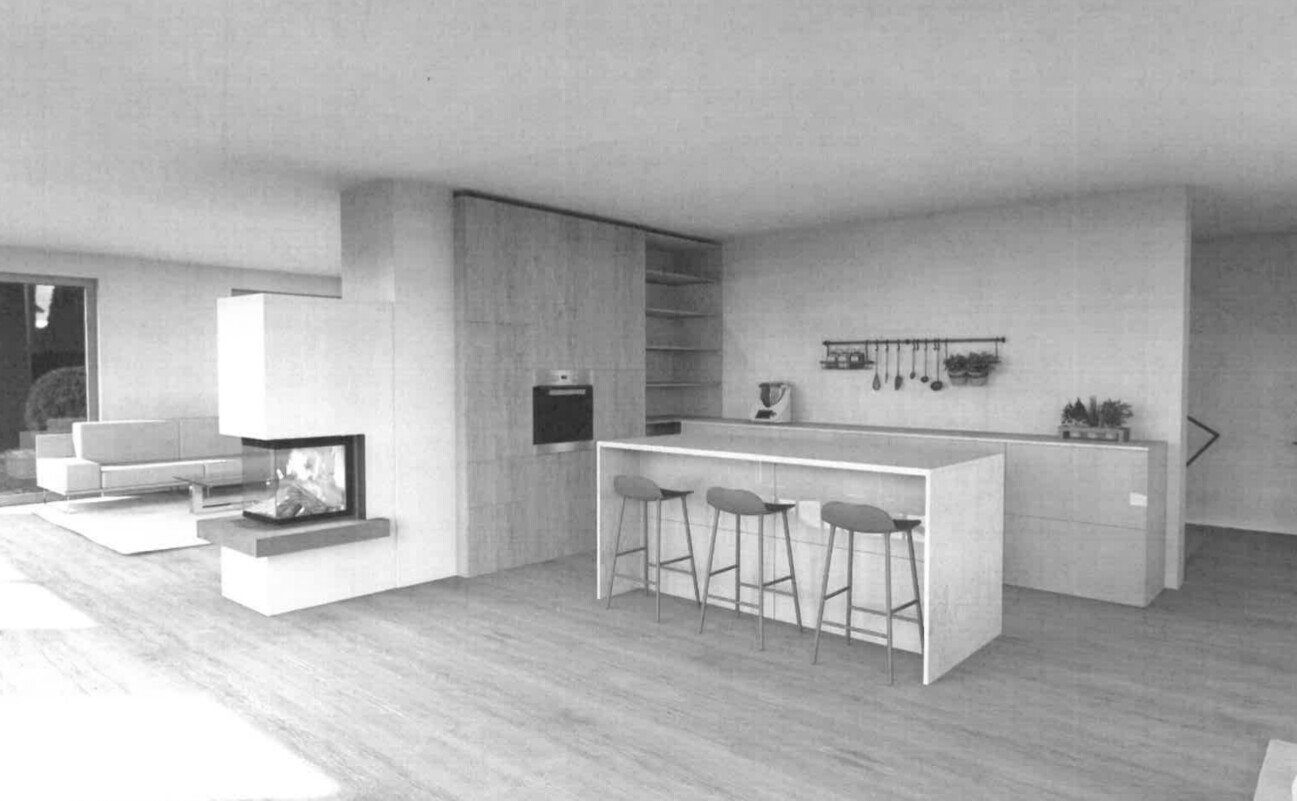
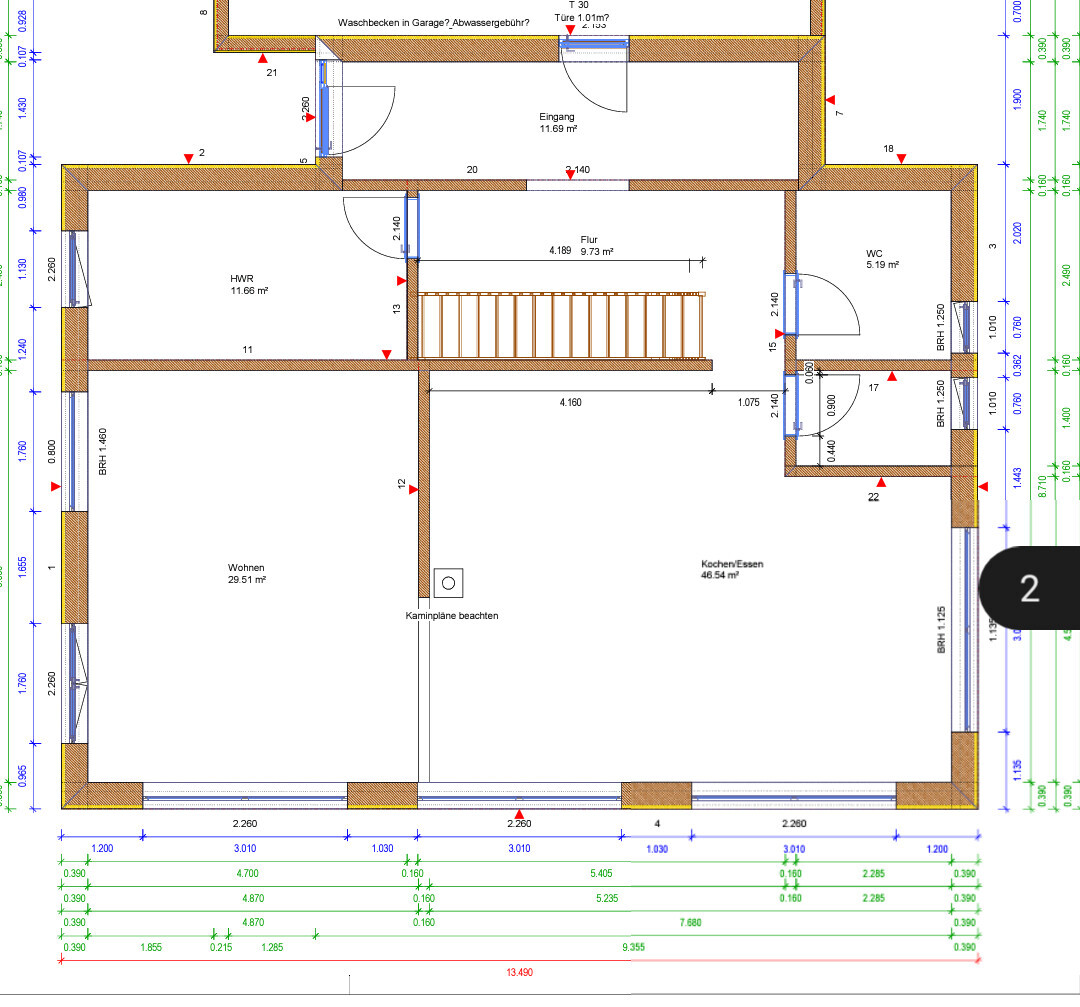
We are currently planning to install a 10 kW wood stove in our open living, cooking, and dining area. It is intended solely to create a cozy atmosphere and will be lit in the evenings only; there is no water heat exchanger. My question is whether this capacity is oversized or appropriate? The area is about 80 m² (860 sq ft), see attached photos of the floor plan and excerpts from the stove manufacturer. Thanks in advance for your answers.
Best regards
N
nordanney24 Dec 2024 11:29elminster schrieb:
From my point of view, besides the room volume and insulation, it is even more important whether the floor plan is openIn the original poster’s case, we are talking about almost 90m² (970 sq ft) of open space...nordanney schrieb:
With TE, we're talking about nearly 90 sqm (970 sq ft) of open space... I have to say, your experience fits my floor plan and stove best, so I think I can stick with the 10 kW. It’s a simple stove, not a storage heater.
Heat is emitted through the three glass sides; maybe some heat also reaches the upper floor since the path to the stairs is always open.
N
Neuer von Da24 Dec 2024 12:58Arauki11 schrieb:
I’m interested in hearing about your experiences as well, including the model, function, installation location, etc.
From a physics standpoint, warm air (ours is mostly heated by a wood stove) naturally rises first to the quite large gallery above, where it gets warm first. We have now started installing fans directly on the stove pipe, although I was initially quite skeptical about them. However, it’s working well because it results in less warmth accumulating upstairs, so more heat stays downstairs.
Our infrared heater sometimes supplements the heating, but we only use that as a kind of backup.
We rarely use the "air heat" from the heat pump; for example, if I’m sitting upstairs and want it to warm up quickly, I turn on the power mode for about 15 minutes, and that’s enough. Otherwise, in summer, it serves as an air conditioner.
We have a KfW 40 standard or even better, and, in my opinion, our heating costs are quite low; however, I believe this only works with individualized user behavior, such as with a stove. Otherwise, it’s easy for the temperature to get out of balance.
In our previous apartment, we had underfloor heating and planned a fireplace; but we gave up on the fireplace because it often got too warm for us when the sun suddenly shone outside.
The situation is similar here—I think we have a similar setup, including a domestic hot water heat pump—and, overall, I find it very cost-effective.
Exactly. The individual situation on site is crucial (insulation, windows, solar gains, etc.), so it’s not easy to directly compare. There’s also individual user behavior and perception to consider. For example, I prefer it cooler rather than too warm. 1. In the living room, about 2 meters (6.5 feet) from the wood stove
Model: no idea, but it was one advertised as very quiet, with a 1.32-meter (52-inch) blade span and LED light.
Stove usage: usually on for about an hour until the room reaches around 24–25°C (75–77°F).
At this point, the adjacent rooms had barely gained any heat.
The fan then pushes the warm air down.
The room temperature rises rapidly as the trapped heat is pushed downward.
At the same time, a larger temperature difference causes cold air to be drawn in.
If the fan is set too high, you notice a draft.
The fan runs for about 3 hours even after the stove is turned off because otherwise the heat would accumulate again at about 2.5 meters (8 feet) height.
Starting at 28°C (82°F), room temperature drops to 23°C (73°F) over 2 hours, and there are hardly any temperature differences compared to other rooms.
All stove vents should be closed then; otherwise, you risk pulling cold air into the house (negative pressure).
Since our stove is covered in soapstone everywhere, this was the only electric fan option; also, I find the small ones you place on the stove plate to be ineffective.
2. As an air conditioner, the air-to-air heat pump is disappointing. It is supposed to have 800 watts of cooling capacity.
A forgotten triple-glazed window on the south side in summer makes the house quite hot.
We’re considering installing a regular split air conditioning system.
N
nordanney24 Dec 2024 13:11Neuer von Da schrieb:
At the same time, the larger temperature difference draws in cold air. Where does it come from in a new build?
Neuer von Da schrieb:
Model no idea, was one advertised as very quiet, 1.32m (52 inches) span with LED light So not one with wood, but a replica?
Neuer von Da schrieb:
Since the stove is covered with soapstone everywhere, only this version with electricity was possible, You can also choose stoves without soapstone.
The problem is that you are talking about a “ship,” but the original poster wants to buy a car.
There is a lack of comparability. Saves on every point.
PMW1993 schrieb:
Question: Is the stove oversized or is it okay?Our house is open plan and about 130 square meters (1400 square feet) over two levels. The stove is located in the open space leading upwards. When we heat with our Olsberg stove without a storage unit at around 5 kW, even I, who is very sensitive to the cold, have to open the windows. This is because the underfloor heating doesn’t immediately turn down. The stove adds heat for comfort on top of that, so the house eventually becomes very warm. And no, for 2-3 hours you should really keep the fire going during 4 hours of cozy time; otherwise, the chimney dampers drip and the glass gets sooty.
N
Nice-Nofret25 Dec 2024 09:17We have sized our fireplace insert to cover a heating system failure. I am probably influenced by our old heating system.
In the 14 years we have lived here, this emergency has never occurred – but it has happened several times to our neighbors.
In the 14 years we have lived here, this emergency has never occurred – but it has happened several times to our neighbors.
Similar topics