
S
Schlaumeier8616 Dec 2024 00:17Hello everyone,
We are currently purchasing a prefabricated timber-frame house built in 2022. It is KFW55 standard, with a lot of insulation and multiple layers.
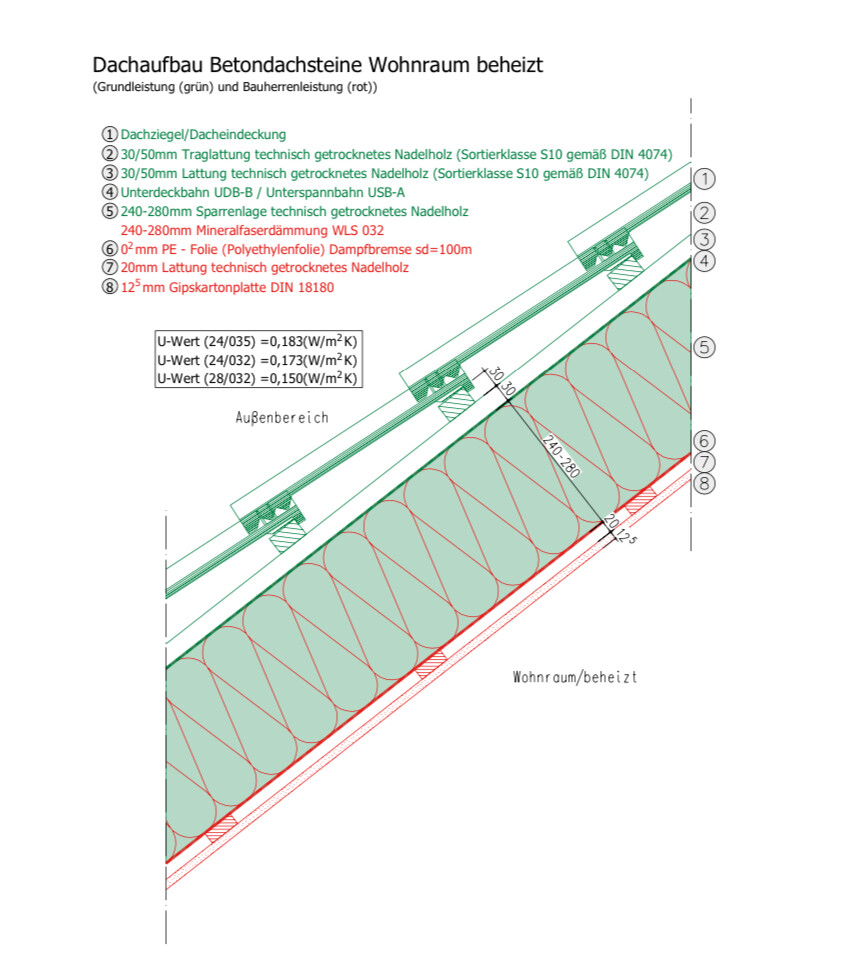
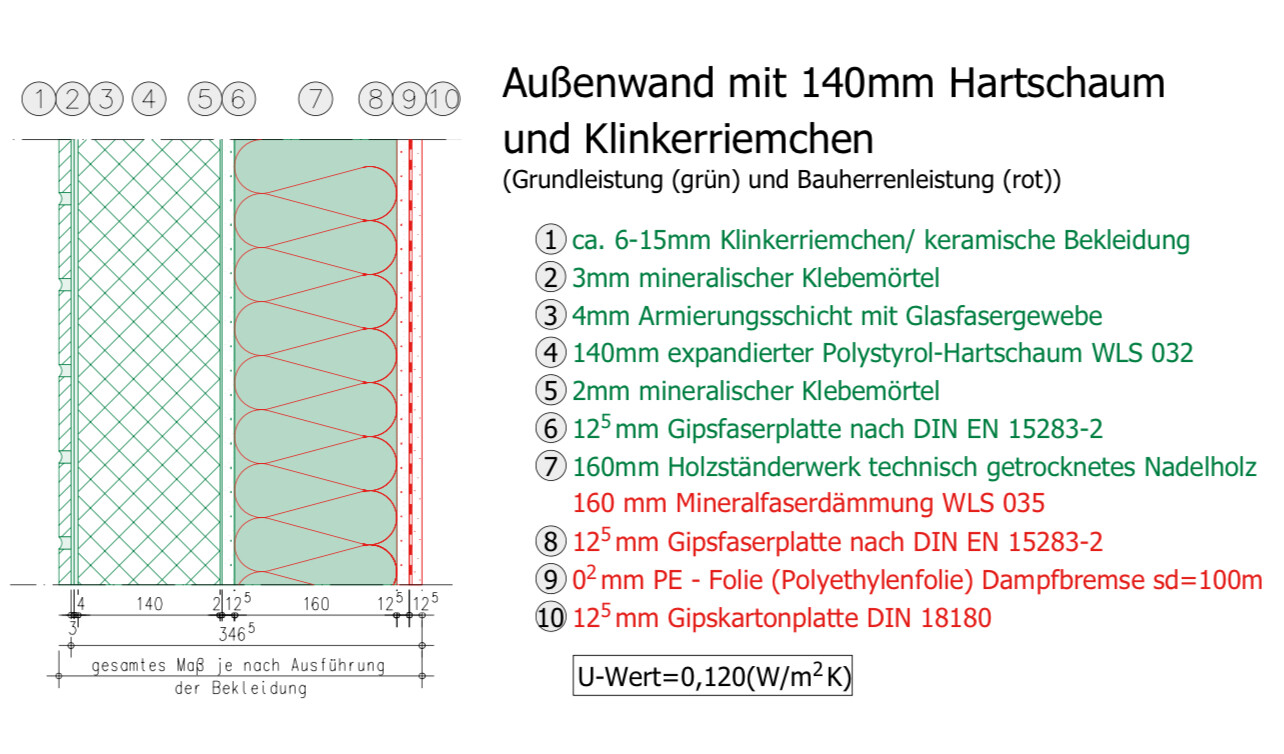
Now, we don’t want to make any mistakes with the house. Common sense tells you that no reputable manufacturer would build houses where you can’t hang a picture or a shelf on a wall without damaging the vapor barrier. Still, there is a lot of information online suggesting this is not good, including calculations claiming that for every square millimeter of hole in the vapor barrier, 10 square meters of the house rot away per year (just kidding, but only partly). Various points like this are repeated.
Can I assume that holes of reasonable size for shelves, curtain rods, etc., are generally not a problem? What do you think?
Thanks
We are currently purchasing a prefabricated timber-frame house built in 2022. It is KFW55 standard, with a lot of insulation and multiple layers.
Now, we don’t want to make any mistakes with the house. Common sense tells you that no reputable manufacturer would build houses where you can’t hang a picture or a shelf on a wall without damaging the vapor barrier. Still, there is a lot of information online suggesting this is not good, including calculations claiming that for every square millimeter of hole in the vapor barrier, 10 square meters of the house rot away per year (just kidding, but only partly). Various points like this are repeated.
Can I assume that holes of reasonable size for shelves, curtain rods, etc., are generally not a problem? What do you think?
Thanks
Hello,
there should be additional sections showing the construction of the interior walls. There must also be a service cavity (for electrical installations, etc.). This is usually located in front of the exterior wall assembly and allows for mounting objects.
It’s best to ask for clarification on this. If it was a shell house, meaning the interior finishing was completed by the previous owner, there might be fewer documents or records available.
Issues could also have arisen during the interior finishing phase (for example, the airtightness or insulation layer might have been compromised).
Documentation of a blower door test would also be helpful here.
there should be additional sections showing the construction of the interior walls. There must also be a service cavity (for electrical installations, etc.). This is usually located in front of the exterior wall assembly and allows for mounting objects.
It’s best to ask for clarification on this. If it was a shell house, meaning the interior finishing was completed by the previous owner, there might be fewer documents or records available.
Issues could also have arisen during the interior finishing phase (for example, the airtightness or insulation layer might have been compromised).
Documentation of a blower door test would also be helpful here.
S
Schlaumeier8616 Dec 2024 10:58x0rzx0rz schrieb:
Hello,
there should be additional cross-sections showing the construction of the interior walls. There has to be an installation cavity (for electrical wiring, etc.). This is usually located in front of the exterior wall structure and also allows for the mounting of fixtures.
It’s best to ask about this specifically. This might have been a shell house, meaning that the interior finishing was done by the previous owner, so there could be fewer documents or records available.
Problems can naturally occur during interior finishing, such as damage to the vapor barrier or insulation layer.
Documentation of a blower door test would also be helpful here. Thank you for the reply. Yes, certain finishing steps, like the interior work, were done separately. However, as shown in the attached pictures, it is exactly the parts marked in red that represent the owner’s scope of work. This was completed as far as I know. Therefore, the innermost layer (8 in the first picture, 10 in the second) is also the final one, with only wallpaper behind it. It can thus be assumed that there is no installation cavity within the exterior walls, roof slopes, etc., and any small drilling would damage the vapor retarder. As I said, common sense suggests that with such a construction, it shouldn’t be expected that the vapor retarder remains undamaged.
By the way, these pictures are from the construction service description by the builder, a method used thousands of times in Germany. That’s why I am about 95% confident that everything is fine. Still, the remaining 5% worries me :-) Maybe there are standards regarding this that the builder would communicate to the owner (for me, the seller), specifying in which areas such work should or shouldn’t be done, or which anchors/sealants to use. The seller could not provide any information on that, but that doesn’t necessarily mean anything.
PS: A blower door test was performed during the handover of the house with excellent results. So it can be assumed that, apart from the holes I am planning to drill, everything is fine.
Are there any photos of the interior, or have you visited the house? Are there absolutely no furniture, power outlets, or switches on the exterior walls?
The critical area is the internal waterproofing. Was the previous owner a professional? Properly sealing all connections with the membrane throughout the entire house requires careful workmanship.
If the house remains as it is, and everything was done properly, it can work. But any modification, extension, or troubleshooting will almost inevitably require extensive work to restore the airtightness, which can sometimes be nearly impossible.
The critical area is the internal waterproofing. Was the previous owner a professional? Properly sealing all connections with the membrane throughout the entire house requires careful workmanship.
If the house remains as it is, and everything was done properly, it can work. But any modification, extension, or troubleshooting will almost inevitably require extensive work to restore the airtightness, which can sometimes be nearly impossible.
S
Schlaumeier8616 Dec 2024 11:35x0rzx0rz schrieb:
Are there any pictures of the interior / have you visited the house? Are there no furniture, electrical outlets, or switches installed on the exterior walls?
The critical area is the internal airtightness. Was the previous owner a professional? Properly sealing all penetrations with the membrane throughout the entire house requires a lot of care.
If the house remains as it is and everything was done carefully, it can work.
But any change / extension / troubleshooting will almost inevitably lead to extensive work to restore airtightness, which can sometimes be practically impossible. Once all connections, outlets, and switches were installed, a blower door test was performed with good results. Afterward, the owner barely lived in the house and did not install anything else, so I assume the current airtightness status is acceptable.
My question is whether there is a risk of damaging this current airtightness status by making a few holes to fix things like curtain rods, etc.
Schlaumeier86 schrieb:
Maybe there are some standards regarding this that should be communicated to the builder (which for me then means the seller), such as in which zones it should be done and where it’s better not to, or which anchors/sealants to use. The seller couldn’t say anything about it, but that doesn’t necessarily mean much. The fact that he can’t or won’t say anything about it would personally raise concerns for me. This certainly doesn’t reflect the current state of technology. The house isn’t that old yet for long-term issues to appear.
He should know if any special precautions were taken or should have been taken during the interior work or electrical installation.
Especially with exterior walls, added EPS/XPS insulation can trap moisture that gets in, leaving it stuck in the insulation and framing.
Personally, I would go through it with an expert and look for any irregularities.
Similar topics