
A
alive&kicking10 Dec 2024 15:22Hello everyone,
I understand that getting a clear answer on a forum and thus a remote diagnosis regarding a dirty/discolored facade is difficult, but maybe with your help I can make some progress.
We are already involved in a legal dispute with the construction company over some other defects (the base “iscoming loose,” soaking wet external claddings, etc.). Our lawyer advised us to repaint the facade at our own expense, as only a complex and costly laboratory analysis can really clarify the cause.
We will have a master painter come to take a look, maybe he can identify the cause.
Facts:
Facade construction:
(I hope this is all correct!)
At first I suspected the barge flashing; by now I think it is a combination of the facade paint and the metal flashing. The facade beneath the gutter is also dirty; where there is a roof overhang, there is no discoloration.
I have a few theories but will keep them to myself for now; however, I do have two questions already:
I will, of course, also post photos of the facade here.
Thanks very much in advance for hopefully some answers!
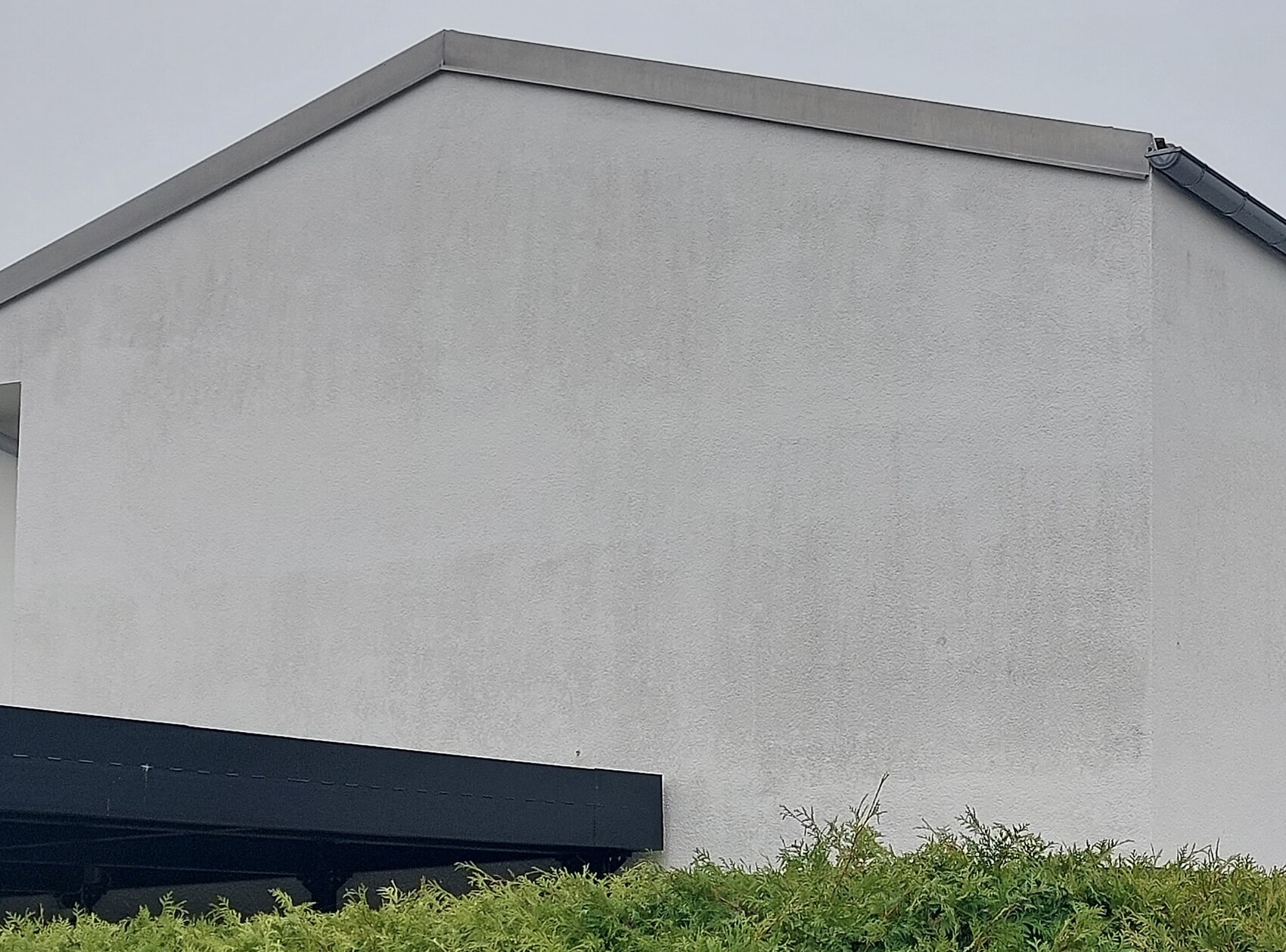
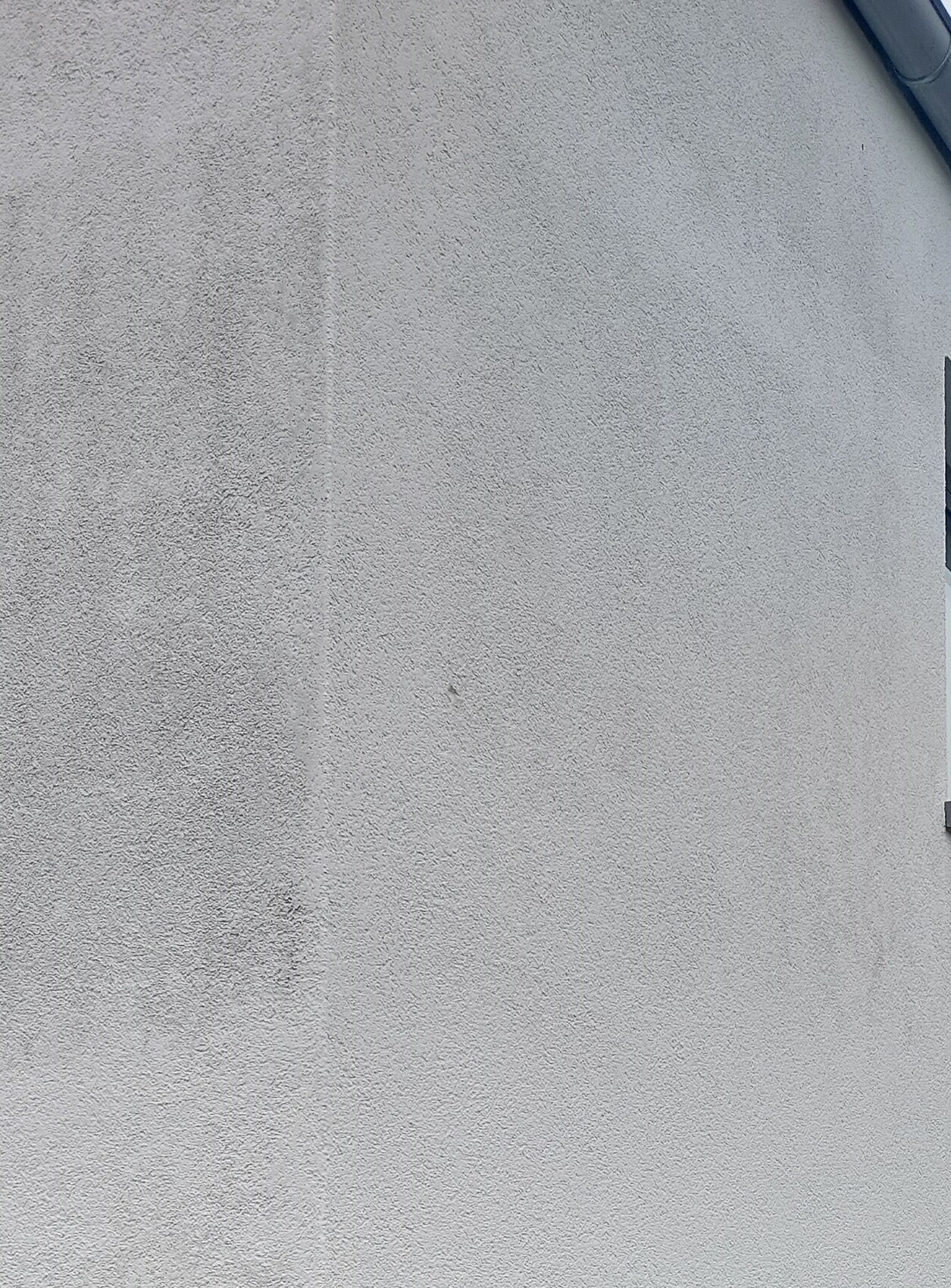

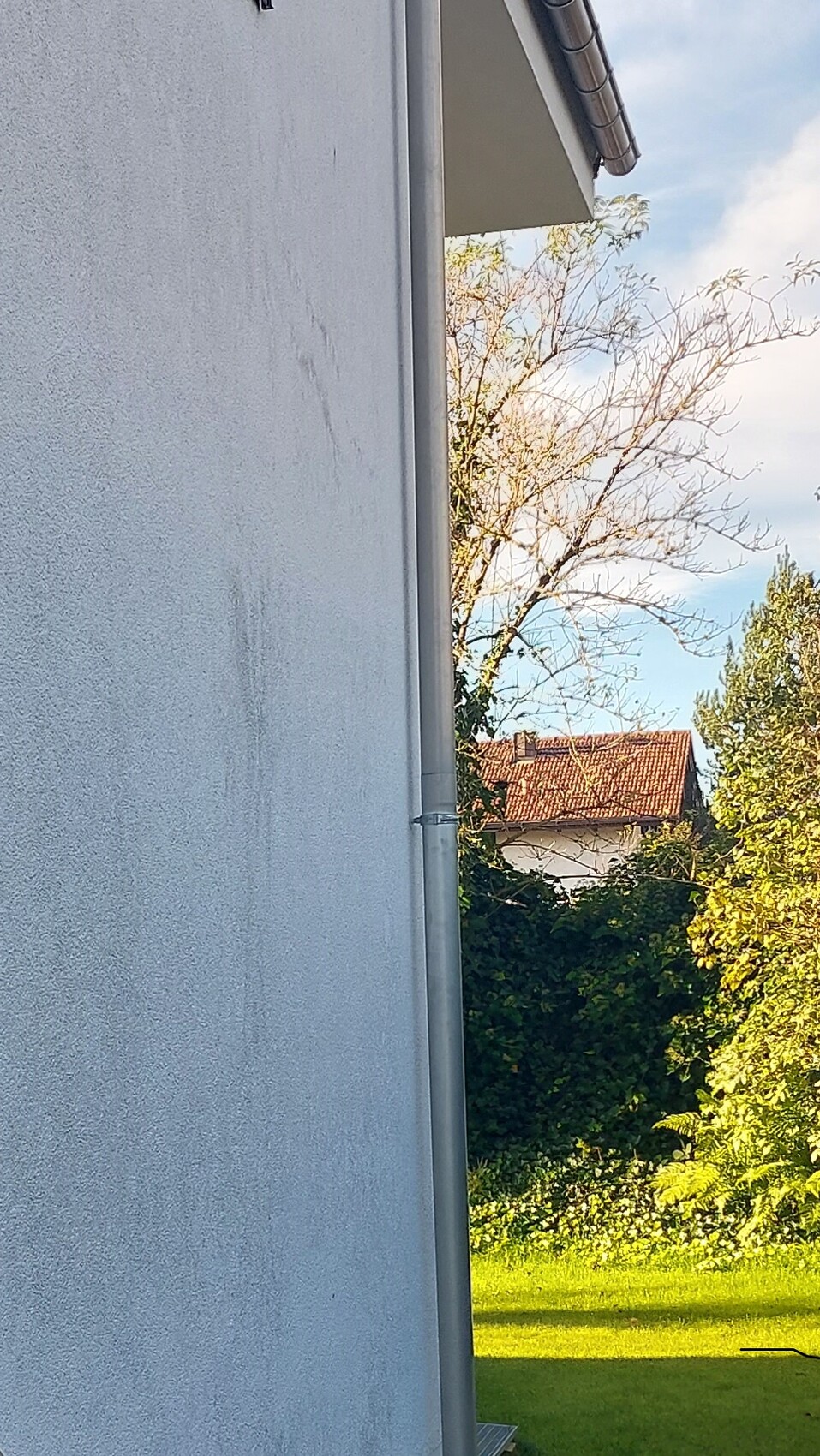
I understand that getting a clear answer on a forum and thus a remote diagnosis regarding a dirty/discolored facade is difficult, but maybe with your help I can make some progress.
We are already involved in a legal dispute with the construction company over some other defects (the base “iscoming loose,” soaking wet external claddings, etc.). Our lawyer advised us to repaint the facade at our own expense, as only a complex and costly laboratory analysis can really clarify the cause.
We will have a master painter come to take a look, maybe he can identify the cause.
Facts:
- Single-family house
- Facade painted 4 years ago, nighttime temperatures were around freezing, according to the construction company, it was painted three times
- Partially no roof overhang
- Barge flashing
Facade construction:
- Insulation material: mineral wool
- Base coat: water-repellent reinforcement mortar
- Top coat: water-absorbent plaster
- Silicate paint: hydroactive (biocide-free)
(I hope this is all correct!)
At first I suspected the barge flashing; by now I think it is a combination of the facade paint and the metal flashing. The facade beneath the gutter is also dirty; where there is a roof overhang, there is no discoloration.
I have a few theories but will keep them to myself for now; however, I do have two questions already:
- When you rub your hand over the silicate paint, it powders off finely, very finely. Is this normal?
- I don’t trust the construction company at all and also don’t believe they actually painted it three times. Is there a simple way to verify this? How does multiple coats affect the quality or performance (for any function) of facade paint, aside from coverage?
I will, of course, also post photos of the facade here.
Thanks very much in advance for hopefully some answers!

Many houses on the west side have this problem, especially white ones. It is often visible around ventilation outlets as well.
Usually, this is not dirt but algae, fungal spores, or something similar, caused by areas that stay moist regularly due to rain or condensation.
Some neighbors had a professional come by who applied an expensive special treatment against algae and fungi. After a few weeks, the area was completely white again. They then ordered a cheaper anti-fungal product themselves and sprayed the house wall on their own. It worked just as well.
Usually, this is not dirt but algae, fungal spores, or something similar, caused by areas that stay moist regularly due to rain or condensation.
Some neighbors had a professional come by who applied an expensive special treatment against algae and fungi. After a few weeks, the area was completely white again. They then ordered a cheaper anti-fungal product themselves and sprayed the house wall on their own. It worked just as well.
Musketier schrieb:
Many houses have this problem on the west side.More on the north side, but with all the characteristics you mentioned. Our new development area is affected by this – some houses more, others less – depending on how well each house was insulated or which type of render was used. Regarding these factors:
alive&kicking schrieb:
Facade paint applied 4 years ago,alive&kicking schrieb:
Hydroactive silicate paint (biocide-free)this is a very typical occurrence. In our case, it started after 7 years. Not paint, but pigmented render with biocides.
ypg schrieb:
More north
Also north here, but in our residential area, it's mostly the west sides of the houses where it is very noticeable, since the west wind tends to carry rain more frequently against the walls. This may also depend on the roof shape and roof overhangs.
Good morning.
There are 6 houses in the neighborhood, two of which are solid construction, the rest are prefabricated houses.
Three of them have severe infestations by now. One homeowner has even cleaned and repainted.
One owner tried to hold the prefab manufacturer liable, but without success. Different paint options with varying quality standards were offered, and during the selection process he could choose paint with algaecide and fungicide, but he did not select this option and therefore had no claim.
For these houses, the west side is affected, but that side also borders a forest. The north side also shows some signs.
So far, we have been lucky and have no discoloration.
There are 6 houses in the neighborhood, two of which are solid construction, the rest are prefabricated houses.
Three of them have severe infestations by now. One homeowner has even cleaned and repainted.
One owner tried to hold the prefab manufacturer liable, but without success. Different paint options with varying quality standards were offered, and during the selection process he could choose paint with algaecide and fungicide, but he did not select this option and therefore had no claim.
For these houses, the west side is affected, but that side also borders a forest. The north side also shows some signs.
So far, we have been lucky and have no discoloration.
A
alive&kicking11 Dec 2024 11:41Hello,
thank you for your participation and analyses.
I am aware of possible discoloration caused by algae growth on damp exterior walls, especially on the north and east sides. For this reason, we chose silicate paint, as it has a high pH value, is nutrient-free or low in nutrients, and naturally biocide-free. If I remember correctly, we also selected it because it is often used on old buildings, such as churches.
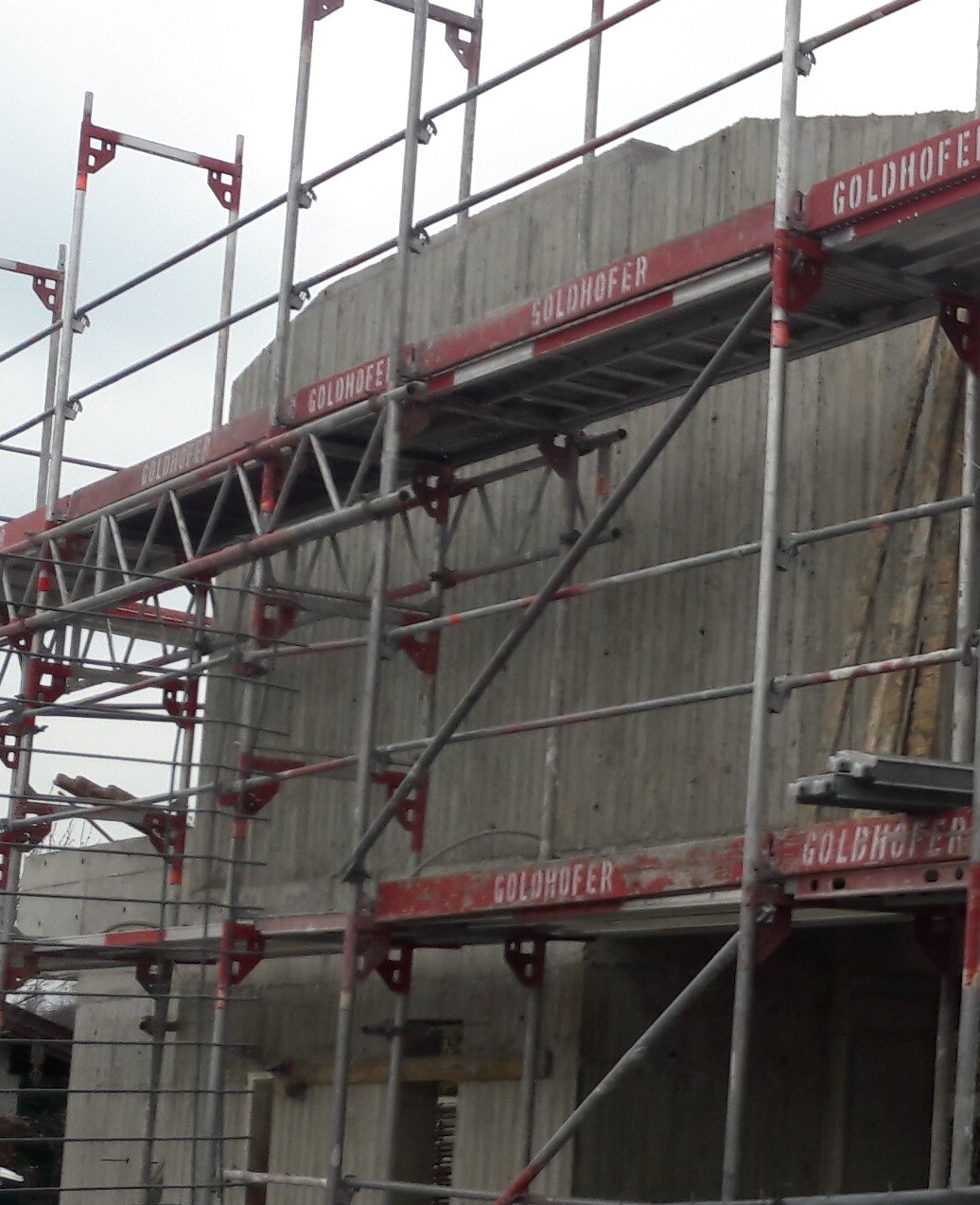
I included the photo with the scaffolding because early one morning, when the sun was shining at an angle on the façade, I noticed a light, almost uncolored horizontal stripe, which I later also found on the long side of the house. It seems to me that the area between the scaffold planks was repainted, and on the right, where the crossbar ends, the paint was rolled further upwards. You can clearly see the “roller marks”; I’m not sure what the exact term is. The manufacturer’s technical data sheet states to apply the paint wet-on-wet.
Therefore, I would like to know if the paint coating only works properly after being applied at least two or three times.
It is also said that silicate paint undergoes silicification through the potassium water glass content and thus becomes inseparably linked to the substrate. So why does the paint powder off? Could the outside temperature during painting be a factor?
thank you for your participation and analyses.
I am aware of possible discoloration caused by algae growth on damp exterior walls, especially on the north and east sides. For this reason, we chose silicate paint, as it has a high pH value, is nutrient-free or low in nutrients, and naturally biocide-free. If I remember correctly, we also selected it because it is often used on old buildings, such as churches.
I included the photo with the scaffolding because early one morning, when the sun was shining at an angle on the façade, I noticed a light, almost uncolored horizontal stripe, which I later also found on the long side of the house. It seems to me that the area between the scaffold planks was repainted, and on the right, where the crossbar ends, the paint was rolled further upwards. You can clearly see the “roller marks”; I’m not sure what the exact term is. The manufacturer’s technical data sheet states to apply the paint wet-on-wet.
Therefore, I would like to know if the paint coating only works properly after being applied at least two or three times.
It is also said that silicate paint undergoes silicification through the potassium water glass content and thus becomes inseparably linked to the substrate. So why does the paint powder off? Could the outside temperature during painting be a factor?
Similar topics