
ᐅ Structural Assessment of Openings for Electrical and HVAC Installations
Created on: 29 Nov 2024 11:43
B
Bayernbors
Hello everyone,
I am currently building a semi-detached house and would like to ask the forum community for their opinion regarding the electrician’s work and the planned modifications for installing an air conditioning system.
Work done by the electrician so far:
I look forward to your assessments and advice!
Thank you in advance!
I am currently building a semi-detached house and would like to ask the forum community for their opinion regarding the electrician’s work and the planned modifications for installing an air conditioning system.
Work done by the electrician so far:
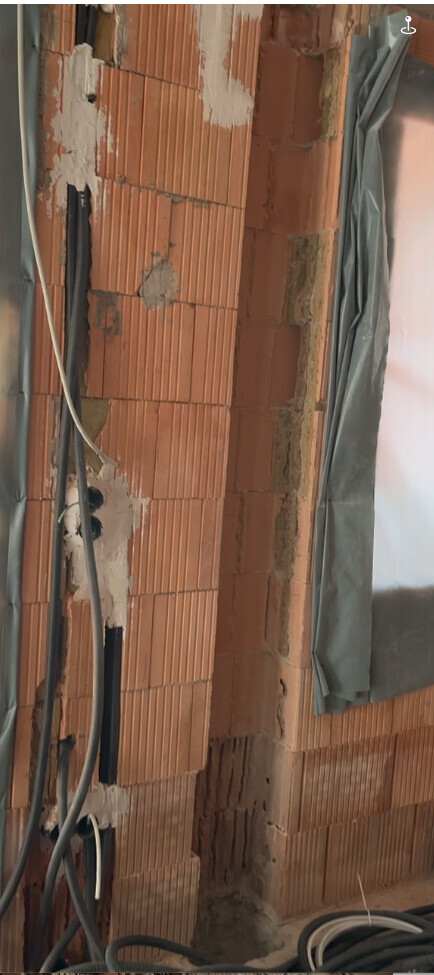
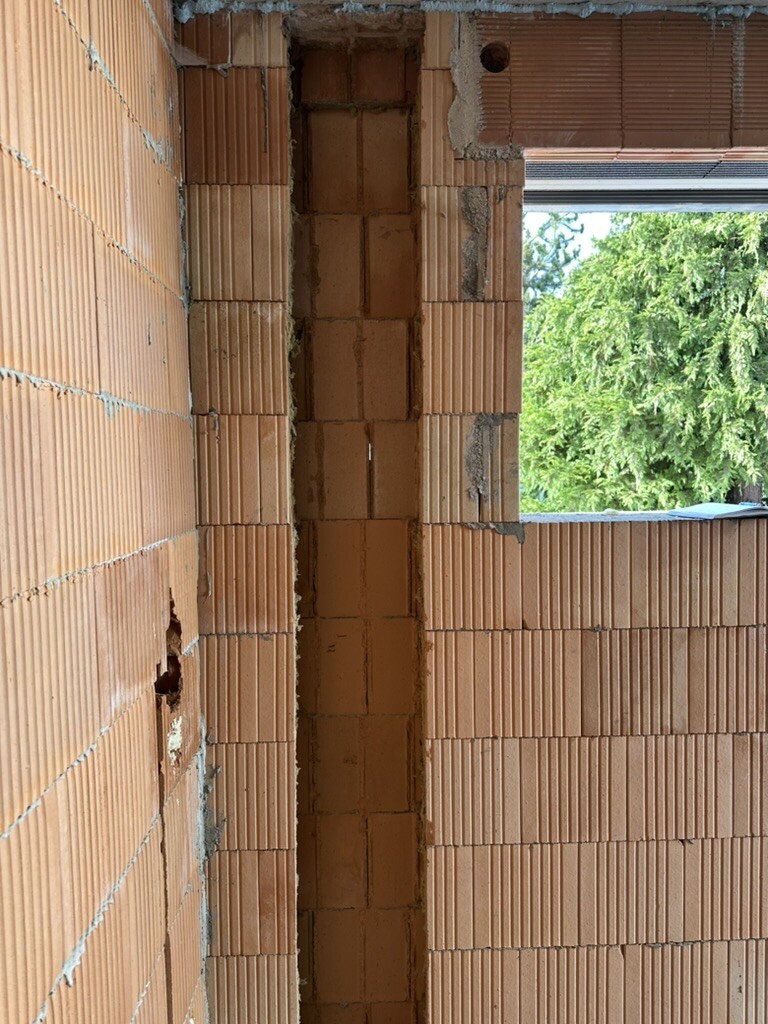
- Large opening in the exterior wall (36 cm thick (14 inches)):
- A very large vertical slot (almost 18 cm deep (7 inches)) running through all floors has been created in the exterior wall to route cables to the distribution panel. The wall is load-bearing and also important for thermal insulation.
- The electrician has assured me that this opening does not affect the structural stability and will be filled later with insulation material (foam).
- My question: Is it common or acceptable to make such a large opening in a load-bearing wall? Should a structural engineer be consulted here, or is the electrician’s confirmation sufficient?
- Vertical chases for sockets and lighting:
- Throughout the house, smaller vertical chases (approximately 3 cm x 3 cm (1 inch x 1 inch)) have been made in the walls for cable routing. These chases are present in both load-bearing and non-load-bearing walls.
- Is it normal to create such chases, or should extra caution be taken with load-bearing walls?
- New chases for air conditioning:
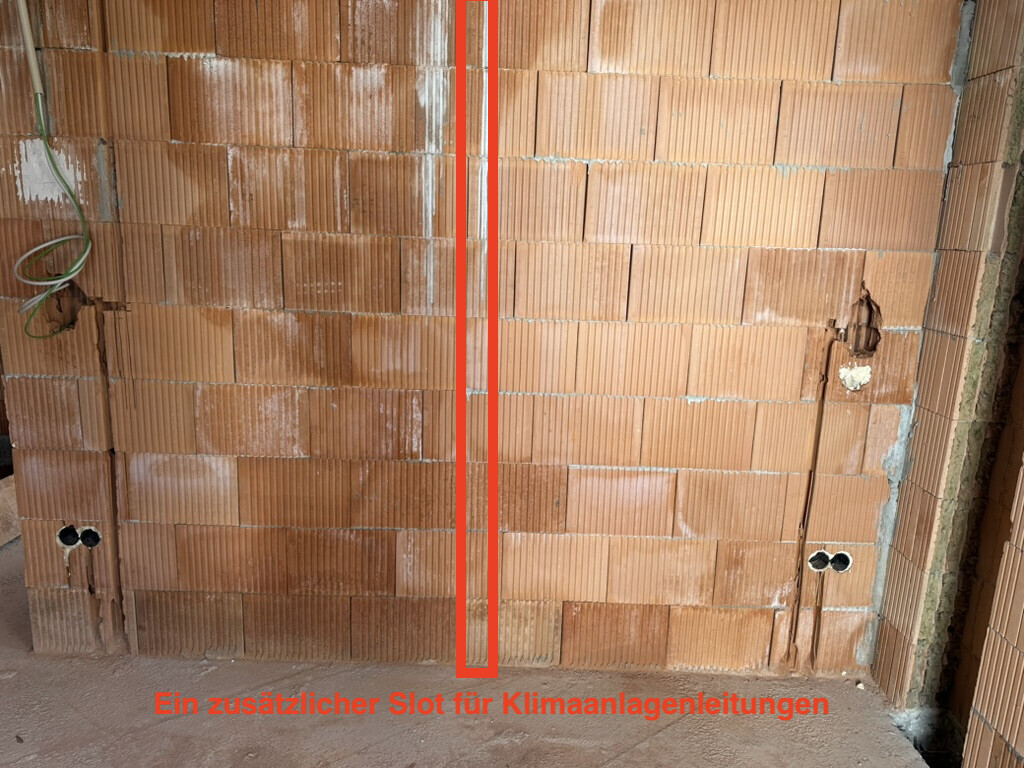
- The air conditioning technician wants to create an additional vertical chase (about 5 cm x 3 cm (2 inches x 1 inch)) for each indoor unit.
- These chases would be made in the load-bearing walls to install the pipes and hoses.
- Drill holes for air conditioning:
- The technician also requests permission to drill holes in the exterior walls to route the lines and pipes of the air conditioning system outside.
- I am wondering whether these drillings could affect the stability or insulation of the exterior walls and if special measures or inspections are necessary.
I look forward to your assessments and advice!
Thank you in advance!
B
Bayernbors29 Nov 2024 21:4211ant schrieb:
Does the general contractor want the final inspection only at the very last moment? As far as I understand, no intermediate inspections are planned. Only the final inspection at the end.
Gerddieter schrieb:
That’s why there are regular visits from the expert to document the intermediate steps. Yes, we only agreed on intermediate checkpoint inspections. One of those would be after the rough installation (before plastering and screed).
Gerddieter schrieb:
Ours looked pretty much the same as yours.... Yes, then let’s hope they are good enough.
11ant schrieb:
No, I meant your approval for the construction contract fulfillment achieved so far – That’s not possible. It is the payment based on construction progress, which legally does not even count as tacit acceptance.
Bayernbors schrieb:
Should a structural engineer be consulted, or is the electrician’s confirmation sufficient? The structural calculations have already been done in advance. Is there an execution plan? The recess should be shown there. It’s of course better to place the cable duct in front of the wall, but then you would have a visible boxed-in section wherever this is now (kitchen?). Some people consider that a defect. In some areas, it is indeed a defect.
Bayernbors schrieb:
Request from the HVAC technician: It’s nice and considerate of him to ask. Vertical slots usually shouldn’t be a problem.
Basically, the whole issue is also indicative of the approach: building with a general contractor without special additional services. There could be problems and disputes, and later there will be no warranty from him on anything.
B
Bayernbors1 Dec 2024 12:26ypg schrieb:
The structural calculations were done in advance. Is there a detailed construction plan? Yes, the structural calculations were already done in advance, but I do not have the structural drawings. There is no detailed construction plan for these specifics.
ypg schrieb:
It is obviously better to position the cable duct in front of the wall, but then wherever this is now (kitchen?), there would be a visible boxing-in. That may be better from a structural perspective, but not from an aesthetic one. We have the internal unit both in the living room and in every bedroom. I am doing the rough-in now to avoid these cable ducts.
ypg schrieb:
Basically, the whole issue is also indicative: building with a general contractor (GC) means no special additional services. There could be problems and hassle, and later there is no warranty from them on anything. I don’t fully understand the general recommendation. I thought it was better to separate the work as much as possible so that there is clear responsibility for the GC and for the other contracted companies. That way, any issues can be assigned to the correct party and there is less confusion or liability disputes, right?
Bayernbors schrieb:
I thought it would be better to separate the work as much as possible, so that there is a clear responsibility for the general contractor and the other contracted companies.Bayernbors schrieb:
This way, any potential issues can be assigned to the correct party.I don’t see it that way: if there is a structural issue related to the condition of the walls, the general contractor could blame the HVAC specialist. Or vice versa. That’s warranty trouble – it will probably be hidden in the fine print of the terms and conditions.T
Teimo19882 Dec 2024 09:02Bayernbors schrieb:
Overall, I don’t have any concerns either. However, I wouldn’t necessarily place the riser pipes within the exterior wall insulation. This can be taken into account during the structural calculation, for example. I informed my shell contractor and structural engineer during the planning phase where I wanted to position my distribution boxes. The shell contractor also left openings in the wall and ceiling accordingly. After completing the electrical installation and before plastering, I filled these with lightweight mortar. I expect your situation will look similar.B
Bayernbors13 Mar 2025 09:35Hello again everyone,
I wanted to give you an update on this topic. We have now received the expert report, which raises concerns about two aspects of our electrical installation:
1️⃣ The large cable duct in the exterior wall
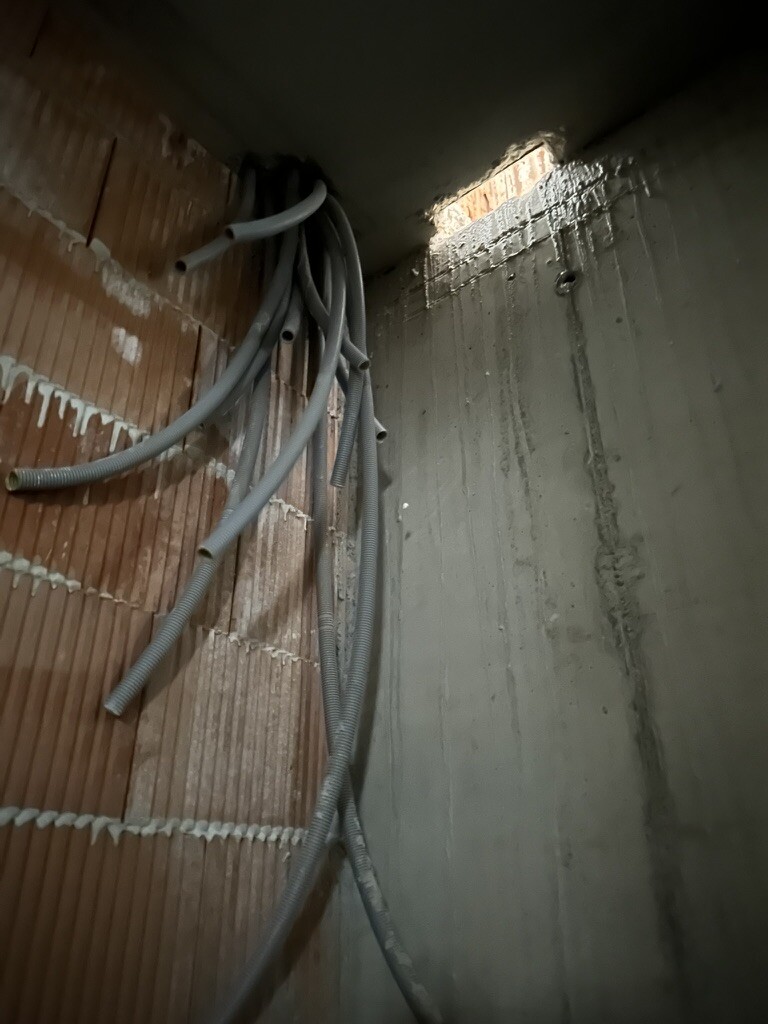
2️⃣ Empty conduits on the unfinished ceiling slab
I would like to hear your opinions and suggestions on this:
✅ Are there any fire safety issues related to such an electrical installation?
✅ What measures would be appropriate for the empty conduits to avoid problems with the screed?
Background: The empty conduits run to the large cable duct through a narrow corridor on the first floor and from there to the technical room in the basement. An alternative routing was apparently difficult to implement.
I look forward to your expertise and suggestions!
Thank you very much and best regards!
2. Findings
2.1 Electrical and Smart Home Installation

2.4 First Floor
I wanted to give you an update on this topic. We have now received the expert report, which raises concerns about two aspects of our electrical installation:
1️⃣ The large cable duct in the exterior wall
2️⃣ Empty conduits on the unfinished ceiling slab
I would like to hear your opinions and suggestions on this:
✅ Are there any fire safety issues related to such an electrical installation?
✅ What measures would be appropriate for the empty conduits to avoid problems with the screed?
Background: The empty conduits run to the large cable duct through a narrow corridor on the first floor and from there to the technical room in the basement. An alternative routing was apparently difficult to implement.
I look forward to your expertise and suggestions!
Thank you very much and best regards!
2. Findings
2.1 Electrical and Smart Home Installation
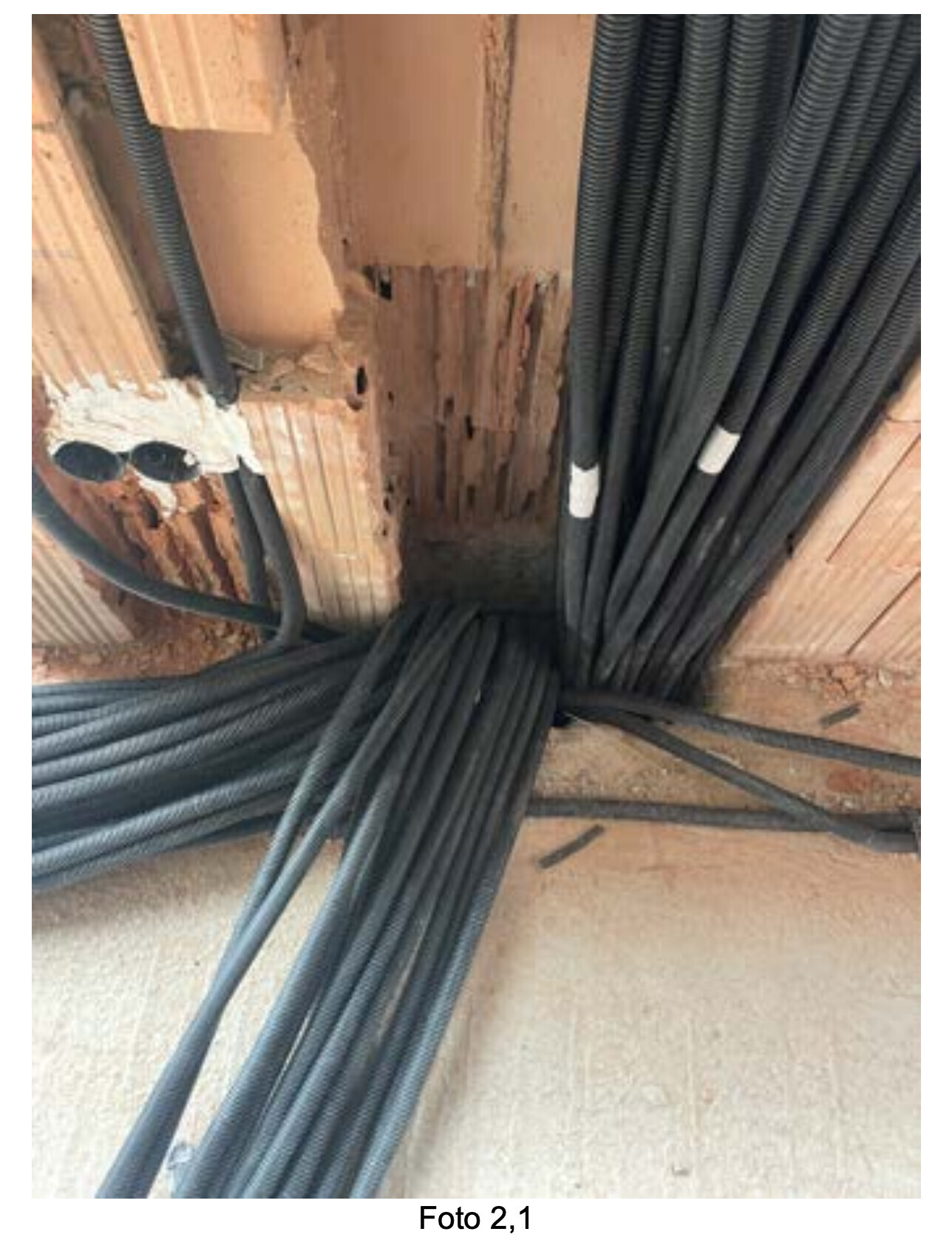
- An increased load on the electrical cables compared to standard buildings has been identified. This is due to the additional wiring required for the smart home system, resulting in more cables distributed throughout the building than usual. Especially in the area of the main cables, numerous wires are bundled together, which can lead to space constraints as well as thermal stress. A detailed review of the cable routes is necessary to ensure that there is no overheating or insufficient insulation.
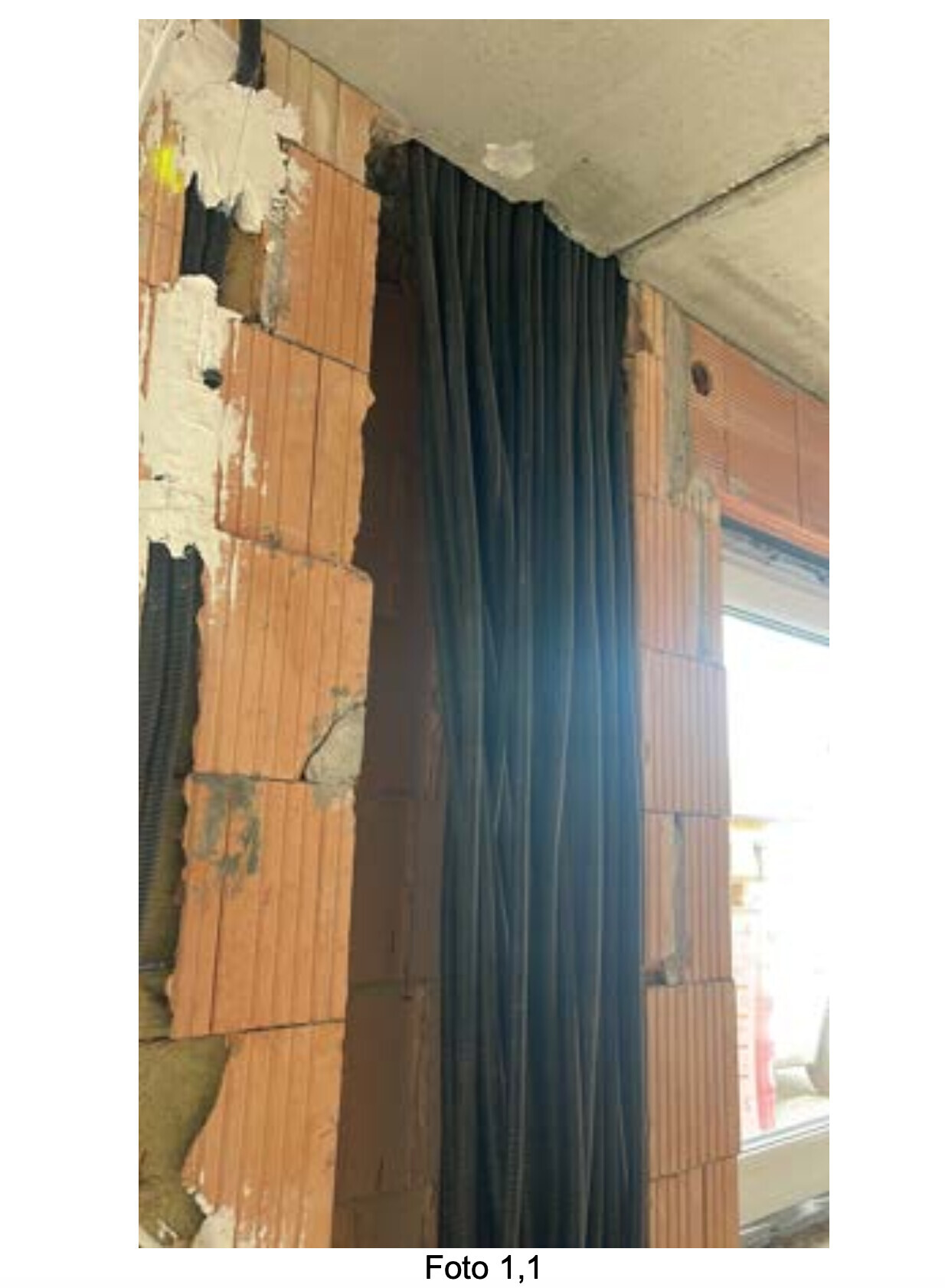
- A cable duct approximately 48 cm (19 inches) wide and 18 cm (7 inches) deep is installed in the exterior wall. (see photos 1.1 and 1.2)
- This setup could cause damage to the wall structure as well as the thermal insulation
- Recommendation: Consider an alternative cable routing within interior walls and professionally seal the open duct with appropriate materials
- Fire safety: All cable ducts must be sealed with approved materials according to applicable fire codes to minimize fire risks.
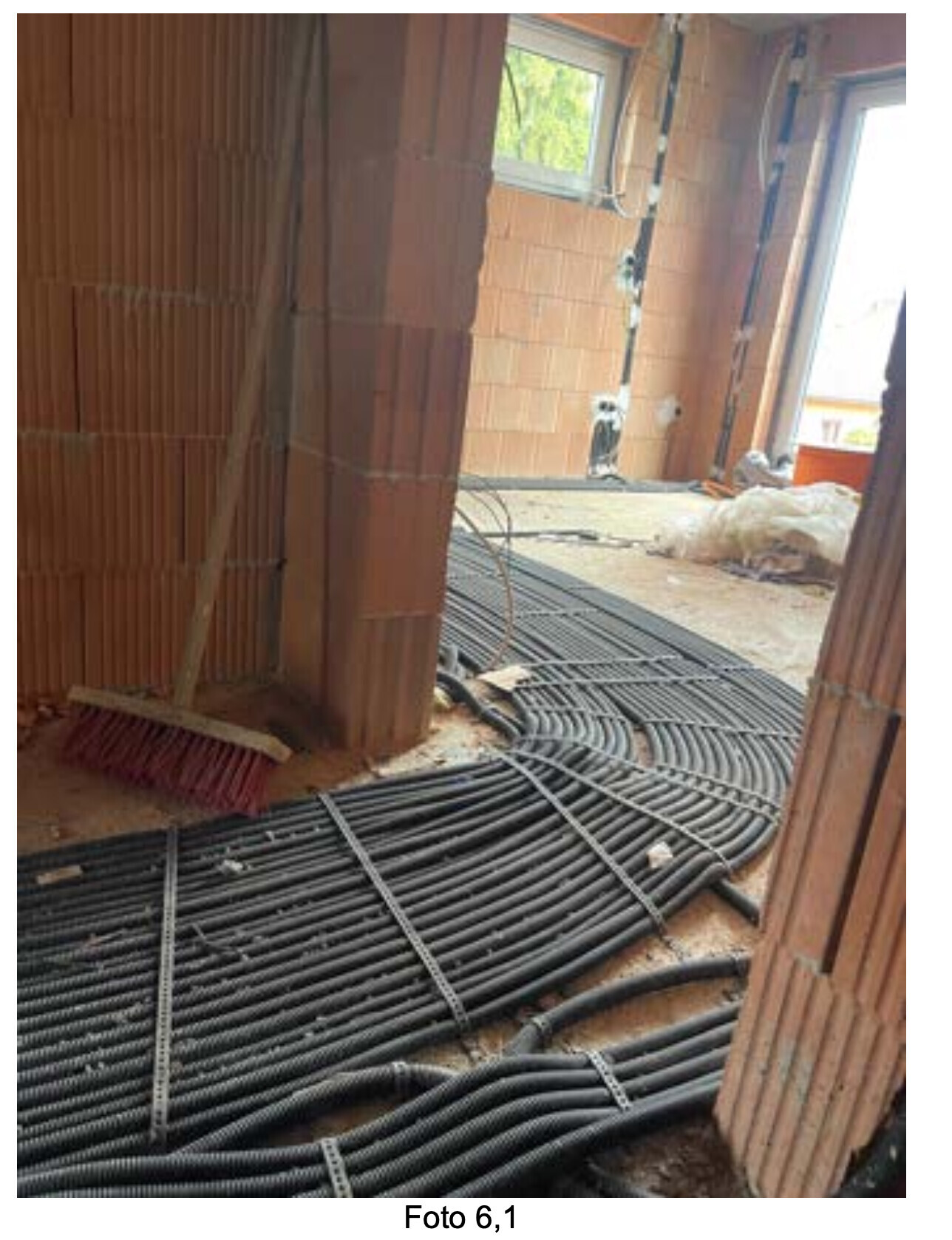
- Screed preparation: Due to the large number of cables laid, air gaps may develop in the screed, which can cause cracks or settlement in the floor. Particular care is required here. (see photo 2.1)
2.4 First Floor
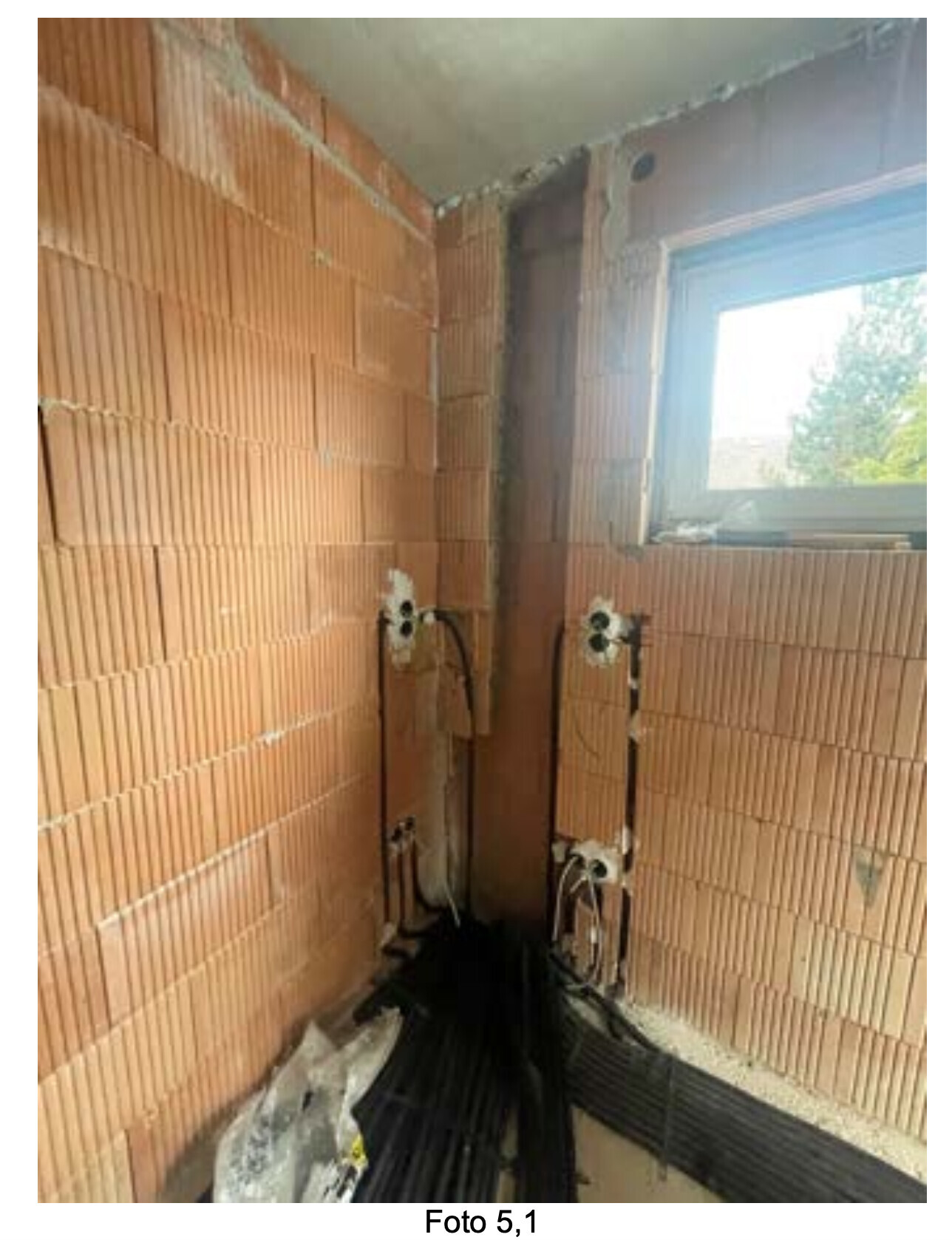
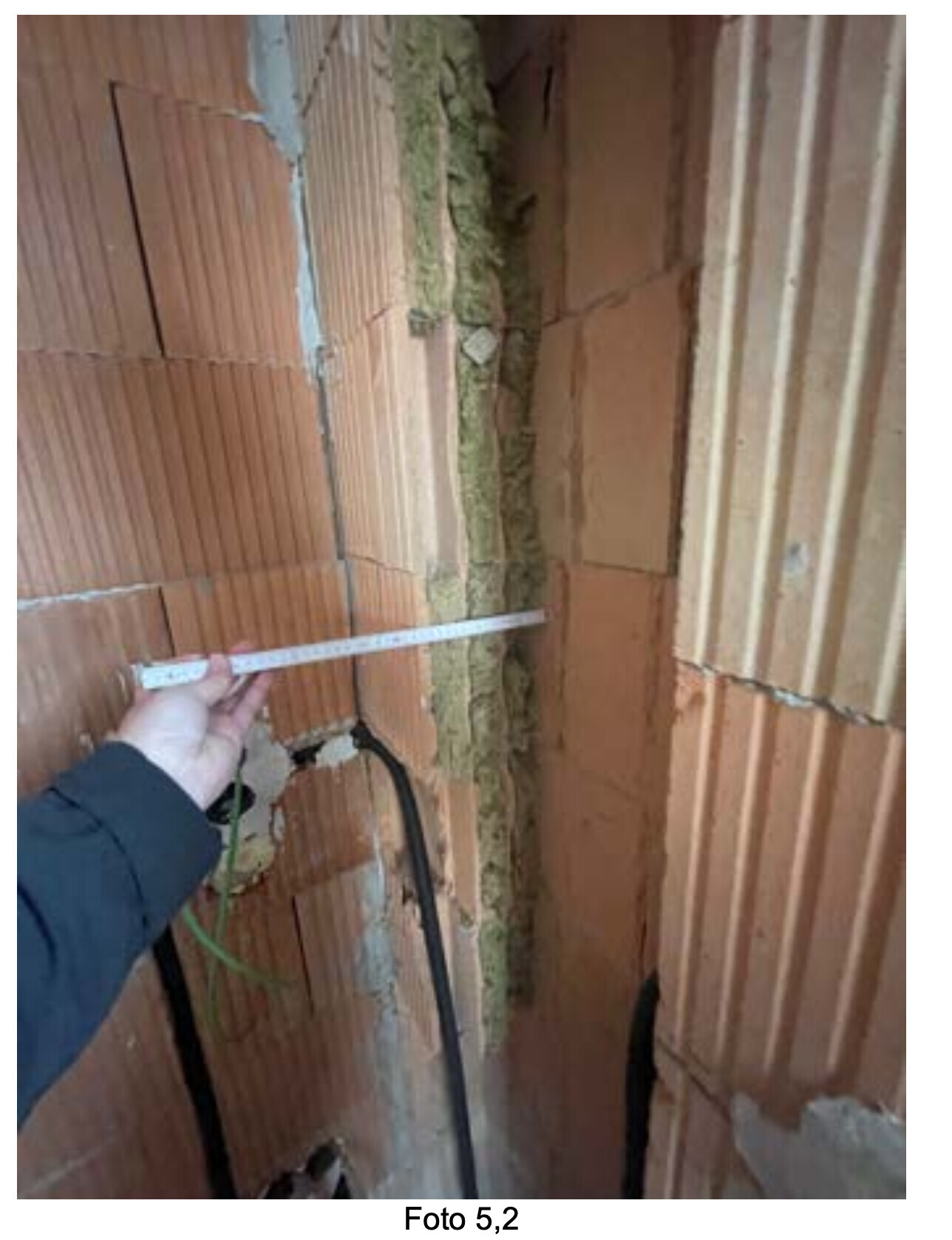
- A cable duct with similar dimensions was also found in the exterior wall on the first floor. It runs vertically along the exterior wall and affects both the structural integrity and the thermal insulation performance of the building. Due to the duct’s depth and width, there is a risk of thermal bridging, which can lead to long-term energy loss and possible moisture damage. Additionally, the structural integrity of the load-bearing exterior wall could be compromised by the weakened structure. It is strongly advised to check whether alternative cable routing inside interior walls is possible to avoid these negative effects. If this is not feasible, appropriate measures must be taken to properly close the duct with structurally suitable materials and fully restore the insulation layer. (see photos 5.1 and 5.2)
- Recommendation: Cable installation should be optimized to enable better routing of the wiring. Air gaps in the screed must be avoided. (see photo 6.1)
Similar topics