
ᐅ Single-family house floor plan with basement, 150 sqm, only one single-story level permitted
Created on: 24 Nov 2024 13:20
G
GeraldG
Hello everyone,
we are approaching the final stage of the floor plan design and thought someone might take a look and provide some feedback.
What we wanted:
The house should be about 150-160 sqm (1,615-1,722 sq ft). Also, the attic level (according to the old development plan, i.e. the 2/3 rule in BW) must not count as a full story.
We actually like these Nordic-style houses with a central gable and also brick cladding, although we had to give up on the brick cladding because apparently no one here does it, and if they do, it’s incredibly expensive.
The architect advised us against a central bay window facing the garden because that would place one side of the terrace almost facing north.
Otherwise, we wanted a fairly classic layout:
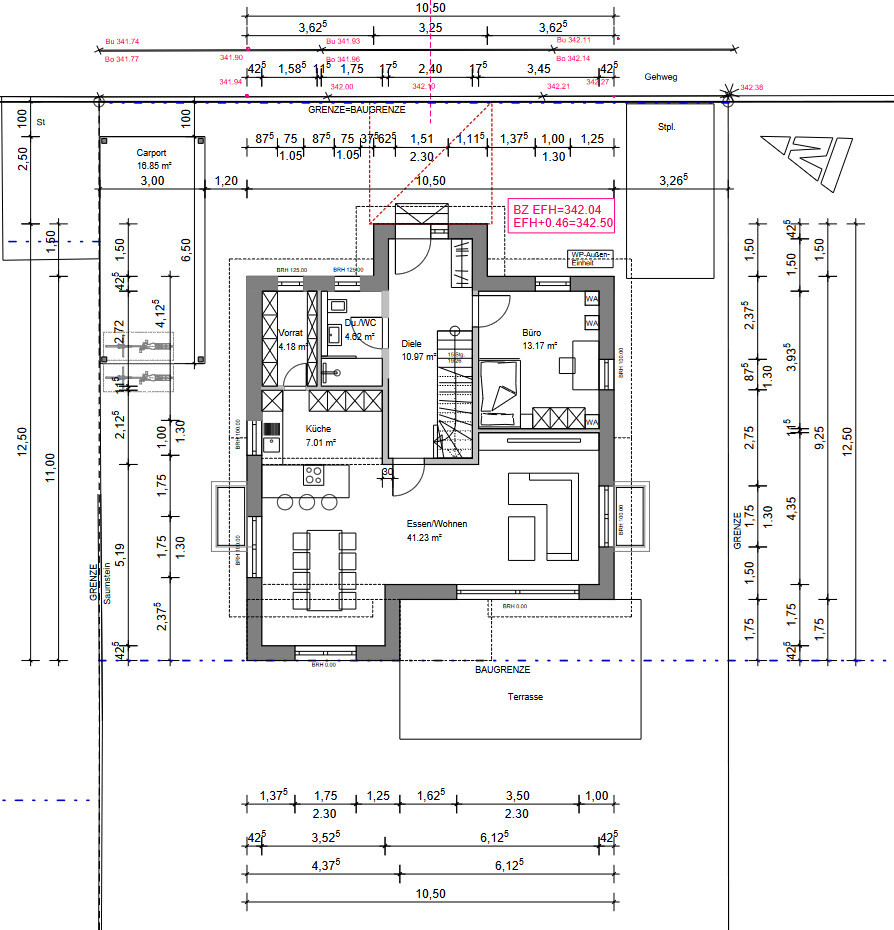
An open living/kitchen/dining area, plus a shower restroom and an office on the ground floor. The attic should have two children’s bedrooms and a master bedroom. If there is space, also a walk-in closet and a large bathroom. I also wanted the knee wall to be as high as possible.
In the current round, the attached floor plans were developed. We only want to make minor adjustments now, so I thought this would be a good time for others to take a look.
There are several proposals for a laundry chute on WhatsApp.
I would appreciate your feedback.
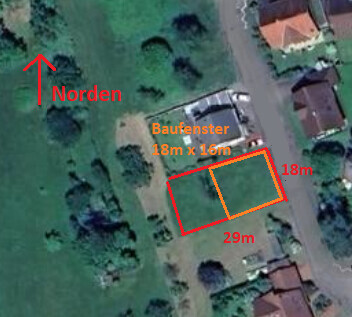
Plot:
Ground floor:
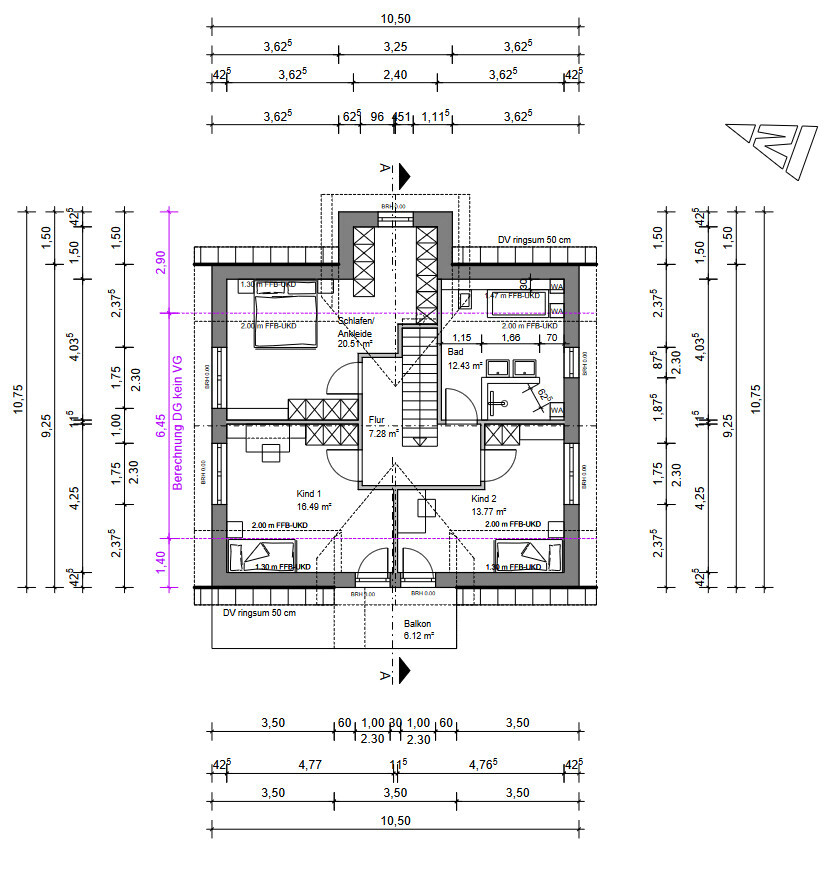
Attic:
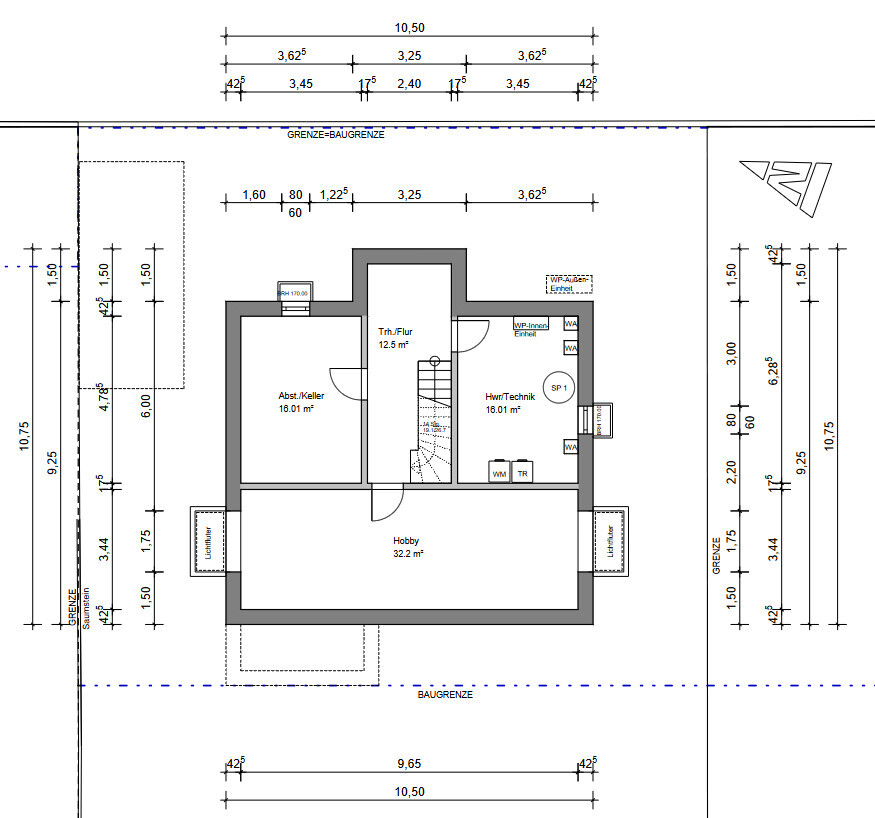
Basement:
3D views:
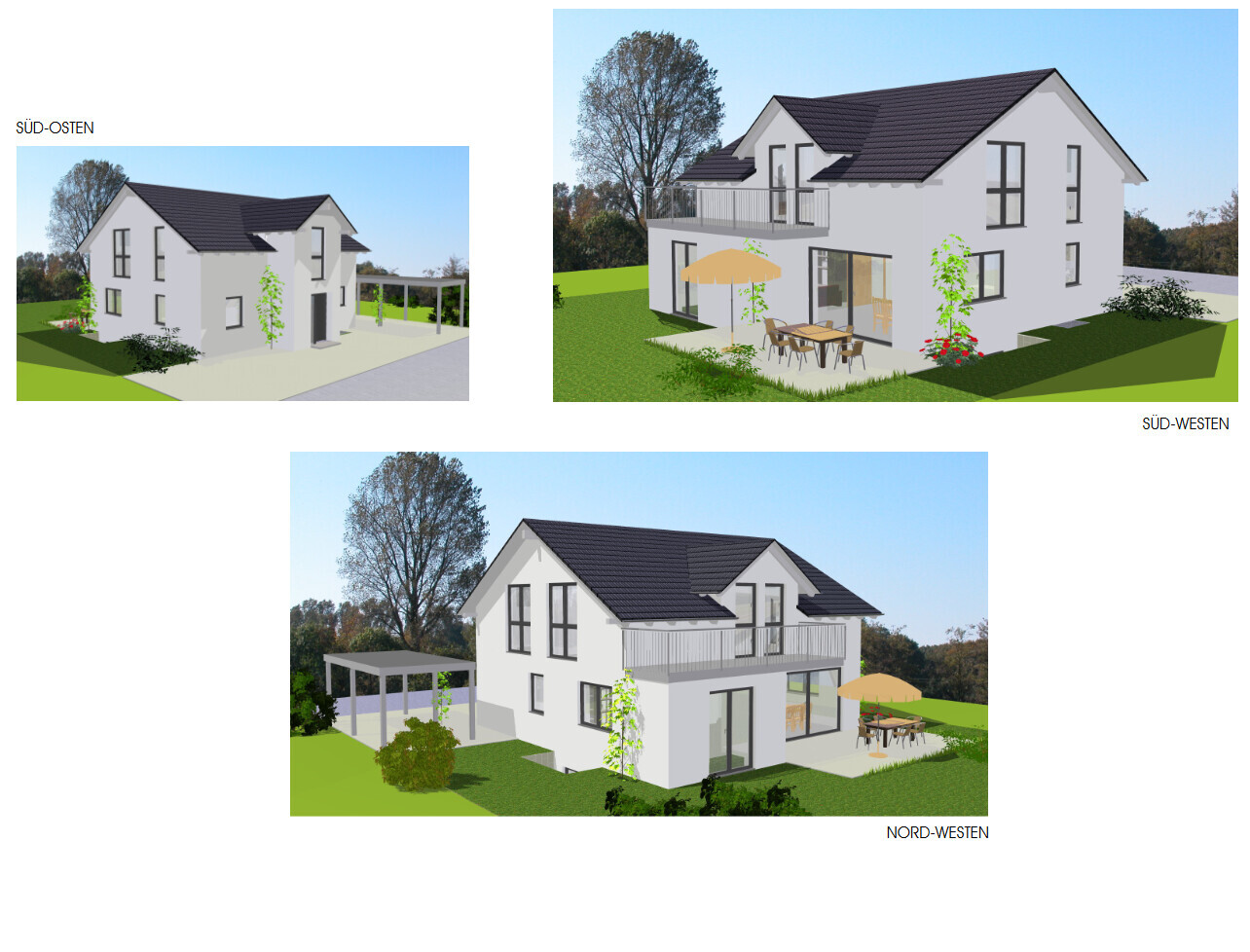
we are approaching the final stage of the floor plan design and thought someone might take a look and provide some feedback.
What we wanted:
The house should be about 150-160 sqm (1,615-1,722 sq ft). Also, the attic level (according to the old development plan, i.e. the 2/3 rule in BW) must not count as a full story.
We actually like these Nordic-style houses with a central gable and also brick cladding, although we had to give up on the brick cladding because apparently no one here does it, and if they do, it’s incredibly expensive.
The architect advised us against a central bay window facing the garden because that would place one side of the terrace almost facing north.
Otherwise, we wanted a fairly classic layout:
An open living/kitchen/dining area, plus a shower restroom and an office on the ground floor. The attic should have two children’s bedrooms and a master bedroom. If there is space, also a walk-in closet and a large bathroom. I also wanted the knee wall to be as high as possible.
In the current round, the attached floor plans were developed. We only want to make minor adjustments now, so I thought this would be a good time for others to take a look.
There are several proposals for a laundry chute on WhatsApp.
I would appreciate your feedback.
Plot:
Ground floor:
Attic:
Basement:
3D views:

Well, every design – no matter how poor – reflects the client’s wishes. So, you almost never start from scratch here. Your version of a preliminary design with days of consultation and a development phase lasting months remains, in my opinion, a utopia for the average homeowner.
Yes, that would certainly be nice, but most homeowners are lucky if they get any advice at all. 99% of designs are pulled from the bottom left drawer, with three lines and some additions stuck on, bloated without really creating an original concept. The kind of consultation with an architect we dream of is only realistic with a budget over $1 million.
Yes, that would certainly be nice, but most homeowners are lucky if they get any advice at all. 99% of designs are pulled from the bottom left drawer, with three lines and some additions stuck on, bloated without really creating an original concept. The kind of consultation with an architect we dream of is only realistic with a budget over $1 million.

K a t j a schrieb:
Well, every design – no matter how poor – includes the wishes of the original poster. So you almost never start from zero here. Of course, you never start from “zero,” but when revising a preliminary design, it is crucial to begin with a “clean slate,” free from the burden of previous unsuccessful attempts. You don’t try to rescue a collapsed soufflé, make stock from an overly salty soup, or put moldy bread into meatballs. You enter design phase 2 armed with the insights gained in phase 1 (and from financing advice) about the framework conditions, the room program, and a clear list of needs and wants separated like egg whites and yolks. After all, house planning is not a party game like lead pouring, and most prospective homeowners rely on a methodical approach due to budget constraints.
K a t j a schrieb:
Sure, that would be nice, but most homebuyers are lucky to get any advice at all. 99% of designs are pulled from the bottom drawer with a few scribbles added and bloated without forming a genuine concept. The kind of architectural consulting we dream of only realistically happens with budgets over $1 million. Most prospective homeowners cannot afford unnecessary extras; a concept-free approach (especially self-managing contracts as first-time builders) is a sure path to spiraling construction costs. About three-quarters clearly don’t need a custom design like a unique ball gown, which is why I usually work with preliminary designs for my advisees (though some come with their own designs) to find practical solutions.
K a t j a schrieb:
Your version of the preliminary design, with days of consultation and a monthly maturation phase, seems utopian to the average homebuilder in my opinion. Architectural discussions for a single-family home for a typical family (two adults, two children) between 130 and 160 sqm (1400 and 1700 sq ft) generally take no more than half a workday throughout design phase 2; larger houses or those with secondary suites take correspondingly longer. The ideal “resting period” of about six weeks is elapsed time, not working time. It is a mourning phase for letting go of excessive ideas and a reflection period to evaluate how well, among other things, the “chemistry” between the building family and the designer works. The architect acts as witness and godparent to the new home. During this resting period, an independent building advisor makes the necessary decisions, after which the process returns to the architect to develop phase 3 or the entire “Module B.” The outcome of this period and its decisions includes not only help deciding on construction methods but also alternative building proposals. Thus, the architect does not necessarily continue to refine the individual preliminary design; often their basis for further work is an alternative proposal (a production home or catalog design) which skilled, client-oriented advisors (not contractors interested in winning the contract) then adapt.
Here, I describe my approach as a construction-method-neutral consultant. I regularly mention several colleagues who focus on prefabricated or “factory-built” homes or specialize in those. Naturally, the “decision-making” element might be absent in their process; their usual procedures should be asked of them directly.
Speaking strictly in terms of house prices/construction costs excluding landscaping, most of my advisees are in the $400k range rather than the $500k group. There are millionaires too, but even they strongly dislike spending money fixing planning oversights. Therefore, the architects I recommend are selected partly based on budget adherence; “@Gerddieter warns” no fly-by-night operators are among them. After all, prospective homeowners could also search the industry directory themselves.
https://www.instagram.com/11antgmxde/
https://www.linkedin.com/company/bauen-jetzt/
11ant schrieb:
House planning is definitely not a fun party game like lead pouring, and for most prospective homeowners, a methodical approach is necessary due to budget constraints. I would like to actually ask "most prospective homeowners" to describe the methods and amount of time their chosen builder has invested in planning their house. Maybe I’m being too pessimistic, but in my experience, many homeowners create their floor plans themselves out of ignorance, and serious consultation is close to zero as long as the design is buildable.
11ant schrieb:
99% of prospective homeowners simply cannot afford unnecessary expansions, ... Yes, shrinking down with minimal furniture is also a common way future homeowners end up shortchanged. Either way, it’s an unfavorable cost-to-benefit ratio.
11ant schrieb:
The dough resting period of ideally about six weeks is a time frame, not working time. It is a mourning phase for letting go of excessive ideas and a reflection period to assess how well the “chemistry” between the building family and the planner is working. The architect acts as the witness and godparent of the home. During the resting period, the independent building consultant makes the key decisions, the results of which are then taken back to the architect to continue with design phase 3 or the entire “Module B.” The outcome of the resting period with key decisions involves not only deciding on the construction method (or guidance), but also alternative building proposals. So the architect does not necessarily further develop the individual preliminary design automatically; rather, the basis for further work is often an alternative design proposal (such as a type house or catalog design), which is then adapted by a knowledgeable and client-oriented party (not by the contractor who has a vested interest in the order). You are only describing your recommendation and method. That’s fine if you want to promote your own approach here. But if suddenly all prospective homeowners came to you, you’d have a problem. I am talking about the majority of homeowners. For them, something like this simply does not exist—at least not as a consulting service at their side. They puzzle alone inside their homes, trying to decide whether and how to proceed with the architect or general contractor.
Hi,
thanks again.
There’s no update yet from the designer; they’re probably still reviewing everything.
By the way, the plan shown originally was the third iteration, with only two days between the second and third versions, and we hadn’t discussed the second one. The first proposal came three weeks ago, so we haven’t put a lot of energy into it yet.
I’ll get back to you as soon as the designer responds.
In the meantime, I made a quick attempt to improve the upper floor to pass the waiting time. I just moved walls around in Paint, so it’s not very neat.
I think it looks better, although now I’m not sure what to do with the extra room 😀
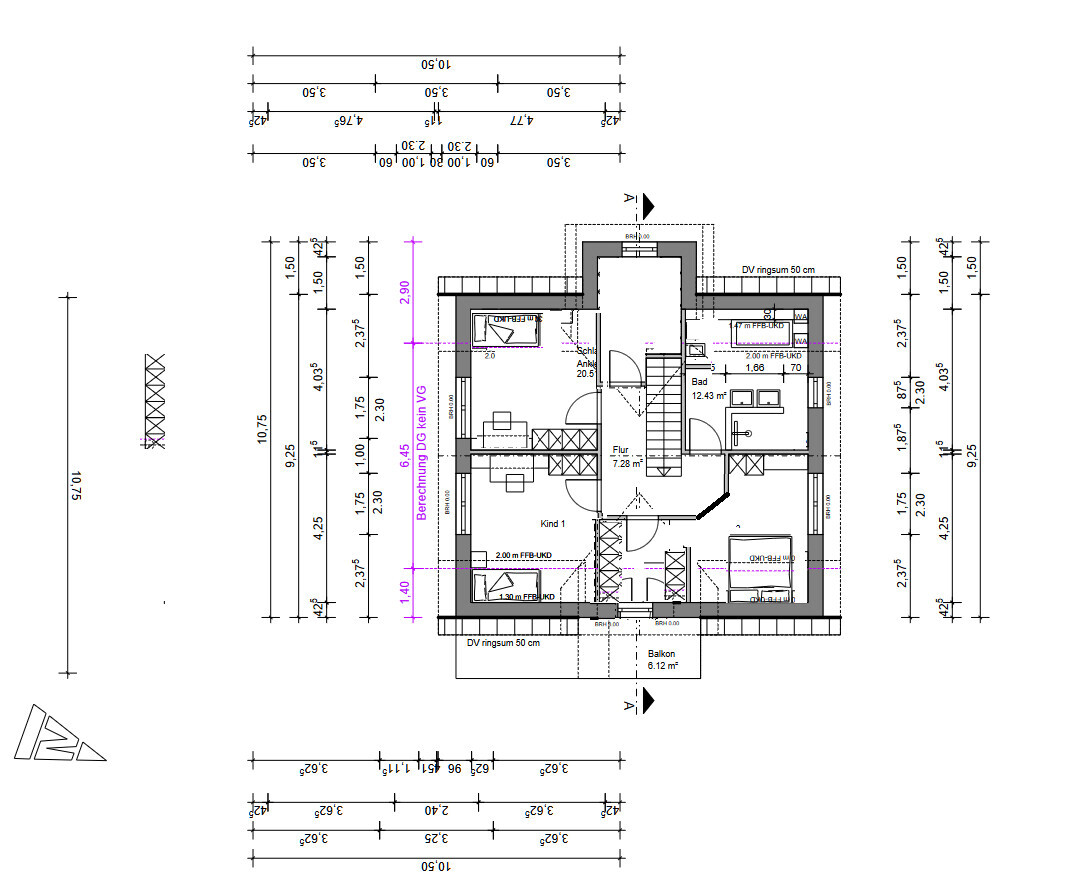
thanks again.
There’s no update yet from the designer; they’re probably still reviewing everything.
By the way, the plan shown originally was the third iteration, with only two days between the second and third versions, and we hadn’t discussed the second one. The first proposal came three weeks ago, so we haven’t put a lot of energy into it yet.
I’ll get back to you as soon as the designer responds.
In the meantime, I made a quick attempt to improve the upper floor to pass the waiting time. I just moved walls around in Paint, so it’s not very neat.
I think it looks better, although now I’m not sure what to do with the extra room 😀
Could it be that you mixed up north and south? I’m having trouble understanding that right now.
Putting the bed directly under the sloped ceiling seems questionable to me. How high is the knee wall? Of course, it depends on the bed, but a headboard is often around 1.20m (4 feet) or even 1.30m (4 feet 3 inches) high. You can also specifically look for beds without a headboard. Even when considering the 2m (6 feet 7 inches) height line, it still often causes headaches. That’s why I would either lower the ceiling area or install a board behind the bed so that the bed comes further into the room away from the wall. But then the door gets tight again, and let’s be honest, do you really want to spend your money on this makeshift solution?
Putting the bed directly under the sloped ceiling seems questionable to me. How high is the knee wall? Of course, it depends on the bed, but a headboard is often around 1.20m (4 feet) or even 1.30m (4 feet 3 inches) high. You can also specifically look for beds without a headboard. Even when considering the 2m (6 feet 7 inches) height line, it still often causes headaches. That’s why I would either lower the ceiling area or install a board behind the bed so that the bed comes further into the room away from the wall. But then the door gets tight again, and let’s be honest, do you really want to spend your money on this makeshift solution?
Yes, you are absolutely right about rotating. I rotated the plan so that the entrance would be at the bottom. My wife didn’t really like that, so I quickly rotated it back again—this time rotating only the house itself, not the entire plan.
Our bed (bought this year, one of the few pieces of furniture we’re taking with us, besides the table) is 1.10m (3 ft 7 in) high. Currently, the knee wall is planned to be 1.3m (4 ft 3 in) high. The bay window below is designed specifically to allow for a relatively high knee wall.
As I said, I was bored and waiting for the planner. I’m basically battling on three fronts now—the planner (to whom I’ve already shown with your plan that it can be done better), the internet (which advises me to approach things more freely), and my wife (who is disappointed that the house looks different from what she wants and already has no interest in comparing floor plans anymore) 😀. At least I found my version better than the planner’s last version, though yours is still better. But of course, he can also try a version with a different staircase. I also mentioned the staircase in the bay window about a week ago (mostly because of the hallway and the layout upstairs, as far as my imagination went without a design program) when I talked to him on the phone to ask how many rounds and attempts are typically made before deciding to build a house.
Our bed (bought this year, one of the few pieces of furniture we’re taking with us, besides the table) is 1.10m (3 ft 7 in) high. Currently, the knee wall is planned to be 1.3m (4 ft 3 in) high. The bay window below is designed specifically to allow for a relatively high knee wall.
As I said, I was bored and waiting for the planner. I’m basically battling on three fronts now—the planner (to whom I’ve already shown with your plan that it can be done better), the internet (which advises me to approach things more freely), and my wife (who is disappointed that the house looks different from what she wants and already has no interest in comparing floor plans anymore) 😀. At least I found my version better than the planner’s last version, though yours is still better. But of course, he can also try a version with a different staircase. I also mentioned the staircase in the bay window about a week ago (mostly because of the hallway and the layout upstairs, as far as my imagination went without a design program) when I talked to him on the phone to ask how many rounds and attempts are typically made before deciding to build a house.
Similar topics