
ᐅ Floor Plan Single-Family Home 165 sqm First Draft – Architect Dissatisfied
Created on: 27 Oct 2024 14:06
K
Kirschsaftlady
Hello everyone,
since we are not completely satisfied with the first draft from our architect and find it difficult to translate our wishes into a design ourselves, or because some things might even be incompatible, we would appreciate suggestions and tips.
Development Plan / Restrictions
Plot size: 954 sqm (10,270 sq ft)
Slope: approximately 1 m (3.3 ft) downward from the street along the entire length
Floor-space index (FSI): 0.4
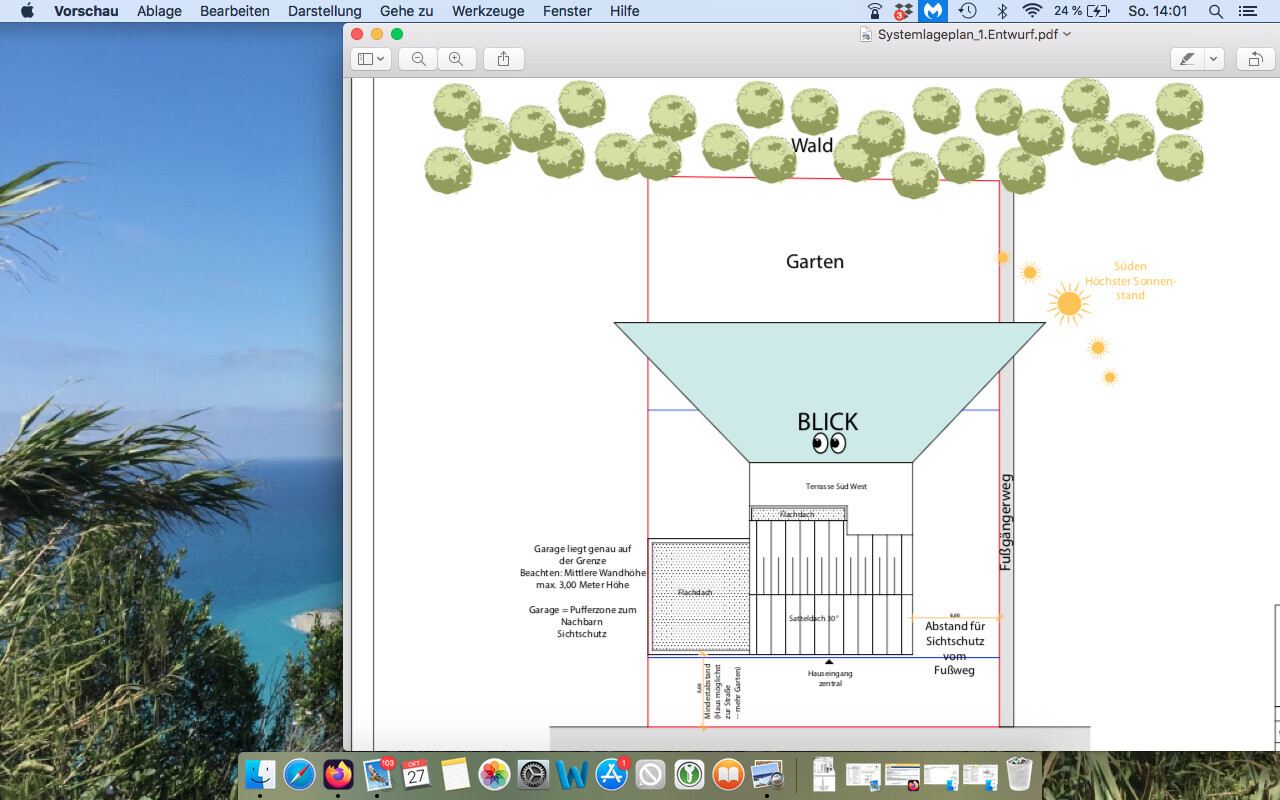
Building envelope, building line, and boundary: see architect’s plan
There is a development plan, but all exceptions we want have been approved without issues or have already been permitted for our street.
Client Requirements
Style, roof shape, building type: gable roof, single-family house, possibly with a bay window
Basement, floors: slab-on-grade, 2 full stories with a sufficiently high knee wall, small storage space under the roof
Number of occupants, age: currently 2 adults and one toddler, planning for an additional child
Space requirements on ground floor (GF) and upper floor (UF):
GF: combined utility and technical room, entrance area, cloakroom niche, guest bathroom with shower, office, open living-dining-kitchen area. Pantry, storage under the stairs
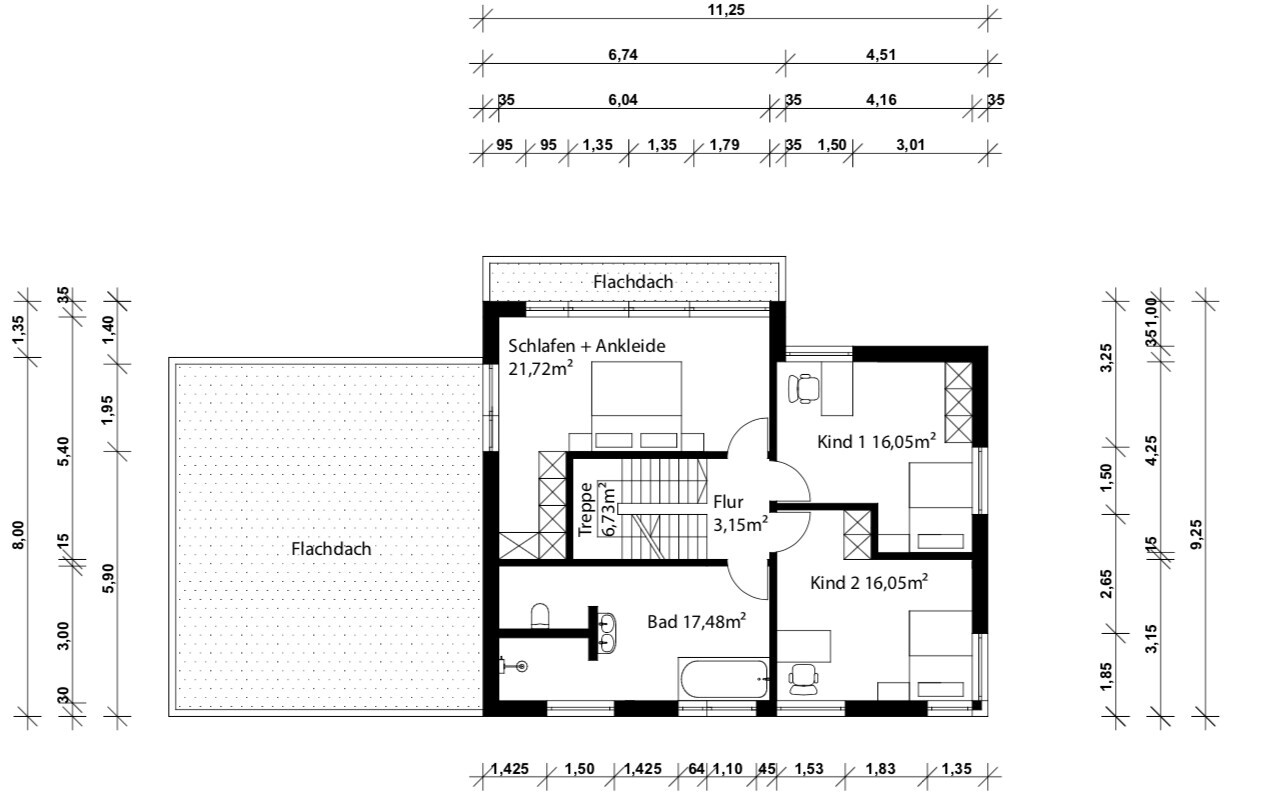
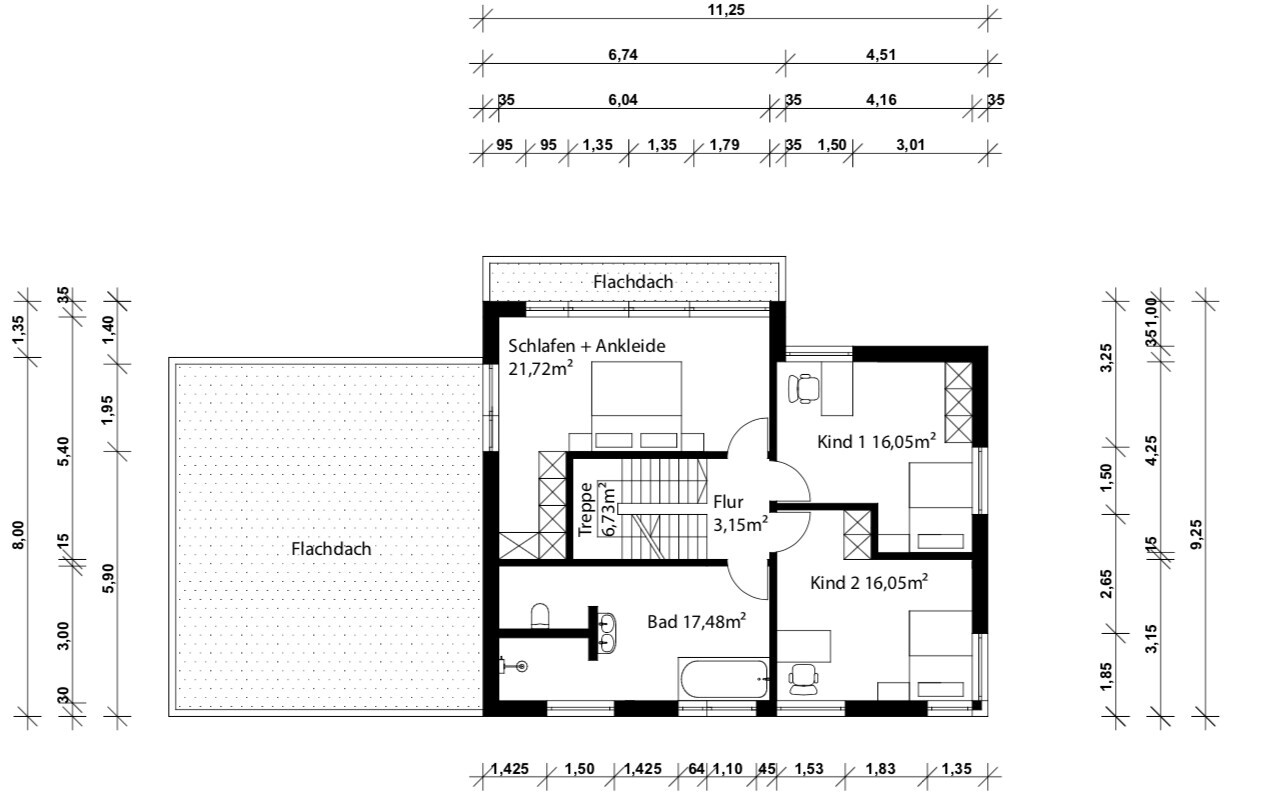
UF: 2 children’s rooms at least 15 sqm (160 sq ft) each, master bedroom with walk-in closet, family bathroom with walk-in shower and double sinks, hallway with daylight and preferably space for a chair or a small table for a sewing machine
Office: family use or home office? Home office nearly daily
Guests per year: hardly any
Open or closed layout: semi-open
Conservative or modern construction: modern
Open kitchen, cooking island: semi-open (visually screened) with attached island
Number of dining seats: 6
Fireplace: no
Music/speaker wall: no
Balcony, roof terrace: no
Garage, carport: either a double garage or a garage with carport
Additional wishes:
Stairs either straight or with a landing, not spiral
Living-dining-kitchen area should not be arranged in a single line without privacy screens, all areas with a view into the garden
Prefer an additional access from the garage/carport through the utility room
Master bedroom oriented top left on the plan, bed with a view out of a floor-to-ceiling window into the garden. Preferred access to the bedroom through the dressing room or the dressing room behind the wall behind the bed (headboard).
Prefer children’s rooms not adjoining the master bedroom wall-to-wall
I will link a plan of a kitchen we really liked in a show house
Prefer the stairs to be naturally lit
Living room at least as large as in the current plan
House Design
Designed by: architect
What do you particularly like? Why? The ground floor, except kitchen and dining area, especially the living room, is well separated and without direct view into the kitchen. The dining area feels somewhat cramped; the kitchen should be wider rather than longer, as currently the attached island looks lost.
What do you dislike? Why? Kitchen and dining area, walk-in closet cramped in a niche, bathroom too large, upper floor hallway without windows. Window areas in the master bedroom and also in the dining-kitchen area too large, cloakroom niche too small.
Price estimate according to architect/planner: none yet, a discussion about the design is still pending.
Personal budget limit for the house including fittings: excluding the plot, with all additional costs, survey, and soil report, we still have a budget of 600,000. It will be a prefabricated house, possibly painting and partial flooring done by ourselves, landscaping also mainly DIY and not immediately.
Preferred heating system: air-to-water heat pump with photovoltaic system
If you have to give up on certain details/extensions:
-can you do without: children’s room next to the master bedroom, storage and office could move upstairs if necessary, utility and technical rooms separated, second access not mandatory, pantry access directly from kitchen as well as from utility room not mandatory, bay window not essential as long as it doesn’t make the layout too open
-can’t you do without: stair shape, room layout, bedroom location, “semi-open” living-dining-kitchen area, cloakroom integrated into a niche
Why is the design the way it is?
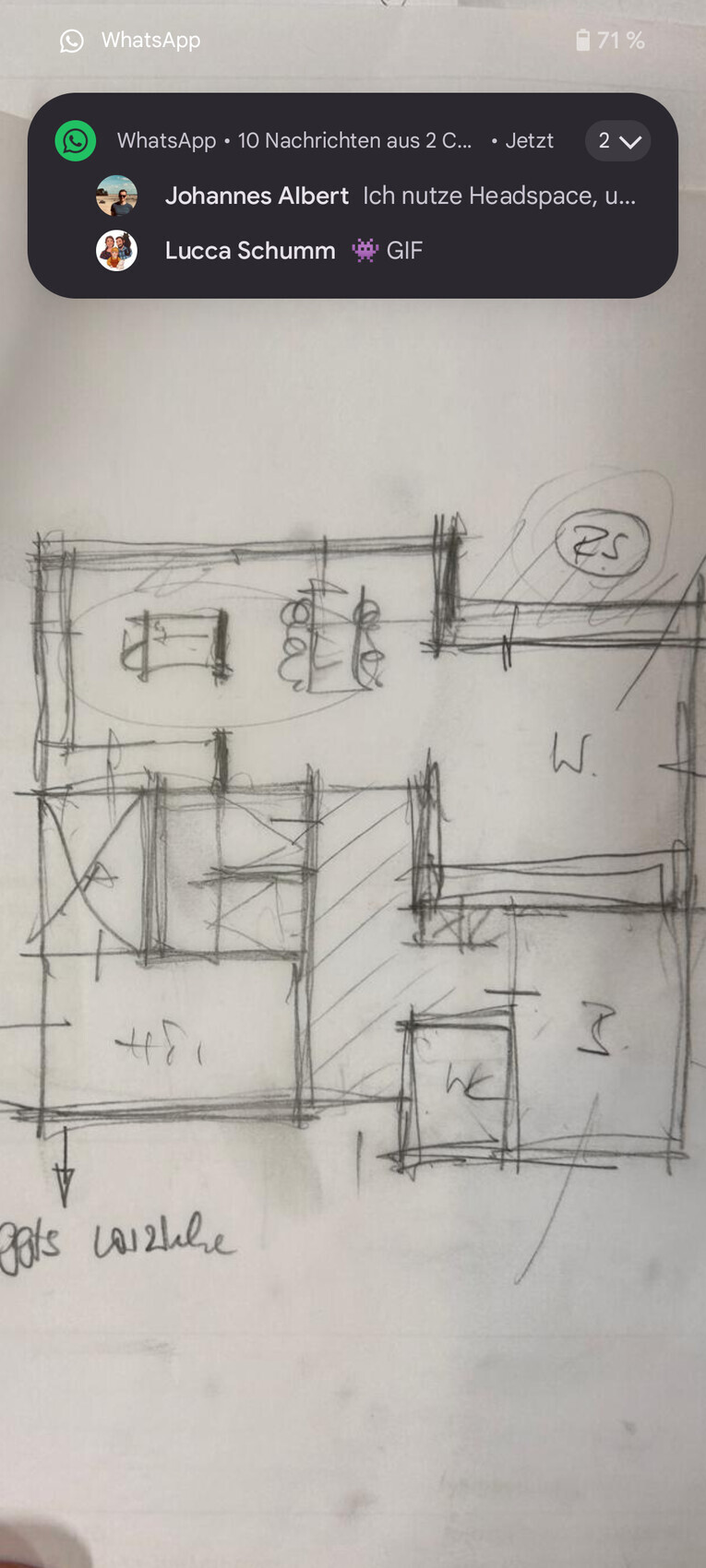
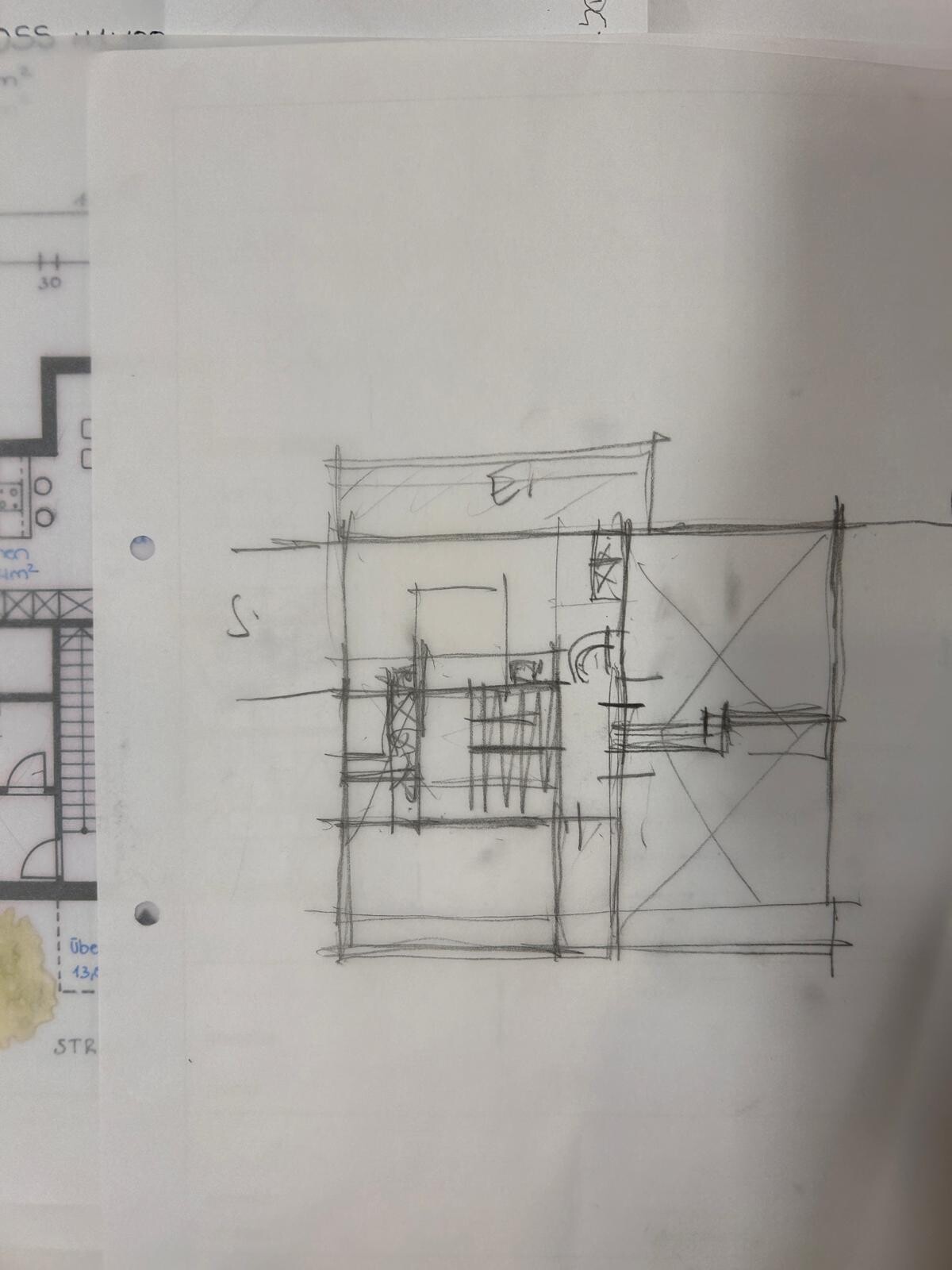
There was an on-site meeting where brainstorming on paper followed. The current draft more or less resulted from this, but it was not yet final with dimensions and sizes, so for example, the problem with the kitchen and dining area was not visible. We communicated the negative points about the upper floor on site and actually expected a new alternative afterward.
I think all relevant information is included above; I’m happy to provide more if needed.
The dining table does not have to be directly in front of the kitchen; the focus is solely on the kitchen layout itself.
Thanks in advance for all your tips!
since we are not completely satisfied with the first draft from our architect and find it difficult to translate our wishes into a design ourselves, or because some things might even be incompatible, we would appreciate suggestions and tips.
Development Plan / Restrictions
Plot size: 954 sqm (10,270 sq ft)
Slope: approximately 1 m (3.3 ft) downward from the street along the entire length
Floor-space index (FSI): 0.4
Building envelope, building line, and boundary: see architect’s plan
There is a development plan, but all exceptions we want have been approved without issues or have already been permitted for our street.
Client Requirements
Style, roof shape, building type: gable roof, single-family house, possibly with a bay window
Basement, floors: slab-on-grade, 2 full stories with a sufficiently high knee wall, small storage space under the roof
Number of occupants, age: currently 2 adults and one toddler, planning for an additional child
Space requirements on ground floor (GF) and upper floor (UF):
GF: combined utility and technical room, entrance area, cloakroom niche, guest bathroom with shower, office, open living-dining-kitchen area. Pantry, storage under the stairs
UF: 2 children’s rooms at least 15 sqm (160 sq ft) each, master bedroom with walk-in closet, family bathroom with walk-in shower and double sinks, hallway with daylight and preferably space for a chair or a small table for a sewing machine
Office: family use or home office? Home office nearly daily
Guests per year: hardly any
Open or closed layout: semi-open
Conservative or modern construction: modern
Open kitchen, cooking island: semi-open (visually screened) with attached island
Number of dining seats: 6
Fireplace: no
Music/speaker wall: no
Balcony, roof terrace: no
Garage, carport: either a double garage or a garage with carport
Additional wishes:
Stairs either straight or with a landing, not spiral
Living-dining-kitchen area should not be arranged in a single line without privacy screens, all areas with a view into the garden
Prefer an additional access from the garage/carport through the utility room
Master bedroom oriented top left on the plan, bed with a view out of a floor-to-ceiling window into the garden. Preferred access to the bedroom through the dressing room or the dressing room behind the wall behind the bed (headboard).
Prefer children’s rooms not adjoining the master bedroom wall-to-wall
I will link a plan of a kitchen we really liked in a show house
Prefer the stairs to be naturally lit
Living room at least as large as in the current plan
House Design
Designed by: architect
What do you particularly like? Why? The ground floor, except kitchen and dining area, especially the living room, is well separated and without direct view into the kitchen. The dining area feels somewhat cramped; the kitchen should be wider rather than longer, as currently the attached island looks lost.
What do you dislike? Why? Kitchen and dining area, walk-in closet cramped in a niche, bathroom too large, upper floor hallway without windows. Window areas in the master bedroom and also in the dining-kitchen area too large, cloakroom niche too small.
Price estimate according to architect/planner: none yet, a discussion about the design is still pending.
Personal budget limit for the house including fittings: excluding the plot, with all additional costs, survey, and soil report, we still have a budget of 600,000. It will be a prefabricated house, possibly painting and partial flooring done by ourselves, landscaping also mainly DIY and not immediately.
Preferred heating system: air-to-water heat pump with photovoltaic system
If you have to give up on certain details/extensions:
-can you do without: children’s room next to the master bedroom, storage and office could move upstairs if necessary, utility and technical rooms separated, second access not mandatory, pantry access directly from kitchen as well as from utility room not mandatory, bay window not essential as long as it doesn’t make the layout too open
-can’t you do without: stair shape, room layout, bedroom location, “semi-open” living-dining-kitchen area, cloakroom integrated into a niche
Why is the design the way it is?
There was an on-site meeting where brainstorming on paper followed. The current draft more or less resulted from this, but it was not yet final with dimensions and sizes, so for example, the problem with the kitchen and dining area was not visible. We communicated the negative points about the upper floor on site and actually expected a new alternative afterward.
I think all relevant information is included above; I’m happy to provide more if needed.
The dining table does not have to be directly in front of the kitchen; the focus is solely on the kitchen layout itself.
Thanks in advance for all your tips!
K
Kirschsaftlady28 Oct 2024 17:22Sorry, I forgot to mention the on-site meeting. It was an appointment at the plot followed by a discussion of the requirements and initial hand-drawn sketches, as well as trying out different entrances, room layouts, and so on.
Professionally, I hope the architect is indeed an architect.
We will take a look at your instructions.
Professionally, I hope the architect is indeed an architect.
We will take a look at your instructions.

Kirschsaftlady schrieb:
Attached is the part of the contract that covers the scope of services. Could you please share the results from section 3.1?
Kirschsaftlady schrieb:
As mentioned, this is not based on HOAI (official fee structure for architects and engineers in Germany); the contract is signed, so I’m afraid there won’t be much room to change anything. We will definitely see what comes out of the meeting, and we still hope that the architect had his student assistant, who will also join the meeting, do some sketches so that something more useful might come of it. If the contract excerpt is at least somewhat representative, it leaves enough leeway downward to consider the services as properly fulfilled. Therefore, no further adjustments are necessary because any request for revisions would be pointless.
Kirschsaftlady schrieb:
Professionally, I hope the architect is indeed an architect. I read “student assistant” as a hint towards a professor or private lecturer (these usually attract warnings like from @Gerddieter due to a lack of practical construction experience and outdated pricing irrelevant for the current decade), and yes, a student assistant would explain the planning quality. What did you pay for this service?
By the way, referring to HOAI would also have meant clearly defined service content. “Smart” to avoid that reference.
Kirschsaftlady schrieb:
We will have a look at your guidelines. Under “Services” it also says “The path to personal advice.” The “setting the course: steering towards implementation” could be a basis to further develop the current so-called planning. That would roughly align with the objective of point 3.3.
https://www.instagram.com/11antgmxde/
https://www.linkedin.com/company/bauen-jetzt/
The question is whether and to what extent you can still opt out or involve another designer. Is this a freelance architect or what is known here as a draftsman employed by a construction company?
We had a general contractor (GC) who handled everything themselves, and if their planning software couldn’t manage it, then it just didn’t work; it was complete chaos, unstructured, unreliable, and mostly rather dismissive in communication. In the end, it did lead to a nice house, but with a lot of unnecessary hassles.
For you, this doesn’t have to be a complete disaster, but you should assess the situation clearly and not let yourselves be lulled into complacency. If necessary, it may cost some money, but that’s less serious than living with shoddy work for decades.
I honestly believe that you could start here with a solid foundation and, using the knowledge available from this forum, get to a good plan that the house-building company can then implement. In fact, we created hundreds of detailed drawings ourselves to prevent as much as possible the mess from our GC.
The real question is whether the "designs" presented here should actually be accepted as such as named in the contract, since it’s obvious even to laypeople that there are fundamental planning errors, which don’t require an expert witness to uncover. He or another architect would know that if you address it clearly.
There are usually problems during construction – don’t be discouraged, even when it sometimes feels like there’s no way forward.
Your requirements haven’t disappeared, and maybe you will loosen the strict shape requirements of the staircase; it should be a beautiful staircase, but there are many possibilities to achieve that. We also wanted a straight staircase and had all kinds of strict requirements, but fortunately eventually freed ourselves from those rigid demands.
Maybe a serious conversation with the managing director or similar person could help to achieve a change of "architect."
We had a general contractor (GC) who handled everything themselves, and if their planning software couldn’t manage it, then it just didn’t work; it was complete chaos, unstructured, unreliable, and mostly rather dismissive in communication. In the end, it did lead to a nice house, but with a lot of unnecessary hassles.
For you, this doesn’t have to be a complete disaster, but you should assess the situation clearly and not let yourselves be lulled into complacency. If necessary, it may cost some money, but that’s less serious than living with shoddy work for decades.
I honestly believe that you could start here with a solid foundation and, using the knowledge available from this forum, get to a good plan that the house-building company can then implement. In fact, we created hundreds of detailed drawings ourselves to prevent as much as possible the mess from our GC.
The real question is whether the "designs" presented here should actually be accepted as such as named in the contract, since it’s obvious even to laypeople that there are fundamental planning errors, which don’t require an expert witness to uncover. He or another architect would know that if you address it clearly.
There are usually problems during construction – don’t be discouraged, even when it sometimes feels like there’s no way forward.
Your requirements haven’t disappeared, and maybe you will loosen the strict shape requirements of the staircase; it should be a beautiful staircase, but there are many possibilities to achieve that. We also wanted a straight staircase and had all kinds of strict requirements, but fortunately eventually freed ourselves from those rigid demands.
Maybe a serious conversation with the managing director or similar person could help to achieve a change of "architect."
H
hanghaus202328 Oct 2024 19:43Kirschsaftlady schrieb:
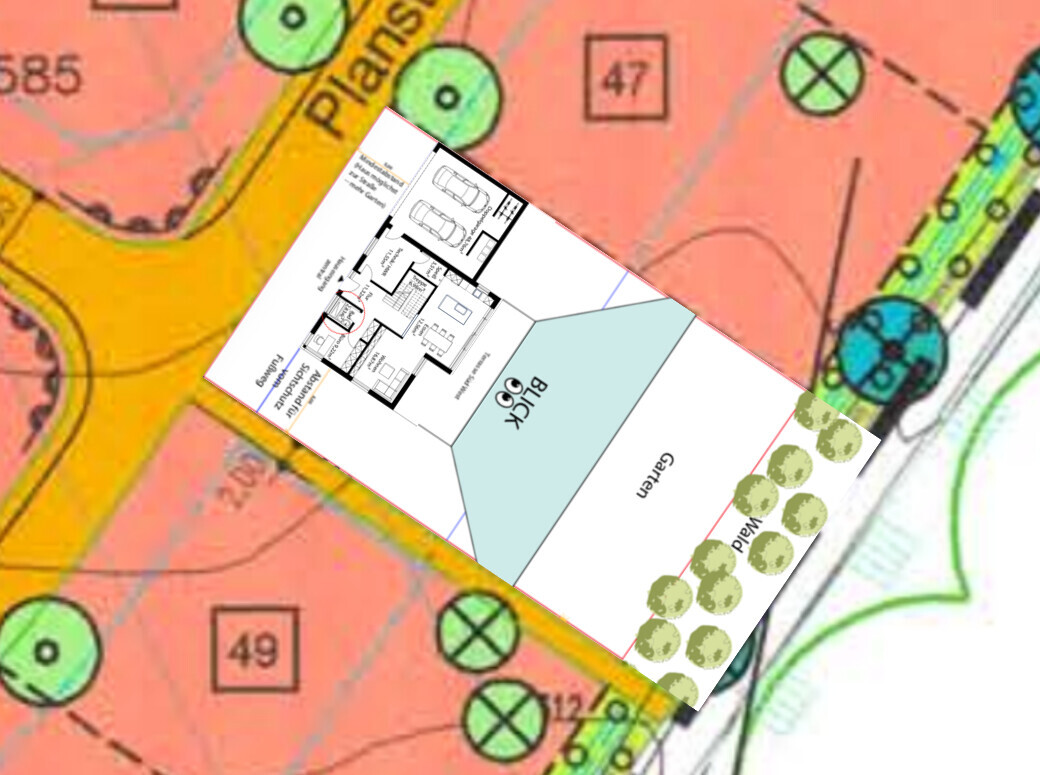
Slope: approximately 1 meter (3.3 feet) descending along the entire length from the street sideThat already means at least 1 meter (3.3 feet) within the building area, which corresponds to about a 10% gradient. I don’t see anything planned by the architect regarding this. Are there any reference elevations?
H
hanghaus202328 Oct 2024 20:11A bit more clarity. The slope is approximately 7%.
I suspect the architect may have let the intern do the planning here.
Do houses 47 and 49 already exist?
I suspect the architect may have let the intern do the planning here.
Do houses 47 and 49 already exist?
K
Kirschsaftlady28 Oct 2024 20:40I can’t answer the question about the reference height, I don’t fully understand it. And how do you arrive at the 7%?
By the way, the architect is neither a professor nor a PD (private lecturer); he only hired a student as an office manager. The architect is the CEO. They usually do custom designs but are somehow connected to a prefab house company. However, you don’t have to buy from them.
I don’t think we can get out of this without paying the full price (around 6000). At least we’re still trying to negotiate; maybe something can be salvaged or a new design created.
Drawing the plans ourselves is difficult for us; we tried all weekend but aren’t that skilled, and with a toddler, there simply isn’t enough time or concentration.
Regarding the stairs, one general question: what are the price differences based on? We find those narrow steps on spiral or curved stairs really uncomfortable to walk on; it’s not primarily about appearance.
Attached are the hand-drawn sketches from March 1st.
By the way, the architect is neither a professor nor a PD (private lecturer); he only hired a student as an office manager. The architect is the CEO. They usually do custom designs but are somehow connected to a prefab house company. However, you don’t have to buy from them.
I don’t think we can get out of this without paying the full price (around 6000). At least we’re still trying to negotiate; maybe something can be salvaged or a new design created.
Drawing the plans ourselves is difficult for us; we tried all weekend but aren’t that skilled, and with a toddler, there simply isn’t enough time or concentration.
Regarding the stairs, one general question: what are the price differences based on? We find those narrow steps on spiral or curved stairs really uncomfortable to walk on; it’s not primarily about appearance.
Attached are the hand-drawn sketches from March 1st.
Similar topics