
ᐅ Single-family house floor plan, 1 full story, utilities and natural lighting
Created on: 22 Jul 2024 08:21
K
klabauter8614
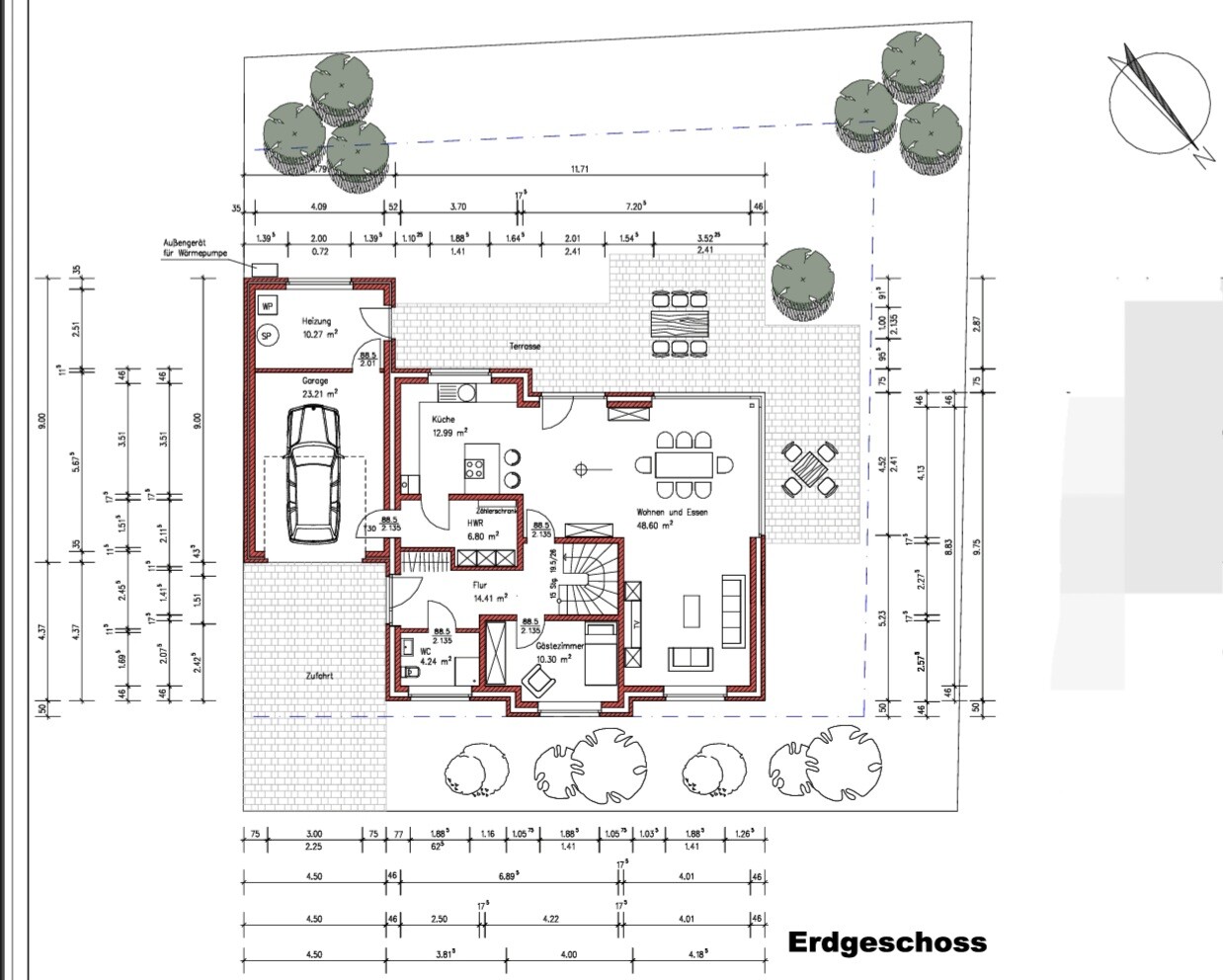
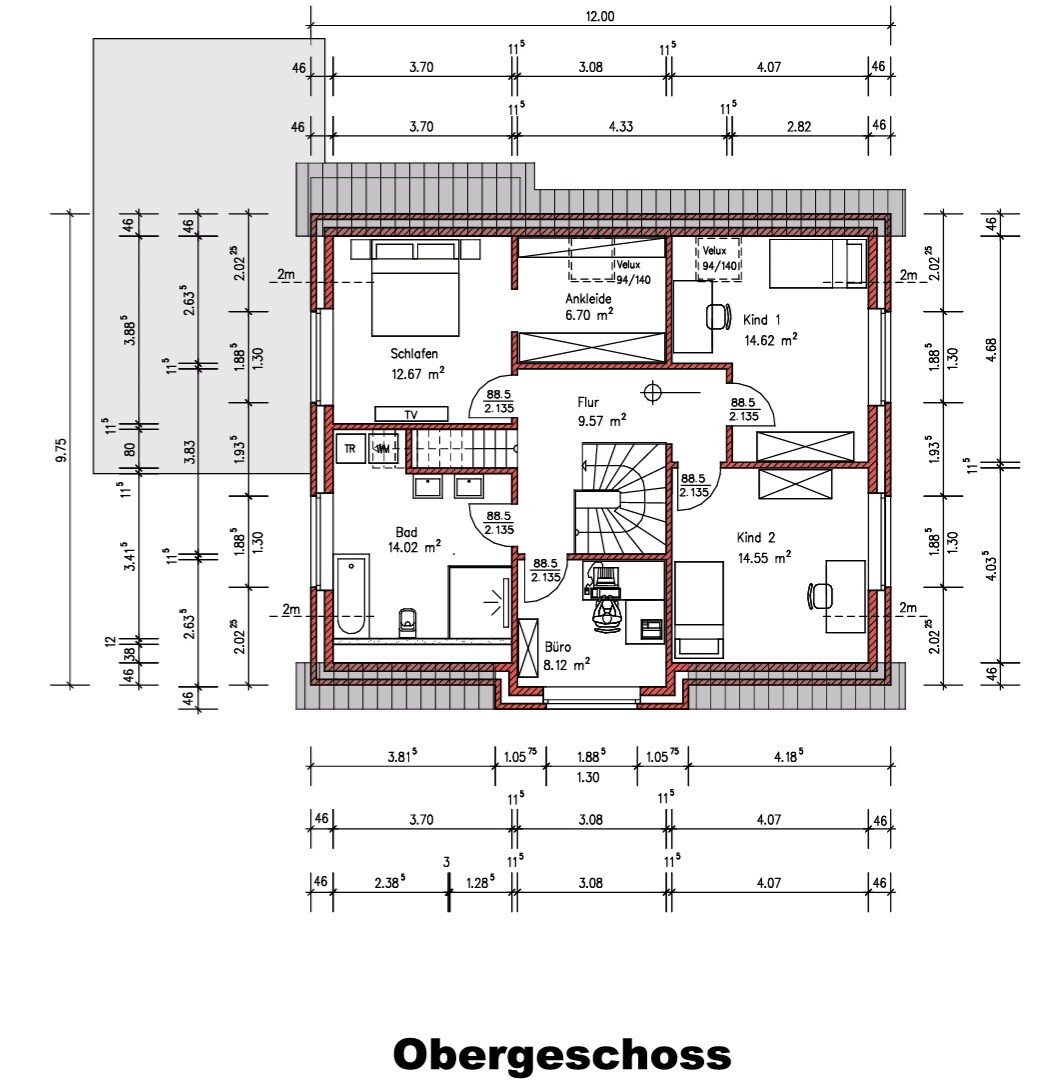
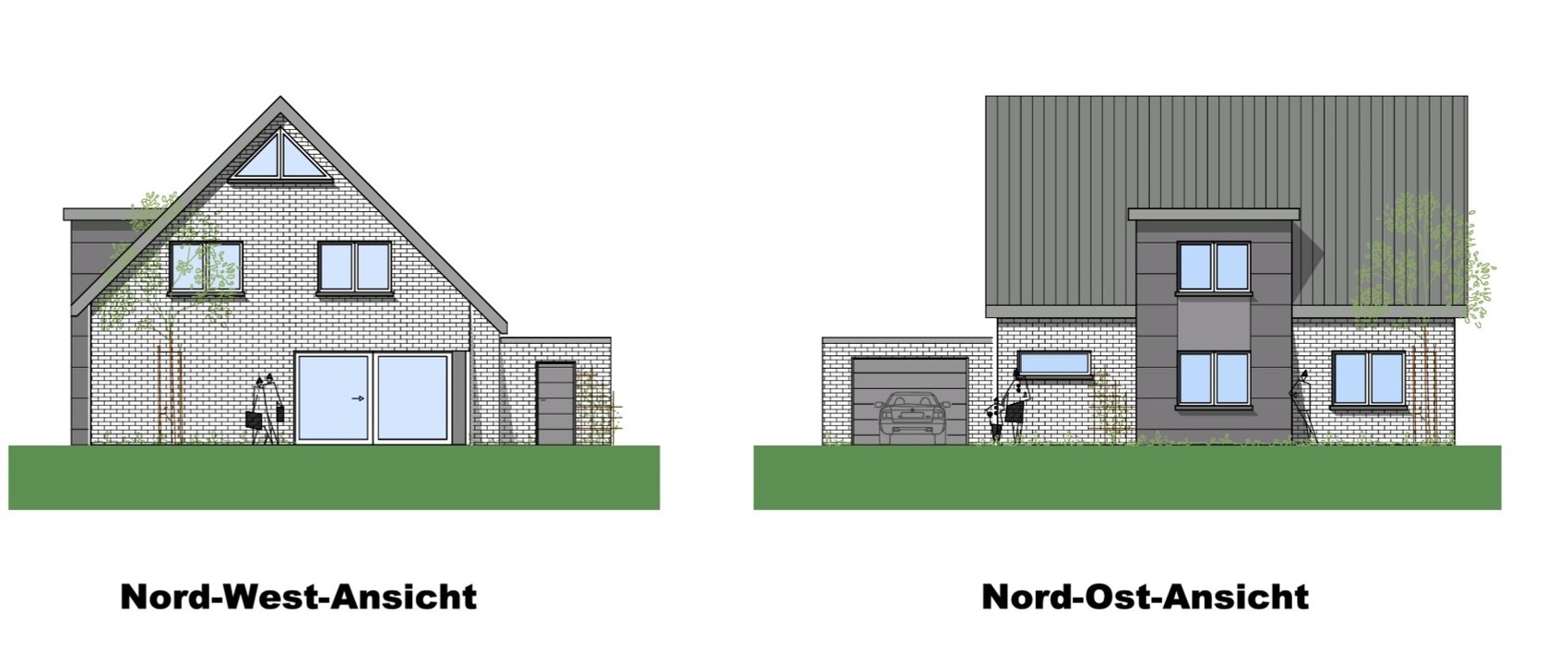
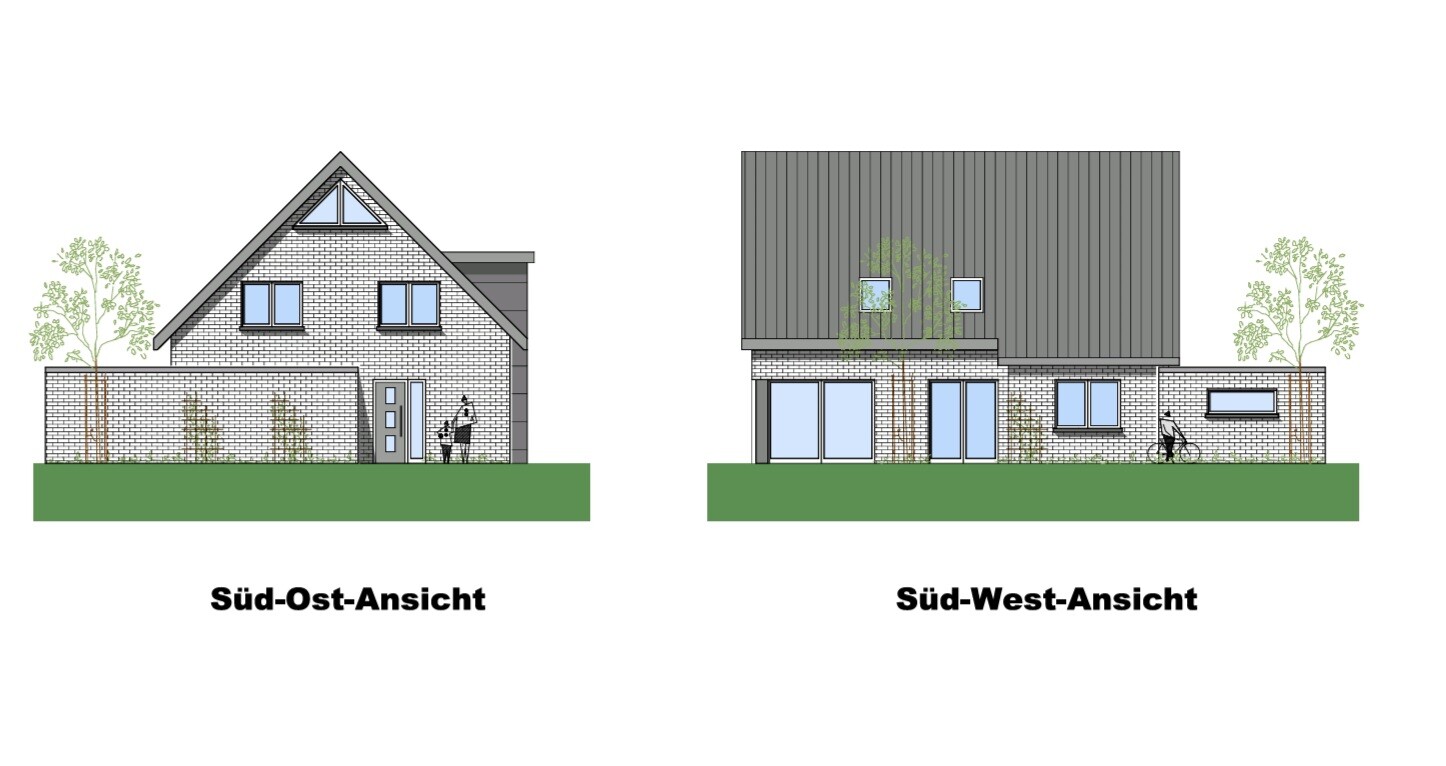
Hello, I would like to gather feedback on the floor plan in order to finalize the design. We don’t have sections or elevations yet, but all other drawings are attached (house shown schematically on the site plan). Thanks.
Development Plan / Restrictions
Plot size: 473m² (5,089 ft²)
Slope: no
Site coverage ratio: 0.4
Floor area ratio
Building envelope, building line and boundary
Edge development
Number of parking spaces: maximum 2 without garage
Number of floors: 1 full floor
Roof type: gable roof
Architectural style
Orientation: Roof facing NNE - SSW
Maximum heights / limits: eave height 4.2m (13.8 ft), ridge height 9.5m (31.2 ft)
Further requirements: only renewable energy sources, infiltration trench for stormwater
Client Requirements
Style, roof type, building type
Basement, floors: no basement (groundwater level at 1m (3.3 ft) depth), 1 full floor
Number of occupants, ages: 4, aged 40-40-7-2 years
Space needs on ground floor and upper floor: Guesst room on the ground floor, office upstairs
Office use: family use or home office? Home office
Number of guest stays per year: 2 nights per week by one parent (also for coming years), parents-in-law stay several weeks annually
Open or closed layout
Traditional or modern construction
Open kitchen, kitchen island: semi-open (sliding door), kitchen island
Number of fixed dining seats: 6 fixed, expandable
Fireplace: no
Music/speaker wall: no
Balcony, roof terrace: no
Garage, carport: garage
Utility garden, greenhouse: herb garden
Additional wishes/special points/daily routine, including reasons for preferences or exclusions
House Design
Planner: synergy between architect and client, now 4th draft
What do you particularly like? Why? Guest room and WC + shower, similar existing layout already working (although a bed is drawn, it is actually a sofa bed), office on the north side, guest room size more than sufficient, wardrobe by the entrance, living room bright, washing machine + dryer upstairs.
What don’t you like? Why?
- Utility room is half unusable due to wardrobe protrusion (which is actually sensible) so it is too small. Attic storage needs to be moved from the garage into the thermal envelope inside the utility room, indoor unit could stay there. The mechanical ventilation system would also need to be installed in the utility room. Possible solution: enlarge kitchen to the rear and expand utility room accordingly. This would make the house larger though. No other solutions discussed yet.
- Stairs are too steep; architect now proposes a rise/run of 17.2cm/26cm (6.8"/10.2"), which may be borderline regarding comfortable step depth.
- Daylight in children’s rooms might be low due to west-facing windows and roughly 12.5% window-to-floor area ratio; simulation might be needed. Skylights wouldn’t significantly improve this; only a dormer and smaller gable windows would.
- As drawn, the kitchen island layout is not suitable for me; passage from utility room too narrow, should be moved to the opposite side, with sink and window to the left.
- Air conditioning would still be needed in the bedroom and children’s rooms, but with the current window and furniture arrangement this looks impractical.
- Shower upstairs located under sloped ceiling, not necessary but a minor point.
- Skylight in guest WC is not at head height, should be slightly higher, also a minor detail.
- Bathroom door upstairs should open outwards.
- Storage under the stairs is still missing.
- Partition wall in garage is unnecessary.
Cost estimate from architect/planner: unknown
Personal price limit for house including fixtures: 650,000
Preferred heating technology: air-source heat pump
If you must give up something, which features or extensions
- Can you give up: walk-in closet
- Cannot give up: office, guest room
Why is the design like it is now?
Own design developed based on space requirements plus architect’s counter proposal
What do you consider especially good or problematic?
Main issues to resolve are utility room + technical space and daylight.
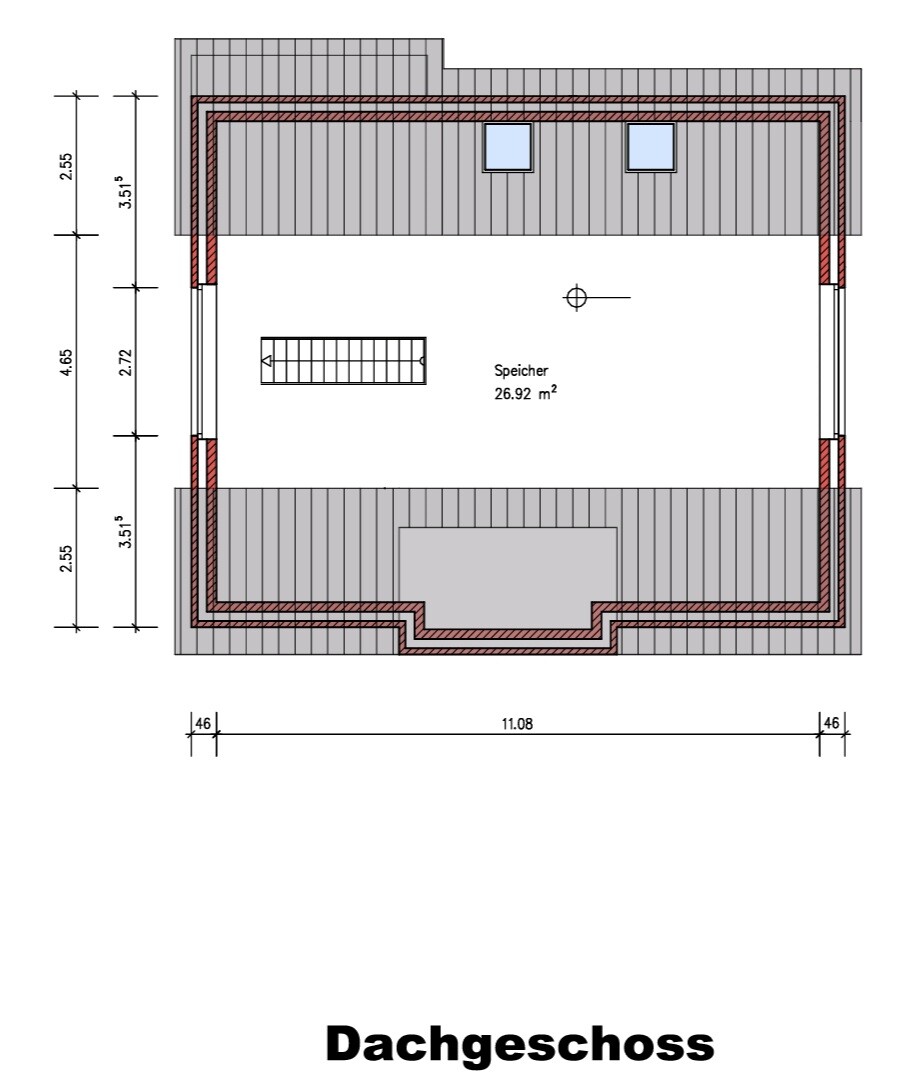
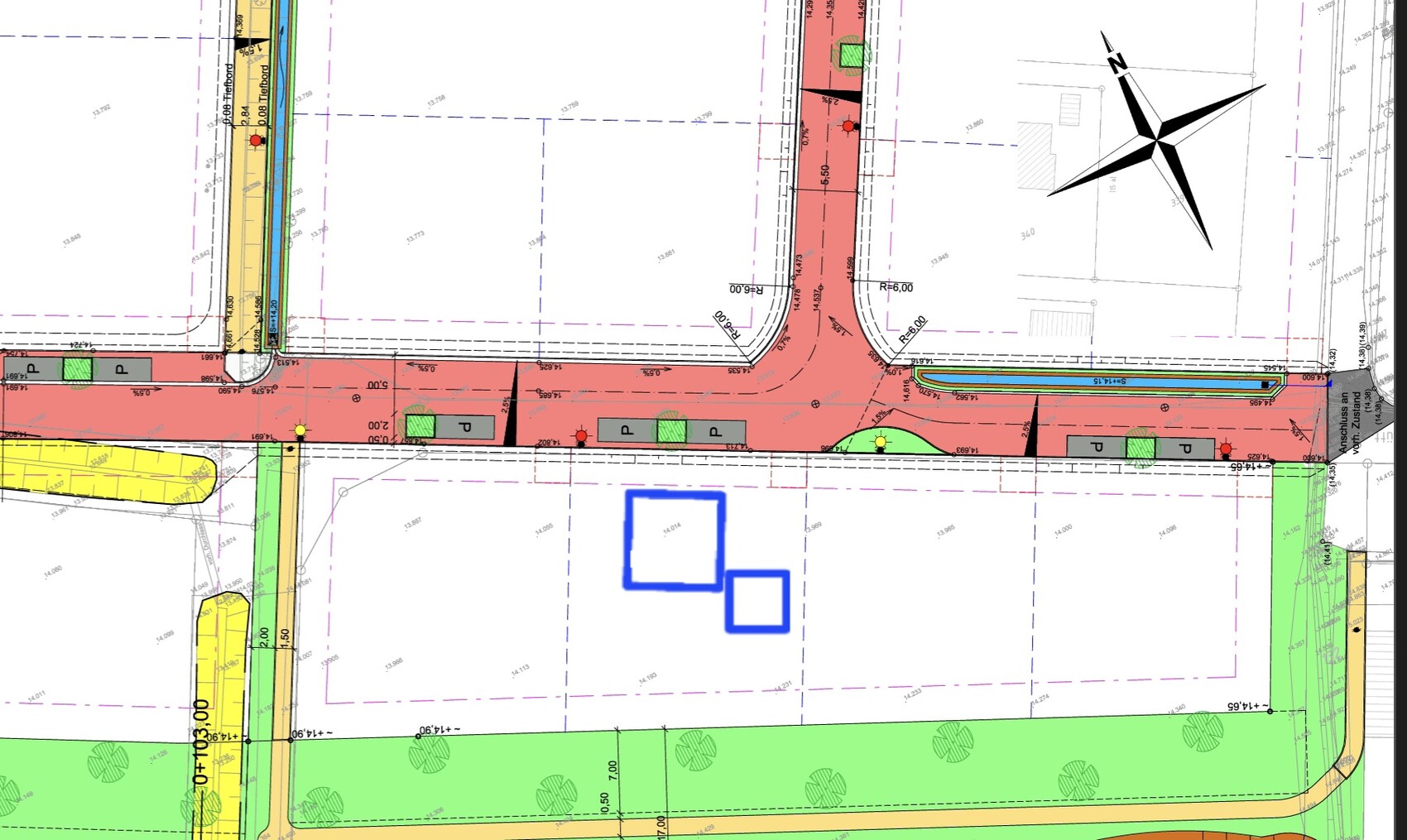
Development Plan / Restrictions
Plot size: 473m² (5,089 ft²)
Slope: no
Site coverage ratio: 0.4
Floor area ratio
Building envelope, building line and boundary
Edge development
Number of parking spaces: maximum 2 without garage
Number of floors: 1 full floor
Roof type: gable roof
Architectural style
Orientation: Roof facing NNE - SSW
Maximum heights / limits: eave height 4.2m (13.8 ft), ridge height 9.5m (31.2 ft)
Further requirements: only renewable energy sources, infiltration trench for stormwater
Client Requirements
Style, roof type, building type
Basement, floors: no basement (groundwater level at 1m (3.3 ft) depth), 1 full floor
Number of occupants, ages: 4, aged 40-40-7-2 years
Space needs on ground floor and upper floor: Guesst room on the ground floor, office upstairs
Office use: family use or home office? Home office
Number of guest stays per year: 2 nights per week by one parent (also for coming years), parents-in-law stay several weeks annually
Open or closed layout
Traditional or modern construction
Open kitchen, kitchen island: semi-open (sliding door), kitchen island
Number of fixed dining seats: 6 fixed, expandable
Fireplace: no
Music/speaker wall: no
Balcony, roof terrace: no
Garage, carport: garage
Utility garden, greenhouse: herb garden
Additional wishes/special points/daily routine, including reasons for preferences or exclusions
House Design
Planner: synergy between architect and client, now 4th draft
What do you particularly like? Why? Guest room and WC + shower, similar existing layout already working (although a bed is drawn, it is actually a sofa bed), office on the north side, guest room size more than sufficient, wardrobe by the entrance, living room bright, washing machine + dryer upstairs.
What don’t you like? Why?
- Utility room is half unusable due to wardrobe protrusion (which is actually sensible) so it is too small. Attic storage needs to be moved from the garage into the thermal envelope inside the utility room, indoor unit could stay there. The mechanical ventilation system would also need to be installed in the utility room. Possible solution: enlarge kitchen to the rear and expand utility room accordingly. This would make the house larger though. No other solutions discussed yet.
- Stairs are too steep; architect now proposes a rise/run of 17.2cm/26cm (6.8"/10.2"), which may be borderline regarding comfortable step depth.
- Daylight in children’s rooms might be low due to west-facing windows and roughly 12.5% window-to-floor area ratio; simulation might be needed. Skylights wouldn’t significantly improve this; only a dormer and smaller gable windows would.
- As drawn, the kitchen island layout is not suitable for me; passage from utility room too narrow, should be moved to the opposite side, with sink and window to the left.
- Air conditioning would still be needed in the bedroom and children’s rooms, but with the current window and furniture arrangement this looks impractical.
- Shower upstairs located under sloped ceiling, not necessary but a minor point.
- Skylight in guest WC is not at head height, should be slightly higher, also a minor detail.
- Bathroom door upstairs should open outwards.
- Storage under the stairs is still missing.
- Partition wall in garage is unnecessary.
Cost estimate from architect/planner: unknown
Personal price limit for house including fixtures: 650,000
Preferred heating technology: air-source heat pump
If you must give up something, which features or extensions
- Can you give up: walk-in closet
- Cannot give up: office, guest room
Why is the design like it is now?
Own design developed based on space requirements plus architect’s counter proposal
What do you consider especially good or problematic?
Main issues to resolve are utility room + technical space and daylight.
K
klabauter861422 Sep 2024 14:13Well, if we change architects, the new architect would have to have the plans redrawn anyway, which might be redundant, but it probably belongs to the quality anyway. At the same time, we still need to complete the thermal insulation certificate and, later, the structural calculations, but these will be outsourced.

klabauter8614 schrieb:
Well, if you change architects, the new architect would have to create new drawings anyway, which seems redundant, but I guess that’s part of quality. No, why? – When I wanted to become an architect, that used to be the case. Today we are 40 years ahead; the architect passes the files on to the successor via the client. This is called CAD. I still know and can do it analog, but a modern architect does not work in a technical museum. The problem remains: the file formats cannot encode the reasoning behind the planning decisions that led to the design being "this way and not another." That’s why they cannot just be passed on along with the data carrier.
klabauter8614 schrieb:
At the same time, we still have to do the thermal insulation certificate and later the structural engineering, but we will outsource both. A structural engineer is from a different field of study, and the thermal insulation certificate is prepared faster by an energy consultant as a specialist. Therefore, it is standard practice to outsource both. However, the thermal insulation certificate has nothing to do with the heating circuit design – so having separate intellectual origins for these is not an issue.
klabauter8614 schrieb:
At the same time, we still have to do the thermal insulation certificate and later the structural engineering, Since both depend on details and especially vary with the construction method, it becomes evident that you should have made key decisions before the permit planning stage (actually even before the design planning). Ideally, these decisions are made during the “dough resting period.” Now you "have" to live with a masonry building (which is not necessarily bad, but it should have been an insight, not a consequence of self-imposed restrictions). In addition, you chose a wall construction where it would have been better to have the shell builder involved from the start.
I have been explaining this for seven and a half years, but some clients still start off in third gear (missing punctuation emoticons).
https://www.instagram.com/11antgmxde/
https://www.linkedin.com/company/bauen-jetzt/
K
klabauter861423 Sep 2024 16:25The construction method is quite clear—almost exclusively masonry is used here. Nearly all planners stated they could design with wood, but that is extremely rare and only with full awareness of the consequences for the build. This was initially left open, but there were so many reasons against wood (from resale value to the choice of construction companies) that it was quickly ruled out. We also defined the wall construction quite early on; this is a new development area where construction is already ongoing. We were able to exchange information with the builders and directly see their methods, and most use facing bricks with cavity walls, with only occasional render and ETICS (External Thermal Insulation Composite Systems). Additionally, almost 40% of all single-family houses in the town come from this planner, and the local companies know them well. We have no concerns there, except that most homeowners have the general contractors complete all work themselves after design phase 4.
I also have the CAD files; they contain nothing beyond the plan. So, it will require a significant amount of intellectual effort for another planner to get up to speed, that is clear. For me, high-quality work takes priority over carelessly simplistic plans, and I predict that the level of detail and communication will not improve much in the next phase.
I also have the CAD files; they contain nothing beyond the plan. So, it will require a significant amount of intellectual effort for another planner to get up to speed, that is clear. For me, high-quality work takes priority over carelessly simplistic plans, and I predict that the level of detail and communication will not improve much in the next phase.
klabauter8614 schrieb:
The construction method is quite clear; almost exclusively masonry is used here. [...], but there were so many reasons against timber (from resale value to the choice of builders) that it was quickly ruled out.That sounds like "peace to prejudices and half-knowledge," followed by uninhibited empirical experience for the specific project. klabauter8614 schrieb:
Almost all planners said they could design with wood, but very rarely and only with an awareness of the implications for the build. This was also openly left undecided at the beginning.Whatever those "implications for the build" are supposed to mean. I have seen many things with architects, but not (i.e., "almost never") a true “ambidextrous skill.” Most are masonry planners, while timber specialists tend to be ideologically timber-focused. And then there is the current generation of "digital natives," for whom (not only) the wall composition is a black box. They plan blindly trusting what the U-value calculator outputs, often using unrealistic dimensions, and generally show weak site management ("after the building permit stamp, a flood of issues" or rather responsibility delegated mostly to the main contractor). Most do not accompany the project from the initial idea through to moving in; they leave that claim to colleagues from one and a half generations ago. One can and should keep the construction method open only up to precisely the borderline between design phase 2 and design phase 3, not a jot before or after. Design phase 3 should start with a clearly defined construction method – but as a result, not from neglecting any option.
klabauter8614 schrieb:
We also defined the wall structure fairly early, since this is a new development where construction is already underway. We were able to communicate with the builders and see directly how each builds, and most use a facing brick veneer with a cavity wall system, only occasionally plaster and ETICS (external thermal insulation composite system). Also, almost 40% of all single-family houses in the town come from this planner, and the firms here know them well.Principal and specific (also regarding measurements) wall structure are two different matters, and with the builder firms familiar with the planner, I see you practically locked in now. Which is a pity, even though one of them might be a good professional. klabauter8614 schrieb:
We’re not worried about that, just that most homeowners have the general contractor do everything themselves after design phase 4.If the homeowner goes to the general contractor without supervision, that is naturally the case, and I have little hope for positive exceptions. The "necessary architectural services" are complete with the building permit stamp; only (usually today, with structural calculations and energy demand calculations to be submitted later) formwork and reinforcement plans follow. The installers will have drywall panels and silicone guns already strapped around their belts; much will be pushed onto the tradespeople. "Design phase 5 without design phase 5" – no, I really don’t know whether to laugh or pray about that. But I assume you are an adult. Either way, whether you come to me or which colleague, none of us has instant availability just because some come in only when it’s critical. If a surveyor had to arrive with flashing lights, it’s already too late for any planning. klabauter8614 schrieb:
I also have the CAD files; there’s nothing more in them besides the plan. So it will require a lot of intellectual familiarization time for another planner, that’s clear.That didn’t sound like it until now. klabauter8614 schrieb:
For me, high-quality work takes precedence over sloppy, oversimplified plans, and I predict that the level of detail and communication won’t improve much in the next phase.What exactly do you mean by sloppy, oversimplified plans? – I see detailed plans from your planner with sloppiness far in front of the comma: the layout and division of responsibilities between the utility and technical rooms remained dangerously vague on a conceptual rather than drawing level. In the end, your heart might suddenly jump into your throat because there’s no space next to the ventilation unit (but this usually only becomes apparent during the subcontractor’s work planning). Take a look around ... klabauter8614 schrieb:
almost 40% of all single-family houses in the town come from this planner... to see how improvised their technical rooms have been.https://www.instagram.com/11antgmxde/
https://www.linkedin.com/company/bauen-jetzt/
K
klabauter861427 Sep 2024 09:39Cost estimate from the architect currently including a 25% contingency buffer:
| 100 | Building plot | - € |
| 200 | Site preparation and infrastructure | €4,000.00 |
| 300 | Building structure and construction | €454,000.00 |
| 400 | Building – Technical installations | €103,000.00 |
| 500 | External works / landscaping | €25,000.00 |
| 600 | Furnishings and artworks | €20,000.00 |
| 700 | Additional construction costs | €26,000.00 |
| Total | €632,000.00 |
K
klabauter861430 Sep 2024 22:0011ant schrieb:
It won’t be good for anything; you won’t notice the difference. The intermediate purlins would also shift inward here by 10 cm (4 inches), and the entire roof structure mechanics would be altered.That’s what I thought as well, until the explanation came that the permitted eaves height of 4.20 m (13 ft 9 in) would be exceeded with a higher ceiling in the upper floor. So, with my basic geometry, the eaves height depends on the ridge height and roof pitch, not on the ceiling above the eaves. Did I misunderstand the definition of eaves height?Similar topics