
ᐅ Floor Plan Design: Single-Family Home with Basement; 560 sqm Plot
Created on: 10 Mar 2024 13:26
J
JKHandler
Hello everyone,
so far we have only been silent readers in this forum and have already gained some interesting ideas this way. We are currently in the planning phase of a single-family house with a basement and have tried to put our wishes into a floor plan. Maybe some of you would like to give feedback on our first drafts. Important: The design is not yet complete. For example, light wells are still missing, the bathroom on the upper floor is not yet fully planned, outdoor areas, etc. Therefore, some changes are still possible, and we would welcome constructive criticism.
Development Plan / Restrictions
Homeowners’ Requirements
House Design
What do we particularly like? Why?
What do we not like? Why?
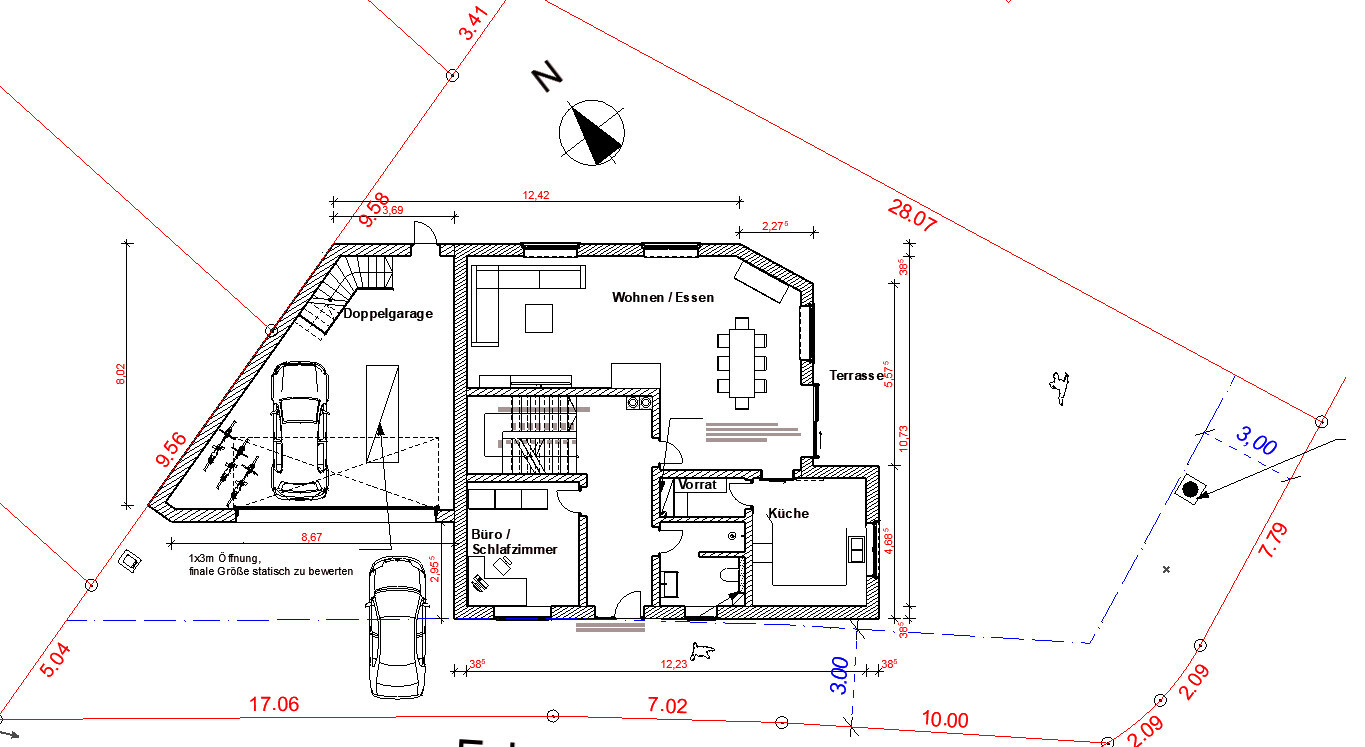
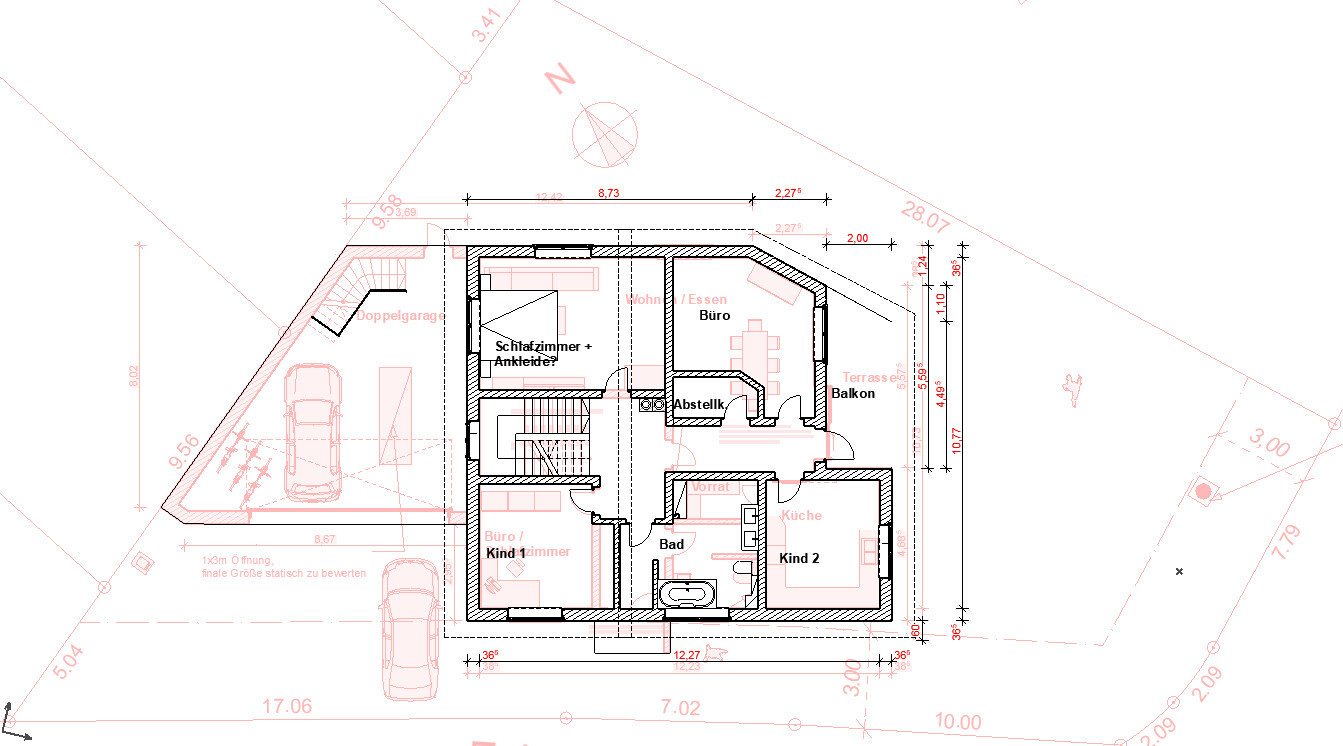
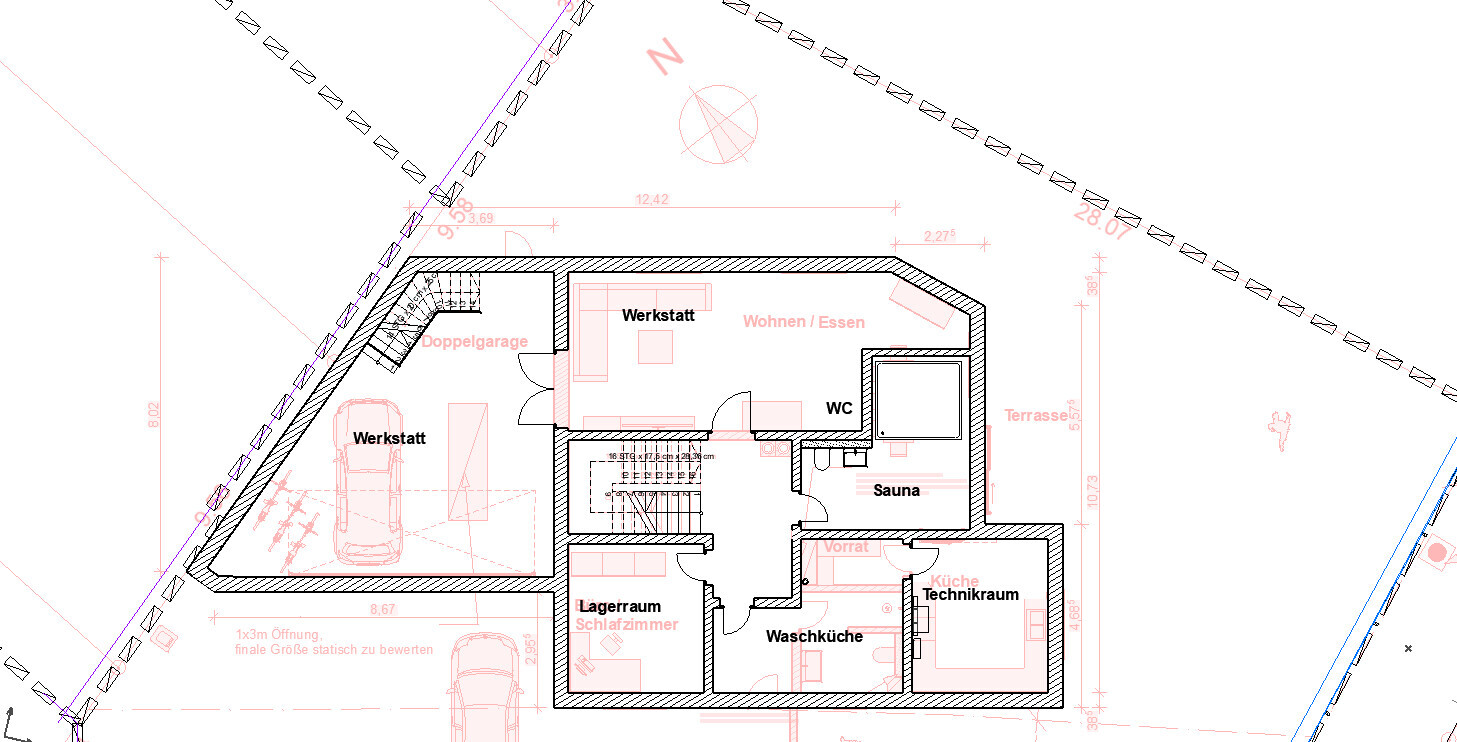
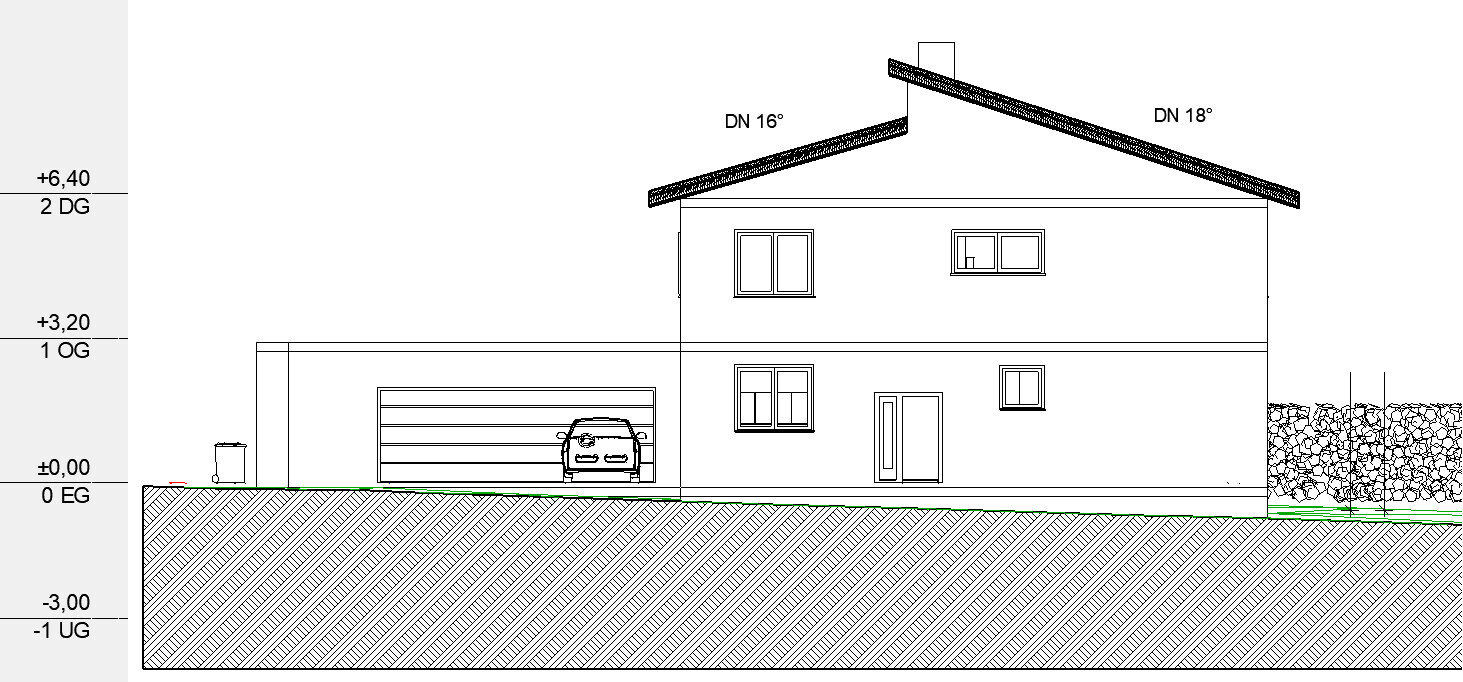
so far we have only been silent readers in this forum and have already gained some interesting ideas this way. We are currently in the planning phase of a single-family house with a basement and have tried to put our wishes into a floor plan. Maybe some of you would like to give feedback on our first drafts. Important: The design is not yet complete. For example, light wells are still missing, the bathroom on the upper floor is not yet fully planned, outdoor areas, etc. Therefore, some changes are still possible, and we would welcome constructive criticism.
Development Plan / Restrictions
- Size of the plot: 560m² (about 6,000 sq ft)
- Slope: slight, approx. 1m (3 ft) drop across the entire width of the plot
- Site occupancy index: 0.35
- Floor area ratio: 0.6
- Building envelope, building line and boundary: present
- Edge development: possible with garage
- Number of parking spaces: at least 2 required
- Number of floors: max. 2 full stories
- Roof type: no direct specification, except slope direction for shed roofs
- Architectural style: modern
- Orientation: no restrictions
- Maximum heights / limits: 7.5m (25 ft) eaves height, 10m (33 ft) ridge height
- Other requirements: should be considered, can be provided upon request/questions
Homeowners’ Requirements
- Architectural style, roof type, building type: staggered shed roof, preferably optimal orientation for photovoltaics or gabled roof
- Basement, floors: basement + 2 full stories
- Number of occupants, ages: 2 adults, 2 children (one toddler), possibly 3rd child
- Space requirements
- Ground floor, generally planned so two people can live comfortably on this level
- Hallway: as small as possible, as large as necessary. If no entrance area, space for shoes/coat storage etc. (cloakroom) must be provided
- Office: one of the parents works very often from home
- Large living room with separate kitchen and pantry
- Bathroom with shower and toilet
- Upper floor:
- Hallway: as small as possible, as large as necessary
- Office for home office in case both parents work from home
- Two children’s rooms
- Parents’ bedroom
- Larger (main) bathroom
- Small storage room for laundry, cleaning supplies, vacuum cleaner, etc.
- Office: family use or home office? Yes
- Guest stays per year: 5-8 overnight stays annually
- Open or closed layout: closed kitchen, open living-dining area, separate hallway
- Conservative or modern construction: modern
- Number of dining seats: at least 4, up to 12 for larger celebrations such as New Year’s Eve or Christmas
- Fireplace: yes
- Music/surround sound wall: surround system would be good and partially available
- Balcony, roof terrace: yes
- Garage, carport: yes, double garage
- Utility garden, greenhouse: no
House Design
- Designed by: architect in cooperation with us
What do we particularly like? Why?
- Laundry chute in both bathrooms
- Very wide and spacious staircase
- Wet rooms stacked above each other
- Nice large living room
- Kitchen with direct pantry and garden view
- Basement prepared for a possible sauna
- Large workshop
- Balcony on the upper floor
- Underground garage
What do we not like? Why?
- Garden is too small, but this is largely due to the plot, the required number of parking spaces, and building envelope restrictions and cannot really be changed
- Windows in the kitchen and second child’s room: windows facing the street were omitted for better furniture arrangement inside. Also, the view of the neighboring house is not to our liking. Unfortunately, the downside is that the exterior appearance of the house suffers from this. What do you think?
- We originally wanted direct access from the garage into the house on the ground floor. This could not be properly realized due to space constraints (staircase too small). That is why the staircase in the garage leads to the basement.
JKHandler schrieb:
From a furnishing perspective, that would work, but unfortunately the chimney would no longer be close to the living room. I also can’t immediately see a way to position it near the ridge in the upper area. It’s also near the ridge there. Or where exactly is the ridge? Where are the eaves?
But you’re right, if you could just change quite a bit spontaneously, then you wouldn’t need an architect.
Because the upper floor also needs attention. I’ve already mentioned that some areas are planned very large, unnecessarily large. A bedroom can also be 3 meters (10 feet) deep; it doesn’t need to be 4.37 meters (14 feet 4 inches). The utility room is even more necessary upstairs. On the ground floor, a broom can be stored in a kitchen cabinet if necessary. That’s just the disadvantage of having a basement: nothing is readily accessible.

JKHandler schrieb:
We just took a look at how to integrate a storage room into the ground floor, but no matter how we shift the walls, at first glance we don’t see a practical solution here. Does the floor plan need to be completely reconsidered then? [...]
The initial assumption is that if you now try to add a storage room on the ground floor, the entire floor plan no longer works (or hopefully someone here has a brilliant idea). Would it make sense to evaluate it from this perspective? Trying to squeeze an extra room into a "finished" floor plan almost never works. The first attempt usually results in an awkward corner that multiplies every time you try to fix it, like cell division (or at least as "ten little soldiers" backwards). The proper sequence (notably in the preliminary design phase!) is: 1. Define the spatial program, 2. refine it, 3. distribute it across the floors, then 4. develop the upper floor layout, and 5. derive the ground floor layout from that. Intervening at step 5 causes a massive mess, and trying to reverse steps 4-3-2-1 breaks everything again. Making changes even in step 6 (when everything down to the ground floor has already been transferred from the preliminary design to the final design) causes an even bigger disruption.
Whether a floor plan "clucks like a chicken" or only flutters instead of flying when it suddenly can’t work properly anymore, I don’t know. The evaluation still makes sense, but then instead of the product called "Building Approval Check," we should use the smaller sibling, the "Mini Floor Plan Check." Both can be used separately or combined like multi-stage rockets. Some architects offer similar services, but usually at a higher cost. If you come to me, one of my colleagues, or another architect besides your current one, you can also get a "second opinion."
How have you been working with your current architect, given that such an essential element as a whole (albeit "small") room only became apparent as missing so late in the process? – You shouldn’t realize on your way from Munich to Sylt in Hannover that one of the children isn’t sitting in the car. It all costs time and money to keep going in circles with the architect. This is where it backfires that some younger architects adapt too much to clients and skip the "preliminary design" phase. This then continues down the line into the cost planning as well [quote ...uhmm... Sonneborn].
https://www.instagram.com/11antgmxde/
https://www.linkedin.com/company/bauen-jetzt/

J
JKHandler9 Sep 2024 17:24ypg schrieb:
[ATTACH alt="IMG_1266.jpeg"]87601[/ATTACH]
Here it is close to the ridge as well. But where exactly is the ridge? Where are the eaves?
You are right, though—if you could just change a lot spontaneously, then you wouldn’t need an architect.
Because you also have to consider the upper floor. I’ve already mentioned that some areas are planned much too large, unnecessarily large. A bedroom can also be 3 meters (10 feet) deep; it doesn’t need to be 4.37 meters (14 feet 4 inches). A storage room upstairs is even more necessary. On the ground floor, a broom can also be stored in a kitchen cabinet if needed. The disadvantage of a basement is not having things readily accessible. The entrance is on the eaves side. The ridge and roof are indicated in the top view here; an asymmetric gable roof or a staggered shed roof could be realized. Personally, we wouldn’t miss a storage room upstairs that much—a built-in closet would work there as well. But a storage room on the ground floor is definitely something missing when simulating everyday situations. I think we have to discuss this with the architect. In theory, the building structure should still allow for a storage room at the expense of the office, right? What do you recommend as storage room sizes (or minimum dimensions regarding furniture usability)?
11ant schrieb:
Forcing an additional room into an already “finished” floor plan almost never works. The first attempt usually leads to an unsatisfactory corner which, with every attempt to smooth it out, multiplies like cell division (or at least like “ten little soldiers” backwards). The procedure (notably in the preliminary design phase!) is: 1. establish the space program, 2. qualify it, and 3. allocate it across the floors, then 4. specifically divide up the upper floor, and 5. derive the ground floor from that. Intervening at step 5 causes a massive collision of elements; steps 4-3-2-1 collapse backwards. Even changing at step 6 (when everything down to the ground floor has already been transferred from preliminary to detailed design) causes an even louder crash.
I don’t know whether a floor plan “squeaks” like a chicken when it suddenly flutters instead of flies, but the analogy makes sense. We should consider using the smaller sibling “The Small Floor Plan Check” instead of the product “The Build-Ready Check.” Both can be used individually but also combined like rocket stages. Some architects offer something similar, but effectively more expensive. If you go to me or one of my colleagues (or another architect different from the current one), you can also get a “second opinion.”
How did you proceed with the current architect when such an essential aspect like an entire (even if “small”) room was noticed so late? You shouldn’t realize from Munich to Sylt that one of the children is not in the car only once you reach Hannover. That costs time and money going in circles with the architect. This is the downside when some younger architects adapt too much to the client and skip the “preliminary design” stage. It then continues similarly during cost planning [Quote ...uhm... Sonneborn]. Unfortunately, private messaging is not possible—are there alternatives?
K a t j a schrieb:
What ceiling height are you aiming for? Somewhere around 2.90 meters (9 feet 6 inches)? That could feel a bit strange in small rooms. The clear room height would be approximately 2.78 meters (9 feet 2 inches) without suspended ceilings, and about 2.56 meters (8 feet 5 inches) with suspended ceilings (ideally only in corridors). We found the room height of approximately 2.78 meters (9 feet 2 inches) very pleasant after visiting several show homes. However, room heights are very subjective.JKHandler schrieb:
Unfortunately, contacting via private message is not possible. Are there any alternatives?Actually, it is possible; there are two quick ways: 2. enter the mentioned titles of my external posts including the quotation marks into a search engine, and you will find them on "Bauen jetzt"; 1. look deeply into my avatar image, and you will recognize the provider name behind my username.https://www.instagram.com/11antgmxde/
https://www.linkedin.com/company/bauen-jetzt/
JKHandler schrieb:
The ridge and roof are indicated in the top view here; an asymmetric gable roof or a staggered shed roof are both feasible. An asymmetric roof looks "off" if there is no "reason" for it—that is, if it does not harmoniously continue a particular feature of the building structure.
JKHandler schrieb:
Mathematically, the building volume might still allow for an additional room at the expense of the office, right? If rooms come at the expense of other rooms, the planning should go back to where they were forgotten or incorrectly sized. Storage rooms have no assigned stakeholder but serve what I would call the collective household purpose. They can sometimes have the additional function of an acoustic buffer (for some people, it is crucial that K1 and K2 cannot hear anything from conception attempts in K3). Usually, having several storage rooms scattered around is better than one compact area, as they serve different purposes (some items need long-term storage, like seasonal clothing, while others should be easily accessible, like towels or bedding), and sometimes they function as temporary storage for flea market goods and bulky waste. I prefer to keep copier paper near the office and towels near the bathroom. Junk can go anywhere.
JKHandler schrieb:
Room heights are very subjective, though. Not only subjective. I have 2.5 meters (8 feet 2 inches) ceilings and traditional ceiling lamps; with spotlights, I could objectively manage with less.
https://www.instagram.com/11antgmxde/
https://www.linkedin.com/company/bauen-jetzt/
Similar topics