
ᐅ Floor Plan Design: Single-Family Home with Basement; 560 sqm Plot
Created on: 10 Mar 2024 13:26
J
JKHandler
Hello everyone,
so far we have only been silent readers in this forum and have already gained some interesting ideas this way. We are currently in the planning phase of a single-family house with a basement and have tried to put our wishes into a floor plan. Maybe some of you would like to give feedback on our first drafts. Important: The design is not yet complete. For example, light wells are still missing, the bathroom on the upper floor is not yet fully planned, outdoor areas, etc. Therefore, some changes are still possible, and we would welcome constructive criticism.
Development Plan / Restrictions
Homeowners’ Requirements
House Design
What do we particularly like? Why?
What do we not like? Why?
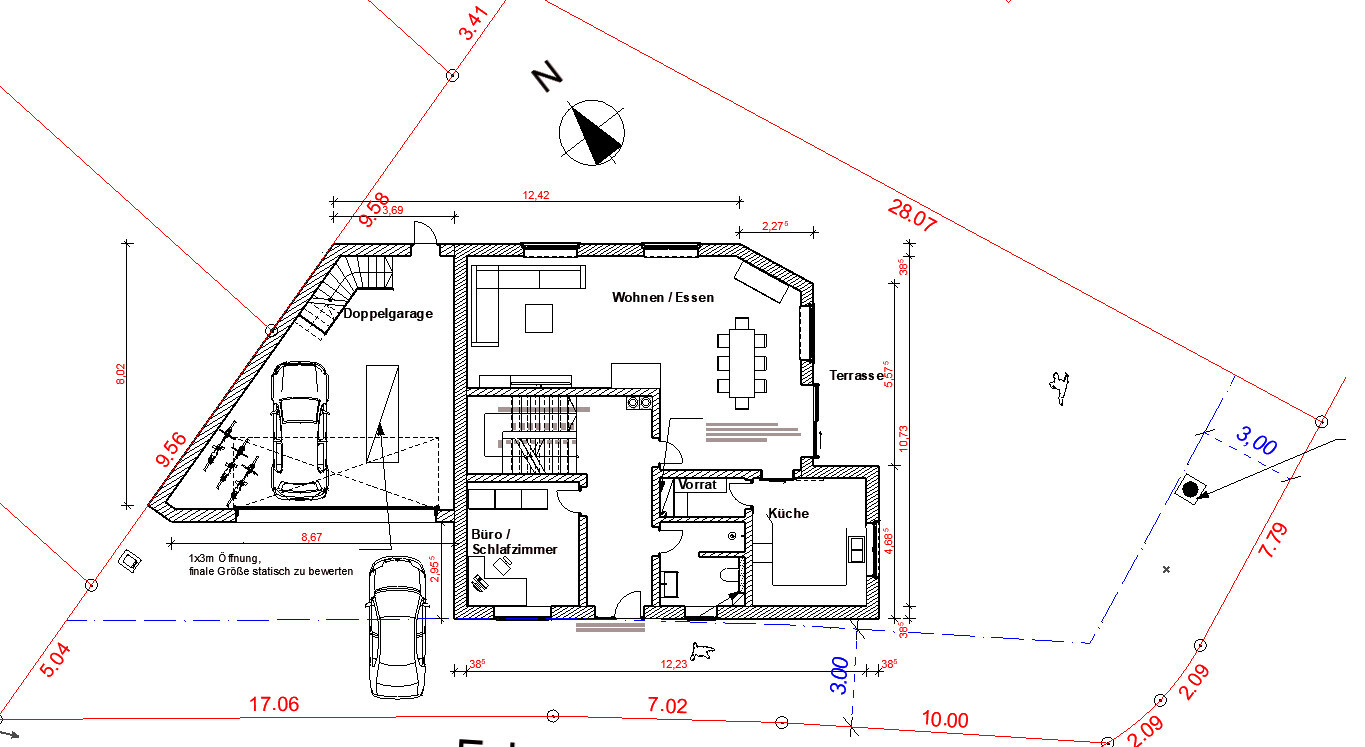
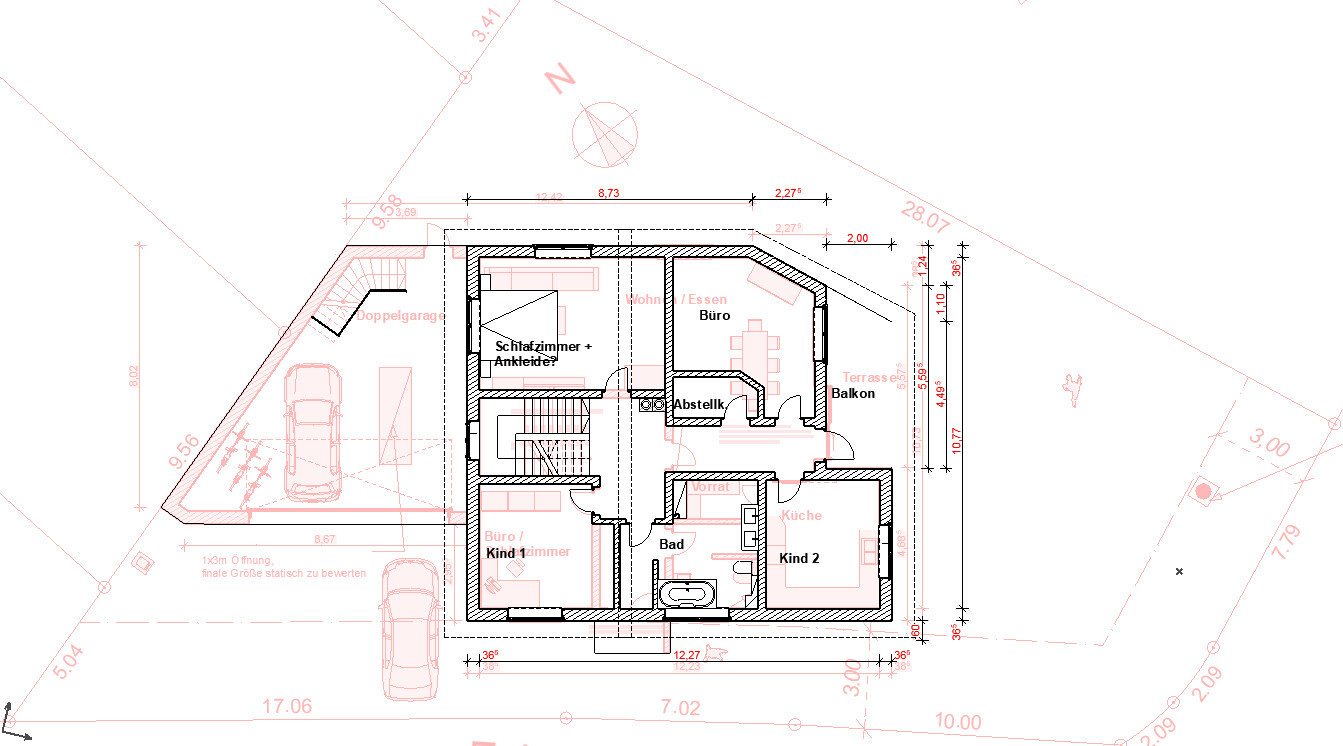
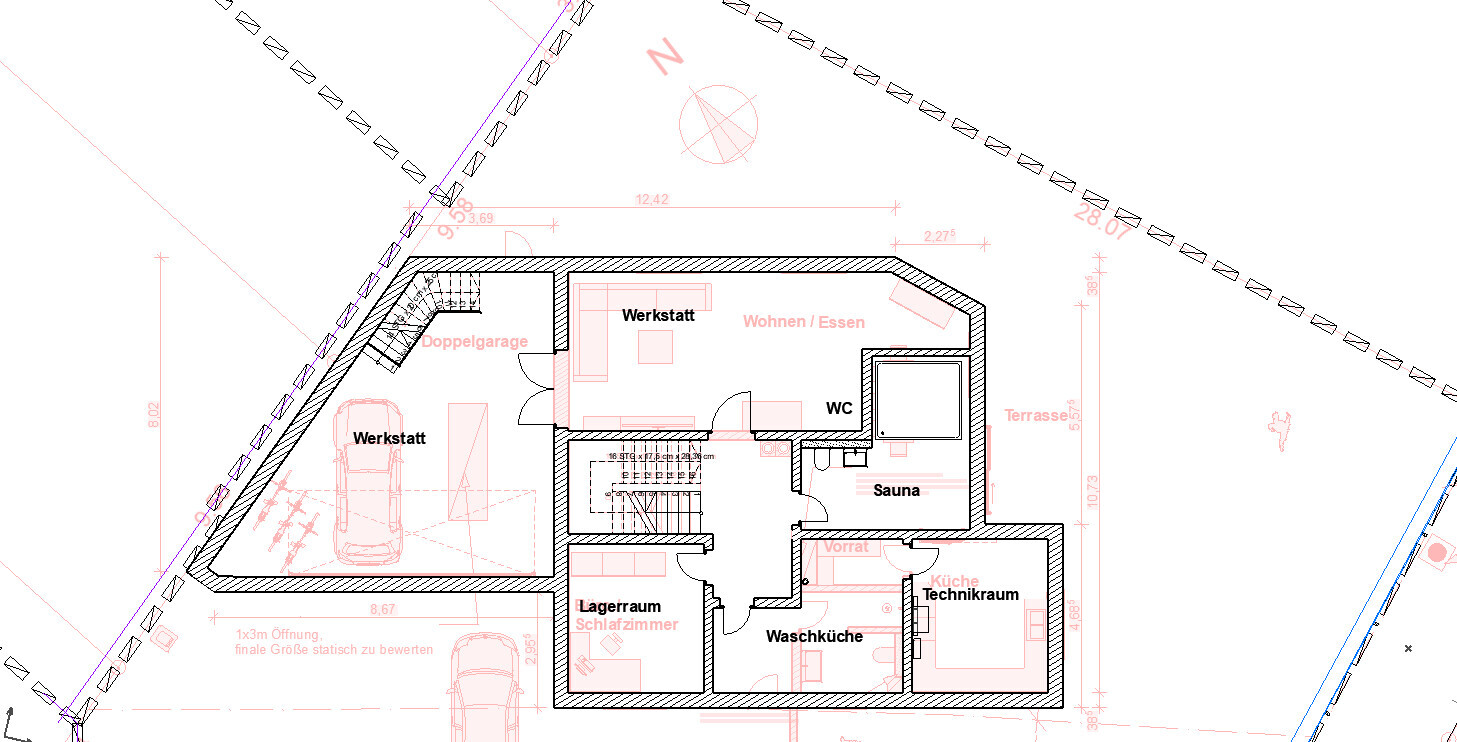
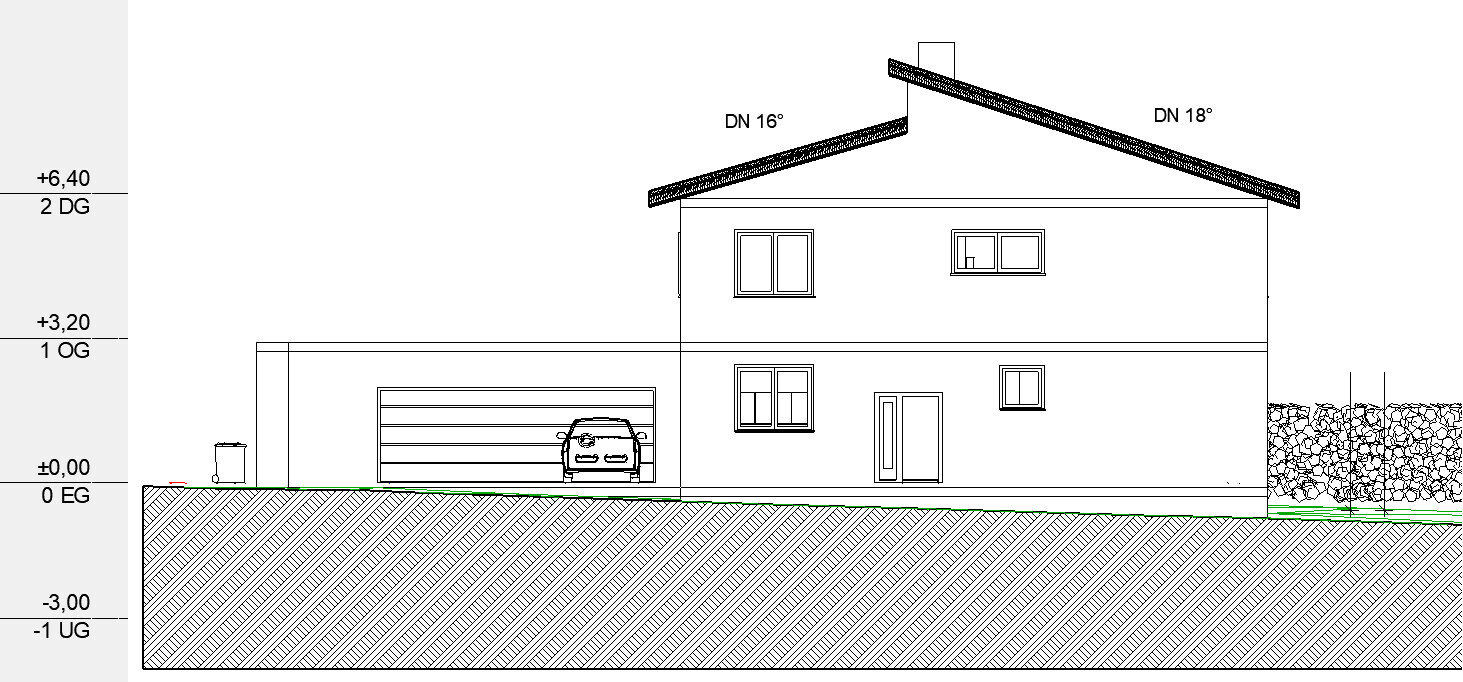
so far we have only been silent readers in this forum and have already gained some interesting ideas this way. We are currently in the planning phase of a single-family house with a basement and have tried to put our wishes into a floor plan. Maybe some of you would like to give feedback on our first drafts. Important: The design is not yet complete. For example, light wells are still missing, the bathroom on the upper floor is not yet fully planned, outdoor areas, etc. Therefore, some changes are still possible, and we would welcome constructive criticism.
Development Plan / Restrictions
- Size of the plot: 560m² (about 6,000 sq ft)
- Slope: slight, approx. 1m (3 ft) drop across the entire width of the plot
- Site occupancy index: 0.35
- Floor area ratio: 0.6
- Building envelope, building line and boundary: present
- Edge development: possible with garage
- Number of parking spaces: at least 2 required
- Number of floors: max. 2 full stories
- Roof type: no direct specification, except slope direction for shed roofs
- Architectural style: modern
- Orientation: no restrictions
- Maximum heights / limits: 7.5m (25 ft) eaves height, 10m (33 ft) ridge height
- Other requirements: should be considered, can be provided upon request/questions
Homeowners’ Requirements
- Architectural style, roof type, building type: staggered shed roof, preferably optimal orientation for photovoltaics or gabled roof
- Basement, floors: basement + 2 full stories
- Number of occupants, ages: 2 adults, 2 children (one toddler), possibly 3rd child
- Space requirements
- Ground floor, generally planned so two people can live comfortably on this level
- Hallway: as small as possible, as large as necessary. If no entrance area, space for shoes/coat storage etc. (cloakroom) must be provided
- Office: one of the parents works very often from home
- Large living room with separate kitchen and pantry
- Bathroom with shower and toilet
- Upper floor:
- Hallway: as small as possible, as large as necessary
- Office for home office in case both parents work from home
- Two children’s rooms
- Parents’ bedroom
- Larger (main) bathroom
- Small storage room for laundry, cleaning supplies, vacuum cleaner, etc.
- Office: family use or home office? Yes
- Guest stays per year: 5-8 overnight stays annually
- Open or closed layout: closed kitchen, open living-dining area, separate hallway
- Conservative or modern construction: modern
- Number of dining seats: at least 4, up to 12 for larger celebrations such as New Year’s Eve or Christmas
- Fireplace: yes
- Music/surround sound wall: surround system would be good and partially available
- Balcony, roof terrace: yes
- Garage, carport: yes, double garage
- Utility garden, greenhouse: no
House Design
- Designed by: architect in cooperation with us
What do we particularly like? Why?
- Laundry chute in both bathrooms
- Very wide and spacious staircase
- Wet rooms stacked above each other
- Nice large living room
- Kitchen with direct pantry and garden view
- Basement prepared for a possible sauna
- Large workshop
- Balcony on the upper floor
- Underground garage
What do we not like? Why?
- Garden is too small, but this is largely due to the plot, the required number of parking spaces, and building envelope restrictions and cannot really be changed
- Windows in the kitchen and second child’s room: windows facing the street were omitted for better furniture arrangement inside. Also, the view of the neighboring house is not to our liking. Unfortunately, the downside is that the exterior appearance of the house suffers from this. What do you think?
- We originally wanted direct access from the garage into the house on the ground floor. This could not be properly realized due to space constraints (staircase too small). That is why the staircase in the garage leads to the basement.
JKHandler schrieb:
The ridge is rotated by 90°. This is what we took from #13 and #17 and passed on. In #13, the ridge runs the other way… in #17, there is no ridge drawn.
JKHandler schrieb:
The ridge direction was requested, based on #17. In both designs, however, it is clear where the intent lies—namely, oriented toward the garden with the wide eave side.

JKHandler schrieb:
The conclusion is: the floor plan is not really suitable for the plot. This now raises the question of how to proceed. Should the floor plan from #12 be completely revised (if that’s even possible), or should we actually start over again? If again, what would be your recommended approach? @11ant prioritizes the upper floor, but before the upper floor, you need the approximate shape and orientation of the house on the plot, right? [...]
The ridge direction was a preference, based on #17. The architect apparently oriented the house along the upper boundary of the plot and therefore rotated it slightly further east compared to #17.
Regarding the precast concrete ceiling: I see the advantage of using thermal activated concrete slabs (especially combined with photovoltaics), eliminating the need for a vapor barrier (which is prone to errors), less cracking, and easier insulation (to the disadvantage of the attic).
About the technical shaft: What exactly is unplanned here?
Regarding the overview: Before generating unnecessary reactive power: Are we talking about a comparison of #17 vs. #29 or #29 vs. #1? Whatever you mean here by generating reactive power, I think (obviously) the latter, so the synopsis between the most recently discussed design (29), after a longer pause, and the one shown at the beginning of the thread (1/2). A floor plan would be “not suitable for the plot” if the plot’s topography required a different layout. Misfits between the house outline and the building envelope are usually easily fixable, even though this regularly causes friction with the sacred cow of the house-garage-vestibule axis (which I anyway recommend as priority ZZ).
At this level, the “problems” are mostly self-inflicted, arising from the premises and wishes of builders and planners—basically beliefs or preferences—such as maximizing a south-facing sunny garden or misusing ancillary structures as privacy screens. For example, it seems important to you to subordinate the dog to the tail—in other words, living to solar gain. This is an excellent recipe for dissatisfaction and will almost certainly produce a (really avoidable) long series of floor plans that are “not quite right yet.”
I do not prioritize the upper floor but rather know and highlight the causal connection behind the phenomenon of planning self-restraint that causes a dead end through “parking forward” by developing the ground floor before the upper floor. Since my better half encourages me to use positive wording, I won’t say “beware of beginning with the ground floor” but rather: the most skillful approach is to first quantify and qualify the spatial program together and its distribution between ground and upper floors, then start the drawing translation with the upper floor. That way, the dough remains malleable until it finds its shape.
Giving the upper floor a heavier ceiling has the side effect of increasing the dominance of its load-bearing walls, making the coordination of wall positions between the two floors more complicated. For the ceiling cooling of the upper floor, the same principle applies as in the previous paragraph concerning the aspect “solar gain overrides living comfort.”
The technical shafts seem unplanned because their position and size lack justification, they obstruct the space, and probably do not consider ease of access for maintenance. Presumably, you have expressed wishes that the planners have little clear idea about, so now they want to give the installers plenty of space to improvise. This looks like the work of a young architect fresh out of university or a general contractor’s draftsman—both groups often severely and expensively fail to bring builders down to earth regarding budget and “purely three-dimensional” space (both require a relaxed attitude toward compromises or at least Pareto optima). “What exactly is unplanned here?” — well, perhaps the full pairs of shafts spanning upper and ground floors could shed light on the matter [I’m already getting stomach aches from the imposed emoji ban; some sentences really need such release valves, otherwise, it’s hard to get over the hump as a writer].
https://www.instagram.com/11antgmxde/
https://www.linkedin.com/company/bauen-jetzt/
H
hanghaus202313 Aug 2024 09:08In #17, I planned the ridge direction from west to east. Orienting the building along the northern boundary has the advantage of providing a large garden and roof area on the south side.
The layout without a basement and separate workshop was to somehow keep your project within budget.
The bay windows and numerous chimneys also unnecessarily increase costs.
A clear ceiling height of 3m (10 feet) as well.
The layout without a basement and separate workshop was to somehow keep your project within budget.
The bay windows and numerous chimneys also unnecessarily increase costs.
A clear ceiling height of 3m (10 feet) as well.
Since the budget obviously seems to be a concern, I have the following questions:
1. Does it have to be a half-turn staircase with a gallery? Wouldn’t a standard quarter-turn staircase without a gallery work as well?
2. What kind of bed setup wouldn’t fit in a master bedroom of about 15 sqm (160 sq ft) or measuring 4.3 x 3.5 m (14 x 11.5 ft)?
3. What exactly do you plan to do in a 14 sqm (150 sq ft) walk-in closet? Just for comparison: You need as much space for the bedroom/walk-in closet that you use only a few hours a day as the two kids combined require...
To me, it seems like after completing the ground floor, there was some leftover space on the upper floor that needed to be filled somehow...
Regarding the ground floor, I have just one question (which others have already asked): Since you also have a basement, do you really need a pantry? For example, we have a classic storage cellar for all food not needed daily, plus the freezer and drinks. That could possibly eliminate the need for a passage to the garage as well.
1. Does it have to be a half-turn staircase with a gallery? Wouldn’t a standard quarter-turn staircase without a gallery work as well?
2. What kind of bed setup wouldn’t fit in a master bedroom of about 15 sqm (160 sq ft) or measuring 4.3 x 3.5 m (14 x 11.5 ft)?
3. What exactly do you plan to do in a 14 sqm (150 sq ft) walk-in closet? Just for comparison: You need as much space for the bedroom/walk-in closet that you use only a few hours a day as the two kids combined require...
To me, it seems like after completing the ground floor, there was some leftover space on the upper floor that needed to be filled somehow...
Regarding the ground floor, I have just one question (which others have already asked): Since you also have a basement, do you really need a pantry? For example, we have a classic storage cellar for all food not needed daily, plus the freezer and drinks. That could possibly eliminate the need for a passage to the garage as well.
J
JKHandler13 Aug 2024 16:28ypg schrieb:
In #13 the ridge runs the other way... in #17 no ridge is indicated.
In both designs, however, it is clear where the direction is heading, namely oriented toward the garden with the wide eave side.
I have roughly indicated the ridge as a line in the comparison sketch.
11ant schrieb:
Whatever you mean here by generating reactive power, I mean (of course in my opinion) the latter, that is the synoptic comparison between the recently discussed design (29) after a longer pause and the one shown at the beginning of the thread (1/2). “Not suitable for the plot” would describe a floor plan if the topography of the plot required a different layout. Misfits between building outline and building permit/planning permission boundaries can usually be fixed easily, even though this often causes scratches on the sacred cow of house-garage-airlock, which I usually recommend to be given top priority ZZ.The comparison sketch is now attached, the black line indicates the ridge (or gable strip in #1). You will also find the other matching ground floor plan attached.
11ant schrieb:
At this level, the “problems” have largely been homegrown by the builders and planners, basically due to their beliefs and wishes—for example, maximizing a sunny south-facing garden or misuse of secondary building volumes as visual screening. It seems important to you to subordinate the dog to the tail—in other words, to prioritize living space below solar gain. This is an excellent recipe for unhappiness or almost certainly leads to a (actually avoidable) long series of not-quite-satisfactory floor plans.
I do not “prioritize” the upper floor but merely understand and highlight the causal connection between the phenomenon of self-imposed planning constraints that lead into a dead end by “parking ahead,” that is, formulating the ground floor before the upper floor. Since my partner encourages positive expressions, I avoid saying “beware of starting with the ground floor” and instead say: “the most skillful approach is to first jointly quantify and qualify the space program and distribute it between the ground floor and upper floor before continuing with the drawing on the upper floor.” This way, the dough remains pliable until it finds its shape.We planned the layout as follows:
- Basement: workshop, storage, utility room, technical room
- Ground floor: guest room/office, bathroom (shower and toilet), pantry, kitchen, dining and living room
- Upper floor: Child 1, Child 2, master bedroom, bathroom
Based on these thoughts @everyone (please correct me if something is completely off): What layout options (form and orientation; also considering that the pantry could be omitted) arise when considering space and room requirements? Or could the current design be adapted to meet these criteria?
11ant schrieb:
The technical shafts appear arbitrary because their positions and dimensions are unmotivated, bulky within the rooms, and likely lack considerations of maintenance accessibility. You probably expressed requirements the planners have little understanding of, and now they want to give the installers generous space for improvisation. This looks like the work of an architect fresh from university or a general contractor’s draftsman; both groups tend to lack, in a worrying and costly manner, the ability to ground the builders in the reality of budget and the three-dimensional nature of space (both require a relaxed attitude toward compromises or at least Pareto optima). “What exactly is arbitrary here?” – well, both ends of the shafts (i.e., the full pairs of upper and ground floor shafts) might shed light on this [I’m getting stomach pains again from having to avoid emoticons, some sentences really need these valves, otherwise it’s hard to get past the hangover as a writer].Our current understanding, at least for design #29 (image 1), is: The heating circuit valve (HKV) for underfloor heating and radiators will be placed on each floor in the niche of the 24 cm (9.5 inch) wall facing the corridor. There is space for a decentralized distribution manifold (UV), if a central manifold is not desired. From there, the underfloor heating can be supplied and laid efficiently to all rooms. If you install two ventilation ducts at least 160 mm (6.3 inches) diameter for mechanical ventilation, about four well-insulated 40 mm (1.6 inch) riser pipes for heating and underfloor circuits, a soil stack, water, electrical, network cables, and so forth, the shaft fills up quickly. But yes, the shaft here is quite large relative to the house, although its size depends heavily on the technical installations. Maintenance accessibility is an important topic! Thanks for the note. Accessibility is problematic in the other design (ground floor attached here), and heat release into the pantry from reversed installation is a concern. Suggestions and criticism are welcome.
hanghaus2023 schrieb:
In #17 I planned the ridge direction west to east. Orientation along the northern boundary had the advantage of a large garden and roof area on the south side.We liked that too and passed it along as encouragement to the architect.hanghaus2023 schrieb:
The bay windows and numerous chimneys also cost unnecessary money.Only one chimney and one flue are planned. In the design presented here, only the recommended chimney and its position have been additionally shown.hanghaus2023 schrieb:
3 meter (10 feet) clear ceiling height as well.The reasoning was: Based on preliminary calculations for installing the mechanical ventilation system, it is more cost-effective to build one more course of blocks (including anything that goes on top) than to install 75 mm (3 inch) ventilation ducts in the precast ceiling slab, which would require additional steel reinforcement and concrete and more complex technical implementation.J
JKHandler13 Aug 2024 17:12DaHias81 schrieb:
Since the budget clearly seems to be an issue, I have the following questions:
1. Does it really have to be a half-turn staircase with a gallery? Wouldn’t a standard quarter-turn staircase without a gallery also work? No, a gallery is definitely not a must; that was just the architect’s suggestion. We are also open to compromises regarding the staircase.
DaHias81 schrieb:
2. Which bed setup wouldn’t fit in a master bedroom of about 15sqm (4.3x3.5m)? 216x240cm (85x95 inches); depending on how you arrange the nightstands, this can impact the walking paths—especially on the 3.5m (11.5 ft) side, where you would end up with a narrow passageway of 67cm (26 inches).
DaHias81 schrieb:
3. What exactly do you want to do in a 14sqm (150 sq ft) walk-in closet? Just for comparison: you need as much space for the bedroom/walk-in closet as the two children combined.
To me, it seems like after finishing the ground floor, there was some leftover space on the upper floor that needed to be filled... We had the same critique. We’d prefer to allocate more space to the children and have the master bedroom slightly larger with enough room for wardrobe storage.
DaHias81 schrieb:
Regarding the ground floor, I have just one question (which others have also asked): You still have a basement—do you really need a pantry? For example, we have a classic “storage cellar” for all non-daily food items, the freezer, and beverages. In that case, the passage to the garage might be unnecessary. If the pantry is removed, we would have to ensure the kitchen design offers enough storage space. Besides food storage, the idea was also to store frequently used kitchen appliances in the pantry since we have quite a few of them.
Similar topics