
ᐅ Single-family house floor plan, 1 full story, utilities and natural lighting
Created on: 22 Jul 2024 08:21
K
klabauter8614
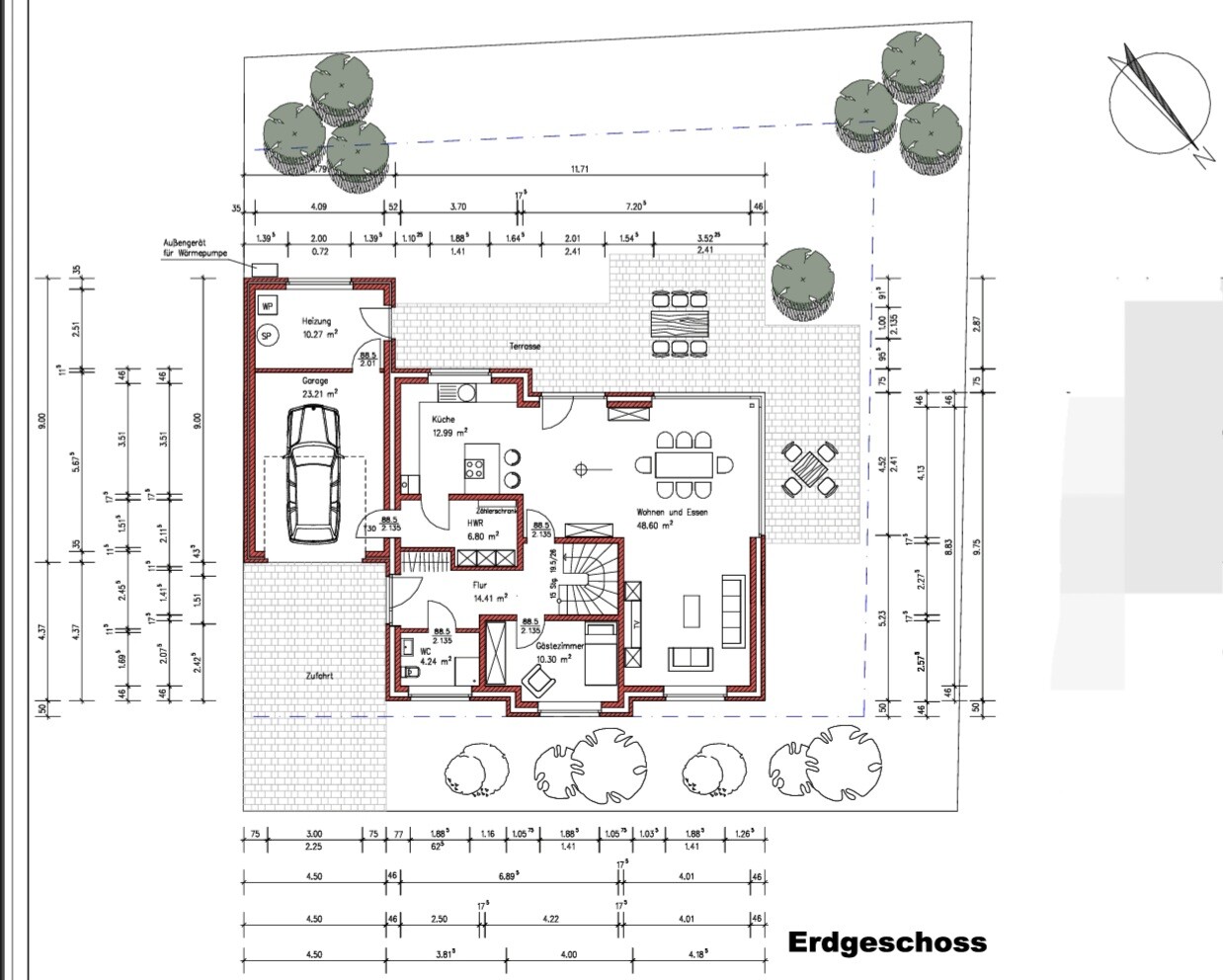
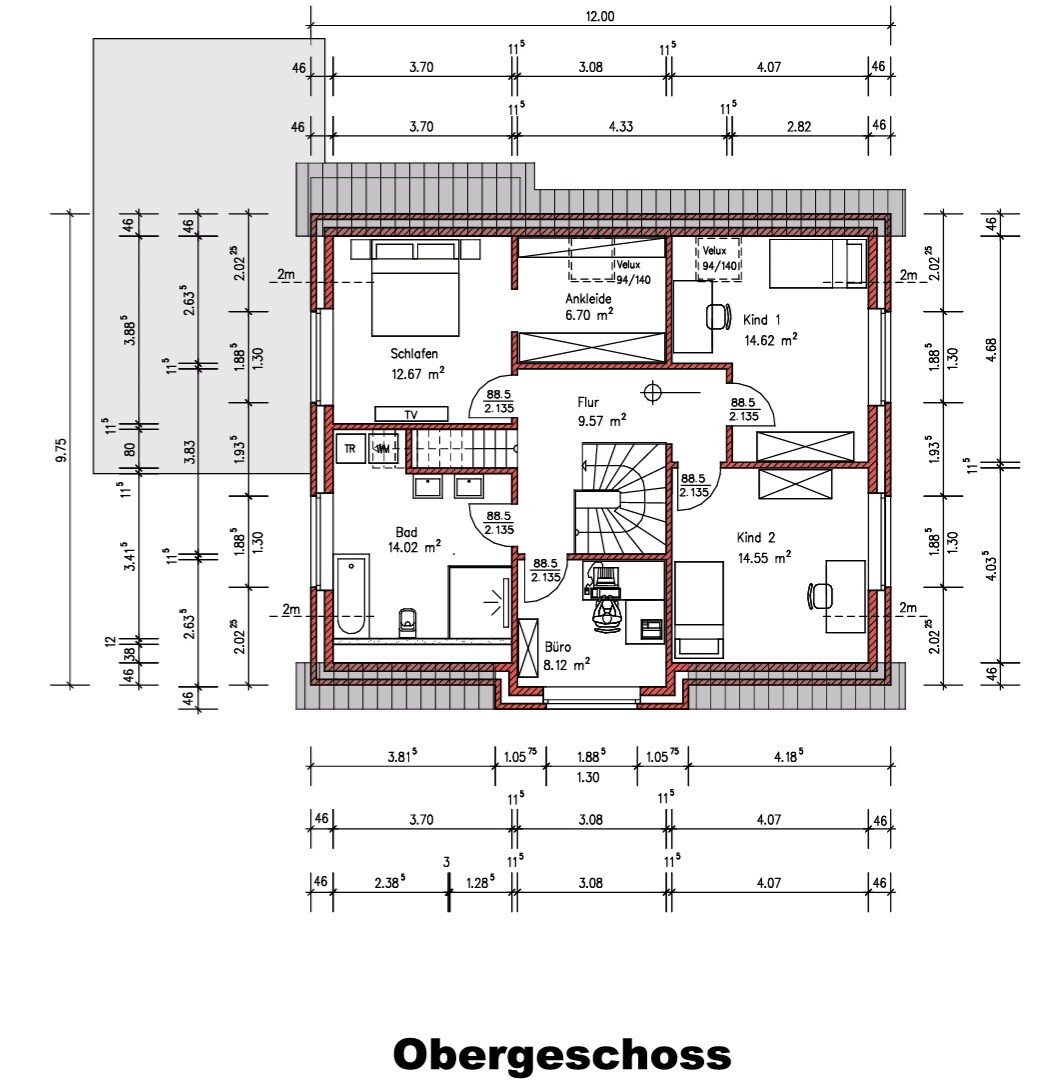
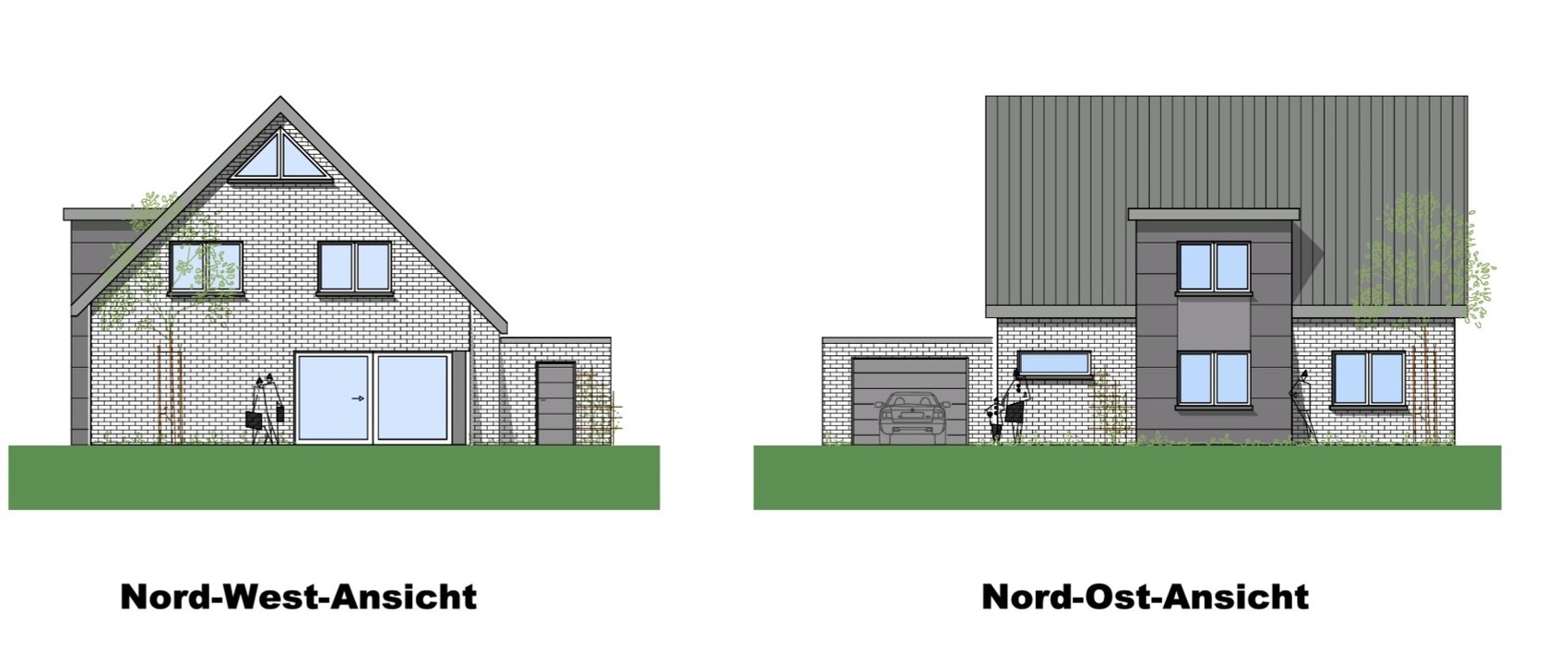
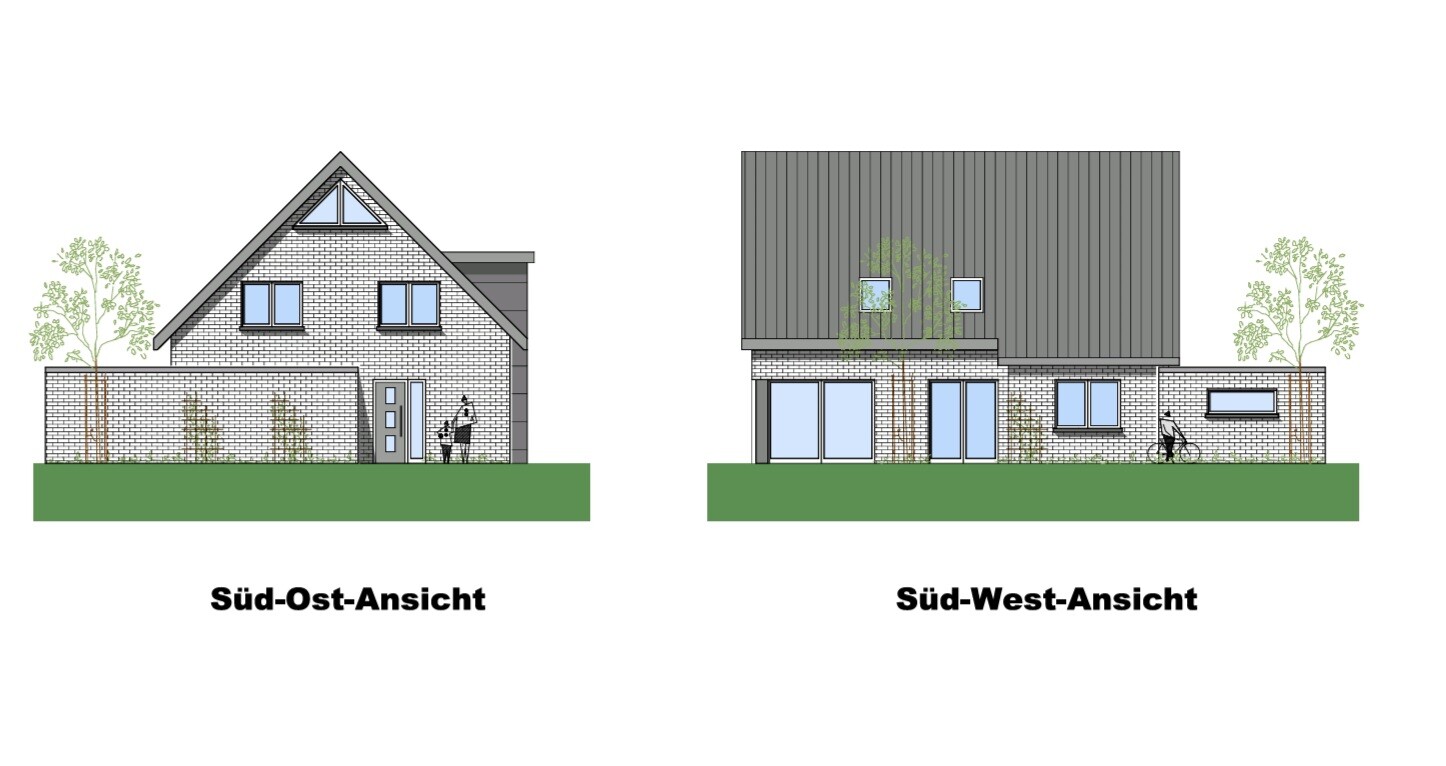
Hello, I would like to gather feedback on the floor plan in order to finalize the design. We don’t have sections or elevations yet, but all other drawings are attached (house shown schematically on the site plan). Thanks.
Development Plan / Restrictions
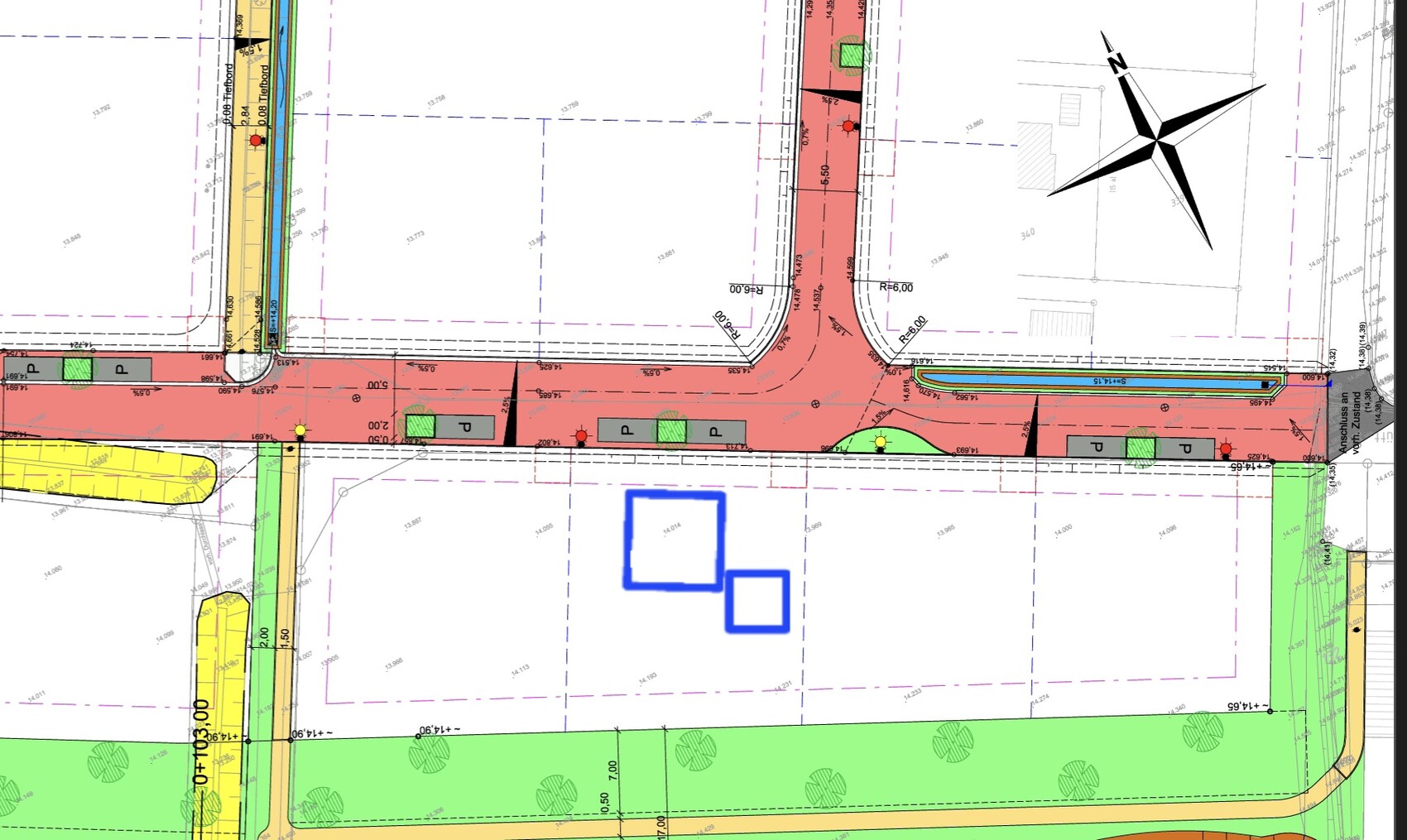
Plot size: 473m² (5,089 ft²)
Slope: no
Site coverage ratio: 0.4
Floor area ratio
Building envelope, building line and boundary
Edge development
Number of parking spaces: maximum 2 without garage
Number of floors: 1 full floor
Roof type: gable roof
Architectural style
Orientation: Roof facing NNE - SSW
Maximum heights / limits: eave height 4.2m (13.8 ft), ridge height 9.5m (31.2 ft)
Further requirements: only renewable energy sources, infiltration trench for stormwater
Client Requirements
Style, roof type, building type
Basement, floors: no basement (groundwater level at 1m (3.3 ft) depth), 1 full floor
Number of occupants, ages: 4, aged 40-40-7-2 years
Space needs on ground floor and upper floor: Guesst room on the ground floor, office upstairs
Office use: family use or home office? Home office
Number of guest stays per year: 2 nights per week by one parent (also for coming years), parents-in-law stay several weeks annually
Open or closed layout
Traditional or modern construction
Open kitchen, kitchen island: semi-open (sliding door), kitchen island
Number of fixed dining seats: 6 fixed, expandable
Fireplace: no
Music/speaker wall: no
Balcony, roof terrace: no
Garage, carport: garage
Utility garden, greenhouse: herb garden
Additional wishes/special points/daily routine, including reasons for preferences or exclusions
House Design
Planner: synergy between architect and client, now 4th draft
What do you particularly like? Why? Guest room and WC + shower, similar existing layout already working (although a bed is drawn, it is actually a sofa bed), office on the north side, guest room size more than sufficient, wardrobe by the entrance, living room bright, washing machine + dryer upstairs.
What don’t you like? Why?
- Utility room is half unusable due to wardrobe protrusion (which is actually sensible) so it is too small. Attic storage needs to be moved from the garage into the thermal envelope inside the utility room, indoor unit could stay there. The mechanical ventilation system would also need to be installed in the utility room. Possible solution: enlarge kitchen to the rear and expand utility room accordingly. This would make the house larger though. No other solutions discussed yet.
- Stairs are too steep; architect now proposes a rise/run of 17.2cm/26cm (6.8"/10.2"), which may be borderline regarding comfortable step depth.
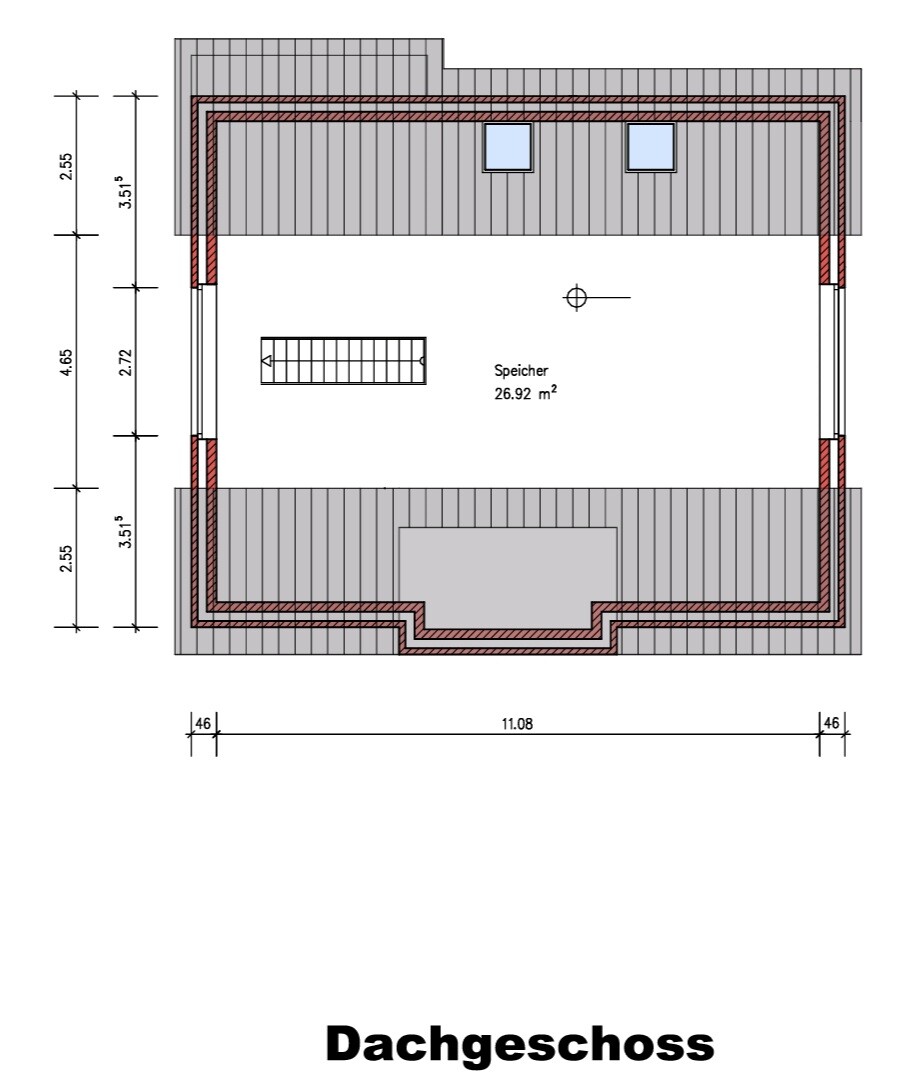
- Daylight in children’s rooms might be low due to west-facing windows and roughly 12.5% window-to-floor area ratio; simulation might be needed. Skylights wouldn’t significantly improve this; only a dormer and smaller gable windows would.
- As drawn, the kitchen island layout is not suitable for me; passage from utility room too narrow, should be moved to the opposite side, with sink and window to the left.
- Air conditioning would still be needed in the bedroom and children’s rooms, but with the current window and furniture arrangement this looks impractical.
- Shower upstairs located under sloped ceiling, not necessary but a minor point.
- Skylight in guest WC is not at head height, should be slightly higher, also a minor detail.
- Bathroom door upstairs should open outwards.
- Storage under the stairs is still missing.
- Partition wall in garage is unnecessary.
Cost estimate from architect/planner: unknown
Personal price limit for house including fixtures: 650,000
Preferred heating technology: air-source heat pump
If you must give up something, which features or extensions
- Can you give up: walk-in closet
- Cannot give up: office, guest room
Why is the design like it is now?
Own design developed based on space requirements plus architect’s counter proposal
What do you consider especially good or problematic?
Main issues to resolve are utility room + technical space and daylight.
Development Plan / Restrictions
Plot size: 473m² (5,089 ft²)
Slope: no
Site coverage ratio: 0.4
Floor area ratio
Building envelope, building line and boundary
Edge development
Number of parking spaces: maximum 2 without garage
Number of floors: 1 full floor
Roof type: gable roof
Architectural style
Orientation: Roof facing NNE - SSW
Maximum heights / limits: eave height 4.2m (13.8 ft), ridge height 9.5m (31.2 ft)
Further requirements: only renewable energy sources, infiltration trench for stormwater
Client Requirements
Style, roof type, building type
Basement, floors: no basement (groundwater level at 1m (3.3 ft) depth), 1 full floor
Number of occupants, ages: 4, aged 40-40-7-2 years
Space needs on ground floor and upper floor: Guesst room on the ground floor, office upstairs
Office use: family use or home office? Home office
Number of guest stays per year: 2 nights per week by one parent (also for coming years), parents-in-law stay several weeks annually
Open or closed layout
Traditional or modern construction
Open kitchen, kitchen island: semi-open (sliding door), kitchen island
Number of fixed dining seats: 6 fixed, expandable
Fireplace: no
Music/speaker wall: no
Balcony, roof terrace: no
Garage, carport: garage
Utility garden, greenhouse: herb garden
Additional wishes/special points/daily routine, including reasons for preferences or exclusions
House Design
Planner: synergy between architect and client, now 4th draft
What do you particularly like? Why? Guest room and WC + shower, similar existing layout already working (although a bed is drawn, it is actually a sofa bed), office on the north side, guest room size more than sufficient, wardrobe by the entrance, living room bright, washing machine + dryer upstairs.
What don’t you like? Why?
- Utility room is half unusable due to wardrobe protrusion (which is actually sensible) so it is too small. Attic storage needs to be moved from the garage into the thermal envelope inside the utility room, indoor unit could stay there. The mechanical ventilation system would also need to be installed in the utility room. Possible solution: enlarge kitchen to the rear and expand utility room accordingly. This would make the house larger though. No other solutions discussed yet.
- Stairs are too steep; architect now proposes a rise/run of 17.2cm/26cm (6.8"/10.2"), which may be borderline regarding comfortable step depth.
- Daylight in children’s rooms might be low due to west-facing windows and roughly 12.5% window-to-floor area ratio; simulation might be needed. Skylights wouldn’t significantly improve this; only a dormer and smaller gable windows would.
- As drawn, the kitchen island layout is not suitable for me; passage from utility room too narrow, should be moved to the opposite side, with sink and window to the left.
- Air conditioning would still be needed in the bedroom and children’s rooms, but with the current window and furniture arrangement this looks impractical.
- Shower upstairs located under sloped ceiling, not necessary but a minor point.
- Skylight in guest WC is not at head height, should be slightly higher, also a minor detail.
- Bathroom door upstairs should open outwards.
- Storage under the stairs is still missing.
- Partition wall in garage is unnecessary.
Cost estimate from architect/planner: unknown
Personal price limit for house including fixtures: 650,000
Preferred heating technology: air-source heat pump
If you must give up something, which features or extensions
- Can you give up: walk-in closet
- Cannot give up: office, guest room
Why is the design like it is now?
Own design developed based on space requirements plus architect’s counter proposal
What do you consider especially good or problematic?
Main issues to resolve are utility room + technical space and daylight.
K a t j a schrieb:
It’s not made of glass, which would annoy me because you’d be cleaning it all the time.Have you ever slid a safety glass door? It’s not exactly easy. But I agree with you that you can include a glass section. The question is whether you get to see everything as clearly as you’d like. But that’s exactly what I mean: every detail gets planned and adjusted, even though the house might already be fully functional. And suddenly you have a maze or two small flaws that you could easily live with, plus eight others. But at least you get to include all those Pinterest ideas. I think cooking aromas are rather secondary. And if you’re frying fish, you just use the extractor hood. Or you live with the pleasant smell for a while. It fades away eventually. But moving away from sliding doors, everyone should get theirs wherever they want it.
klabauter8614 schrieb:
Because of the sun on the southwest-facing terrace, the garage is placed on the left (east side), so the kitchen and utility room are there too.K a t j a schrieb:
I haven’t read your list in full, but a quick question: Why do the utility room and the kitchen both have to be on the east side?The design explains that, plus the fact that the utility room is meant to serve as a buffer zone. Speaking of which: where is the freezer room, anyway???
K
klabauter861425 Jul 2024 15:36ypg schrieb:
Three comments regarding this:
A sliding door lets quite a bit of air pass through.That is probably more of a detail and not relevant for the initial design. As you mentioned, later in the process it might become clear that it is not practical. So it makes sense to keep an open mind between wishful thinking and reality.ypg schrieb:
For example, I made changes to the entire neighborhood. Otherwise, it would have been inadequate for me. Whether that is a drawback for you again... Sometimes you have to leave the shoe in the box instead of constantly looking for the mistake.I already thanked you for that and asked a question. Would you like to answer it?ypg schrieb:
For that reason, a storage room immediately gets two doors because you supposedly want to go through such an airlock every day with two bags full of groceries, although it is located quite far from the cloakroom.Shopping every two or three days really happens, sometimes more and sometimes less, usually for the fridge or freezer, by bike or car. That’s why in this design the utility room is connected both to the kitchen and the entrance. I will simply upload the photo again. 🙂 But maybe here the routes are still too long and the entrance too dark. @ypg What do you think?ypg schrieb:
The design explains that, and the fact that you want to use the utility room as an airlock. By the way, where is the freezer room???The architect suggested positioning the terrace to the southwest, and thus placing the garage on the opposite side, i.e., on the left side of the plan. According to the planner, the technical equipment should be at the back of the garage, but what is drawn there doesn’t make sense. The heating should be within the thermal envelope; if anything, the interior unit, inverter, or battery could be placed at the back.klabauter8614 schrieb:
I had already thanked for that and asked a question; would you like to answer it? Which question? It was probably too detailed for me, as I refer to the note on the sketch.
ypg schrieb:
Here is my suggestion, but it should only be seen as a sketch. If you mean the garage question, whether to move it or not: it’s possible but not mandatory. There is the option for a window.
klabauter8614 schrieb:
But maybe the distances are still too long here and the entrance too dark. @ypg What do you think? Your sketch? I’d put it this way: sketches can generally be quite useful if they’re drawn roughly to scale. Of course, they don’t have to be precise scale drawings—that wouldn’t be a sketch. Still, the proportions should be somewhat accurate. If you add up the rooms and doors, plus an entrance, cloakroom, and staircase vertically on the plan, we’re looking at an estimated hallway depth of at least 6 meters (about 20 feet) (Even Dieter Bohlen doesn’t have that). Yes, at least by staircase height, it will be dark. The kitchen and dining area wing up to the living room would be about 13 meters (43 feet) wide, if you consider 4 meters (13 feet) for the living room depth and also include the staircase, bathroom, and cloakroom across the plan.
No offense, but based on the sketch, the connecting hallway between utility room and entrance should be removed first. And with this sketch, be prepared that the architect will probably leave very little of it.
A room program is best defined in words such as: “Living room preferably quiet and yet very bright,” or “Dining area sunny and a bit more space on the ground floor for kids to play, where one can keep an eye on them from the kitchen.”
klabauter8614 schrieb:
The technical room should be at the back in the garage according to the planner, but what’s drawn there doesn’t make sense. Yes, that doesn’t make sense.
klabauter8614 schrieb:
Synergy architect + client, 4th design now Yes, very poor synergy if the client does not allow themselves to be guided.
klabauter8614 schrieb:
Possible solution: enlarge the kitchen towards the back No: enlarging is never the first solution! A design is based on the size, features, and style according to the plot and the specified budget. Therefore, something like enlarging is initially not the solution.
klabauter8614 schrieb:
Daylight in the children’s rooms could be limited due to the window orientation west and approximately 12.5% window-to-room size ratio; this should perhaps be examined in a simulation. Velux would not improve this much, only a dormer and then smaller windows in the gable. On the contrary, a roof window clearly provides significantly more light— even more than a gable window of the same size!
klabauter8614 schrieb:
The most important points to clarify are the utility room + technical area and natural daylight.Although I’m quoting the question, I’ll come back to it later. klabauter8614 schrieb:
The house is supposed to be wide rather than deep.That’s understandable if you want to have as much lawn or garden as possible in the back, especially when the plot isn’t very large anyway. klabauter8614 schrieb:
Afterwards, in the process, the entrance is moved to the left.I don’t quite get that because a) you want to avoid access along the length of the house, as that would create a very long corridor. Also, you are conservatively planning with a middle bay window, which b) naturally suggests a central entrance. And considering c) that a side entrance is planned anyway.I tried to plan your wish sketch. Guest room on the right side, utility room instead of guest, added second and third doors. Left the bay window at the top due to the depth of the dining area, shifted corridor walls to make room for a coat rack, fiddled around the staircase, and what do you get? 95sqm (1020 sq ft), but no practical upper floor and way too much corridor space.
Then it must have been that the open-plan living area was perceived as too small and yes, the passage through the utility room was insisted on, so the pantry at the lower right was not wanted. So the living room is moved to that corner, which makes the house bigger, because the utility room and guest room both can’t fit on the left side. So the entrance is moved to the left side and the guest room is placed at the bottom. That makes the corridor very long and it even needs a turn. All that is accepted so the utility room can serve as a passage. Then the kitchen is slightly extended with a bay window because 3 meters (10 feet) width is not satisfactory for an island.
However, the pantry is moved behind the garage, as the actual pantry gets smaller and the airlock function becomes more important.
There would normally be room here for a nicely designed house, but it probably wouldn’t reflect the wish for lots of space.
I recommend a fresh start and reconsider that you won’t starve without an airlock.
Here again is my disaster design based on your sketch.
Since the TV is not really the main focus and considering
I would mainly think about effectively separating the sofa/TV area.
Because after cooking, the food is set down and you would open a door between the kitchen/dining area anyway, and any remaining odors will naturally spread to the dining area just from the food being at the table. So it’s better to focus on properly separating the sofa/TV area, which also creates the opportunity to organize better access to the terrace from the dining/kitchen area and improve supervision of the children.
chand1986 schrieb:
I think the problem of food odors in the living area is minor and temporary. We have a completely open space, but here we have an exhaust hood. It removes so much that a partition is practically unnecessary.
I would mainly think about effectively separating the sofa/TV area.
Because after cooking, the food is set down and you would open a door between the kitchen/dining area anyway, and any remaining odors will naturally spread to the dining area just from the food being at the table. So it’s better to focus on properly separating the sofa/TV area, which also creates the opportunity to organize better access to the terrace from the dining/kitchen area and improve supervision of the children.
Similar topics