
ᐅ Poor Workmanship in Earthworks – Excavation Reaching Groundwater
Created on: 24 Jul 2024 07:48
S
Steve55Hello everyone,
I am quite frustrated and have been worrying a lot lately about the earthworks for a ground slab.
Unfortunately, I was naive and trusted an excavator who said that 1.7m (5.6 ft) of excavation was required (according to the soil report). However, this later turned out to be incorrect!!! He then dug even deeper because he believed the clay soil was not load-bearing. This led to groundwater being encountered.
The overly deep section (about one-third) of the foundation pit was then refilled with soil!!! which, of course, later came back up because fortunately this was noticed. Afterward, crushed stone was placed there, and mineral concrete 0/32 was laid and compacted on the remaining two-thirds of the still moist pit. Then a geotextile was installed, followed by a ring earth electrode, and another layer of mineral concrete/crushed stone 0/32. That is the current status. Overall, an additional 1.5m to 2m (5 to 6.5 ft) of crushed stone now needs to be placed.
The base of the excavation therefore had a slope of approximately 10 degrees… but it has now been almost leveled.
I have since terminated the cooperation with the excavator due to his lack of expertise, which cost me quite a bit of money because the deposit was lost.
Now my questions:
1. Is the slope at the base a problem? Or should it have been completely level?
2. Could the groundwater trapped beneath the crushed stone cause issues with settlement? (Clay/silt)
3. The subgrade was not properly leveled and was moist… could this cause problems regarding the compaction of the 0/32 crushed stone and settlement?
4. The excavation will remain open for 1-2 months. Could this be a problem concerning rain?
5. Can this be left as it is since a very thick crushed stone layer will be placed on top anyway, or what should I do? Should I bring in the soil surveyor who prepared the report?
I am already at the end of my nerves and have only just started.
Many thanks in advance.
Best regards,
Steven
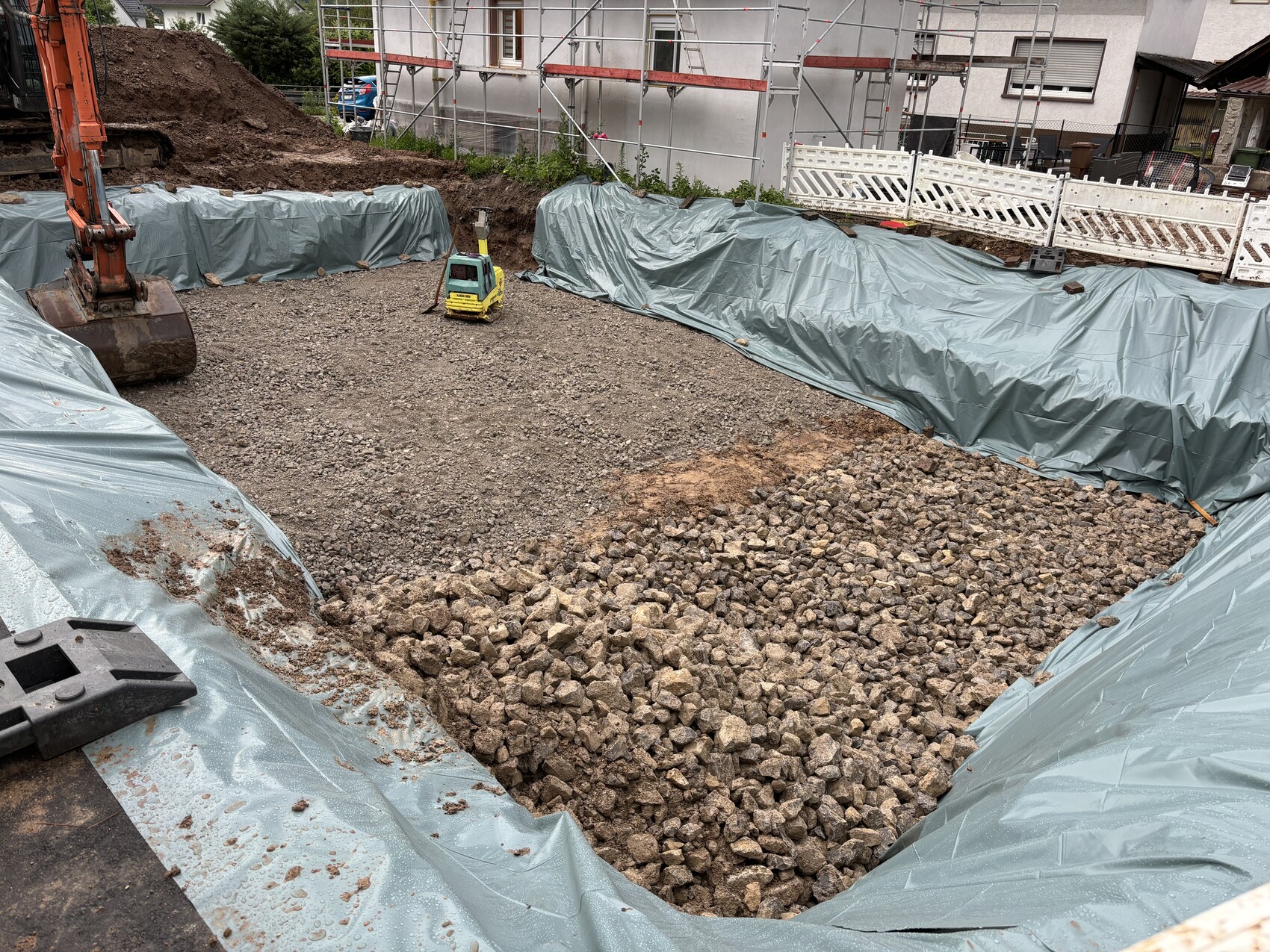
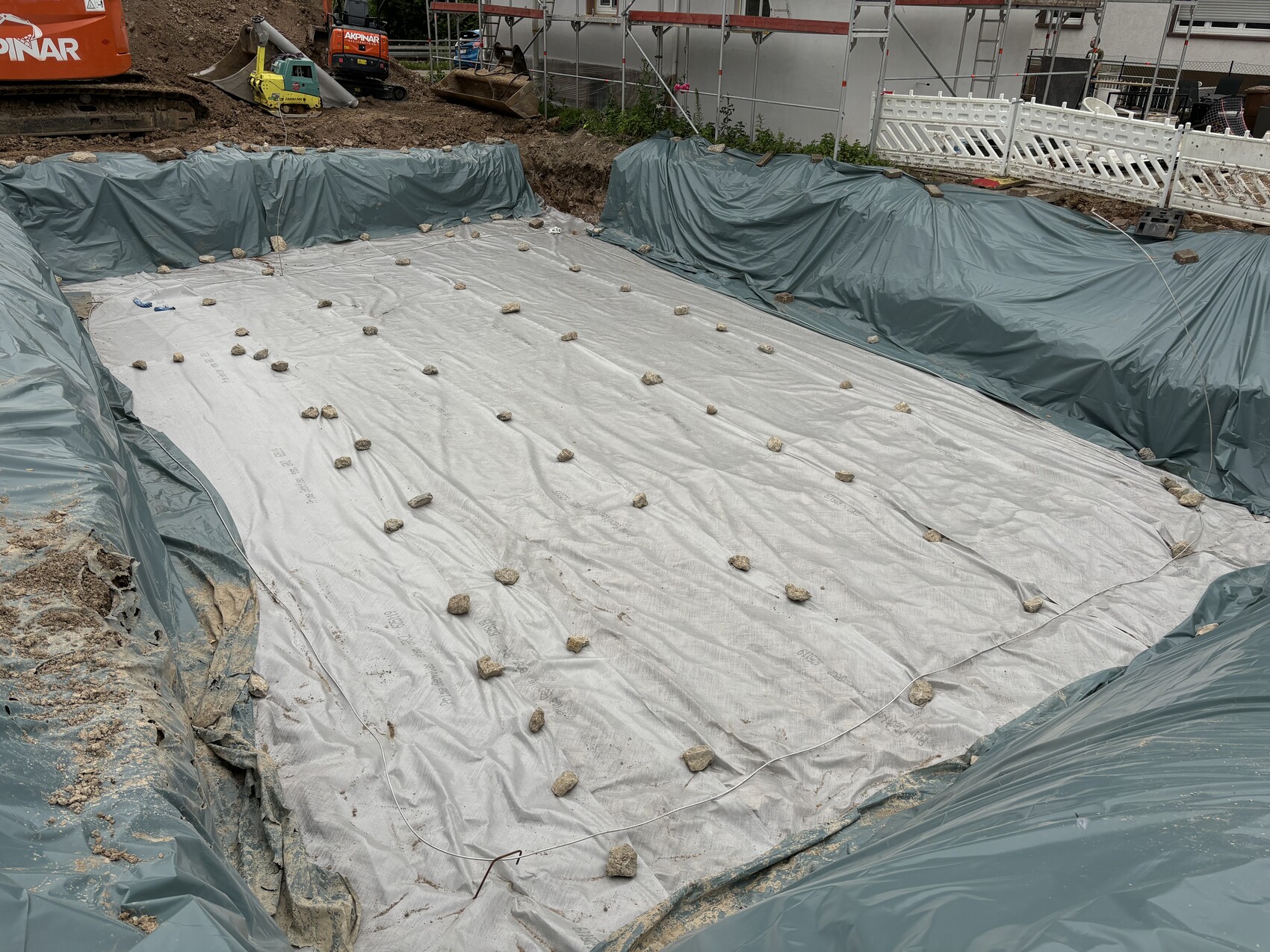
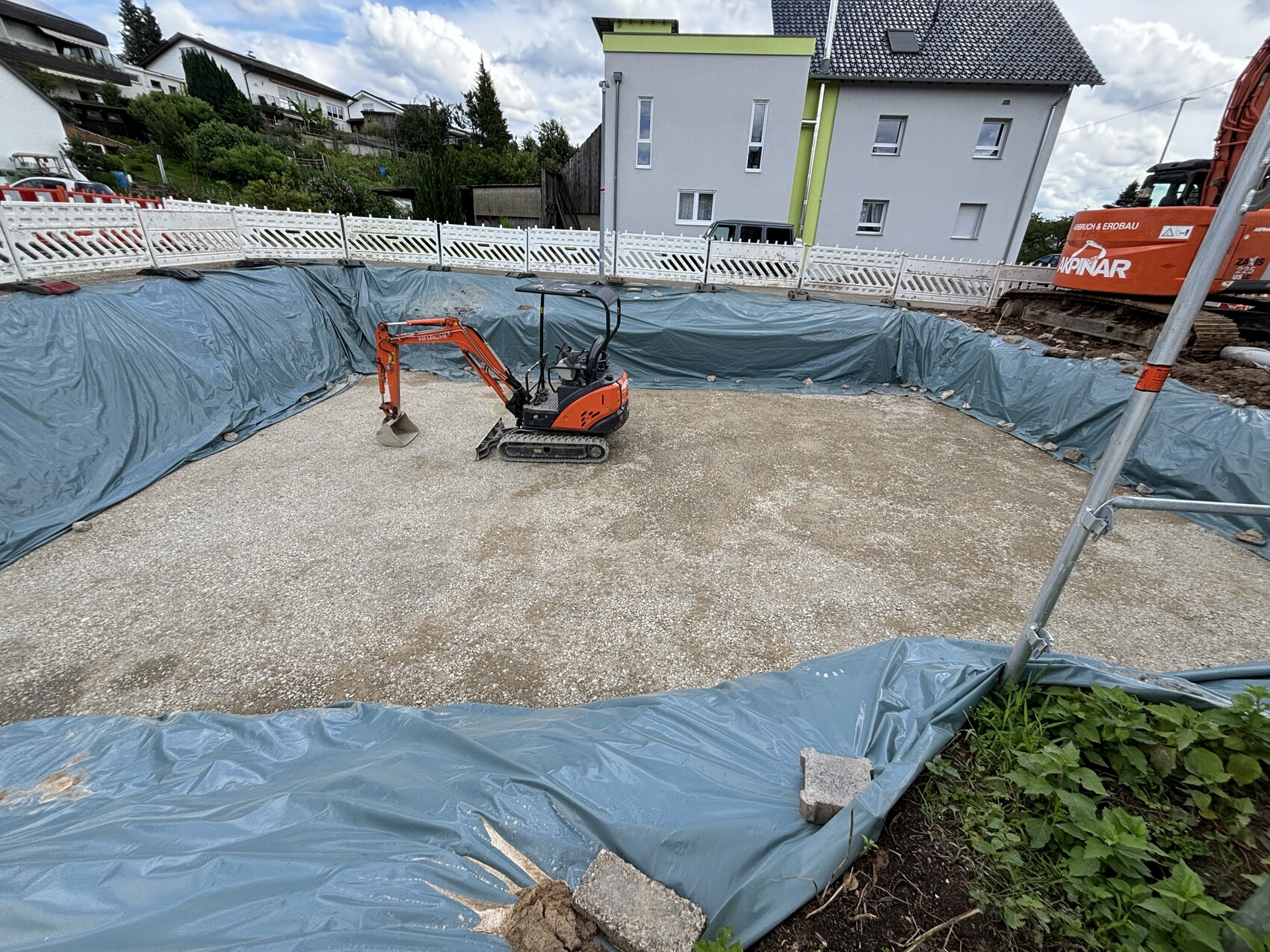
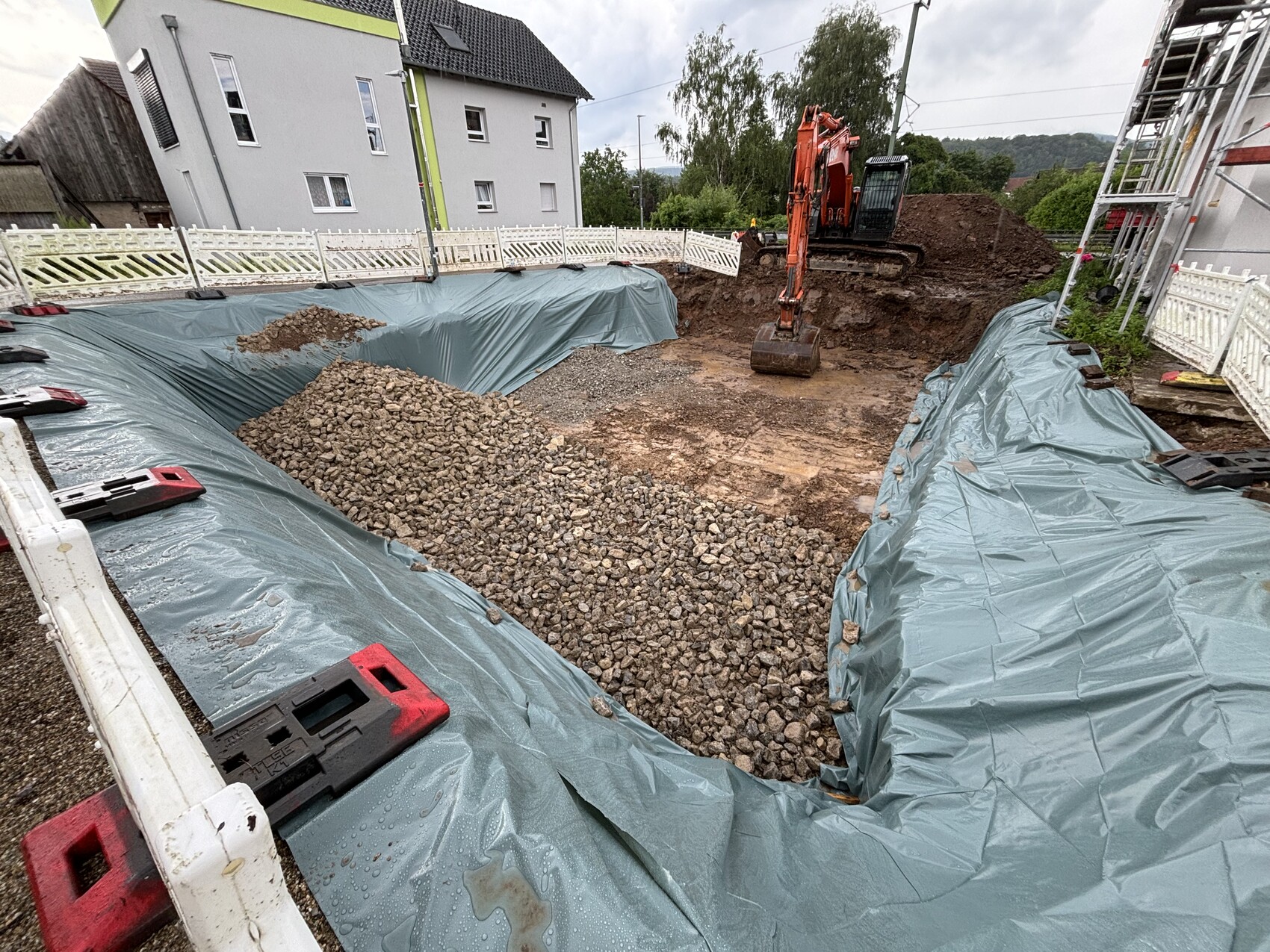
I am quite frustrated and have been worrying a lot lately about the earthworks for a ground slab.
Unfortunately, I was naive and trusted an excavator who said that 1.7m (5.6 ft) of excavation was required (according to the soil report). However, this later turned out to be incorrect!!! He then dug even deeper because he believed the clay soil was not load-bearing. This led to groundwater being encountered.
The overly deep section (about one-third) of the foundation pit was then refilled with soil!!! which, of course, later came back up because fortunately this was noticed. Afterward, crushed stone was placed there, and mineral concrete 0/32 was laid and compacted on the remaining two-thirds of the still moist pit. Then a geotextile was installed, followed by a ring earth electrode, and another layer of mineral concrete/crushed stone 0/32. That is the current status. Overall, an additional 1.5m to 2m (5 to 6.5 ft) of crushed stone now needs to be placed.
The base of the excavation therefore had a slope of approximately 10 degrees… but it has now been almost leveled.
I have since terminated the cooperation with the excavator due to his lack of expertise, which cost me quite a bit of money because the deposit was lost.
Now my questions:
1. Is the slope at the base a problem? Or should it have been completely level?
2. Could the groundwater trapped beneath the crushed stone cause issues with settlement? (Clay/silt)
3. The subgrade was not properly leveled and was moist… could this cause problems regarding the compaction of the 0/32 crushed stone and settlement?
4. The excavation will remain open for 1-2 months. Could this be a problem concerning rain?
5. Can this be left as it is since a very thick crushed stone layer will be placed on top anyway, or what should I do? Should I bring in the soil surveyor who prepared the report?
I am already at the end of my nerves and have only just started.
Many thanks in advance.
Best regards,
Steven
N
nordanney24 Jul 2024 08:03Steve55 schrieb:
Unfortunately, I was too trusting and relied on an excavator who said that 1.7m (5.5 feet) of excavation was necessary (according to the soil report). The excavator would be a fool to have agreed to less against better knowledge! And you would have been wrong to insist on it – after all, you don’t have the qualifications to produce a soil report.
Steve55 schrieb:
He even dug deeper because he thought the clay soil wasn’t load-bearing enough. In that case, the soil expert should have been consulted.
Steve55 schrieb:
Now my questions: No matter what you ask, the answer is: get the soil expert involved.
Because all specific questions can be answered with yes/no/maybe (except for the issue with the rain — it is normal for excavations to remain open for several months).
Hello, it would be interesting to see what the geotechnical report says about this.
I am a geotechnical engineer myself, so please take my comments with caution since I have not seen the construction site, the full process, or the report!
1. No (stormwater/surface water will collect more due to the slope, but it should not cause any problems).
2. No (is that really permanent groundwater or temporary perched water that occurs after rainfall? The coarse aggregate that has been installed is the right solution in this case).
3. No (in general, the subgrade should be dry and firm before the gravel is placed. With soft soils, it is also possible to excavate deeper and then compact additional gravel into the soil. The actual base layer can then be constructed on top of that).
4. No (a clay subgrade should never be left exposed. Once a layer of gravel is installed, the surface is considered "protected." If there is a waiting period before placing the next layers, additional compaction may be required).
5. Yes (in my opinion, this can remain as is. Replacing clay soil with gravel is always better. With the cushion thickness in the end, I would not worry in the case of a single-family house. To be 100% sure, it is always advisable to consult the geotechnical engineer).
Overall, the earthworks approach does not seem obviously wrong. When water is present in the soil, conditions typically get worse with depth rather than better. This should be clarified in the geotechnical report. Soft soils generally need to be replaced. If the earthworks contractor did not know how the soil continues at depth, they will of course continue excavation until they go deeper than necessary. As mentioned, that is exactly what the geotechnical report is intended for—to adapt the foundation to the soil conditions.
I am a geotechnical engineer myself, so please take my comments with caution since I have not seen the construction site, the full process, or the report!
1. No (stormwater/surface water will collect more due to the slope, but it should not cause any problems).
2. No (is that really permanent groundwater or temporary perched water that occurs after rainfall? The coarse aggregate that has been installed is the right solution in this case).
3. No (in general, the subgrade should be dry and firm before the gravel is placed. With soft soils, it is also possible to excavate deeper and then compact additional gravel into the soil. The actual base layer can then be constructed on top of that).
4. No (a clay subgrade should never be left exposed. Once a layer of gravel is installed, the surface is considered "protected." If there is a waiting period before placing the next layers, additional compaction may be required).
5. Yes (in my opinion, this can remain as is. Replacing clay soil with gravel is always better. With the cushion thickness in the end, I would not worry in the case of a single-family house. To be 100% sure, it is always advisable to consult the geotechnical engineer).
Overall, the earthworks approach does not seem obviously wrong. When water is present in the soil, conditions typically get worse with depth rather than better. This should be clarified in the geotechnical report. Soft soils generally need to be replaced. If the earthworks contractor did not know how the soil continues at depth, they will of course continue excavation until they go deeper than necessary. As mentioned, that is exactly what the geotechnical report is intended for—to adapt the foundation to the soil conditions.
P
Pinkiponk25 Jul 2024 12:52Steve55 schrieb:
... I’m a bit desperate and have been stressing a lot lately about the earthworks for a concrete slab. Technically, you have already received competent information and answers that I, as a non-expert, wouldn’t have been able to provide. Based on your description of your soil, it seems to me that it is roughly similar to the soil in our area or construction site: clay, water at about 1.50m (5 feet), etc. Perhaps it will reassure you a little that none of this is a problem. Everything is solvable. Basically—and this is something I had to learn as well—on construction sites, there is always a solution because there are usually several ways to reach the goal or different techniques available.
Our geotechnical report and what our earthworks contractor did probably won’t help you, otherwise I would share those documents with you.
Steve55 schrieb:
I’m already at my wits’ end and have just started. It will be fine. You can ask questions here anytime, day or night, and you will always get helpful answers. Building a house is a great opportunity to learn how to handle life’s challenges. And it’s also a lot of fun.
Who is building the house or the concrete slab? From what I know, the home builder ensures that the slab provides the necessary structural safety for the house, and the slab contractor ensures that the earthworks are carried out properly so that the slab meets all the safety and quality requirements set by the home builder.
Okay, thank you very much for your assessments; they mean a lot to me. Now I can be at ease and continue building on this. It would be best if I eventually bring in the surveyor after all.
The soil report shows up to 1.7m (5.6 ft) of fill—silt, slightly clayey, and then silt, clayey—basically almost the same.
Thanks for the reassuring words. In the beginning, not everything is easy, especially when you’re not familiar with it. I tend to worry about things that might not be necessary.
Yes, I have a project manager from Glatthaar/foundation slab who is overseeing this and also gave the instructions. I probably decided too early to end the cooperation with the earthworks contractor, but due to a few incidents, I lost trust. It will work out 🙂
Thanks again.
The soil report shows up to 1.7m (5.6 ft) of fill—silt, slightly clayey, and then silt, clayey—basically almost the same.
Thanks for the reassuring words. In the beginning, not everything is easy, especially when you’re not familiar with it. I tend to worry about things that might not be necessary.
Yes, I have a project manager from Glatthaar/foundation slab who is overseeing this and also gave the instructions. I probably decided too early to end the cooperation with the earthworks contractor, but due to a few incidents, I lost trust. It will work out 🙂
Thanks again.
Similar topics