
ᐅ Floor Plan Design for a 150 sqm Townhouse with Gable Roof, 6 Rooms
Created on: 28 May 2024 22:14
L
LeFy2023
Dear forum members,
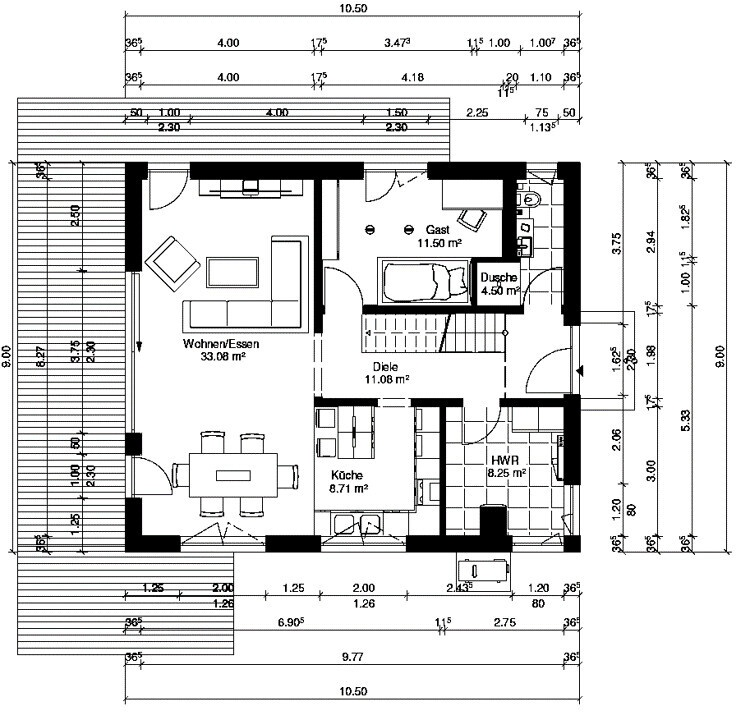
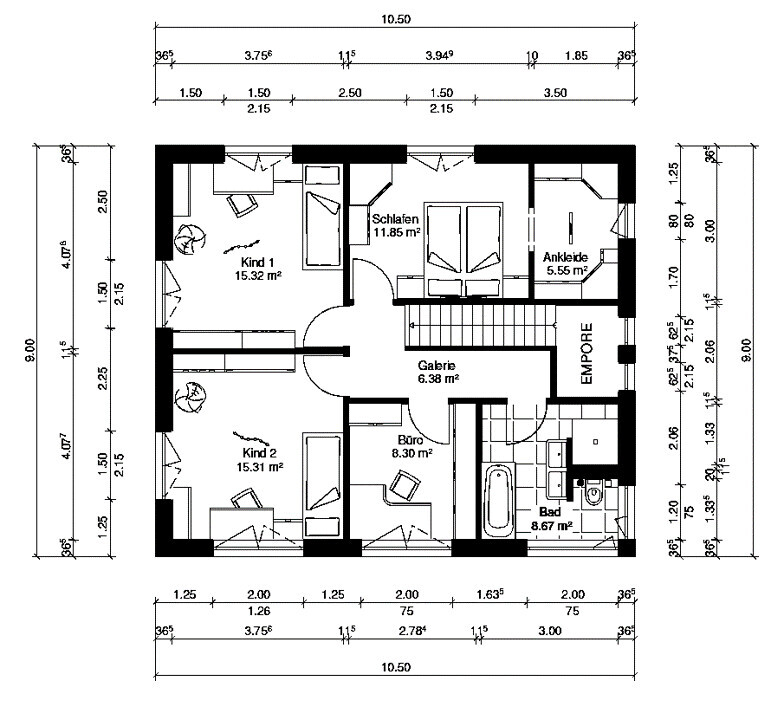
We have completed a preliminary design for our house together with a company and are now at the beginning of the detailed planning stage. Therefore, we would greatly appreciate any suggestions for improvement, critical feedback, and additional ideas or tips regarding the floor plan.
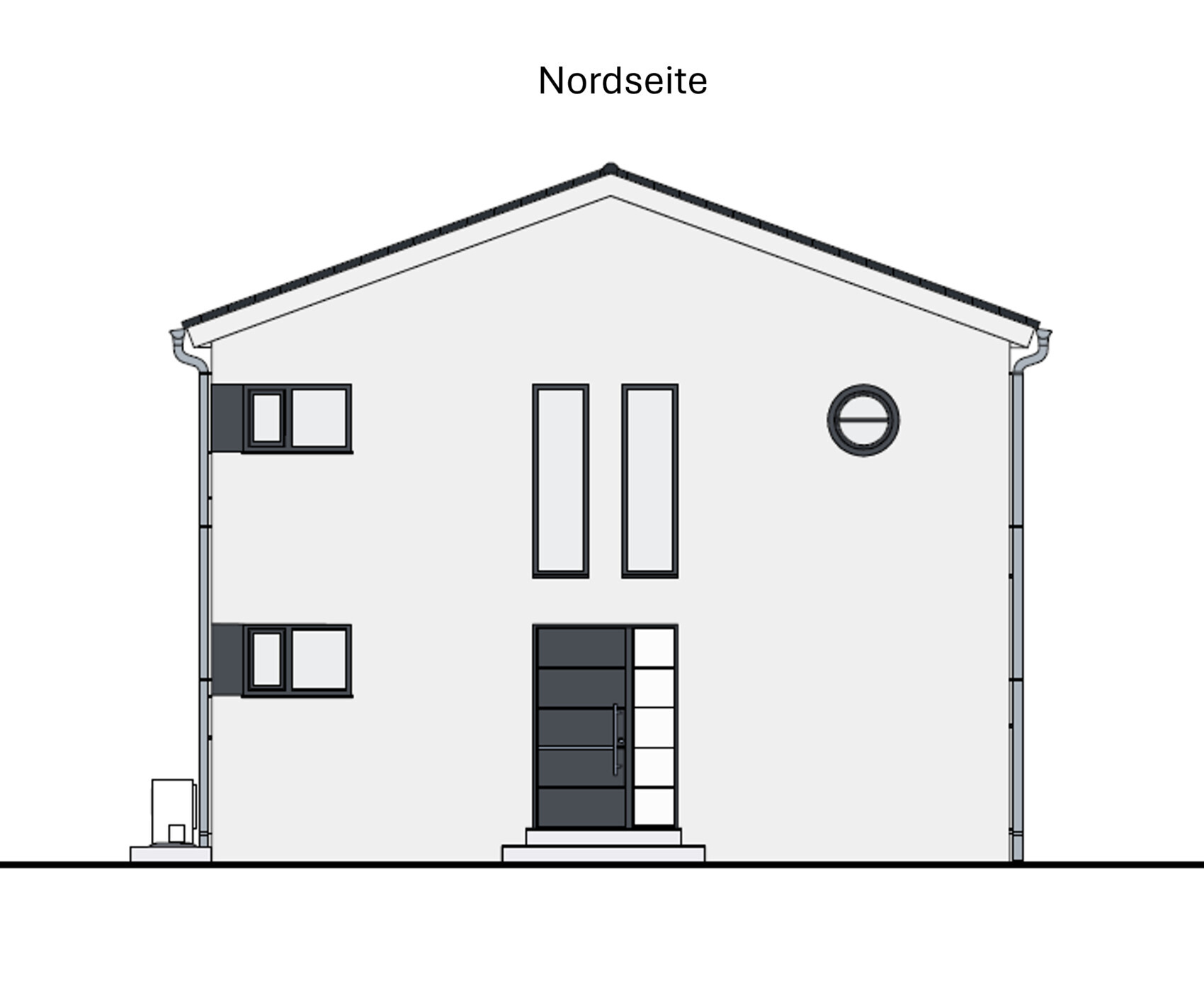
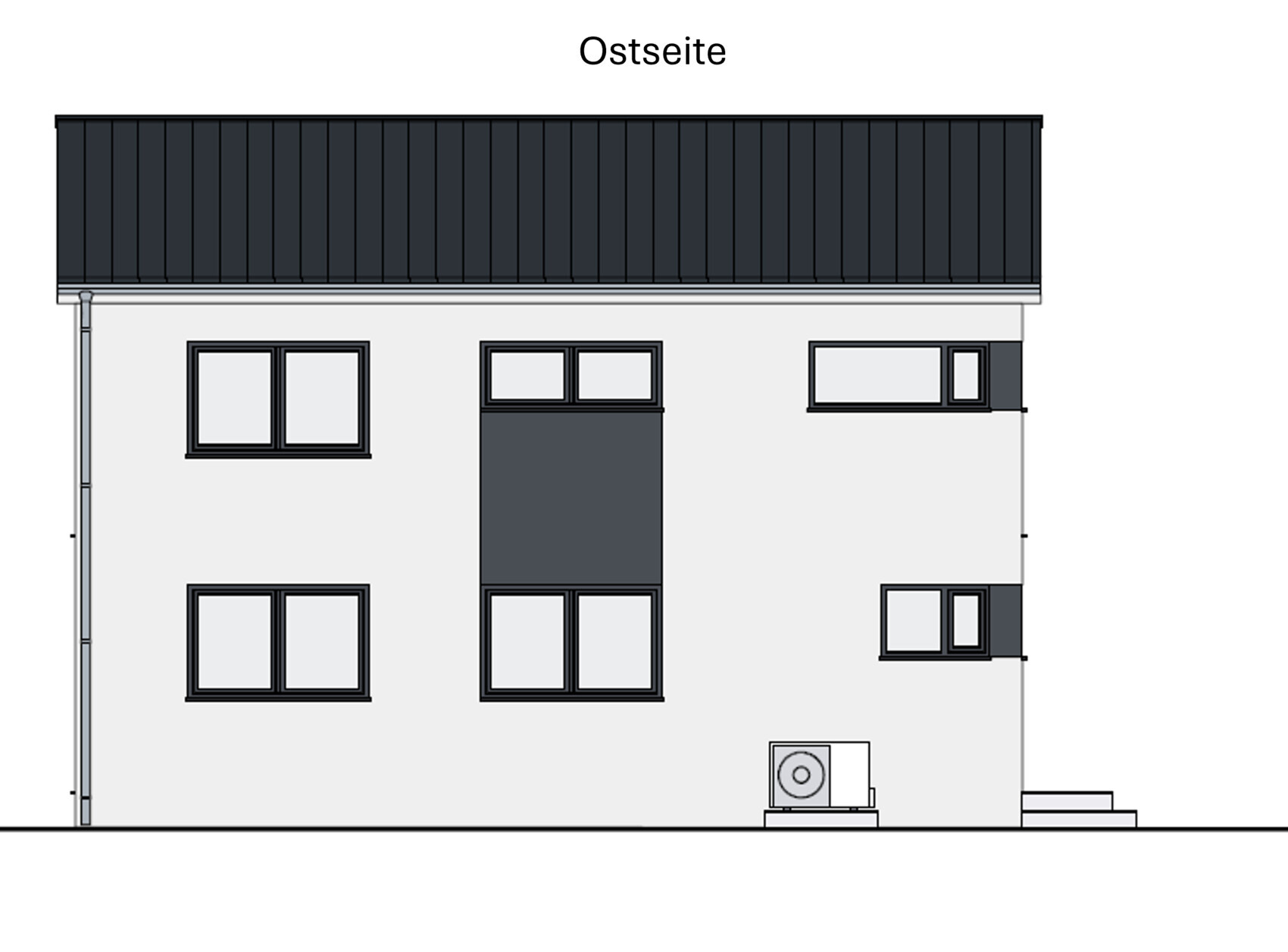
Unfortunately, we do not yet have a site plan, but we do have the floor plans for the ground floor and upper floor at a scale of 1:100, as well as drawings of the house.
Thanks in advance!
Development Plan / Restrictions
Plot size: 700 sqm (7,534 sq ft)
Development according to §34 of the Building Code; the neighborhood features a wide variety of house types, sizes, number of floors, roof styles, etc. A positive preliminary building inquiry exists for a two-story townhouse up to 200 sqm (2,153 sq ft).
Client Requirements
Style, roof type, building type: shallow pitched gable roof, townhouse
Basement, floors: no basement, 2 floors
Number of occupants, age: 2 adults, 1 child (1 year old), possibly a second child planned
Space requirements for ground floor and upper floor: 150 sqm (1,615 sq ft)
Office: family use or home office? Home office for both adults about 3 days per week on average
Occasional overnight guests per year: parents-in-law visit several times a year
Open or closed architecture: open
Conservative or modern construction: modern
Open kitchen, kitchen island: open kitchen with island if possible
Number of dining seats: 4–8
Fireplace: no
Music/sound wall: no
Balcony, roof terrace: no
Garage, carport: yes, one parking space including a shed
Utility garden, greenhouse: possibly
Additional wishes / special features / daily routine, also reasons why something should or should not be included:
- Larger guest room on the ground floor with space for a double bed as the parents-in-law visit frequently
- Guest room on ground floor must also be usable as an office
- Bright rooms / mezzanine
- Open entrance area with open rooms and a view of the garden (a clear sightline)
- Straight concrete staircase to upper floor for dogs and parking space underneath (built-in cupboards)
- Office on upper floor should also serve as a utility/laundry room
- Façade in stone gray with wood cladding elements
House Design
Designer: planner from a construction company
What is liked most? Why?
- Very practical room layout and good room sizes
- Barrier-free access to the guest shower on the ground floor
- Additional storage space in the roof as a storage binder
- Lots of light through large windows
- Laundry room on upper floor close to the bedrooms/children’s rooms
What is disliked? Why?
- Kitchen might be too small / cramped
- Question whether a passage to the kitchen is necessary
- Main entrance is not barrier-free (terrace exit also not)
- The gray elements in the façade are to be replaced by wood cladding to give the house a more distinctive exterior appearance.
Preferred heating system: heat pump
If you had to do without, which details/features?
- Can do without: second washbasin in upper floor bathroom, round window in dressing room (can have a different shape), kitchen island if it doesn’t fit
- Cannot do without: straight concrete staircase, windows, large lift-and-slide door, larger guest room, mezzanine, guest shower on ground floor, walk-in showers, laundry room on upper floor
Why does the design look as it does now? For example,
This is the initial individual draft without adjustments from us so far. A mezzanine, a larger guest room on the ground floor, storage space in the roof, and laundry room on the upper floor were explicitly requested and implemented accordingly.
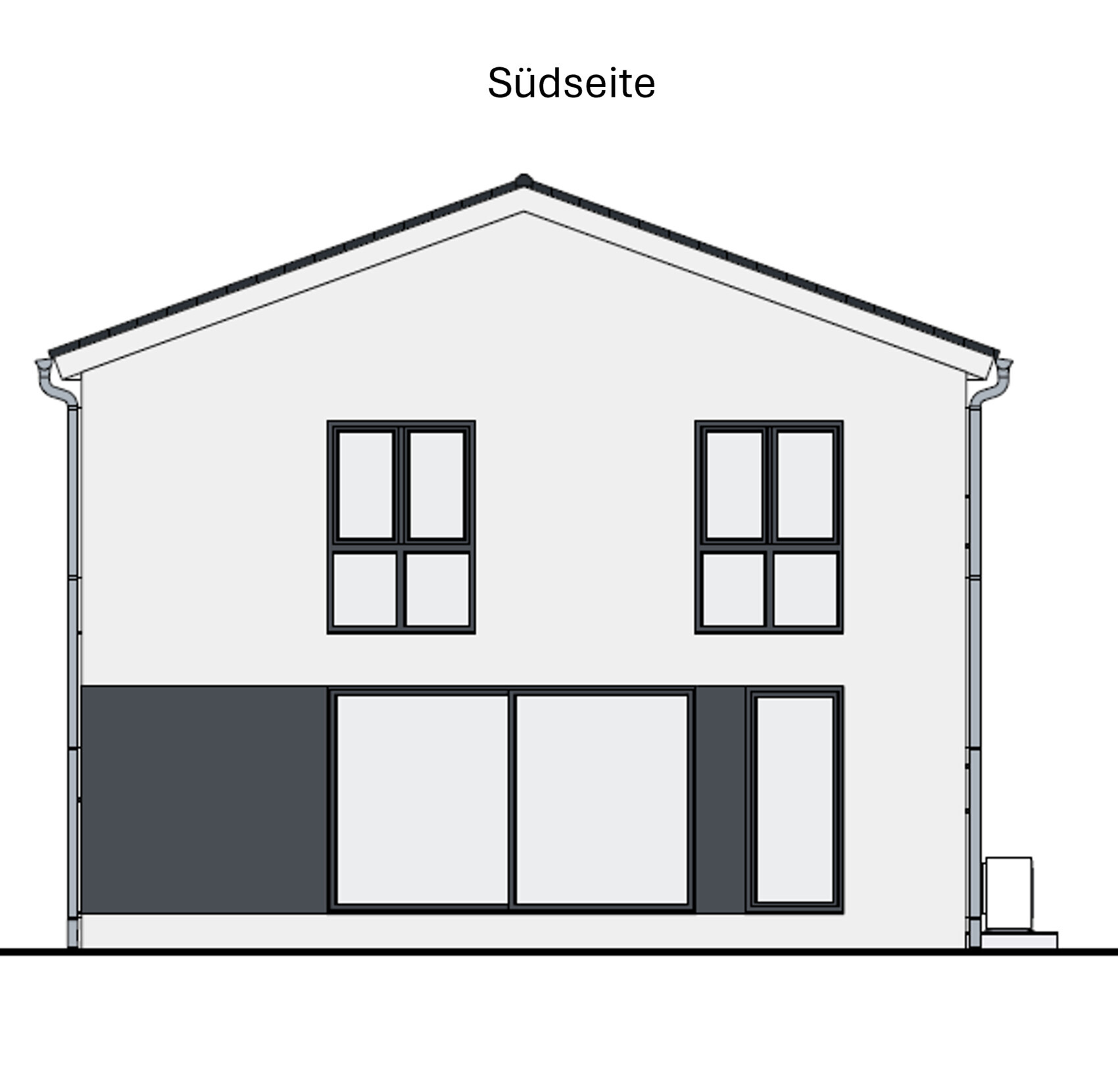
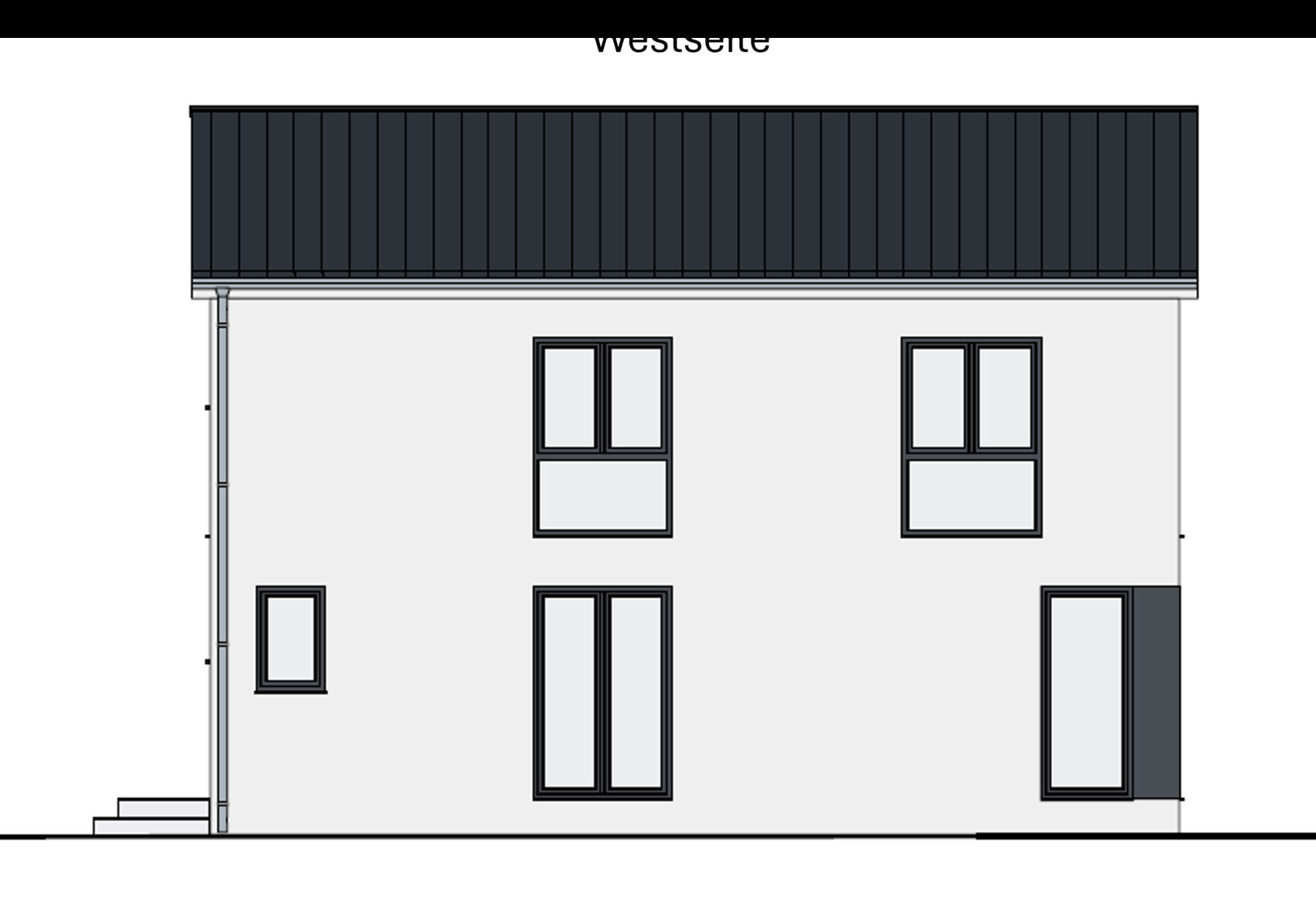
We have completed a preliminary design for our house together with a company and are now at the beginning of the detailed planning stage. Therefore, we would greatly appreciate any suggestions for improvement, critical feedback, and additional ideas or tips regarding the floor plan.
Unfortunately, we do not yet have a site plan, but we do have the floor plans for the ground floor and upper floor at a scale of 1:100, as well as drawings of the house.
Thanks in advance!
Development Plan / Restrictions
Plot size: 700 sqm (7,534 sq ft)
Development according to §34 of the Building Code; the neighborhood features a wide variety of house types, sizes, number of floors, roof styles, etc. A positive preliminary building inquiry exists for a two-story townhouse up to 200 sqm (2,153 sq ft).
Client Requirements
Style, roof type, building type: shallow pitched gable roof, townhouse
Basement, floors: no basement, 2 floors
Number of occupants, age: 2 adults, 1 child (1 year old), possibly a second child planned
Space requirements for ground floor and upper floor: 150 sqm (1,615 sq ft)
Office: family use or home office? Home office for both adults about 3 days per week on average
Occasional overnight guests per year: parents-in-law visit several times a year
Open or closed architecture: open
Conservative or modern construction: modern
Open kitchen, kitchen island: open kitchen with island if possible
Number of dining seats: 4–8
Fireplace: no
Music/sound wall: no
Balcony, roof terrace: no
Garage, carport: yes, one parking space including a shed
Utility garden, greenhouse: possibly
Additional wishes / special features / daily routine, also reasons why something should or should not be included:
- Larger guest room on the ground floor with space for a double bed as the parents-in-law visit frequently
- Guest room on ground floor must also be usable as an office
- Bright rooms / mezzanine
- Open entrance area with open rooms and a view of the garden (a clear sightline)
- Straight concrete staircase to upper floor for dogs and parking space underneath (built-in cupboards)
- Office on upper floor should also serve as a utility/laundry room
- Façade in stone gray with wood cladding elements
House Design
Designer: planner from a construction company
What is liked most? Why?
- Very practical room layout and good room sizes
- Barrier-free access to the guest shower on the ground floor
- Additional storage space in the roof as a storage binder
- Lots of light through large windows
- Laundry room on upper floor close to the bedrooms/children’s rooms
What is disliked? Why?
- Kitchen might be too small / cramped
- Question whether a passage to the kitchen is necessary
- Main entrance is not barrier-free (terrace exit also not)
- The gray elements in the façade are to be replaced by wood cladding to give the house a more distinctive exterior appearance.
Preferred heating system: heat pump
If you had to do without, which details/features?
- Can do without: second washbasin in upper floor bathroom, round window in dressing room (can have a different shape), kitchen island if it doesn’t fit
- Cannot do without: straight concrete staircase, windows, large lift-and-slide door, larger guest room, mezzanine, guest shower on ground floor, walk-in showers, laundry room on upper floor
Why does the design look as it does now? For example,
This is the initial individual draft without adjustments from us so far. A mezzanine, a larger guest room on the ground floor, storage space in the roof, and laundry room on the upper floor were explicitly requested and implemented accordingly.
ypg schrieb:
Could it be that you are not letting the planner do the planning, but are prescribing everything to them? LeFy2023 schrieb:
He only had the information, I wasn’t referring to the windows! I mean the entire planning process! The planner corrects your mistakes, and as a result, many things become awkward—like the washbasin in the small shower-toilet room. Who would even think of dividing that room further with an additional wall?
ypg schrieb:
I wasn’t referring to the windows! I meant the whole design! He corrects your mistakes, and as a result, many things become “off,” like the washbasin in the small shower-toilet. Who would think of dividing that room further with an additional wall? The planner’s task should be to correct, improve, or discard any errors in sketches or requirements so that the overall design is coherent. We’re not sending him fully scaled drawings for him to simply copy. If he made everything 100% perfect, we wouldn’t need this thread here. But you yourself took his first draft completely apart. Apparently, he also makes “mistakes” or is imprecise in some areas.
It would be helpful to know all the points you consider inconsistent so that we can send him adjusted requirements if they suit us. So far, I’ve noted: staircase rotated to make room for a closet in the walk-in wardrobe and spacing of the washbasin in the guest bathroom. What else?
LeFy2023 schrieb:
It would be helpful to know which areas you consider particularly awkward, But this is something we constantly discuss here. They are certainly all named and explained on the respective pages.
LeFy2023 schrieb:
He probably also makes "mistakes" or is inaccurate in some places He is allowed to make mistakes. And he is also allowed not to make mistakes, while you criticize and object, and he does things differently.
LeFy2023 schrieb:
so that we can send him adjusted requirements, But that is exactly the wrong approach, as it leads to mistakes. The planner develops ideas. You give him instructions not in words, but as facts on the drawings, he improves it, and the result is a small shower toilet with a wall! which makes the room almost unusable. Miss Piggy can pass through, but not the elderly. He corrects the sink to a hand basin because the space with the wall no longer allows anything else. He would probably simply plan a shower in the corner to make the bathroom functional, but the client demands a walk-in shower with a wall, which, including tiles, will add about 17cm (7 inches) of width. The shower will have a maximum finished width of 70cm (28 inches), despite the hand basin. It is YOUR responsibility to check the dimensions to see if the design is feasible when YOU give specifications to the planner. You tell the planner that he can send his brain on vacation and think he is now an artist who can make everything compact just because you instruct him so.
Here are some problems caused by the rotated staircase and the bathroom with a 55cm (22 inches) deep washbasin and a 75cm (30 inches) tub. The few centimeters between the wall and the fixtures (gaps in the drawing) are due to plaster and tiles. The washbasin here is without a stud wall, which usually adds about 15cm (6 inches) in depth.
Here are more examples of bathroom layouts that allow more than one person to move around comfortably. They serve as a comparison to your T-shaped bathroom solution, showing that furnishing a family bathroom of average size this way is not ideal.
Personally, I would limit myself to only one solid wall and use glass for the rest.
S
Schorsch_baut16 Jun 2024 00:09motorradsilke schrieb:
I wouldn’t worry too much about furnishing the children’s rooms. They’ll rearrange everything more than once anyway and set it up however they want. I have to strongly disagree. We have two rather poorly designed children’s rooms, and if I were building new, I would plan them very carefully. There is so much that needs to be accommodated in the children’s rooms. Yet planners still come up with outdated designs from the 1980s—with a 1 m (3 ft 3 in) desk, a tiny bed, and a 1 m (3 ft 3 in) wardrobe. Most people put more thought into the guest bathroom than the living space for their children.
Schorsch_baut schrieb:
I have to strongly disagree. We have two rather modestly planned children’s rooms The rooms here are nearly 15sqm (160 sq ft) without sloping ceilings, so they are not small by any means, but rather well-shaped spaces where a lot is possible. I would also not worry too much about the furniture, as every child is different and will create their own little nook.
Schorsch_baut schrieb:
With a 1-meter (3.3 feet) desk, a mini bed, and a 1-meter (3.3 feet) wardrobe. https://www.hausbau-forum.de/attachments/grundrissplanung-stadthaus-150qm-mit-satteldach-6-zimmer-664413-1-png.86277/
Of course, the two setups might conflict somewhat, but many options remain. The original poster is only planning a primary school desk but includes the oversized bed in American style. The designer uses 40cm (16 inch) cabinets and toys scattered on the floor...
The child will figure it out.
However, my focus has been more on the bathroom (the internet is full of bathrooms with placeholder furniture that later cause problems during execution), which should be clear.
M
motorradsilke16 Jun 2024 07:26ypg schrieb:
Here, the nearly 15 square meters (160 square feet) without a sloped ceiling are not small rooms, but rather well-shaped spaces where a lot is possible. I wouldn’t focus too much on the furniture layout since every child is different and will create their own little retreat.
Exactly. I don’t know any child who has left their room’s setup unchanged over the years. The planned rooms here offer so many options (bed in the alcove, wardrobe in the nook, desk in front of the window, desk against the wall).
By the way, washbasins don’t necessarily require a stud wall installation. I don’t understand why that is such a big issue. The pipes fit even inside 115mm (4.5 inches) thick interior walls.
Similar topics