
ᐅ Heat pump on the flat roof is making a loud humming noise
Created on: 3 Apr 2024 07:32
N
Nik_HamburgN
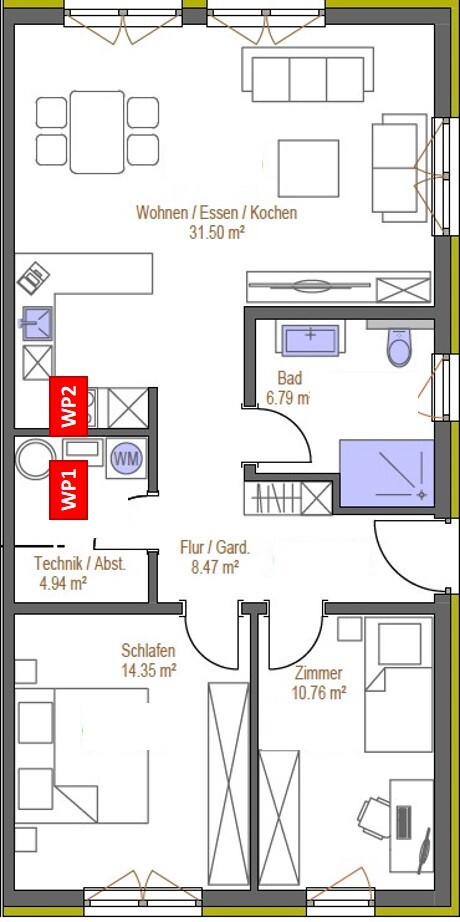
Nik_Hamburg3 Apr 2024 07:32Hello everyone, we purchased a new apartment from a developer. The building has four units, two on the ground floor and two upstairs, with a flat roof timber structure featuring insulation above the rafters and a suspended hollow ceiling. Since there are no common rooms in the building, each apartment has its own heating system (heat pump) with one outdoor unit on the roof. Two of these units are located above our apartment, above the utility room (next to the bedroom) and the kitchen with living area. All interior walls of the apartment are lightweight construction walls. Since the electricity finally started working recently and the units are running, there is a loud humming and droning noise from above, as if a lawn mower is running on the roof. It is unbearable; we are relieved every time we leave the apartment.
Outdoor unit model: Daikin Altherma 3R (I believe, see photos in the link below), placed on small, round vibration isolation feet on vibration dampening beams, which are mounted on concrete beams that are reportedly (I cannot see, as there is green roof substrate on top) resting on vibration isolation mats.
Photos attached.
I am just surprised why the humming and droning noise is still so loud despite the vibration isolation measures. Of course, I also don’t know whether it is airborne noise or structure-borne noise (or both).
Does anyone have any idea what could be done technically here? We are really sad and desperate; it is impossible to move into this apartment.
The only thing I can think of as a layperson would be to place huge and very thick sound insulation mats under the outdoor units. But somehow they also need to be fixed securely, otherwise they could be blown away. Or open the ceiling again and insert thick insulation wool between the rafters. I am really at a loss. Unfortunately, the developer is incompetent and does not take care of the legal or cost issues; we will have to deal with that later.
Thanks for your help. Nik
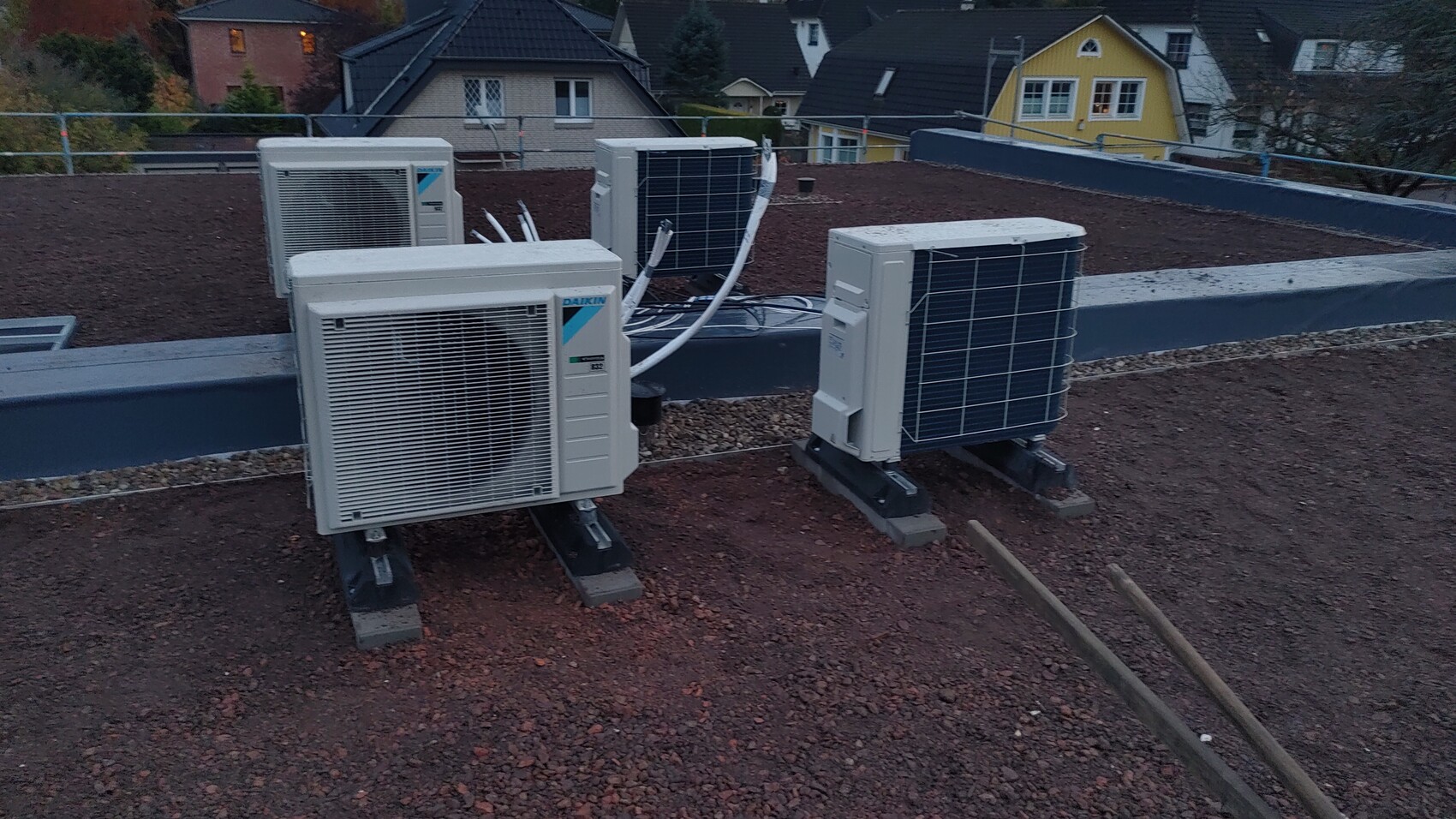
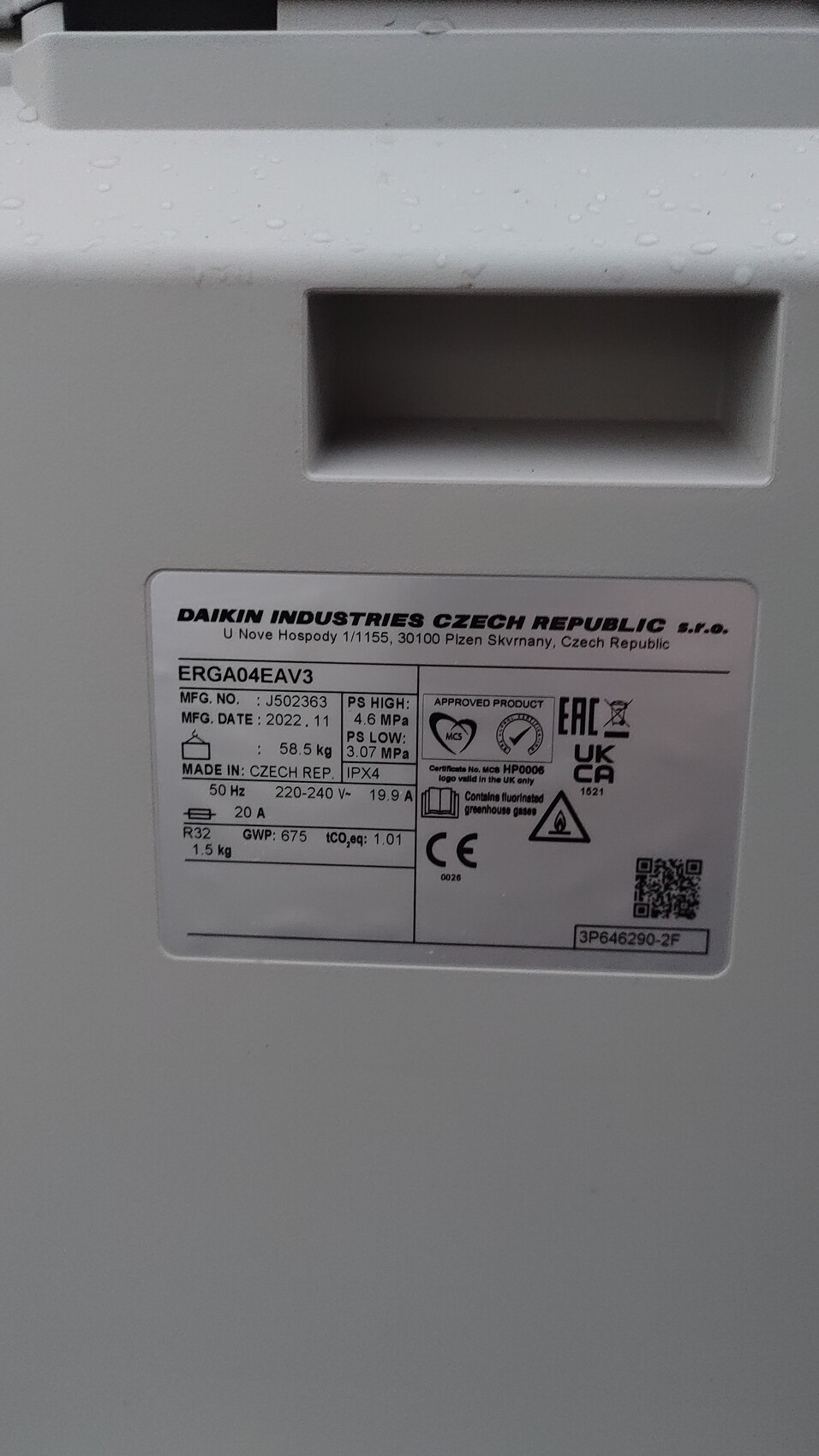
Outdoor unit model: Daikin Altherma 3R (I believe, see photos in the link below), placed on small, round vibration isolation feet on vibration dampening beams, which are mounted on concrete beams that are reportedly (I cannot see, as there is green roof substrate on top) resting on vibration isolation mats.
Photos attached.
I am just surprised why the humming and droning noise is still so loud despite the vibration isolation measures. Of course, I also don’t know whether it is airborne noise or structure-borne noise (or both).
Does anyone have any idea what could be done technically here? We are really sad and desperate; it is impossible to move into this apartment.
The only thing I can think of as a layperson would be to place huge and very thick sound insulation mats under the outdoor units. But somehow they also need to be fixed securely, otherwise they could be blown away. Or open the ceiling again and insert thick insulation wool between the rafters. I am really at a loss. Unfortunately, the developer is incompetent and does not take care of the legal or cost issues; we will have to deal with that later.
Thanks for your help. Nik
Nik_Hamburg schrieb:
It stands on small, round vibration isolation feet on vibration damping beams, which are mounted on concrete beams that supposedly (I can't see, there is green roof substrate on top) rest on sound insulation mats.The developer must have thought: 4 residential units = 4 heat pumps = good. However, the fact that four identical noise sources are significantly louder than one is not their problem. In addition, all four heat pumps must be properly isolated to control the noise. Do the other residents have the same problem? Has the final inspection already been completed, or has the purchase price been fully paid? I hope not, as that would still give you leverage against the developer.
The noise is almost certainly structure-borne sound, meaning it is transmitted due to a lack of proper isolation. The setup as described initially makes sense, but if a sound bridge has been built somewhere, even the best isolation elsewhere won’t help.
It is correct that some mass, for example in the form of concrete, should be present beneath the outdoor unit for vibration damping. This has been addressed here by the concrete strips.
You should clarify whether the concrete strips, on which the black mounting bases are placed, are floating on the damping mats or additionally screwed down. Since that would require penetrating the waterproofing, I doubt it, but it is possible.
In your photo, the heat pumps are not yet connected. Was acoustic isolation considered during installation? For monoblock outdoor units, flexible hoses are used for this purpose. For connection with copper refrigerant lines, compensators should be used, or flexible lines at the connection arranged in a loop to allow free vibration.
How is the condensate drainage handled? Is there a pipe drainage system? These pipes should also be acoustically isolated.
The electrical connection / cables can also transmit structure-borne sound. A loop at the connection should be present here as well.
If the neighbors have the same problem, report it to the developer in writing as a defect, and if they block, consider involving an acoustic consultant who can prepare an expert opinion.
N
Nik_Hamburg4 Apr 2024 23:19Hello dertill, thank you very much for your quick and detailed response! The inspection already took place about a week ago, but there was no power at that time, so the heat pump wasn’t running. Luckily, we still have an outstanding installment and a guarantee. My neighbors next door in the upper floor under the roof also noticed the humming noise; they have the other two outdoor units above their apartment.
I’m not sure whether these are copper pipes or flexible conduits. In the one photo I posted (of the two units on the roof), the prepared lines look more like flexible conduits (?), since they are slightly bent. However, in an older photo I took from the ceiling in the utility room, it looks more like copper pipes are coming from the roof.
The architect said he has informed the heating company, and they are supposed to check the vibration isolation. This will take place next week. I will address your points and report back.
Unfortunately, the developer is not one I would recommend (I’m trying to be diplomatic here). If the heating company doesn’t manage to solve the issue next week (or at least identify the problem), it will probably lead to a noise assessment.
For your information: I measured with my phone (of course these are not reliable results, but still): with the heat pump switched off, in the living room next to the utility room where the units are above, 33 dB; with the heat pump running and a “quiet” humming, 41 dB; and with loud humming, 49 dB (windows closed, no outside noise, holding my breath). These are quite significant levels...
Thanks again and best regards!
Nik
I’m not sure whether these are copper pipes or flexible conduits. In the one photo I posted (of the two units on the roof), the prepared lines look more like flexible conduits (?), since they are slightly bent. However, in an older photo I took from the ceiling in the utility room, it looks more like copper pipes are coming from the roof.
The architect said he has informed the heating company, and they are supposed to check the vibration isolation. This will take place next week. I will address your points and report back.
Unfortunately, the developer is not one I would recommend (I’m trying to be diplomatic here). If the heating company doesn’t manage to solve the issue next week (or at least identify the problem), it will probably lead to a noise assessment.
For your information: I measured with my phone (of course these are not reliable results, but still): with the heat pump switched off, in the living room next to the utility room where the units are above, 33 dB; with the heat pump running and a “quiet” humming, 41 dB; and with loud humming, 49 dB (windows closed, no outside noise, holding my breath). These are quite significant levels...
Thanks again and best regards!
Nik

Nik_Hamburg schrieb:
I don’t know if those are copper or flexible pipes. In the photo I posted (of the two units on the roof) the prepared pipes look more like flexible pipes (?), since they are slightly bent. These are split-system units, not monoblock designs. Therefore, these are copper pipes for the refrigerant with insulation. They are also flexible to some extent. Flexible pipes look like the connection pieces under a sink from the angle valve to the faucet and are insulated separately, but they are not delivered pre-insulated. However, they are only used with water.
For refrigerant lines (split-system), a vibration dampening / decoupling fitting must be installed at the connection point, and the copper pipe can additionally be routed in a loop.
Nik_Hamburg schrieb:
With the heat pump switched off in the living room next to the technical room where the units are located, it measures 33 dB; when the heat pump is running with a "quiet" hum, it’s 41 dB; and with a loud hum, it reaches 49 dB (window closed, no outside noise, holding breath). That is quite noticeable, although the dB apps often show very different values, especially if they aren’t calibrated, which is hard to do without proper equipment. In any case, I wouldn’t accept that level of noise.
Rübe1 schrieb:
If they were installed like that in the end, there is another problem. Each pump is forced to take in "cold" air, which leads to a significant efficiency loss. How careless can you be... Wow! I hadn’t even noticed that they are installed “in series.” For structure-borne noise that may not be so important, but if the second unit is always pulling air that is 3°C (5°F) cooler, that quickly translates to about 20% higher electricity consumption and continuous defrost cycles, since the incoming air is already partially cooled down to the dew point.
Similar topics