
ᐅ Looking for information on basements with waterproof concrete tanking systems
Created on: 2 Apr 2024 16:35
M
M a v oWe plan to build a usable basement with light wells (approximately 1-1.5m deep for windows) beneath a prefabricated house.
The soil survey for the plot itself is not yet available (-> commissioned), but there are surveys for the entire new development area, including dynamic cone penetration tests conducted almost directly next to the plot. (See attached file)
Due to occasionally pressing groundwater, construction with a waterproof concrete shell ("white tank") will be necessary.
Without the waterproof concrete shell, we have received offers from prefabricated house suppliers for a size of approximately 9x10m (30x33 feet) including foundation, 4 light wells, and 2 windows ranging from €70,000 to €80,000.
Earthworks would cost about €20,000 to €25,000.
We have several questions:
1. How exactly does a light well integrated with a waterproof concrete shell work, including drainage options (we have not found any photos), and what additional costs should be expected?
2. What approximate extra costs should be anticipated for a basement of the above size when constructed with a waterproof concrete shell?
3. For neighboring plots, earthworks have already been planned requiring backfilling with gravel or similar material if no basement is built. Can it be determined from the attached file that this will no longer be necessary when building a basement, since the foundation reaches close to firmer soil?
I look forward to all information and questions.
Regards
"6.2.6 General assessment of moisture protection According to DIN 18533 and the execution guidelines of the German Committee for Reinforced Concrete (DAfStB Guideline for Waterproof Concrete Structures), the load case of soil moisture and non-pressing water may only be applied if the permeability coefficient for the soil is assumed to be kf 10^-4 m/s. For the clayey soils likely present at the working slab level, it is expected that this requirement will mostly not be met. Therefore, the following options are considered for moisture protection: 1. External waterproofing according to DIN 18533 assuming water exposure class W2.1-E (moderate exposure to pressing water) 2. Execution of all earth-contacting structural parts according to the DAfStB guideline for waterproof concrete structures. Design is based on stress class 1, which covers pressing water, non-pressing water, and temporarily rising water. All construction joints and penetrations must be made watertight with coordinated systems (joint tapes, joint sheets, injection hoses, etc.)."
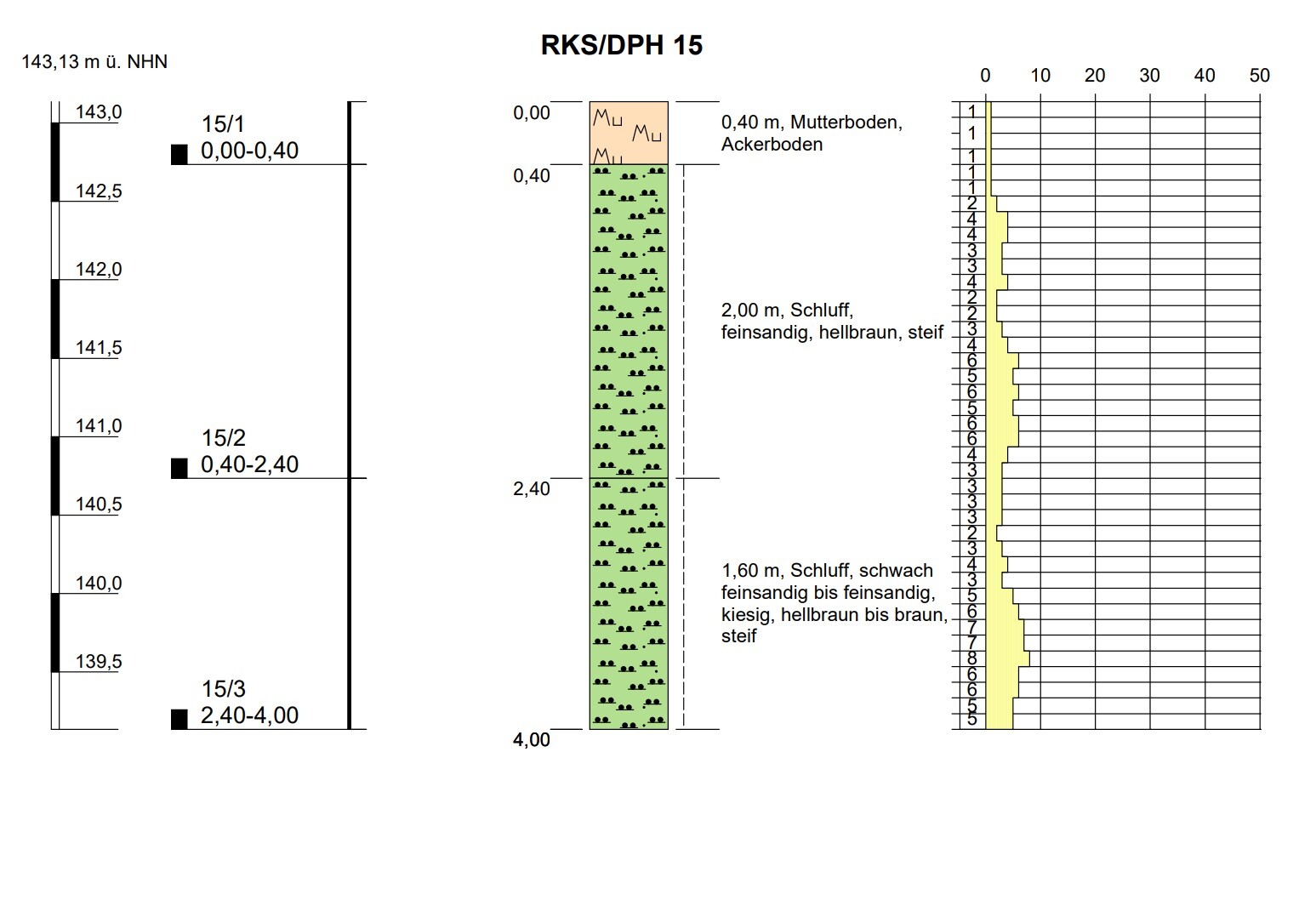
The soil survey for the plot itself is not yet available (-> commissioned), but there are surveys for the entire new development area, including dynamic cone penetration tests conducted almost directly next to the plot. (See attached file)
Due to occasionally pressing groundwater, construction with a waterproof concrete shell ("white tank") will be necessary.
Without the waterproof concrete shell, we have received offers from prefabricated house suppliers for a size of approximately 9x10m (30x33 feet) including foundation, 4 light wells, and 2 windows ranging from €70,000 to €80,000.
Earthworks would cost about €20,000 to €25,000.
We have several questions:
1. How exactly does a light well integrated with a waterproof concrete shell work, including drainage options (we have not found any photos), and what additional costs should be expected?
2. What approximate extra costs should be anticipated for a basement of the above size when constructed with a waterproof concrete shell?
3. For neighboring plots, earthworks have already been planned requiring backfilling with gravel or similar material if no basement is built. Can it be determined from the attached file that this will no longer be necessary when building a basement, since the foundation reaches close to firmer soil?
I look forward to all information and questions.
Regards
"6.2.6 General assessment of moisture protection According to DIN 18533 and the execution guidelines of the German Committee for Reinforced Concrete (DAfStB Guideline for Waterproof Concrete Structures), the load case of soil moisture and non-pressing water may only be applied if the permeability coefficient for the soil is assumed to be kf 10^-4 m/s. For the clayey soils likely present at the working slab level, it is expected that this requirement will mostly not be met. Therefore, the following options are considered for moisture protection: 1. External waterproofing according to DIN 18533 assuming water exposure class W2.1-E (moderate exposure to pressing water) 2. Execution of all earth-contacting structural parts according to the DAfStB guideline for waterproof concrete structures. Design is based on stress class 1, which covers pressing water, non-pressing water, and temporarily rising water. All construction joints and penetrations must be made watertight with coordinated systems (joint tapes, joint sheets, injection hoses, etc.)."

M a v o schrieb:
Hello, this is my first post here, and I hope this is the right category and that I’m providing the correct information.
We want to build a usable basement with light wells (about 1–1.5 meters deep for windows) under a prefabricated house. The soil report for the plot is not available yet [...] Due to occasionally pressing water, the basement would have to be constructed as a waterproof concrete shell (“white tank”). This is not only your first post, but you have only been here for two hours. I suggest you take some time to read through the forum first. After that, you will probably reconsider some of your plans, realizing that you have already planned too far ahead given your current level of knowledge.
A usable basement with light wells sounds rather impractical, since utility connections, storage, and miscellaneous items do not require a view. Conversely, rooms that have a demand for a view are no longer considered typical utility basements. You mention only the qualitative soil conditions of your plot, but say nothing about terrain elevation differences—which are at least equally important.
I can easily imagine that your plot may not even be suitable for a basement; in that case, the further question of how to keep it dry would not even arise.
If your soil report is still pending, you cannot yet proceed reasonably with an architect into the design development phase (phase 2 of services), and therefore you cannot make any fact-based decisions regarding the construction method. So what is the purpose of already committing to a prefab house at this stage?
Just searching the forum for the term “prefab house” will provide you with several days’ worth of reading material that will bring you back to earth and highlight the gaps in your knowledge. It’s better to replace myths and assumptions with facts before you let your planning dreams run wild (unless you want to pay a high price later in corrections and additional costs).
https://www.instagram.com/11antgmxde/
https://www.linkedin.com/company/bauen-jetzt/

M a v o schrieb:
1. How exactly does a light well in a waterproof concrete shell with drainage workDefinitely not with drainage; with water pressure, it runs backward and fills the light wells, and without waterproof basement windows, also the cellar. If the level is below the sewer line, that means a lifting station (sump pump) is required.
The light wells from the usual suspects can be installed to be watertight under pressure—the additional effort is minimal (maybe about 1 hour extra work per light well, if that), but they must be mounted directly on the waterproof concrete, which is not ideal from a thermal perspective (if your basement is intended to be within the thermal envelope). There are also solutions to achieve this completely without thermal bridging; however, these are somewhat more expensive because they require special prefabricated insulation panels as the mounting base.
I don’t see any issues with drainage here—the light well itself is “watertight” from below, left, and right, and is simply connected to your drainage system in a watertight manner as well. Usually, no drainage is installed with waterproof concrete basements, so that would certainly be an additional cost compared to the aforementioned options.
It becomes more complicated if the light wells and basement windows need to be floodproof. This requires either expecting water from above (flowing into the light well) or backflow from the drainage system—in the case of the latter, a backflow preventer can be installed at the drainage connection of the well (which, of course, can quickly become problematic during prolonged rainfall...).
Additional costs for waterproof concrete construction are generally manageable—did they offer you prefabricated elements? If so, the price should include the waterproof concrete version. Additional costs only arise compared to masonry basements, which I don’t think any prefab house supplier would offer.
However, estimating 20,000 to 25,000 Euros for earthworks is quite optimistic. You really need to be careful with that. Did they include disposal and similar services in their offer?
I don’t see any issues with drainage here—the light well itself is “watertight” from below, left, and right, and is simply connected to your drainage system in a watertight manner as well. Usually, no drainage is installed with waterproof concrete basements, so that would certainly be an additional cost compared to the aforementioned options.
It becomes more complicated if the light wells and basement windows need to be floodproof. This requires either expecting water from above (flowing into the light well) or backflow from the drainage system—in the case of the latter, a backflow preventer can be installed at the drainage connection of the well (which, of course, can quickly become problematic during prolonged rainfall...).
Additional costs for waterproof concrete construction are generally manageable—did they offer you prefabricated elements? If so, the price should include the waterproof concrete version. Additional costs only arise compared to masonry basements, which I don’t think any prefab house supplier would offer.
However, estimating 20,000 to 25,000 Euros for earthworks is quite optimistic. You really need to be careful with that. Did they include disposal and similar services in their offer?
H
hanghaus20233 Apr 2024 09:50M a v o schrieb:
We want to build a utility basement with light wells (about 1-1.5m (3-5 feet) deep for windows) under a prefabricated house. I would first consider whether it might be better to build the house on top of the basement.
Otherwise, wait for the soil survey report first.
If the basement is absolutely necessary, then your planner must know what they are doing.
Pay special attention to the spoiler!
H
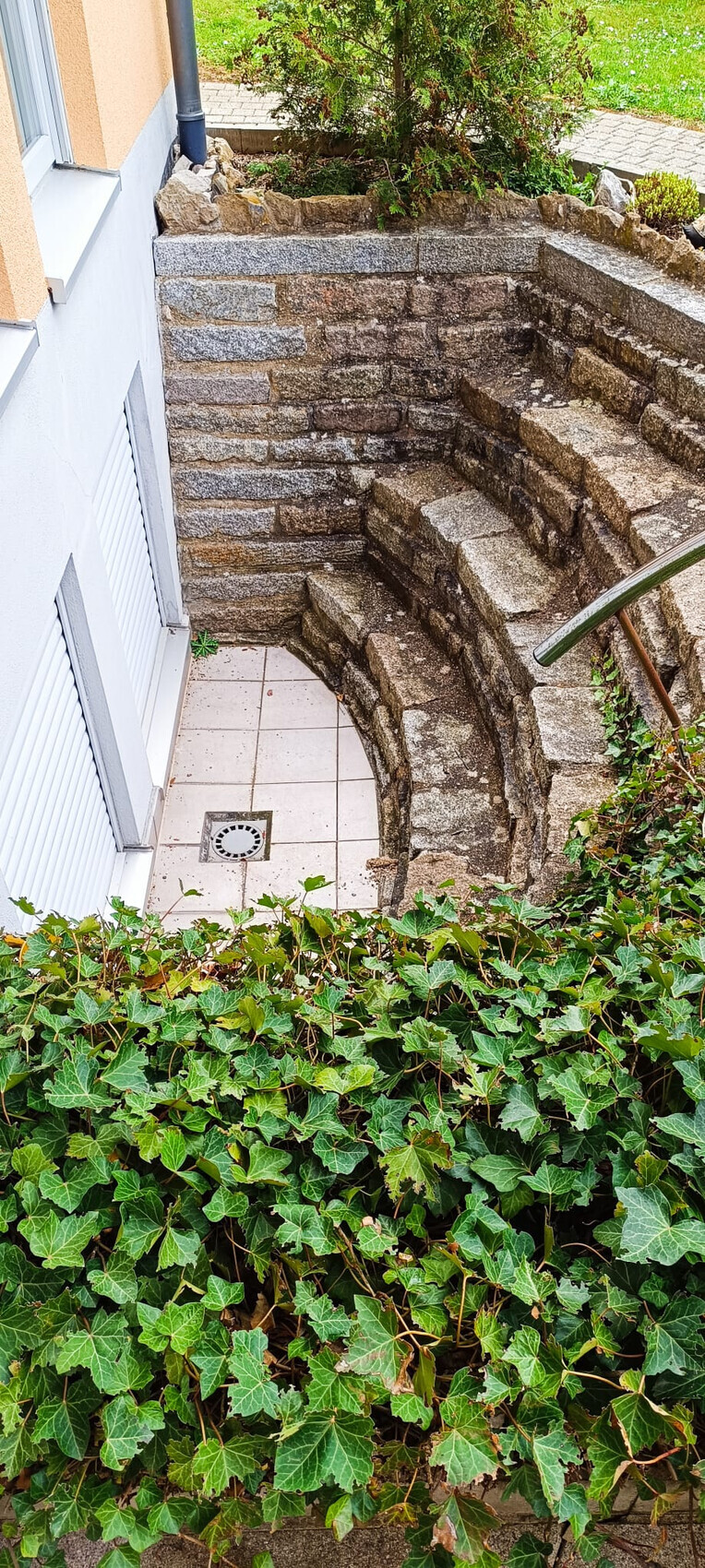
hanghaus20233 Apr 2024 09:58Here is a picture of the foundation slab with drainage.
Similar topics