
H
HausGraus31 Mar 2024 15:55Hello,
our heating installer has installed the underfloor heating, and there are several things that seem odd to me. There are 3 cm (1.2 inches) EPS insulation boards (0.35) with a studded panel and 17 mm (0.67 inches) PE-Xa pipes.
In my opinion, the layer below the screed needs to be sealed. That is the only way to prevent screed from flowing into the gaps between the insulation boards or the edge insulation strip. In the worst case, the boards could start to float, or there would be a rigid connection between the screed and the edge insulation strip or wall (-> sound and thermal bridge).
On the other hand, I was told that in the area of the stairs, the screed will be poured directly onto the edge insulation strip. Otherwise, the screed would be too thin to support the staircase above. Wouldn’t that be a sound bridge as well?
Are my concerns unfounded, or does the installer need to redo the work before the screed is poured?
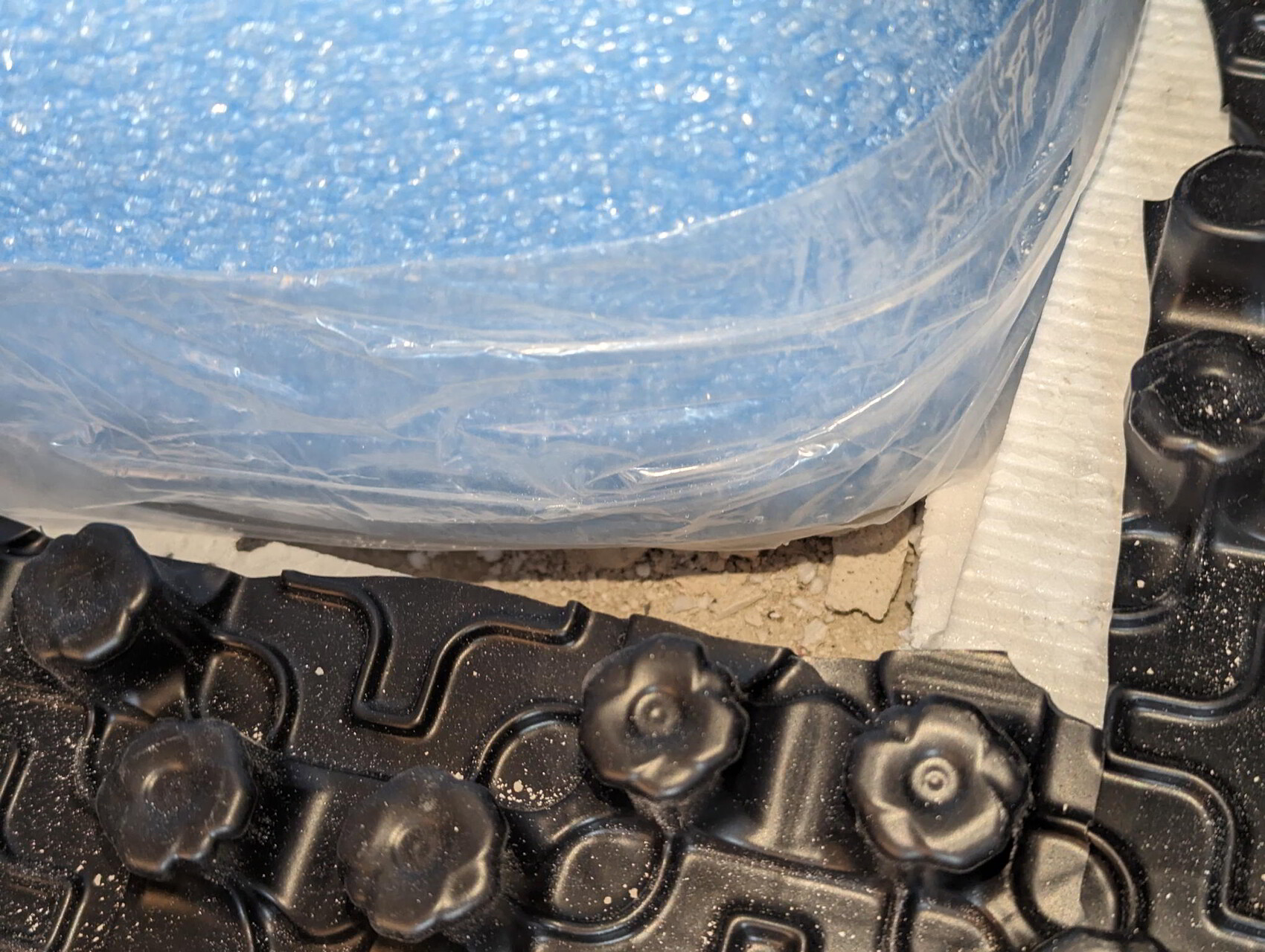
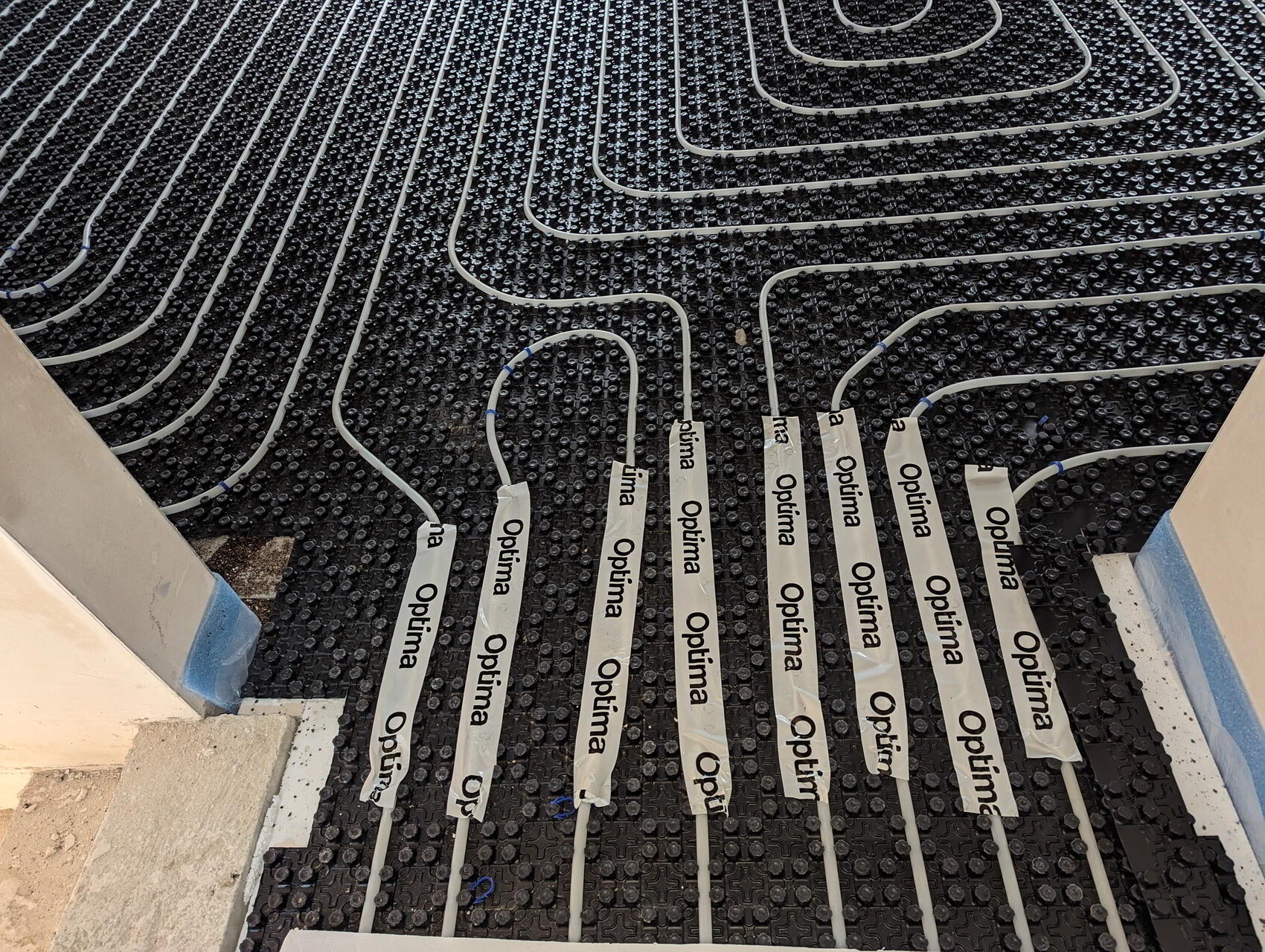
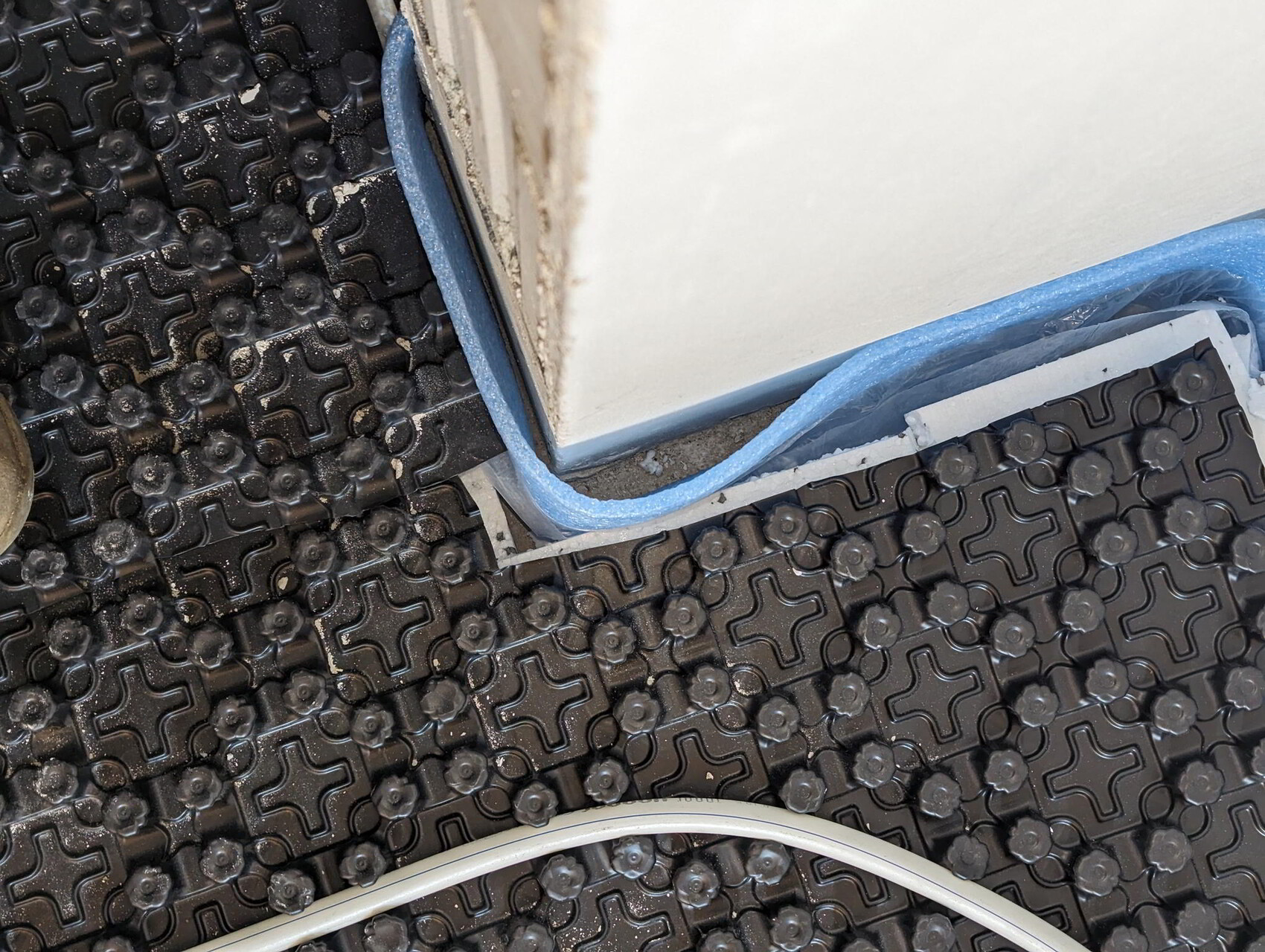
our heating installer has installed the underfloor heating, and there are several things that seem odd to me. There are 3 cm (1.2 inches) EPS insulation boards (0.35) with a studded panel and 17 mm (0.67 inches) PE-Xa pipes.
- The transparent film from the edge insulation strip is lying loose on the studded panel. Shouldn’t the film be fixed with tape or a foam strip? When the screed is poured, something could shift, allowing the screed to get into the lower part of the insulation strip.
- In some areas, the film is under the studded panel or even extends down to the raw floor.
- In some places, there is neither insulation nor studded panel, and you can see the raw floor. I’m less worried about heat loss and more about possible sound bridges. Is this acceptable?
- In some spots, the gaps have been at least partially filled with loose fill (Uponor). But there is no plastic layer above it. Can the screed flow through or penetrate deeply into the loose fill?
- At the transitions between rooms, tape was applied over the pipes. I have usually seen short pipe sections there. Is this supposed to accommodate expansion somehow?
In my opinion, the layer below the screed needs to be sealed. That is the only way to prevent screed from flowing into the gaps between the insulation boards or the edge insulation strip. In the worst case, the boards could start to float, or there would be a rigid connection between the screed and the edge insulation strip or wall (-> sound and thermal bridge).
On the other hand, I was told that in the area of the stairs, the screed will be poured directly onto the edge insulation strip. Otherwise, the screed would be too thin to support the staircase above. Wouldn’t that be a sound bridge as well?
Are my concerns unfounded, or does the installer need to redo the work before the screed is poured?
Correct, without continuous insulation board installation and sealing with the perimeter insulation strip, the screed cannot be installed. Subsequent damage/problems/legal disputes are likely.
The planned approach in the stair area is also rather unusual. What type of staircase is intended? Can mounting points be defined so that the screed is initially omitted only at these locations? Later, these areas can be filled again with insulation underneath plus a perimeter insulation strip connected to the stair structure.
The planned approach in the stair area is also rather unusual. What type of staircase is intended? Can mounting points be defined so that the screed is initially omitted only at these locations? Later, these areas can be filled again with insulation underneath plus a perimeter insulation strip connected to the stair structure.
A
Allthewayup31 Mar 2024 20:49That looks very poorly done. The previous commenter already mentioned it: insulation should be continuous, there needs to be an expansion joint at the staircase, and generally, may I ask who performed the heat load calculation? I find the number of heating pipes you have running there to be quite low, and in some places the distances between them are quite large.
H
HausGraus31 Mar 2024 21:06The staircase to the attic will be a "notched stringer staircase with risers" because the load-bearing capacity of the stairwell walls is insufficient.
The stair builder mentioned that the area where the attic staircase rests supports more than half of the weight. A screed covering of only 4 cm (1.6 inches) over the floor pipes was too little for him.
I will ask the stair builder if the area that needs to remain clear can be defined more precisely.
What will the gap be filled with afterwards—mortar?
The stairwell in the basement to ground floor to upper floor consists of a concrete staircase cast during the shell construction. There is also a 20 cm (8 inches) wide area with bare rough floor concrete (RFC) in front of the first/last step. Is this area usually treated the same way with insulation strips as around walls?
What about the tape over the pipes? Is this sufficient in the transition area, or is a protective sleeve required?
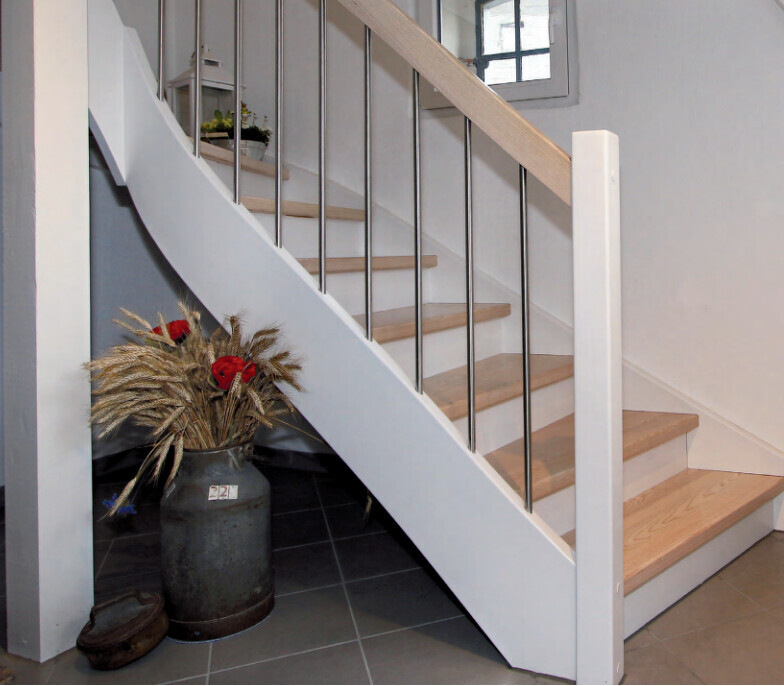
The stair builder mentioned that the area where the attic staircase rests supports more than half of the weight. A screed covering of only 4 cm (1.6 inches) over the floor pipes was too little for him.
I will ask the stair builder if the area that needs to remain clear can be defined more precisely.
What will the gap be filled with afterwards—mortar?
The stairwell in the basement to ground floor to upper floor consists of a concrete staircase cast during the shell construction. There is also a 20 cm (8 inches) wide area with bare rough floor concrete (RFC) in front of the first/last step. Is this area usually treated the same way with insulation strips as around walls?
What about the tape over the pipes? Is this sufficient in the transition area, or is a protective sleeve required?
HausGraus schrieb:
What about the tape over the pipes? Is that sufficient at the transition area, or does it need a protective sleeve? Protective sleeves should be installed in the area of the screed expansion joints, as the tape there is not very effective. The location of the expansion joints must be communicated to the heating installer in advance, since, for example, larger areas without expansion joints are possible with calcium sulfate screed.
If an expansion joint is actually planned at the door area where the tape is applied, then care should also be taken during the heating pipe installation to have as few pipes as possible crossing the expansion joint. This is not the case here.
Similar topics