
We have a shallow 23-degree pitched roof with drainage via an eaves flashing. This means the underlay drains over the eaves flashing and everything flows over the roof tiles into the gutter. It is a cold roof.
1. How problematic is this if a photovoltaic system is installed later? Water that gets onto the underlay through the connections or roof tiles.
2. How problematic is this for the façade, since the water drips off uncontrollably? Condensation and moisture buildup, as well as snow loads in winter that pass through the roof tiles and get blown onto the façade by the wind. (2 full floors)
3. Are there any negative experiences regarding a terrace—meaning water frequently running off the eaves flashing onto the façade?
4. Should drainage generally go into the gutter starting from a certain roof size, since more water naturally accumulates?
5. Am I worrying too much?
The roof tile used has a standard roof pitch of 22 degrees.
Does the eaves flashing need to be explicitly listed in the construction and scope of work description? The general contractor just did it this way, and I would have preferred to be consulted beforehand.
1. How problematic is this if a photovoltaic system is installed later? Water that gets onto the underlay through the connections or roof tiles.
2. How problematic is this for the façade, since the water drips off uncontrollably? Condensation and moisture buildup, as well as snow loads in winter that pass through the roof tiles and get blown onto the façade by the wind. (2 full floors)
3. Are there any negative experiences regarding a terrace—meaning water frequently running off the eaves flashing onto the façade?
4. Should drainage generally go into the gutter starting from a certain roof size, since more water naturally accumulates?
5. Am I worrying too much?
The roof tile used has a standard roof pitch of 22 degrees.
Does the eaves flashing need to be explicitly listed in the construction and scope of work description? The general contractor just did it this way, and I would have preferred to be consulted beforehand.
S
Spiderman198226 Feb 2024 19:38Does no one have an opinion on this topic?
@11ant You seem to be knowledgeable about everything.
@11ant You seem to be knowledgeable about everything.
O
Oberhäslich26 Feb 2024 20:22I don’t understand your issue. The underlay membrane is only there as a backup in case roof tiles get damaged or something similar. Normally, no drainage occurs above it; water drains only through the roof tiles. The drip edge at the end of the underlay membrane is correct and important (see emergency mentioned above).
The photovoltaic hooks are attached to the rafters. For this, the roof tile below must be notched out. No water penetrates there, as the tiles overlap by about 15cm (6 inches).
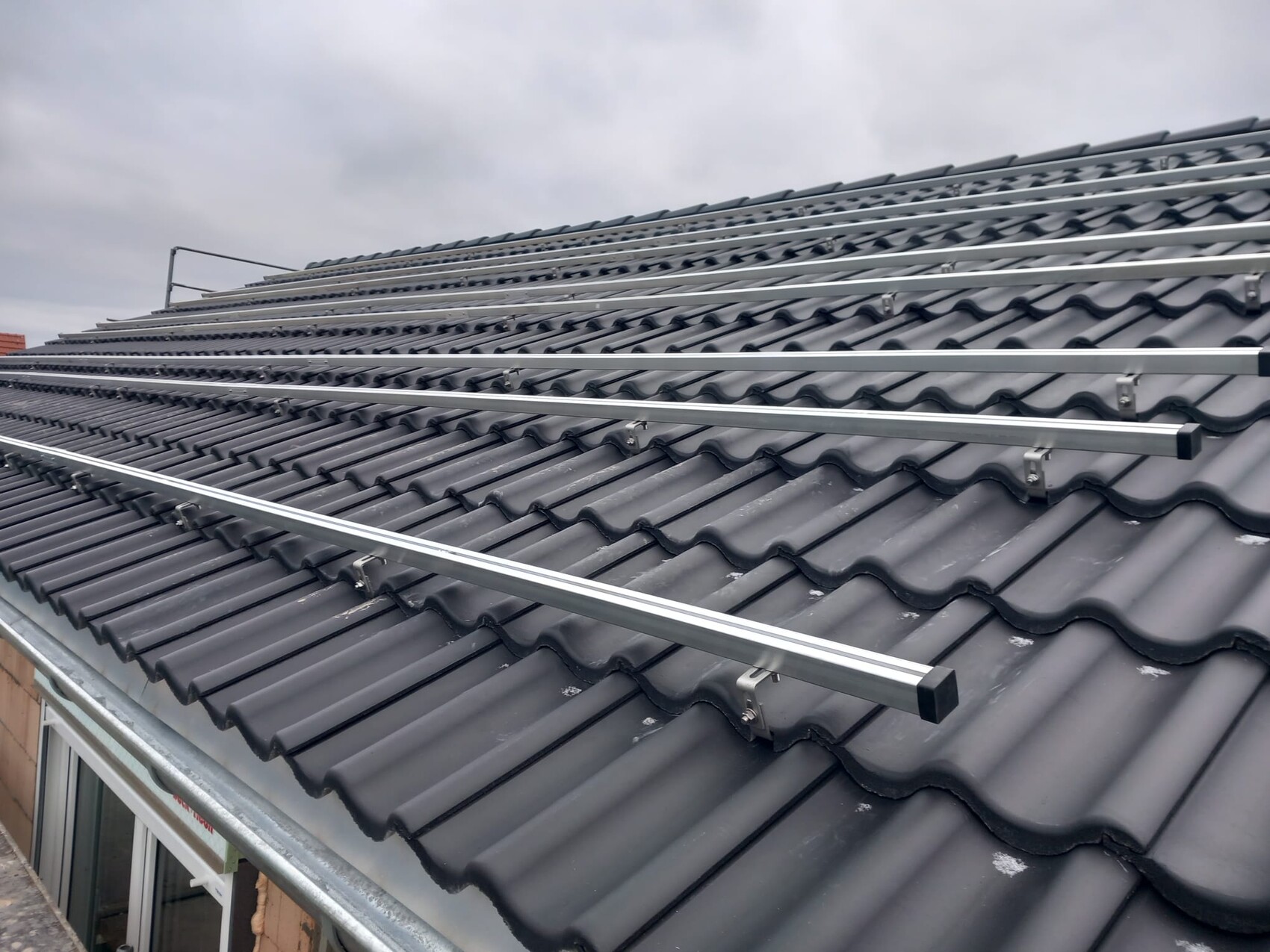
The photovoltaic hooks are attached to the rafters. For this, the roof tile below must be notched out. No water penetrates there, as the tiles overlap by about 15cm (6 inches).
S
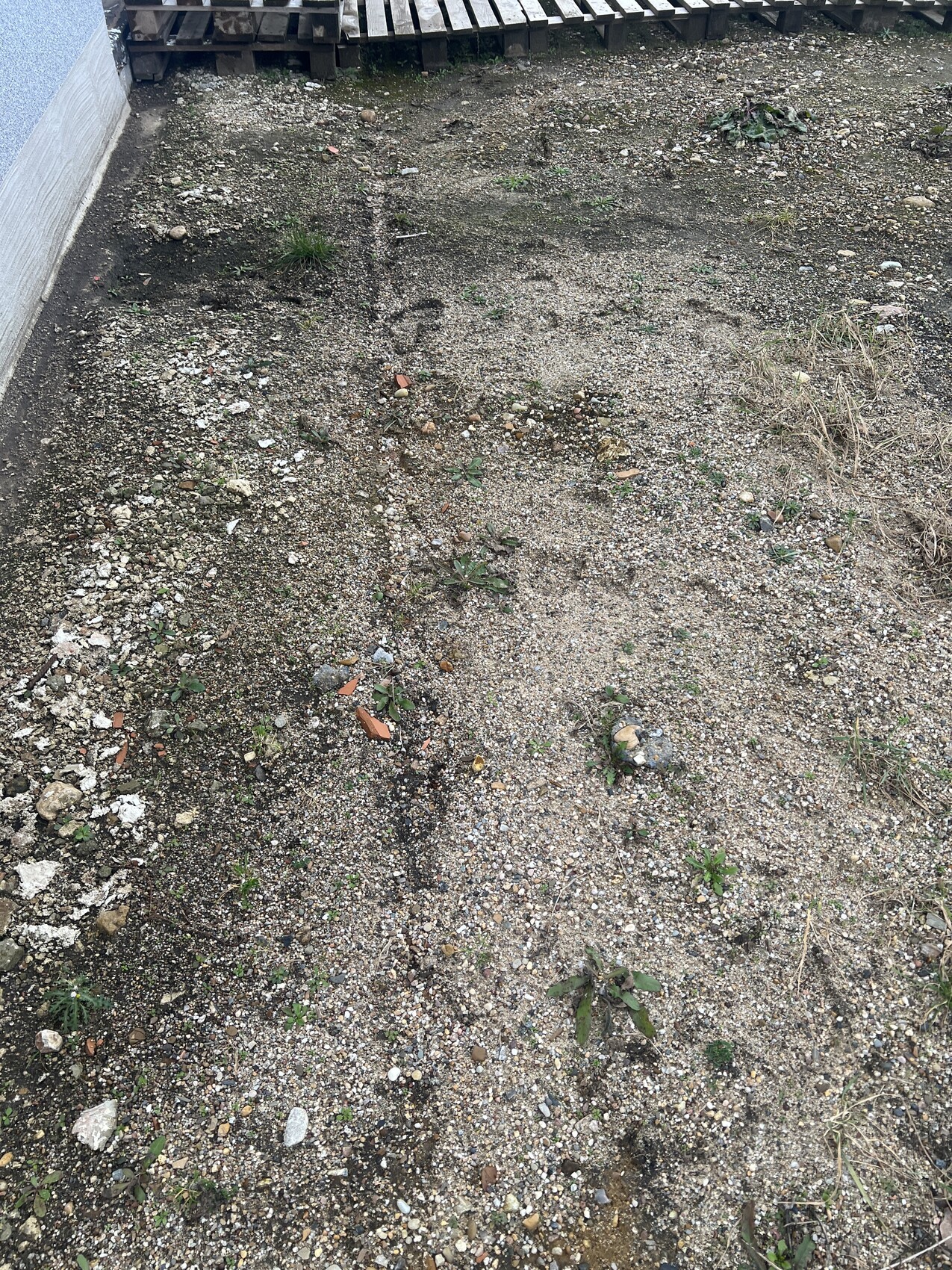
Spiderman198226 Feb 2024 21:44I looked at a roof with exactly this design. The drainage of the underlay is discharged uncontrolled over a drip edge. Do you see the marks in the soil? ( Image ) Maybe the roof tiles are simply not installed properly or the water is "shooting" over the gutter. The latter would not be good.
@Oberhäslich Then I might be worrying too much about the photovoltaic system. I wanted to hear that the tiles overlap by about 15cm (6 inches). Thanks, thanks! 🙂
Then only condensation, moisture buildup, and snow loads in winter would be an issue. In my opinion, though, all of that is manageable.
@Oberhäslich Then I might be worrying too much about the photovoltaic system. I wanted to hear that the tiles overlap by about 15cm (6 inches). Thanks, thanks! 🙂
Then only condensation, moisture buildup, and snow loads in winter would be an issue. In my opinion, though, all of that is manageable.
O
Oberhäslich26 Feb 2024 22:02So if it happens, it can only be because the roof tiles extend too far over the gutter. Then the water shoots beyond it. But this has nothing to do with the drip edge or the underlayment membrane.
Attached is another photo showing the overlap on Braas Harzer Pfanne.
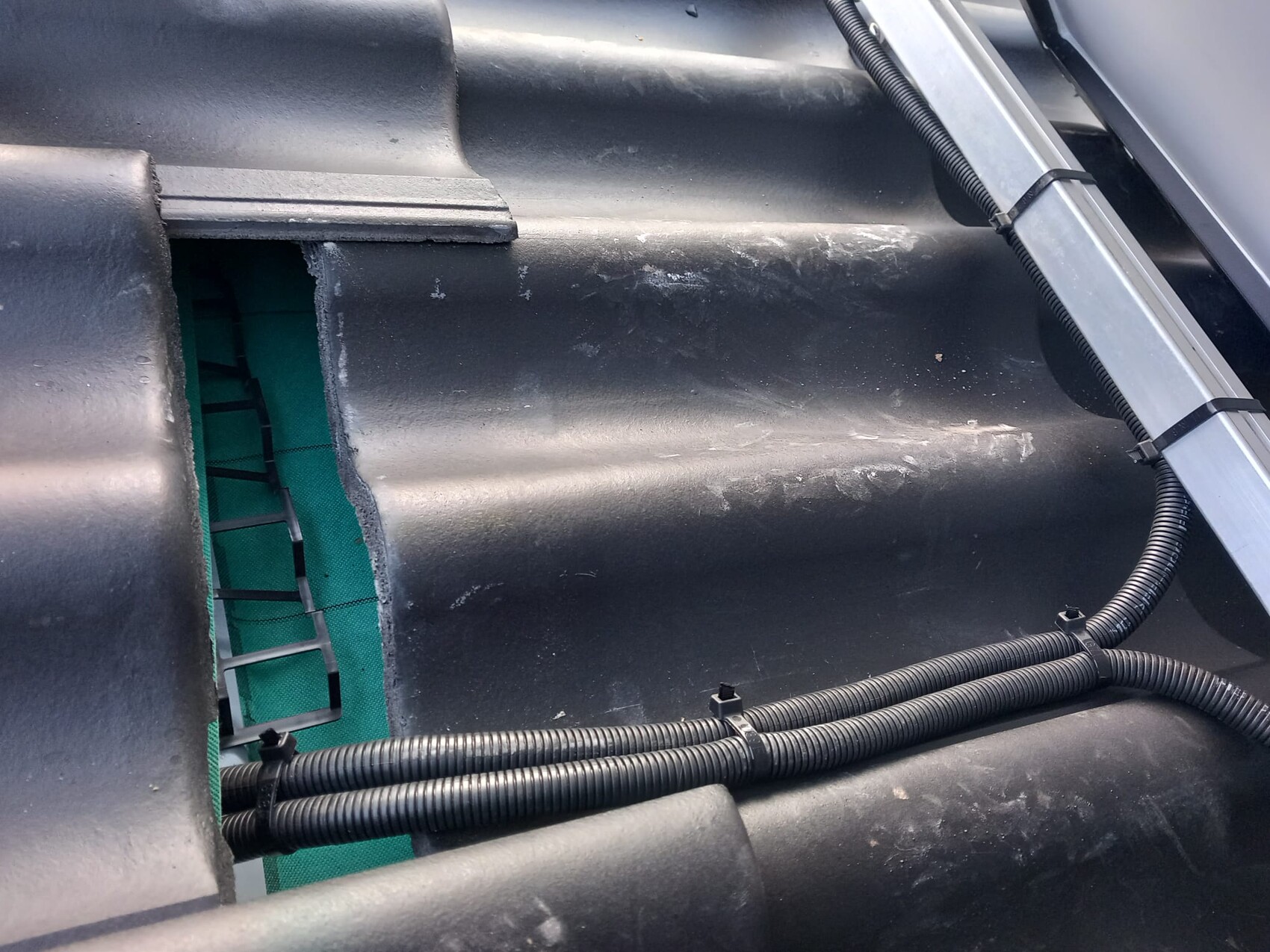
Attached is another photo showing the overlap on Braas Harzer Pfanne.
S
Spiderman198226 Feb 2024 22:14Oberhäslich schrieb:
If this occurs, it can only be because the roof tiles extend too far beyond the gutter. Then water shoots over it. However, this has nothing to do with the drip edge or underlay membrane.
Attached is another photo of the overlap on the Braas Harzer Pfanne tile. You also have underlay membrane ventilation elements. 🙂
If a tile is damaged, water can sometimes run over the underlay membrane down to the drip edge and drip off uncontrollably. (Early warning system)
O
Oberhäslich26 Feb 2024 22:45Why uncontrolled? The drip edge leads directly into the gutter, just like in my first photo. You can clearly see it below the roof tile there.
Similar topics