
ᐅ Load-bearing wall or not? Wooden beam directly resting on masonry?
Created on: 19 Feb 2024 06:07
A
AlexannahausA
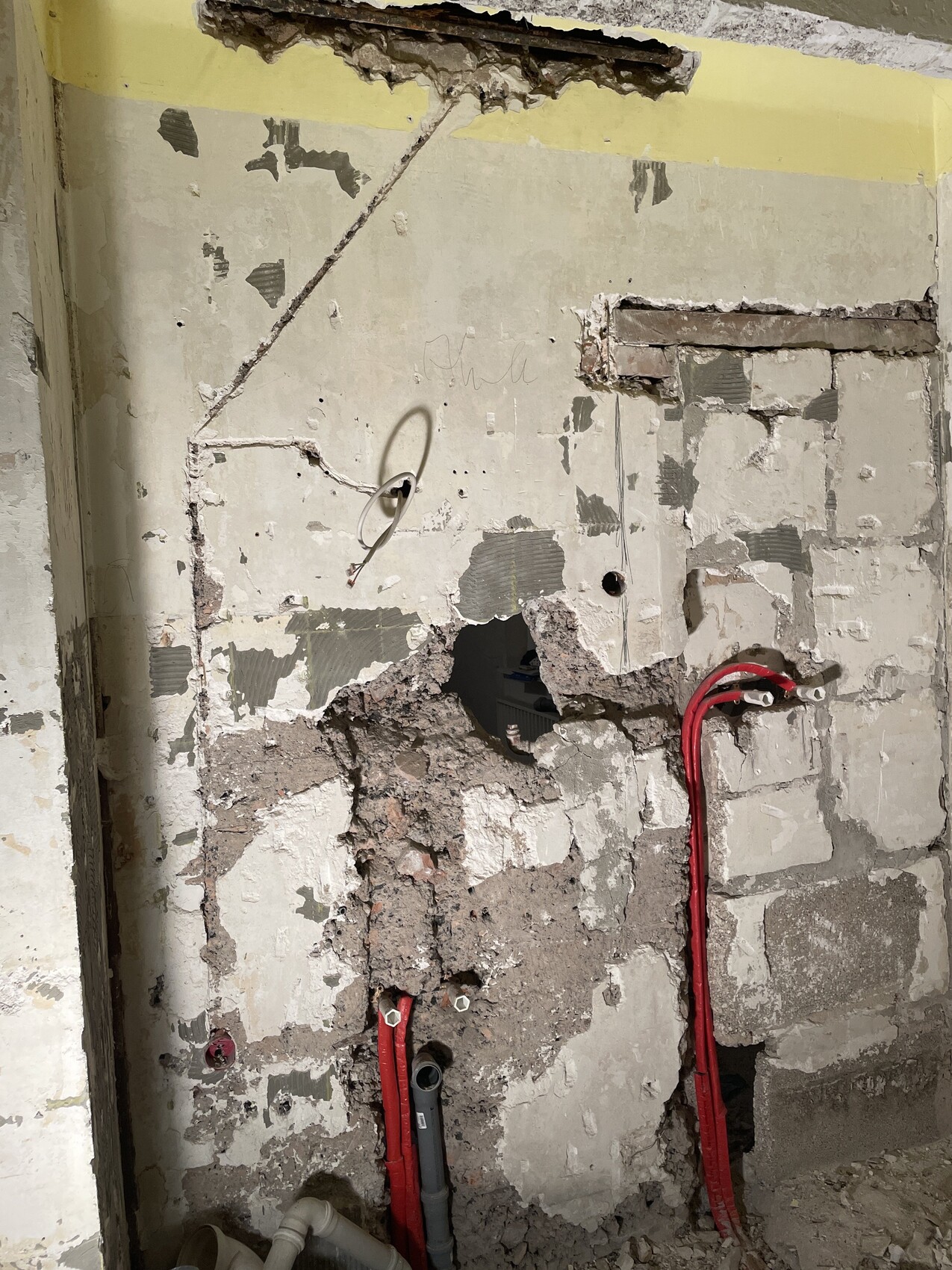
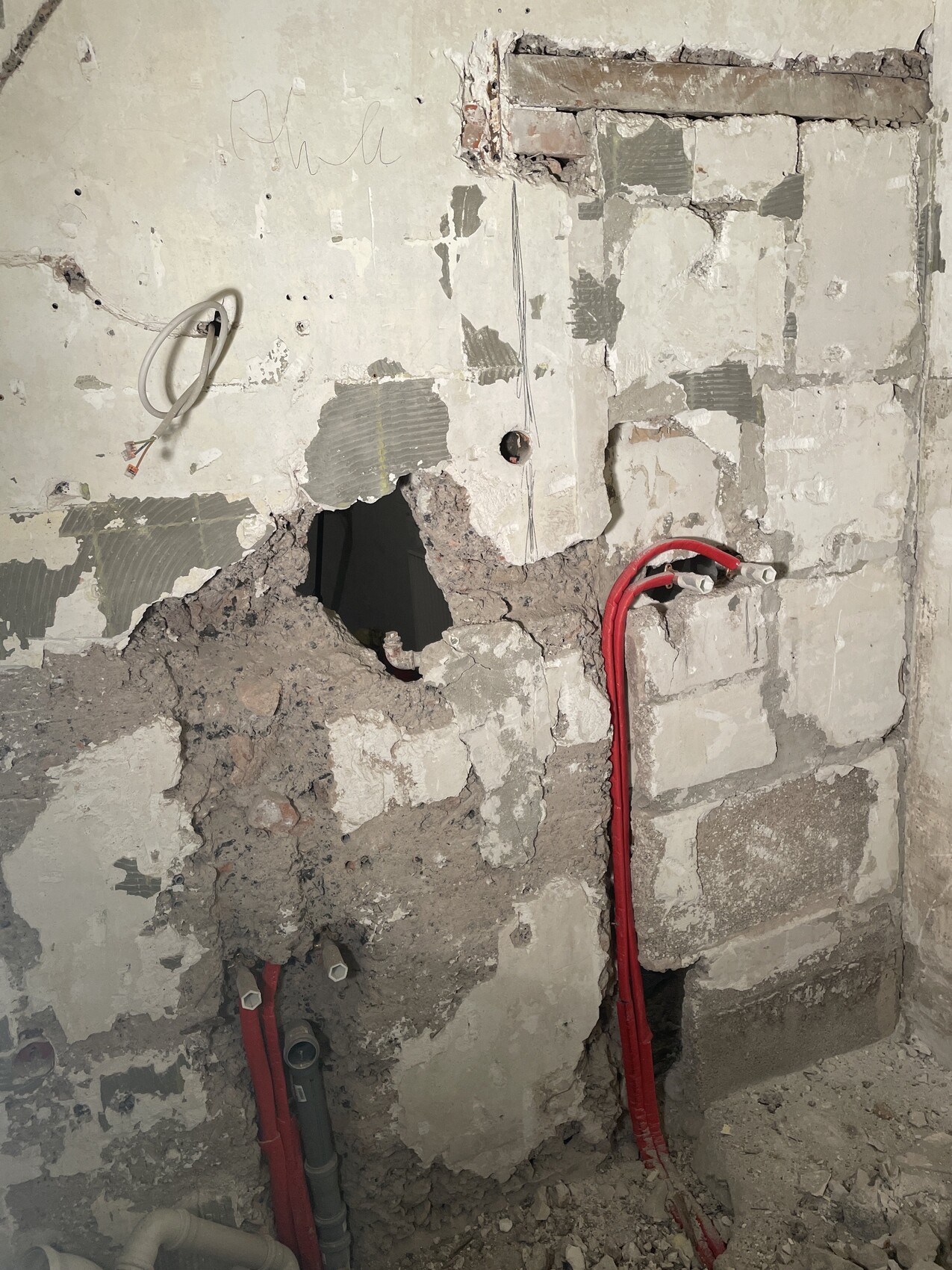
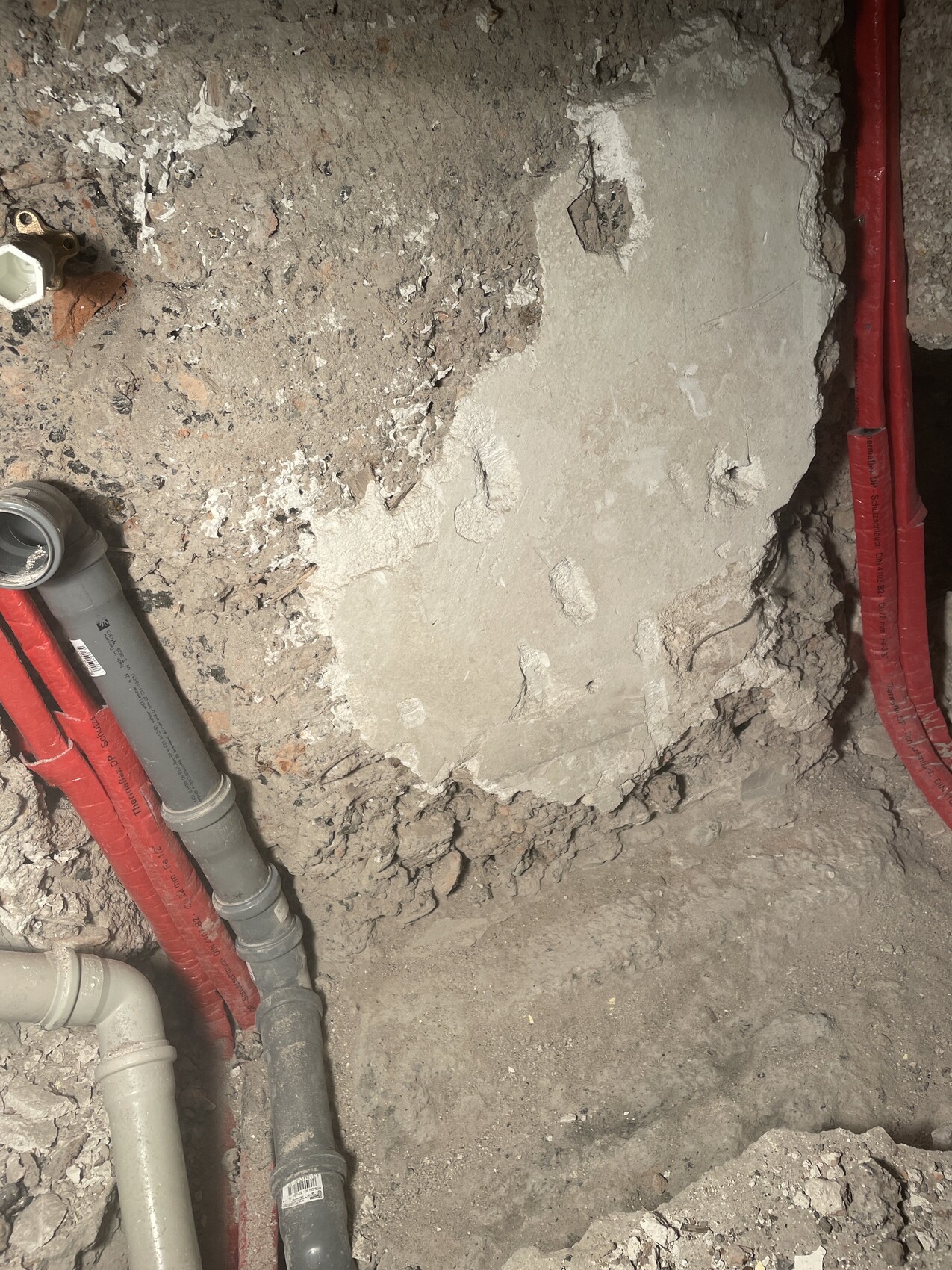
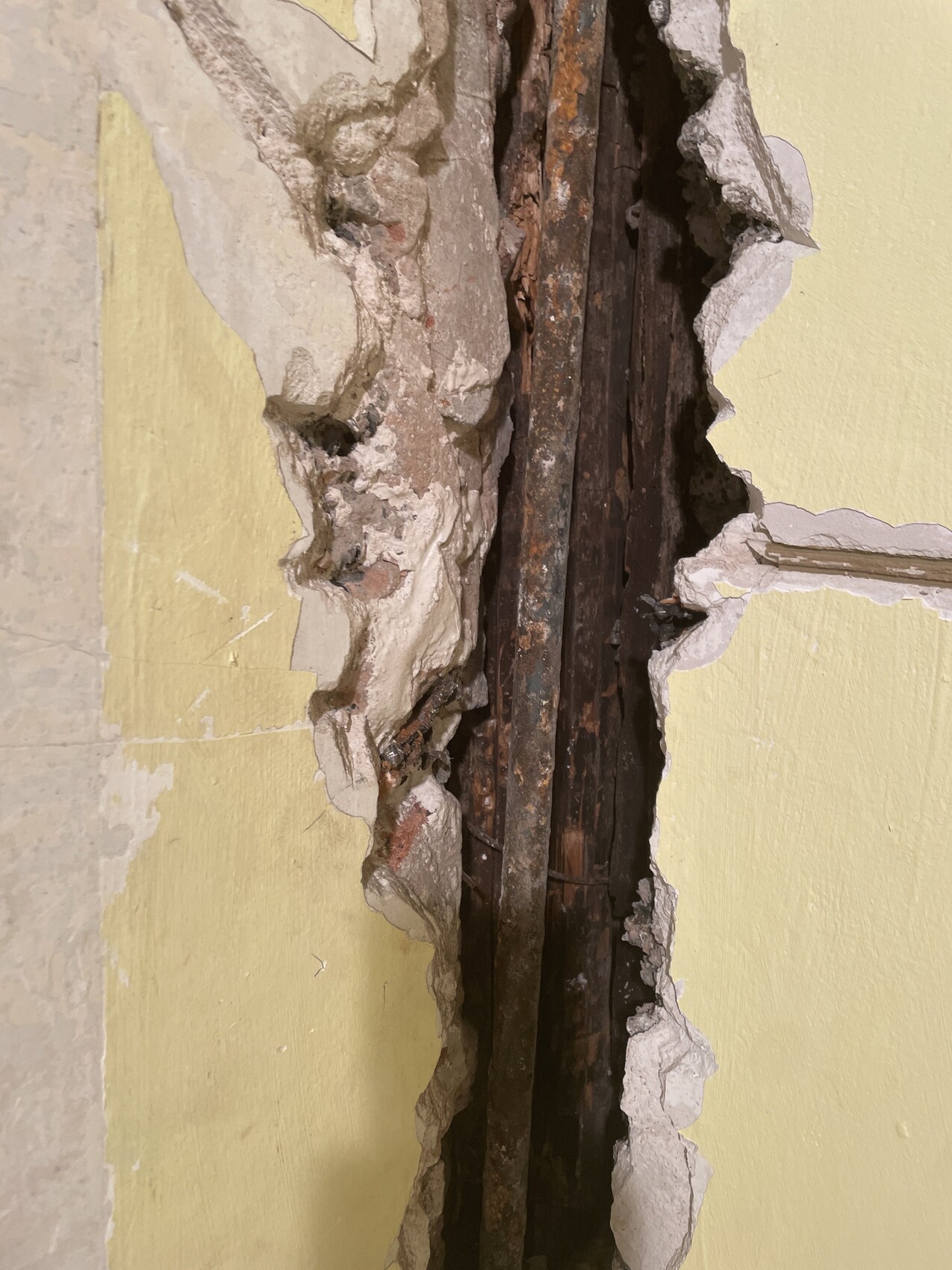
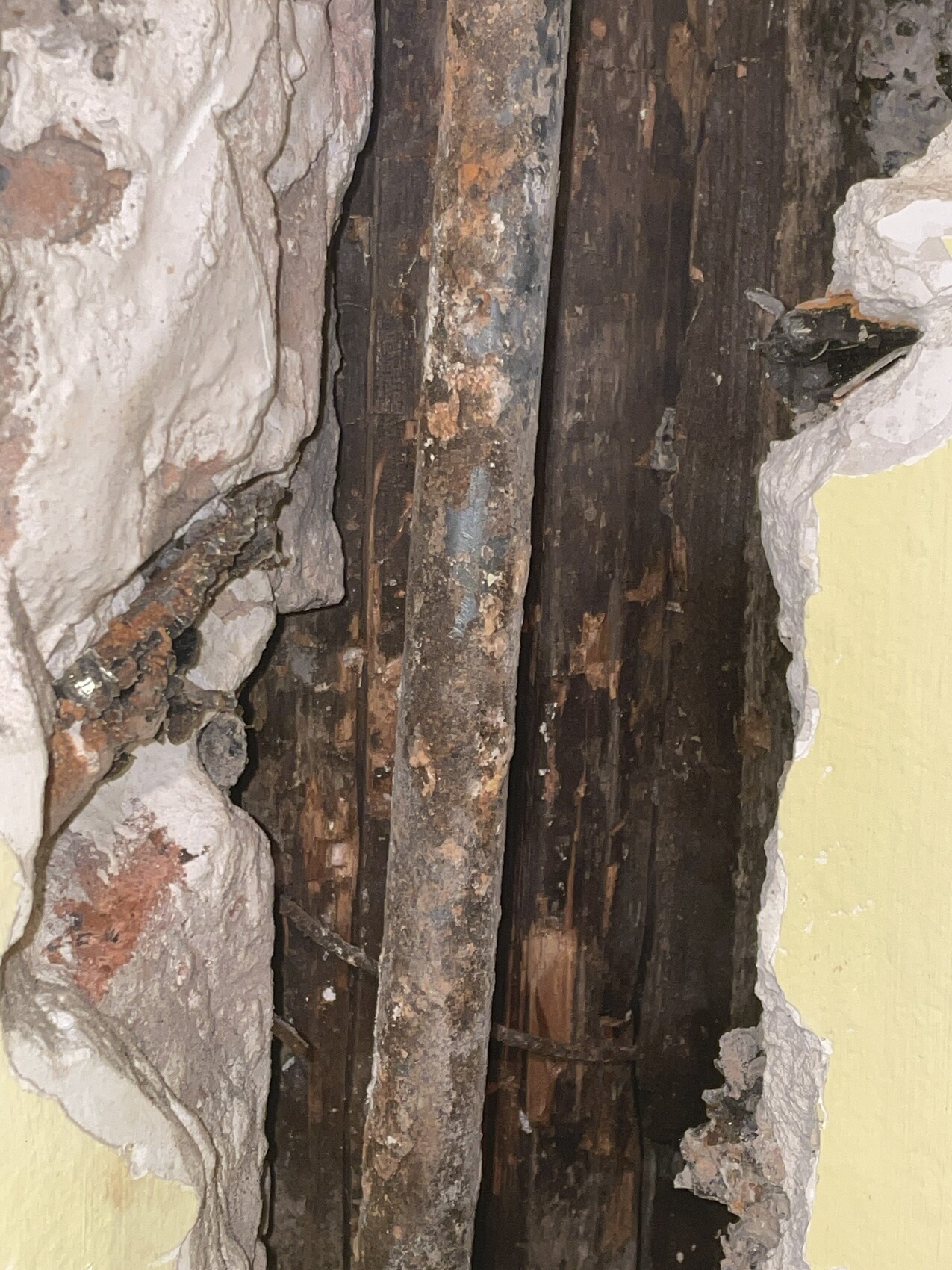
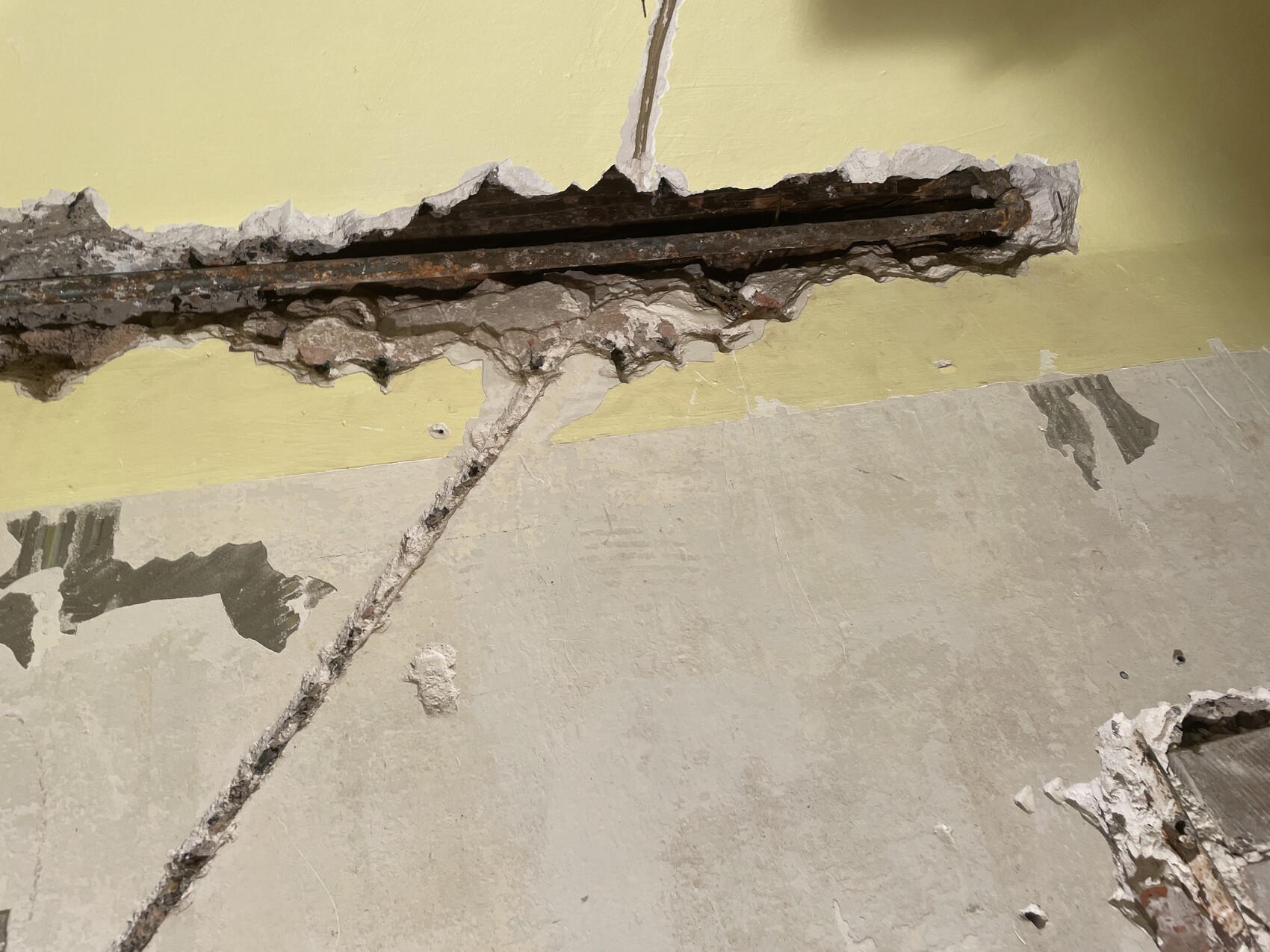
Alexannahaus19 Feb 2024 06:07The house was built in the 1950s/60s. On the ground floor, a wall is planned to be demolished and replaced with a drywall partition due to large holes in the wall. This would be more cost-effective. However, I suspect the wall might be load-bearing. There are also walls above and below this wall.
N
nordanney19 Feb 2024 09:58If the wall shown in the pictures were load-bearing, I wouldn’t enter the house today and would have legitimate concerns. It also looks only a few centimeters thick (a few inches).
And that’s all that can be said. No information on thickness, material, no plans (for the floor plus above and below), no structural engineering details, etc.
And that’s all that can be said. No information on thickness, material, no plans (for the floor plus above and below), no structural engineering details, etc.

Buildings from the 1950s and 1960s often present surprises in the structural details of the shell construction. Materials were sometimes used very sparingly or improvised from other applications.
The wall appears to be at most a half-brick thickness (11.5cm (5 inches)). In houses from this period, such a wall can indeed be load-bearing. A key factor is also the construction of the ceiling above the ground floor and how the wall may serve as a support (reinforced concrete ceiling / timber beam ceiling / precast ceiling with varying orientation of joists, etc.).
These structural relationships can only be clarified on site by a structural engineer, who can then approve demolition or replacement if necessary. The original house plans and the structural calculations submitted with the building permit / planning permission are always helpful for this. If you do not have these, an inquiry at the archive of the relevant building authority will assist.
You should not make any decisions on your own without this preliminary examination by the structural engineer.
The wall appears to be at most a half-brick thickness (11.5cm (5 inches)). In houses from this period, such a wall can indeed be load-bearing. A key factor is also the construction of the ceiling above the ground floor and how the wall may serve as a support (reinforced concrete ceiling / timber beam ceiling / precast ceiling with varying orientation of joists, etc.).
These structural relationships can only be clarified on site by a structural engineer, who can then approve demolition or replacement if necessary. The original house plans and the structural calculations submitted with the building permit / planning permission are always helpful for this. If you do not have these, an inquiry at the archive of the relevant building authority will assist.
You should not make any decisions on your own without this preliminary examination by the structural engineer.

Alexannahaus schrieb:
The house was built in the 1950s/60s.The 1950s alone cover several building periods and extend up to around 1963. If this is the same house as in https://www.hausbau-forum.de/threads/sandstein-keller-flecken-auf-boden.45708/, it would actually be older. After World War II, no archives in Germany were bombed (with the exception of a significant loss in Cologne). The photos without scale and without knowledge of the exact location in the floor plan are practically worthless. Please provide floor plans and at least one cross-section. Who is pounding on that wall so aggressively (and were the pipes replaced with hoses before or after that)?Alexannahaus schrieb:
On the ground floor, a wall is supposed to be removed and replaced with a drywall partition because of the large holes in the wall. This would be cheaper.At this point, I cannot see how it would be "cheaper" to prepare this condition properly for installing a drywall partition.Alexannahaus schrieb:
However, I suspect that the wall is load-bearing.If that wall is still load-bearing, then the Pope will convert to Buddhism.https://www.instagram.com/11antgmxde/
https://www.linkedin.com/company/bauen-jetzt/
 Winniefred19 Feb 2024 15:25
Hire a structural engineer. We also have some very thin walls (I believe 7 or 8 cm (3 or 3¼ inches) thick), and for a partial demolition last year, we brought in a structural engineer. We had to make a few inspection holes so they could see where the beams run, how strong they are, and where they rest. In our case, such a thin wall could also have been load-bearing (built in 1921).
Winniefred schrieb:
where beams run, how strong they are, and where they rest. Even in our case, such a thin wall could have been load-bearing (built in 1921).Here too, beams can be supported by walls half a brick thick (and they should be). However, a building rarely reaches the point where its structural stability fails immediately after losing a load-bearing wall (not instantly, as in the case of Günter Schabowski). When it does, though, it can happen faster than turning on a siren.https://www.instagram.com/11antgmxde/
https://www.linkedin.com/company/bauen-jetzt/
Similar topics