
ᐅ Heated surfaces in rooms with significantly increased heating demand
Created on: 27 Jan 2024 09:17
L
LostWolf
Since an extension is being built onto my existing property, there are unfortunately some issues with the heating load in this new area.
(Underfloor heating will be installed throughout the entire heated space.)
Because this room (living room) mainly consists of exterior walls, it has a heating load of 54.37 W/m² (1909 W).
In the rest of the ground floor, we have about 25 W/m².
Is there a way to heat this room in the extension (living room) without having to increase the heat pump’s supply temperature to nearly 40°C (104°F)?
Unfortunately, the heating surface is limited to the floor and cannot be increased.
Would using larger pipe diameters and increasing the flow rate help in this case (if that is even possible)?
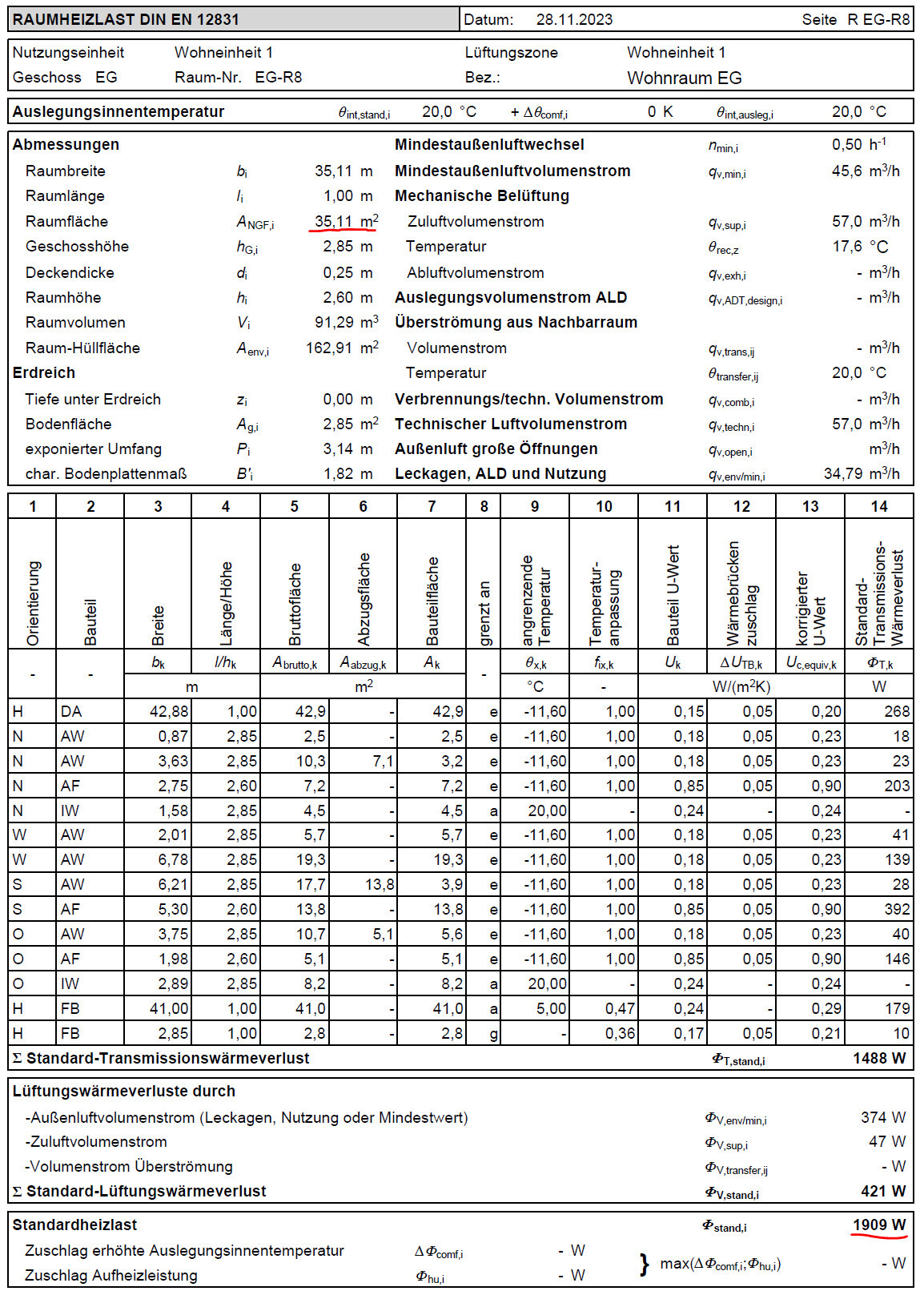
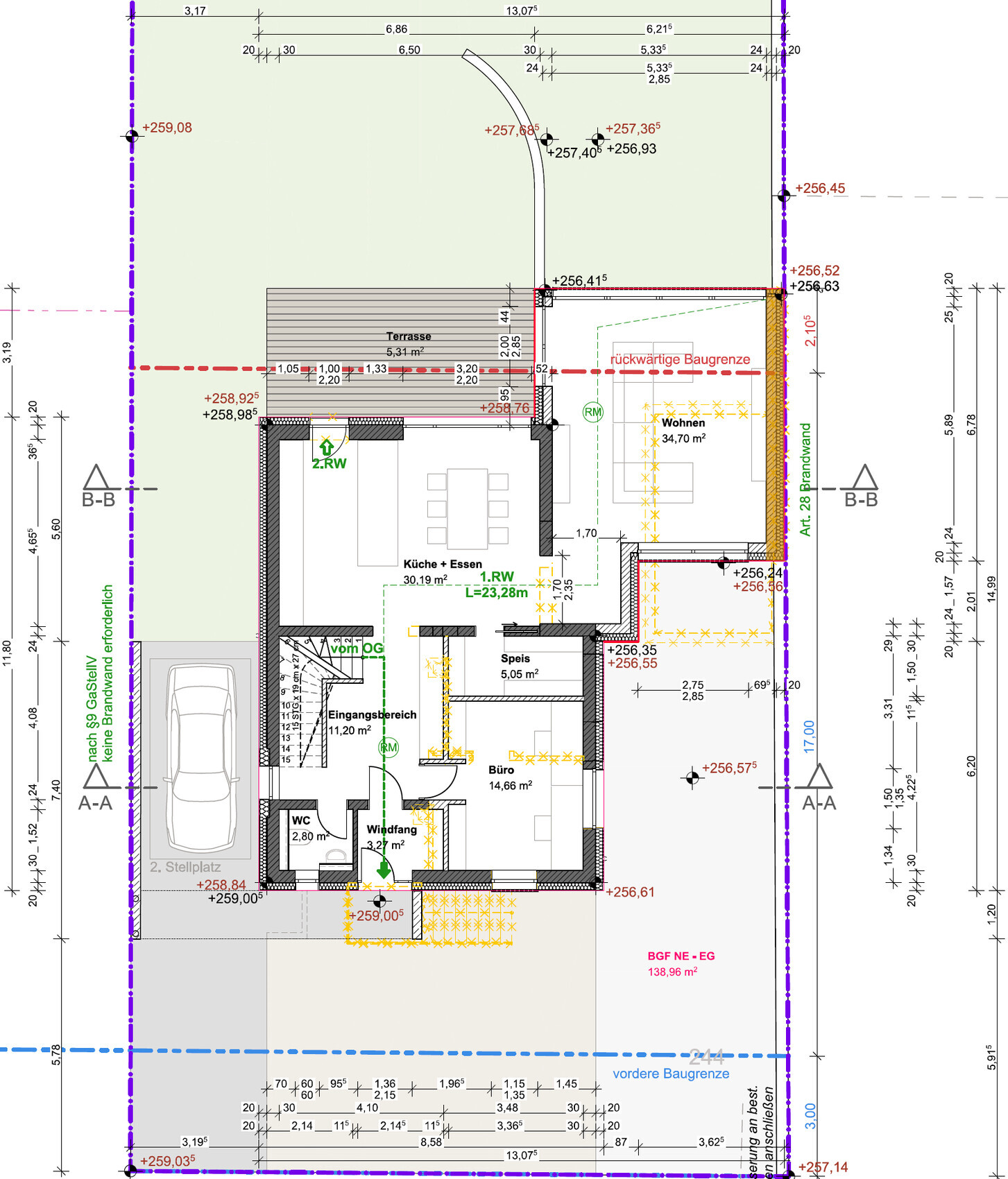
(Underfloor heating will be installed throughout the entire heated space.)
Because this room (living room) mainly consists of exterior walls, it has a heating load of 54.37 W/m² (1909 W).
In the rest of the ground floor, we have about 25 W/m².
Is there a way to heat this room in the extension (living room) without having to increase the heat pump’s supply temperature to nearly 40°C (104°F)?
Unfortunately, the heating surface is limited to the floor and cannot be increased.
Would using larger pipe diameters and increasing the flow rate help in this case (if that is even possible)?
J
jens.knoedel27 Jan 2024 10:25LostWolf schrieb:
20°C (68°F) is more than sufficient...
Yes, parquet will be installed in this roomNowadays, a comfort temperature of around 22°C (72°F) is usually considered.
My first thought is to leave everything as it is, which is sufficient for about nine months, and for the remaining time use a split air conditioning system for heating or cooling. The unit, of course, should be nicely installed on the ceiling or wall. The mess during installation is manageable, as are the costs (heat pump).
J
jens.knoedel27 Jan 2024 11:15LostWolf schrieb:
Is it beneficial here to use larger pipe diameters and increase the flow velocity (if that is possible at all)? Addition to this: Didn’t you specify in the heating load calculation how you want to heat (room temperature, supply temperature, return temperature) and receive a corresponding floor heating plan (layout plan for underfloor heating with the planned pipes) as well as the hydraulic balancing (flow rates)? At least the hydraulic balancing must be completely redesigned due to the extension.
jens.knoedel schrieb:
An addition to that: In your heating load calculation, did you specify how you plan to heat (indoor temperature, supply temperature, return temperature) and receive a corresponding design for the underfloor heating system (installation plan for the underfloor heating with the planned pipes) as well as the hydraulic balancing (flow rates)? At least the hydraulic balancing must be completely redesigned due to the extension. I only received a heating load calculation for each room and the entire building (from the energy consultant).
No design for the underfloor heating has been done yet.
That is still to be commissioned, or a few heating engineers claim they can handle it, but I am still quite skeptical.
J
jens.knoedel27 Jan 2024 17:54LostWolf schrieb:
No design for the underfloor heating has been done yet.
That will be assigned later. As I said, I have the same values for my extension, and it is not a problem for the heat pump running at 30°C (86°F) supply temperature with outside temperatures of -6 to -8°C (21 to 18°F). That will require around 450 m (1,480 ft) of 16/2 pipes for the room.
jens.knoedel schrieb:
As I said, I have the same values for my extension Is the heating load for your existing rooms also lower then?
jens.knoedel schrieb:
And that’s not a problem for the heat pump with a 30°C (86°F) supply temperature at -6 to -8°C (21 to 18°F). That will require about 450 meters (1,480 feet) of 16/2 pipes for the room. My heating load is calculated for -11.6°C (11°F) (97456)
Similar topics