
ᐅ Crack across several 60x60 cm living room tiles. Has anyone experienced this?
Created on: 25 Dec 2023 11:26
D
djb-computerD
djb-computer25 Dec 2023 11:26Hi everyone,
This is a semi-detached house from 2010, everything was built by the developer and their professional tradespeople, so no amateur work involved. The floors are tiled with 60x60 cm (24x24 inch) tiles.
Now, there is a (stress?) crack across three tiles right in the middle of the living room.
Can you share your collective knowledge and give me some advice?
Is this something that any insurance would cover?
Should this be repaired (to protect the building structure)? If yes, how?
Is it necessary to investigate the cause?
Photos attached.
(Sorry, I didn’t bother cleaning before taking the pictures 🙂 )
Thanks in advance and Merry Christmas to all!

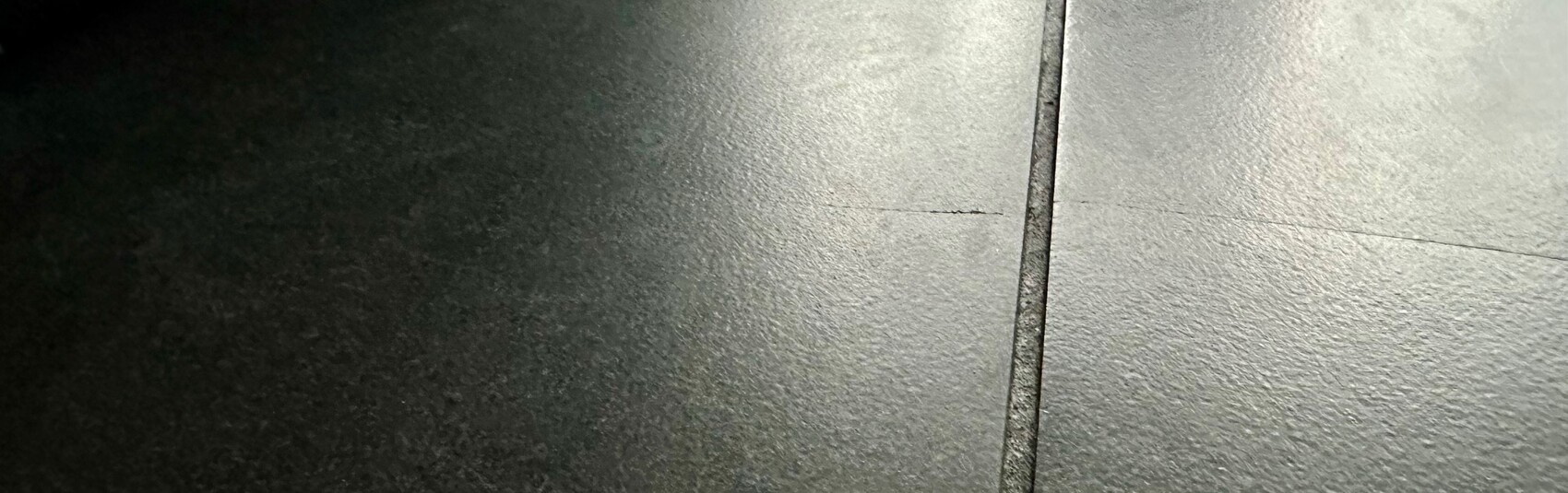
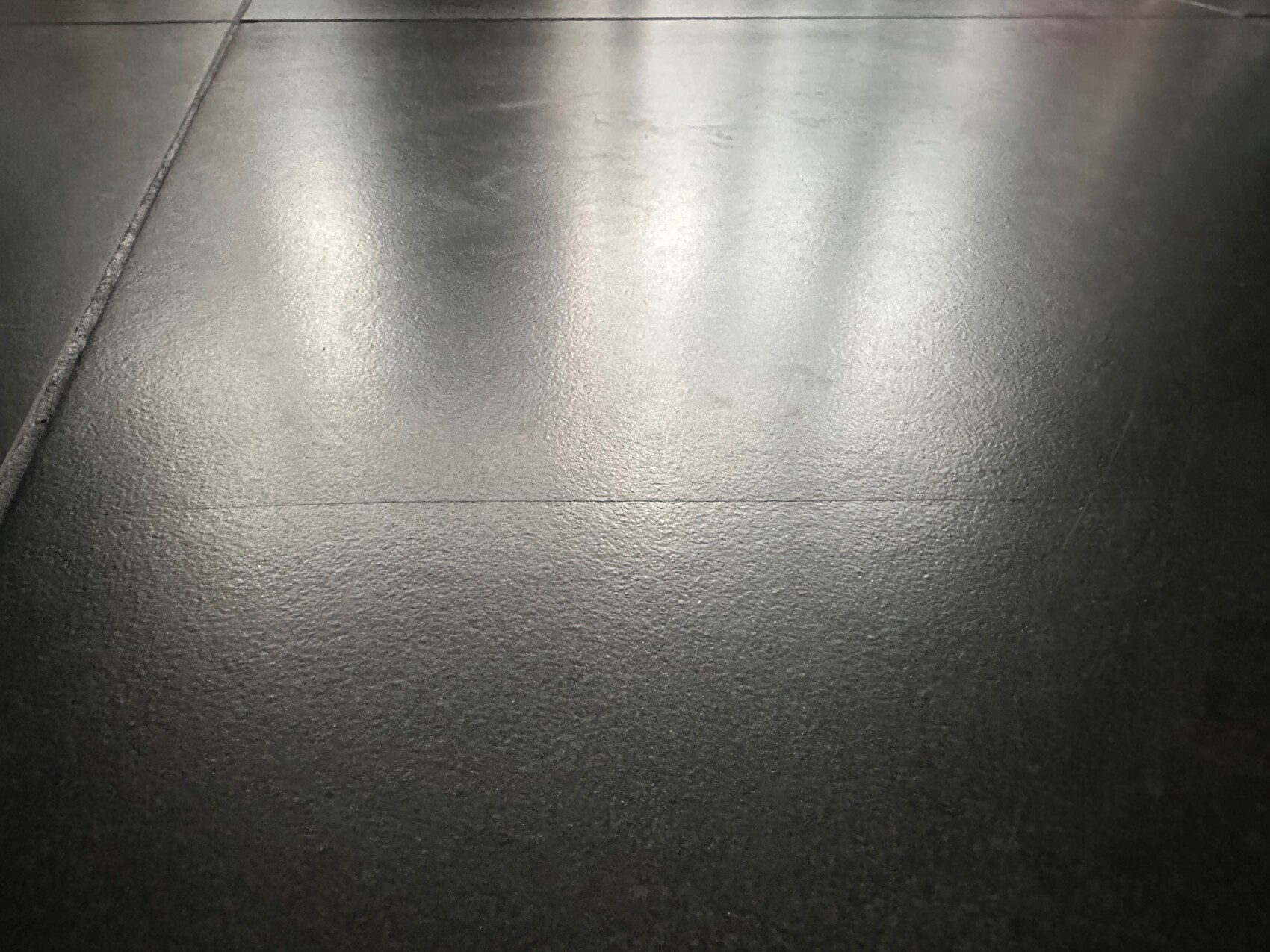
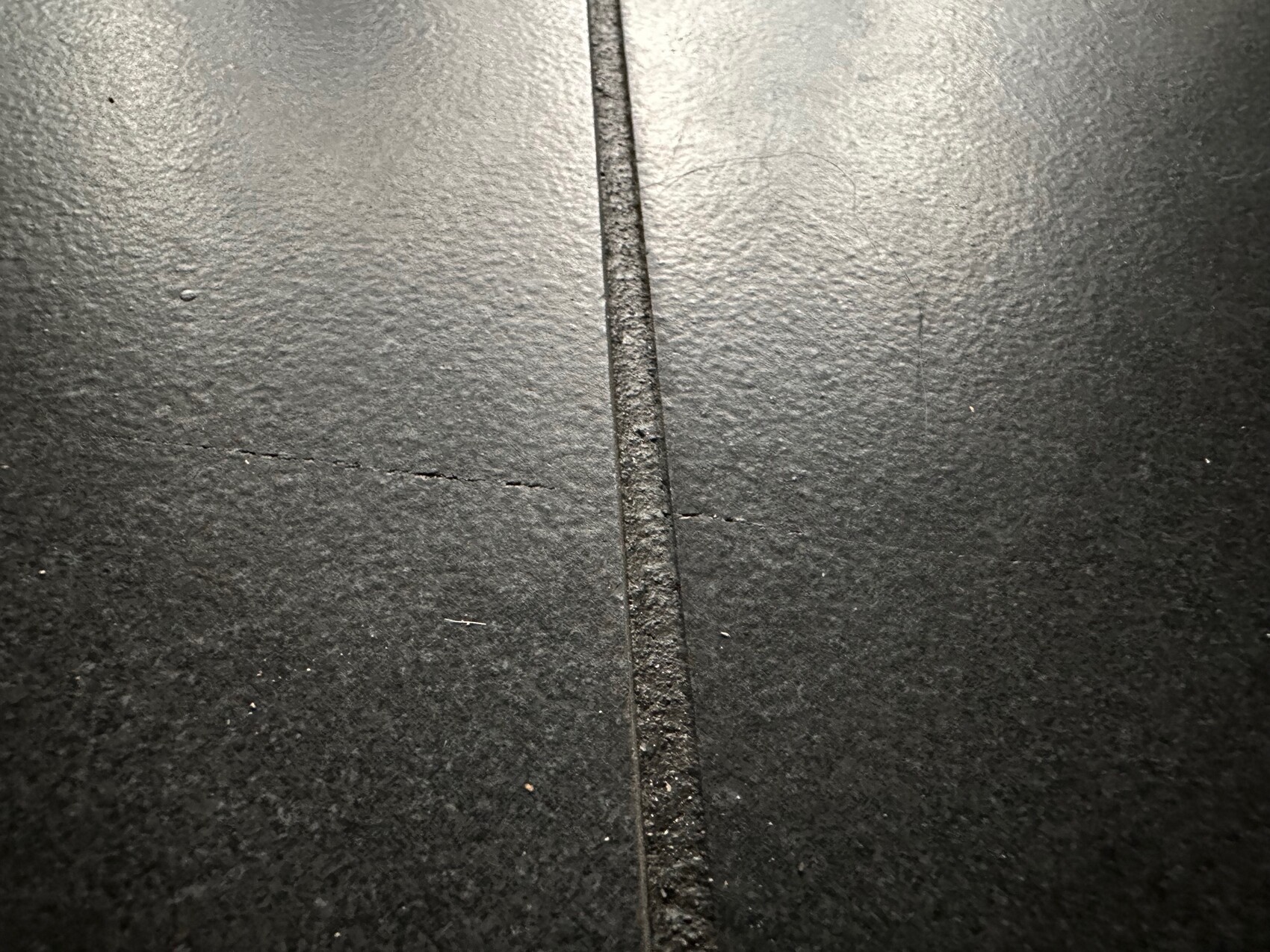
This is a semi-detached house from 2010, everything was built by the developer and their professional tradespeople, so no amateur work involved. The floors are tiled with 60x60 cm (24x24 inch) tiles.
Now, there is a (stress?) crack across three tiles right in the middle of the living room.
Can you share your collective knowledge and give me some advice?
Is this something that any insurance would cover?
Should this be repaired (to protect the building structure)? If yes, how?
Is it necessary to investigate the cause?
Photos attached.
(Sorry, I didn’t bother cleaning before taking the pictures 🙂 )
Thanks in advance and Merry Christmas to all!
J
jens.knoedel26 Dec 2023 09:48djb-computer schrieb:
Can you share some advice here with your collective knowledge?It could have been caused by an expansion joint in the screed.djb-computer schrieb:
Is this a case for any insurance?No, it’s just bad luck or unfortunate circumstances.djb-computer schrieb:
Can/should this be repaired (to protect the building structure)? If yes, how?Can it be repaired? Yes – remove the old tiles and install new ones. Ideally, keep the joint from the screed (if that’s the source of the issue). Should it be repaired? Not necessarily, if you can live with the visual imperfection.djb-computer schrieb:
Is it necessary to investigate the cause?Personally, I’d be curious about the cause. I also wouldn’t want to live with that kind of damage permanently.P.S. I’d recommend asking the developer. We had neighbors who even after 10 years received a tile replacement on goodwill – but they had to provide the material themselves, which luckily was still stored in the basement (tiles).
J
Jesse Custer26 Dec 2023 10:09jens.knoedel schrieb:
P.S. I would ask the builder about it. We had neighbors who, even after 10 years, were still able to get tiles replaced as a goodwill gesture – but they had to provide the materials themselves, which luckily were still stored in their basement (tiles).That would be my first thought too: do you still have any tiles left?
If yes, I would have a professional handle it – whether you want to approach the builder again after almost 14 years is up to you.
If no, I would just accept it. Since it’s not exactly clean anyway, it won’t be noticeable.
D
djb-computer26 Dec 2023 11:27Jesse Custer schrieb:
That would be my first thought too: do you still have tiles left?
If so, I would have a professional handle it – whether you want to go back to the developer after almost 14 years is up to you.Thanks, everyone. Yes, I still have 4 packages of all the tiles in the basement. That was recommended at the time. I’ll have it done as soon as the crack gets bigger or sharper. My main concern was just to make sure that no one in my family falls into the basement through a hole that might develop.
Hello questioner.
First of all, a comment on the previous answers:
An expansion joint in screed flooring in residential construction is mainly installed between different rooms, specifically beneath the (future) door leaf in public buildings, and somewhere in the door jamb area in private residential buildings.
In public buildings, these joints remain open and are transferred into the surface covering. In private properties, the movement joints serve their purpose after the screed has dried and are then closed in a load-transferring manner.
Now to your case:
If we look closely at the crack formation, we can see a slight wedge-shaped downward warping.
This is a typical damage pattern for a crack in the screed beneath.
The classic cause is screed that was not sufficiently dry and therefore not ready for tile installation at the time the tiles were laid.
With this, we have clearly addressed the "cause analysis" without an on-site inspection or opening of test points!
Regarding the repair:
The damaged tiles can be removed without any problems after cutting along the joints.
Further necessary measures depend on the visible crack width in the screed.
Typically, the old (rigid) tile adhesive is removed, the crack may be slightly opened by cutting (to about 5mm depth), the dust thoroughly vacuumed, and then the crack edges are sealed again with a low-viscosity reactive resin.
After that, the new tiles are installed.
This is not complicated at all!
This is by no means a case for insurance. And after 10 years, it is no longer a warranty case against the tile installer.
This warranty obligation usually applies only for 5 years, which is generally considered sufficient.
---------------------
Best regards to all: KlaRa
First of all, a comment on the previous answers:
An expansion joint in screed flooring in residential construction is mainly installed between different rooms, specifically beneath the (future) door leaf in public buildings, and somewhere in the door jamb area in private residential buildings.
In public buildings, these joints remain open and are transferred into the surface covering. In private properties, the movement joints serve their purpose after the screed has dried and are then closed in a load-transferring manner.
Now to your case:
If we look closely at the crack formation, we can see a slight wedge-shaped downward warping.
This is a typical damage pattern for a crack in the screed beneath.
The classic cause is screed that was not sufficiently dry and therefore not ready for tile installation at the time the tiles were laid.
With this, we have clearly addressed the "cause analysis" without an on-site inspection or opening of test points!
Regarding the repair:
The damaged tiles can be removed without any problems after cutting along the joints.
Further necessary measures depend on the visible crack width in the screed.
Typically, the old (rigid) tile adhesive is removed, the crack may be slightly opened by cutting (to about 5mm depth), the dust thoroughly vacuumed, and then the crack edges are sealed again with a low-viscosity reactive resin.
After that, the new tiles are installed.
This is not complicated at all!
This is by no means a case for insurance. And after 10 years, it is no longer a warranty case against the tile installer.
This warranty obligation usually applies only for 5 years, which is generally considered sufficient.
---------------------
Best regards to all: KlaRa
Similar topics