
ᐅ Efficient and Cost-Effective Heating System for New Construction
Created on: 19 Dec 2023 16:39
W
Wanted2bHello everyone,
My name is Tobias, and my wife and I want to build a house with our two children.
I need your support with planning the heating and energy systems in the house and would appreciate a discussion. The house is still in the planning stage, meaning the floor plan is currently being developed. However, I want to consider energy efficiency early on. I am thinking about the roof shape and how the house is positioned on the plot. I lack experience and knowledge about what makes sense and what funding options are available.
Here are the key details:
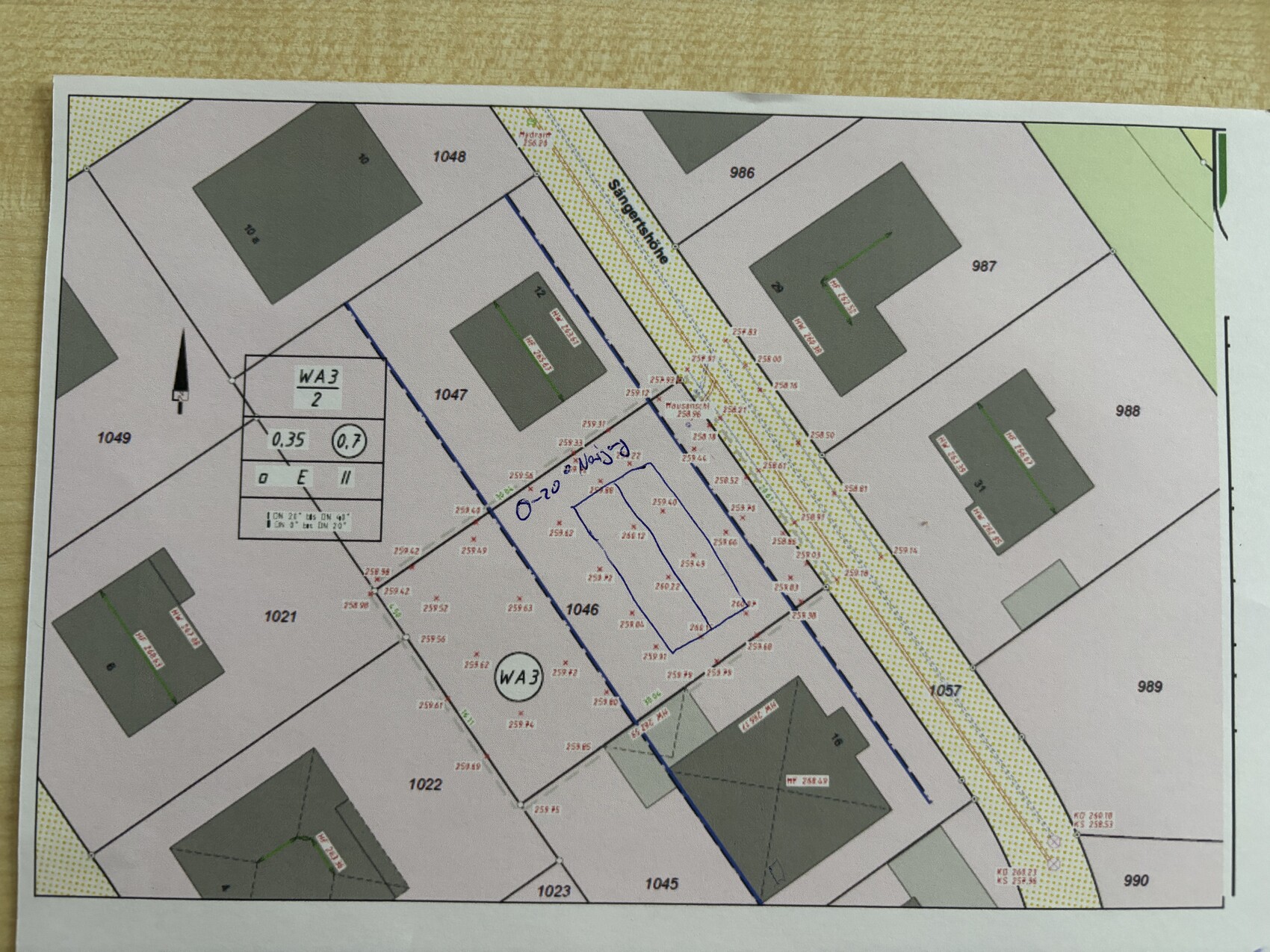
The plot is located in NRW in Nümbrecht. Attached is a picture showing the orientation.
We are building a two-story house, with a roof pitch between 0° and 20°.
It will be a Passive House standard 40 (PH40) with timber frame construction. The provider is not yet decided.
We want underfloor heating.
The house will be about 150–160 square meters (1,615–1,722 square feet), without a basement.
There is the possibility to connect to district heating provided by the municipality.
The goal is to be as economical as possible but also efficient, considering future developments to ensure some degree of independence.
Currently, there is no electric vehicle, but that might change (ideally powered by our own photovoltaic system).
What would you recommend?
I am grateful for any help.
My name is Tobias, and my wife and I want to build a house with our two children.
I need your support with planning the heating and energy systems in the house and would appreciate a discussion. The house is still in the planning stage, meaning the floor plan is currently being developed. However, I want to consider energy efficiency early on. I am thinking about the roof shape and how the house is positioned on the plot. I lack experience and knowledge about what makes sense and what funding options are available.
Here are the key details:
The plot is located in NRW in Nümbrecht. Attached is a picture showing the orientation.
We are building a two-story house, with a roof pitch between 0° and 20°.
It will be a Passive House standard 40 (PH40) with timber frame construction. The provider is not yet decided.
We want underfloor heating.
The house will be about 150–160 square meters (1,615–1,722 square feet), without a basement.
There is the possibility to connect to district heating provided by the municipality.
The goal is to be as economical as possible but also efficient, considering future developments to ensure some degree of independence.
Currently, there is no electric vehicle, but that might change (ideally powered by our own photovoltaic system).
What would you recommend?
- An air-to-water heat pump? Or a ground-source (brine) heat pump?
- With or without a buffer tank or layered storage?
- With or without photovoltaic panels? If yes, what size makes sense?
- With or without a battery storage system? If yes, what size makes sense?
- With or without solar thermal panels on the roof? If yes, what size makes sense?
- What type of roof makes the most sense?
- If using photovoltaic or solar thermal—what roof shape optimizes solar energy capture?
- How do these combinations compare in terms of price-performance ratio? Do these “add-ons” only add a few percent in efficiency compared to a plain air-to-water heat pump with underfloor heating, or are they meaningful and cost-effective upgrades?
I am grateful for any help.
W
WilderSueden19 Dec 2023 17:28- Air-to-water heat pump. You probably won’t recover the additional cost of a ground-source heat pump during your lifetime.
- without a buffer tank,
- with photovoltaic panels, generally without battery storage (unless a good subsidy becomes available)
- no solar thermal system; with photovoltaic panels and a heat pump, you’re already covered
- gable roof or possibly a mono-pitched roof
- what do you mean by add-ons? Photovoltaic panels provide a nice bonus in winter.
- without a buffer tank,
- with photovoltaic panels, generally without battery storage (unless a good subsidy becomes available)
- no solar thermal system; with photovoltaic panels and a heat pump, you’re already covered
- gable roof or possibly a mono-pitched roof
- what do you mean by add-ons? Photovoltaic panels provide a nice bonus in winter.
R
RotorMotor19 Dec 2023 18:34Under what conditions do you receive the local heating?
B
Buchsbaum19 Dec 2023 20:04With district heating, you don’t need a heat pump anymore. If district heating is available, you also don’t need to make large investments.
A photovoltaic system with storage around 10 kW is suitable for your situation. However, the system can also be planned larger if you have an electric car. But that always depends on the local conditions.
The prices for photovoltaic systems with storage have dropped so much that the question of storage is no longer an issue. Incentives for photovoltaic systems are already available through the eliminated value-added tax.
I would avoid solar thermal systems, as they simply don’t make sense.
A photovoltaic system with storage around 10 kW is suitable for your situation. However, the system can also be planned larger if you have an electric car. But that always depends on the local conditions.
The prices for photovoltaic systems with storage have dropped so much that the question of storage is no longer an issue. Incentives for photovoltaic systems are already available through the eliminated value-added tax.
I would avoid solar thermal systems, as they simply don’t make sense.
H
HungrigerHugo19 Dec 2023 20:49For the local heating connection, fees of 10-15k are often charged. In that case, it might be just as practical to install a heat pump.
W
WilderSueden19 Dec 2023 21:13And you are then not tied to a single monopolist. For me, that is the main problem with the district heating network.
Similar topics