
ᐅ Make an oval-shaped bathtub slightly movable due to dirt buildup behind it?
Created on: 16 Oct 2023 11:49
B
Besenkammer84B
Besenkammer8416 Oct 2023 11:49Hello everyone,
we are currently planning our home renovation and thinking about the bathroom. We have already consulted a specialist on this.
We find a freestanding oval bathtub very stylish, but the advisor recommended against a design-focused tub due to the intended corner position. The reason is that dirt would accumulate behind it, making it difficult to keep that area clean and dry.
I’ve been thinking about this and appreciate that he was honest about these issues.
Furthermore, we use the bathtub only about 15 times a year; the rest of the time it would either collect laundry or just be wasted space. Also, the main problem seems to be the fixed bathtub itself and the resulting difficulty in cleaning behind it.
Therefore, I came up with the idea that the bathtub could be made movable somehow (with small/flat casters or something similar). The only real issue here would be the drainage of the used water.
So here is the idea I have in mind:
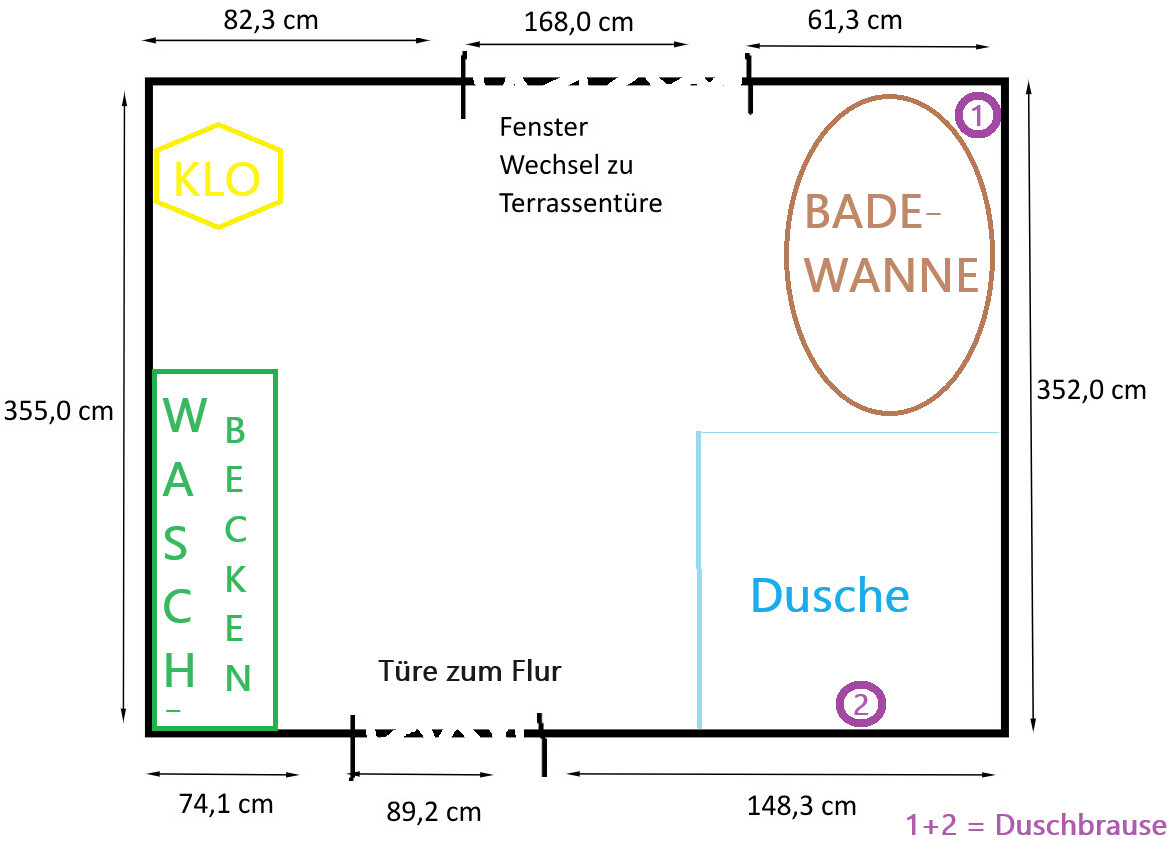
Below is a rough plan showing our current bathroom layout. The measurements are accurate, but the walls are not to scale. Speaking of measurements, we are quite short at 155cm (5 feet 1 inch) and 168cm (5 feet 6 inches) and can manage fine with a somewhat smaller bathtub. Guests or children are not a priority for now ;-)
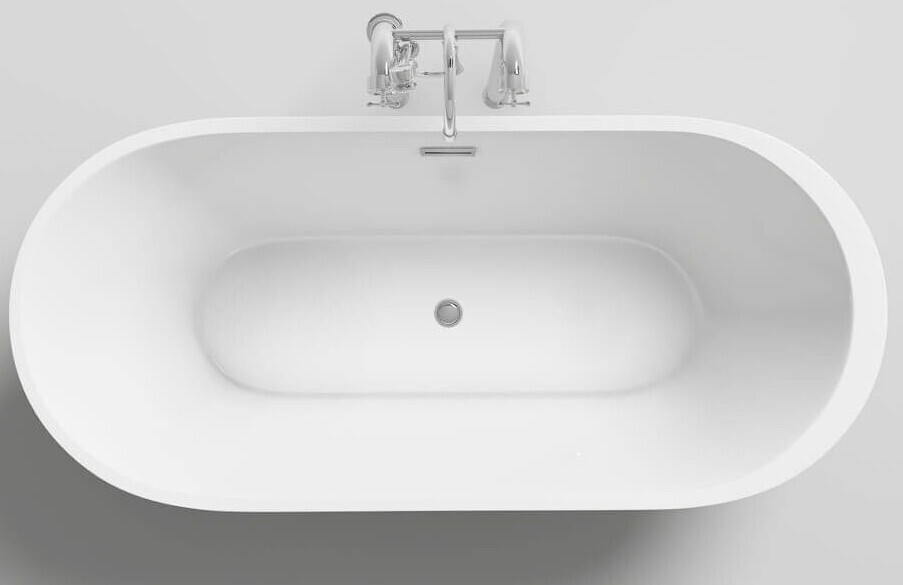
This is a potential bathtub choice (weight approx. 40 kg (88 lbs)):
What do you think about our plan? The dimensions for both bathtub and shower are 165cm (65 inches) each, which should just fit.. We still need to try lying in the bathtub to be sure :-/
Thanks in advance to everyone who advises us & best regards
we are currently planning our home renovation and thinking about the bathroom. We have already consulted a specialist on this.
We find a freestanding oval bathtub very stylish, but the advisor recommended against a design-focused tub due to the intended corner position. The reason is that dirt would accumulate behind it, making it difficult to keep that area clean and dry.
I’ve been thinking about this and appreciate that he was honest about these issues.
Furthermore, we use the bathtub only about 15 times a year; the rest of the time it would either collect laundry or just be wasted space. Also, the main problem seems to be the fixed bathtub itself and the resulting difficulty in cleaning behind it.
Therefore, I came up with the idea that the bathtub could be made movable somehow (with small/flat casters or something similar). The only real issue here would be the drainage of the used water.
So here is the idea I have in mind:
- We equip the bathtub with small/flat casters or similar so it can be moved forward for cleaning.
- Option A – Attach a hose to the drain so that after use, the hose can be placed in the shower to allow the water to drain there.
- Option B – Use a flexible drainage system so the bathtub can be moved for cleaning with the drain attached.
- Optionally, consider whether a bathtub faucet is needed at all, or if just a showerhead mounted on the wall would suffice (currently, we also fill the tub exclusively using the shower hose).
Below is a rough plan showing our current bathroom layout. The measurements are accurate, but the walls are not to scale. Speaking of measurements, we are quite short at 155cm (5 feet 1 inch) and 168cm (5 feet 6 inches) and can manage fine with a somewhat smaller bathtub. Guests or children are not a priority for now ;-)
This is a potential bathtub choice (weight approx. 40 kg (88 lbs)):
What do you think about our plan? The dimensions for both bathtub and shower are 165cm (65 inches) each, which should just fit.. We still need to try lying in the bathtub to be sure :-/
Thanks in advance to everyone who advises us & best regards

No, that’s not possible. It’s also unsafe or even dangerous. What would you do if the tub tipped over?
A tub like that is simply not placed against a wall or in a corner. Freestanding really means freestanding. If you don’t have enough space, then just choose a “standard” tub. There are also models designed to look a bit more stylish...
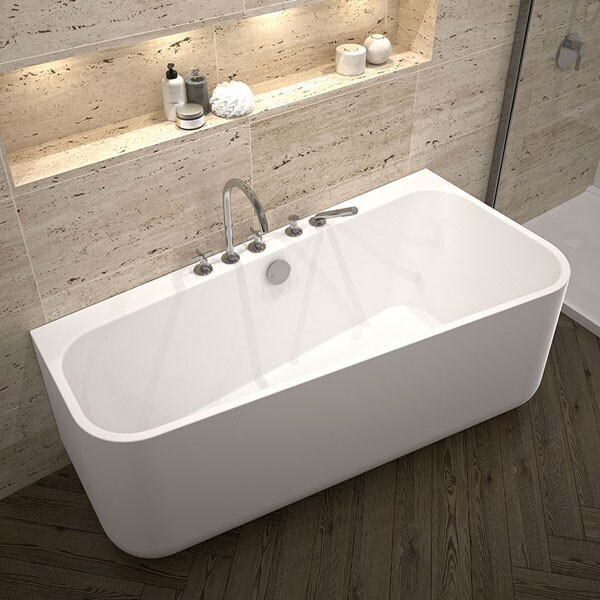
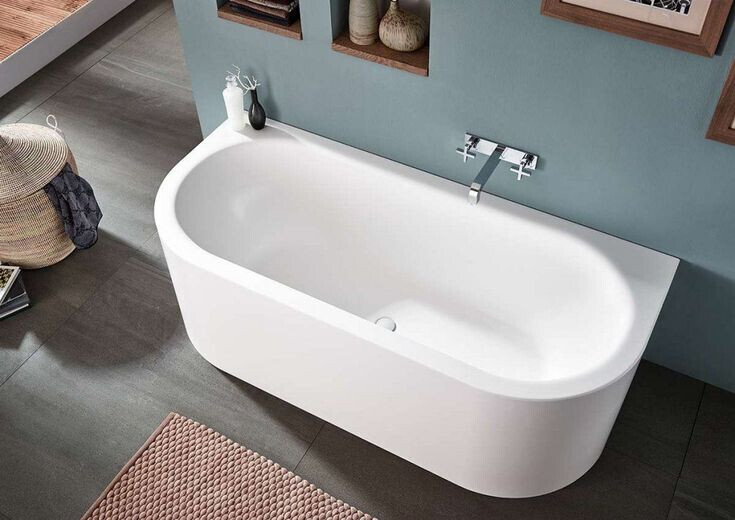
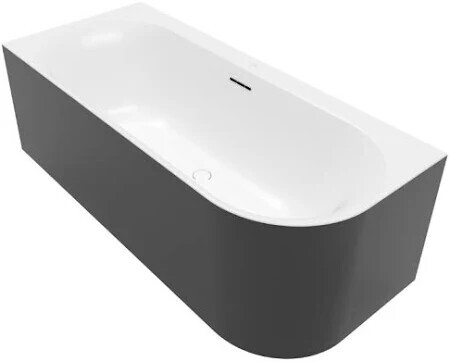
A tub like that is simply not placed against a wall or in a corner. Freestanding really means freestanding. If you don’t have enough space, then just choose a “standard” tub. There are also models designed to look a bit more stylish...
B
Besenkammer8416 Oct 2023 13:01KarstenausNRW schrieb:
Sorry, I have nothing more to say about this. I haven’t heard such a bad idea in ages. You’re building a new house and want to do something like this? Either accept that the corners will be a bit harder to clean or just go with a standard bathtub. But please don’t try something ridiculous like putting a 400 kg (880 lbs) bathtub on small casters screwed from underneath. Well, you should actually read properly and not argue based on false facts..
1. This is a house renovation.
2. The bathtub weighs about 40 kg (88 lbs).
What’s wrong with the idea of moving the bathtub every two weeks to clean stubborn dirt? A standard fixed bathtub is unfortunately not what we want..
S
Schorsch_baut16 Oct 2023 13:04The problem is that the filled bathtub weighs about 400 kg (880 lbs) and is on casters. Good luck making the water supply and drainage connections watertight. Why don’t you swap the positions of the toilet and the bathtub and place the bathtub slightly diagonally in the corner?
K
KarstenausNRW16 Oct 2023 13:24Besenkammer84 schrieb:
Yeah, you really need to read properly and not argue with false facts..
1. This is a house renovation.
2. The bathtub weighs about 40 KG.
What speaks against the idea of moving the bathtub every two weeks to clean the stubborn dirt?
A standard bathtub glued down is unfortunately not an option for us.. Alright, then you’re basically rebuilding the bathroom from scratch. There’s no real difference in substance compared to a new build. And what exactly are the false facts in the argument?
You’re creating a basic DIY solution that only has downsides:
- filled bathtub with 400 kg (880 lbs) on small castors
- attaching the castors (which are already unstable) securely to the bottom of the bathtub
- properly installing water inlet and drain, especially keeping the drain watertight
- someone accidentally bumps into the bathtub (children, guests, or you when emptying the tub with laundry) and damages the drain – good luck after the next bath session
and so on.
These are points you can’t easily dismiss. Regardless of whether it’s a new build or a renovation.
Also, I don’t understand why a bathtub used two to three times a month that isn’t freestanding would not be of interest to you. Personally, I would value a well-functioning bathtub much more than a makeshift fix.
Lastly, I don’t get the dirt issue. At most, it accumulates behind the tub, right at the wall, which you can’t reach. But that doesn’t really matter—if you place it close to the wall like you plan, you won’t see any dirt anyway.
And finally, though this is just my personal opinion: The tub looks cramped and lost in that small bathroom. Like a forced solution that doesn’t work. A freestanding tub needs space—that’s what “freestanding” implies. Or does the catalog actually describe it as a “bathtub model to be squeezed into a corner”? To have the desired effect, it really needs to stand freely. Freely, meaning not placed directly against walls.
But of course, that’s really a matter of taste.
Similar topics