
ᐅ Floor Plan for a 164 sqm Solid Construction Urban Villa on a Rear Lot
Created on: 7 Oct 2023 22:59
R
Richard-MD
Homeowners’ Requirements
Style, roof shape, building type: urban villa, hip roof, 22 degrees, solid construction
Basement, floors: no basement, two full floors, total 164 sqm (1765 sq ft)
Number of people, ages: 33, 37, 3, possibly another planned
Space requirements on ground floor and upper floor: 1 home office on ground floor, 2 children’s rooms on upper floor
Office use: family use or home office? Home office
Overnight guests per year: minimal
Open or closed layout: closed
Conservative or modern construction: conservative
Open kitchen, kitchen island: yes
Number of dining seats: 6 – 8
Fireplace: no
Music/stereo wall: not important
Balcony, roof terrace: no
Garage, carport: if budget allows
Utility garden, greenhouse: no
House Design
Planning by:
- Do-it-yourself with support from a potential general contractor
What do you particularly like? Why? Platform staircase
What do you not like? Why? Transition from living area to dining area
Estimated price according to architect/planner: 400,000
Personal price limit for the house, including fittings:
Preferred heating system: heat pump
If you have to give up certain details/finishes
- What can you give up: large bathroom
- What you cannot give up: children’s rooms, office, lift-and-slide door in dining area
Hello dear house building forum,
I would like to gather opinions and suggestions for improvements regarding my floor plan and look forward to exchanging ideas.
I am particularly struggling with the transition between the living and dining areas. On the one hand, I want to be able to look from the living area, through the dining area, out onto the property. On the other hand, I would like a clear physical separation between these spaces. Currently, a double sliding door is planned. However, the wall does not offer much space. The sliding door needs to be pushed somewhere. In the dining area, a lift-and-slide door will be added or implemented in the western corner. It should be about 2.80 m (9 ft 2 in) wide.
We have also been thinking hard about the entrance area. How can we create plenty of storage without wasting much space, while coordinating with the orientation of the platform staircase? I am worried that we may have created a bit of a bottleneck there.
Good luck
R.
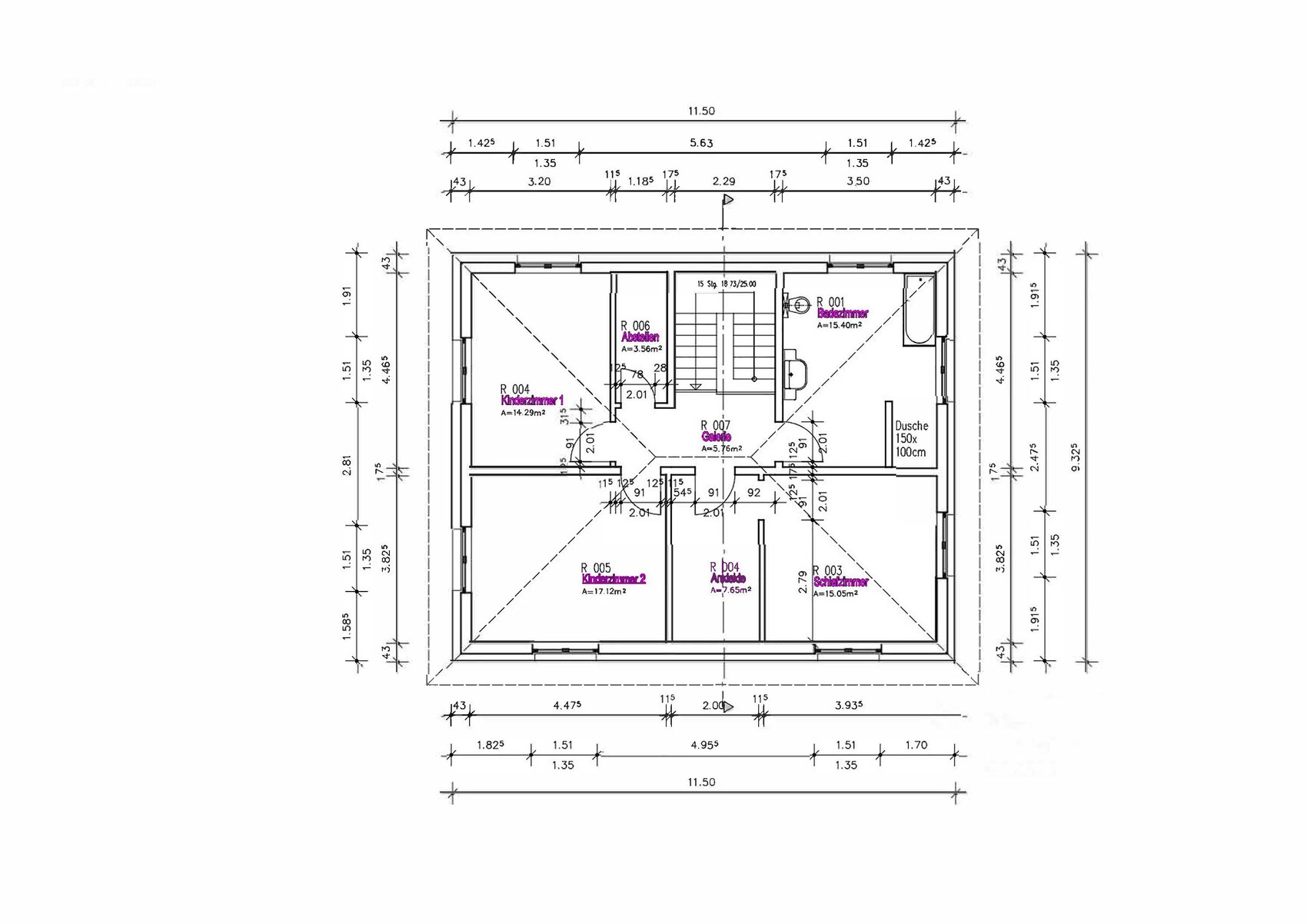
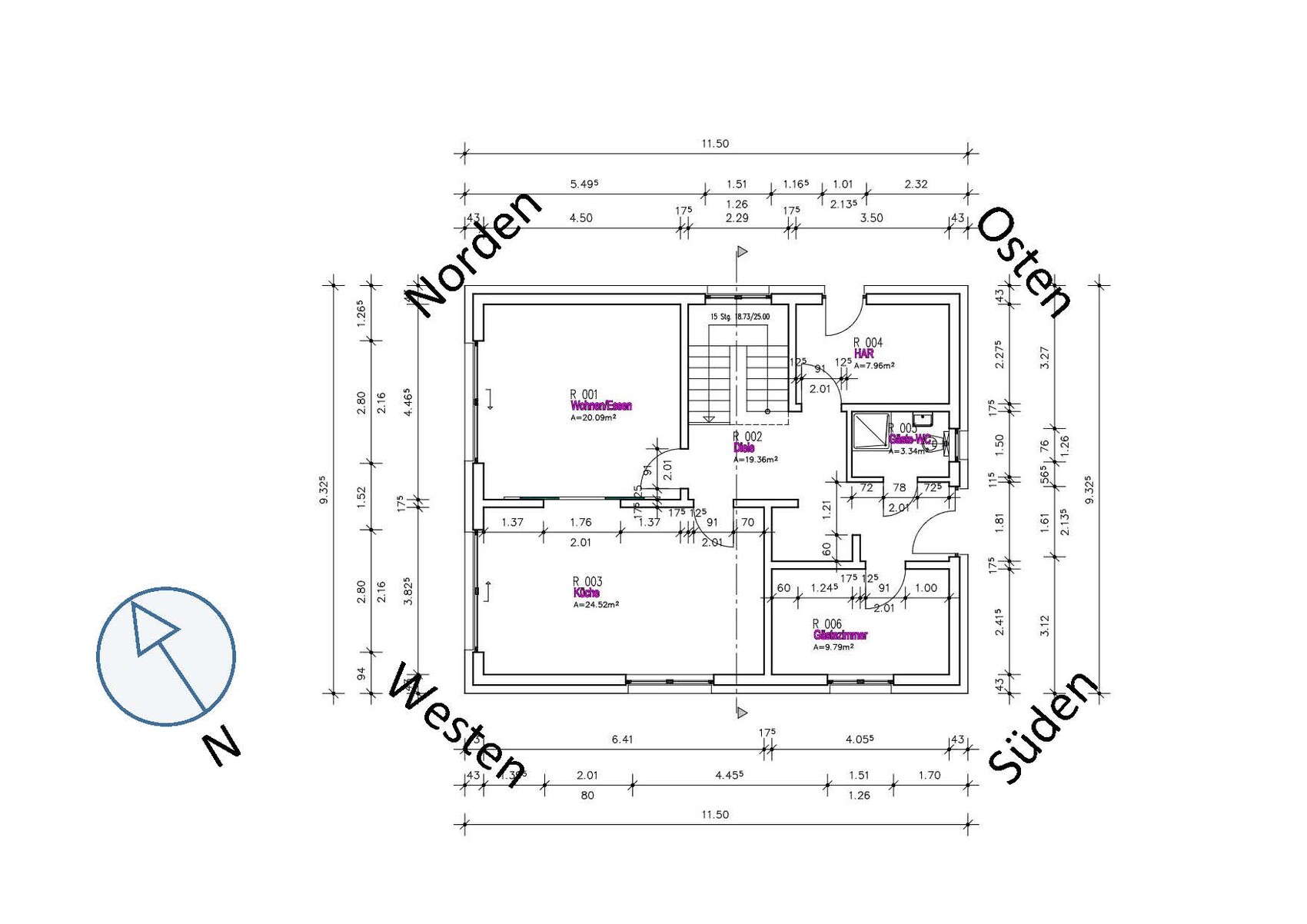
Style, roof shape, building type: urban villa, hip roof, 22 degrees, solid construction
Basement, floors: no basement, two full floors, total 164 sqm (1765 sq ft)
Number of people, ages: 33, 37, 3, possibly another planned
Space requirements on ground floor and upper floor: 1 home office on ground floor, 2 children’s rooms on upper floor
Office use: family use or home office? Home office
Overnight guests per year: minimal
Open or closed layout: closed
Conservative or modern construction: conservative
Open kitchen, kitchen island: yes
Number of dining seats: 6 – 8
Fireplace: no
Music/stereo wall: not important
Balcony, roof terrace: no
Garage, carport: if budget allows
Utility garden, greenhouse: no
House Design
Planning by:
- Do-it-yourself with support from a potential general contractor
What do you particularly like? Why? Platform staircase
What do you not like? Why? Transition from living area to dining area
Estimated price according to architect/planner: 400,000
Personal price limit for the house, including fittings:
Preferred heating system: heat pump
If you have to give up certain details/finishes
- What can you give up: large bathroom
- What you cannot give up: children’s rooms, office, lift-and-slide door in dining area
Hello dear house building forum,
I would like to gather opinions and suggestions for improvements regarding my floor plan and look forward to exchanging ideas.
I am particularly struggling with the transition between the living and dining areas. On the one hand, I want to be able to look from the living area, through the dining area, out onto the property. On the other hand, I would like a clear physical separation between these spaces. Currently, a double sliding door is planned. However, the wall does not offer much space. The sliding door needs to be pushed somewhere. In the dining area, a lift-and-slide door will be added or implemented in the western corner. It should be about 2.80 m (9 ft 2 in) wide.
We have also been thinking hard about the entrance area. How can we create plenty of storage without wasting much space, while coordinating with the orientation of the platform staircase? I am worried that we may have created a bit of a bottleneck there.
Good luck
R.

Richard-MD schrieb:
Unfortunately, yes, there is no other way according to the preliminary building permit. I do have the idea to plan the driveway only at the very end, at the entrance to the carport, at the full width of 6 meters (20 feet), and to gradually narrow it down "funnel-shaped" to about 3 meters (10 feet) in the middle, If you have a positive preliminary building permit regarding the floor area ratio inefficiency, then let’s just pretend I said nothing on this point ;-)
Richard-MD schrieb:
I couldn’t find out what “Pfuschertaschen” are by googling. Do you have a link? Isn’t that a common wall construction?
I should add, this is a single-family house with a 40 cm (16 inch) external wall. That “Pfuschertaschen” have become “a common wall construction” ;-) you might actually be right — or did you mean to add 24 cm plus 18 cm to get FORTY-THREE cm (about 17 inches), even though there is nothing in between?
I found 115 forum search results for the term “Pfuschertaschen” before your question, but I’d be happy to explain again: these are mortar pockets where they absolutely should not be — namely in the vertical joints of masonry walls. They occur when careless planners invent fictitious dimensions for masonry sections that no mason can properly follow. Then, bricks or blocks that should be dry-jointed get filled with mortar like a cream puff in a pastry shop. This disrupts the bonding (lap) length and weakens the masonry bond both structurally and thermally. You could almost call it “masonry cancer,” although it thankfully doesn’t spread or metastasize. It is simply sloppy work (by the planner, not the mason), and there is no justification for it — not even in the higher-efficiency KfW building energy classes.
Clients don’t usually care because the plasterer covers it up with a “mantle of silence.” At best, you see them only in high-resolution thermography scans. Still, they remain avoidable defects. These pockets won’t cause houses to collapse — but using them as an excuse for poor quality, in my opinion, does not set a good ethical example.
At window reveals, the same fictitious dimensions lead to cutting through bricks at unintended locations, which can jeopardize the proper installation of windows. So at least conscientious window fitters know that this criticism is not some personal obsession of a single forum member called 11ant.
Since I basically gave you homework to find these, just divide every masonry measurement by 0.125 meters (an eighth of a meter). Each resulting non-integer number is a warning flag.
https://www.instagram.com/11antgmxde/
https://www.linkedin.com/company/bauen-jetzt/
R
Richard-MD10 Oct 2023 21:4711ant schrieb:
If you have a positive preliminary building permit/planning permission for the floor area ratio overrun, then let’s just pretend I didn’t say anything about that point ;-)
You might actually be right that "botched mortar pockets" have become a “common wall construction” ;-) — or did you mean adding 24 cm plus 18 cm to a total of FORTY-THREE cm (17 inches), even though nothing is in between?
I found 115 search results for the term "botched mortar pockets" here in the forum (counted before your question), but I’d be happy to explain it again: these are mortar pockets where they absolutely don’t belong, specifically in the vertical joints of masonry walls. They occur when careless planners invent fanciful measurements for sections of masonry that a bricklayer simply cannot properly follow. Then bricks are filled with mortar in places where a dry interlocking joint should be, like cream puffs in a bakery. This causes disruption of the overlapping pattern and weakens the wall bond both structurally and in terms of thermal performance. You could almost call it "masonry cancer," although at least it doesn’t spread or metastasize. It’s purely sloppy work (though the planner is at fault, not the bricklayer), and there are no valid reasons for it—even in higher quality building standards like those with KfW efficiency classes. Homeowners usually don’t mind because the plasterer covers it up afterwards. You can only detect it in high-resolution thermographic images. Still, it remains avoidable garbage. Houses won’t collapse because of it—but using this as an excuse sets a poor ethical example, in my opinion ;-)
At window reveals, the same fanciful measurements cause cuts through bricks at places where none are planned, compromising proper window installation. So at least conscientious window installers know that this criticism is not just a personal quirk of 11ant, but a real issue.
But since I basically gave you the homework to find these yourself: simply divide each wall measurement by 0.125 meters (an eighth of a meter). Every non-integer result is a warning sign. Thank you very much for the detailed explanation. Now I understand. I suspect this is because the plot is part of an initial draft to create a rough cost estimate for us. Maybe these planning oversights will be corrected in the more detailed planning stages. I will definitely keep an eye on it.
Based on the great advice here in the forum, I have adjusted the ground floor layout in two versions to straighten out the complications in the entrance area. Maybe someone has an opinion on this.
In version 1, the cloakroom was slightly modified.
In version 2, the utility room was swapped with the guest bedroom and guest WC. I don’t think this solution is bad. However, I don’t yet have a solution for the resulting poorly lit hallway.
Good luck
R.
Richard-MD schrieb:
Thank you very much for the detailed explanation. Now I understand. I suspect this is because the plot is a first draft meant to provide a rough cost estimate for us. Perhaps these planning inaccuracies will be corrected in the more detailed planning stages. I will definitely keep an eye on it. I know the usual experts differently. For a cost estimate, I already find the draft far too detailed. The ratio of detail to thoroughness is too unfavorable for me to trust this general contractor.
Richard-MD schrieb:
Based on the great advice here in the forum, I adjusted the ground floor layout of the plot in two versions to straighten out the confusion around the entrance area. Maybe someone has an opinion on that. Plot = floor plan for a townhouse? Since you added the orientation of the house on the plot later on, I think it should be oriented completely differently. The sunk costs of a second building permit / planning permission request are negligible and not a reason to skip a relaunch. Am I correct in assuming that so far everything has always started with the ground floor? (This is unfortunately a very common beginner’s mistake).
Why are the room labels "Living/Dining" used for "Living" and "Kitchen" used for "Dining/Cooking"?
And, among other things, regarding the location of the utility room, I wonder: what is the profession of the planner?
I cannot shake the impression that this is an (interim) result of the owners’ own search for somewhat suitable floor plan ideas handed over to a general contractor and “cleaned up” by their planner. What comes out of it looks like a professional plan ...
https://www.instagram.com/11antgmxde/
https://www.linkedin.com/company/bauen-jetzt/
R
Richard-MD10 Oct 2023 22:5211ant schrieb:
I know the usual characters differently. For a cost estimate, I already find the design far too detailed. The detail-to-care ratio would be too unfavorable for me to trust this general contractor.
Plot = floor plan for an urban villa? Since you added the positioning of the house on the plot, I think it should be oriented completely differently. The sunk cost of a second preliminary building inquiry is trivial compared to giving up a relaunch because of it. Am I correct in assuming that the ground floor was always the starting point so far? (Unfortunately, this is a very common beginner’s mistake).
Why exactly are the room labels "Living/Dining" for "Living" and "Kitchen" for "Dining/Cooking"? And, among other things, because of the location of the utility room, I wonder: what is the planner’s profession? I can't shake the impression that this is an (intermediate) result of the owners’ own search for somewhat suitable floor plan ideas given to a general contractor, whose planner simply "traced" it. What comes out of it looks like a professional plan ...That’s exactly how it was. We sent him a floor plan of a model house we liked, and he then adapted it according to our wishes.Another design is not out of the question. The preliminary inquiry only sets the allowable building depth due to the second row of development. Do you have concrete ideas or existing comparable floor plans so I know where the mistake is and can start over or make additions to the design?
Richard-MD schrieb:
so that I know where the error is now and can restart or supplement the planning? I was talking about a relaunch, not a patch.
Richard-MD schrieb:
Do you have any concrete ideas or existing comparable floor plans? My "idea" is always the same: plan professionally and in a structured way instead of patching together random ideas. Create a room program, qualify the room program, do a rough plan of the upper floor, derive a rough ground floor plan from that, and so on. I have explained the procedure of when, how far, and with whom this path varies quite often. Just in recent weeks, I have linked several posts here in this forum naming different approaches and advisers in a wide range. Also keywords for internal forum and further research, so people can read up from all perspectives.
Richard-MD schrieb:
Nothing stands in the way of a different plan. The preliminary inquiry only defines the depth of development through the second building row. But it sounded quite different here...
Richard-MD schrieb:
Unfortunately yes, it cannot be done otherwise according to the building permit / planning permission. ... to my ears. You gave me the impression that you felt almost “tied” in the framework of the response to the preliminary building inquiry to extensively pave all the way to the farthest corner of the plot; better options seemed to drift too far from what was already offered as likely to be approved.
Richard-MD schrieb:
Exactly. We sent him a floor plan of a model house we like, and this was then adapted according to our wishes. And where is this model house located? Surely not on a tiny, unusable plot, right? ... that’s where things already start to go wrong... Unsuitable templates cannot be sensibly developed, especially not by a draftsman.
Please name/show the model house in its “original form” and what adjustment requests you made for it.
And please also explain your reasons for skipping a proper architect and instead letting a draftsman produce a collage (which costs the same large amount of borrowed money as if it had been planned intelligently).
https://www.instagram.com/11antgmxde/
https://www.linkedin.com/company/bauen-jetzt/
R
Richard-MD11 Oct 2023 20:10Attached is the model house in its "pure form." Source: Origin WEISS-Model House UrbanLife. That’s correct, I don’t think it was a problematic plot. I was very enthusiastic about the floor plan since it was already somewhat tailored to our needs. The main changes were relocating the entrance “further down – toward the southwest” and spatially separating the living area from the dining area. In my opinion, it wasn’t that bad at all. I am especially grateful for the helpful comments.
The requirement to tie the building request to the second building line limits me significantly in terms of placement. I have illustrated what I mean in the site plan with the red line. This condition essentially leaves me no choice but to pave half of my property for the driveway (which frustrates me a lot). Or am I overlooking another option?
My reasoning for not hiring an architect can be summarized briefly. We liked the attached floor plan so much that we considered commissioning an architect unnecessary. Additionally, this view was reinforced by the fact that we received a reasonable price offer from our preferred general contractor for this townhouse project. A local family business with an excellent reputation. One or two years ago, it would have been impossible to get an appointment with them before 2025.
Addendum: I would immediately invest money to hire an architect, but as someone outside the industry, how am I supposed to find out who does a good job? What I have learned is that an architect’s website does not reflect their competence.
Good luck
R.
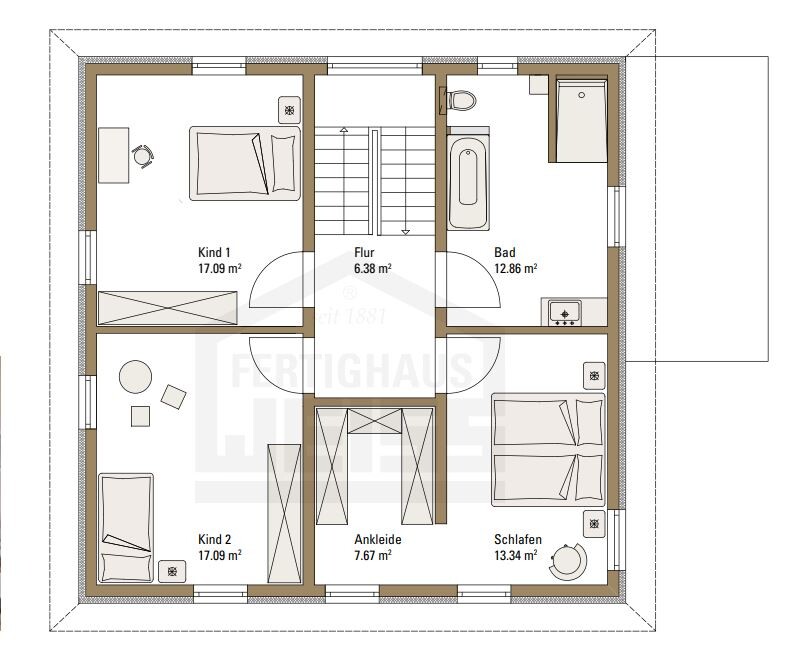
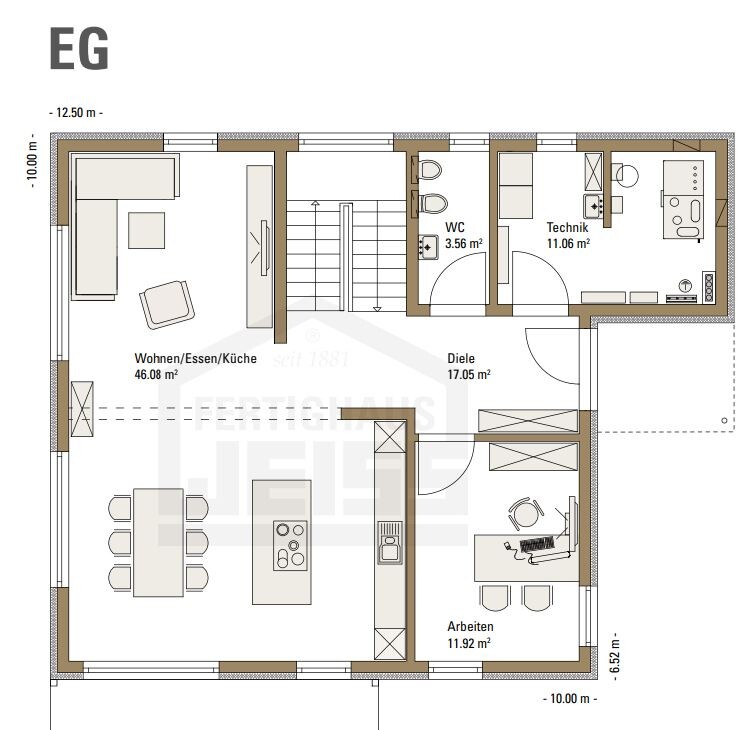
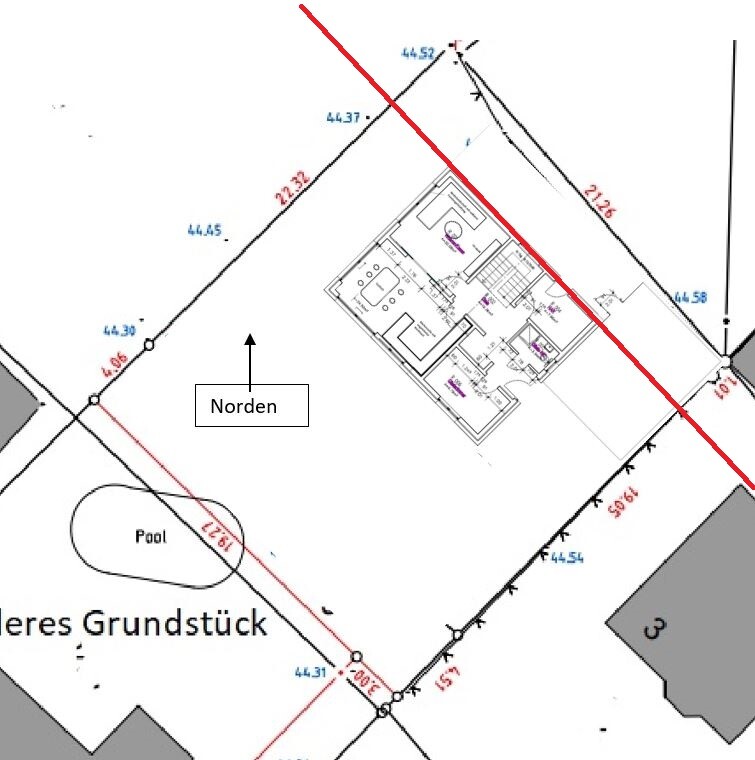
The requirement to tie the building request to the second building line limits me significantly in terms of placement. I have illustrated what I mean in the site plan with the red line. This condition essentially leaves me no choice but to pave half of my property for the driveway (which frustrates me a lot). Or am I overlooking another option?
My reasoning for not hiring an architect can be summarized briefly. We liked the attached floor plan so much that we considered commissioning an architect unnecessary. Additionally, this view was reinforced by the fact that we received a reasonable price offer from our preferred general contractor for this townhouse project. A local family business with an excellent reputation. One or two years ago, it would have been impossible to get an appointment with them before 2025.
Addendum: I would immediately invest money to hire an architect, but as someone outside the industry, how am I supposed to find out who does a good job? What I have learned is that an architect’s website does not reflect their competence.
Good luck
R.
Similar topics