
Good morning,
We have a problem with water behind the grout in our shower. However, our tiler is not very cooperative. Maybe someone has experience with this issue and can give us an opinion before we contact an expert:
- The shower in the guest bathroom has only been used 5 times since we moved in, so wear and tear can be ruled out.
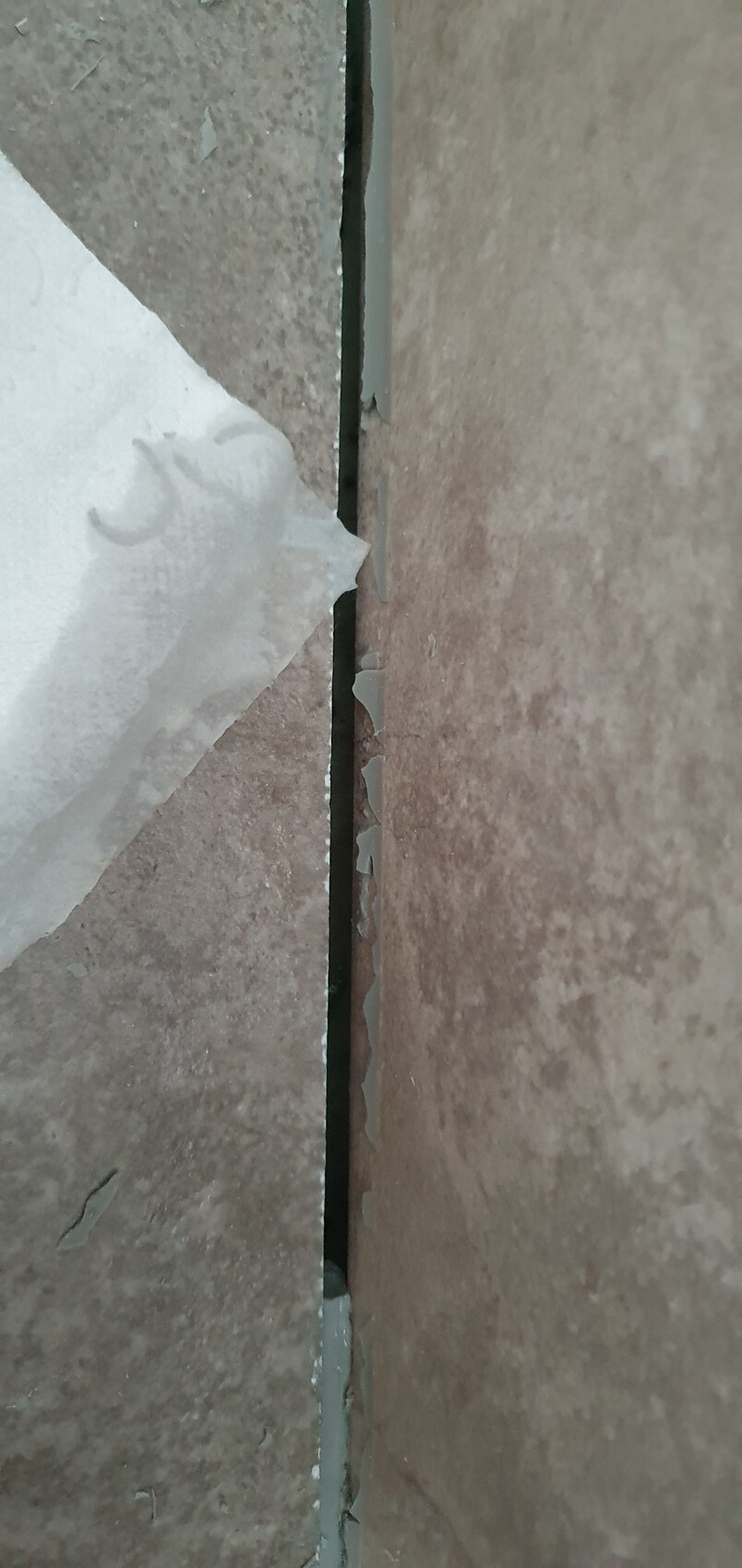
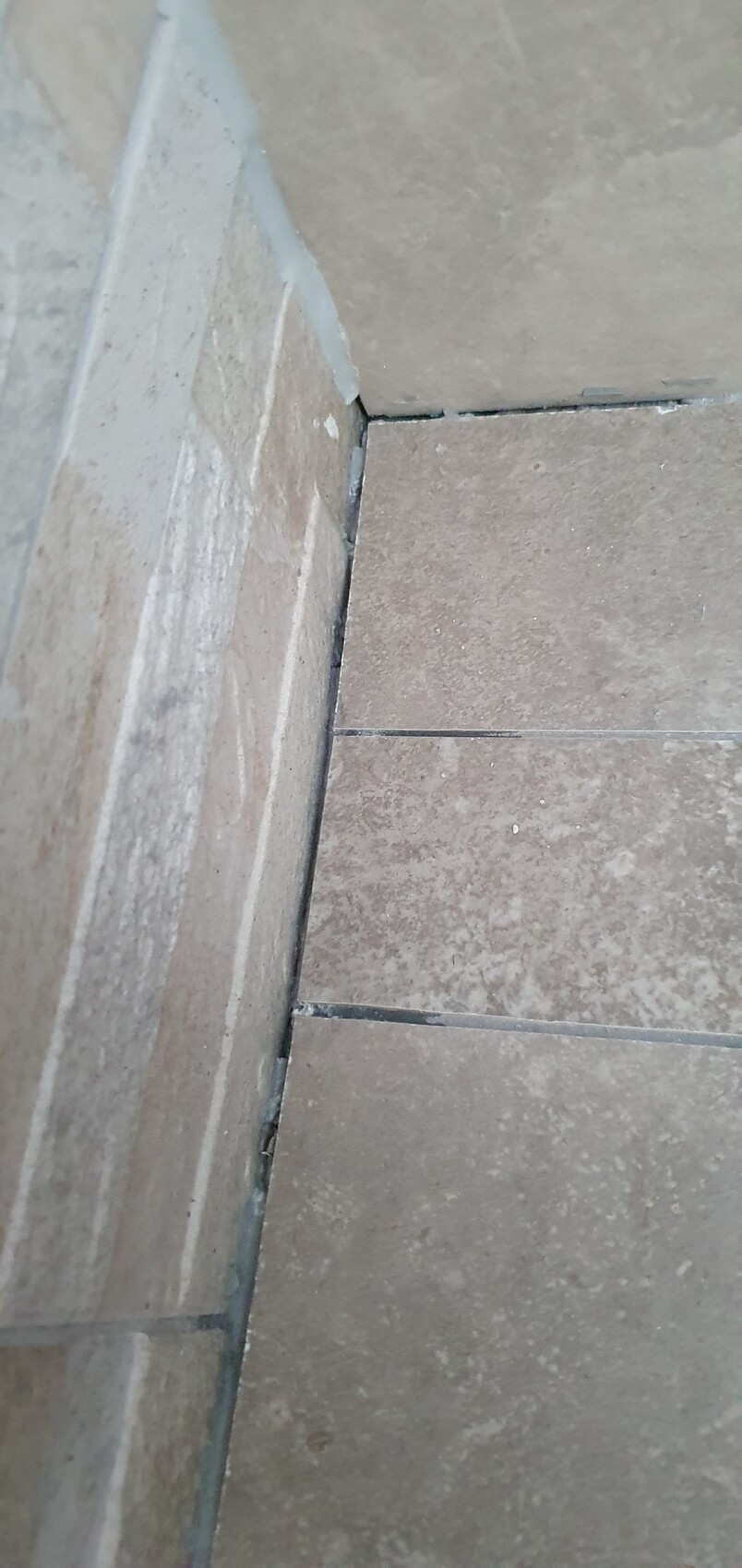
- The grout in the shower, especially where the floor meets the wall tiles, has come loose and appears to be leaking salts (?). In the photos, you can see that the regular grout near the silicone joints is noticeably darker, which we believe indicates moisture.
- We informed the tiler about the problem, and he said these were maintenance joints, so it’s not a warranty issue, but he would redo the grout. He then applied a new silicone bead over the old one, which peeled off immediately after just one shower (silicone on silicone, of course, didn’t hold). The dark areas on the grout remained several weeks after the last shower. When pressing on the new joints, water also came out of the grout.
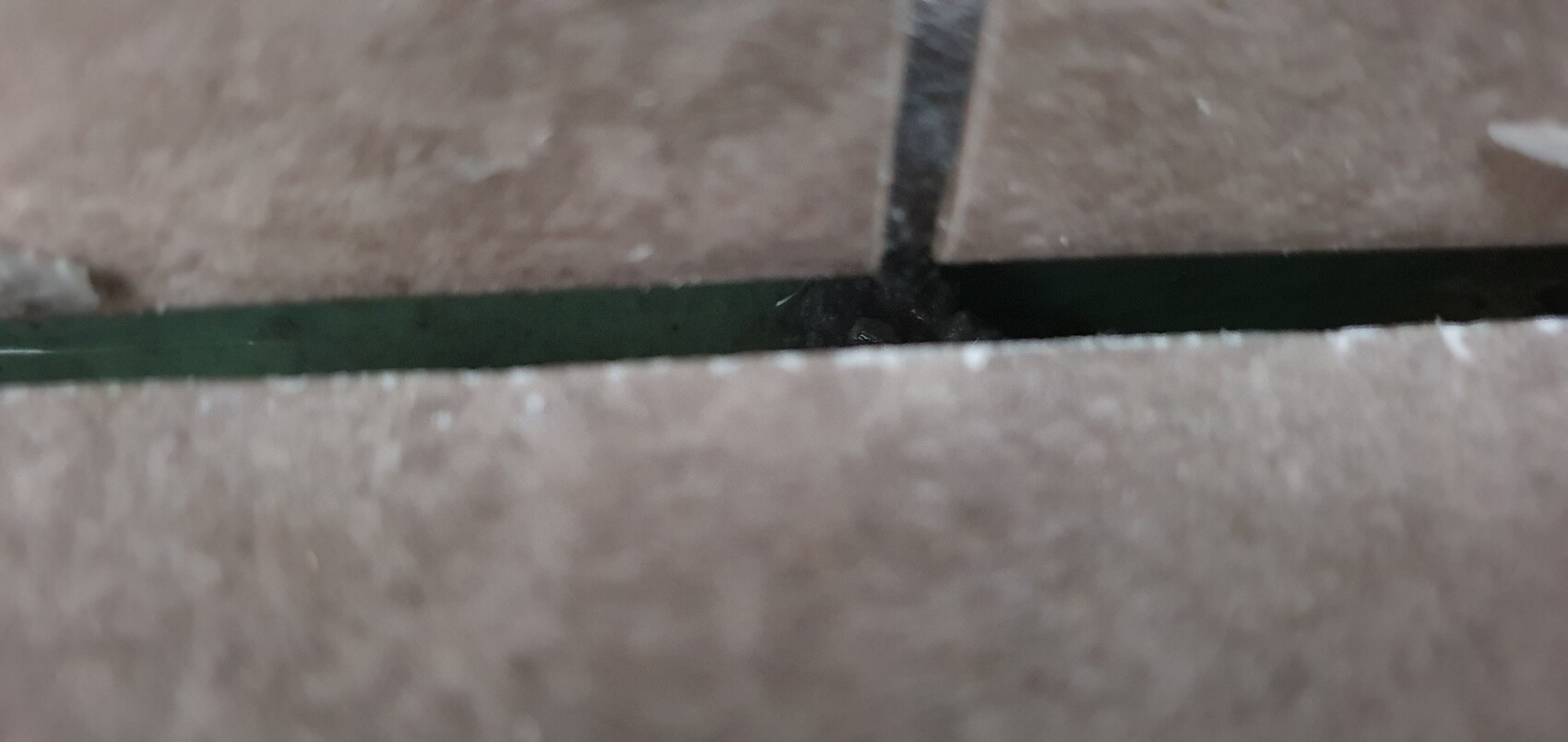
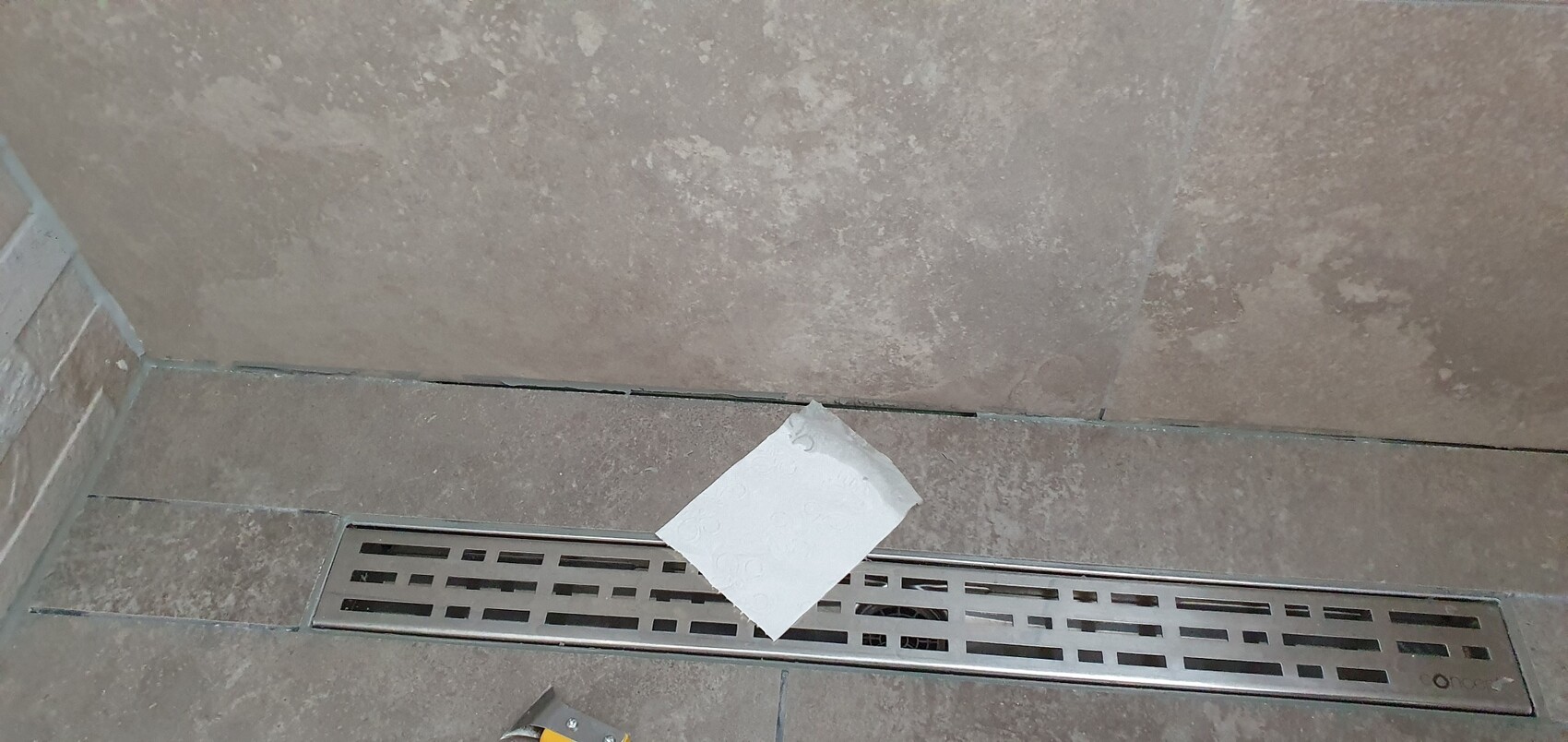
- Since the new grout separated from the old, and the old grout was already damaged, I removed the silicone to redo the grouting completely. During this process, we could see that water had collected behind the grout and there are large voids. A piece of paper pushed between the grout pulled water out immediately.
- This means the grout is allowing water to pass through, and water is collecting in these voids. If water continues to accumulate there and cannot dry out (since it is behind the silicone joints), are we not looking at water damage very soon?
Is this normal? In our opinion, this area should be sealed so that no water can collect there.
Thank you in advance if anyone can provide an assessment.
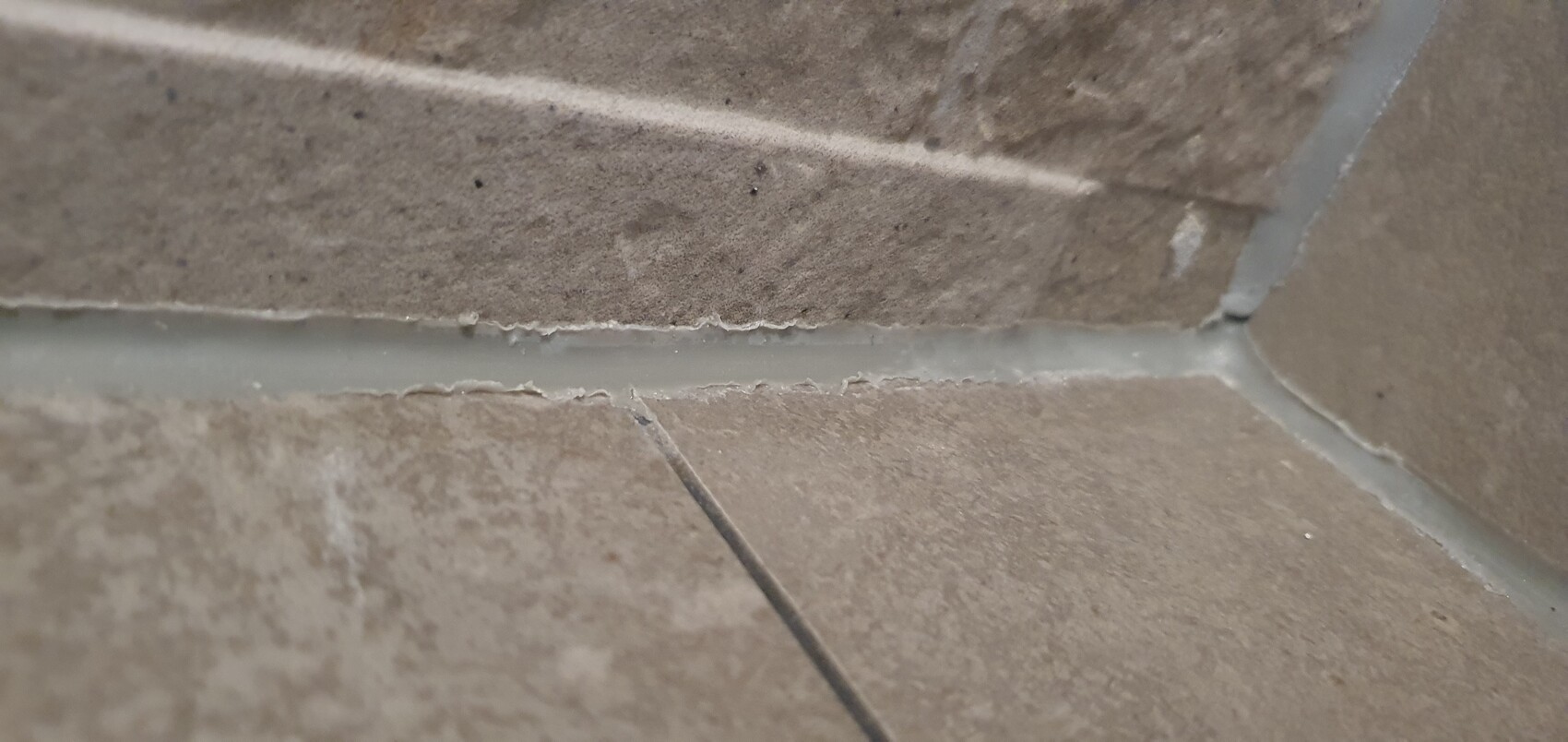
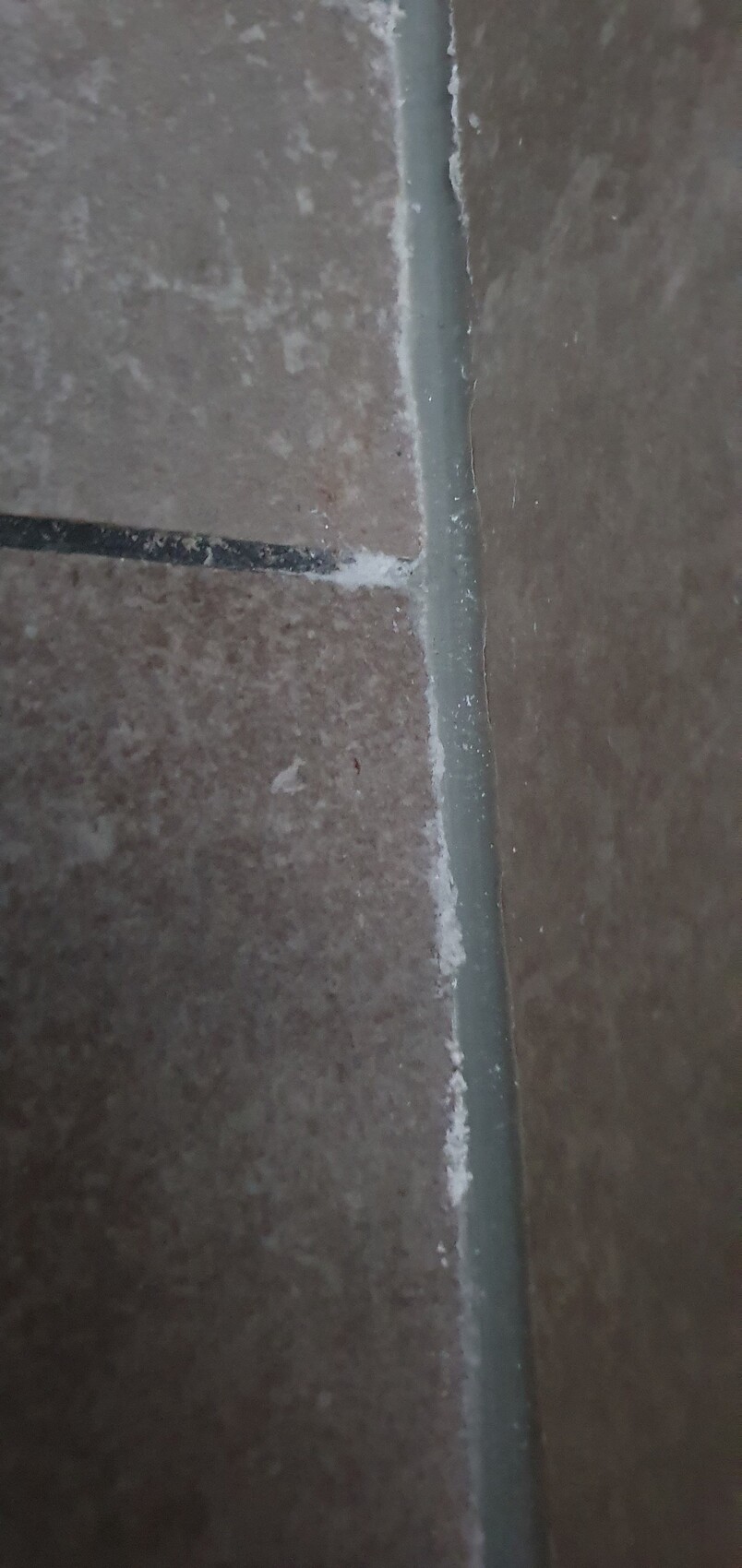

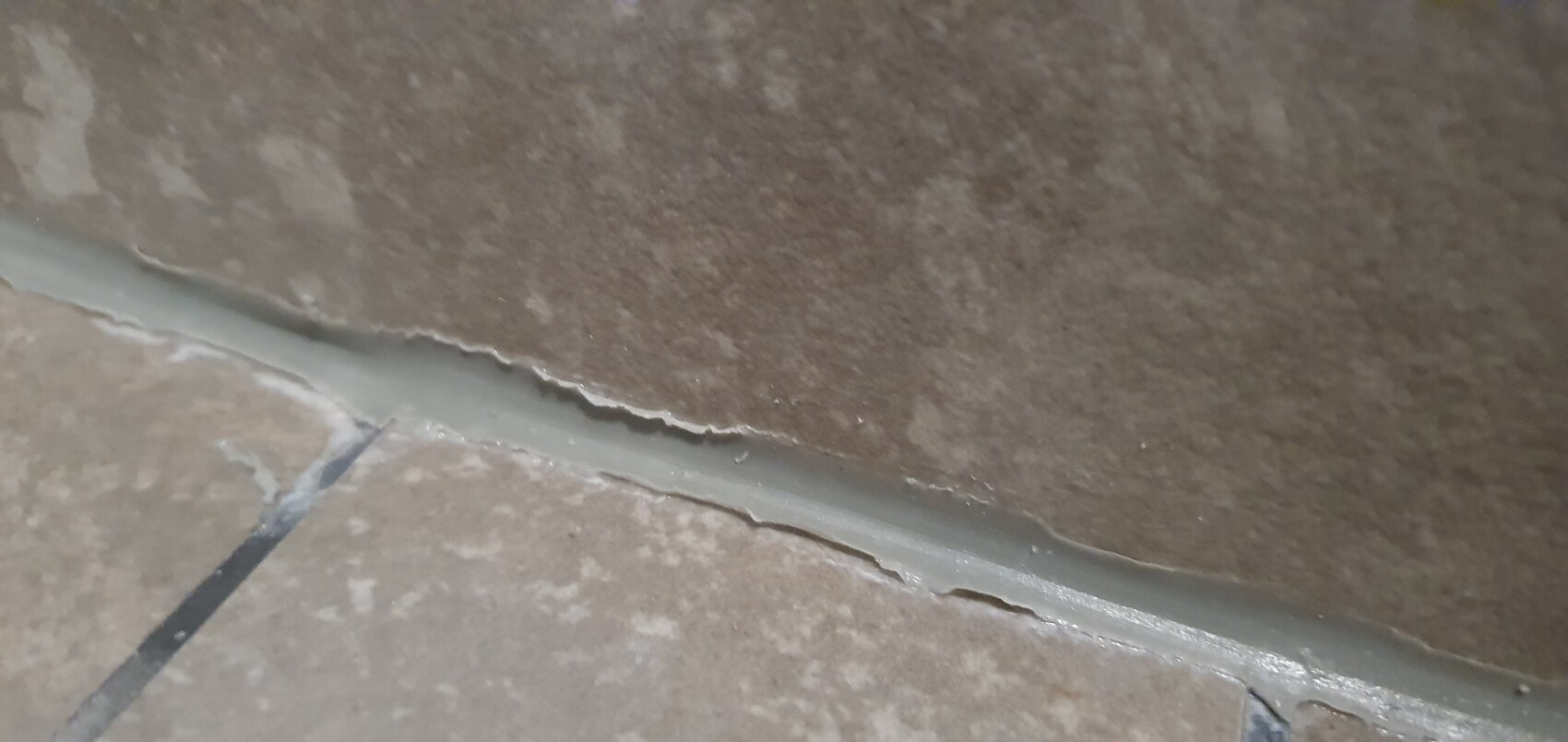
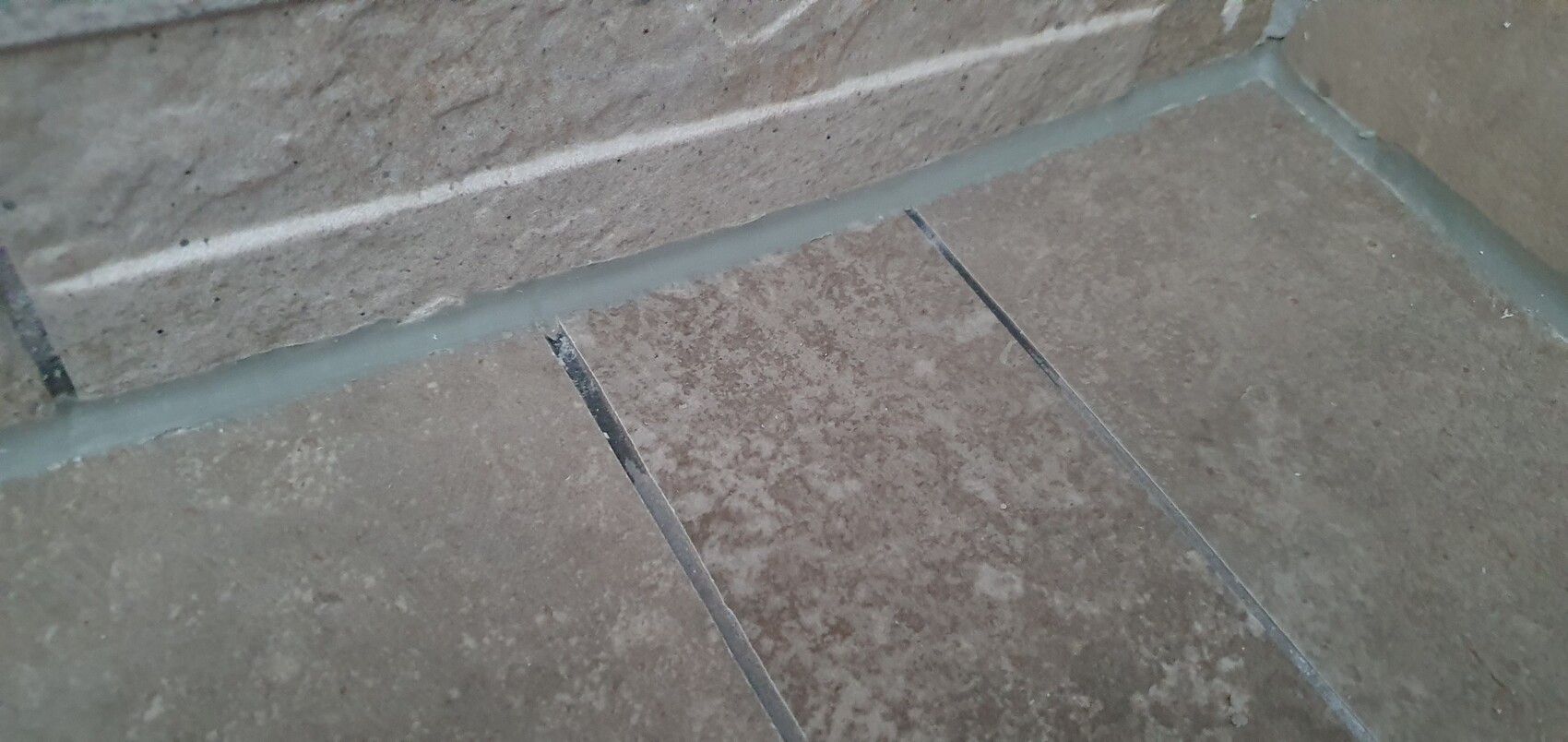

We have a problem with water behind the grout in our shower. However, our tiler is not very cooperative. Maybe someone has experience with this issue and can give us an opinion before we contact an expert:
- The shower in the guest bathroom has only been used 5 times since we moved in, so wear and tear can be ruled out.
- The grout in the shower, especially where the floor meets the wall tiles, has come loose and appears to be leaking salts (?). In the photos, you can see that the regular grout near the silicone joints is noticeably darker, which we believe indicates moisture.
- We informed the tiler about the problem, and he said these were maintenance joints, so it’s not a warranty issue, but he would redo the grout. He then applied a new silicone bead over the old one, which peeled off immediately after just one shower (silicone on silicone, of course, didn’t hold). The dark areas on the grout remained several weeks after the last shower. When pressing on the new joints, water also came out of the grout.
- Since the new grout separated from the old, and the old grout was already damaged, I removed the silicone to redo the grouting completely. During this process, we could see that water had collected behind the grout and there are large voids. A piece of paper pushed between the grout pulled water out immediately.
- This means the grout is allowing water to pass through, and water is collecting in these voids. If water continues to accumulate there and cannot dry out (since it is behind the silicone joints), are we not looking at water damage very soon?
Is this normal? In our opinion, this area should be sealed so that no water can collect there.
Thank you in advance if anyone can provide an assessment.
K
KarstenausNRW10 Oct 2023 08:281. How old is the bathroom?
2. Silicone joints are actually only maintenance joints and do not ensure the shower is watertight.
3. Behind the tiles, there should be a waterproof layer that prevents water from penetrating the walls. Therefore, the joints themselves do not need to be waterproof.
4. Regrouting (even if done by the tiler) means removing the old grout and then applying new grout.
Make a deal with the tiler: you remove the old grout, and they reseal everything completely. Or hire someone who specializes in this. Many tilers are not able to do this properly.
2. Silicone joints are actually only maintenance joints and do not ensure the shower is watertight.
3. Behind the tiles, there should be a waterproof layer that prevents water from penetrating the walls. Therefore, the joints themselves do not need to be waterproof.
4. Regrouting (even if done by the tiler) means removing the old grout and then applying new grout.
Make a deal with the tiler: you remove the old grout, and they reseal everything completely. Or hire someone who specializes in this. Many tilers are not able to do this properly.
KarstenausNRW schrieb:
1. How old is the bathroom?
2. Silicone joints are actually just maintenance joints and do not provide waterproofing for the shower.
3. There should be a waterproof membrane behind the tiles that prevents water from penetrating the walls. Therefore, the joints do not need to be waterproof.
4. Re-grouting (even if done by a tiler) means removing the old grout completely and then applying new grout.
Make a deal with the tiler. You scrape out the old grout, and they reseal everything properly. Or hire someone who specializes in this. Many tilers cannot do it properly. Thank you for the feedback!
1. The bathroom was tiled in February 2023, and we moved in in March.
2. Shouldn't the grout last for more than just 5 showers?
3. I understand that, but if there are large gaps where water can collect and cannot drain away, wouldn’t moldy, smelly water build up over the years? Shouldn’t the tiler have worked in a way that the adhesive fills those gaps to prevent liters of standing water?
4. Yes, we thought the same… It’s disappointing if a tiler simply applies new grout over the old, damaged grout…
Thanks for your assessment.

With the tile installer’s approach here, I’m afraid of serious problems. Is this a new build with move-in planned for March 2023, or a renovation?
Are there any photos showing the bathroom in its shell condition or during construction, especially regarding the waterproofing BELOW the tiles mentioned earlier?
If this is missing, even redoing the silicone joints won’t help! Non-silicone joints are also not 100% waterproof. So, if no (double) waterproof coating was applied, and waterproofing tapes and collars were omitted, this is a clear case for major demolition :-(
Otherwise, substantial damage to the house is to be expected...
Are there any photos showing the bathroom in its shell condition or during construction, especially regarding the waterproofing BELOW the tiles mentioned earlier?
If this is missing, even redoing the silicone joints won’t help! Non-silicone joints are also not 100% waterproof. So, if no (double) waterproof coating was applied, and waterproofing tapes and collars were omitted, this is a clear case for major demolition :-(
Otherwise, substantial damage to the house is to be expected...
i_b_n_a_n schrieb:
With the tile installer’s approach here, I’m afraid of the worst. Is this a new build with move-in planned for March 2023, or a renovation?
Are there any photos showing the bathroom in its rough-in stage or during construction, especially regarding the waterproofing BELOW the tiles mentioned earlier?
If that is missing, applying new silicone grout won’t help! Even the non-silicone grout joints are not 100% waterproof. So if no (double) waterproof coating was applied, and if the sealing tapes and collars were left out, this could be a good case for demolition :-(
Otherwise, serious damage to the house could be expected... This is a new build.
No, unfortunately I don’t have any photos from the rough-in phase and can’t say if it was properly waterproofed. I have also lost all trust in the tile installer by now. Is there any way to verify afterwards whether waterproofing was done? Besides removing the tiles and inspecting underneath?
B
Buchsbaum10 Oct 2023 09:33First, I would check the slope in the shower towards the drain. Use a small spirit level to see if water flows away from the drain or even pools there.
At the joint between the floor and the rear wall, I would apply a strip instead of a sealant using body filler adhesive like Sika Flex or a similar product. This would make the joint watertight. I would also seal the other connections with body filler adhesive rather than silicone.
There are semi-circular sealing strips available for corner areas.
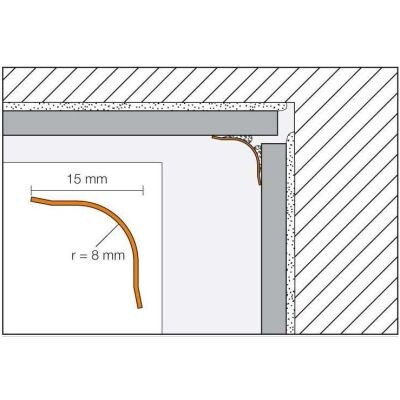
But first, check the slope, otherwise everything else will be pointless.
At the joint between the floor and the rear wall, I would apply a strip instead of a sealant using body filler adhesive like Sika Flex or a similar product. This would make the joint watertight. I would also seal the other connections with body filler adhesive rather than silicone.
There are semi-circular sealing strips available for corner areas.
But first, check the slope, otherwise everything else will be pointless.
Similar topics