
ᐅ Mold in a corner, ground floor, detached house, built in 1968
Created on: 21 Sep 2023 14:30
S
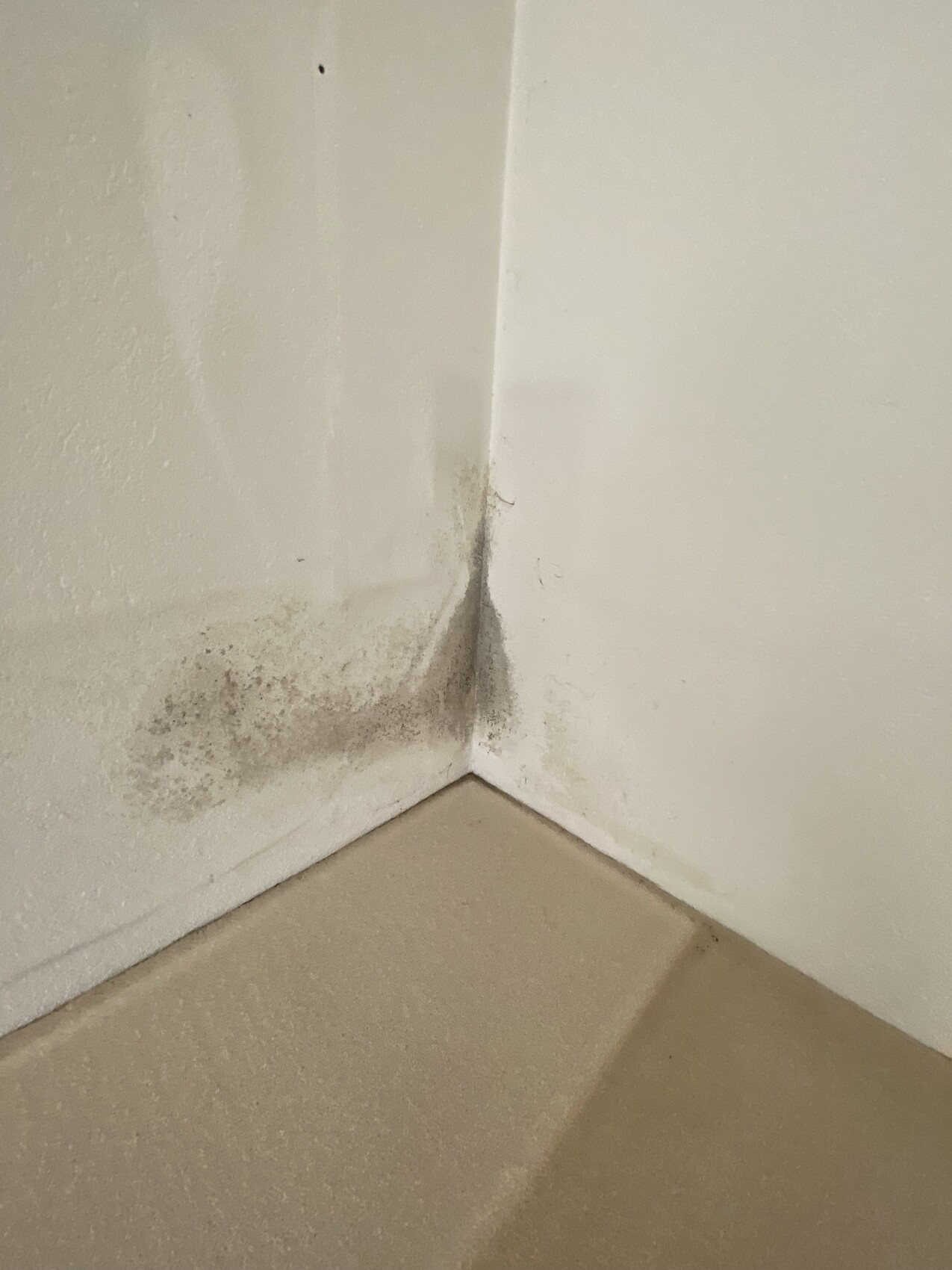
SlamillI would appreciate some advice on what needs to be done with this corner. Ground floor, detached house, built in 1968. Many thanks!
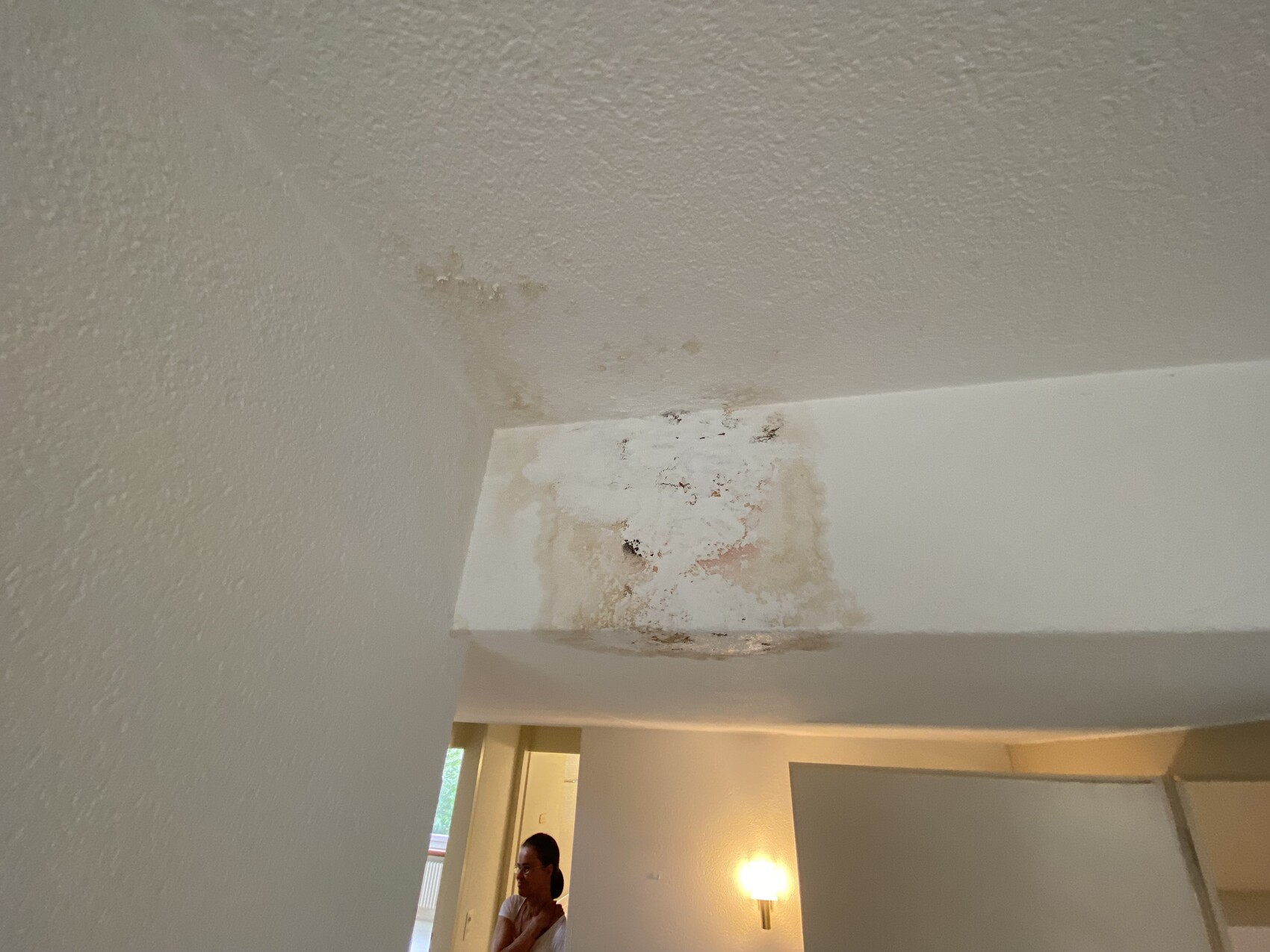
In addition, there is water damage on the flat roof. There is one larger stain and one smaller stain.
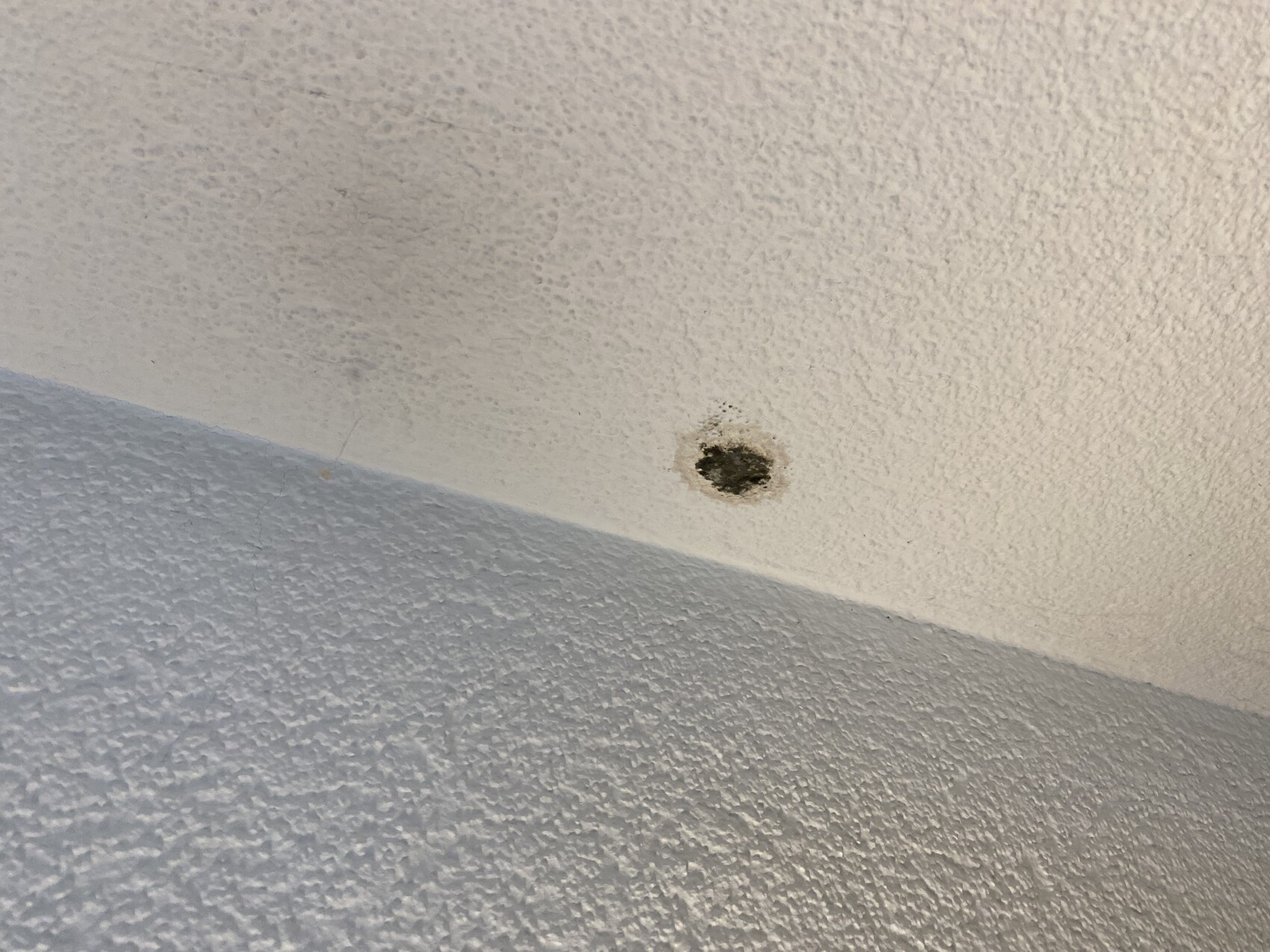
And here is the smaller damage
How much effort is required to fix all of this?
Thank you in advance for any input!
In addition, there is water damage on the flat roof. There is one larger stain and one smaller stain.
And here is the smaller damage
How much effort is required to fix all of this?
Thank you in advance for any input!
The corner looks as if a cabinet or similar piece of furniture had been standing on the carpet. This severely limited air circulation behind it. The wall likely meets the building standards from 1968, so the insulation is poor. Therefore, a high air exchange rate and higher room temperatures are necessary to prevent condensation of moisture there.
The damp area will eventually (quite quickly) start to develop mold.
You can prevent this by not placing cabinets in exterior corners and always leaving at least 5 cm (2 inches) of air space behind furniture on exterior walls.
If the roof is leaking, you have to address it from the outside, no matter how large the stain inside is. With some luck, the leak might be at a roof penetration. But given the 1968 construction date, I would plan on having to re-insulate and waterproof the entire roof.
The damp area will eventually (quite quickly) start to develop mold.
You can prevent this by not placing cabinets in exterior corners and always leaving at least 5 cm (2 inches) of air space behind furniture on exterior walls.
If the roof is leaking, you have to address it from the outside, no matter how large the stain inside is. With some luck, the leak might be at a roof penetration. But given the 1968 construction date, I would plan on having to re-insulate and waterproof the entire roof.
dertill schrieb:
The corner looks as if a cabinet or something similar had been placed on the carpet. This significantly limited the air circulation behind it. The wall is probably built to the 1968 building standards in terms of energy efficiency, so it’s poor. Therefore, a high air exchange rate and higher room temperatures are necessary to prevent moisture from condensing there.
The damp spot will then start to mold eventually (quite quickly).
You can fix this by not placing cabinets in exterior corners and always leaving at least 5cm (2 inches) of air space behind furniture on exterior walls.
If the roof is leaking, you have to check from the outside, no matter how big the stain is on the inside. If you’re lucky, it’s a leak around a penetration. But for a 1968 building, I would simply plan on insulating and sealing the entire roof anew. Thank you very much! This is exactly the kind of information that helps me as a non-expert to better understand the basics and connections and to draw conclusions from them.
Slamill schrieb:
Thank you very much! That is exactly what I needed as a layperson to better understand the basics and connections and to draw some conclusions from them. I have also read something about roof insulation, but it was not entirely clear to me when it is not recommended. Can you always do it, or only as part of an overall energy efficiency concept?
Considering the construction year (1968), I would plan to completely re-roof and insulate the entire roof. Insulation is required when renewing the roof covering anyway and can/should also be done independently of other work.
Creating a comprehensive concept or renovation plan is generally a good idea, especially for non-experts.
Creating a comprehensive concept or renovation plan is generally a good idea, especially for non-experts.
Similar topics