
ᐅ Electrical Planning / Lighting Design / Networking for New Construction – Experiences?
Created on: 20 Sep 2023 17:50
G
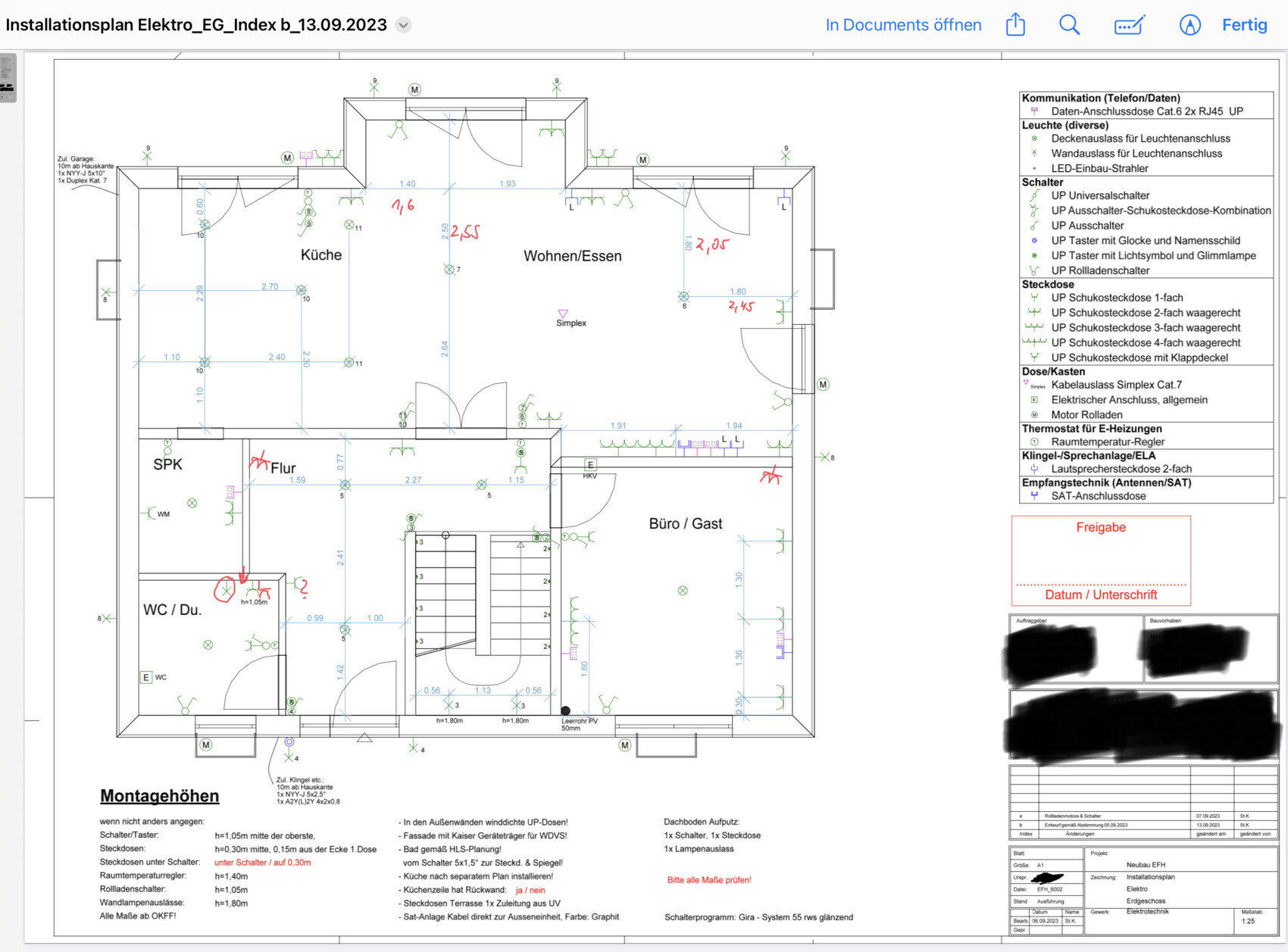
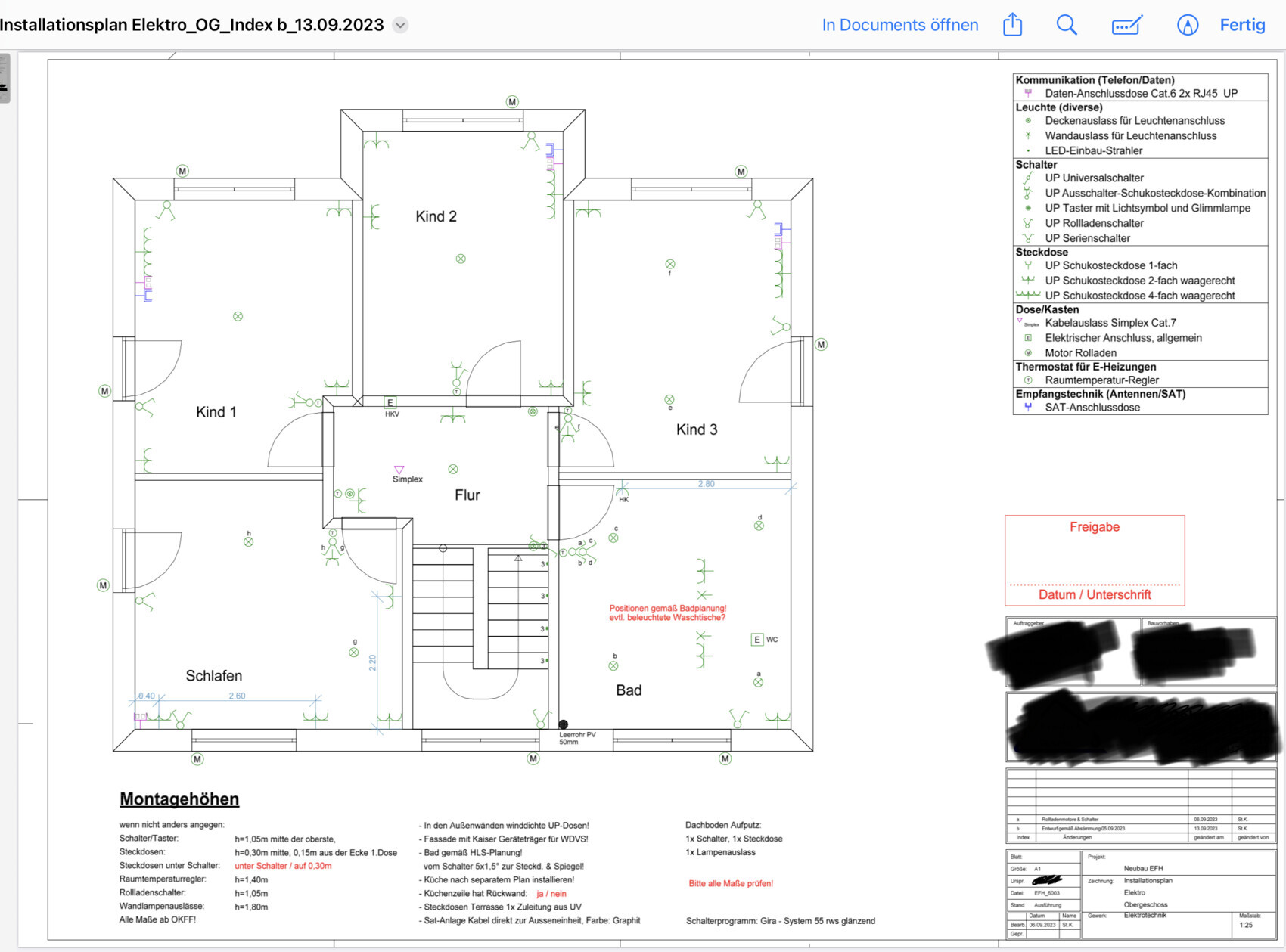
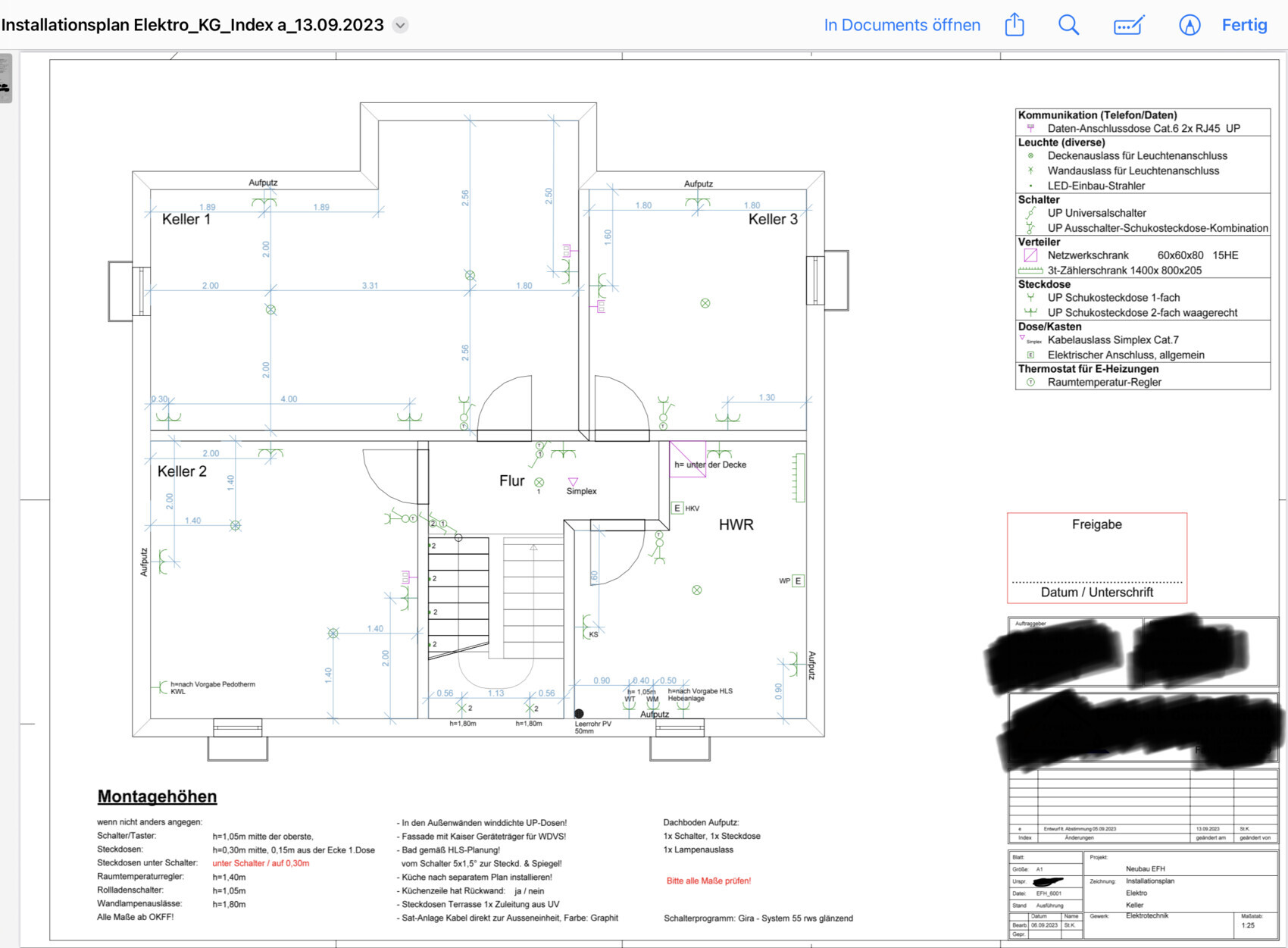
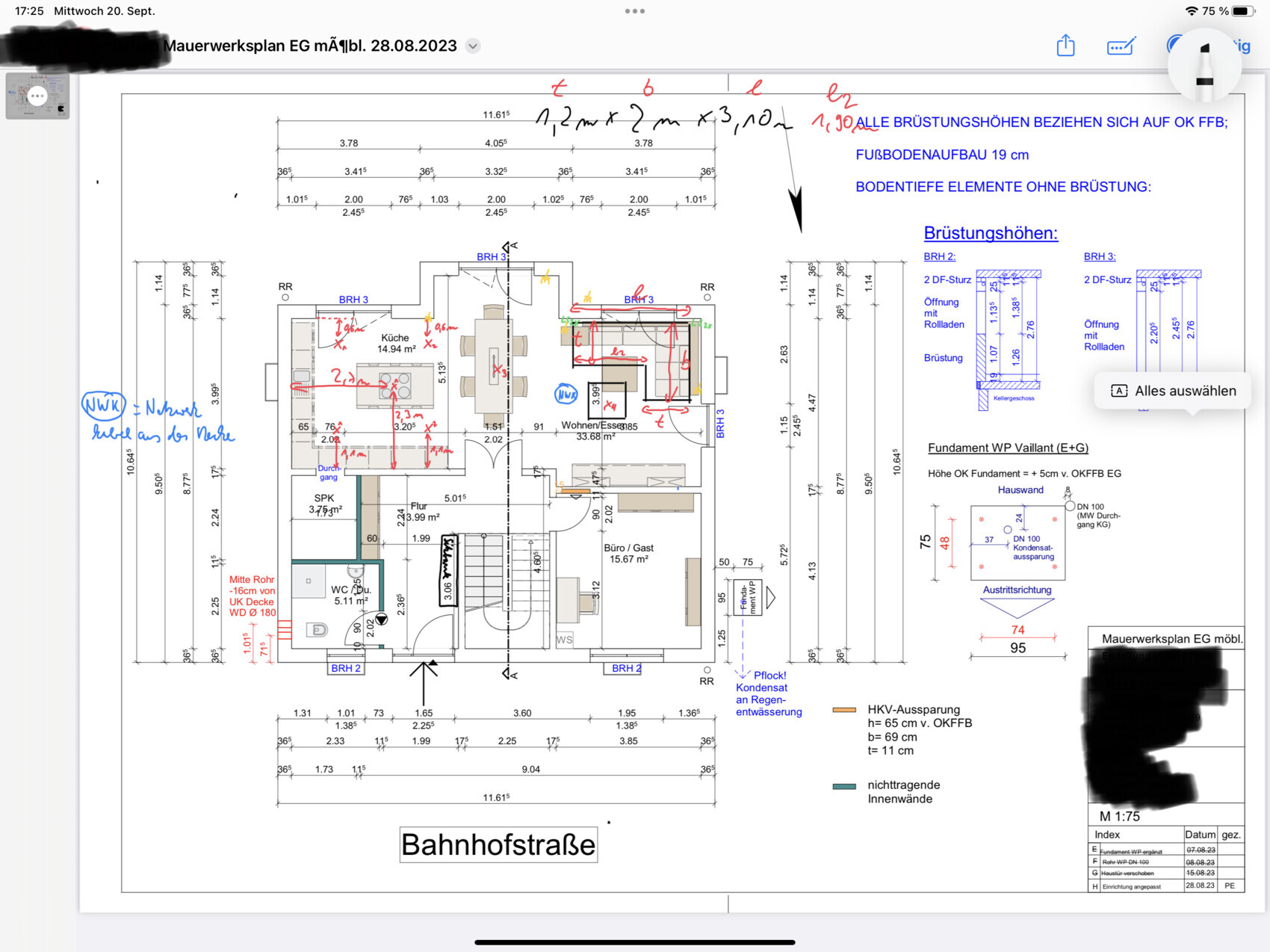
Gregor_KWe recently had the electrical planning meeting. During this process, the following plan was created. Unfortunately, no furniture is shown, so I have also included a floor plan with furniture. This is our first time doing something like this. I would appreciate your feedback, as I am sure you can provide valuable advice and some helpful suggestions.
I am particularly uncertain about the kitchen, main bathroom, and staircase areas.
About the house:
- 3 floors: basement + ground floor + upper floor
- approximately 258 sqm (2773 sq ft) of living space on each of the 3 floors
- ceiling height on ground and upper floors: about 2.55 m (8.4 ft)
- ceiling height in basement: about 2.38 m (7.8 ft)
Questions:
Should I really install 5 ceiling light outlets in the kitchen? Although a lot of light is needed, I wonder if this might be too many.
What do you think about the wall outlets in the staircase area?
For rooms of at least 16 sqm (172 sq ft), I have always planned two ceiling outlets. Do you think it is also necessary if the room is, for example, 16.5 sqm (178 sq ft)?
Should I run a cable for illuminated washbasins?
Is a 50 mm (2 inches) empty conduit sufficient for photovoltaics?
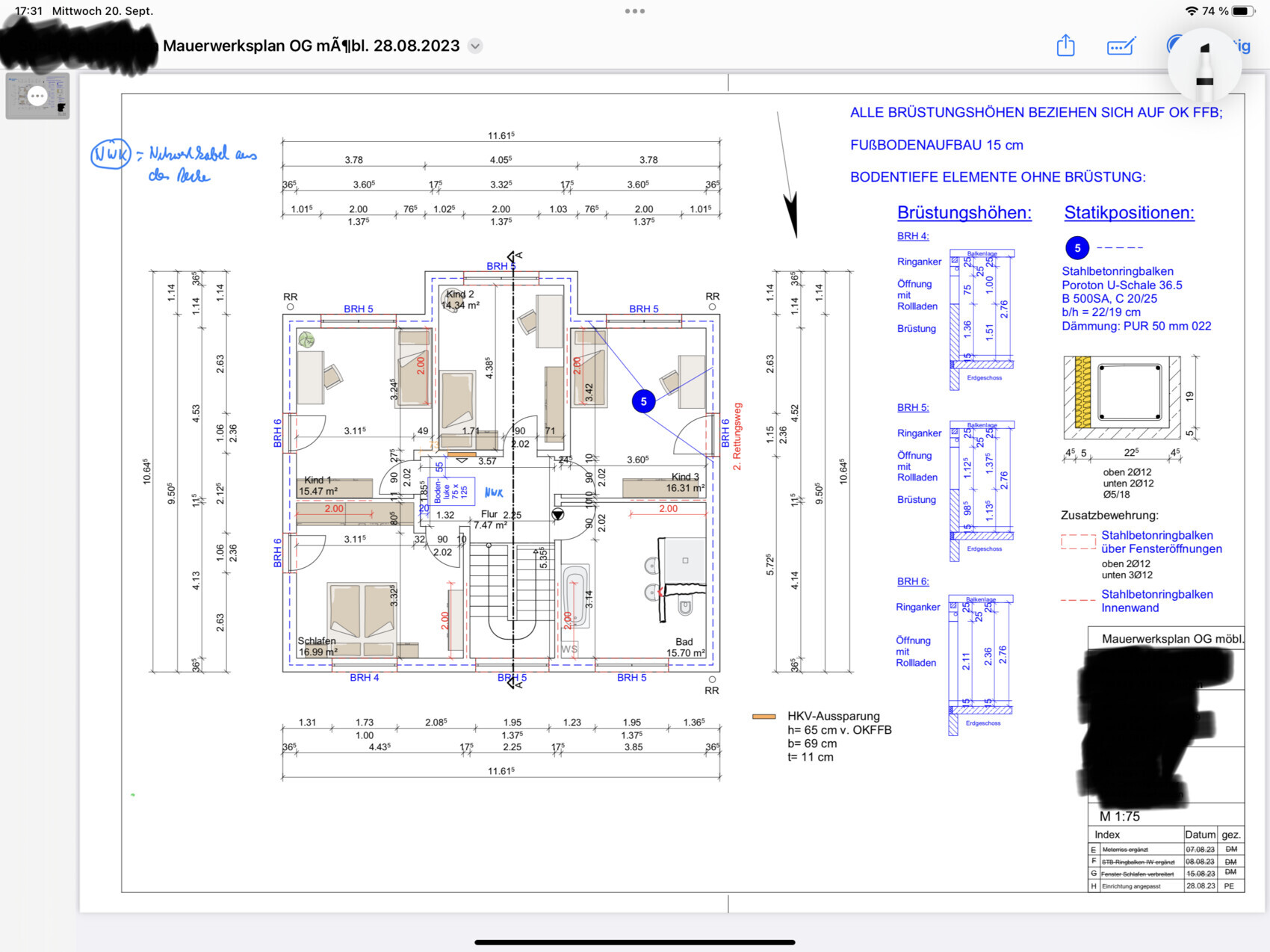
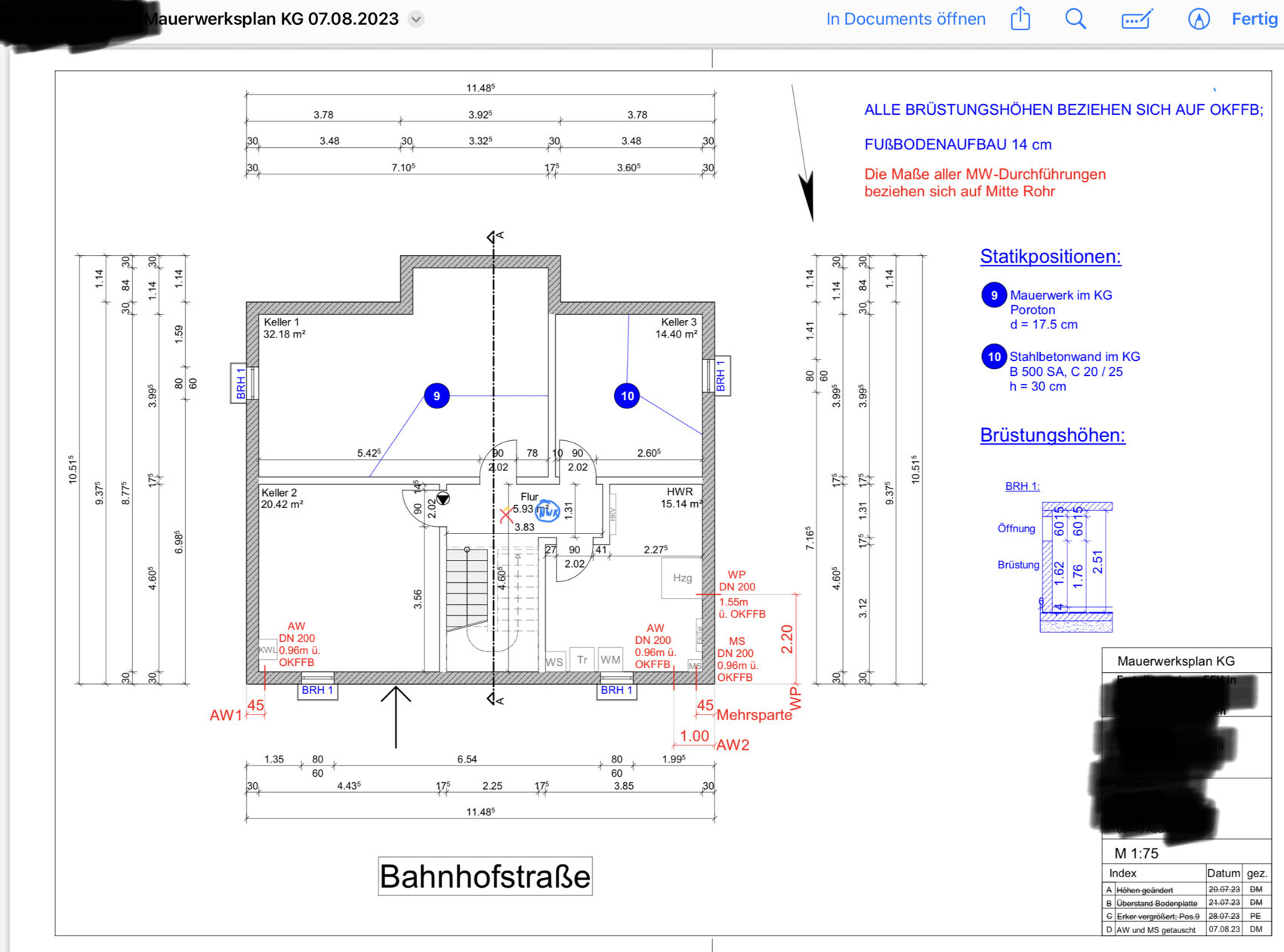
I am particularly uncertain about the kitchen, main bathroom, and staircase areas.
About the house:
- 3 floors: basement + ground floor + upper floor
- approximately 258 sqm (2773 sq ft) of living space on each of the 3 floors
- ceiling height on ground and upper floors: about 2.55 m (8.4 ft)
- ceiling height in basement: about 2.38 m (7.8 ft)
Questions:
Should I really install 5 ceiling light outlets in the kitchen? Although a lot of light is needed, I wonder if this might be too many.
What do you think about the wall outlets in the staircase area?
For rooms of at least 16 sqm (172 sq ft), I have always planned two ceiling outlets. Do you think it is also necessary if the room is, for example, 16.5 sqm (178 sq ft)?
Should I run a cable for illuminated washbasins?
Is a 50 mm (2 inches) empty conduit sufficient for photovoltaics?
N
NatureSys20 Sep 2023 18:40I am not convinced by the lighting design. Typically, wall-mounted lamps are practical, and overall the lighting plan should be carefully considered. A good lighting design makes a huge difference. We were happy to invest a high three-figure amount for this.
N
NatureSys20 Sep 2023 18:42The roller shutter switches next to the windows are very impractical. We have grouped all the switches for one room together in a single location.
I’m not convinced by the plan either.
I don’t see any sockets in the kitchen at all, and the ceiling outlets should preferably be located above the countertop. That way, a track lighting system or spotlights can be used for countertop illumination.
Bedroom... the wall facing the children’s room has no socket. That brings me to a general rule: every wall should have at least one socket, even if you can’t currently think of a use for it. In the bedroom, it could be for cabinet lighting. I would also suggest providing TV and Cat7 outlets on the wall, even if you don’t plan to use them right now. Someone could get sick or bedridden, for example, and having the appropriate connection there would be helpful.
In the bedroom, I would always plan the wiring so that both ceiling lights and bedside lamps can be controlled from the bed and from the door.
In winter mornings, you wake up, turn on the bedside light, get up, gather your things, and turn off the light near the door when you leave the room. And in the evening, you do the opposite.
I don’t see any sockets in the kitchen at all, and the ceiling outlets should preferably be located above the countertop. That way, a track lighting system or spotlights can be used for countertop illumination.
Bedroom... the wall facing the children’s room has no socket. That brings me to a general rule: every wall should have at least one socket, even if you can’t currently think of a use for it. In the bedroom, it could be for cabinet lighting. I would also suggest providing TV and Cat7 outlets on the wall, even if you don’t plan to use them right now. Someone could get sick or bedridden, for example, and having the appropriate connection there would be helpful.
In the bedroom, I would always plan the wiring so that both ceiling lights and bedside lamps can be controlled from the bed and from the door.
In winter mornings, you wake up, turn on the bedside light, get up, gather your things, and turn off the light near the door when you leave the room. And in the evening, you do the opposite.
H
HeimatBauer20 Sep 2023 20:44A 50-panel photovoltaic system is sufficient and should be dedicated exclusively to that purpose. Currently, I have only two strings, but I’m considering adding a third. Having a reserve is beneficial.
Kitchen: Definitely include ceiling outlets above the countertops and any potential dining table. Install plenty of power outlets, including near seating areas for toasters or phone charging.
In the living room, I installed everything needed for the TV at two possible locations—I’ve already needed them. In the basement, I initially installed only one ceiling outlet per room, which turned out to be a bad idea; it was quite a hassle to neatly install three lamps there afterward.
In my music room, I ran dedicated cables with a larger cross-section directly from the distribution panel to the amplifiers, reducing cable length by half. In the garage, I installed a heavy-duty cable for a potential electric vehicle.
I laid reserve cables under the roof for possible spotlights, and in the basement, I ran cables inside all drain pipe shaft enclosures and one in each bathroom for potential high-tech toilets. Wherever I might hang artwork, I installed a wall outlet opposite the spot.
In my house, there are a total of 16 satellite sockets, 25 speaker lines, and 120 network ports. This is definitely overkill, but I have surprisingly used many of them already. Most importantly, you never know beforehand which ones might never be needed over the next 40 years.
In the next house, I would separate lighting and power sockets. I would also secure all emergency exit lighting circuits separately.
Kitchen: Definitely include ceiling outlets above the countertops and any potential dining table. Install plenty of power outlets, including near seating areas for toasters or phone charging.
In the living room, I installed everything needed for the TV at two possible locations—I’ve already needed them. In the basement, I initially installed only one ceiling outlet per room, which turned out to be a bad idea; it was quite a hassle to neatly install three lamps there afterward.
In my music room, I ran dedicated cables with a larger cross-section directly from the distribution panel to the amplifiers, reducing cable length by half. In the garage, I installed a heavy-duty cable for a potential electric vehicle.
I laid reserve cables under the roof for possible spotlights, and in the basement, I ran cables inside all drain pipe shaft enclosures and one in each bathroom for potential high-tech toilets. Wherever I might hang artwork, I installed a wall outlet opposite the spot.
In my house, there are a total of 16 satellite sockets, 25 speaker lines, and 120 network ports. This is definitely overkill, but I have surprisingly used many of them already. Most importantly, you never know beforehand which ones might never be needed over the next 40 years.
In the next house, I would separate lighting and power sockets. I would also secure all emergency exit lighting circuits separately.
NatureSys schrieb:
I’m not convinced by the lighting design. Typically, wall lamps are practical, and in general, you should carefully plan the lighting. Good lighting design makes a huge difference. We were happy to spend a high three-digit amount on it. We currently don’t have any wall lamps in our apartment. It probably looks stylish, but I’m not quite sure how to position them. Do you have any ideas?
NatureSys schrieb:
The roller shutter switches next to the windows are very impractical. We have all the switches for a room grouped together in one place. For the electrician, it’s most convenient if the roller shutter switches are right next to the window. The electrician told us that through the smart home system, you can also install surface-mounted switches and control everything via tablet or smartphone.
kbt09 schrieb:
I don’t see any outlets in the kitchen at all, and the ceiling outlets should rather be located above the countertop so that you can install a track lighting system or spotlights for countertop illumination.
Bedroom … the wall to the children’s room has no outlet … to add to that statement, in general, every wall should have at least one outlet, even if you can’t currently think of a use for it. But the bedroom could have closet lighting. I would also provide a TV/Cat7 connection on the wall, even if you don’t currently plan to use it. It might be useful if someone gets sick or bedridden, so at least the proper connection is available.
In the bedroom, I would always plan so that ceiling lights and bedside lamps can be controlled both from the bed and from the door.
Waking up in the winter mornings, turning on the bedside light, getting up, gathering things, and leaving the room—turning off the light at the door. And vice versa at night 😉 There is a separate plan for the kitchen outlets (kitchen plan). Sorry, I forgot to mention that. I will upload that shortly…
Adding an outlet on the bedroom wall will be done. To be honest, I’m not planning for Cat7. I can handle that via Wi-Fi, and there is already an outlet in the corner by the bedside table. Adding a TV outlet there also makes sense. You are right—we currently don’t have a use case for these outlets. 😉
Regarding switches to control ceiling and bedside lights both from the bed and from the door: where would you position those? We currently have a 1.6m (5 ft 3 in) bed. There are larger beds, and depending on the size, the position of the switches changes. Would you solve this with wireless switches? That was my idea at least. They could then be easily relocated.
One thing I forgot to mention: the smart home system is planned with Homematic IP.
Similar topics