
ᐅ Which type of flooring is best for a combined kitchen and dining area?
Created on: 19 Sep 2023 21:46
S
stef943Hello everyone,
We have been considering which flooring to choose for our combined kitchen/dining area (the living room is separate). The room will be used frequently, including for cozy game nights and similar activities. Unfortunately, we haven’t reached a reasonable conclusion yet, so we would appreciate your input.
Here are our thoughts so far:
- Fully tiled flooring has the advantage of being durable for the kitchen, where there is grease, etc., and for the dirt from using the fireplace. However, I find tiles a bit cold for the dining area. Planning a large rug under the dining table just for comfort might not be practical with underfloor heating due to heat buildup? Also, it could be inconvenient as crumbs often end up in the rug.
- Using all hardwood or wood planks is cozy but probably not very practical for the kitchen and fireplace area, or what experiences have you had with this?
- We would actually prefer real wood, which argues against vinyl. Also, there are concerns that vinyl gaps may lift or swell with moisture or poor installation. On the other hand, vinyl seems to be the easiest and least complicated to install yourself.
- The most practical option might be dividing the room, with tiles in the kitchen and hardwood in the dining area. However, I imagine that might not look very appealing in a single open space.
We would appreciate hearing about your experiences with these flooring options—what is practical and how you solved this issue.
Thank you and best regards,
Steffi
We have been considering which flooring to choose for our combined kitchen/dining area (the living room is separate). The room will be used frequently, including for cozy game nights and similar activities. Unfortunately, we haven’t reached a reasonable conclusion yet, so we would appreciate your input.
Here are our thoughts so far:
- Fully tiled flooring has the advantage of being durable for the kitchen, where there is grease, etc., and for the dirt from using the fireplace. However, I find tiles a bit cold for the dining area. Planning a large rug under the dining table just for comfort might not be practical with underfloor heating due to heat buildup? Also, it could be inconvenient as crumbs often end up in the rug.
- Using all hardwood or wood planks is cozy but probably not very practical for the kitchen and fireplace area, or what experiences have you had with this?
- We would actually prefer real wood, which argues against vinyl. Also, there are concerns that vinyl gaps may lift or swell with moisture or poor installation. On the other hand, vinyl seems to be the easiest and least complicated to install yourself.
- The most practical option might be dividing the room, with tiles in the kitchen and hardwood in the dining area. However, I imagine that might not look very appealing in a single open space.
We would appreciate hearing about your experiences with these flooring options—what is practical and how you solved this issue.
Thank you and best regards,
Steffi

We decided to go with parquet flooring in the kitchen and dining area.
It’s a rustic plank style with many knots and an overall uneven appearance. We like it, it’s an affordable grade, and we find it cozy. However, we chose it with the expectation that the floor will develop a patina from everyday family life in these rooms. We’re not intentionally damaging it, but signs of wear are inevitable. We’re prepared for that and are fine with it.
Warping or swelling tends to happen with parquet if the subfloor is still too moist. That’s why it’s important to test thoroughly before starting the installation.
In our previous house, we had fully glued vinyl in the kitchen and dining area. It looked nice and was very easy to maintain, but of course, you could tell it was plastic. It didn’t compare to wood either visually or to the touch. Now that we have parquet, I can say from direct experience that I wouldn’t want to go back to vinyl.
I wouldn’t worry too much about heat buildup. Modern underfloor heating operates at a low supply temperature. We haven’t had any issues so far with runners or rugs.
Attached are two photos. The top one shows a vinyl floor in a wood-look style, the bottom one is the parquet.
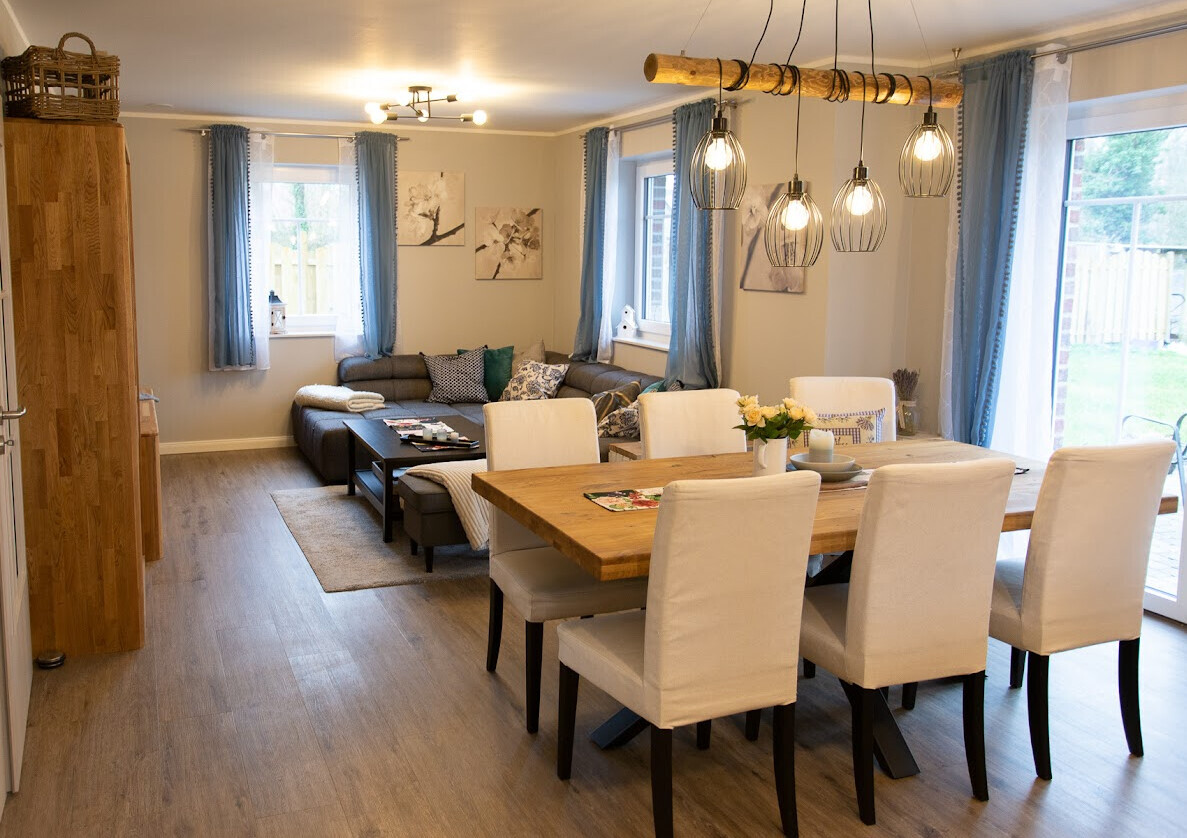
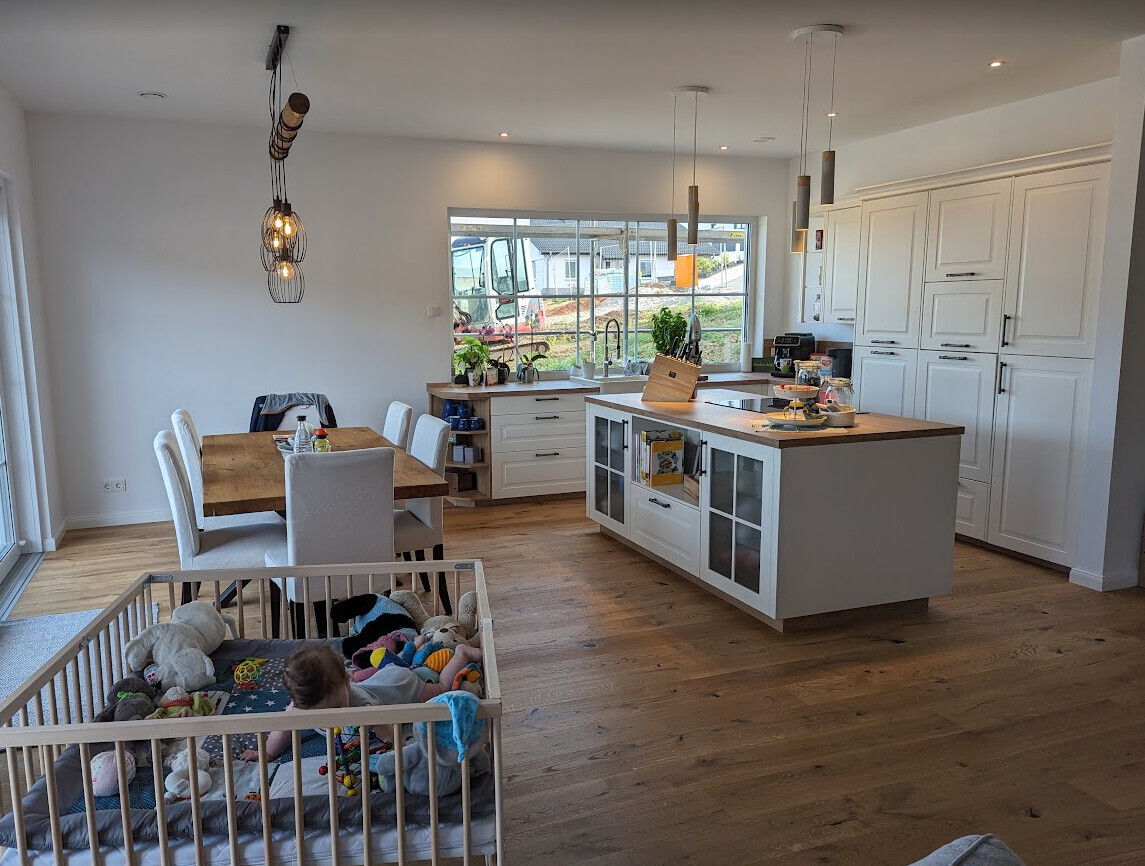
It’s a rustic plank style with many knots and an overall uneven appearance. We like it, it’s an affordable grade, and we find it cozy. However, we chose it with the expectation that the floor will develop a patina from everyday family life in these rooms. We’re not intentionally damaging it, but signs of wear are inevitable. We’re prepared for that and are fine with it.
Warping or swelling tends to happen with parquet if the subfloor is still too moist. That’s why it’s important to test thoroughly before starting the installation.
In our previous house, we had fully glued vinyl in the kitchen and dining area. It looked nice and was very easy to maintain, but of course, you could tell it was plastic. It didn’t compare to wood either visually or to the touch. Now that we have parquet, I can say from direct experience that I wouldn’t want to go back to vinyl.
I wouldn’t worry too much about heat buildup. Modern underfloor heating operates at a low supply temperature. We haven’t had any issues so far with runners or rugs.
Attached are two photos. The top one shows a vinyl floor in a wood-look style, the bottom one is the parquet.
X
xMisterDx20 Sep 2023 04:48I wanted hardwood flooring in the kitchen, but now I’m glad my wife insisted on tiles.
Since then, the kids have spilled juice on the floor twice—once with glass shards, once without. The refrigerator once leaked because of the high humidity; the drip tray for condensation on the back wall, which should be emptied regularly, had about half a puddle of water in it. Hardwood would have been completely ruined.
I wouldn’t want to constantly watch out for drips, splashes, or accidentally stepping on a tomato that fell while chopping.
There’s a good reason kitchens and entryways are traditionally tiled.
But it depends on you. If you don’t cook much and/or are extremely meticulous about cleaning everything up immediately, it can work. Not for me— I clean with a pressure washer after cooking, but by then the tomato has already soaked into the wood.
Since then, the kids have spilled juice on the floor twice—once with glass shards, once without. The refrigerator once leaked because of the high humidity; the drip tray for condensation on the back wall, which should be emptied regularly, had about half a puddle of water in it. Hardwood would have been completely ruined.
I wouldn’t want to constantly watch out for drips, splashes, or accidentally stepping on a tomato that fell while chopping.
There’s a good reason kitchens and entryways are traditionally tiled.
But it depends on you. If you don’t cook much and/or are extremely meticulous about cleaning everything up immediately, it can work. Not for me— I clean with a pressure washer after cooking, but by then the tomato has already soaked into the wood.
W
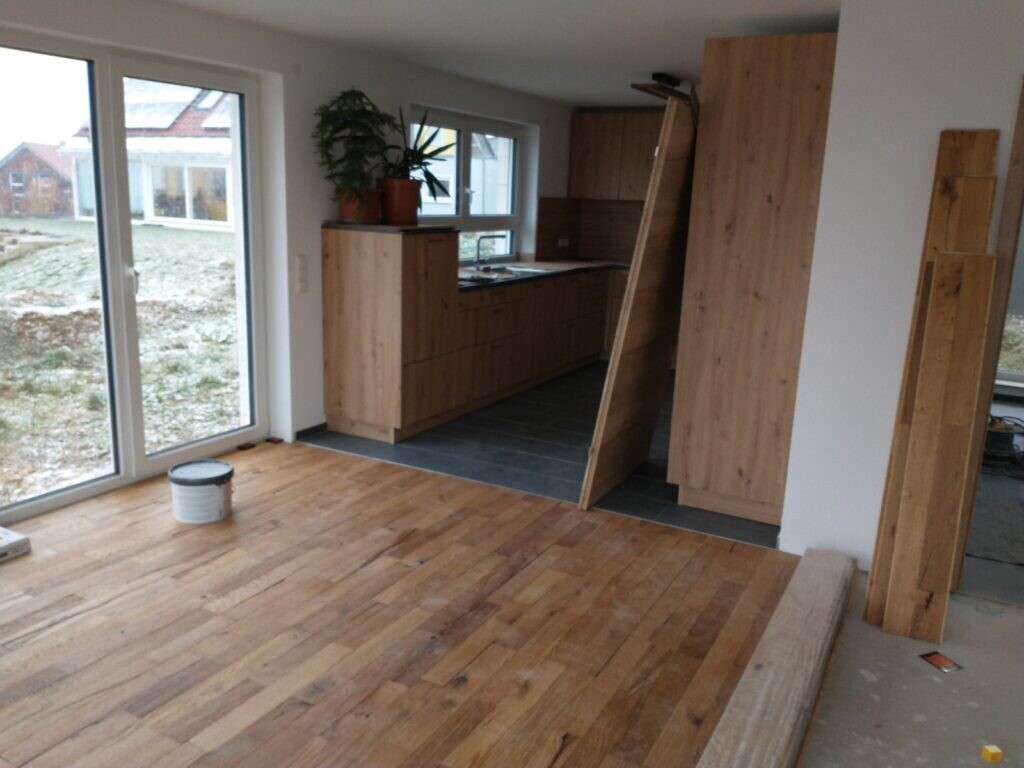
WilderSueden20 Sep 2023 09:00We tiled the kitchen and installed parquet flooring in the dining and living areas. Here is a picture from the construction phase; I will look for a current photo when I have the chance. I would do it the same way again.

We installed this modern rigid click vinyl flooring in our open-plan kitchen-living area. It is even said to be suitable for bathrooms, but I didn’t want to take any chances, so we used tiles in the bathroom instead. There are no long-term experiences with this flooring yet. Visually, it looks very stylish and, when walking barefoot in the summer, feels very comfortable—almost like real wood. I’m not sure if tiles would feel the same.
To be honest, we would have chosen tile even if small children lived here. Our teenager is about to turn 18, and we only see them in the kitchen when I turn off the Wi-Fi.
To be honest, we would have chosen tile even if small children lived here. Our teenager is about to turn 18, and we only see them in the kitchen when I turn off the Wi-Fi.
We currently have parquet flooring throughout our open-plan kitchen and entrance area. The landlord installed it about 4–5 years ago. It still looks okay overall but isn’t really maintained since the landlord is supposed to take care of oiling and similar treatments.
However, there are now noticeable marks and stains, especially in the kitchen and hallway. Anything that falls on the floor leaves a noticeable dent immediately, and if it’s not treated right away, dark stains develop. You need to clean up any water immediately; otherwise, the floor will swell, and then it’s damaged for good. You need to be aware of this. But it’s manageable if you want to handle it.
For us, that’s not an option. We prefer a low-maintenance floor, which is why we chose click vinyl flooring. Another advantage is that we can install it ourselves, which saves us a significant amount of money.
A bit off-topic, but do you have the floor plan for the room in the top picture? Our open-plan area will probably look similar, so it might help us get some inspiration. I’d find that very interesting 🙂
However, there are now noticeable marks and stains, especially in the kitchen and hallway. Anything that falls on the floor leaves a noticeable dent immediately, and if it’s not treated right away, dark stains develop. You need to clean up any water immediately; otherwise, the floor will swell, and then it’s damaged for good. You need to be aware of this. But it’s manageable if you want to handle it.
For us, that’s not an option. We prefer a low-maintenance floor, which is why we chose click vinyl flooring. Another advantage is that we can install it ourselves, which saves us a significant amount of money.
kati1337 schrieb:
Attached are 2 photos. The top one shows vinyl flooring with a wood look, the bottom one shows parquet.
A bit off-topic, but do you have the floor plan for the room in the top picture? Our open-plan area will probably look similar, so it might help us get some inspiration. I’d find that very interesting 🙂
Similar topics